BCGA2015Wireless Headset
Apple Inc.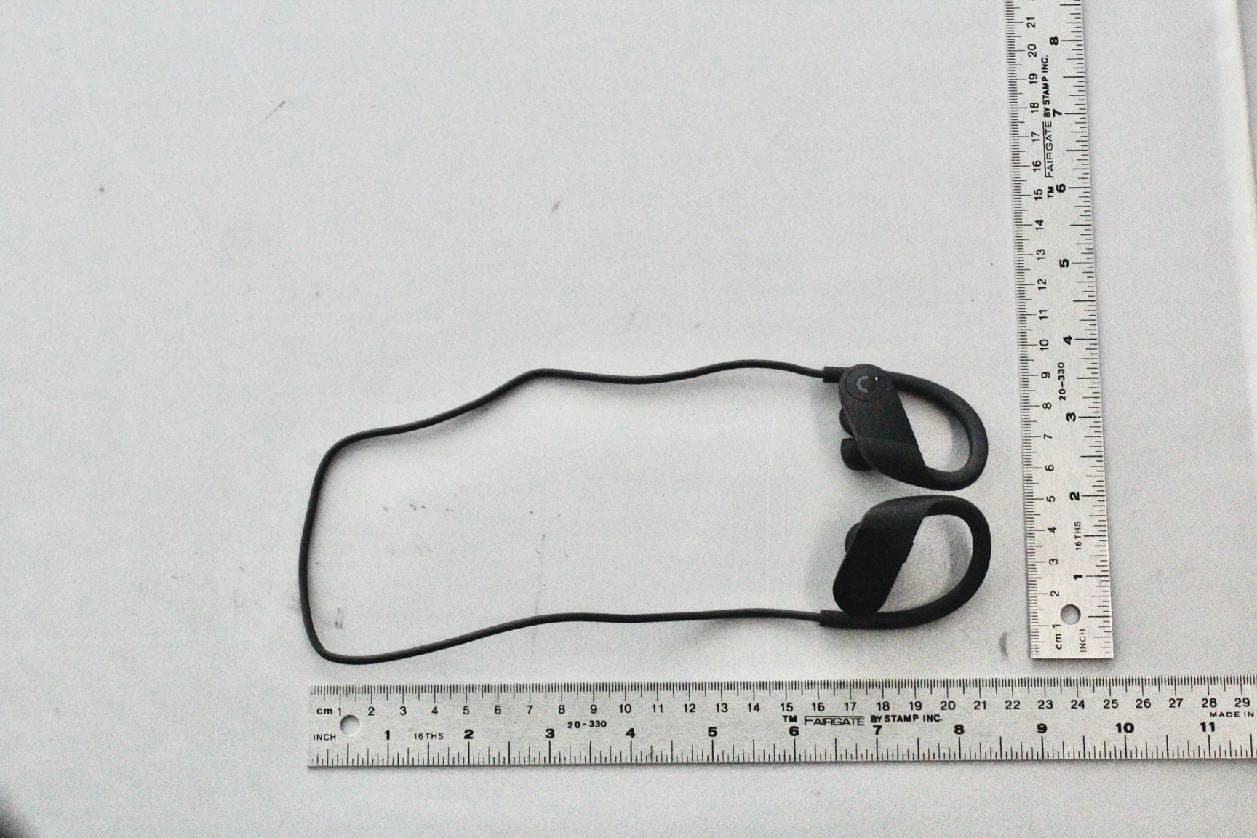
Click to zoom
Application Details
- Equipment Class
- DTS - Digital Transmission System
- Date of Grant
- Feb 26, 2020
- Application Purpose
- Original Equipment
- Date of Application
- Feb 24, 2020
- Equipment Note
- Wireless Headset
- Frequency Range
- 2402.00000000 - 2480.00000000
- Company
- Apple Inc.
- Country
- United States
Documents & Files
Document Text
Text extracted from the exhibit documents filed with the FCC. Open a document above to read the original.
Users Manual
SAFETY AND HANDLING Important safety information Handle Powerbeats 4 with care. Powerbeats 4 contains sensitive electronic components, including a battery, and can be damaged, impair functionality, or cause injury if dropped, burned, punctured, crushed, disassembled, or if exposed to excessive heat or liquid or to environments having high concentrations of industrial chemicals, including near evaporating liquified gasses such as helium. Don’t use a damaged Powerbeats 4. Bluetooth ® To turn off Bluetooth ® on Powerbeats 4, press the power button. Batteries Don’t attempt to replace the Powerbeats 4 battery yourself—you may damage the battery, which could cause overheating and injury. Charging Charge Powerbeats 4 with the charging cable and a power adapter or computer. Only charge with an adapter that is compliant with applicable country regulations and international and regional safety standards, including the International Standard for Safety of Information Technology Equipment (IEC 60950-1). Other adapters may not meet applicable safety standards, and charging with such adapters could pose a risk of death or injury. Using damaged cables or chargers, or charging when moisture is present, can cause fire, electric shock, injury, or damage to Powerbeats 4 or other property. Prolonged heat exposure Avoid prolonged skin contact with a device, its power adapter, and the charging cable and connector when plugged into a power source, because it may cause discomfort or injury. For example, while Powerbeats 4 is charging using the charging cable and a power adapter, don’t sit or sleep on the device, charging cable, connector, or power adapter, or place them under a blanket, pillow, or your body. Take special care if you have a physical condition that affects your ability to detect heat against your body. Hearing loss Listening to sound at high volumes may permanently damage your hearing. Background noise, as well as continued exposure to high volume levels, can make sounds seem quieter than they actually are. Check the volume before inserting Powerbeats 4 in your ear. For more information about hearing loss and how to set a maximum volume limit, see www.apple.com/sound. WARNING: To prevent possible hearing damage, do not listen at high volume levels for long periods. Driving hazard Use of Powerbeats 4 while operating a vehicle is not recommended and is illegal in some areas. Check and obey the applicable laws and regulations on the use of earphones while operating a vehicle. Be careful and attentive English 1 Model: A2015 034-03130-01© 2019 Apple Inc. All rights reserved. The b logo, beats and powerbeats are trademarks of Beats Electronics, LLC. The Bluetooth ® word mark and logos are registered trademarks owned by Bluetooth SIG, Inc. and any use of such marks by Apple Inc. is under license. Page 1 Page 16 S&C(24P) Material: 64gsm UPM Binding method: saddle stitch Panel 1 96.5 193 96.5 Panel 2 96.5 96.5 193 96.5 Panel 3 96.5 96.596.5 193 96.5 Panel 5 96.5 96.5 193 96.5 Panel 6 96.5 193 96.5 Panel 4 96.5 A 2 015 User Manual Apple Proprietary and Confidential while driving. Stop listening to your audio device if you find it disruptive or distracting while operating any type of vehicle or performing any activity that requires your full attention. Choking hazard The small parts included with Powerbeats 4 may present a choking hazard or cause other injury to small children. Keep them away from small children. Medical device interference Powerbeats 4 contains components and radios that emit electromagnetic fields. Powerbeats 4 also contains magnets. These electromagnetic fields and magnets may interfere with pacemakers, defibrillators, or other medical devices. Maintain a safe distance of separation between your medical device and Powerbeats 4. Consult your physician and medical device manufacturer for information specific to your medical device. Stop using Powerbeats 4 if you suspect it is interfering with your pacemaker, defibrillator, or any other medical device. Skin irritation Earphones can lead to ear infections if not properly cleaned. Clean Powerbeats 4 regularly with a soft lint-free cloth. Don’t get moisture in any openings, or use aerosol sprays, solvents, or abrasives. If a skin problem develops, discontinue use. If the problem persists, consult a physician. Electrostatic shock When using Powerbeats 4 in areas where the air is very dry, it is easy to build up static electricity and possible for your ears to receive a small electrostatic discharge from Powerbeats 4. To minimize the risk of electrostatic discharge, avoid using Powerbeats 4 in extremely dry environments, or touch a grounded unpainted metal object before inserting Powerbeats 4. Important handling information Discoloration of the Lightning connector after regular use is normal. Dirt, debris, and exposure to moisture may cause discoloration. For information about exposure to liquid and cleaning Powerbeats 4 and the Lightning connector, see www.beatsbydre.com/support. Support For support and troubleshooting information and the latest software downloads, go to www.beatsbydre.com/support. Disposal and Recycling Information The symbol above indicates that this product and/or battery should not be disposed of with household waste. When you decide to dispose of this product and/or its battery, do so in accordance with local environmental laws and guidelines. For information about Apple’s recycling program, recycling collection points, restricted substances and other environmental initiatives, visit www.apple.com/environment/. Battery Disposal Information Dispose of batteries according to your local environmental laws and guidelines. The lithium-ion battery in your Powerbeats 4 should be serviced or recycled by Apple or an authorized service provider, and disposed of separately from household waste. For information about Apple lithium-ion batteries, go to www.apple.com/batteries. FCC and ISED Canada Compliance This equipment complies with…
Text truncated - open the document above for the full version.
Cover Letter(s)
Apple Proprietary and Confidential Date: November 14 th , 2019 Federal Communications Commission Equipment Authorization Branch 7435 Oakland Mills Rd. Columbia MD 21046 Attn: Equipment Authorization Branch Ref: FCC ID number Model FCC ID A2015 BCGA2015 To whom it may concern: I, the undersigned, hereby authorize UL Verification Services Inc. to act on our behalf in all manners relating to application for equipment authorization, including signing of all documents relating to these matters. Any and all acts carried out by UL Verification Services Inc. on our behalf shall have the same effect as acts of our own. I, the undersigned, hereby certify that we are not subject to a denial of federal benefits, that includes FCC benefits, pursuant to Section 5301 of the Anti-Drug Abuse Act of 1988, 21 U.S.C. 853(a). In authorizing UL Verification Services Inc. as our representative, we still recognize that we are responsible to: a) comply with the relevant provisions of the certification program; b) make all necessary arrangements for the conduct of the evaluation, including provision for examining documentation and access to all areas, records (including internal audit reports) and personnel for the purposes of evaluation (e.g. testing, inspection, assessment, surveillance, reassessment) and resolution of complaints; c) make claims regarding certification only in respect of the scope for which certification has been granted; d) do not use our product certification in such a manner as to bring the Certification Division into disrepute and not make any statement regarding our product certification which the Certification Division may consider misleading or unauthorized; Apple Proprietary and Confidential e) upon suspension or cancellation of certification, discontinue use of all advertising matter that contains any reference thereto and return any certification documents as required by the Certification Division; f) use certification only to indicate the products are certified as being in conformity with specified standards; g) endeavor to ensure that no certificate or report nor any part thereof is used in a misleading manner; h) ensure that any reference to our product certification in communication media such as documents, brochures or advertising, complies with the requirements of the Certification Division; i) keep a record of all complaints made known to the us relating to the product’s compliance with requirements of the relevant standard and to make these records available to the when requested; j) take appropriate action with respect to such complaints and any deficiencies found in products or services that affect compliance with the requirements for certification; k) document the actions taken. This authorization is valid until further written notice from the applicant. Sincerely, ____________________ Abhishek Rala Apple Inc. Global Certification Manager [email protected]
Cover Letter(s)
Apple Inc. One Apple Park Way Cupertino, CA v1.0 www.apple.com Date: November 14 th , 2019 Federal Communications Commission Office of Engineering and Technology Laboratory Division 7435 Oakland Mills Rd. Columbia MD 21046 Subject: Request for Confidentiality Ref: FCC ID numbers Model FCC ID A2015 BCGA2015 To whom it may concern: Pursuant to the provisions of Sections 0.457 and 0.459 of the Commission’s rules (47 CFR §§ 0.457, 0.459), Apple Inc. hereby requests confidential treatment for documents filed with the Commission in connection with the application for equipment authorization referenced above. Permanent Confidentiality Apple Inc. requests that the Commission withholds the following documents from public viewing indefinitely: •Block Diagrams •Electrical Schematic Diagrams •Technical Descriptions, Product Specifications •Antenna Gain, Antenna Locations These documents reveal detailed technical and design information that is protected by Apple Inc. as confidential and proprietary trade secrets. This information has been disclosed to those required to maintain its confidentiality and is not customarily disclosed to the public even after commercial release of a device. As a result, disclosure of this information by the Commission would harm Apple Inc. by giving competitors an unfair advantage even after commercial release of the device. Apple Proprietary and Confidential Apple Inc. One Apple Park Way Cupertino, CA v1.0 www.apple.com Short Term Confidentiality In addition to the above mentioned documents, pursuant to Public Notice DA 04-1705 of the Commission’s policy, in order to comply with the marketing regulations in 47 CFR §2.803 and the importation rules in 47 CFR §2.1204, while ensuring that business sensitive information remains confidential until the actual marketing of newly authorized devices, Apple Inc. requests that the Commission withholds the following documents from public viewing for one hundred eighty days after the date the grant of equipment authorization is issued: •External Photographs •Internal Photographs •Test Setup Photographs •User Manual These documents reveal technical and design information that has not been publicly disclosed in marketing materials and is protected by Apple Inc. as confidential and proprietary trade secrets. This information has been disclosed to those required to maintain its confidentiality and is not customarily disclosed publicly prior to the commercial release of the device. As a result, disclosure of this information by the Commission prior to commercial release would harm Apple Inc. by giving competitors an unfair market advantage. Apple Inc. believes the period of confidentiality requested is necessary to protect the information until the commercial release of a device. It is our understanding that measurement test reports and FCC ID label format cannot be granted as confidential documents and this information will be available for public review once the grant of equipment authorization is issued. Sincerely, ____________________ Abhishek Rala Apple Inc. Global Certification Manager [email protected] Apple Proprietary and Confidential
External Photos
Front View A2015 Apple Proprietary and Confidential Back View A2015 Apple Proprietary and Confidential Bottom View A2015 Lightning Connector Apple Proprietary and Confidential A2015 Top View Turn On/Off Button Apple Proprietary and Confidential A2015 Side View - Face Down Apple Proprietary and Confidential A2015 Side View - Face Up Apple Proprietary and Confidential
ID Label/Location Info
L+R Indications and Compliance Markings (1:1) Placement L+R indications process: pad print color: refer to CMF Center A2015 Compliance Markings - (1:1) 2mm 2mm 2mm 2mm Center SN: PPPYWSSSEEEE FCC ID: BCGA2015 IC: 579C-A2015 1.4 1.4 6.93mm 2.66mm 7.41mm 2.68mm SN: PPPYWSSSEEEE Vendor to replace PPPYWSSSEEEE with variable number Left: 1:1 modified for laser etchRight: 1:1 modified for laser etch Made in China Beats Model: A2015 5V 0.5A EMC 3248 1Apple Proprietary and Confidential A2015 Label Artwork
Internal Photos
Front Internal View of the MLB and Battery A2015 Back view of the speakers A2015 Front View of the MLB and Flex Cable - With Shield A2015 Back View of the MLB and Flex Cable - With Shield A2015 Front View of the MLB - Without Shield A2015 Antenna Location Back View of the MLB - Without Shield A2015 Antenna Location Front View of the Flex Cable - Without Shield A2015 Back View of the Flex Cable - Without Shield A2015 Close view of the Battery A2015
RF Exposure Info
Plot No. 1 Test Laboratory: UL Verification Services Inc. SAR Lab A Date/Time: 11/14/2019 10:08:49 AM 20191114_SystemPerformanceCheck-D2450V2 SN 899 Frequency: 2450 MHz; Duty Cycle: 1:1; Room Ambient Temperature: 24.0C; Liquid Temperature: 23.0C Medium parameters used: f = 2450 MHz; σ = 2.036 S/m; ε r = 51.194; ρ = 1000 kg/m 3 DASY5 Configuration: - Area Scan Setting: Find Secondary Maximum Within: 2.0 dB and with a peak SAR value greater than 0.0012W/kg - Electronics: DAE4 Sn1259; Calibrated: 7/10/2019 - Probe: EX3DV4 - SN3749; ConvF(6.89, 6.89, 6.89) @ 2450 MHz; Calibrated: 1/25/2019 - Sensor-Surface: 2.5mm (Mechanical Surface Detection) - Phantom: ELI V8.0 (20deg probe tilt) Front; Type: QD OVA 004 AA; Serial: 2079 Body/Pin=100 mW/Area Scan (8x8x1): Measurement grid: dx=12mm, dy=12mm Maximum value of SAR (measured) = 7.22 W/kg Body/Pin=100 mW/Zoom Scan (7x7x7)/Cube 0: Measurement grid: dx=5mm, dy=5mm, dz=5mm Reference Value = 58.31 V/m; Power Drift = 0.04 dB Peak SAR (extrapolated) = 11.2 W/kg SAR(1 g) = 5.39 W/kg; SAR(10 g) = 2.49 W/kg Maximum value of SAR (measured) = 7.68 W/kg 0 dB = 7.68 W/kg = 8.85 dBW/kg Plot No. 2 Test Laboratory: UL Verification Services Inc. SAR Lab A Date/Time: 11/14/2019 10:23:58 AM 20191114_SystemPerformanceCheck-D2450V2 SN 899 Frequency: 2450 MHz; Duty Cycle: 1:1 Body/Pin=100 mW/Z Scan (1x1x21): Measurement grid: dx=20mm, dy=20mm, dz=5mm Maximum value of SAR (measured) = 6.65 W/kg
RF Exposure Info
Plot No. 1 Test Laboratory: UL Verification Services Inc. SAR Lab A Date/Time: 11/14/2019 3:12:41 PM Bluetooth Frequency: 2441 MHz; Duty Cycle: 1:1.29033; Room Ambient Temperature: 24.0C; Liquid Temperature: 23.0C Medium parameters used (interpolated): f = 2441 MHz; σ = 1.793 S/m; ε r = 38.601; ρ = 1000 kg/m 3 DASY5 Configuration: - Area Scan Setting: Find Secondary Maximum Within: 2.0 dB and with a peak SAR value greater than 0.0012W/kg - Electronics: DAE4 Sn1259; Calibrated: 7/10/2019 - Probe: EX3DV4 - SN3749; ConvF(6.73, 6.73, 6.73) @ 2441 MHz; Calibrated: 1/25/2019 - Sensor-Surface: 2.5mm (Mechanical Surface Detection) - Phantom: Twin-SAM V8.0 (20deg probe tilt); Type: QD 000 P41 AA; Serial: 1948 Right Touch/ GFSK DH5_Ch 39/Area Scan (9x8x1): Measurement grid: dx=12mm, dy=12mm Info: Interpolated medium parameters used for SAR evaluation. Maximum value of SAR (measured) = 0.132 W/kg Right Touch/ GFSK DH5_Ch 39/Zoom Scan (7x7x7)/Cube 0: Measurement grid: dx=5mm, dy=5mm, dz=5mm Reference Value = 8.628 V/m; Power Drift = -0.07 dB Peak SAR (extrapolated) = 0.229 W/kg SAR(1 g) = 0.096 W/kg; SAR(10 g) = 0.045 W/kg Info: Interpolated medium parameters used for SAR evaluation. Maximum value of SAR (measured) = 0.132 W/kg 0 dB = 0.132 W/kg = -8.79 dBW/kg Plot No. 2 Test Laboratory: UL Verification Services Inc. SAR Lab A Date/Time: 11/14/2019 11:56:55 AM Bluetooth Frequency: 2402 MHz; Duty Cycle: 1:1.29033; Room Ambient Temperature: 24.0C; Liquid Temperature: 23.0C Medium parameters used (interpolated): f = 2402 MHz; σ = 1.992 S/m; ε r = 51.249; ρ = 1000 kg/m 3 DASY5 Configuration: - Area Scan Setting: Find Secondary Maximum Within: 2.0 dB and with a peak SAR value greater than 0.0012W/kg - Electronics: DAE4 Sn1259; Calibrated: 7/10/2019 - Probe: EX3DV4 - SN3749; ConvF(6.89, 6.89, 6.89) @ 2402 MHz; Calibrated: 1/25/2019 - Sensor-Surface: 2.5mm (Mechanical Surface Detection (Locations From Previous Scan Used)), Sensor-Surface: 2.5mm (Mechanical Surface Detection) - Phantom: ELI V8.0 (20deg probe tilt) Front; Type: QD OVA 004 AA; Serial: 2079 Right Flat/Bluetooth_ch 0/Area Scan (7x7x1): Measurement grid: dx=12mm, dy=12mm Info: Interpolated medium parameters used for SAR evaluation. Maximum value of SAR (measured) = 0.555 W/kg Right Flat /Bluetooth_ch 0/Zoom Scan (7x7x7)/Cube 0: Measurement grid: dx=5mm, dy=5mm, dz=5mm Reference Value = 15.71 V/m; Power Drift = 0.06 dB Peak SAR (extrapolated) = 1.03 W/kg SAR(1 g) = 0.319 W/kg; SAR(10 g) = 0.109 W/kg Info: Interpolated medium parameters used for SAR evaluation. Maximum value of SAR (measured) = 0.532 W/kg 0 dB = 0.532 W/kg = -2.74 dBW/kg
RF Exposure Info
Head Tissue Simulating Liquids Head Tissue Parameters according to IEEE Std 1528-2013 / IEC 62209 / FCC KDB 865664 D01 Narrow- Band Solutions (±5% tolerance) Product HSL300V2 HSL450V2 HSL750V2 HSL900V2 HSL1450V2 HSL1750V2 HSL1800V2 HSL1900V2 HSL1950V2 HSL2450V2 Test Frequency (MHz) 300 450 750 835, 900 1450, 1500, 1640 1750 1800, 1900 1900 1950, 2000 2450, 2600 Main Ingredients Water, Sugar Water, Sugar Water, Sugar Water, Sugar Water, DGBE Water, DGBE Water, DGBE Water, DGBE Water, DGBE Water, DGBE Broad- Band Solutions (±5% tolerance) Product HBBL30-250V3 HBBL1350-1850V3 HBBL1550-1950V3 HBBL1900-3800V3 HBBL3500-5800V5 Test Frequency (MHz) 30-250 1400-1800 1750-1900 1950-3000 3500-5800 Main Ingredients Water, Tween Water, Tween Water, Tween Water, Tween Water, Oil Body Tissue Simulating Liquids Body Tissue (Muscle) Parameters according to FCC KDB 865664 D01 Narrow- Band Solutions (±5% tolerance) Product MSL300V2 MSL450V2 MSL750V2 MSL900V2 MSL1450V2 MSL1750V2 MSL1800V2 MSL1900V2 MSL1950V2 MSL2450V2 Test Frequency (MHz) 300 400, 450 750 835, 900 1450, 1500, 1640 1750 1800, 1900 1900 1950, 2100 2450, 2600 Main Ingredients Water, Sugar Water, Sugar Water, Sugar Water, Sugar Water, DGBE Water, DGBE Water, DGBE Water, DGBE Water, DGBE Water, DGBE Broad- Band Solutions (±5% tolerance) Product MBBL130-250V3 MBBL1350-1850V3 MBBL1550-1950V3 MBBL1900-3800V3 MBBL3500-5800V5 Test Frequency (MHz) 130-250 1350-1800 1550-1850 1950-3800 3500-5800 Main Ingredients Water, Tween Water, Tween Water, Tween Water, Tween Water, Oil
RF Exposure Info
NVLAP LAB CODE 200065-0 SAR EVALUATION REPORT IEEE Std 1528-2013 For Power Beats Wireless FCC ID: BCGA2015 Model Name: A2015 Report Number: 12750204-S1V2 Issue Date: 12/2/2019 Prepared for APPLE INC. 1 APPLE PARK WAY CUPERTINO, CA 95014 Prepared by UL VERIFICATION SERVICES INC. 47173 BENICIA STREET FREMONT, CA 94538, U.S.A. TEL: (510) 319-4000 FAX: (510) 661-0888 Report No.: 12750204-S1V2 Issue Date: 12/2/2019 Page 2 of 15 UL Verification Services Inc. Doc. No.: 1.0 This report shall not be reproduced without the written approval of UL Verification Services Inc. Revision History Rev. Date Revisions Revised By V1 11/18/2019 Initial Issue -- V2 12/2/2019 Report Revised base on reviewer’s comments : Sec. 7 : Adding Note. Art Thammanavarat Report No.: 12750204-S1V2 Issue Date: 12/2/2019 Page 3 of 15 UL Verification Services Inc. Doc. No.: 1.0 This report shall not be reproduced without the written approval of UL Verification Services Inc. Table of Contents 1. Attestation of Test Results ......................................................................................................... 4 2. Test Specification, Methods and Procedures ............................................................................ 5 3. Facilities and Accreditation ........................................................................................................ 5 4. SAR Measurement System & Test Equipment .......................................................................... 6 4.1. SAR Measurement System ........................................................................................................ 6 4.2. SAR Scan Procedures ............................................................................................................... 7 4.3. Test Equipment .......................................................................................................................... 9 5. Measurement Uncertainty ........................................................................................................... 9 6. Device Under Test (DUT) Information ...................................................................................... 10 6.1. DUT Description ...................................................................................................................... 10 6.2. Wireless Technologies ............................................................................................................. 10 6.3. Maximum Output Power from Tune-up Procedure ................................................................... 10 7. RF Exposure Conditions (Test Configurations) ...................................................................... 10 8. Dielectric Property Measurements & System Check .............................................................. 11 8.1. Dielectric Property Measurements ........................................................................................... 11 8.2. System Check.......................................................................................................................... 12 9. Conducted Output Power Measurements ................................................................................ 13 9.1. Bluetooth ................................................................................................................................. 13 10. Measured and Reported (Scaled) SAR Results ....................................................................... 14 10.1. Bluetooth .............................................................................................................................. 14 11. SAR Measurement Variability ................................................................................................... 14 12. Simultaneous Transmission Conditions ................................................................................. 14 Appendixes .......................................................................................................................................... 15 Appendix A: SAR Setup Photos ......................................................................................................... 15 Appendix B: SAR System Check Plots ............................................................................................... 15 Appendix C: SAR Highest Test Plots .................................................................................................. 15 Appendix D: SAR Tissue Ingredients .................................................................................................. 15 Appendix E: SAR Probe Certificates ................................................................................................... 15 Appendix F: SAR Dipole Certificates .................................................................................................. 15 Report No.: 12750204-S1V2 Issue Date: 12/2/2019 Page 4 of 15 UL Verification Services Inc. Doc. No.: 1.0 This report shall not be reproduced without the written approval of UL Verification Services Inc. 1. Attestation of Test Results Applicant Name APPLE INC. FCC ID BCGA2015 Model Name A2015 Applicable Standards Published RF exposure KDB procedures IEEE Std 1528-2013 Exposure Category SAR Limits (W/Kg) Peak spatial-average (1g of tissue) Extremities (hands, wrists, ankles, etc.) (10g of tissue) General population / Uncontrolled exposure 1.6 4 RF Exposure Conditions Equipment Class - Highest Reported SAR (W/kg) PCE DTS NII DSS Head N/A N/A N/A 0.105 Body-worn N/A N/A N/A 0.346 Date Tested 11/14/2019 Test Results Pass UL Verification Services Inc. tested the above equipment in accordance with the requirements set forth in the above standards. The test results show that the equipment tested is capable of demonstrating compliance with the requirements as documented in this report. The results documented in this report apply only to the tested sample, under the conditions and modes of operation as described herein. It i…
Text truncated - open the document above for the full version.
Test Report
NVLAP Lab code: 200065-0 CERTIFICATION TEST REPORT Report Number. : 12750204-E2V2 Applicant : APPLE, INC. 1 APPLE PARK WAY CUPERTINO, CA 95014, U.S.A. Model : A2015 FCC ID : BCGA2015 IC : 579C-A2015 EUT Description : WIRELESS HEADPHONE Test Standard(s) : FCC 47 CFR PART 15 SUBPART C ISED RSS-247 ISSUE 2 ISED RSS-GEN ISSUE 5 Date Of Issue: December 10, 2019 Prepared by: UL Verification Services Inc. 47173 Benicia Street Fremont, CA 94538 U.S.A. TEL: (510) 319-4000 FAX: (510) 661-0888 REPORT NO: 12750204-E2V2 DATE: 12/10/2019 FCC ID: BCGA2015 IC: 579C-A2015 Page 2 of 66 UL VERIFICATION SERVICES INC. 47173 Benicia Street, Fremont, CA 94538; USA TEL:(510) 319-4000 FAX:(510) 661-0888 This report shall not be reproduced except in full, without the written approval of UL Verification Services Inc. REPORT REVISION HISTORY Rev. Issue Date Revisions Revised By V1 11/25/2019 Initial Issue Chin Pang V2 12/10/2019 Address TCB question Chin Pang REPORT NO: 12750204-E2V2 DATE: 12/10/2019 FCC ID: BCGA2015 IC: 579C-A2015 Page 3 of 66 UL VERIFICATION SERVICES INC. 47173 Benicia Street, Fremont, CA 94538; USA TEL:(510) 319-4000 FAX:(510) 661-0888 This report shall not be reproduced except in full, without the written approval of UL Verification Services Inc. TABLE OF CONTENTS REPORT REVISION HISTORY ................................................................................................. 2 TABLE OF CONTENTS ............................................................................................................ 3 1. ATTESTATION OF TEST RESULTS ................................................................................. 5 2. TEST METHODOLOGY ..................................................................................................... 6 3. FACILITIES AND ACCREDITATION ................................................................................. 6 4. CALIBRATION AND UNCERTAINTY ................................................................................ 7 4.1. MEASURING INSTRUMENT CALIBRATION .............................................................. 7 4.2. SAMPLE CALCULATION ............................................................................................ 7 4.3. MEASUREMENT UNCERTAINTY ............................................................................... 7 5. EQUIPMENT UNDER TEST ............................................................................................... 8 5.1. EUT DESCRIPTION .................................................................................................... 8 5.2. MAXIMUM OUTPUT POWER...................................................................................... 8 5.3. DESCRIPTION OF AVAILABLE ANTENNAS .............................................................. 8 5.4. SOFTWARE AND FIRMWARE .................................................................................... 8 5.5. WORST-CASE CONFIGURATION AND MODE .......................................................... 8 5.6. DESCRIPTION OF TEST SETUP ................................................................................ 9 6. MEASUREMENT METHOD...............................................................................................14 7. TEST AND MEASUREMENT EQUIPMENT ......................................................................15 8. ANTENNA PORT TEST RESULTS ...................................................................................16 8.1. ON TIME AND DUTY CYCLE .....................................................................................16 8.2. 99% BANDWIDTH ......................................................................................................17 8.2.1. BLE (1Mbps) ........................................................................................................18 8.2.2. BLE (2Mbps) ........................................................................................................19 8.3. 6 dB BANDWIDTH ......................................................................................................20 8.3.1. BLE (1Mbps) ........................................................................................................21 8.3.2. BLE (2Mbps) ........................................................................................................22 8.4. OUTPUT POWER.......................................................................................................23 8.4.1. BLE (1Mbps) ........................................................................................................24 8.4.2. BLE (2Mbps) ........................................................................................................24 8.5. AVERAGE POWER ....................................................................................................25 8.5.1. BLE (1Mbps) ........................................................................................................26 8.5.2. BLE (2Mbps) ............................…
Text truncated - open the document above for the full version.
Contact Information
Applicant
Abhishek Rala(Regulatory Compliance Manager)
Technical Contact
UL Verification Services Inc.Mona Hua
[email protected]5103194000
47173 Benicia Street · Fremont, California · United States
Non-Technical Contact
UL Verification Services Inc.Mona Hua
[email protected]5103194000
Test Firm
UL Verification Services Inc. (formerly UL CCS)Jay Kogoma
Technical Specifications
| # | Rule Parts | Frequency Range | Power Output |
|---|---|---|---|
| 1 | 15C | 2.40 GHz - 2.48 GHz | 1.92 mW |
Other Applications from Apple Inc.
BCG-E9204A
Sep 09, 2026Smartphone
Equipment Class
6VL - 15E 6 GHZ Very Low Power DeviceBCGA3277
Sep 09, 2026Magnetic Charging Cable
Equipment Class
DCD - Part 15 Low Power Transmitter Below 1705 kHzBCGA3641
Sep 09, 2026Magnetic Charger
Equipment Class
DCD - Part 15 Low Power Transmitter Below 1705 kHzBCGA3669
Sep 09, 2026Magnetic Charger
Equipment Class
DCD - Part 15 Low Power Transmitter Below 1705 kHzBCG-E9193A
Sep 09, 2026Smartphone
Equipment Class
PCE - PCS Licensed Transmitter held to ear