BEJAX275Tri-Mode Dual-Band Phone (AMPS/CDMA)
LG Electronics USA, Inc.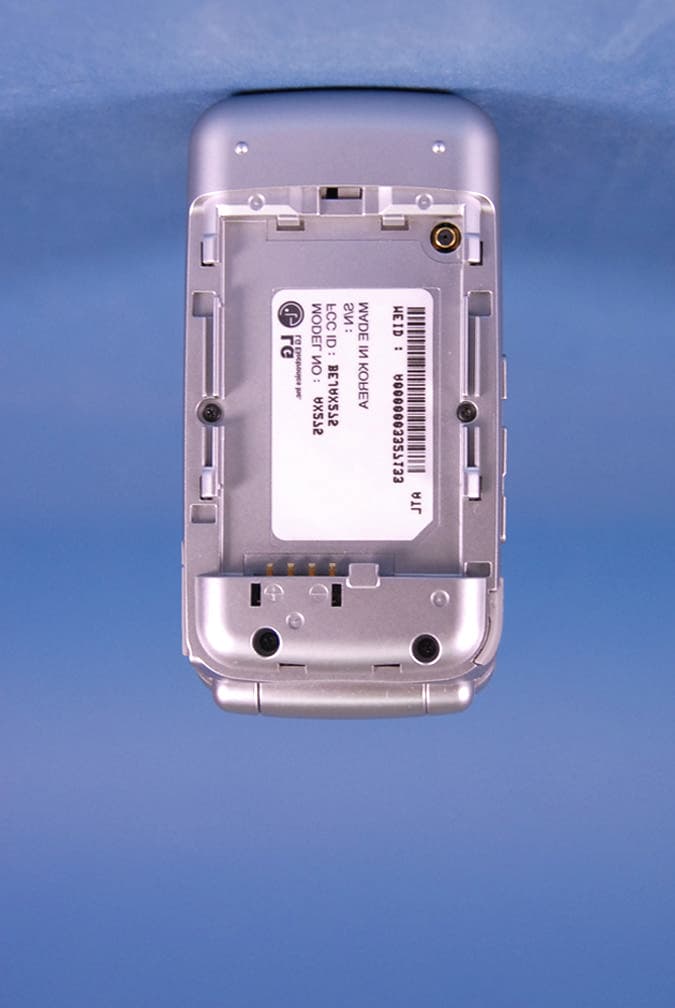
Click to zoom
Application Details
- Equipment Class
- PCE - PCS Licensed Transmitter held to ear
- Date of Grant
- Dec 10, 2006
- Application Purpose
- Original Equipment
- Date of Application
- Dec 07, 2006
- Equipment Note
- Tri-Mode Dual-Band Phone (AMPS/CDMA)
- Frequency Range
- 1851.25000000 - 1908.75000000
- Company
- LG Electronics USA, Inc.
- Country
- United States
Documents & Files
Document Text
Text extracted from the exhibit documents filed with the FCC. Open a document above to read the original.
Users Manual
LIMITED WARRANTY STATEMENT 1. WHAT THIS WARRANTY COVERS: LG offers you a limited warranty that the enclosed subscriber unit and its enclosed accessories will be free from defects in material and workmanship, according to the following terms and conditions: (1) The limited warranty for the product extends for ONE (1) year beginning on the data of purchase of the product. (2) The limited warranty extends on to the original purchaser of the product and is not assignable or transferable to any subsequent purchaser/end user. (3) This warranty is good only to the original purchaser of the product during the warranty period as long as it is in the U.S., including Alaska, Hawaii, U.S. Territories and Canada. (4) The external housing and cosmetic parts shall not be covered under these limited warranty terms. (5) Upon request from LG, the consumer must provide information to reasonably prove the date of purchase. (6) The customer shall bear the cost of shipping the product to the Customer Service Department of LG. LG shall bear the cost of shipping the product back to the consumer after the completion of service under this limited warranty. 2. WHAT THIS WARRANTY DOES NOT COVER: (1) Defects or damages resulting from use of the product in other than its normal and customary manner. (2) Defects or damages from abnormal use, abnormal conditions, improper storage, exposure to moisture or dampness, unauthorized modifications, unauthorized connections, unauthorized repair, misuse, neglect, abuse, accident, alteration, improper installation, or other acts which are not the fault of LG, including damage caused by shipping blown fuses spills of food or liquid. (3) Breakage or damage to antennas unless caused directly by defects in material or workmanship. (4) That the Customer Service Department at LG was net notified by consumer of the alleged defect or malfunction of the product during the applicable limited warranty period. (5) Products which have had the serial number removed or made illegible. (6) The limited warranty is in lieu of all other warranties, express or implied either in fact or by operations law, statutory or otherwise, including, but limited to any implied warranty of marketability or fitness for a particular use. (7) Damage resulting from use of non-LG approved accessories. (8) All plastic surfaces and all other externally exposed parts that are scratched or damaged due to normal customer use. (9) Products operated outside published maximum ratings. 3 (10) Products used or obtained in a rental program. (11) Consumables (such as fuses). 3. STATE LAW RIGHTS: No other express warranty is applicable to this product. THE DURATION OF ANY IMPLIED WARRANTIES, INCLUDING THE IMPLIED WARRANTY OF MARKETABILITY, IS LIMITED TO THE DURATION OF THE EXPRESS WARRANTY HEREIN. LG INFOCOMM INC. SHALL NOT BE LIABLE FOR THE LOSS OF THE USE OF THE PRODUCT, INCONVENIENCE, LOSS OR ANY OTHER DAMAGES, DIRECT OR CONSEQUENTIAL, RISING OUT OF THE USE OF, OR INABILITY TO USE, THIS PRODUCT OR FOR ANY BREACH OF ANY EXPRESS OR IMPLIED WARRANTY, INCLUDING THE IMPLIED WARRANTY OF MARKETABILITY APPLICABLE TO THIS PRODUCT. Some states do not allow the exclusive of imitation of incidental or consequential damages or limitations on how long an implied warranty lasts; so these limitations or exclusions may not apply to you. This warranty gives you specific legal rights and you may also have other rights which vary from state to state. 4. HOW TO GET WARRANTY SERVICE: To obtain warranty service, please call the following web address: www.lgeservice.com 8 For Your Safety Important Information This user guide contains important information on the use and operation of this phone. Please read all the information carefully for optimal performance and to prevent any damage to or misuse of the phone. Any changes or modifications not expressly approved in this user guide could void your warranty for this equipment. Before You Start Safety Instructions WARNING!To reduce the possibility of electric shock, do not expose your phone to high humidity areas, such as the bathroom, swimming pool, etc. Always store your phone away from heat.Never store your phone in settings that may expose it to temperatures less than 32°F or greater than 104°F, such as outside during extreme weather conditions or in your car on a hot day. Exposure to excessive cold or heat will result in malfunction, damage and/or catastrophic failure. Be careful when using your phone near other electronic devices.RF emissions from your mobile phone may affect nearby in adequately shielded electronic equipment. You should consult with manufacturers of any personal medical devices such as pacemakers and hearing aides to determine if they are susceptible to interference from your mobile phone. Turn off your phone in a medical facility or at a gas station. Never place your phone in a microwave oven as this will cause the battery to explode. IMPORTANT!Please read the TIA SAFETY INFORMATION on page 78 before using your phone. Safety Information Read these simple guidelines. Breaking the rules may be dangerous or illegal. Further detailed information is given in this user guide. ]Never use an unapproved battery since this could damage the phone and/or battery and could cause the battery to explode. ]Never place your phone in a microwave oven as it will cause the battery to explode. ]Do not dispose of your battery by fire or with hazardous or flammable materials. ]Make sure that no sharp-edged items come into contact with the battery. There is a risk of this causing a fire. ]Store the battery in a place out of reach of children. ]Be careful that children do not swallow any parts such as rubber plugs (earphone, connection parts of the phone, etc.). This could cause asphyxiation or suffocation. 9 For Your Safety ]Unplug the power cord and charger during lightning storms to avoid electric shock or fire. ]When riding in a car, do not leave your phone or set up the hands-free kit near to the …
Text truncated - open the document above for the full version.
Cover Letter(s)
PCTEST TCB From: ??? [[email protected]] Sent: Friday, December 08, 2006 3:20 AM To: PCTEST TCB Cc: PCTEST - Al Cirwithian; PCTEST - Andrea Zaworski; PCTEST - Channy Park; PCTEST - Gregory Czumak; PCTEST - Randy Ortanez; PCTEST - Steve Liu; 'espark'; [email protected]; '???[JI SUNG. JANG]'; '???'; ??? Subject: Re: Questions Regarding FCC ID: BEJAX275 Attachments: AX275_FCC ID label form and statement.pdf; AX275_User Manual(Page1~5).pdf; DOC Letter for Mass Product(AX275).pdf; TIAEIA-553 compliance statement.pdf; 911 compliance statement.pdf Page 1 of 3 12/8/2006 Hello Mr. Gregory, Please refer to below then, just let me know if you need more. 1. Please submit a statement verifying that the FCC ID label will be visible at the time of purchase (in other words, the EUT will not be sold with the battery already installed). I note that such a statement appears in the Part 15B test report, but nowhere else. -> Please find the attachment.(FCC ID label form & statement) 2. Please submit a "State of Production" letter for the HAC Testing. -> Please find the attachment.(DoC letter) 3. Please submit a statement verifying compliance of AMPS operation with ANSI TIA/EIA 553-A-1999, per Section 22.901(e)(1), as well as a statement verifying compliance with the Section 22.921 Wireless 911 Call Processing requirements for AMPS phones. -> Please find the attachment.(TIA/EIA-553 compliance and 911 compliance statements) 4. Please verify that the statements required by Sections 15.21 and 15.105 will be included in the user’s manual prior to shipment of the EUT. -> I confirm the statements required by Sections 15.21 and 15.105 will be included in the user’s manual prior to shipment of the EUT. Please find the AX275 User manual(Page 1 ~ 5) attached. Should you have any question, please feel free to contact me. Best regards Han. ----- Original Message ----- From: PCTEST TCB To: LGE - Bong Hyo, Han Cc: PCTEST - Al Cirwithian ; PCTEST - Andrea Zaworski ; PCTEST - Channy Park ; PCTEST - Gregory Czumak ; PCTEST - Randy Ortanez ; PCTEST - Steve Liu Sent: Wednesday, November 29, 2006 8:18 AM Sub ject: Questions Regarding FCC ID: BEJAX275 To: Mr. Bong Hyo Han / LG Electronics Inc. From: Mr. Gregory Czumak / PCTEST TCB RE: FCC ID: BEJAX275 Applicant: LG Electronics Inc. Correspondence Reference Number: BEJ0718 Confirmation Number: 11030718-19 Date of Original Email: November 28, 2006 Subject: Request for additional information In regards to your recent TCB application referenced above, we kindly request that you provide the following additional information. 1. Please submit a statement verifying that the FCC ID label will be visible at the time of purchase (in other words, the EUT will not be sold with the battery already installed). I note that such a statement appears in the Part 15B test report, but nowhere else. 2. Please submit a "State of Production" letter for the HAC Testing. 3. Please submit a statement verifying compliance of AMPS operation with ANSI TIA/EIA 553-A-1999, per Section 22.901(e)(1), as well as a statement verifying compliance with the Section 22.921 Wireless 911 Call Processing requirements for AMPS phones. 4. Please verify that the statements required by Sections 15.21 and 15.105 will be included in the user’s manual prior to shipment of the EUT. The items indicated above must be submitted before processing can continue on the above referenced application. Sincerely, Gregory Czumak Quality Manager Senior Certification Engineer PCTEST Engineering Laboratory, Inc. 6660-B Dobbin Road Columbia, MD 21045 410-290-6652 410-290-6654 (Fax) [email protected] This communication and its attachments contain information from PCTEST Engineering Laboratory, Inc., and is intended for the exclusive use of the recipient (s) named above. It may contain information that is confidential and/or legally privileged. Any unauthorized use that may compromise that confidentiality via distribution or disclosure is prohibited. Please notify the sender immediately if you receive this communication in error, and delete it from your computer system. Usage of PCTEST email addresses for non-business related activities is Page 2 of 3 12/8/2006 strictly prohibited. No warranty is made that the e-mail or attachment(s) are free from computer virus or other defect. Thank you. Page 3 of 3 12/8/2006
External Photos
LGE FCC ID: BEJAX275 EUT Photographs © 2006 PCTEST Lab. Tri-Mode Dual-Band Analog/ PCS Phone Model: AX275 LGE FCC ID: BEJAX275 EUT Photographs © 2006 PCTEST Lab. Tri-Mode Dual-Band Analog/ PCS Phone Model: AX275 LGE FCC ID: BEJAX275 EUT Photographs © 2006 PCTEST Lab. Tri-Mode Dual-Band Analog/ PCS Phone Model: AX275 LGE FCC ID: BEJAX275 EUT Photographs © 2006 PCTEST Lab. Tri-Mode Dual-Band Analog/ PCS Phone Model: AX275 LGE FCC ID: BEJAX275 EUT Photographs © 2006 PCTEST Lab. Tri-Mode Dual-Band Analog/ PCS Phone Model: AX275 LGE FCC ID: BEJAX275 EUT Photographs © 2006 PCTEST Lab. Tri-Mode Dual-Band Analog/ PCS Phone Model: AX275
Internal Photos
LGE FCC ID: BEJAX275 EUT Photographs © 2006 PCTEST Lab. Tri-Mode Dual-Band Analog/ PCS Phone Model: AX275 LGE FCC ID: BEJAX275 EUT Photographs © 2006 PCTEST Lab. Tri-Mode Dual-Band Analog/ PCS Phone Model: AX275 LGE FCC ID: BEJAX275 EUT Photographs © 2006 PCTEST Lab. Tri-Mode Dual-Band Analog/ PCS Phone Model: AX275 LGE FCC ID: BEJAX275 EUT Photographs © 2006 PCTEST Lab. Tri-Mode Dual-Band Analog/ PCS Phone Model: AX275 LGE FCC ID: BEJAX275 EUT Photographs © 2006 PCTEST Lab. Tri-Mode Dual-Band Analog/ PCS Phone Model: AX275 LGE FCC ID: BEJAX275 EUT Photographs © 2006 PCTEST Lab. Tri-Mode Dual-Band Analog/ PCS Phone Model: AX275 LGE FCC ID: BEJAX275 EUT Photographs © 2006 PCTEST Lab. Tri-Mode Dual-Band Analog/ PCS Phone Model: AX275 LGE FCC ID: BEJAX275 EUT Photographs © 2006 PCTEST Lab. Tri-Mode Dual-Band Analog/ PCS Phone Model: AX275 LGE FCC ID: BEJAX275 EUT Photographs © 2006 PCTEST Lab. Tri-Mode Dual-Band Analog/ PCS Phone Model: AX275
RF Exposure Info
Reviewed by: FCC ID: BEJAX275 CERTIFICATION REPORT Quality Manager SAR Filename: Test Dates: EUT Type: 0611030970 11/08/06 - 11/10/06 Tri-Mode Dual-Band Analog/PCS Phone Page 1 of 26 © 2006 PCTEST Engineering Laboratory, Inc. REV3.4C* 11/09/06 Applicant Name: Date of Testing: LG Electronics USA 11/08/06 - 11/10/06 1000 Sylvan Avenue Test Site/Location: Englewood Cliffs, NJ 07632 PCTEST Lab, Columbia, MD, USA United States Test Report Serial No.: 0611030970 FCC ID: BEJAX275 APPLICANT: LG ELECTRONICS USA EUT Type: Tri-Mode Dual-Band Analog/PCS Phone Application Type: Certification FCC Rule Part(s): §2.1093; FCC/OET Bulletin 65 Supplement C [July 2001] FCC Classification: Licensed Transmitter Held to Ear (PCE) Model(s): AX275 Tx Frequency: 824.04 - 848.97 MHz (AMPS) 824.70 - 848.31 MHz (Cellular CDMA) 1851.25 - 1908.75 MHz (PCS CDMA) Conducted Power: 26.3 dBm @ AMPS / 24.0 dBm @ CDMA / 23.7 dBm @ PCS Max. SAR Measurement: 1.34 W/kg AMPS Head SAR / 0.902 W/kg AMPS Body SAR 1.03 W/kg CDMA Head SAR / 0.71 W/kg CDMA Body SAR 1.04 W/kg PCS Head SAR / 0.537 W/kg PCS Body SAR Test Device Serial No.: Pre-Production [S/N: SAR #1] This wireless portable device has been shown to be capable of compliance for localized specific absorption rate (SAR) for uncontrolled environment/general population exposure limits specified in ANSI/IEEE Std. C95.1-2005 and had been tested in accordance with the measurement procedures specified in FCC/OET Bulletin 65 Supplement C (2001) and IEEE Std. 1528-2003. I attest to the accuracy of data. All measurements reported herein were performed by me or were made under my supervision and are correct to the best of my knowledge and belief. I assume full responsibility for the completeness of these measurements and vouch for the qualifications of all persons taking them. Grant Conditions: Power output listed is ERP for Part 22 and EIRP for Part 24. SAR compliance for body-worn operating configuration is based on a separation distance of 1.5 cm between the back of the unit and the body of the user. End-users must be informed of the body-worn operating requirements for satisfying RF exposure compliance. Belt clips or holsters not specified in this filing may not contain metallic components. PCTEST certifies that no party to this application has been denied the FCC benefits pursuant to Section 5301 of the Anti-Drug Abuse Act of 1988, 21 U.S.C. 862. PCTEST ENGINEERING LABORATORY, INC. 6660-B Dobbin Road, Columbia, MD 21045 USA Tel. 410.290.6652 / Fax 410.290.6554 http://www.pctestlab.com CERTIFICATE OF COMPLIANCE (SAR EVALUATION) Reviewed by: FCC ID: BEJAX275 CERTIFICATION REPORT Quality Manager SAR Filename: Test Dates: EUT Type: 0611030970 11/08/06 - 11/10/06 Tri-Mode Dual-Band Analog/PCS Phone Page 2 of 26 © 2006 PCTEST Engineering Laboratory, Inc. REV3.4C* 11/09/06 TABLE OF CONTENTS 1 INTRODUCTION ..............................................................................................................................3 2 TEST SITE LOCATION ....................................................................................................................4 3 SAR MEASUREMENT SETUP ........................................................................................................5 4 DASY E-FIELD PROBE SYSTEM ...................................................................................................7 5 PROBE CALIBRATION PROCESS .................................................................................................8 6 PHANTOM AND EQUIVALENT TISSUES.......................................................................................9 7 DOSIMETRIC ASSESSMENT & PHANTOM SPECS....................................................................10 8 DEFINITION OF REFERENCE POINTS .......................................................................................11 9 TEST CONFIGURATION POSITIONS ..........................................................................................12 10 ANSI/IEEE C95.1-2005 RF EXPOSURE LIMITS..........................................................................14 11 MEASUREMENT UNCERTAINTIES .............................................................................................15 12 SYSTEM VERIFICATION...............................................................................................................16 13 FCC 3G MEASUREMENT PROCEDURES – JUNE 2006 ............................................................17 14 SAR DATA SUMMARY ..................................................................................................................19 15 EQUIPMENT LIST..........................................................................................................................23 16 CONCLUSION................................................................................................................................24 17 REFERENCES ...............................................................................................................................25 Reviewed by: FCC ID: BEJAX275 CERTIFICATION REPORT Quality Manager SAR Filename: Test Dates: EUT Type: 0611030970 11/08/06 - 11/10/06 Tri-Mode Dual-Band Analog/PCS Phone Page 3 of 26 © 2006 PCTEST Engineering Laboratory, Inc. REV3.4C* 11/09/06 1 INTRODUCTION The FCC has adopted the guidelines for evaluating the environmental effects of radio frequency (RF) radiation in ET Docket 93-62 on Aug. 6, 1996 to protect the public and workers from the potential hazards of RF emissions due to FCC-regulated portable devices.[1] The safety limits used for the environmental evaluation measurements are based on the criteria published by the American National Standards Institute (ANSI) for localized specific absorption rate (SAR) in IEEE/ANSI C95.1-2005 Standard for Safety Levels with Respect to Human Exposure to Radio Frequency Electromagnetic Fields, 3 kHz to 300 GHz. (c) 1992 by the Institute of Electrical and Electronics Engineers, Inc., New York, New …
Text truncated - open the document above for the full version.
RF Exposure Info
PCTEST ENGINEERING LABORATORY, INC. DUT: LG Electronics AX275; Type: TRI Mode Cellular Phone; Serial: SAR #1 Communication System: AMPS; Frequency: 848.97 MHz;Duty Cycle: 1:1 Medium: 835 Brain (σ = 0.90 mho/m, ε r = 40.44, ρ = 1000 kg/m 3 ) Phantom section: Right Section Test Date: 11-08-2006; Ambient Temp: 23.5 ° C ; Tissue Temp: 21.4 ° C Probe: EX3DV4 - SN3589; ConvF(8.36, 8.36, 8.36); Calibrated: 7/14/2006 Sensor-Surface: 3mm (Mechanical Surface Detection) Electronics: DAE4 Sn704; Calibrated: 6/1/2006 Phantom: SAM Main; Type: SAM 4.0; Serial: TP:1197 Measurement SW: DASY4, V4.7 Build 44; Postprocessing SW: SEMCAD, V1.8 Build 171 Right Head, Touch, Ch.799, Standard Battery, Antenna Internal Area Scan (7x14x1): Measurement grid: dx=15mm, dy=15mm Zoom Scan (5x5x7)/Cube 0: Measurement grid: dx=8mm, dy=8mm, dz=5mm Reference Value = 18.9 V/m Peak SAR (extrapolated) = 3.06 W/kg SAR(1 g) = 1.34 mW/g; SAR(10 g) = 0.965 mW/g 0 dB = 1.81mW/g PCTEST ENGINEERING LABORATORY, INC. DUT: LG Electronics AX275; Type: TRI Mode Cellular Phone; Serial: SAR #1 Communication System: AMPS; Frequency: 836.52 MHz;Duty Cycle: 1:1 Medium: 835 Brain (σ = 0.90 mho/m, ε r = 40.44, ρ = 1000 kg/m 3 ) Phantom section: Right Section Test Date: 11-08-2006; Ambient Temp: 23.5 ° C ; Tissue Temp: 21.4 ° C Probe: EX3DV4 - SN3589; ConvF(8.36, 8.36, 8.36); Calibrated: 7/14/2006 Sensor-Surface: 3mm (Mechanical Surface Detection) Electronics: DAE4 Sn704; Calibrated: 6/1/2006 Phantom: SAM Main; Type: SAM 4.0; Serial: TP:1197 Measurement SW: DASY4, V4.7 Build 44; Postprocessing SW: SEMCAD, V1.8 Build 171 Right Head, Tilt, Ch.384, Standard Battery, Antenna Internal Area Scan (7x14x1): Measurement grid: dx=15mm, dy=15mm Zoom Scan (5x5x7)/Cube 0: Measurement grid: dx=8mm, dy=8mm, dz=5mm Reference Value = 18.8 V/m Peak SAR (extrapolated) = 0.696 W/kg SAR(1 g) = 0.512 mW/g; SAR(10 g) = 0.368 mW/g 0 dB = 0.581mW/g PCTEST ENGINEERING LABORATORY, INC. DUT: LG Electronics AX275; Type: TRI Mode Cellular Phone; Serial: SAR #1 Communication System: AMPS; Frequency: 848.97 MHz;Duty Cycle: 1:1 Medium: 835 Brain (σ = 0.90 mho/m, ε r = 40.44, ρ = 1000 kg/m 3 ) Phantom section: Left Section Test Date: 11-08-2006; Ambient Temp: 23.5 ° C ; Tissue Temp: 21.4 ° C Probe: EX3DV4 - SN3589; ConvF(8.36, 8.36, 8.36); Calibrated: 7/14/2006 Sensor-Surface: 3mm (Mechanical Surface Detection) Electronics: DAE4 Sn704; Calibrated: 6/1/2006 Phantom: SAM Main; Type: SAM 4.0; Serial: TP:1197 Measurement SW: DASY4, V4.7 Build 44; Postprocessing SW: SEMCAD, V1.8 Build 171 Left Head, Touch, Ch.799, Standard Battery, Antenna Internal Area Scan (7x14x1): Measurement grid: dx=15mm, dy=15mm Zoom Scan (5x5x7)/Cube 0: Measurement grid: dx=8mm, dy=8mm, dz=5mm Reference Value = 19.1 V/m Peak SAR (extrapolated) = 1.96 W/kg SAR(1 g) = 1.28 mW/g; SAR(10 g) = 0.857 mW/g 0 dB = 1.47mW/g PCTEST ENGINEERING LABORATORY, INC. DUT: LG Electronics AX275; Type: TRI Mode Cellular Phone; Serial: SAR #1 Communication System: AMPS; Frequency: 836.52 MHz;Duty Cycle: 1:1 Medium: 835 Brain (σ = 0.90 mho/m, ε r = 40.44, ρ = 1000 kg/m 3 ) Phantom section: Left Section Test Date: 11-08-2006; Ambient Temp: 23.5 ° C ; Tissue Temp: 21.4 ° C Probe: EX3DV4 - SN3589; ConvF(8.36, 8.36, 8.36); Calibrated: 7/14/2006 Sensor-Surface: 3mm (Mechanical Surface Detection) Electronics: DAE4 Sn704; Calibrated: 6/1/2006 Phantom: SAM Main; Type: SAM 4.0; Serial: TP:1197 Measurement SW: DASY4, V4.7 Build 44; Postprocessing SW: SEMCAD, V1.8 Build 171 Left Head, Tilt, Ch.384, Standard Battery, Antenna Internal Area Scan (7x14x1): Measurement grid: dx=15mm, dy=15mm Zoom Scan (5x5x7)/Cube 0: Measurement grid: dx=8mm, dy=8mm, dz=5mm Reference Value = 17.3 V/m Peak SAR (extrapolated) = 0.531 W/kg SAR(1 g) = 0.387 mW/g; SAR(10 g) = 0.273 mW/g 0 dB = 0.439mW/g PCTEST ENGINEERING LABORATORY, INC. DUT: LG Electronics AX275; Type: TRI Mode Cellular Phone; Serial: SAR #1 Communication System: Cellular CDMA; Frequency: 848.31 MHz;Duty Cycle: 1:1 Medium: 835 Brain (σ = 0.90 mho/m, ε r = 40.44, ρ = 1000 kg/m 3 ) Phantom section: Right Section Test Date: 11-08-2006; Ambient Temp: 23.5 ° C ; Tissue Temp: 21.4 ° C Probe: EX3DV4 - SN3589; ConvF(8.36, 8.36, 8.36); Calibrated: 7/14/2006 Sensor-Surface: 3mm (Mechanical Surface Detection) Electronics: DAE4 Sn704; Calibrated: 6/1/2006 Phantom: SAM Main; Type: SAM 4.0; Serial: TP:1197 Measurement SW: DASY4, V4.7 Build 44; Postprocessing SW: SEMCAD, V1.8 Build 171 Right Head, Touch, Ch.777, Standard Battery, Antenna Internal Area Scan (7x14x1): Measurement grid: dx=15mm, dy=15mm Zoom Scan (5x5x7)/Cube 0: Measurement grid: dx=8mm, dy=8mm, dz=5mm Reference Value = 14.3 V/m Peak SAR (extrapolated) = 2.14 W/kg SAR(1 g) = 1.03 mW/g; SAR(10 g) = 0.690 mW/g 0 dB = 1.29mW/g PCTEST ENGINEERING LABORATORY, INC. DUT: LG Electronics AX275; Type: TRI Mode Cellular Phone; Serial: SAR #1 Communication System: Cellular CDMA; Frequency: 836.52 MHz;Duty Cycle: 1:1 Medium: 835 Brain (σ = 0.90 mho/m, ε r = 40.44, ρ = 1000 kg/m 3 ) Phantom section: Right Section Test Date: 11 -08-2006; Ambient Temp: 23.5 ° C ; Tissue Temp: 21.4 ° C Probe: EX3DV4 - SN3589; ConvF(8.36, 8.36, 8.36); Calibrated: 7/14/2006 Sensor-Surface: 3mm (Mechanical Surface Detection) Electronics: DAE4 Sn704; Calibrated: 6/1/2006 Phantom: SAM Main; Type: SAM 4.0; Serial: TP:1197 Measurement SW: DASY4, V4.7 Build 44; Postprocessing SW: SEMCAD, V1.8 Build 171 Right Head, Tilt, Ch.384, Standard Battery, Antenna Internal Area Scan (7x14x1): Measurement grid: dx=15mm, dy=15mm Zoom Scan (5x5x7)/Cube 0: Measurement grid: dx=8mm, dy=8mm, dz=5mm Reference Value = 13.7 V/m Peak SAR (extrapolated) = 0.450 W/kg SAR(1 g) = 0.324 mW/g; SAR(10 g) = 0.232 mW/g 0 dB = 0.365mW/g PCTEST ENGINEERING LABORATORY, INC. DUT: LG Electronics AX275; Type: TRI Mode Cellular Phone; Serial: SAR #1 Communication System: Cellular CDMA; Frequency: 848.31 MHz;Duty Cycle: 1:1 Medium: 835 Brain (σ = 0.90 mho/m, ε r = 40.44, ρ = 1000 kg/m 3 ) Phantom section: Left Section Test Date: …
Text truncated - open the document above for the full version.
RF Exposure Info
PCTEST ENGINEERING LABORATORY, INC. DUT: Dipole 835 MHz; Type: D835V2; Serial: 406 Communication System: CW; Frequency: 835 MHz;Duty Cycle: 1:1 Medium: 835 Brain ( σ = 0.90 mho/m, ε r = 40.44, ρ = 1000 kg/m 3 ) Phantom section: Flat Section; Space: 1.5 cm Test Date: 11-08-2006; Ambient Temp: 23.5° C; Tissue Temp: 21.4 °C Probe: EX3DV4 - SN3589; ConvF(8.36, 8.36, 8.36); Calibrated: 7/14/2006 Sensor-Surface: 3mm (Mechanical Surface Detection) Electronics: DAE4 Sn704; Calibrated: 6/1/2006 Phantom: SAM Main; Type: SAM 4.0; Serial: TP:1197 Measurement SW: DASY4, V4.7 Build 44; Postprocessing SW: SEMCAD, V1.8 Build 171 835MHz Dipole Validation Area Scan (7x13x1): Measurement grid: dx=15mm, dy=15mm Zoom Scan (7x7x7)/Cube 0: Measurement grid: dx=5mm, dy=5mm, dz=5mm Input Power = 24.0 dBm (250 mW) SAR(1 g) = 2.49 mW/g; SAR(10 g) = 1.68 mW/g Target SAR(1g) = 2.375 mW/g; Deviation = +4.84 % 0 dB = 2.96mW/g PCTEST ENGINEERING LABORATORY, INC. DUT: Dipole 1900 MHz; Type: D1900V2; SN: 502 Communication System: CW; Frequency: 1900 MHz;Duty Cycle: 1:1 Medium: 1900 Brain ( σ = 1.46 mho/m, ε r = 40.13, ρ = 1000 kg/m 3 ) Phantom section: Flat Section Test Date: 11-09-2006; Ambient Temp: 23.4° C; Tissue Temp: 21.3°C Probe: EX3DV4 - SN3589; ConvF(7.11, 7.11, 7.11); Calibrated: 7/14/2006 Sensor-Surface: 3mm (Mechanical Surface Detection) Electronics: DAE4 Sn704; Calibrated: 6/1/2006 Phantom: SAM Main; Type: SAM 4.0; Serial: TP:1197 Measurement SW: DASY4, V4.7 Build 44; Postprocessing SW: SEMCAD, V1.8 Build 171 1900MHz Dipole Validation Area Scan (5x7x1): Measurement grid: dx=15mm, dy=15mm Zoom Scan (5x5x7)/Cube 0: Measurement grid: dx=8mm, dy=8mm, dz=5mm Input Power = 20.0 dBm (100 mW) SAR(1 g) = 4.13 mW/g; SAR(10 g) = 2.65 mW/g Target SAR(1g) = 3.97 mW/g; Deviation = + 3.77 % 0 dB = 5.37mW/g PCTEST ENGINEERING LABORATORY, INC. DUT: Dipole 835 MHz; Type: D835V2; Serial: 406 Communication System: CW; Frequency: 835 MHz;Duty Cycle: 1:1 Medium: 835 Brain ( σ = 0.90 mho/m, ε r = 40.44, ρ = 1000 kg/m 3 ) Phantom section: Flat Section; Space: 1.5 cm Test Date: 11-10-2006; Ambient Temp: 23.3° C; Tissue Temp: 21.2°C Probe: EX3DV4 - SN3589; ConvF(8.36, 8.36, 8.36); Calibrated: 7/14/2006 Sensor-Surface: 3mm (Mechanical Surface Detection) Electronics: DAE4 Sn704; Calibrated: 6/1/2006 Phantom: SAM Main; Type: SAM 4.0; Serial: TP:1197 Measurement SW: DASY4, V4.7 Build 44; Postprocessing SW: SEMCAD, V1.8 Build 171 835MHz Dipole Validation Area Scan (7x13x1): Measurement grid: dx=15mm, dy=15mm Zoom Scan (7x7x7)/Cube 0: Measurement grid: dx=5mm, dy=5mm, dz=5mm Input Power = 24.0 dBm (250 mW) SAR(1 g) = 2.51 mW/g; SAR(10 g) = 1.64 mW/g Target SAR(1g) = 2.375 mW/g; Deviation = +5.68 % 0 dB = 2.83mW/g PCTEST ENGINEERING LABORATORY, INC. DUT: Dipole 1900 MHz; Type: D1900V2; SN: 502 Communication System: CW; Frequency: 1900 MHz;Duty Cycle: 1:1 Medium: 1900 Brain ( σ = 1.46 mho/m, ε r = 40.13, ρ = 1000 kg/m 3 ) Phantom section: Flat Section Test Date: 11-10-2006; Ambient Temp: 23.3° C; Tissue Temp: 21.2°C Probe: EX3DV4 - SN3589; ConvF(7.11, 7.11, 7.11); Calibrated: 7/14/2006 Sensor-Surface: 3mm (Mechanical Surface Detection) Electronics: DAE4 Sn704; Calibrated: 6/1/2006 Phantom: SAM Main; Type: SAM 4.0; Serial: TP:1197 Measurement SW: DASY4, V4.7 Build 44; Postprocessing SW: SEMCAD, V1.8 Build 171 1900MHz Dipole Validation Area Scan (5x7x1): Measurement grid: dx=15mm, dy=15mm Zoom Scan (5x5x7)/Cube 0: Measurement grid: dx=8mm, dy=8mm, dz=5mm Input Power = 20.0 dBm (100 mW) SAR(1 g) = 4.15 mW/g; SAR(10 g) = 2.71 mW/g Target SAR(1g) = 3.97 mW/g; Deviation = + 4.53 % 0 dB = 5.43mW/g
Test Report
Reviewed by: FCC ID: BEJAX275 FCC Pt. 22/24 CDMA MEASUREMENT REPORT (CERTIFICATION) Quality Manager Test Report S/N: Test Dates: EUT Type: 0611030972 November 16-20, 2006 Tri-Mode Dual-Band Analog/ PCS Phone (AMPS/ CDMA) Page 1 of 53 © 2006 PCTEST Engineering Laboratory, Inc. Ver. 4.1 Applicant Name: Date of Testing: LG Electronics USA November 16-20, 2006 1000 Sylvan Avenue Test Site/Location: Englewood Cliffs, NJ 07632 PCTEST Lab., Columbia, MD, USA United States Test Report Serial No.: 0611030972 FCC ID: BEJAX275 APPLICANT: LG ELECTRONICS USA Application Type: Certification FCC Classification: PCS Licensed Transmitter Held to Ear (PCE) FCC Rule Part(s): §2; §22(H), §24(E) EUT Type: Tri-Mode Dual-Band Analog/ PCS Phone (AMPS/ CDMA) Model(s): AX275 Tx Frequency Range: 824.04 - 848.97MHz (AMPS) / 824.70 - 848.31MHz (Cell. CDMA) / 1851.25 - 1908.75MHz (PCS CDMA) Rx Frequency Range: 869.04 - 893.97MHz (AMPS) / 869.70 - 893.31MHz (Cell. CDMA) / 1931.25 - 1988.75MHz (PCS CDMA) Max. RF Output Power: 0.456 W ERP AMPS (26.585 dBm) / 0.301 W ERP Cell. CDMA (24.783 dBm) / 0.299 W EIRP PCS CDMA (24.751 dBm) Max. SAR Measurement: 1.340 W/kg AMPS Head SAR, 0.902 W/kg AMPS Body SAR / 1.030 W/kg Cell. CDMA Head SAR, 0.710 W/kg Cell. CDMA Body SAR / 1.040 W/kg PCS CDMA Head SAR, 0.537 W/kg PCS CDMA Body SAR Emission Designator(s): 40K0F8W, 40K0F1D (AMPS) / 1M27F9W (CDMA) / 1M26F9W (PCS) Test Device Serial No.: identical prototype [S/N: A0000003327130] Class II Permissive Change: Original Grant Date: This equipment has been shown to be capable of compliance with the applicable technical standards as indicated in the measurement report and was tested in accordance with the measurement procedures specified in §2.947. I attest to the accuracy of data. All measurements reported herein were performed by me or were made under my supervision and are correct to the best of my knowledge and belief. I assume full responsibility for the completeness of these measurements and vouch for the qualifications of all persons taking them. Grant Conditions: Power output listed is ERP for Part 22 and EIRP for Part 24. SAR compliance for body-worn operating configuration is based on a separation distance of 1.5cm between the back of the unit and the body of the user. End-users must be informed of the body-worn operating requirements for satisfying RF exposure compliance. Belt clips or holsters may not contain metallic components. PCTEST certifies that no party to this appl…
Text truncated - open the document above for the full version.
Contact Information
Applicant
David Kim(Team leader, LGEUS NA Policy & Regulatory Affairs)
Technical Contact
PCTEST Engineering Lab., Inc.Randy Ortanez
[email protected]410-290-6652
6660-B Dobbin Road · Columbia, Maryland · United States
Test Firm
PCTEST Engineering Laboratory, Inc.Randy Ortanez
Technical Specifications
| # | Rule Parts | Frequency Range | Power Output | Emission | Tolerance |
|---|---|---|---|---|---|
| 4 | 24E | 1.85 GHz - 1.91 GHz | 299.00 mW | 1M26F9W | 2.5 ppm |
Other Applications from LG Electronics USA, Inc.
BEJTFHOBINI1F1
Jan 08, 2025Telematics
Equipment Class
DTS - Digital Transmission SystemBEJNT-16Z90TS
Oct 02, 2024Notebook Computer
Equipment Class
DSS - Part 15 Spread Spectrum TransmitterBEJSP-PEW8
Sep 26, 2024Stylus Pen
Equipment Class
DCD - Part 15 Low Power Transmitter Below 1705 kHzBEJ-RSMV2
Sep 24, 2024RF Module
Equipment Class
FDS - Part 15 Field Disturbance SensorBEJTFBMEIBN3EU
Sep 24, 2024Telematics
Equipment Class
NII - Unlicensed National Information Infrastructure TX