BEJLG320GCellular/PCS GSM Phone
LG Electronics USA, Inc.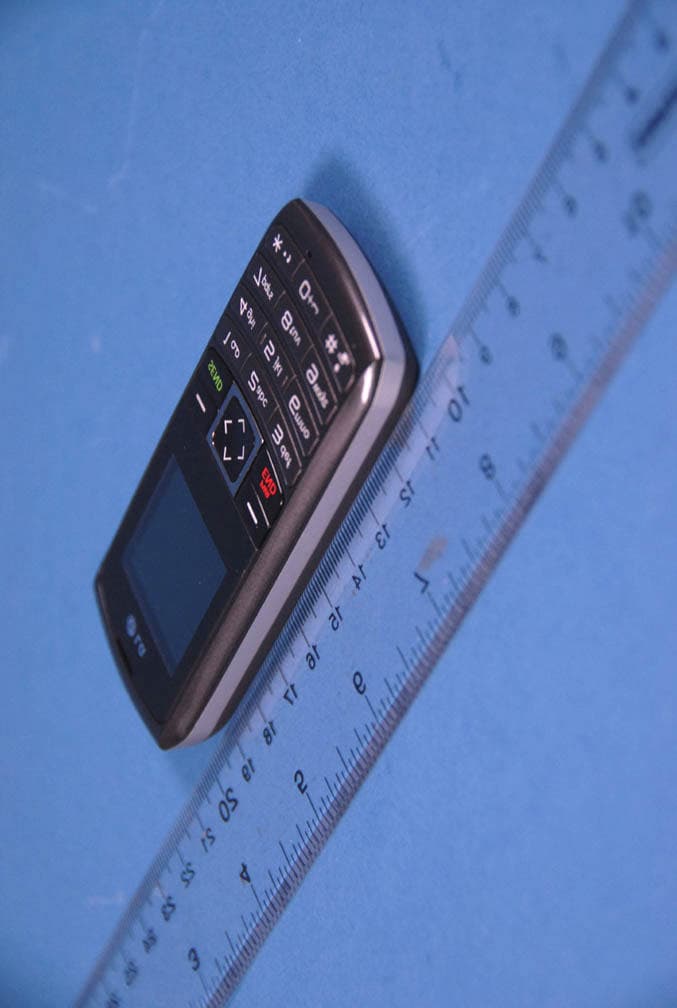
Click to zoom
Application Details
- Equipment Class
- PCE - PCS Licensed Transmitter held to ear
- Date of Grant
- Apr 05, 2010
- Application Purpose
- Original Equipment
- Date of Application
- Apr 05, 2010
- Equipment Note
- Cellular/PCS GSM Phone
- Frequency Range
- 1850.20000000 - 1909.80000000
- Company
- LG Electronics USA, Inc.
- Country
- United States
Documents & Files
Document Text
Text extracted from the exhibit documents filed with the FCC. Open a document above to read the original.
Users Manual
Part 15.21 statement " Change or Modifications that are not expressly approved by the manufacturer could void the user's authority to operate the equipment. “ Part 15.105 statement This equipment has been tested and found to comply with the limits for a class B digital device, pursuant to Part 15 of the FCC Rules. These limits are designed to provide reasonable protection against harmful interference in a residential installation. This equipment generates uses and can radiate radio frequency energy and, if not installed and used in accordance with the instructions, may cause harmful interference to radio communications. However, there is no guarantee that interference will not occur in a particular installation. If this equipment does cause harmful interference or television reception, which can be determined by turning the equipment off and on, the user is encouraged to try to correct the interference by one or more of the following measures: - Reorient or relocate the receiving antenna. - Increase the separation between the equipment and receiver. - Connect the equipment into an outlet on a circuit different from that to which the receiver is connected. - Consult the dealer or an experienced radio/TV technician for help. Part 15 Class B Compliance This device and its accessories comply with part15 of FCC rules. Operation is subject to the following two conditions: (1) This device & its accessories may not cause harmful interference. (2) This device & its accessories must accept any interference received, including interference that may cause undesired operation. Body-worn Operation This device has been tested for typical body-worn operations with the distance of 0.79inches (2.0cm) from the user’s body. To comply with FCC RF exposure requirements, a minimum separation distance of 0.79inches(2.0cm) must be maintained from the user's body. Additionally, Belt clips, holsters & other body-worn accessories may not contain metallic components. 5 When you enter this menu a calendar will be displayed. The square cursor is used to locate a particular day. The orange colored date indicates schedule(s) on for that day. This function helps to remind you of the schedule. The phone will sound an alarm tone if it has been set for a specific schedule item. For changing the day, month, and year. ]View:Allows you to view the selected schedule. ]Delete:Allows you to delete the selected schedule. ]New Schedule:You can edit a maximum of 30 characters and create up to 30 notes. ]Edit:Allows you to edit the selected schedule. ]Calendar:Allows you to consult the calendar. ]Scheduler Tone:The phone can sound an alarm tone when the scheduled date for an event has been reached with this option. ]All Schedules:Shows the notes that are set for all days. Use the up/down navigation keys to browse through the note lists. You can use the menu by press the right soft key [Options]. ]Go to Date:Allows you to jump to a specific date. ]Delete Old:Delete the past schedule event that has already been notified. ]Delete All:Delete all schedules. You are asked to confirm your action. Calendar KeyDescription up/down navigation keyWeekly left/right navigation keyDaily key /keyYearly key/keyMonthly keyToday 6 Contact ListMenu 2.1 This menu allows you to save and manage contact address information. The Contact List functions allow you to add a new address or search saved contact addresses by name. New ContactMenu 2.2 This menu allows you to add a new contact address. You can input contact address information including name, phone numbers, email addresses, group information items, and memos. Caller Groups Menu 2.3 1. Every Group list will be displayed: Family, VIP, Friends, Colleague, Group 1, Group 2, No Group. 2. Select the Group name that you want to manage by pressing the right soft key [Options]. 3. You will see the following submenus under the predefined groups except for the No Groupgroup. • Members List:Allows you to see the member list in the group. • Group Ringtone:Allows you to select the ringtone to be used when you receive a voice phone call from a person in the group. • Group Icon:Allows you to select the graphic icon to be displayed on the group of Group List. • Add Member:Allows you to add the member to the group. • Remove Member:Allows you to delete the member in the group. • Rename:Allows you to assign a name to the group. Speed Dia l ListMenu 2.4 This menu allows you to configure the speed dial numbers. You can select a number as a speed dial from 2 to 9. You can configure speed dial numbers for any of the 8 numbers for a specific contact address. Address Book 7 Copy All Contacts Menu 2.5 This menu allows you to copy all of the information from your SmartChip, e.g. name, handset number, etc., to your handset vice versa. If a name is duplicated during the copying operation, the information is also duplicated. ]SmartChip to Handset:You can copy the entry from the SmartChip card to the handset memory. ]Handset to SmartChip:You can copy the entry from the handset memory to the SmartChip card (not all the data will be copied). Delete All ContactsMenu 2.6 You can delete all entries in the SmartChipand the Handset. Press the[END] key to return to standby mode. My Business CardMenu 2.7 This feature allows you to create your own name card. You can key in the Name, Mobile number, Office number, Fax number and E-mail address. ]Edit:Allows you to write a new message or edit the selected name card. ]Send Via Text Message:Sends the selected name card by SMS. ]Delete:Allows you to delete the selected name card. My NumbersMenu 2.8 Allows you to display your phone number in the SmartChip card. Address Book 8 Games 9 Set the alarm to ring at a specific time. In the Set Alarm Clockmenu, the following options are available: On:Set the time(hour and minute) for activating the alarm. 1.Enter the menu. 2.Select [On] by pressing the right/left navigation keys. 3.If you want to set the time for activating the alarm, press the down navigat…
Text truncated - open the document above for the full version.
Cover Letter(s)
From: 한봉효 Sent: Tuesday, October 06, 2009 1:21 PM To: PCTEST TCB/CB Subject: Re : Question Regarding FCC ID: BEJLG320G Hello PCTEST TCB, Thank you for your e-mail. Please see below response and find the attachments. Thank you! Best regards Han. ---------- Original Message ---------- From : "PCTEST TCB/CB" To : LGE - Bong Hyo Date : 09/10/6 11:54:50 Subject : Question Regarding FCC ID: BEJLG320G To: Mr. Bong Hyo Han / LG Electronics Inc. From: Mr. Gregory Czumak / PCTEST TCB RE: FCC ID: BEJLG320G Applicant: LG Electronics Inc. Correspondence Reference Number: BEJ91164 Confirmation Number: 909251164 Date of Original Email: October 5, 2009 Subject: Request for additional information In regards to your recent TCB application referenced above, we kindly request that you provide the following additional information. 1. The operational description describes a TX VCO (1648-1910 MHz) on p.5 and a VCO (2520-2985 MHz) on p.7, neither of which are shown on the block diagram. Please revise the block diagram accordingly. → The Main VCO is 26MHz and this is mentioned on the block diagram. 2. There is an apparent typo at the bottom of p.5/8 of the tune-up procedure: the power tolerance shows -1.5 dB – max conducted pwr - -0.5 dB. Should this be -1.5 dB to +0.5 dB? If so, please revise. → Please find the attachment. 3. On p. 46/48 of the user’s manual, max SAR levels are listed that do not correspond to the actual measured values. Please either corrects these values, or else removes all reference to the measured SAR levels from the manual, and resubmits it. → Please find the attachment. 4. The operational description lists GPRS Class 12 capability, but the SAR report indicates no GPRS at all. Please confirm that GPRS is not implemented in the EUT. → The chipset supports GPRS but the DUT doesn't support GPRS. 5. In the SAR report, 2 out of 3 PCS band channels list output power levels in the lower half of the acceptable power range shown in the tune-up procedure. The FCC requires that the levels of tested units be closer to the upper end of the acceptable range. Please either re-tests a unit with higher output levels, or else revises the acceptable power range listed in the tune-up procedure. → Steve, please check this comment asap. The item indicated above must be submitted before processing can continue on the above referenced application. Sincerely, Gregory Czumak Senior Certification Engineer Quality Manager PCTEST Engineering Laboratory, Inc. 6660-B Dobbin Road Columbia, MD 21045 410-290-6652 410-290-6654 (Fax) [email protected] This communication and its attachments contain information from PCTEST Engineering Laboratory, Inc., and is intended for the exclusive use of the recipient (s) named above. It may contain information that is confidential and/or legally privileged. Any unauthorized use that may compromise that confidentiality via distribution or disclosure is prohibited. Please notify the sender immediately if you receive this communication in error, and delete it from your computer system. Usage of PCTEST email addresses for non-business related activities is strictly prohibited. No warranty is made that the e-mail or attachment(s) are free from computer virus or other defect. Thank you.
Cover Letter(s)
LG Electronics USA 1000 Sylvan Avenue Englewood Cliffs, NJ 07632 Date: August 28, 2009 Federa l Communications Commission Authorization and Evaluation Division 7435 Oakland Mills Road, Columbia, MD 21046 RE: Request of Confidentiality for FCC ID: BEJ LG320G Equipment Cl ass: PCE: PCS Licensed Transmitter held to ear To Whom It May Concern: Pursuant to Sections 0.457 and 0.459 of the Commission’s Rules (CFR 47), and Section 552 (b) (4) of the Freedom of Information Act, LG Electronics USA hereby requests confidentiality and treatment of certain information accompanying this application. The materials contain trade secrets and proprietary information not customarily released to the public. The public disclosure of these matters might be harmful to the Applicant and provide unjustified benefits to its competitors. We are also hereby request Short-Term Confidentiality for 180 days after the grant as outlined in Public Notice DA 04-1705. This provision will give LG Electronics USA temporary confidentiality of commercially sensitive information prior to product release. The requested Permanent and Temporary Confidential exhibits are listed as follows: PERMANENT AND SHORT-TERM CONFIDENTIAL LIST Exhibit Description 1 Block Diagram 2 Operational Descriptions 3 Parts Lists and Tune-Up Procedure PERMANENT 4 Schematics 5 External Photos 6 Internal Photos 7 Test-Setup Photos SHORT-TERM 8 User’s Manual The Applicant understands that pursuant to Rule 0.457, disclosure of this application and all accompanying documentations, where applicable, will not be made public before the date of the Grant for this application. Sincerely, Jae Cheon(J.C.) Lee General Manage r LG Electronics USA LG Electronics USA 1000 Sylvan Avenue Englewood Cliffs, NJ 07632
External Photos
LG ELECTRONICS USA FCC ID: BEJLG320G Model: LG320G External Photos EUT Type: 850/1900 GSM Phone Page 1 of 4 © 2009 PCTEST Engineering Laboratory Inc. EXTERNAL PHOTOGRAPHS LG ELECTRONICS USA FCC ID: BEJLG320G Model: LG320G External Photos EUT Type: 850/1900 GSM Phone Page 2 of 4 © 2009 PCTEST Engineering Laboratory Inc. LG ELECTRONICS USA FCC ID: BEJLG320G Model: LG320G External Photos EUT Type: 850/1900 GSM Phone Page 3 of 4 © 2009 PCTEST Engineering Laboratory Inc. LG ELECTRONICS USA FCC ID: BEJLG320G Model: LG320G External Photos EUT Type: 850/1900 GSM Phone Page 4 of 4 © 2009 PCTEST Engineering Laboratory Inc.
ID Label/Location Info
Model No: LG320G F CC ID : BEJ LG320G S/N :ttGGr LG Electronics Inc. LGE CONFIDENTIAL
Internal Photos
LG ELECTRONICS USA FCC ID: BEJLG320G Model: LG320G Internal Photos EUT Type: 850/1900 GSM Phone Page 1 of 9 © 2009 PCTEST Engineering Laboratory Inc. INTERNAL PHOTOGRAPHS LG ELECTRONICS USA FCC ID: BEJLG320G Model: LG320G Internal Photos EUT Type: 850/1900 GSM Phone Page 2 of 9 © 2009 PCTEST Engineering Laboratory Inc. LG ELECTRONICS USA FCC ID: BEJLG320G Model: LG320G Internal Photos EUT Type: 850/1900 GSM Phone Page 3 of 9 © 2009 PCTEST Engineering Laboratory Inc. LG ELECTRONICS USA FCC ID: BEJLG320G Model: LG320G Internal Photos EUT Type: 850/1900 GSM Phone Page 4 of 9 © 2009 PCTEST Engineering Laboratory Inc. LG ELECTRONICS USA FCC ID: BEJLG320G Model: LG320G Internal Photos EUT Type: 850/1900 GSM Phone Page 5 of 9 © 2009 PCTEST Engineering Laboratory Inc. LG ELECTRONICS USA FCC ID: BEJLG320G Model: LG320G Internal Photos EUT Type: 850/1900 GSM Phone Page 6 of 9 © 2009 PCTEST Engineering Laboratory Inc. LG ELECTRONICS USA FCC ID: BEJLG320G Model: LG320G Internal Photos EUT Type: 850/1900 GSM Phone Page 7 of 9 © 2009 PCTEST Engineering Laboratory Inc. LG ELECTRONICS USA FCC ID: BEJLG320G Model: LG320G Internal Photos EUT Type: 850/1900 GSM Phone Page 8 of 9 © 2009 PCTEST Engineering Laboratory Inc. LG ELECTRONICS USA FCC ID: BEJLG320G Model: LG320G Internal Photos EUT Type: 850/1900 GSM Phone Page 9 of 9 © 2009 PCTEST Engineering Laboratory Inc.
RF Exposure Info
Reviewed by: FCC ID: BEJLG320G CERTIFICATION REPORT Quality Manager Filename: Test Dates: EUT Type: 0909251786.BEJ 09/28/09 - 09/30/09 850/1900 GSM Phone Page 1 of 26 © 2009 PCTEST Engineering Laboratory, Inc. REV 6.6 07/13/09 Applicant Name: Date of Testing: LG Electronics USA 09/28/09 - 09/30/09 1000 Sylvan Avenue Test Site/Location: Englewood Cliffs, NJ 07632 PCTEST Lab, Columbia, MD, USA United States Test Report Serial No.: 0909251786.BEJ FCC ID: BEJLG320G APPLICANT: LG ELECTRONICS USA EUT Type: 850/1900 GSM Phone Application Type: Certification FCC Rule Part(s): CFR §2.1093; FCC/OET Bulletin 65 Supplement C [July 2001] FCC Classification: Licensed Transmitter Held to Ear (PCE) Model(s): LG320G Tx Frequency: 824.20 - 848.80 MHz (Cellular GSM) 1850.20 - 1909.80 MHz (GSM PCS) Conducted Power: 32.84 dBm GSM 850 29.68 dBm GSM 1900 Max. SAR Measurement: 0.77 W/kg GSM 850 Head SAR / 0.34 W/kg GSM 850 Body SAR 0.86 W/kg GSM 1900 Head SAR / 0.22 W/kg GSM 1900 Body SAR Test Device Serial No.: Pre-Production [S/N: SAR #1] This wireless portable device has been shown to be capable of compliance for localized specific absorption rate (SAR) for uncontrolled environment/general population exposure limits specified in ANSI/IEEE C95.1-1992 and has been tested in accordance with the measurement procedures specified in FCC/OET Bulletin 65 Supplement C (2001), IEEE 1528-2003 and in applicable Industry Canada Radio Standards Specifications (RSS); for North American frequency bands only. I attest to the accuracy of data. All measurements reported herein were performed by me or were made under my supervision and are correct to the best of my knowledge and belief. I assume full responsibility for the completeness of these measurements and vouch for the qualifications of all persons taking them. Test results reported herein relate only to the item(s) tested. PCTEST certifies that no party to this application has been denied the FCC benefits pursuant to Section 5301 of the Anti-Drug Abuse Act of 1988, 21 U.S.C. 862. PCTEST ENGINEERING LABORATORY, INC. 6660-B Dobbin Road, Columbia, MD 21045 USA Tel. 410.290.6652 / Fax 410.290.6554 http://www.pctestlab.com CERTIFICATE OF COMPLIANCE (SAR EVALUATION) Reviewed by: FCC ID: BEJLG320G CERTIFICATION REPORT Quality Manager Filename: Test Dates: EUT Type: 0909251786.BEJ 09/28/09 - 09/30/09 850/1900 GSM Phone Page 2 of 26 © 2009 PCTEST Engineering Laboratory, Inc. REV 6.6 07/13/09 TABLE OF CONTENTS 1 INTRODUCTION ............................................................................................................................. 3 2 TEST SITE LOCATION ................................................................................................................... 4 3 SAR MEASUREMENT SETUP ....................................................................................................... 5 4 DASY E-FIELD PROBE SYSTEM .................................................................................................. 7 5 PROBE CALIBRATION PROCESS ................................................................................................ 8 6 PHANTOM AND EQUIVALENT TISSUES...................................................................................... 9 7 DOSIMETRIC ASSESSMENT & PHANTOM SPECS................................................................... 10 8 DEFINITION OF REFERENCE POINTS ...................................................................................... 11 9 TEST CONFIGURATION POSITIONS ......................................................................................... 12 10 RF EXPOSURE LIMITS ................................................................................................................ 15 11 MEASUREMENT UNCERTAINTIES ............................................................................................ 16 12 SYSTEM VERIFICATION.............................................................................................................. 17 13 FCC 3G MEASUREMENT PROCEDURES .................................................................................. 19 14 SAR DATA SUMMARY ................................................................................................................. 20 15 EQUIPMENT LIST......................................................................................................................... 23 16 CONCLUSION............................................................................................................................... 24 17 REFERENCES .............................................................................................................................. 25 Reviewed by: FCC ID: BEJLG320G CERTIFICATION REPORT Quality Manager Filename: Test Dates: EUT Type: 0909251786.BEJ 09/28/09 - 09/30/09 850/1900 GSM Phone Page 3 of 26 © 2009 PCTEST Engineering Laboratory, Inc. REV 6.6 07/13/09 1 INTRODUCTION The FCC has adopted the guidelines for evaluating the environmental effects of radio frequency (RF) radiation in ET Docket 93-62 on Aug. 6, 1996 to protect the public and workers from the potential hazards of RF emissions due to FCC-regulated portable devices.[1] The safety limits used for the environmental evaluation measurements are based on the criteria published by the American National Standards Institute (ANSI) for localized specific absorption rate (SAR) in IEEE/ANSI C95.1-1992 Standard for Safety Levels with Respect to Human Exposure to Radio Frequency Electromagnetic Fields, 3 kHz to 300 GHz[2] and Health Canada RF Exposure Guidelines Safety Code 6 [26]. The measurement procedure described in IEEE/ANSI C95.3-2002 Recommended Practice for the Measurement of Potentially Hazardous Electromagnetic Fields - RF and Microwave [3] is used for guidance in measuring the Specific Absorption Rate (SAR) due to the RF radiation exposure from the Equipment Under Test (EUT). These criteria for SAR evaluation are similar to those recommended by the Internati…
Text truncated - open the document above for the full version.
Test Report
Reviewed by: FCC ID: BEJLG320G FCC Pt. 22/24 GSM MEASUREMENT REPORT (CERTIFICATION) Quality Manager Test Report S/N: Test Dates: EUT Type: 0909251787.BEJ September 28-29, 2009 850/1900 GSM Phone Page 1 of 34 © 2009 PCTEST Engineering Laboratory, Inc. REV 7.2G 05/13/2009 Applicant Name: Date of Testing: LG Electronics USA September 28-29, 2009 1000 Sylvan Avenue Test Site/Location: Englewood Cliffs, NJ 07632 PCTEST Lab, Columbia, MD, USA United States Test Report Serial No.: 0909251787.BEJ FCC ID: BEJLG320G APPLICANT: LG ELECTRONICS USA Application Type: Certification FCC Classification: PCS Licensed Transmitter Held to Ear (PCE) FCC Rule Part(s): §2; §22(H), §24(E) EUT Type: 850/1900 GSM Phone Model(s): LG320G Tx Frequency Range: 824.20 - 848.80MHz (Cell. GSM) / 1850.20 - 1909.80MHz (PCS GSM) Max. RF Output Power: 1.346 W ERP Cell. GSM (31.29 dBm) / 1.663 W EIRP PCS GSM (32.21 dBm) Emission Designator(s): 247KGXW (Cellular GSM), 245KGXW (PCS GSM) Test Device Serial No.: identical prototype [S/N: N/A] This equipment has been shown to be capable of compliance with the applicable technical standards as indicated in the measurement report and was tested in accordance with the measurement procedures specified in §2.947. Test results reported herein relate only to the item(s) tested. I attest to the accuracy of data. All measurements reported herein were performed by me or were made under my supervision and are correct to the best of my knowledge and belief. I assume full responsibility for the completeness of these measurements and vouch for the qualifications of all persons taking them. Grant Conditions: Power output listed is ERP for Part 22 and EIRP for Part 24. PCTEST certifies that no party to this application has been denied the FCC benefits pursuant to Section 5301 of the Anti-Drug Abuse Act of 1988, 21 U.S.C. 862. PCTEST ENGINEERING LABORATORY, INC. 6660-B Dobbin Road, Columbia, MD 21045 USA Tel. 410.290.6652 / Fax 410.290.6554 http://www.pctestlab.com CERTIFICATE OF COMPLIANCE FCC Part 22 & 24 Certification Reviewed by: FCC ID: BEJLG320G FCC Pt. 22/24 GSM MEASUREMENT REPORT (CERTIFICATION) Quality Manager Test Report S/N: Test Dates: EUT Type: 0909251787.BEJ September 28-29, 2009 850/1900 GSM Phone Page 2 of 34 © 2009 PCTEST Engineering Laboratory, Inc. REV 7.2G 05/13/2009 TABLE OF CONTENTS FCC PART 22 & 24 MEASUREMENT REPORT............................................................................3 1.0 INTRODUCTION....................................................................................................................4 1.1 SCOPE..................................................................................................................................................................4 1.2 TESTING FACILITY............................................................................................................................................4 2.0 PRODUCT INFORMATION.....................................................................................................5 2.1 EQUIPMENT DESCRIPTION...........................................................................................................................5 2.2 EMI SUPPRESSION DEVICE(S)/MODIFICATIONS....................................................................................5 2.3 LABELING REQUIREMENTS...........................................................................................................................5 3.0 DESCRIPTION OF TESTS......................................................................................................6 3.1 MEASUREMENT PROCEDURE......................................................................................................................6 3.2 OCCUPIED BANDWIDTH EMISSION LIMITS...............................................................................................6 3.3 CELLULAR - BASE FREQUENCY BLOCKS.................................................................................................6 3.4 CELLULAR - MOBILE FREQUENCY BLOCKS.............................................................................................7 3.5 PCS - BASE FREQUENCY BLOCKS..............................................................................................................7 3.6 PCS - MOBILE FREQUENCY BLOCKS.........................................................................................................7 3.7 SPURIOUS AND HARMONIC EMISSIONS AT ANTENNA TERMINAL...................................................7 3.8 RADIATED SPURIOUS AND HARMONIC EMISSIONS..............................................................................8 3.9 PEAK-AVERAGE RATIO...................................................................................................................................8 3.10 FREQUENCY STABILITY / TEMPERATURE VARIATION.........................................................................8 4.0 TEST EQUIPMENT CALIBRATION DATA...............................................................................9 5.0 SAMPLE CALCULATIONS....................................................................................................10 6.0 TEST RESULTS...................................................................................................................11 6.1 SUMMARY.........................................................................................................................................................11 6.2 EFFECTIVE RADIATED POWER OUTPUT DATA.....................................................................................12 6.3 EQUIVALENT ISOTROPIC RADIATED POWER OUTPUT DATA..........................................................13 6.4 CELLULAR GSM RADIATED MEASUREMENTS......................................................................................14 6.5 PCS GSM RADIATED MEASUREMENTS...................................................................................................17 6.6 CELLULAR …
Text truncated - open the document above for the full version.
Test Setup Photos
FCC ID: BEJLG320G Model: LG320G SAR Test Setup Photos 850/1900 GSM Phone Page 1 of 5 © 2009 PCTEST REV 3.1 07/13/09 1. Right Head SAR 2. Left Head SAR FCC ID: BEJLG320G Model: LG320G SAR Test Setup Photos 850/1900 GSM Phone Page 2 of 5 © 2009 PCTEST REV 3.1 07/13/09 3. Right Head SAR, Cheek Touch 4. Right Head SAR, 15 ̊ Tilt FCC ID: BEJLG320G Model: LG320G SAR Test Setup Photos 850/1900 GSM Phone Page 3 of 5 © 2009 PCTEST REV 3.1 07/13/09 5. Left Head SAR, Cheek Touch 6. Left Head SAR, 15 ̊ Tilt
Test Setup Photos
FCC ID: BEJLG320G Model: LG320G SAR Test Setup Photos 850/1900 GSM Phone Page 4 of 5 © 2009 PCTEST REV 3.1 07/13/09 7. Body SAR, Back Side 8. Body SAR, Back Side with 2.0 cm Space FCC ID: BEJLG320G Model: LG320G SAR Test Setup Photos 850/1900 GSM Phone Page 5 of 5 © 2009 PCTEST REV 3.1 07/13/09 9. Body SAR, Front Side 10. Body SAR, Front Side with 2.0 cm Space
Test Setup Photos
LG ELECTRONICS USA FCC ID: BEJLG320G Model: LG320G Test Set-Up Photos EUT Type: 850/1900 GSM Phone Page 1 of 2 © 2009 PCTEST Engineering Laboratory Inc. TEST SETUP PHOTOGRAPHS LG ELECTRONICS USA FCC ID: BEJLG320G Model: LG320G Test Set-Up Photos EUT Type: 850/1900 GSM Phone Page 2 of 2 © 2009 PCTEST Engineering Laboratory Inc.
Contact Information
Applicant
David Kim(Team leader, LGEUS NA Policy & Regulatory Affairs)
Technical Contact
PCTEST Engineering Laboratory, Inc.Randy Ortanez
[email protected]410-290-6652
6660-B Dobbin Road · Columbia, Maryland · United States
Test Firm
PCTEST Engineering Laboratory, Inc.Randy Ortanez
Technical Specifications
| # | Rule Parts | Frequency Range | Power Output | Emission | Tolerance |
|---|---|---|---|---|---|
| 2 | 24E | 1.85 GHz - 1.91 GHz | 1.663 W | 245KGXW | 2.5 ppm |
Other Applications from LG Electronics USA, Inc.
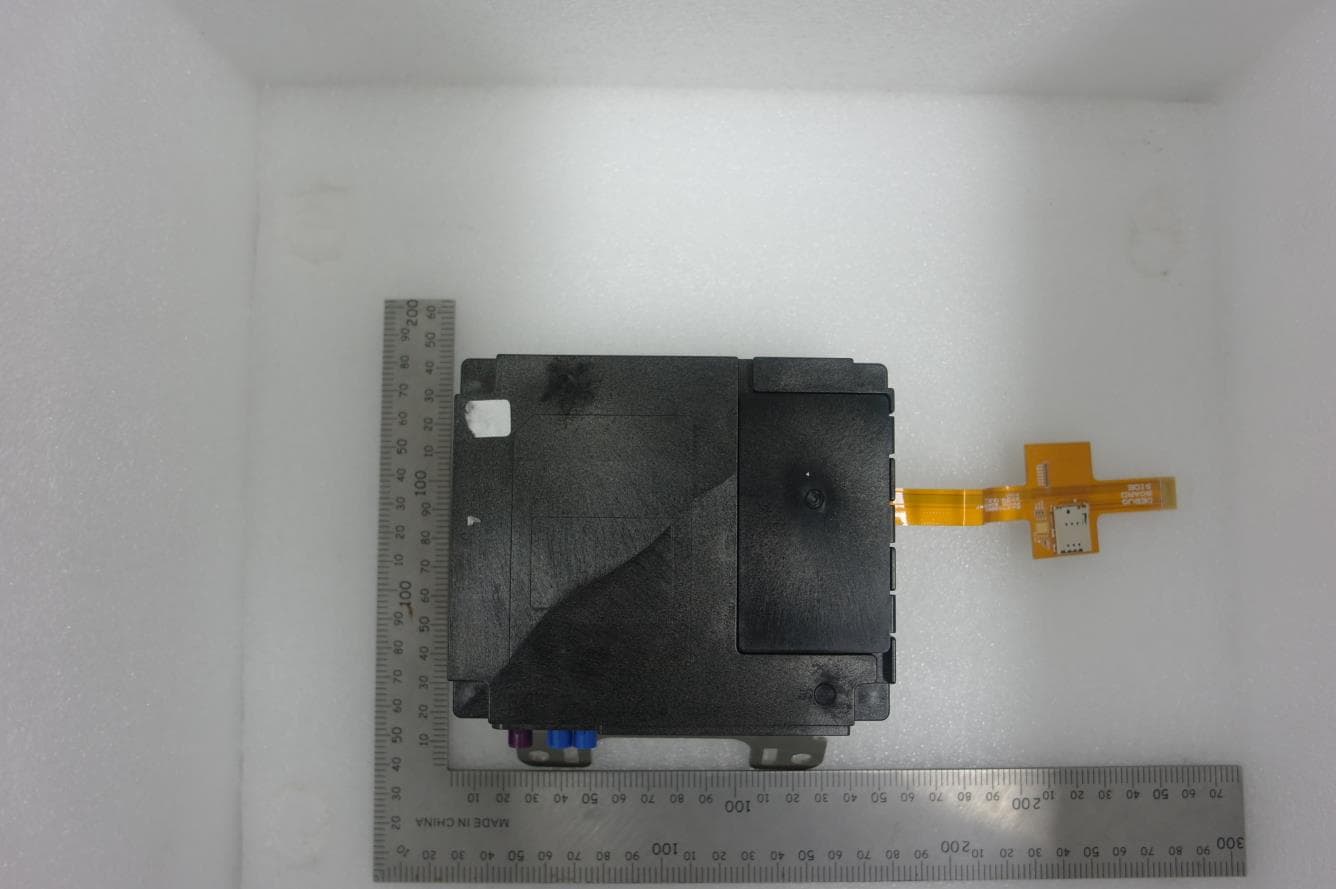
BEJTFHOBINI1F1
Jan 08, 2025Telematics
Equipment Class
DTS - Digital Transmission SystemBEJNT-16Z90TS
Oct 02, 2024Notebook Computer
Equipment Class
DSS - Part 15 Spread Spectrum TransmitterBEJSP-PEW8
Sep 26, 2024Stylus Pen
Equipment Class
DCD - Part 15 Low Power Transmitter Below 1705 kHzBEJ-RSMV2
Sep 24, 2024RF Module
Equipment Class
FDS - Part 15 Field Disturbance SensorBEJTFBMEIBN3EU
Sep 24, 2024Telematics
Equipment Class
NII - Unlicensed National Information Infrastructure TX