BEJNT-11TC50QNotebook Computer
LG Electronics USA, Inc.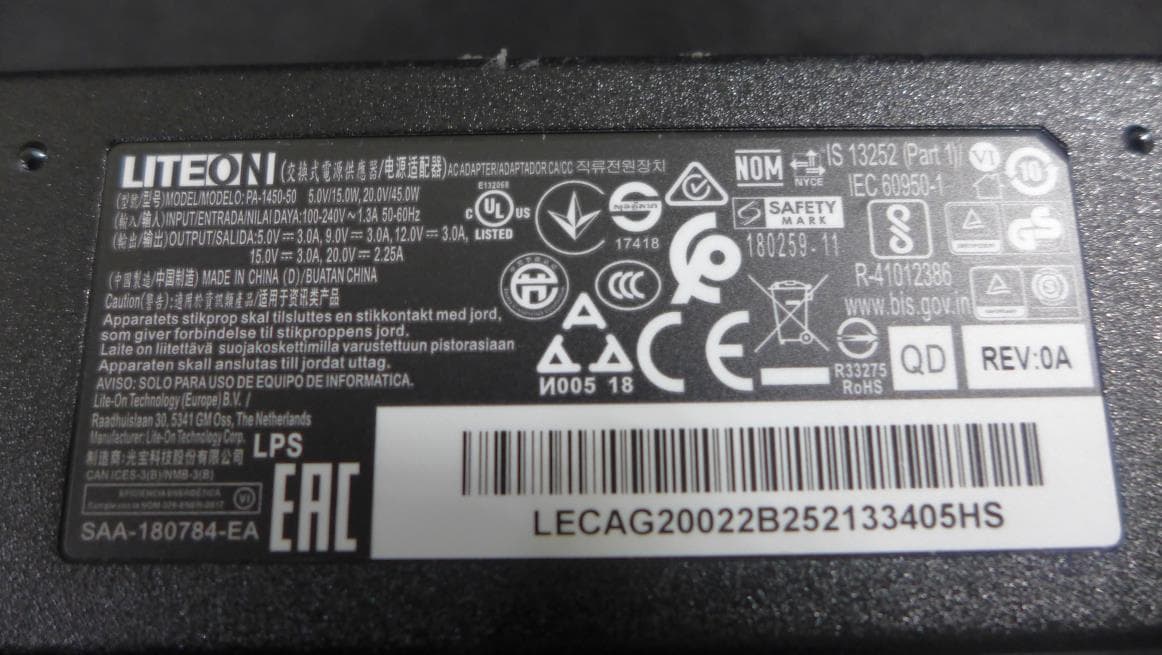
Click to zoom
Application Details
- Equipment Class
- DTS - Digital Transmission System
- Date of Grant
- Feb 15, 2023
- Application Purpose
- Original Equipment
- Date of Application
- Feb 12, 2023
- Equipment Note
- Notebook Computer
- Frequency Range
- 2412.00000000 - 2472.00000000
- Company
- LG Electronics USA, Inc.
- Country
- United States
Documents & Files
Document Text
Text extracted from the exhibit documents filed with the FCC. Open a document above to read the original.
Users Manual
Education Chromebook USER MANUAL September 2021 ENGLISH Convertible Touch series 2 CONTENTS BEFORE YOU START ...........................................................................................4 Make sure you have everything ...................................................................................4 Familiarize yourself with the computer .......................................................................5 OPENING THE DISPLAY PANEL ..............................................................................5 FRONT OVERVIEW...................................................................................................6 LEFT SIDE OVERVIEW .............................................................................................8 RIGHT SIDE OVERVIEW ........................................................................................10 BACK OVERVIEW ...................................................................................................11 BOTTOM OVERVIEW..............................................................................................11 GETTING STARTED ............................................................................................12 Power Sources .............................................................................................................12 CONNECTING THE POWER ADAPTERS ..............................................................12 RECHARGING THE BATTERY ...............................................................................13 Starting Your Chromebook .........................................................................................14 POWER ON .............................................................................................................14 POWER OFF ...........................................................................................................14 USING SHORTCUT KEYS ......................................................................................15 USING THE TOUCHPAD .........................................................................................17 USING THE MULTI-TOUCH SCREEN ....................................................................19 POSITIONING YOUR CHROMEBOOK ...................................................................21 CHARGING YOUR STYLUS ...................................................................................21 TROUBLESHOOTING .........................................................................................22 Identifying the Problem ...............................................................................................22 REGULATORY NOTICES ....................................................................................23 SPECIFICATIONS ................................................................................................29 3 TAKING CARE OF YOUR COMPUTER •To prevent possible overheating of the computer’s processor, make sure you don’t block the openings provided for ventilation. •DO NOT press or touch the display panel. •DO NOT place on uneven or unstable work surfaces. •DO NOT use your computer under harsh conditions. •DO NOT place or drop objects on the computer and DO NOT apply heavy pressure on it. •DO NOT subject the computer to magnetic fields. •DO NOT expose to direct sunlight. •DO NOT use or store in extreme temperatures. •Avoid sudden changes in temperature or humidity by keeping it away from A/C and heating vents. •Avoid exposing the computer to rain or moisture. •DO NOT place near fire or other sources of heat. •DO NOT tamper with the batteries. Keep them away from younger children. •DO NOT expose to dust and/or corrosive chemicals. •DO NOT slam your computer shut and never pick up or hold your computer by the display. •DO NOT spray water or any other cleaning fluids directly on the display. •If you are traveling with your computer, remember to carry it as hand luggage. Do not check it in as baggage. 4 BEFORE YOU START Make sure you have everything When you receive your Chromebook, unpack it carefully, and check to make sure you have all the items listed below. For a pre-configured model you should have the following: • Chromebook • AC adapter with power cord • User Manual • Wacom stylus 9013EMR (optional) Once you have checked and confirmed that your Chromebook system is complete, read through the following pages to learn about all of your Chromebook components. Depending on the model you purchased, the actual appearance of your Chromebook may vary from that shown in this manual. NOTE BEFORE YOU START 5 Familiarize yourself with the computer OPENING THE DISPLAY PANEL To open the display panel, simply lift the lid up. When closing it, be sure not to slam it shut. BEFORE YOU START 6 FRONT OVERVIEW The following is an overview of the front of the Chromebook. Touch Panel Keyboard Touchpad Pointing Device Camera Microphones Camera LED Camera LED Camera Microphones The built-in microphones allow for the reception and transmission of voice and/or other audio data to any program capable of accepting such input. Camera LED The camera LED indicates when the camera is enabled or disabled. Camera The built-in HD camera allows you to snap a photo or create a video chat or video conference with just a click. BEFORE YOU START 7 Touch Panel The display panel is a color touch panel with back lighting for the display of text and graphics. Touchpad Pointing Device The touchpad pointing device is a mouse-like cursor control with a touch sensitive movement pad. Keyboard The standard Chromebook keyboard is equipped with special shortcut keys which help you access common actions quickly. It is also spill resistant to offer users protection from accidental liquid spills. BEFORE YOU START 8 LEFT SIDE OVERVIEW The following is a brief description of the left side of the Chromebook. Kensington Lock Slot USB 3.0 Port USB Type C Port Suspend/Power On Button Volume Buttons USB 3.0 Port The USB 3.0 port allow…
Text truncated - open the document above for the full version.
Attestation Statements
Covered Equipment Certification Attestation Letter DATE Telefication B.V., Dept. FCC TCB Wilmersdorf 50 7327 AC Apeldoorn The Netherlands ATTN.: Reviewing Engineer FCC ID: BEJNT-11TC50Q LG Electronics USA (“the applicant”) certifies that the equipment for which authorization is sought is not “covered” equipment prohibited from receiving an equipment authorization pursuant to section 2.903 of the FCC rules. Note: If the equipment for which the applicant seeks authorization is produced by any of the entities identified on the current Covered List, the applicant should include an explanation on why the equipment is not “covered” equipment. LG Electronics USA (“the applicant”) certifies that, as of the date of the filing of the application, the applicant is not identified on the Covered List as an entity producing “covered” equipment. Signed: Printed name: Hee Jae Cho Title: Director, Regulatory and Environmental Affairs Company Name: LG Electronics USA Date: 2/7/2023
Attestation Statements
* the applicant must designate a contact located in the United States for purposes of acting as the applicant’s agent for service of process, regardless of whether the applicant is a domestic or foreign entity. An applicant located in the United States may designate itself as the agent for service of process. U.S. Agent Designation for Service of Process - Certification Attestation Letter 2/7/2023 Telefication B.V., Dept. FCC TCB Wilmersdorf 50 7327 AC Apeldoorn The Netherlands ATTN.: Reviewing Engineer FCC ID: BEJNT-11TC50Q Per section 2.911(d)(7) of the FCC rules, LG Electronics USA (“the applicant”) certifies that the equipment for which authorization is sought is designated to the following U.S. Designated agent* for service of process: Company Name: LG Electronics USA Physical U.S. Company Address: 111 Sylvan Avenue, North Building, Englewood Cliffs, New Jersey 07632, United States Agent name: Hee Jae Cho Agent Email Address: [email protected] The above contact person accepts the obligation for service of process. The applicant accepts to maintain an agent for no less than one year after the grantee has terminated all marketing and importation or the conclusion of any Commission-related proceeding involving the equipment. Applicant Signed: Designated Agent Signed: (Required, if different to Applicant): Signed: Signed: Printed name: Hee Jae Cho Printed name: Click here to enter text. Title: Director, Regulatory and Environmental Affairs Title: Click here to enter text. Company Name: LG Electronics USA Company Name: Click here to enter text. Date: 2/7/2023 Date: Click here to enter a date.
Cover Letter(s)
Declaration of Authorization We Name: LG Electronics USA Address: 111 Sylvan Avenue, North Building, Englewood Cliffs, City: New Jersey 07632 Country: United States Declare that: Name Representative of agent: Ms, Grace Chen Agent Company name: BTL Inc. Address: 4F,No.18, Ln. 171, Sec. 2, Jiuzong Rd., Neihu Dist.114, City: Taipei Country Taiwan is authorized to apply for Certification of the following product(s): FCC ID: BEJNT-11TC50Q Product description: Notebook Computer Type designation: 11TC50Q Trademark: LG Validity/ expiry date: From Jan/2/2023 to Jan/1/2024 on our behalf. Date: Feb, 10, 2023 Name: Hee Jae Cho Function: Director, Regulatory and Environmental Affairs Signature: Notes: (1): Required for FCC application (2): For FCC it must be the Grantee Code “owner” or the authorized agent.
Cover Letter(s)
To: Telefication B.V., Dept. FCC TCB Wilmersdorf 50 7327 AC Apeldoorn The Netherlands Subject: Request for confidentiality FCC ID: BEJNT-11TC50Q Reference number: ###### Dear FCC TCB, 1. Long-Term Confidentiality Pursuant to 47 CFR Section 0.459(a) & (b), we hereby requests non-disclosure and confidential treatment of the following materials submitted in support of FCC certification application: Bill(s) of Material Block Diagrams Operational Description Schematic Diagrams Tune-up Procedure Above materials contain secrets, proprietary and technical information, which would customarily be guarded from competitors under 47 CFR, section 0.457(d)(2). Disclosure or publication or any portion of this company confidential material to other parties could cause substantial competitive harm and provide unjustified benefits for competitors. 2. Short-Term Confidentiality (STC) Pursuant to Public Notice DA 04-1705 of the Commission’s policy, in order to comply with the marketing regulations in 47 CFR §2.803 and the importation rules in 47 CFR §2.1204, a pplicant hereby requests Short-Term Confidential treatment of the following materials (See notes below): Internal Photos User’s Manual Test Set-up Photos External Photo Justification: The applicant requests the exhibits selected above as short term confidential be withheld from public view for a period of 180 days from the date of the Grant of Equipment Authorization and prior to marketing. This is to avoid premature release of sensitive information prior to marketing or release of the product to the public. Date: Jan, 2, 2023 Name and signature of applicant: Hee Jae Cho Notes: 1) A document or type of document can only have ONE type of confidentiality! 2) Short-Term confidentiality is in principle for 45 days from date of grant; it can be extended max 3 times (total time 180 days max.)! The planned date should stated in the RF731 application form. 3) FCC must be informed when marketing begins earlier. 4) Release takes place automatically thus extension must be requested in time. Telefication does not remind you of this! 5) Request for extension or for release must be received by Telefication at least 7 days before date of actual marketing or before expiration of the STC period
Cover Letter(s)
Federal Communications Commission Authorization and Evaluation Division ATTESTATION FCC ID: BEJNT-11TC50Q IC: 2703H-11TC50Q Product description: Notebook Computer We, LG Electronics USA hereby declare that the [Notebook Computer, 11TC50Q] for being in compliance with KDB 594280 is disabled following bands/ functions by software 1. Ad-hoc and Wi-Fi Direct are disable on the U-NII bands 2A & 2C. 2. When the client in non-associated mode, this device is client software and associated drivers will not initiate any transmission on DFS frequencies without initiation by a master. Without DFS detection function capability. This includes transmissions for beacon ad-hoc peer-to-peer modes. 3. This device is not able to operate in non-US/IC frequencies, and without country code selection function. Best regards Date: Feb, 7, 2023 Name: Hee Jae Cho Function: Director, Regulatory and Environmental Affairs
External Photos
Appendix No.: EP-2212T065-1 APPENDIX-EUT PHOTOS Project No.: 2212T065 Page 1 of 24 Appendix No.: EP-2212T065-1 APPENDIX-EUT PHOTOS Project No.: 2212T065 Page 2 of 24 Appendix No.: EP-2212T065-1 APPENDIX-EUT PHOTOS Project No.: 2212T065 Page 3 of 24 Appendix No.: EP-2212T065-1 APPENDIX-EUT PHOTOS Project No.: 2212T065 Page 4 of 24 Appendix No.: EP-2212T065-1 APPENDIX-EUT PHOTOS Project No.: 2212T065 Page 5 of 24 Appendix No.: EP-2212T065-1 APPENDIX-EUT PHOTOS Project No.: 2212T065 Page 6 of 24 Appendix No.: EP-2212T065-1 APPENDIX-EUT PHOTOS Project No.: 2212T065 Page 7 of 24 Appendix No.: EP-2212T065-1 APPENDIX-EUT PHOTOS Project No.: 2212T065 Page 8 of 24
Internal Photos
Appendix No.: EP-2212T065-1 APPENDIX-EUT PHOTOS Project No.: 2212T065 Page 9 of 24 Appendix No.: EP-2212T065-1 APPENDIX-EUT PHOTOS Project No.: 2212T065 Page 10 of 24 Appendix No.: EP-2212T065-1 APPENDIX-EUT PHOTOS Project No.: 2212T065 Page 11 of 24 Appendix No.: EP-2212T065-1 APPENDIX-EUT PHOTOS Project No.: 2212T065 Page 12 of 24 Appendix No.: EP-2212T065-1 APPENDIX-EUT PHOTOS Project No.: 2212T065 Page 13 of 24 Appendix No.: EP-2212T065-1 APPENDIX-EUT PHOTOS Project No.: 2212T065 Page 14 of 24 Appendix No.: EP-2212T065-1 APPENDIX-EUT PHOTOS Project No.: 2212T065 Page 15 of 24 Appendix No.: EP-2212T065-1 APPENDIX-EUT PHOTOS Project No.: 2212T065 Page 16 of 24 Appendix No.: EP-2212T065-1 APPENDIX-EUT PHOTOS Project No.: 2212T065 Page 17 of 24 Appendix No.: EP-2212T065-1 APPENDIX-EUT PHOTOS Project No.: 2212T065 Page 18 of 24 Appendix No.: EP-2212T065-1 APPENDIX-EUT PHOTOS Project No.: 2212T065 Page 19 of 24 Appendix No.: EP-2212T065-1 APPENDIX-EUT PHOTOS Project No.: 2212T065 Page 20 of 24 Appendix No.: EP-2212T065-1 APPENDIX-EUT PHOTOS Project No.: 2212T065 Page 21 of 24 Appendix No.: EP-2212T065-1 APPENDIX-EUT PHOTOS Project No.: 2212T065 Page 22 of 24 Appendix No.: EP-2212T065-1 APPENDIX-EUT PHOTOS Project No.: 2212T065 Page 23 of 24 Appendix No.: EP-2212T065-1 APPENDIX-EUT PHOTOS Project No.: 2212T065 Page 24 of 24
RF Exposure Info
Project No.: 2212T065 Page 1 of 50 Report Version: R00 Re port No.: BTL-FCC SAR-1-2212T065 FCC SAR Test Report FCC ID: BEJNT-11TC50Q Report No. : BTL-FCC SAR-1-2212T065 Equipment : Notebook Computer Model Name : 11TC50Q Brand Name : LG Applicant : LG Electronics USA Address : 111 Sylvan Avenue, North Building, Englewood Cliffs, New Jersey 07632, United States Radio Function : WLAN 2.4G, WLAN 5G, Bluetooth Standard(s) : KDB447498 D04 Interim General RF Exposure Guidance v01 KDB248227 D01 802.11 Wi-Fi SAR v02r02 KDB865664 D01 SAR measurement 100 MHz to 6 GHz v01r04 KDB865664 D02 SAR Reporting v01r02 KDB616217 D04 SAR for laptop and Tablets Date of Receipt : Dec. 14, 2022 Date of Test : Dec. 23, 2022 ~ Dec. 26, 2022 Issued Date : Dec. 29, 2022 The above equipment has been tested and found in compliance with the requirement of the above standards by BTL Inc. Prepared by : Jerry Chuang, Supervisor Approved by : Peter Chen, Assistant Manager BTL Inc. No.18, Ln. 171, Sec. 2, Jiuzong Rd., Neihu Dist., Taipei City 114, Taiwan Tel: +886-2-2657-3299 Fax: +886-2-2657-3331 Web: www.newbtl.com Project No.: 2212T065 Page 2 of 50 Report Version: R00 Re port No.: BTL-FCC SAR-1-2212T065 Declaration BTL represents to the client that testing is done in accordance with standard procedures as applicable and that test instruments used has been calibrated with standards traceable to international standard(s) and/or national standard(s). BTL's reports apply only to the specific samples tested under conditions. It is manufacture’s responsibility to ensure that additional production units of this model are manufactured with the identical electrical and mechanical components. BTL shall have no liability for any declarations, inferences or generalizations drawn by the client or others from BTL issued reports. This report is the confidential property of the client. As a mutual protection to the clients, the public and ourselves, the test report shall not be reproduced, except in full, without our written approval. BTL’s laboratory quality assurance procedures are in compliance with the ISO/IEC 17025 requirements, and accredited by the conformity assessment authorities listed in this test report. BTL is not responsible for the sampling stage, so the results only apply to the sample as received. The information, data and test plan are provided by manufacturer which may affect the validity of results, so it is manufacturer’s responsibility to ensure that the apparatus meets the essential requirements of applied standards and in all the possible configurations as representative of its intended use. Limitation For the use of the authority's logo is limited unless the Test Standard(s)/Scope(s)/Item(s) mentioned in this test report is (are) included in the conformity assessment authorities acceptance respective. Please note that the measurement uncertainty is provided for informational purpose only and are not use in determining the Pass/Fail results. Project No.: 2212T065 Page 3 of 50 Report Version: R00 Re port No.: BTL-FCC SAR-1-2212T065 Table of Contents Page 1. GENERAL INFORMATION 6 1.1. GENERAL DESCRIPTION OF EUT 6 2. RF EMISSIONS MEASUREMENT 7 2.1. TEST FACILITY 7 2.2. MEASUREMENT UNCERTAINTY 7 2.3. WLAN ANTENNA INFORMATION: 9 2.4. THE MAXIMUM SAR-1G VALUES 10 2.5. LABORATORY ENVIRONMENT 10 2.6. MAIN TEST INSTRUMENTS 11 3. SAR MEASUREMENTS SYSTEM CONFIGURATION 12 3.1. SAR MEASUREMENT SETUP 12 3.1.1. TEST SETUP LAYOUT 12 3.2. DASY5 E-FIELD PROBE SYSTEM 13 3.2.1. EX3DV4 PROBE SPECIFICATION 13 3.2.2. E-FIELD PROBE CALIBRATION 14 3.2.3. OTHER TEST EQUIPMENT 15 3.2.4. SCANNING PROCEDURE 16 3.2.5. DATA STORAGE AND EVALUATION 17 3.2.6. DATA EVALUATION BY SEMCAD 18 4. TISSUE-EQUIVALENT LIQUID 20 4.1. TISSUE-EQUIVALENT LIQUID INGREDIENTS 20 4.2. TISSUE-EQUIVALENT LIQUID PROPERTIES 21 5. SYSTEM CHECK 22 5.1. DESCRIPTION OF SYSTEM CHECK 22 5.2. DESCRIPTION OF SYSTEM CHECK 23 6. OPERATIONAL CONDITIONS DURING TEST 24 6.1. GENERAL DESCRIPTION OF TEST PROCEDURES 24 6.2. TEST POSITION ANTENNA LOCATION 24 6.3. TEST POSITION OF PORTABLE DEVICES 25 6.4. TEST POSITION 26 6.4.1. BODY TEST CONFIGURATION 26 7. SAR MEASUREMENT VARIABILITY AND UNCERTAINTY 30 7.1. SAR MEASUREMENT VARIABILITY 30 7.2. TEST CONFIGURATION 31 7.2.1. WIFI TEST CONFIGURATION 31 7.2.2. WLAN 2.4G SAR TEST REQUIREMENTS 33 7.2.3. WLAN 5G SAR TEST REQUIREMENTS 33 7.2.4. OFDM TRANSMISSION MODE AND SAR TEST CHANNEL SELECTION 34 7.2.5. INITIAL TEST CONFIGURATION PROCEDURE 34 8. CONDUCTED POWER RESULTS 35 8.1. CONDUCTED POWER MEASUREMENT RESULTS OF BLUETOOTH 35 Project No.: 2212T065 Page 4 of 50 Report Version: R00 Re port No.: BTL-FCC SAR-1-2212T065 8.2. CONDUCTED POWER MEASUREMENTS OF WI-FI 2.4GHZ BAND 36 8.3. CONDUCTED POWER MEASUREMENTS OF 5G UNII_1 37 8.4. CONDUCTED POWER MEASUREMENTS OF 5G UNII_2A 38 8.5. CONDUCTED POWER MEASUREMENTS OF 5G UNII_2C 39 8.6. CONDUCTED POWER MEASUREMENTS OF 5G UNII_3 40 8.7. SARTEST RESULTS 41 9. SAR TEST RESULTS 42 9.1. BODY SAR TEST RESULTS 42 10. SIMULTANEOUS TRANSMISSION CONDITIONS 44 10.1. STAND-ALONE SAR TEST EXCLUSION 44 10.2. SIMULTANEOUS TRANSMISSION CONDITIONS 45 10.3. ESTIMATED SAR FOR SIMULTANEOUS TRANSMISSION SAR ANALYSIS 46 10.3.1. ESTIMATED SAR FOR BLUETOOTH 46 10.4. SIMULTANEOUS TRANSMISSION CONDITIONS 48 11. TEST LAYOUT 49 Project No.: 2212T065 Page 5 of 50 Report Version: R00 Re port No.: BTL-FCC SAR-1-2212T065 REPORT ISSUED HISTORY Report Version Description Issued Date R00 Original Issue. 2022/12/29 Project No.: 2212T065 Page 6 of 50 Report Version: R00 Re port No.: BTL-FCC SAR-1-2212T065 1 GENERAL INFORMATION 1.1 GENERAL DESCRIPTION OF EUT Equipment Notebook Computer Model Name 11TC50Q Brand Name LG Power Source DC voltage supplied from External Power Supply.(Lite-On / PA-1450-50) Power Rating Brand: Lite-On M/N: PA-1450-50 I/P: 100-240V~1.3A 50-60Hz O/P: 5.0V 3.0A, 9.0V 3.0A, 12.0V, 3.0A, 15.0V, 3.0A, 20.0V 2.25A Battery Information Brand / Model: Simplo / SQU-2101 Model Rating: 6250mAh / 48.12Wh Rating Voltage: 7.7V …
Text truncated - open the document above for the full version.
RF Exposure Info
Test Laboratory: BTL Date: 2022/12/26 System Check_H2450 Frequency: 2450 MHz; Duty Cycle: 1:1; Room Ambient Temperature: 23.0°C; Liquid Temperature: 22.0°C Medium parameters used (interpolated): f = 2450 MHz; σ = 1.869 S/m; ε r = 40.794; ρ = 1000 kg/m 3 DASY5 Configuration: - Area Scan Setting: Find Secondary Maximum Within: 2.0 dB and with a peak SAR value greater than 0.0012W/kg - Electronics: DAE4 Sn1486; Calibrated: 2022/5/31 - Probe: EX3DV4 - SN7369; ConvF(7.61, 7.61, 7.61) @ 2450 MHz; Calibrated: 2022/5/28 - Sensor-Surface: 1.4mm (Mechanical Surface Detection (Locations From Previous Scan Used)), Sensor-Surface: 1.4mm (Mechanical Surface Detection) - Phantom: ELI V5.0 (20deg probe tilt); Type: QD OVA 002 AA; Serial: 1240 Configuration/Pin=250mW /Area Scan (9x9x1): Measurement grid: dx=12mm, dy=12mm Maximum value of SAR (measured) = 21.2 W/kg Configuration/Pin=250mW /Zoom Scan (7x7x7)/Cube 0: Measurement grid: dx=5mm, dy=5mm, dz=5mm Reference Value = 111.8 V/m; Power Drift = -0.01 dB Peak SAR (extrapolated) = 25.6 W/kg SAR(1 g) = 12.7 W/kg; SAR(10 g) = 5.95 W/kg Smallest distance from peaks to all points 3 dB below = 9.5 mm Ratio of SAR at M2 to SAR at M1 = 49.5% Maximum value of SAR (measured) = 20.9 W/kg 0 dB = 21.2 W/kg = 13.27 dBW/kg Test Laboratory: BTL Date: 2022/12/23 System Check_H5G Frequency: 5200 MHz; Duty Cycle: 1:1; Room Ambient Temperature: 23.0°C; Liquid Temperature: 22.0°C Medium parameters used: f = 5200 MHz; σ = 4.563 S/m; ε r = 35.937; ρ = 1000 kg/m 3 DASY5 Configuration: - Area Scan Setting: Find Secondary Maximum Within: 2.0 dB and with a peak SAR value greater than 0.0012W/kg - Electronics: DAE4 Sn1486; Calibrated: 2022/5/31 - Probe: EX3DV4 - SN7369; ConvF(5.2, 5.2, 5.2) @ 5200 MHz; Calibrated: 2022/5/28 - Sensor-Surface: 1.4mm (Mechanical Surface Detection) - Phantom: ELI V5.0 (20deg probe tilt); Type: QD OVA 002 AA; Serial: 1240 Configuration/Pin=100mW/Area Scan (10x10x1): Measurement grid: dx=10mm, dy=10mm Maximum value of SAR (measured) = 14.0 W/kg Configuration/Pin=100mW/Zoom Scan (7x7x12)/Cube 0: Measurement grid: dx=4mm, dy=4mm, dz=2mm Reference Value = 63.10 V/m; Power Drift = -0.18 dB Peak SAR (extrapolated) = 31.7 W/kg SAR(1 g) = 7.71 W/kg; SAR(10 g) = 2.2 W/kg Smallest distance from peaks to all points 3 dB below = 7.2 mm Ratio of SAR at M2 to SAR at M1 = 53.6% Maximum value of SAR (measured) = 19.5 W/kg 0 dB = 19.5 W/kg = 12.90 dBW/kg Test Laboratory: BTL Date: 2022/12/23 System Check_H5G Frequency: 5300 MHz; Duty Cycle: 1:1; Room Ambient Temperature: 23.0°C; Liquid Temperature: 22.0°C Medium parameters used: f = 5300 MHz; σ = 4.678 S/m; ε r = 35.77; ρ = 1000 kg/m 3 DASY5 Configuration: - Area Scan Setting: Find Secondary Maximum Within: 2.0 dB and with a peak SAR value greater than 0.0012W/kg - Electronics: DAE4 Sn1486; Calibrated: 2022/5/31 - Probe: EX3DV4 - SN7369; ConvF(5.04, 5.04, 5.04) @ 5300 MHz; Calibrated: 2022/5/28 - Sensor-Surface: 1.4mm (Mechanical Surface Detection (Locations From Previous Scan Used)), Sensor-Surface: 1.4mm (Mechanical Surface Detection) - Phantom: ELI V5.0 (20deg probe tilt); Type: QD OVA 002 AA; Serial: 1240 Configuration/Pin=100mW /Area Scan (10x10x1): Measurement grid: dx=10mm, dy=10mm Maximum value of SAR (measured) = 13.4 W/kg Configuration/Pin=100mW /Zoom Scan (7x7x12)/Cube 0: Measurement grid: dx=4mm, dy=4mm, dz=2mm Reference Value = 60.78 V/m; Power Drift = -0.02 dB Peak SAR (extrapolated) = 31.6 W/kg SAR(1 g) = 7.54 W/kg; SAR(10 g) = 2.15 W/kg Smallest distance from peaks to all points 3 dB below = 7.2 mm Ratio of SAR at M2 to SAR at M1 = 52.7% Maximum value of SAR (measured) = 19.3 W/kg 0 dB = 19.3 W/kg = 12.86 dBW/kg Test Laboratory: BTL Date: 2022/12/23 System Check_H5G Frequency: 5600 MHz; Duty Cycle: 1:1; Room Ambient Temperature: 23.0°C; Liquid Temperature: 22.0°C Medium parameters used: f = 5600 MHz; σ = 5.025 S/m; ε r = 35.217; ρ = 1000 kg/m 3 DASY5 Configuration: - Area Scan Setting: Find Secondary Maximum Within: 2.0 dB and with a peak SAR value greater than 0.0012W/kg - Electronics: DAE4 Sn1486; Calibrated: 2022/5/31 - Probe: EX3DV4 - SN7369; ConvF(4.66, 4.66, 4.66) @ 5600 MHz; Calibrated: 2022/5/28 - Sensor-Surface: 1.4mm (Mechanical Surface Detection (Locations From Previous Scan Used)), Sensor-Surface: 1.4mm (Mechanical Surface Detection) - Phantom: ELI V5.0 (20deg probe tilt); Type: QD OVA 002 AA; Serial: 1240 Configuration/Pin=100mW /Area Scan (10x10x1): Measurement grid: dx=10mm, dy=10mm Maximum value of SAR (measured) = 13.6 W/kg Configuration/Pin=100mW /Zoom Scan (7x7x12)/Cube 0: Measurement grid: dx=4mm, dy=4mm, dz=2mm Reference Value = 59.50 V/m; Power Drift = -0.02 dB Peak SAR (extrapolated) = 35.1 W/kg SAR(1 g) = 7.66 W/kg; SAR(10 g) = 2.16 W/kg Smallest distance from peaks to all points 3 dB below = 7.4 mm Ratio of SAR at M2 to SAR at M1 = 49.7% Maximum value of SAR (measured) = 20.2 W/kg 0 dB = 20.2 W/kg = 13.05 dBW/kg Test Laboratory: BTL Date: 2022/12/23 System Check_H5G Frequency: 5800 MHz; Duty Cycle: 1:1; Room Ambient Temperature: 23.0°C; Liquid Temperature: 22.0°C Medium parameters used: f = 5800 MHz; σ = 5.27 S/m; ε r = 34.855; ρ = 1000 kg/m 3 DASY5 Configuration: - Area Scan Setting: Find Secondary Maximum Within: 2.0 dB and with a peak SAR value greater than 0.0012W/kg - Electronics: DAE4 Sn1486; Calibrated: 2022/5/31 - Probe: EX3DV4 - SN7369; ConvF(4.65, 4.65, 4.65) @ 5800 MHz; Calibrated: 2022/5/28 - Sensor-Surface: 1.4mm (Mechanical Surface Detection (Locations From Previous Scan Used)), Sensor-Surface: 1.4mm (Mechanical Surface Detection) - Phantom: ELI V5.0 (20deg probe tilt); Type: QD OVA 002 AA; Serial: 1240 Configuration/Pin=100mW /Area Scan (10x10x1): Measurement grid: dx=10mm, dy=10mm Maximum value of SAR (measured) = 15.3 W/kg Configuration/Pin=100mW /Zoom Scan (7x7x12)/Cube 0: Measurement grid: dx=4mm, dy=4mm, dz=2mm Reference Value = 60.66 V/m; Power Drift = 0.03 dB Peak SAR (extrapolated) = 40.5 W/kg SAR(1 g) = 8.37 W/kg; SAR(10 g) = 2.34 W/kg Smallest distance f…
Text truncated - open the document above for the full version.
RF Exposure Info
Test Laboratory: BTL Date: 2022/12/26 Bluetooth Frequency: 2480 MHz; Duty Cycle: 1:1; Room Ambient Temperature: 23.0°C; Liquid Temperature: 22.0°C Medium parameters used (interpolated): f = 2480 MHz; σ = 1.892 S/m; ε r = 40.746; ρ = 1000 kg/m 3 DASY5 Configuration: - Area Scan Setting: Find Secondary Maximum Within: 2.0 dB and with a peak SAR value greater than 0.0012W/kg - Electronics: DAE4 Sn1486; Calibrated: 2022/5/31 - Probe: EX3DV4 - SN7369; ConvF(7.61, 7.61, 7.61) @ 2480 MHz; Calibrated: 2022/5/28 - Sensor-Surface: 1.4mm (Mechanical Surface Detection) - Phantom: ELI V5.0 (20deg probe tilt); Type: QD OVA 002 AA; Serial: 1240 Tablet/Aux Ant/Edge 1/Bluetooth_Ch78 /Area Scan (6x8x1): Measurement grid: dx=12mm, dy=12mm Maximum value of SAR (measured) = 0.0992 W/kg Tablet/Aux Ant/Edge 1/Bluetooth_Ch78/Zoom Scan (7x7x7)/Cube 0: Measurement grid: dx=5mm, dy=5mm, dz=5mm Reference Value = 3.557 V/m; Power Drift = -0.02 dB Peak SAR (extrapolated) = 0.125 W/kg SAR(1 g) = 0.056 W/kg; SAR(10 g) = 0.025 W/kg Smallest distance from peaks to all points 3 dB below = 8.2 mm Ratio of SAR at M2 to SAR at M1 = 45%. Maximum value of SAR (measured) = 0.0999 W/kg Test Laboratory: BTL Date: 2022/1 2/26 WiFi 2.4GHz Frequency: 2437 MHz; Duty Cycle: 1:1; Room Ambient Temperature: 23.0°C; Liquid Temperature: 22.0°C Medium parameters used (interpolated): f = 2437 MHz; σ = 1.859 S/m; ε r = 40.812; ρ = 1000 kg/m 3 DASY5 Configuration: - Area Scan Setting: Find Secondary Maximum Within: 2.0 dB and with a peak SAR value greater than 0.0012W/kg - Electronics: DAE4 Sn1486; Calibrated: 2022/5/31 - Probe: EX3DV4 - SN7369; ConvF(7.61, 7.61, 7.61) @ 2437 MHz; Calibrated: 2022/5/28 - Sensor-Surface: 1.4mm (Mechanical Surface Detection) - Phantom: ELI V5.0 (20deg probe tilt); Type: QD OVA 002 AA; Serial: 1240 Tablet/Main Ant/Edge 1/802.11n40_Ch6/Area Scan (6x8x1): Measurement grid: dx=12mm, dy=12mm Maximum value of SAR (measured) = 0.467 W/kg Tablet/Main Ant/Edge 1/802.11n40_Ch6/Zoom Scan (7x7x7)/Cube 0: Measurement grid: dx=5mm, dy=5mm, dz=5mm Reference Value = 7.884 V/m; Power Drift = -0.07 dB Peak SAR (extrapolated) = 0.620 W/kg SAR(1 g) = 0.278 W/kg; SAR(10 g) = 0.130 W/kg Smallest distance from peaks to all points 3 dB below = 8 mm Ratio of SAR at M2 to SAR at M1 = 42.9% Maximum value of SAR (measured) = 0.479 W/kg Test Laboratory: BTL Date: 2022/1 2/26 WiFi 2.4GHz Frequency: 2452 MHz; Duty Cycle: 1:1; Room Ambient Temperature: 23.0°C; Liquid Temperature: 22.0°C Medium parameters used (interpolated): f = 2452 MHz; σ = 1.87 S/m; ε r = 40.791; ρ = 1000 kg/m 3 DASY5 Configuration: - Area Scan Setting: Find Secondary Maximum Within: 2.0 dB and with a peak SAR value greater than 0.0012W/kg - Electronics: DAE4 Sn1486; Calibrated: 2022/5/31 - Probe: EX3DV4 - SN7369; ConvF(7.61, 7.61, 7.61) @ 2452 MHz; Calibrated: 2022/5/28 - Sensor-Surface: 1.4mm (Mechanical Surface Detection) - Phantom: ELI V5.0 (20deg probe tilt); Type: QD OVA 002 AA; Serial: 1240 Tablet/Aux Ant/Edge 1/802.11n40_Ch9/Area Scan (6x8x1): Measurement grid: dx=12mm, dy=12mm Maximum value of SAR (measured) = 0.415 W/kg Tablet/Aux Ant/Edge 1/802.11n40_Ch9/Zoom Scan (7x7x7)/Cube 0: Measurement grid: dx=5mm, dy=5mm, dz=5mm Reference Value = 7.608 V/m; Power Drift = -0.06 dB Peak SAR (extrapolated) = 0.558 W/kg SAR(1 g) = 0.245 W/kg; SAR(10 g) = 0.110 W/kg Smallest distance from peaks to all points 3 dB below = 7.6 mm Ratio of SAR at M2 to SAR at M1 = 4…
Text truncated - open the document above for the full version.
Contact Information
Applicant
David Kim(Team leader, LGEUS NA Policy & Regulatory Affairs)
Technical Contact
BTL Inc.Kent Liu
[email protected]886-2-2641-8198
No.18, Lin. 171, Sec. 2, Jiuzong Rd., Neihu Dist. · Taiwan
Non-Technical Contact
BTL Inc.Kent Liu
[email protected]886-3-271-8629
Test Firm
BTL Inc.Jackie Chiu
Technical Specifications
| # | Rule Parts | Frequency Range | Power Output |
|---|---|---|---|
| 2 | 15C | 2.41 GHz - 2.47 GHz | 410.00 mW |
Other Applications from LG Electronics USA, Inc.
BEJTFHOBINI1F1
Jan 08, 2025Telematics
Equipment Class
DTS - Digital Transmission SystemBEJNT-16Z90TS
Oct 02, 2024Notebook Computer
Equipment Class
DSS - Part 15 Spread Spectrum TransmitterBEJSP-PEW8
Sep 26, 2024Stylus Pen
Equipment Class
DCD - Part 15 Low Power Transmitter Below 1705 kHzBEJ-RSMV2
Sep 24, 2024RF Module
Equipment Class
FDS - Part 15 Field Disturbance SensorBEJTFBMEIBN3EU
Sep 24, 2024Telematics
Equipment Class
NII - Unlicensed National Information Infrastructure TX