BEJS070MFMicrowave oven
LG Electronics USA, Inc.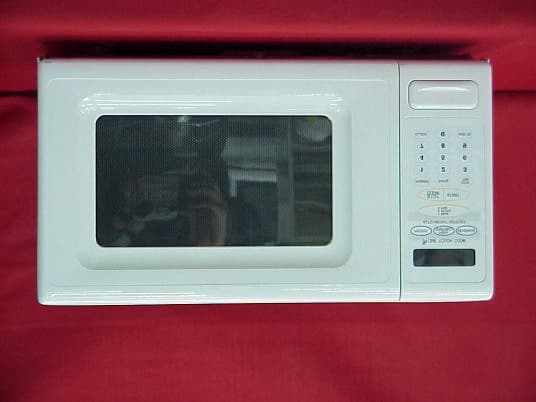
Click to zoom
Application Details
- Equipment Class
- 8CC - Part 18 Consumer Device
- Date of Grant
- Mar 30, 1999
- Application Purpose
- Original Equipment
- Date of Application
- Jan 26, 1999
- Equipment Note
- Microwave oven
- Frequency Range
- 2450.00000000 - 2450.00000000
- Company
- LG Electronics USA, Inc.
- Country
- United States
Documents & Files
Document Text
Text extracted from the exhibit documents filed with the FCC. Open a document above to read the original.
Users Manual
MS-74ME MICROWAVE OVEN OWNER'S MANUAL & COOKING GUIDE PLEASE READ THIS OWNER'S MANUAL THOROUGHLY BEFORE OPERATING. Web - http://www.LGEservice.com E-mail - [email protected] - 2 - Please record the model number and serial number of this unit for future reference. We also suggest you record the details of your contact with Goldstar (LG Electronics U.S.A., Inc.) concerning this unit. Staple your Receipt here to prove your retail purchase. Model No: Serial No: Dealer: Dealer Phone No: Customer Relations LG Electronics U.S.A., Inc. Service Division Bldg. #3 201 James Record Rd. Huntsville, AL 35824-0126 (a) Do not attempt to operate this oven with the door open since open-door operation can result in harmful exposure to microwave energy. It is important not to defeat or tamper with the safety interlocks. (b) Do not place any object between the oven front face and the door or allow soil or cleaner residue to accumulate on sealing surfaces. (c) Do not operate the oven if it is damaged. It is particularly important that the oven door close properly and that there is no damage to the: (1) Door (bent), (2) Hinges and latches (broken or loos- ened), (3) Door seals and sealing surfaces. (d) The oven should not be adjusted or repaired by anyone except properly qualified service personnel. PRECAUTIONS TO AVOID POSSIBLE EXPOSURE TO EXCESSIVE MICROWAVE ENERGY Thank you for purchasing a Goldstar microwave oven TECHNICAL SPECIFICATIONS3 IMPORTANT SAFETY INSTRUCTIONS4 INSTALLATION5 INTRODUCTION6 - 3 - TABLE OF CONTENTS TECHNICAL SPECIFICATIONS * IEC 705 RATING STANDARDSpecifications subject to change without prior notice. Power Supply120V AC., 60Hz Rated Power Consumption1050W Microwave Output*700W Frequency2,450MHz Rated Current9.3A Overall Dimensions (WXHXD)19" 511"512 7 /8" Oven Cavity Dimensions (WXHXD)12 1 /4"57 3 /4"512 1 /2" Effective Capacity of Oven Cavity0.7 Cu.ft. MS-74ME - 4 - IMPORTANT SAFETY INSTRUCTIONS WARNING– To reduce the risk of burns, electric shock, fire, injury to persons or exposure to excessive microwave energy: 1. Read all instructions before using the appliance. 2. Read and follow the specific "PRECAUTIONS TO AVOID POSSIBLE EXPOSURE TO EXCESSIVE MICROWAVE ENERGY"found on page 2 of this manual. 3. This appliance must be grounded. Connect only to properly grounded outlet. See "GROUNDING INSTRUCTIONS"found on page 5 of this manual . 4. Install or locate this appliance only in accordance with the provided installation instructions. 5. Some products such as whole eggs and sealed containers–for example, closed glass jars–may explode and should not be heated in this oven. 6. Use this appliance only for its intended use as described in the manual. Do not use corrosive chemicals or vapors in this appliance. This type of oven is specifically designed to heat, cook, or dry food. It is not designed for industrial or laboratory use. 7. As with any appliance, close supervision is necessary when used by children. 8. Do not operate this appliance if it has a damaged cord or plug, if it is not working properly, or if it has been damaged or dropped. 9. This appliance should be serviced only by qualified service personnel. Contact nearest authorized service facility for examination, repair or adjustment. 10. Do not cover or block any openings on the appliance. 11. Do not store this appliance outdoors. Do not use this product near water - for example, near a kitchen sink, in a wet basement, or near a swimming pool, and the like. 12. Do not immerse cord or plug in water. 13. Keep cord away from heated surfaces. 14. Do not let cord hang over edge of table or counter. 15. Either - (a) When cleaning surfaces of door and oven that come together on closing the door, use only mild, nonabrasive soaps or detergents applied with a sponge or soft cloth; or when separate cleaning instructions apply, (b) See door surface cleaning instructions on(specific page or section to be included). 16. To reduce the risk of fire in the oven cavity: a. Do not overcook food. Carefully attend appliance if paper, plastic, or other combustible materi- als are placed inside the oven to facilitate cooking. b. Remove wire twist-ties from paper or plastic bags before placing bag in oven. c. If materials inside the oven should ignite, KEEP OVEN DOOR CLOSED, turn oven off, and disconnect the power cord, or shut off power at the fuse or circuit breaker panel. d. Do not use the cavity for storage purposes. Do not leave paper products, cooking utensils, or food in the cavity when not in use. 17. a. Do not operate any heating or cooking appliance beneath this appliance. b. Do not mount unit over or near any portion of a heating or cooking appliance. c. Do not mount over a sink. d. Do not store anything directly on top of the appliance surface when appliance is in operation. 18. Do not heat any type of baby bottles or baby food. Uneven heating may occur and could cause personal injury. 19. Avoid using corrosive and vapors, such as sulfide and chloride. 20. Liquids heated in certain shaped containers (especially cylindrical-shaped containers) may become overheated. The liquid may splash out with a loud noise during or after heating or when adding ingredients (instant coffee, etc.), resulting in harm to the oven and possible injury. In all containers, for best results, stir the liquid several times before heating. Always stir liquid several times between reheatings. SAVE THESE INSTRUCTIONS A. GROUNDING INSTRUCTIONS For personal safety, this appliance must be properly grounded. In the event of an electrical short circuit, grounding reduces the risk of electric shock by provid- ing an escape route for the electric current. The power cord of this appliance is equipped with a three-prong (grounding) plug to minimize the possibility of electric shock hazard from this appliance. The plug must be plugged into an outlet that is properly installed and grounded. WARNING – Improper use of the grounding plug can result in a risk of electric sh…
Text truncated - open the document above for the full version.
Users Manual
MS-74ME MICROWAVE OVEN OWNER'S MANUAL & COOKING GUIDE PLEASE READ THIS OWNER'S MANUAL THOROUGHLY BEFORE OPERATING. Web - http://www.LGEservice.com E-mail - [email protected] - 2 - Please record the model number and serial number of this unit for future reference. We also suggest you record the details of your contact with Goldstar (LG Electronics U.S.A., Inc.) concerning this unit. Staple your Receipt here to prove your retail purchase. Model No: Serial No: Dealer: Dealer Phone No: Customer Relations LG Electronics U.S.A., Inc. Service Division Bldg. #3 201 James Record Rd. Huntsville, AL 35824-0126 (a) Do not attempt to operate this oven with the door open since open-door operation can result in harmful exposure to microwave energy. It is important not to defeat or tamper with the safety interlocks. (b) Do not place any object between the oven front face and the door or allow soil or cleaner residue to accumulate on sealing surfaces. (c) Do not operate the oven if it is damaged. It is particularly important that the oven door close properly and that there is no damage to the: (1) Door (bent), (2) Hinges and latches (broken or loos- ened), (3) Door seals and sealing surfaces. (d) The oven should not be adjusted or repaired by anyone except properly qualified service personnel. PRECAUTIONS TO AVOID POSSIBLE EXPOSURE TO EXCESSIVE MICROWAVE ENERGY Thank you for purchasing a Goldstar microwave oven TECHNICAL SPECIFICATIONS3 IMPORTANT SAFETY INSTRUCTIONS4 INSTALLATION5 INTRODUCTION6 - 3 - TABLE OF CONTENTS TECHNICAL SPECIFICATIONS * IEC 705 RATING STANDARDSpecifications subject to change without prior notice. Power Supply120V AC., 60Hz Rated Power Consumption1050W Microwave Output*700W Frequency2,450MHz Rated Current9.3A Overall Dimensions (WXHXD)19" 511"512 7 /8" Oven Cavity Dimensions (WXHXD)12 1 /4"57 3 /4"512 1 /2" Effective Capacity of Oven Cavity0.7 Cu.ft. MS-74ME - 4 - IMPORTANT SAFETY INSTRUCTIONS WARNING– To reduce the risk of burns, electric shock, fire, injury to persons or exposure to excessive microwave energy: 1. Read all instructions before using the appliance. 2. Read and follow the specific "PRECAUTIONS TO AVOID POSSIBLE EXPOSURE TO EXCESSIVE MICROWAVE ENERGY"found on page 2 of this manual. 3. This appliance must be grounded. Connect only to properly grounded outlet. See "GROUNDING INSTRUCTIONS"found on page 5 of this manual . 4. Install or locate this appliance only in accordance with the provided installation instructions. 5. Some products such as whole eggs and sealed containers–for example, closed glass jars–may explode and should not be heated in this oven. 6. Use this appliance only for its intended use as described in the manual. Do not use corrosive chemicals or vapors in this appliance. This type of oven is specifically designed to heat, cook, or dry food. It is not designed for industrial or laboratory use. 7. As with any appliance, close supervision is necessary when used by children. 8. Do not operate this appliance if it has a damaged cord or plug, if it is not working properly, or if it has been damaged or dropped. 9. This appliance should be serviced only by qualified service personnel. Contact nearest authorized service facility for examination, repair or adjustment. 10. Do not cover or block any openings on the appliance. 11. Do not store this appliance outdoors. Do not use this product near water - for example, near a kitchen sink, in a wet basement, or near a swimming pool, and the like. 12. Do not immerse cord or plug in water. 13. Keep cord away from heated surfaces. 14. Do not let cord hang over edge of table or counter. 15. Either - (a) When cleaning surfaces of door and oven that come together on closing the door, use only mild, nonabrasive soaps or detergents applied with a sponge or soft cloth; or when separate cleaning instructions apply, (b) See door surface cleaning instructions on(specific page or section to be included). 16. To reduce the risk of fire in the oven cavity: a. Do not overcook food. Carefully attend appliance if paper, plastic, or other combustible materi- als are placed inside the oven to facilitate cooking. b. Remove wire twist-ties from paper or plastic bags before placing bag in oven. c. If materials inside the oven should ignite, KEEP OVEN DOOR CLOSED, turn oven off, and disconnect the power cord, or shut off power at the fuse or circuit breaker panel. d. Do not use the cavity for storage purposes. Do not leave paper products, cooking utensils, or food in the cavity when not in use. 17. a. Do not operate any heating or cooking appliance beneath this appliance. b. Do not mount unit over or near any portion of a heating or cooking appliance. c. Do not mount over a sink. d. Do not store anything directly on top of the appliance surface when appliance is in operation. 18. Do not heat any type of baby bottles or baby food. Uneven heating may occur and could cause personal injury. 19. Avoid using corrosive and vapors, such as sulfide and chloride. 20. Liquids heated in certain shaped containers (especially cylindrical-shaped containers) may become overheated. The liquid may splash out with a loud noise during or after heating or when adding ingredients (instant coffee, etc.), resulting in harm to the oven and possible injury. In all containers, for best results, stir the liquid several times before heating. Always stir liquid several times between reheatings. SAVE THESE INSTRUCTIONS A. GROUNDING INSTRUCTIONS For personal safety, this appliance must be properly grounded. In the event of an electrical short circuit, grounding reduces the risk of electric shock by provid- ing an escape route for the electric current. The power cord of this appliance is equipped with a three-prong (grounding) plug to minimize the possibility of electric shock hazard from this appliance. The plug must be plugged into an outlet that is properly installed and grounded. WARNING – Improper use of the grounding plug can result in a risk of electric sh…
Text truncated - open the document above for the full version.
Cover Letter(s)
FCC ID LABEL FORMAT AND LOCATION Applicant:LABWAY CORPORATION FCC ID:LWHA331L7 FCC ID:LWHA331L7 FCC ID LABEL AREA
External Photos
Front View BEJS070MF Cavity View BEJS070MF
ID Label/Location Info
ID Label 1 BEJS070MF ID Label Location 1 ID Label 2 - Alternate BEJS070MF ID Label Location 2 - Alternate
Internal Photos
Wave Guide View BEJS070MF Upper View without Enclosure BEJS070MF
Internal Photos
PCB PART -1FCC ID ; BEJS070MF PCB PART -2FCC ID ; BEJS070MF
Internal Photos
PCB PART -1FCC ID ; BEJS070MF PCB PART -2FCC ID ; BEJS070MF
Schematics
Model : MS-74ME FCC ID : BEJS070MF Model : MS-71MA (Alternate) FCC ID : BEJS070MF
Test Report
LG Electronics Inc., EMI Laboratory 391-2 Gaeumjeong - Dong, Changwon City, Gyeongnam, Korea 641-711 REPORT of MEASUREMENT of ELECTROMAGNETIC INTERFERENCE TESTING Issued: January 19,1999 1. Name of Applicant: LG Electronics Inc. 2. Address of Applicant: 6133 North River Road Suite, 1100 (Riverwary Plaza) Rosemont, IL 60018 3. Equipment Under Test: LG Electronics Inc., Microwave Oven Model MS-74ME with Magnetron Type 2M213 by LG Electronics Inc.. 4. Power Supply: 120 V ac, 60 Hz 5. Test Requirements: CFR Title 47, Part 18 6. Test Procedure: OST MP-5 7. Instrument Used: Hioki Digital Power High Test Model 3181-01 Holaday Industries Inc. Microwave Survey Meter Model 1700 Electro Metrics Field Intensity Meter Model EMC-30 MKIV Electro Metrics Field Intensity Meter Model EMC-60 MKIV Electro Metrics Metering Module CRM-30 Hewlett Packard Frequency Counter 5350A Hewlett Packard Sweep Oscillator 8350B 8. Test Condition: The Equipment Under Test (EUT) was tested while operating at maximum RF output power. Loads of water in a glass beaker was used in amount specified by Test Procedure. 1/7 FCC ID : BEJS070MF 9. Results of Testings: A. Input Power Input Power was measured using a Wattmeter. A 275 ml water load was placed in the center of the oven and the oven was operated at full output power for 6 minutes after which the reading was taken. A 275 ml water load was chosen for its compatibility with the UL procedure used by manufacturers to determine our input ratings. Voltage Current Input PowerManufacturer’s Rating 120 V ac, 60 Hz9.25 A1040 W9.3 A B. RF Power Output The Calorimetric Method was used to determine maximum output power. A 1000 ml water load was placed in the center of the oven. A mercury thermometer was used to measure temperature rise. Quantity of WaterStarting Temperature Final TemperatureElapsed Time 1000 ml20.0 °C37.3 °C120 Sec (4.2 Joules/Cal) X (Volume in ml) X (Temperature Rise) Power (W) = Time in Seconds 4.2 x 1000 x 17.3 Power (W) = 120 Power (W) = 605.5 Watts 2/7 FCC ID : BEJS070MF C. Frequency Measurements The fundamental operating frequency was measured with a substitution method using the Electro Metrics receiver, Hewlett Packard Sweep Oscillator and Frequency Counter. The receiver was turned to the maximum amplitude at the oven operating frequency. The Sweep Oscillator was substituted for operating the antenna and turned to the same frequency as the receiver. The frequency of the generator was determined using the frequency counter. The frequency was observed over a period of time, and with line voltage variation. The maximum frequency permitted in Part 18 is maximum 2.500 GHz and the minimum 2.400 GHz. No out-of-band frequency measurement was observed. Variation of Frequency With Time (1000 ml reduced to 200 ml) Maximum Frequency Observed: 2.466GHz Minimum Frequency Observed: 2.446 GHz Variation of Frequency With Line Voltage (96 Volts to 150 Volts AC) Maximum Frequency Observed: 2.470 GHz Minimum Frequency Observed: 2.448 GHz D. Microwave Leakage Radiation leakage was measured in the as-received condition with the oven door closed using a microwave leakage meter. No power greater than 0.18 mW/cm square was observed at any location on the enclosure of the oven. A maximum of 1.0 mW/cm square is allowed in accordance with UL 923 standard. Hence, microwave leakage in the as-received condition with the oven door closed, did not exceed the specified limit. 3/7FCC ID : BEJS070MF E. Radiated Emissions Radiated emission was measured over a frequency range of 100 MHz to 10 GHz. For measurements the EUT was get set up in an Shielded Anechoic Chamber. The EUT was supported by a wood table, 1 m high in both cases, measurement above 1 GHz and below 1 GHz. The results of measurements above 1 GHz are shown on Data Page 1. Maximum readings were recorded after variations in antenna polarization, antenna height, EUT orientation, load location, and load volume. Readings were taken with the antenna 3 meters away from the EUT. Field intensity was then extrapolated to a 300 meters distance by multiplying by a factor of 0.01 as described in Section 2.2.6 of MP-5. No over-limit radiated emissions were discovered. The results of measurements below 1 GHz are found on Data Page 2 and 3. They represent horizontal and vertical antenna polarization at 3 meters respectively. 10. Test Engineer: Mr. S. G. PARK Reviewed By: Mr. S. Y. KIM 4/7 FCC ID : BEJS070MF Issued: January 19, 1999 LABORATORY MEASUREMENTS ABOVE 1 GHz Data Page 1 Date Tested: January 11, 1999 Equipment Under Test (EUT): Microwave Oven Model MS-74ME Mode of Operating (DUT): Maximum RF Power Test Requirements: CFR Title 47, Part 18 Test Equipment: Electro-Metrics FIM. EMC-60MKIV Antenna: Double Ridged Guide Antenna RGA-180 Detector Mode: Average Bandwidth: 1 MHz Measurement Distance: 3 meters FREQ. (GHz) Antenna Factor (dB) Cable Factor (dB) Load (ml) Load Locating Meter Reading (dBμV) Field Intensity @ 3 m dBμV/m Field Intensity @ 3 m (μV/m) Field Intensity @ 300 m (μV/m) FCC Limit @ 300 m (μV/m) 2.3929.40.6700Center18.247.9248.32.4827.5 2.5129.60.6700Center11.441.3116.11.1627.5 4.9034.40.9700Center24.158.6851.18.5127.5 4.9034.40.9700RF24.559.0891.38.9127.5 4.9034.40.9300Center24.759.2912.09.1227.5 4.9034.40.9300RF26.0960.51059.310.5927.5 7.3536.81.2700Center5.242.1127.41.2727.5 7.3536.81.2700RF7.644.5167.91.6827.5 7.3536.81.2300Center7.244.1160.31.6027.5 7.3536.81.2300RF7.744.6169.81.7027.5 9.8038.01.5700Center5.745.0177.81.7827.5 Note: RF = Right Front Corner 5/7 FCC ID : BEJS070MF Issued: January 19, 1999 LABORATORY MEASUREMENTS BELOW 1 GHz Data Page 2 Date Tested: January 11, 1999 Manufacturer: LG Electronics Inc. Product Type: Household Microwave Oven Model No.: MS-74ME Mode of Operating: Maximum RF Power Test Requirements: CFR Title 47, Part 18 Test Equipment: Electro-Metrics FIM EMC-30MKIV Electro-Metrics Metering Module CRM-30 Detector Mode: Peak Measurement Distance: 3 meters Antenna: Electro-Metrics Biconical Antenna BIA-25, …
Text truncated - open the document above for the full version.
Test Report
LG Electronics Inc., EMI Laboratory 391-2 Gaeumjeong - Dong, Changwon City, Gyeongnam, Korea 641-711 REPORT of MEASUREMENT of ELECTROMAGNETIC INTERFERENCE TESTING Issued: January 19,1999 1. Name of Applicant: LG Electronics Inc. 2. Address of Applicant: 6133 North River Road Suite, 1100 (Riverwary Plaza) Rosemont, IL 60018 3. Equipment Under Test: LG Electronics Inc., Microwave Oven Model MS-74ME with Magnetron Type 2M213 by LG Electronics Inc.. 4. Power Supply: 120 V ac, 60 Hz 5. Test Requirements: CFR Title 47, Part 18 6. Test Procedure: OST MP-5 7. Instrument Used: Hioki Digital Power High Test Model 3181-01 Holaday Industries Inc. Microwave Survey Meter Model 1700 Electro Metrics Field Intensity Meter Model EMC-30 MKIV Electro Metrics Field Intensity Meter Model EMC-60 MKIV Electro Metrics Metering Module CRM-30 Hewlett Packard Frequency Counter 5350A Hewlett Packard Sweep Oscillator 8350B 8. Test Condition: The Equipment Under Test (EUT) was tested while operating at maximum RF output power. Loads of water in a glass beaker was used in amount specified by Test Procedure. 1/7 FCC ID : BEJS070MF 9. Results of Testings: A. Input Power Input Power was measured using a Wattmeter. A 275 ml water load was placed in the center of the oven and the oven was operated at full output power for 6 minutes after which the reading was taken. A 275 ml water load was chosen for its compatibility with the UL procedure used by manufacturers to determine our input ratings. Voltage Current Input PowerManufacturer’s Rating 120 V ac, 60 Hz9.25 A1040 W9.3 A B. RF Power Output The Calorimetric Method was used to determine maximum output power. A 1000 ml water load was placed in the center of the oven. A mercury thermometer was used to measure temperature rise. Quantity of WaterStarting Temperature Final TemperatureElapsed Time 1000 ml20.0 °C37.3 °C120 Sec (4.2 Joules/Cal) X (Volume in ml) X (Temperature Rise) Power (W) = Time in Seconds 4.2 x 1000 x 17.3 Power (W) = 120 Power (W) = 605.5 Watts 2/7 FCC ID : BEJS070MF C. Frequency Measurements The fundamental operating frequency was measured with a substitution method using the Electro Metrics receiver, Hewlett Packard Sweep Oscillator and Frequency Counter. The receiver was turned to the maximum amplitude at the oven operating frequency. The Sweep Oscillator was substituted for operating the antenna and turned to the same frequency as the receiver. The frequency of the generator was determined using the frequency counter. The frequency was observed over a period of time, and with line voltage variation. The maximum frequency permitted in Part 18 is maximum 2.500 GHz and the minimum 2.400 GHz. No out-of-band frequency measurement was observed. Variation of Frequency With Time (1000 ml reduced to 200 ml) Maximum Frequency Observed: 2.466GHz Minimum Frequency Observed: 2.446 GHz Variation of Frequency With Line Voltage (96 Volts to 150 Volts AC) Maximum Frequency Observed: 2.470 GHz Minimum Frequency Observed: 2.448 GHz D. Microwave Leakage Radiation leakage was measured in the as-received condition with the oven door closed using a microwave leakage meter. No power greater than 0.18 mW/cm square was observed at any location on the enclosure of the oven. A maximum of 1.0 mW/cm square is allowed in accordance with UL 923 standard. Hence, microwave leakage in the as-received condition with the oven door closed, did not exceed the specified limit. 3/7FCC ID : BEJS070MF E. Radiated Emissions Radiated emission was measured over a frequency range of 100 MHz to 10 GHz. For measurements the EUT was get set up in an Shielded Anechoic Chamber. The EUT was supported by a wood table, 1 m high in both cases, measurement above 1 GHz and below 1 GHz. The results of measurements above 1 GHz are shown on Data Page 1. Maximum readings were recorded after variations in antenna polarization, antenna height, EUT orientation, load location, and load volume. Readings were taken with the antenna 3 meters away from the EUT. Field intensity was then extrapolated to a 300 meters distance by multiplying by a factor of 0.01 as described in Section 2.2.6 of MP-5. No over-limit radiated emissions were discovered. The results of measurements below 1 GHz are found on Data Page 2 and 3. They represent horizontal and vertical antenna polarization at 3 meters respectively. 10. Test Engineer: Mr. S. G. PARK Reviewed By: Mr. S. Y. KIM 4/7 FCC ID : BEJS070MF Issued: January 19, 1999 LABORATORY MEASUREMENTS ABOVE 1 GHz Data Page 1 Date Tested: January 11, 1999 Equipment Under Test (EUT): Microwave Oven Model MS-74ME Mode of Operating (DUT): Maximum RF Power Test Requirements: CFR Title 47, Part 18 Test Equipment: Electro-Metrics FIM. EMC-60MKIV Antenna: Double Ridged Guide Antenna RGA-180 Detector Mode: Average Bandwidth: 1 MHz Measurement Distance: 3 meters FREQ. (GHz) Antenna Factor (dB) Cable Factor (dB) Load (ml) Load Locating Meter Reading (dBμV) Field Intensity @ 3 m dBμV/m Field Intensity @ 3 m (μV/m) Field Intensity @ 300 m (μV/m) FCC Limit @ 300 m (μV/m) 2.3929.40.6700Center18.247.9248.32.4827.5 2.5129.60.6700Center11.441.3116.11.1627.5 4.9034.40.9700Center24.158.6851.18.5127.5 4.9034.40.9700RF24.559.0891.38.9127.5 4.9034.40.9300Center24.759.2912.09.1227.5 4.9034.40.9300RF26.0960.51059.310.5927.5 7.3536.81.2700Center5.242.1127.41.2727.5 7.3536.81.2700RF7.644.5167.91.6827.5 7.3536.81.2300Center7.244.1160.31.6027.5 7.3536.81.2300RF7.744.6169.81.7027.5 9.8038.01.5700Center5.745.0177.81.7827.5 Note: RF = Right Front Corner 5/7 FCC ID : BEJS070MF Issued: January 19, 1999 LABORATORY MEASUREMENTS BELOW 1 GHz Data Page 2 Date Tested: January 11, 1999 Manufacturer: LG Electronics Inc. Product Type: Household Microwave Oven Model No.: MS-74ME Mode of Operating: Maximum RF Power Test Requirements: CFR Title 47, Part 18 Test Equipment: Electro-Metrics FIM EMC-30MKIV Electro-Metrics Metering Module CRM-30 Detector Mode: Peak Measurement Distance: 3 meters Antenna: Electro-Metrics Biconical Antenna BIA-25, …
Text truncated - open the document above for the full version.
Test Report
LG Electronics Inc. Quality & Reliability Center 36, Munlae-dong, 6-ga, Youngdungpo-gu, Seoul 150-096, Korea Tel : + 82 2 630 3137, Fax : +82 2 635 5543 CERTIFICATION OF COMPLIANCE Date of Issue : Feb. 14, 1999Test Report No : 00431-4521-F9028 Applicant :LG Electronics Inc. Regulation :FCC Part 18 Test procedure :MP-5 : 1985 Equipment Class : Industrial, Scientific, and Medical equipment EUT Type :Microwave oven Brand Name(s) :Goldstar or LG Model No. :MS-74ME FCC ID :BEJS070MF This device has been verified to comply with the applicable requirements in the FCC Part 18 and was tested in accordance with the measurement procedures specified in MP-5 : 1985. I assume full responsibility for the completeness of these measurements and vouch for the qualifica- tions of all persons taking them. Pan-Hwan Byun / General Manager Quality and Reliability Center 1 / 17 NVLAP Code : 200040-0 Report No. : 00431-4521-F9028 LG Electronics Inc. Quality & Reliability Center, 36, Munlae-dong, 6-ga, Youngdungpo-gu, Seoul, Korea Tel:+82-2-630-3137, Fax:+82-2-635-5543 REPORT FOR A MICROWAVE OVEN Scope - Measurement and determination of electromagnetic emissions (EME) of radio frequency devices including intentional and/or unintentional radiators for compliance with the technical rules and regulations of the Federal Communications Commission. Test Report No : 00431-4521-F9028 EUT Type : Microwave oven Model No. : MS-74ME FCC ID :BEJS070MF Rule Part : FCC Part 18 Test Procedure : MP-5 : 1985 Date of Test : Feb. 12, 1999 Date of Issue : Feb. 14, 1999 Test Result : Positive Quality and Reliability Center authorizes the above-named applicant to reproduce this report provided it is reproduced in its entirety. Quality and Reliability Center reports apply only to the specific samples tested under stated test con- ditions. It is the manufacturer’s responsibility to assure that additional production unit of this model are manufactured with identical electrical and mechanical components. This report is the confidential property of the client. As a mutual protection to our clients, the public and ourselves, extracts from the test report shall not be reproduced except in full without our written approval. This report must not be used by the client to claim product endorsement by NVLAP or any agency of the U.S. Government. The Quality and Reliability Center was accredited by National Voluntary Laboratory Accreditation Program for the FCC Part15 : Digital device of accreditation under Lab Code : 200040-0. Tested by : Reviewed by : D.H. Kim / Associate Research Engineer J.C. Lee / Associate Research Engineer Quality and Reliability Center Quality and Reliability Center 2 / 17 NVLAP Code : 200040-0 Report No. : 00431-4521-F9028 LG Electronics Inc. Quality & Reliability Center, 36, Munlae-dong, 6-ga, Youngdungpo-gu, Seoul, Korea Tel:+82-2-630-3137, Fax:+82-2-635-5543 CONTENTS Page 1. CLIENT INFORMATION...................................................................................................................3 2. EQUIPMENT UNDER TEST (EUT)...................................................................................................3 2.1 IDENTIFICATION OF THE EUT..............................................................................................................3 2.2 ADDITIONAL INFORMATION ABOUT THE EUT......................................................................................3 3. TEST SITE............................................................................................................................................4 3.1 SEMI-ANECHOIC CHAMBER.................................................................................................................4 4. CALIBRATIONS OF MEASURING INSTRUMENTS......................................................................4 5. DESCRIPTION OF TEST CONDITION.............................................................................................4 5.1 RADIATED EMISSIONS MEASUREMENTS................................................................................................4 6. MEASURING INSTRUMENTS AND SET-UP...................................................................................6 6.1 RADIATED EMISSIONS.........................................................................................................................6 6.2 FREQUENCY MEASUREMENTS..............................................................................................................6 7. RF POWER OUTPUT MEASUREMENT AND RESULTS...............................................................7 8. TEST DATA..........................................................................................................................................8 8-1. RADIATED EMISSIONS (SECTION 18.305)............................................................................................8 8-2. FREQUENCY MEASUREMENTS.............................................................................................................9 9. LIST OF INSTRUMENTS USED......................................................................................................10 APPENDIX A THE EUT PHOTOGRAPHS.........................................................................................11 APPENDIX B THE PHOTOGRAPHS OF TEST SET-UP...................................................................13 APPENDIX C LABEL....................................................................…
Text truncated - open the document above for the full version.
Contact Information
Applicant
David Kim(Team leader, LGEUS NA Policy & Regulatory Affairs)
Technical Contact
LG Electronics, Inc.Kyeom Soon Kim
[email protected]847-692-4500
6133 N. River Road, Suite 1100 · Rosemont, Illinois · United States
Non-Technical Contact
LG Electronics, Inc.Kyeom Soon Kim
[email protected]847-692-4500
Technical Specifications
| # | Rule Parts | Frequency Range | Power Output |
|---|---|---|---|
| 1 | 18 | 2.45 GHz - 2.45 GHz | - |
Other Applications from LG Electronics USA, Inc.
BEJTFHOBINI1F1
Jan 08, 2025Telematics
Equipment Class
DTS - Digital Transmission SystemBEJNT-16Z90TS
Oct 02, 2024Notebook Computer
Equipment Class
DSS - Part 15 Spread Spectrum TransmitterBEJSP-PEW8
Sep 26, 2024Stylus Pen
Equipment Class
DCD - Part 15 Low Power Transmitter Below 1705 kHzBEJ-RSMV2
Sep 24, 2024RF Module
Equipment Class
FDS - Part 15 Field Disturbance SensorBEJTFBMEIBN3EU
Sep 24, 2024Telematics
Equipment Class
NII - Unlicensed National Information Infrastructure TX