BEJS141XFmicrowave oven
LG Electronics USA, Inc.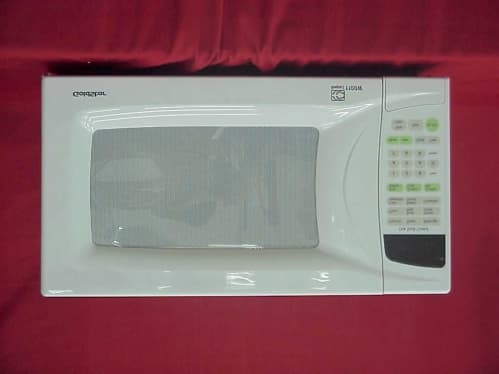
Click to zoom
Application Details
- Equipment Class
- 8CC - Part 18 Consumer Device
- Date of Grant
- Mar 16, 1999
- Application Purpose
- Original Equipment
- Date of Application
- Feb 07, 1999
- Equipment Note
- microwave oven
- Frequency Range
- 2400.00000000 - 2500.00000000
- Company
- LG Electronics USA, Inc.
- Country
- United States
Documents & Files
Document Text
Text extracted from the exhibit documents filed with the FCC. Open a document above to read the original.
Users Manual
2 TABLE OF CONTENTS SAFETY3-4 Precautions to Avoid Possible Exposure To Excessive Microwave Energy3 Grounding Instructions3 Important Safety Instructions 4 UNDERSTANDING YOUR MICROWAVE OVEN 5-10 Specifications5 Installation5 Parts and Accessories6 Control Panel7 Cookware Guide8 Tips for Microwave Cooking9 Precautions10 Cleaning10 Using your microwave oven11-21 Setting the Clock11 Child Lock11 Custom Set12 Timer13 EZ On13 Timed Cooking13 Multi-Stage Cooking14 Microwave Power Levels14 One Touch Cooking15 One Touch Cook Chart15-16 Custom Cook17 More/Less17 Auto Defrost18 Auto Defrost Chart18-19 Cooking Tips20-21 HEATING OR REHEATING GUIDE22 FRESH VEGETABLE CHART23 TROUBLESHOOTING24-26 Questions and Answers24-25 Before Calling for Service26 WARRANTY27 Please record the model number and serial number of this unit for future reference. We also suggest you record the details of your contact with GoldStar (LG Electronics U.S.A., Inc.) concerning this unit. Staple your receipt here for proof of retail purchase. Model No: Serial No: Dealer: Dealer Phone No: Customer Relations LG Electronics U.S.A., Inc. Service Division Bldg. #3 201 James Record Rd. Huntsville, AL 35824-0126 Thank you for purchasing a GoldStar microwave oven. 1.If your microwave oven cabinet is covered with a vinyl film (used as protection during shipping), remove the vinyl before you use the oven for the first time. Otherwise, moisture will build up inside and the vinyl will become difficult to remove. Peel the vinyl film off by starting at the bottom edge. 2.DO NOT remove the mica wave guide cover inside the oven. Rear The mica wave guide cover Important Notes: SAFETY • Do not attempt to operate this oven with the door open, since open-door operation can result in harmful exposure to microwave energy. It is important not to defeat or tamper with the safety interlocks. • Do not place any object between the oven front face and the door,or allow soil or cleaner residue to accumulate on sealing surfaces. • Do not operate the oven if it is damaged. It is particularly important that the oven door closes properly and that there is no damage to the: - door (bent), - hinges and latches (broken or loosened), - door seals and sealing surfaces. • The oven should not be adjusted or repairedby anyone except properly qualified service personnel. PRECAUTIONS TO AVOID POSSIBLE EXPOSURE TO EXCESSIVE MICROWAVE ENERGY 3 GROUNDING INSTRUCTIONS This appliance must be grounded. In the event of an electrical short circuit, grounding reduces the risk of electric shock by providing an escape wire for the electric current. This appliance is equipped with a cord having a grounding wire and a grounding plug. The plug must be plugged into an outlet that is properly installed and grounded. w WARNING w Improper grounding can result in a risk of elec- tric shock. Consult a qualified electrician if the grounding instructions are not completely under- stood, or if doubt exists as to whether the appli- ance is properly grounded, and either: 1.If it is necessary to use an extension cord, use only a 3-wire extension cord that has a 3-blade grounding plug, and a 3-slot recepta- cle that will accept the plug on the appliance. The marked rating of the extension cord shall be equal to or greater than the electrical rating of the appliance, or. . . . 2.Do not use an extension cord. If the power supply cord is too short, have a qualified electrician or serviceman install an outlet near the appliance. NOTES: 1. A short power-supply cord is provided to reduce the risks resulting from becoming entangled in or tripping over a longer cord. 2. Longer cord sets or extension cords are available and may be used if care is exer- cised in their use. 3. If a long cord or extension cord is used, (1) the marked electrical rating of the cord set or extension cord should be at least as great as the electrical rating of the appliance, (2) the extension cord must be a grounding-type 3-wire cord, and (3) the longer cord should be arranged so that it will not drape over the countertop or tabletop where it can be pulled on by children or tripped over accidentally. Ensure proper ground exists before use SAFETY IMPORTANT SAFETY INSTRUCTIONS The safety instructions below will tell you how to use your oven to avoid harm to yourself or damage to your oven. WARNING- To reduce the risk of burns, electric shock, fire, injury to persons, or exposure to excessive microwave energy: 1.Read all instructions before using the appliance. 2.Read and follow the specific PRECAUTIONS TO AVOID POSSIBLE EXPOSURE TO EXCESSIVE MICROWAVE ENERGYfound on page 3 of this manual. 3. This appliance must be grounded. Connect only to properly grounded outlet. SeeGROUNDING INSTRUCTIONS found on page 3 of this manual . 4.Install or locate this appliance only in accordance with the provided installation instructions. 5. Some products, such as whole eggs and sealed containers – for example, closed glass jars – may explode and should not be heated in this oven. 6.Use this appliance only for its intended use as described in the manual. Do not use corrosive chemicals or vapors in this appliance. This type of oven is specifically designed to heat, cook, or dry food. It is not designed for industrial or laboratory use. 7.As with any appliance, close supervision is necessary when used by children. 8.Do not operate this appliance if it has a damaged cord or plug, if it is not working properly, or if it has been damaged or dropped. 9. This appliance should be serviced only by qualified service personnel. Contact the nearest authorized service facility for examination, repair, or adjustment. 10.Do not cover or block any openings on the appliance. 11. Do not store this appliance outdoors. Do not use this product near water – for example, near a kitchen sink, in a wet basement, or near a swimming pool, and the like. 12. Do not immerse cord or plug in water. 13.Keep cord away from heated surfaces. 14. Do not let cord hang over the edge of a…
Text truncated - open the document above for the full version.
Cover Letter(s)
FEDERAL COMMUNICATION COMMISSION Authorization and Standards BrenchRef. No.: L9901120 1919M St. North West Washington D.C. 20554-1300Date: Jan. 28,1999 Subject: Application for certification on LG Electronics Microwave Oven FCC ID: BEJS141XF Model No.: MS-144YD Magnetron: 2M246 (LG Electronics Inc., Korea) 2M248J (Toshiba, Japan) Gentleman: We, LG Electronics Inc., hereby submit this application letter to apply for FCC Certification for the subject new models. For your references, here is the following information. 1. The model MS-144YD is new model to be produced by LG Electronics Inc. 2. The model MS-144YD is to be installed on the counter-top and built-in installation. 3. The model MS-144YD employs touch control assembly. 4. The model MS-144YD employs the turntable on the lower side of oven cavity for even cooking. We have performed the relevant testing using the representative Model MS-144YD with LG Electronics Magnetron type 2M246 and 2M248J with acceptable results at our laboratory facilities as enclosed. No out-of-band frequency measurement and over-limit radiated emission was discovered. Your continued cooperation would be highly appreciated. Should you have any comments, please feel free to contact Mr. K. S. Kim at LG Electronics Chicago Office. Best Regards, Bo Hoon Kim, Senior Engineer K. S. Kim, General Manager Cooking Appliance OBU,Engineering Department LG Electronics Inc.LG Electronics Chicago Office
External Photos
Front View BEJS141XF Cavity View BEJS141XF
ID Label/Location Info
ID Label 1 BEJS141XF ID Label Location 1 ID Label 2 - Alternate BEJS141XF ID Label Location 2 - Alternate
ID Label/Location Info
ID Label 1 BEJS141XF ID Label Location 1 ID Label 2 - Alternate BEJS141XF ID Label Location 2 - Alternate
Internal Photos
Wave Guide View BEJS141XF Upper View without Enclosure BEJS070MF
Internal Photos
Wave Guide View BEJS141XF Upper View without Enclosure BEJS070MF
Schematics
Model : MS-144YD FCC ID : BEJS141XF
Schematics
Model : MS-144YD FCC ID : BEJS141XF
Test Report
1 LG Electronics Inc., EMI Laboratory Total : 14 Pages 391-2 Gaeumjeong - Dong, Changwon City, Gyeongnam, Korea 641-711 REPORT of MEASUREMENT of ELECTROMAGNETIC INTERFERENCE TESTING Issued: January 27,1999 1. Name of Applicant: LG Electronics Inc. 2. Address of Applicant: 6133 North River Road Suite, 1100 (Riverwary Plaza) Rosemont, IL 60018 3. Equipment Under Test: LG Electronics Inc., Microwave Oven Model MS-144YD with Magnetron Type 2M246 by LG Electronics Inc.. 4. Power Supply: 120 V ac, 60 Hz 5. Test Requirements: CFR Title 47, Part 18 6. Test Procedure: OST MP-5 7. Instrument Used: Hioki Digital Power High Test Model 3181-01 Holaday Industries Inc. Microwave Survey Meter Model 1700 Electro Metrics Field Intensity Meter Model EMC-30 MKIV Electro Metrics Field Intensity Meter Model EMC-60 MKIV Electro Metrics Metering Module CRM-30 Hewlett Packard Frequency Counter 5350A Hewlett Packard Sweep Oscillator 8350B 8. Test Condition: The Equipment Under Test (EUT) was tested while operating at maximum RF output power. Loads of water in a glass beaker was used in amount specified by Test Procedure. FCC ID : BEJS141XF Model MS-144YD with Toshiba Magnetron 2 9. Results of Testings: A. Input Power Input Power was measured using a Wattmeter. A 275 ml water load was placed in the center of the oven and the oven was operated at full output power for 6 minutes after which the reading was taken. A 275 ml water load was chosen for its compatibility with the UL procedure used by manufacturers to determine our input ratings. Voltage Current Input PowerManufacturer’s Rating 120 V ac, 60 Hz14.58 A1652 W13.6 A B. RF Power Output The Calorimetric Method was used to determine maximum output power. A 1000 ml water load was placed in the center of the oven. A mercury thermometer was used to measure temperature rise. Quantity of WaterStarting Temperature Final TemperatureElapsed Time 1000 ml19.2 ° C44.0 ° C120 Sec (4.2 Joules/Cal) X (Volume in ml) X (Temperature Rise) Power (W) = Time in Seconds 4.2 x 1000 x 24.8 Power (W) = 120 Power (W) = 868 Watts FCC ID : BEJS141XFModel MS-144YD with Toshiba Magnetron 3 C. Frequency Measurements The fundamental operating frequency was measured with a substitution method using the Electro Metrics receiver, Hewlett Packard Sweep Oscillator and Frequency Counter. The receiver was turned to the maximum amplitude at the oven operating frequency. The Sweep Oscillator was substituted for operating the antenna and turned to the same frequency as the receiver. The frequency of the generator was determined using the frequency counter. The frequency was observed over a period of time, and with line voltage variation. The maximum frequency permitted in Part 18 is maximum 2.500 GHz and the minimum 2.400 GHz. No out-of-band frequency measurement was observed. Variation of Frequency With Time (1000 ml reduced to 200 ml) Maximum Frequency Observed: 2.468GHz Minimum Frequency Observed: 2.438 GHz Variation of Frequency With Line Voltage (96 Volts to 150 Volts AC) Maximum Frequency Observed: 2.444 GHz Minimum Frequency Observed: 2.438 GHz D. Microwave Leakage Radiation leakage was measured in the as-received condition with the oven door closed using a microwave leakage meter. No power greater than 0.15 mW/cm square was observed at any location on the enclosure of the oven. A maximum of 1.0 mW/cm square is allowed in accordance with UL 923 standard. Hence, microwave leakage in the as-received condition with the oven door closed, did not exceed the specified limit. FCC ID : BEJS141XF Model MS-144YD with Toshiba Magnetron 4 E. Radiated Emissions Radiated emission was measured over a frequency range of 100 MHz to 10 GHz. For measurements the EUT was get set up in an Shielded Anechoic Chamber. The EUT was supported by a wood table, 1 m high in both cases, measurement above 1 GHz and below 1 GHz. The results of measurements above 1 GHz are shown on Data Page 1. Maximum readings were recorded after variations in antenna polarization, antenna height, EUT orientation, load location, and load volume. Readings were taken with the antenna 3 meters away from the EUT. Field intensity was then extrapolated to a 300 meters distance by multiplying by a factor of 0.01 as described in Section 2.2.6 of MP-5. No over-limit radiated emissions were discovered. The results of measurements below 1 GHz are found on Data Page 2 and 3. They represent horizontal and vertical antenna polarization at 3 meters respectively. 10. Test Engineer: Mr. S. G. PARK Reviewed By: Mr. S. Y. KIM FCC ID : BEJS141XF Model MS-144YD with Toshiba Magnetron 5 Issued: January 27, 1999 LABORATORY MEASUREMENTS ABOVE 1 GHz Data Page 1 Date Tested: January 21, 1999 Equipment Under Test (EUT): Microwave Oven Model MS-144YD Mode of Operating (DUT): Maximum RF Power Test Requirements: CFR Title 47, Part 18 Test Equipment: Electro-Metrics FIM. EMC-60MKIV Antenna: Double Ridged Guide Antenna RGA-180 Detector Mode: Average Bandwidth: 1 MHz Measurement Distance: 3 meters FREQ. (GHz) Antenna Factor (dB) Cable Factor (dB) Load (ml) Load Locating Meter Reading (dB μ V) Field Intensity @ 3 m dB μ V/m Field Intensity @ 3 m ( μ V/m) Field Intensity @ 300 m ( μ V/m) FCC Limit @ 300 m ( μ V/m) 2.3929.40.6700Center19.749.4295.12.9532.9 2.5129.60.6700Center14.444.3164.11.6432.9 4.9034.40.9700Center24.358.8870.98.7132.9 4.9034.40.9700RF23.658.1803.58.0432.9 4.9034.40.9300Center23.558.0794.37.9432.9 4.9034.40.9300RF24.659.1901.59.0232.9 7.3536.81.2700Center23.260.11011.610.1232.9 7.3536.81.2700RF23.160.01000.010.0032.9 7.3536.81.2300Center23.360.21023.310.2332.9 7.3536.81.2300RF24.561.41174.911.7532.9 9.8038.01.5700Center18.157.4741.37.4132.9 Note: RF = Right Front Corner FCC ID : BEJS141XF Model MS-144YD with Toshiba Magnetron 6 Issued: January 27, 1999 LABORATORY MEASUREMENTS BELOW 1 GHz Data Page 2 Date Tested: January 21, 1999 Manufacturer: LG Electronics Inc. Product Type: Household Microwave Oven Model No.: MS-144YD Mode of Operating: Maximum RF Power Test …
Text truncated - open the document above for the full version.
Test Setup Photos
TEST SET-UP (1) BEJS141XF TEST SET-UP (2) BEJS141XF
Contact Information
Applicant
David Kim(Team leader, LGEUS NA Policy & Regulatory Affairs)
Technical Contact
LG ELECTRONICS, INCKYEOM SOON KIM
[email protected]847-692-4500
6133 N. RIVER ROAD, SUITE 1100 · Rosemont, Illinois · United States
Non-Technical Contact
LG ELECTRONICS, INC.KYEOM SOON KIM
[email protected]847-692-4500
Technical Specifications
| # | Rule Parts | Frequency Range | Power Output |
|---|---|---|---|
| 1 | 18 | 2.40 GHz - 2.50 GHz | 1150 W |
Other Applications from LG Electronics USA, Inc.
BEJTFHOBINI1F1
Jan 08, 2025Telematics
Equipment Class
DTS - Digital Transmission SystemBEJNT-16Z90TS
Oct 02, 2024Notebook Computer
Equipment Class
DSS - Part 15 Spread Spectrum TransmitterBEJSP-PEW8
Sep 26, 2024Stylus Pen
Equipment Class
DCD - Part 15 Low Power Transmitter Below 1705 kHzBEJ-RSMV2
Sep 24, 2024RF Module
Equipment Class
FDS - Part 15 Field Disturbance SensorBEJTFBMEIBN3EU
Sep 24, 2024Telematics
Equipment Class
NII - Unlicensed National Information Infrastructure TX