BEJTM240Tri-Mode Dual-Band Analog/PCS Phone (AMPS/CDMA)
LG Electronics USA, Inc.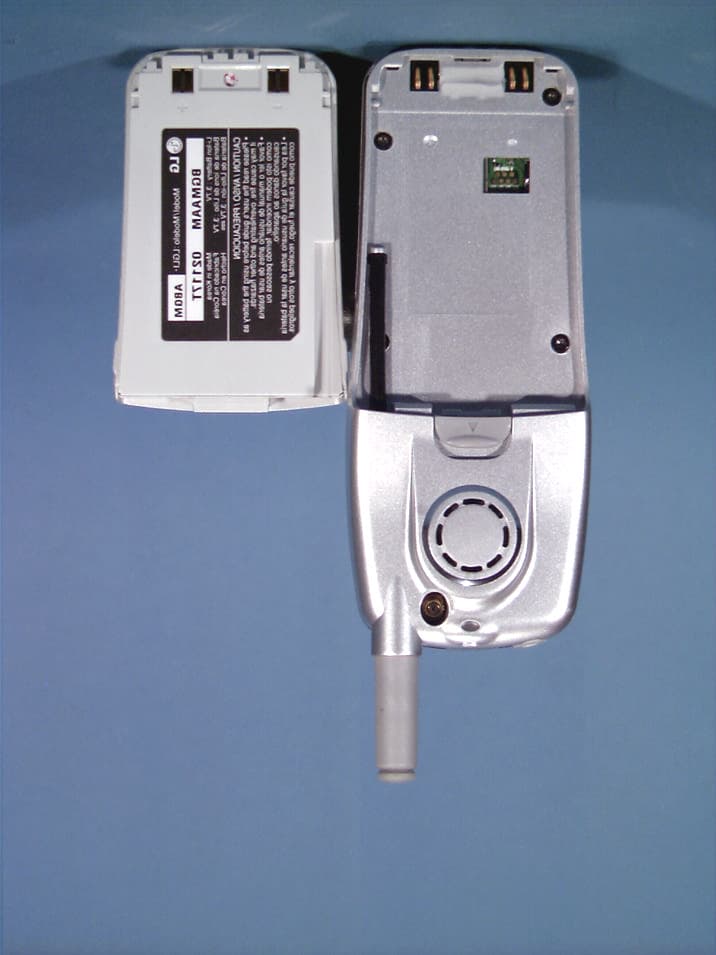
Click to zoom
Application Details
- Equipment Class
- PCE - PCS Licensed Transmitter held to ear
- Date of Grant
- May 07, 2002
- Application Purpose
- Original Equipment
- Date of Application
- Mar 05, 2002
- Equipment Note
- Tri-Mode Dual-Band Analog/PCS Phone (AMPS/CDMA)
- Frequency Range
- 1851.25000000 - 1908.75000000
- Company
- LG Electronics USA, Inc.
- Country
- United States
Documents & Files
Document Text
Text extracted from the exhibit documents filed with the FCC. Open a document above to read the original.
Users Manual
LG-TM240 User Guide CDMA/AMPS/PCS/GPS Quad-MODE PHONE Contents Introduction Highlights Important Information Check Accessories Before You Start FCC RF EXPOSURE INFORMATION Chapter 1. Getting Started Cautions Phone Overview On screen Icons Chapter 2. Basic Functions Turning the Phone On and Off Making a Call Correcting Dialing Mistakes Receiving Calls Using Quick Mode Call Waiting Mute Redialing Calls Adjusting the Volume Power Save Mode Signal Strength Emergency Dialing Mini Display Speed Dialing Caller ID Phone Book Features Chapter 3. Menu Features Sound Display Features System Security Voice Service Wireless Web Chapter 4. Book Features Call History Phone Book Function of Scheduler General Guidelines to Scheduler Access and Settings Scheduler Item Descriptions Schedule Wake Up Game Calculator Chapter 5. Message Features Voice Send Msg New Text Old Text Erase All Setting Chapter 6. Functions used during a call Mute Memo Recording Key Tone Voice Privacy Chapter 7. Accessories Travel Charger Battery (LGLi-AAEM) Desktop Charger Cigar Lighter Charger Hands-Free Car Kit (Portable) Hands-Free Car kit(Install) Data Cable Kit Headset Chapter 8. CTIA Safty Guideline Exposure to Radio Frequency Signals Antenna Care Phone Operation Driving Electronic Devices Hearing Aids Other Medical Devices Posted Facilities Aircraft Blasting Areas Potentially Explosive Atmospheres For Vehicles Equipped with Air bag FDA Consumer Update For more information about RF exposure, please visit the FCC website at www.fcc.gov FCC RF EXPOSURE INFORMATION In August 1996 the Federal Communications Commission (FCC) of the United States with its action in Report and Order FCC 96-326 adopted an updated safety standard for human exposure to radio frequency electromagnetic energy emitted by FCC regulated transmitters. Those guidelines are consistent with the safety standard previously set by both U.S. and international standards bodies. The design of this phone complies with the FCC guidelines and these international standards. Use only the supplied or an approved antenna. Unauthorized antennas, modifications, or attachments could impair call quality, damage the phone, or result in violation of FCC regulations. Do not use the phone with a damaged antenna. If a damaged antenna comes into contact with the skin, a minor burn may result. Please contact your local dealer for replacement antenna. Body-worn Operation This device was tested for typical body-worn operations with the back of the phone kept 1.5 cm. from the body. To maintain compliance with FCC RF exposure requirements, use only belt-clips, holsters or similar accessories that maintain a 1.5 cm. separation distance between the user’s body and the back of the phone, including the antenna, whether extended or retracted. The use of third-party belt- clips, holsters and similar accessories should not contain metallic components in its assembly. The use of accessories that do not satisfy these requirements may not comply with FCC RF exposure requirements, and should be avoided. WARNING! Read this information before using your phone Chapter 1. Getting Started Cautions l Using the phone in proximity to receiving equipment (i.e., TV or radio) may cause interference. l Keep your phone in a safe place when not in use. l Only use the batteries, antennas, and chargers provided by LG. Using the wrong accessories could void your warranty. l Only authorized personnel should service the phone and its accessories. Faulty installation or service may result in accidents and consequently invalidate the warranty. l Do not hold the antenna while the phone is in use. l Do not use the phone in designated “no cellular phone use” areas. l Do not expose the phone to high temperature or humidity. l Avoid getting your phone wet. If the phone gets wet, turn the power off immediately and remove the battery pack. If the phone is mal-functional, return it to the dealer for service. l Avoid shock or impact on the phone. Phone Overview Function Key Descriptions Lamp The red light goes on when you use the power key to turn on the phone and when there are incoming calls and messages. LCD screen Displays messages & indicator icons. END/PWR Used to turn power on/off. This key disconnects a call. Using this key, you can also exit out of a menu back to the phone’s standby display without changing the setting. SEND Allows user to place or answer calls. Mouse Key This mouse key allows quick access to text and voice mail notification messages. calendar, outgoing call log, phonebook Find name. Soft Keys The current operation of a soft key is defined by the word at the bottom of the display. Soft Keys 2 : If you press this key once in a menu, you can go back one level and if you press and hold the key in a menu, you can go back to the standby display. Scroll Keys These keys are used to scroll through the memory locations and menu items. - In the standby status, set the manner mode by pressing the button. (for 2 seconds) - In the standby status, set the lock function by pressing the button. (for 2 seconds) Alphanumeric Keypad These keys enable you to enter numbers and characters and choose menu items. On screen Icons The phone screen displays several onscreen icons and onscreen icons appears when the phone is power on. Icons Descriptions Displays the strength of the signal received by the phone and current signal strength is indicated as the number of bars displayed on the screen. No service The phone is not receiving a system signal. In use A call is in progress. No icon indicates the phone is in standby mode. Digital indicator Digital service is available. Analog indicator Analog service is available Indicates that a text message or voice mail has been received Roaming The phone is outside of its home service area. Charge level Indicates battery charge level. D Chapter 2. Basic Functions Turning the Phone On and Off Turning the Phone On 1. Install a charged battery pack or connect the phone to an external power sou…
Text truncated - open the document above for the full version.
Users Manual
LG-TM240 User Guide CDMA/AMPS/PCS/GPS Quad-MODE PHONE enhanced voice privacy mode. New SVC CFG (During a call : [MENU]+[5] ) Chapter 7. Accessories There are a variety of accessories available for the phone. You can select these options according to your personal communication requirements. Consult your local dealer for availability. Travel Charger This charger, model TC-10W, allows you to charge the battery pack. It supports standard U.S. 120Volt 60Hz outlets. While an orange light indicates that it is charging, a green light indicates charging is complete. It takes 5 hours to charge a completely discharged battery. Battery (LGLi-AAEM) Standard battery Desktop Charger The desktop charger, model DC-41W, allows you to place the phone for charging the stand. It can charge a completely discharged battery in 3 hours. Cigar Lighter Charger You can operate the phone and trickle charge the phone’s battery from your vehicle by using the cigarette lighter charger, model CLC-11W. It takes 5 hours to charge a completely discharged battery. Hands-Free Car Kit (Portable) The hands-free car kit, model PHF-30W, enables you to attach the phone to the car providing you with hands-free operation. It will also charge a completely discharged battery in 5 hours. Hands-Free Car kit(Install) The installed hands-free car kit model IHF-51W is permanently installed in your car, and provides you with hands-free operation. It will also charge a completely discharged battery is shows. Data Cable Kit Connects your phone to your PC.(Model KW-a) Headset Connects to your phone, allowing hands free operation. Includes earpiece, microphone and mute key. (Model Headset 1000) Hand strap AC Adaptor Areas with a potentially explosive atmosphere are often but not always clearly marked. They include fueling areas such as gasoline stations; below deck on boats; fuel or chemical transfer or storage facilities; vehicles using liquefied petroleum gas (such as propane of butane); areas where the air contains chemicals or particles, such as grain, dust, or metal powders; and any other area where you would normally be advised to turn off your vehicle engine. For Vehicles Equipped with an Air Bag An air bag inflates with great force. DO NOT place objects, including both installed or portable wireless equipment, in the area over the air bag or in the air bag deployment area. If in-vehicle wireless equipment is improperly installed and the air bag inflates, serious injury could result. GPS Receiver The TM240 contains a Global Positioning System (GPS) reeiver to assist the network in determing the position of the handset. GPS is a system of satellites orbiting the earth that provide positioning and timing information. The handset GPS receiver collects ranging information from these satellite signals and transmits this information to the network. Enhanced 911 (E911) Wireless Services Under the rules of the Federal Communications, wireless companies are required to provide Automatic Location Identification (ALI) information that enables 911 callers to be located within 50 meters for 67% of the calls and 150 meters for 95% of the calls. The TM240 is an ALL-capable phone designed to support 911 emergency services. Consumer Information on SAR (Specific Absorption Rate) THIS MODEL PHONE MEETS THE GOVERNMENT’ S REQUIREMENTS FOR EXPOSURE TO RADIO WAVES. Your wireless phone is a radio transmitter and receiver. It is designed and manufactured not to exceed the emission limits for exposure to radiofrequency (RF) energy set by the Federal Communications ‘ Commission of the U.S. Government. These limits are part of comprehensive guidelines and establish permitted levels of RF energy for the general population. The guidelines are based on standards that were developed by independent scientific organizations through periodic and thorough evaluation of scientific studies. The standards include a substantial safety margin designed to assure the safety of all persons, regardless of age and health. The exposure standard for wireless mobile phones employs a unit of measurement known as the Specific Absorption Rate, or SAR. The SAR limit set by the FCC is 1.6W/kg. * Tests for SAR are conducted using standard operating positions specified by the FCC with the phone transmitting at its highest certified power level, the actual SAR level of the phone while operating can be well below the maximum value. This is because the phone is designed to operate at multiple power levels so as to use only the power required to reach the network. In general, the closer you are to a wireless base station antenna, the lower the power output. Before a phone model is available for sale to the public, it must be tested and certified to the FCC that ist does not exceed the limit established by the government-adopted requirement for safe exposure. The tests are performed in positions and locations (e.g., at the ear and worn on the body)as required by the FCC for each model. The highest SAR value for this model phone when tested for use at the ear is 1.28mW/g and when worn on the body, as described in this user guide, is 0.90mW/g, (Body-worn measurements differ among phone models, depending upon available accessories and FCC requirements). [Labeling Committee note : if applicable, if body-worn SARs are required]. While there may be differences between the SAR levels of various phones and at various positions, they all meet the government requirement for safe exposure. The FCC has granted an Equipment Authorization for this model phone with all reported SAR levels evaluated as in compliance with the FCC RF emission guidelines. SAR information on this model phone is on file with the FCC and can be found under the Display Gant section of http://www.fcc.gov/oet/fccid after searching on FCC ID BEJTM240. Additional information os Specific Absorption Rates (SAR) can be found on the Cellular Telecommunications Industry Association (CTIA) web-site at http://www.wow-com.com . __________________…
Text truncated - open the document above for the full version.
Attestation Statements
@ LG Electronics Inc.& February 21, 2002 Federal Communications Commission Authorization and Evaluation Division Equipment Authorization Branch 7435 Oakland Mills Road Columbia, MD 21046 U.S.A. To whom it may concern: We, the undersigned, hereby authorize PCTEST Engineering Laboratory, Inc., to act on our behalf in all matters relating to applications for equipment authorization, including the signing of all documents relating to these matters. Any and all acts carried out by PCTEST Engineering Laboratory, Inc. on our behalf shall have the same effect as acts of our own. We also hereby certify that no party to the application is subject to a denial of benefits, including FCC benefits, pursuant to Section 5301 of the Anti-Drug Abuse Act of 1988, 21 U.S.C. 853(a). Sincerely, General Manager of New York Office LG Electronics Inc. @ LGE LG Electronics Inc. 459-9, Kasan-dong, Kemchun-ku Seoul 153-023, Korea Tel : 82-2-850-3850 Fax : 82-2-850-3861 http://[email protected] AFFIDAVIT FOR ESN PROTECTION OF CELLULAR MOBILE TELEPHONES We hereby certify that the LGE Handheld Portable Cellular Telephone(FCC ID: BEJTM240) is so designed that it complies with all the requirements for ESN protection specified in section 22.919 of the FCC Rules. A) The transmitter in service has a unique ESN. B) The ESN host component is permanently attached to a main circuit board of the mobile transmitter and the integrity of the unit operating software cannot be altered. The ESN is plated from fraudulent contact and tampering. The ESN is encoded using multiplication by a polynomial and the ESN data programmed in the memory with other information. C) The ESN is factory -set and cannot be altered, transferred, removed or otherwise able to be manipulated. Cellular mobile equipment is specifically designed such that any attempt to remove, tamper with, or change the ESN chip, its logic system, or firmware originally programmed by the manufacturer will render the mobile transmitter inoperative. Sincerely, E. S .Park Research Engineer CDMA Handset Lab LG Electronics Inc. 459-9 Kasandong Kumcfiunqu Sew1 153-023 Korea Tel : 82-2-850-3861 E-mall : esparkdglCco.kr F~x : 82-2-850-3856 February 21,2001 Federal Communications Commission Equipment Approval Services 7435 Oakland Mills Road Columbia, MD 21046 SUBJECT: LG ELECTRONICS INC. FCC ID: BEJTM240 Users Manual RF Exposure Warning Statement Gentlemen: LG Electronics Inc. hereby confirms that the attached FIF exposure warning page will be readily visible to the user, and will be placed at a prominent location in the front section of the users manual. I f you have any further questions regarding this matter, please do not hesitate to contact me or PCTEST Lab at (410) 290-6652. Sincerely, 4 ES. Park Research Engineer LG Eledmcs Inc.
Attestation Statements
February 21. 2002 Federal Communication Commission Equipment Authorization Branch 7435 Oakland Mills Road Columbia, MID 21046 In re : LG Electronics Inc.. FCC ID: BEJTM240 Tri -Mode PCS Phone (PCS CDMA) Part 22/24 Certification Request for Confidentiality Gentlemen: In accordance with 0.459 of CFR 47, LG Electronics, Inc. hereby requests confidentiality of the Block Diagrams attachment, Schematic Diagrams & Circuit Description attachment, Operational Description attachment, and Parts List/Tune-Up Procedure attachment for the above-referenced Type Acceptance application. These documents contain detailed system and equipment description and related information about the product which LG Electronics Inc. Considers to be proprietary, confidential, and a custom design and, otherwise, would not release to the general public. Since this design is a basis from which future technological products will evolve, LG Electronics Inc. considers this information to be of benefit to its competitors, such that the disclosure of the information in these documents would give competitors an unfair advantage in the market. Sincerely, E.S.Park Research Engineer LG Electronics Inc. Tel : 82-2-850-3850 Fax : 82-2-850-3861 http://[email protected] 459-9, Kasan-dong,Kemchun-ku Seoul 153-023, Korea LG Electronics Inc. LGE
Cover Letter(s)
. February 21, 2002 Federal Communications Commission Equipment Approval Services 7435 Oakland Mills Road Columbia, MD 21046 SUBJECT: LG ELECTRONICS, INC. FCC ID: BEJTM240 Part 22/24 Certification Gentlemen: Submitted herewith, on behalf of LG ELECTRONICS, Inc., is an application for Part 22/24 Certification of the following Tri-Mode PCS Phone (PCS CDMA): FCC ID: BEJTM240 TRADE/MODEL(s): LG TM-240 EUT TYPE: Tri-Mode PCS Phone (PCS CDMA) Tx Freq. Range(s): 824.04 – 848.97 MHz (AMPS) 824.70 – 848.31 MHz (CDMA) 1851.25 – 1908.75 MHz (PCS CDMA) Rx Freq. Range(s): 869.04 – 893.97 MHz (AMPS) 869.70 – 893.31 MHz (CDMA) 1931.25 – 1988.75 MHz (PCS CDMA) Max. RF Output Power: 0.505 W EIRP AMPS (27.033 dBm) 0.319 W ERP CDMA (25.033 dBm) 0.351 W ERP PCS CDMA (25.451 dBm) Max. Peak SAR: 1.240mW/g PCS CDMA Head SAR; 0.673mW/g PCS CDMA Body SAR Attached is the applicant’s Letter of Authorization, Confidentiality Request, User’s Manual RF Warning page, User’s Manual Location of RF Warning page statement, measurement report test data and plots, RF Exposure measurement report and data, FCC ID label and location, test setup photographs, internal and external photographs, block diagram (confidential), circuit diagrams & description (confidential), operational description (confidential), parts list & tune-up procedure (confidential), and the user's manual. Should you have any questions or comments concerning the above, please contact the undersigned.
Cover Letter(s)
April 18, 2002 Federal Communications Commission Equipment Approval Services 7435 Oakland Mills Road Columbia, MD 21046 Attn: Mr. Andy Leimer SUBJECT: LG Electronics Inc. FCC ID: BEJTM240 731 Confirmation No.: EA638840 Correspondence Reference No.: 22486 Request for Tech. Info.: 4/2/2002 Dear Andy: Transmitted herewith, on behalf of LG Electronics Inc., is an amendment provided in response to the request for technical information dated April 4, 2002. 1. Please find attached the SAR Test Data Plots. We trust this information is sufficient to issue the grant as soon as possible. If you have any further questions, please do not hesitate to contact us.
Cover Letter(s)
May 7, 2002 Federal Communications Commission Equipment Approval Services 7435 Oakland Mills Road Columbia, MD 21046 Attn: Mr. Andy Leimer SUBJECT: LG Electronics Inc. FCC ID: BEJTM240 731 Confirmation No.: EA638840 Correspondence Reference No.: 22730 Request for Tech. Info.: 4/26/2002 Dear Andy: Transmitted herewith, on behalf of LG Electronics Inc., is an amendment provided in response to the request for technical information dated April 26, 2002. 1. Please find attached the revised Users Manual. 2. Please find attached the revised Users Manual which explains the purpose of the GPS. We trust this information is sufficient to issue the grant as soon as possible. If you have any further questions, please do not hesitate to contact us.
External Photos
© 2002 PCTEST Lab LG Electronics, Inc. FCC ID: BEJTM240 TriMode AMPS/PCS Phone © 2002 PCTEST Lab LG Electronics, Inc. FCC ID: BEJTM240 TriMode AMPS/PCS Phone © 2002 PCTEST Lab LG Electronics, Inc. FCC ID: BEJTM240 TriMode AMPS/PCS Phone © 2002 PCTEST Lab LG Electronics, Inc. FCC ID: BEJTM240 TriMode AMPS/PCS Phone © 2002 PCTEST Lab LG Electronics, Inc. FCC ID: BEJTM240 TriMode AMPS/PCS Phone © 2002 PCTEST Lab LG Electronics, Inc. FCC ID: BEJTM240 TriMode AMPS/PCS Phone
ID Label/Location Info
© 2002 PCTEST Lab FCC ID SAMPLE LABEL & LOCATION LABELLING REQUIREMENTS PER §§ 2.925 The Label shown shall be permanently affixed at a conspicuous location on the device and be readily visible to the user at the time of purchase. (SEE NEXT PAGE) @ LGIC LG Information & Communications. Led. Model No. LG TM240 FCC ID : BEJTM240 S/N : Made in Korea
Internal Photos
© 2002 PCTEST Lab LG Electronics, Inc. FCC ID: BEJTM240 TriMode AMPS/PCS Phone © 2002 PCTEST Lab LG Electronics, Inc. FCC ID: BEJTM240 TriMode AMPS/PCS Phone © 2002 PCTEST Lab LG Electronics, Inc. FCC ID: BEJTM240 TriMode AMPS/PCS Phone © 2002 PCTEST Lab LG Electronics, Inc. FCC ID: BEJTM240 TriMode AMPS/PCS Phone © 2002 PCTEST Lab LG Electronics, Inc. FCC ID: BEJTM240 TriMode AMPS/PCS Phone © 2002 PCTEST Lab LG Electronics, Inc. FCC ID: BEJTM240 TriMode AMPS/PCS Phone © 2002 PCTEST Lab LG Electronics, Inc. FCC ID: BEJTM240 TriMode AMPS/PCS Phone © 2002 PCTEST Lab LG Electronics, Inc. FCC ID: BEJTM240 TriMode AMPS/PCS Phone © 2002 PCTEST Lab LG Electronics, Inc. FCC ID: BEJTM240 TriMode AMPS/PCS Phone © 2002 PCTEST Lab LG Electronics, Inc. FCC ID: BEJTM240 TriMode AMPS/PCS Phone
RF Exposure Info
© 2002 PCTEST Lab LG Electronics, Inc. FCC ID: BEJTM240 TriMode AMPS/PCS Phone © 2002 PCTEST Lab LG Electronics, Inc. FCC ID: BEJTM240 TriMode AMPS/PCS Phone © 2002 PCTEST Lab LG Electronics, Inc. FCC ID: BEJTM240 TriMode AMPS/PCS Phone © 2002 PCTEST Lab LG Electronics, Inc. FCC ID: BEJTM240 TriMode AMPS/PCS Phone © 2002 PCTEST Lab LG Electronics, Inc. FCC ID: BEJTM240 TriMode AMPS/PCS Phone © 2002 PCTEST Lab LG Electronics, Inc. FCC ID: BEJTM240 TriMode AMPS/PCS Phone © 2002 PCTEST Lab LG Electronics, Inc. FCC ID: BEJTM240 TriMode AMPS/PCS Phone © 2002 PCTEST Lab LG Electronics, Inc. FCC ID: BEJTM240 TriMode AMPS/PCS Phone © 2002 PCTEST Lab LG Electronics, Inc. FCC ID: BEJTM240 TriMode AMPS/PCS Phone © 2002 PCTEST Lab LG Electronics, Inc. FCC ID: BEJTM240 TriMode AMPS/PCS Phone © 2002 PCTEST Lab LG Electronics, Inc. FCC ID: BEJTM240 TriMode AMPS/PCS Phone © 2002 PCTEST Lab LG Electronics, Inc. FCC ID: BEJTM240 TriMode AMPS/PCS Phone © 2002 PCTEST Lab LG Electronics, Inc. FCC ID: BEJTM240 TriMode AMPS/PCS Phone © 2002 PCTEST Lab LG Electronics, Inc. FCC ID: BEJTM240 TriMode AMPS/PCS Phone © 2002 PCTEST Lab LG Electronics, Inc. FCC ID: BEJTM240 TriMode AMPS/PCS Phone
RF Exposure Info
PCTEST ENGINEERING LABORATORY, INC. 6660 – B Dobbin Road •• Columbia, MD 21045 •• USA Telephone 410.290.6652 / Fax 410.290.6654 http://www.pctestlab.com (email: [email protected]) CERTIFICATE OF COMPLIANCE (SAR EVALUATION) PCTEST SAR TEST REPORT SAR EVALUATION REPORT AMPS/PCS TRIMODE PHONE Reviewed by: Quality Manager SAR Filename: SAR-220225079.A3L Test Dates: February 25-29, 2002 Phone Type: TriMode AMPS/PCS FCC ID: BEJTM240 Page 1 of 33 © 2002 PCTEST Engineering Laboratory, Inc. APPLICANT NAME & ADDRESS: DATE & LOCATION OF TESTING: LG Electronics Inc. Dates of Tests: February 25-29, 2002 Communication Terminal Research Lab Test Report S/N: SAR.220225079.BEJ 459-9, Kasan-dong, Keumchun-Ku Test Site: PCTEST Lab, Columbia, MD USA Seoul 153-023, Korea Attn: Harris Ahn, Principal Engineer FCC ID: BEJTM240 APPLICANT: LG ELECTRONICS, INC. EUT Type: Tri-Mode Dual-Band Analog/PCS Phone (AMPS/CDMA) Tx Frequency: 824.04 – 848.97 MHz (AMPS) / 824.70 – 848.31 MHz (CDMA) 1851.25 – 1908.75 MHz (PCS CDMA) Rx Frequency: 869.04 – 893.97 MHz (AMPS) / 869.70 – 893.31 MHz (CDMA) 1931.25 – 1988.75 MHz (PCS CDMA) Max. RF Output Power: 0.505 W ERP AMPS (27.033 dBm); 0.319 W ERP Cellular CDMA (25.033 dBm); 0.351 W EIRP PCS CDMA (25.451dBm) Max. SAR Measurement: 1.220mW/g AMPS Head SAR; 0.901mW/g AMPS Body SAR; 0.615mW/g Cell. CDMA Head SAR; 0.515mW/g Cell. CDMA Body SAR; 1.280mW/g PCS CDMA Head SAR; 0.246mW/g PCS CDMA Body SAR Trade Name/Model(s): LG TM-240 FCC Classification: Licensed Portable Transmitter Held to Ear (PCE) FCC Rule Part(s): §2.1093; FCC/OET Bulletin 65 Supplement C [July 2001] Application Type: Certification Test Device Serial No.: identical prototype Antenna Manufacturer: ACE TECHNOLOGY Model No.: TM-240 Antenna Dimensions: Length = 10.32 cm. [Helical / Whip] This wireless portable device has been shown to be capable of compliance for localized specific absorption rate (SAR) for uncontrolled environment/general population exposure limits specified in ANSI/IEEE Std. C95.1-1992 and had been tested in accordance with the measurement procedures specified in ANSI/IEEE Std. C95.3-1992 and IEEE Std. 1528-200X (Draft 6.4, July 2001). I attest to the accuracy of data. All measurements reported herein were performed by me or were made under my supervision and are correct to the best of my knowledge and belief. I assume full responsibility for the completeness of these measurements and vouch for the qualifications of all persons taking them. NVLAP accreditation does not constitute any product endorsement by NVLAP or any agency of the United States Government. NVLAP accreditation does not include SAR measurement. PCTEST certifies that no party to this application has been denied the FCC benefits pursuant to Section 5301 of the Anti-Drug Abuse Act of 1988, 21 U.S.C. 862. 220225079.BEJ PCTEST SAR TEST REPORT SAR EVALUATION REPORT AMPS/PCS TRIMODE PHONE Reviewed by: Quality Manager SAR Filename: SAR-220225079.A3L Test Dates: February 25-29, 2002 Phone Type: TriMode AMPS/PCS FCC ID: BEJTM240 Page 2 of 33 © 2002 PCTEST Engineering Laboratory, Inc. 1. INTRODUCTION.................................................................................................3 Scope....................................................................................................................3 Evaluation Guidelines...........................................................................................3 2. SAR DEFINITION..................................................................................................4 Definition..............................................................................................................4 Overview..............................................................................................................4 3. SAR MEASUREMENT SETUP.................................................................................5 Robotic System.....................................................................................................5 System Hardware..................................................................................................5 System Electronics.................................................................................................5 4. DASY3 E-FIELD PROBE SYSTEM...........................................................................6 Probe Measurement System...................................................................................6 Probe Specifications..............................................................................................6 5. Probe Calibration Process......................................................................................7 Dosimetric Assessment Procedure.........................................................................7 Free Space Assessment..........................................................................................7 Temperature Assessment.......................................................................................7 6. PHANTOM & EQUIVALENT TISSUES...................................................................8 SAM Phantom.......................................................................................................8 Brain & Muscle Simulating Mixture Characterization.............................................8 Device Holder for Transmitters..............................................................................8 7. TEST SYSTEM SPECIFICATIONS............................................................................9 Automated Test System Specifications...................................................................9 8. DOSIMETRIC ASSESSMENT & PHANTOM SPECS...............................................10 Measurement Procedure......................................................................................10 Specific Anthropomorphic Mannequin (SAM) Specifications...............................10 9. DEFINITION OF REFERENCE POINTS..........…
Text truncated - open the document above for the full version.
RF Exposure Info
Probe ET3DV6 SN:1560 Manufactured:December 1, 2000 Calibrated:February 20, 2001 Calibrated for System DASY3 Page 1 of 8 ET3DV6 SN:1560 DASY3 - Parameters of Probe: ET3DV6 SN:1560 Sensitivity in Free SpaceDiode Compression NormX1.48 μV/(V/m) 2 DCP X98mV NormY1.51 μV/(V/m) 2 DCP Y98mV NormZ1.43 μV/(V/m) 2 DCP Z98mV Sensitivity in Tissue Simulating Liquid Head450MHz ε r =43.5 ± 5% σ = 0.87 ± 10% mho/m ConvF X7.17 extrapolatedBoundary effect: ConvF Y7.17 extrapolatedAlpha0.25 ConvF Z7.17 extrapolatedDepth3.21 Head900MHz ε r =42 ± 5% σ = 0.97 ± 10% mho/m ConvF X6.59 ± 7% (k=2)Boundary effect: ConvF Y6.59 ± 7% (k=2)Alpha0.32 ConvF Z6.59 ± 7% (k=2)Depth2.93 Head1500MHz ε r =40.4 ± 5% σ = 1.23 ± 10% mho/m ConvF X5.82 interpolatedBoundary effect: ConvF Y5.82 interpolatedAlpha0.41 ConvF Z5.82 interpolatedDepth2.55 Head1800MHz ε r =40 ± 5% σ = 1.40 ± 10% mho/m ConvF X5.43 ± 7% (k=2)Boundary effect: ConvF Y5.43 ± 7% (k=2)Alpha0.46 ConvF Z5.43 ± 7% (k=2)Depth2.36 Sensor Offset Probe Tip to Sensor Center2.7mm Optical Surface Detection2.0 ± 0.2mm Page 2 of 8 ET3DV6 SN:1560 Receiving Pattern (φ), θ = 0° f = 30 MHz, TEM cell ifi110 0 10 20 30 40 50 60 70 80 90 100 110 120 130 140 150 160 170 180 190 200 210 220 230 240 250 260 270 280 290 300 310 320 330 340 350 XYZTot f = 100 MHz, TEM cell ifi110 0 10 20 30 40 50 60 70 80 90 100 110 120 130 140 150 160 170 180 190 200 210 220 230 240 250 260 270 280 290 300 310 320 330 340 350 XYZTot f = 300 MHz, TEM cell ifi110 0 10 20 30 40 50 60 70 80 90 100 110 120 130 140 150 160 170 180 190 200 210 220 230 240 250 260 270 280 290 300 310 320 330 340 350 XYZTot f = 900 MHz, TEM cell ifi110 0 10 20 30 40 50 60 70 80 90 100 110 120 130 140 150 160 170 180 190 200 210 220 230 240 250 260 270 280 290 300 310 320 330 340 350 XYZTot Page 3 of 8 ET3DV6 SN:1560 Isotropy Error (φ), θ = 0° -1.00 -0.80 -0.60 -0.40 -0.20 0.00 0.20 0.40 0.60 0.80 1.00 060120180240300360 error[dB] 30 MHz 100 MHz 300 MHz 900 MHz 1800 MHz 2500 MHz f = 1800 MHz, WG R22 0 10 20 30 40 50 60 70 80 90 100 110 120 130 140 150 160 170 180 190 200 210 220 230 240 250 260 270 280 290 300 310 320 330 340 350 XYZTot f = 2500 MHz, WG R26 0 10 20 30 40 50 60 70 80 90 100 110 120 130 140 150 160 170 180 190 200 210 220 230 240 250 2…
Text truncated - open the document above for the full version.
Contact Information
Applicant
David Kim(Team leader, LGEUS NA Policy & Regulatory Affairs)
Technical Contact
PCTEST Engineering Laboratory, Inc.Randy Ortanez
[email protected]410-290-6652
6660-B Dobbin Road · Columbia, Maryland · United States
Non-Technical Contact
PCTEST Engineering Laboratory, Inc.Randy Ortanez
[email protected]410-290-6652
Test Firm
PCTEST Engineering Laboratory, Inc.Randy Ortanez
Technical Specifications
| # | Rule Parts | Frequency Range | Power Output | Emission | Tolerance |
|---|---|---|---|---|---|
| 4 | 24E | 1.85 GHz - 1.91 GHz | 351.00 mW | 1M25F9W | 2.5 ppm |
Other Applications from LG Electronics USA, Inc.
BEJTFHOBINI1F1
Jan 08, 2025Telematics
Equipment Class
DTS - Digital Transmission SystemBEJNT-16Z90TS
Oct 02, 2024Notebook Computer
Equipment Class
DSS - Part 15 Spread Spectrum TransmitterBEJSP-PEW8
Sep 26, 2024Stylus Pen
Equipment Class
DCD - Part 15 Low Power Transmitter Below 1705 kHzBEJ-RSMV2
Sep 24, 2024RF Module
Equipment Class
FDS - Part 15 Field Disturbance SensorBEJTFBMEIBN3EU
Sep 24, 2024Telematics
Equipment Class
NII - Unlicensed National Information Infrastructure TX