BEJTM250Dual-Band CDMA Phone
LG Electronics USA, Inc.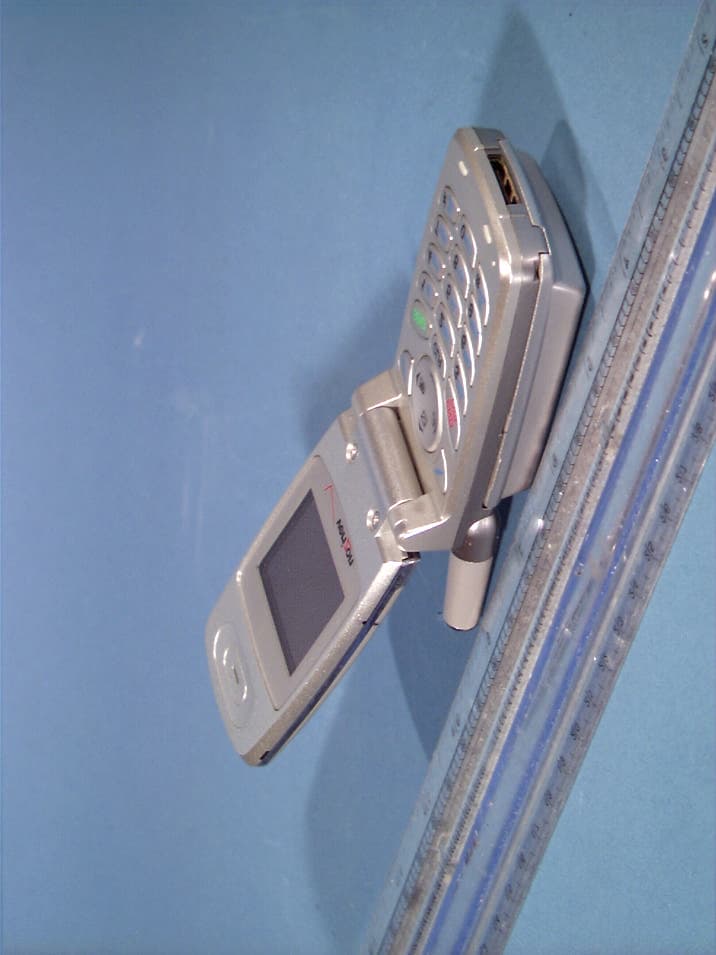
Click to zoom
Application Details
- Equipment Class
- PCE - PCS Licensed Transmitter held to ear
- Date of Grant
- Sep 12, 2002
- Application Purpose
- Original Equipment
- Date of Application
- Sep 12, 2002
- Equipment Note
- Dual-Band CDMA Phone
- Frequency Range
- 1851.25000000 - 1908.75000000
- Company
- LG Electronics USA, Inc.
- Country
- United States
Documents & Files
Document Text
Text extracted from the exhibit documents filed with the FCC. Open a document above to read the original.
Users Manual
LG-TM250 User Guide [PCS/GPS/Cellular] CDMA Mobile Phone For more information about RF exposure, please visit the FCC website at www.fcc.gov FCC RF EXPOSURE INFORMATION In August 1996 the Federal Communications Commission (FCC) of the United States with its action in Report and Order FCC 96-326 adopted an updated safety standard for human exposure to radio frequency electromagnetic energy emitted by FCC regulated transmitters. Those guidelines are consistent with the safety standard previously set by both U.S. and international standards bodies. The design of this phone complies with the FCC guidelines and these international standards. Use only the supplied or an approved antenna. Unauthorized antennas, modifications, or attachments could impair call quality, damage the phone, or result in violation of FCC regulations. Do not use the phone with a damaged antenna. If a damaged antenna comes into contact with the skin, a minor burn may result. Please contact your local dealer for replacement antenna. Body-worn Operation This device was tested for typical body-worn operations with the back of the phone kept 1.5 cm. from the body. To maintain compliance with FCC RF exposure requirements, use only belt-clips, holsters or similar accessories that maintain a 1.5 cm. separation distance between the user’s body and the back of the phone, including the antenna. The use of belt-clips, holsters and similar accessories should not contain metallic components in its assembly. The use of accessories that do not satisfy these requirements may not comply with FCC RF exposure requirements, and should be avoided. WARNING! Read this information before using your phone Contents Introduction Highlights Important Information Check Accessories Before You Start FCC RF EXPOSURE INFORMATION Chapter 1. Getting Started Cautions Phone Overview On screen Icons Chapter 2. Basic Functions Turning the Phone On and Off Making a Call Correcting Dialing Mistakes Receiving Calls Using Quick Mode Call Waiting Mute Redialing Calls Adjusting the Volume Power Save Mode Signal Strength Emergency Dialing Mini Display Speed Dialing Caller ID Phone Book Features Chapter 3. Menu Features General Guidelines to MENU Access and Settings Sound Display System Features Utility Security Voice Services Browser Start Chapter 4. Book Features Call History Phone Book Function of Scheduler General Guidelines to Scheduler Access and Settings Scheduler Item Descriptions Schedule Wake Up Viewing Your Telephone Number Chapter 5. Message Features Voice Send Msg New Text Old Text Erase All Setting Chapter 6. Functions used during a call Mute Memo Recording Key Tone Voice Privacy Chapter 7. Accessories Chapter 1. Getting Started Cautions z Using the phone in proximity to receiving equipment (i.e., TV or radio) may cause interference. z Keep your phone in a safe place when not in use. z Only use the batteries, antennas, and chargers provided by LG. Using the wrong accessories could void your warranty. z Only authorized personnel should service the phone and its accessories. Faulty installation or service may result in accidents and consequently invalidate the warranty. z Do not hold the antenna while the phone is in use. z Do not use the phone in designated “no cellular phone use” areas. z Do not expose the phone to high temperature or humidity. z Avoid getting your phone wet. If the phone gets wet, turn the power off immediately and remove the battery pack. If the phone is mal-functional, return it to the dealer for service. z Avoid shock or impact on the phone. Phone Overview Function Key Descriptions Lamp The red light goes on when you use the power key to turn on the phone and when there are incoming calls and messages. LCD screen Displays messages & indicator icons. END/PWR Used to turn power on/off. This key disconnects a call. Using this key, you can also exit out of a menu back to the phone’s standby display without changing the setting. SEND Allows user to place or answer calls. Mouse Key This mouse key allows quick access to text and voice mail notification messages. calendar, outgoing call log, phonebook Find name. Cellcase Close the active cellcase to the terminate a call in progress. Open the active cellcase to answer an incoming call. Soft Keys The current operation of a soft key is defined by the word at the bottom of the display. Soft Keys 2 : If you press this key once in a menu, you can go back one level and if you press and hold the key in a menu, you can go back to the standby display. Side Keys These keys enable you to adjust keybeep volume (in standby mode) and earpiece volume (in a call status). Scroll Keys These keys are used to scroll through the memory locations and menu items. - In the standby status, set the manner mode by pressing the button. (for 2 seconds) - In the standby status, set the lock function by pressing the button. (for 2 seconds) Alphanumeric Keypad These keys enable you to enter numbers and characters and choose menu items. Clear Key On screen Icons The phone screen displays several onscreen icons and onscreen icons appears when the phone is power on. Icons Descriptions Displays the strength of the signal received by the phone and current signal strength is indicated as the number of bars displayed on the screen. No service The phone is not receiving a system signal. In use A call is in progress. No icon indicates the phone is in standby mode. Digital indicator Digital service is available. Analog indicator Analog service is available Indicates that a text message or voice mail has been received Roaming The phone is outside of its home service area. Charge level Indicates battery charge level. D Chapter 2. Basic Functions Turning the Phone On and Off Turning the Phone On 1. Install a charged battery pack or connect the phone to an external power source such as the cigarette lighter adapter or car kit. 2. Press [END/PWR] for a few seconds until the red light on the top of the phone flashes. z Fully extend the a…
Text truncated - open the document above for the full version.
Attestation Statements
August 16. 2002 Federal Communication Commission Equipment Authorization Branch 7435 Oakland Mills Road Columbia, MID 21046 In re : LG Electronics Inc.. FCC ID: BEJTM250 Dual Band CDMA Phone Part 22/24 Certification Request for Confidentiality Gentlemen: In accordance with 0.459 of CFR 47, LG Electronics, Inc. hereby requests confidentiality of the Block Diagrams attachment, Schematic Diagrams & Circuit Description attachment, Operational Description attachment, and Parts List/Tune-Up Procedure attachment for the above-referenced Type Acceptance application. These documents contain detailed system and equipment description and related information about the product which LG Electronics Inc. Considers to be proprietary, confidential, and a custom design and, otherwise, would not release to the general public. Since this design is a basis from which future technological products will evolve, LG Electronics Inc. considers this information to be of benefit to its competitors, such that the disclosure of the information in these documents would give competitors an unfair advantage in the market. Sincerely, E.S.Park Research Engineer CDMA Handset Lab LG Electronics Inc. Tel : 82-2-850-3850 Fax : 82-2-850-3861 [email protected] 459-9, Kasan-dong,Kemchun-ku Seoul 153-023, Korea LG Electronics Inc. LGE
Attestation Statements
AFFIDAVIT FOR ESN PROTECTION OF CELLULAR MOBILE TELEPHONES We hereby certify that the LGE Handheld Portable Cellular Telephone(FCC ID: BEJTM250) is so designed that it complies with all the requirements for ESN protection specified in section 22.919 of the FCC Rules. A) The transmitter in service has a unique ESN. B) The ESN host component is permanently attached to a main circuit board of the mobile transmitter and the integrity of the unit operating software cannot be altered. The ESN is plated from fraudulent contact and tampering. The ESN is encoded using multiplication by a polynomial and the ESN data programmed in the memory with other information. C) The ESN is factory-set and cannot be altered, transferred, removed or otherwise able to be manipulated. Cellular mobile equipment is specifically designed such that any attempt to remove, tamper with, or change the ESN chip, its logic system, or firmware originally programmed by the manufacturer will render the mobile transmitter inoperative. Sincerely, E.S.Park Research Engineer CDMA Handset Lab LG Electronics Inc. Tel : 82-2-850-3850 Fax : 82-2-850-3861 [email protected] 459-9, Kasan-dong,Kemchun-ku Seoul 153-023, Korea LG Electronics Inc. LGE Tel : 82-2-850-3850 Fax : 82-2-850-3861 [email protected] 459-9, Kasan-dong,Kemchun-ku Seoul 153-023, Korea LG Electronics Inc. LGE August 16. 2002 Federal Communication Commission Equipment Authorization Branch 7435 Oakland Mills Road Columbia, MID 21046 Subject : LG Electronics Inc.. FCC ID: BEJTM250 User’s Manual RF Exposure Warning Statement Gentlemen: LG Electronics, Inc. hereby conforms that the attached RF exposure warning page will be ready visible to the user, and will be placed at a prominent location in the front of user’s manual. If you have any questions or comments concerned the above, please do not hesitate to contact PCTEST Lab. or me at (410)290-6652 Sincerely, E.S.Park Research Engineer CDMA Handset Lab LG Electronics Inc.
Cover Letter(s)
. September 5, 2002 Federal Communications Commission Equipment Approval Services 7435 Oakland Mills Road Columbia, MD 21046 SUBJECT: LG ELECTRONICS, INC. FCC ID: BEJTM250 Part 22/24 Certification Gentlemen: Submitted herewith, on behalf of LG ELECTRONICS, Inc., is an application for Part 22/24 Certification of the Dual-Band CDMA Phone. Attached is the applicant’s Letter of Authorization, Confidentiality Request, ESN affidavit, measurement report test data and plots, RF Exposure measurement report and data, FCC ID label and location, test setup photographs, internal and external photographs, block diagram (confidential), circuit diagrams & description (confidential), operational description (confidential), parts list & tune-up procedure (confidential), and the user's manual. Should you have any questions or comments concerning the above, please contact the undersigned.
External Photos
© 2002 PCTEST Lab LG Electronics, Inc. FCC ID: BEJTM250 Dual-Band CDMA Phone (Model: LG-TM250) © 2002 PCTEST Lab LG Electronics, Inc. FCC ID: BEJTM250 Dual-Band CDMA Phone (Model: LG-TM250) © 2002 PCTEST Lab LG Electronics, Inc. FCC ID: BEJTM250 Dual-Band CDMA Phone (Model: LG-TM250) © 2002 PCTEST Lab LG Electronics, Inc. FCC ID: BEJTM250 Dual-Band CDMA Phone (Model: LG-TM250) © 2002 PCTEST Lab LG Electronics, Inc. FCC ID: BEJTM250 Dual-Band CDMA Phone (Model: LG-TM250) © 2002 PCTEST Lab LG Electronics, Inc. FCC ID: BEJTM250 Dual-Band CDMA Phone (Model: LG-TM250) © 2002 PCTEST Lab LG Electronics, Inc. FCC ID: BEJTM250 Dual-Band CDMA Phone (Model: LG-TM250)
ID Label/Location Info
© 2002PCTEST Lab FCC ID SAMPLE LABEL & LOCATION LABELLING REQUIREMENTS PER §§ 2.925 The Label shown shall be permanently affixed at a conspicuous location on the device and be readily visible to the user at the time of purchase. (SEE NEXT PAGE) Model No. : LG-TM250 FCC ID : BEJTM250 S/N : Made in Korea LG Electronics Inc. LG
Internal Photos
© 2002 PCTEST Lab LG Electronics, Inc. FCC ID: BEJTM250 Dual-Band CDMA Phone (Model: LG-TM250) © 2002 PCTEST Lab LG Electronics, Inc. FCC ID: BEJTM250 Dual-Band CDMA Phone (Model: LG-TM250) © 2002 PCTEST Lab LG Electronics, Inc. FCC ID: BEJTM250 Dual-Band CDMA Phone (Model: LG-TM250) © 2002 PCTEST Lab LG Electronics, Inc. FCC ID: BEJTM250 Dual-Band CDMA Phone (Model: LG-TM250) © 2002 PCTEST Lab LG Electronics, Inc. FCC ID: BEJTM250 Dual-Band CDMA Phone (Model: LG-TM250) © 2002 PCTEST Lab LG Electronics, Inc. FCC ID: BEJTM250 Dual-Band CDMA Phone (Model: LG-TM250) © 2002 PCTEST Lab LG Electronics, Inc. FCC ID: BEJTM250 Dual-Band CDMA Phone (Model: LG-TM250) © 2002 PCTEST Lab LG Electronics, Inc. FCC ID: BEJTM250 Dual-Band CDMA Phone (Model: LG-TM250) © 2002 PCTEST Lab LG Electronics, Inc. FCC ID: BEJTM250 Dual-Band CDMA Phone (Model: LG-TM250) © 2002 PCTEST Lab LG Electronics, Inc. FCC ID: BEJTM250 Dual-Band CDMA Phone (Model: LG-TM250)
RF Exposure Info
PCTEST ENGINEERING LABORATORY, INC. 6660 — B Dobbin Road • Columbia, MD 21045 • USA Telephone 410.290.6652 / Fax 410.290.6654 http://www.pctestlab.com (email: [email protected]) CERTIFICATE OF COMPLIANCE (SAR EVALUATION) PCTEST SAR REPORT FCC CERTIFICATION Reviewed by: Quality Manager SAR Filename: SAR-220815439.BEJ Test Dates: August 20-22, 2002 Phone Type: Dual-Band CDMA FCC ID: BEJTM250 Page 1 of 30 © 2002 PCTEST Engineering Laboratory, Inc APPLICANT NAME & ADDRESS: DATE & LOCATION OF TESTING: LG ELECTRONICS, Inc. Dates of Tests: August 20-22, 2002 Communication Terminal Research Lab Test Report S/N: SAR.220815439.BEJ 459-9, Kasan-dong, Keumchun-Ku Test Site: PCTEST Lab, Columbia, MD USA Seoul, KOREA 153-023 Attn: E.S. Park, Research Engineer FCC ID: BEJTM250 APPLICANT: LG ELECTRONICS, INC. EUT Type: Dual-Band CDMA Phone Tx Frequency: 824.70 — 848.31 MHz (CDMA) /1851.25 — 1908.75 MHz (PCS CDMA) Rx Frequency: 869.70 — 893.31 MHz (CDMA) / 1931.25 — 1988.75 MHz (PCS CDMA) Max. RF Output Power: 0.253 W ERP CDMA (24.033 dBm) / 24.0 dBm Conducted 0.256 W ERP CDMA (24.081 dBm) / 24.0 dBm Conducted Max. SAR Measurement: 1.15W/kg CDMA Head SAR; 1.00W/kg CDMA Body SAR; 1.27W/kg PCS CDMA Head SAR; 0.735W/kg PCS CDMA Body SAR Trade Name/Model(s): LG-TM250 FCC Classification: Licensed Portable Transmitter Held to Ear (PCE) FCC Rule Part(s): §2.1093; FCC/OET Bulletin 65 Supplement C [July 2001] Application Type: Certification Test Device Serial No.: identical prototype This wireless portable device has been shown to be capable of compliance for localized specific absorption rate (SAR) for uncontrolled environment/general population exposure limits specified in ANSI/IEEE Std. C95.1-1992 and had been tested in accordance with the measurement procedures specified in FCC/OET Bulletin 65 Supplement C (2001) and IEEE Std. 1528-200X (Draft 6.4, July 2001). I attest to the accuracy of data. All measurements reported herein were performed by me or were made under my supervision and are correct to the best of my knowledge and belief. I assume full responsibility for the completeness of these measurements and vouch for the qualifications of all persons taking them. PCTEST certifies that no party to this application has been denied the FCC benefits pursuant to Section 5301 of the Anti-Drug Abuse Act of 1988, 21 U.S.C. 862. 220815439.BEJ PCTEST SAR REPORT FCC CERTIFICATION Reviewed by: Quality Manager SAR Filename: SAR-220815439.BEJ Test Dates: August 20-22, 2002 Phone Type: Dual-Band CDMA FCC ID: BEJTM250 Page 2 of 30 © 2002 PCTEST Engineering Laboratory, Inc TABLE OF CONTENTS 1. INTRODUCTION .................................................................................................. 3 SAR DEFINITION ................................................................................................. 3 2. SAR MEASUREMENT SETUP .................................................................................. 4 Robotic System ....................................................................................................... 4 System Hardware ................................................................................................... 4 System Electronics .................................................................................................. 4 3. DASY3 E-FIELD PROBE SYSTEM ............................................................................ 5 Probe Measurement System.................................................................................... 5 Probe Specifications ............................................................................................... 5 4. Probe Calibration Process....................................................................................... 6 Dosimetric Assessment Procedure .......................................................................... 6 Free Space Assessment ........................................................................................... 6 Temperature Assessment ........................................................................................ 6 5. PHANTOM & EQUIVALENT TISSUES .................................................................... 7 SAM Phantom ........................................................................................................ 7 Brain & Muscle Simulating Mixture Characterization ............................................. 7 Device Holder for Transmitters............................................................................... 7 6. TEST SYSTEM SPECIFICATIONS ............................................................................. 8 Automated Test System Specifications .................................................................... 8 7. DOSIMETRIC ASSESSMENT & PHANTOM SPECS ................................................. 9 Measurement Procedure......................................................................................... 9 Specific Anthropomorphic Mannequin (SAM) Specifications.................................. 9 8. DEFINITION OF REFERENCE POINTS ................................................................. 10 EAR Reference Point............................................................................................. 10 Handset Reference Points ..................................................................................... 10 9. TEST CONFIGURATION POSITIONS .................................................................. 11 Positioning for Cheek/Touch ................................................................................ 11 Positioning for Ear / 15° Tilt .................................................................................. 12 Body Holster /Belt Clip Configurations ................................................................. 13 10. ANSI/IEEE C95.1 - 1992 RF EXPOSURE LIMITS ................................................... 14 Uncontrolled Environment ...................................................…
Text truncated - open the document above for the full version.
RF Exposure Info
LGE FCC ID: BEJTM250 -- Cellular CDMA Head SAR SAM Phantom; Right Hand Section; Probe:ET3DV6 - SN1677; ConvF(6.70,6.70,6.70) Med. Parameters 835 MHz Brain: σ = 0.92 mho/m ε r = 42.1 ρ = 1.00 g/cm 3 ; Antenna Position -- Fixed: Crest Factor 1.0 SAR (1g): 1.04 mW/g, SAR (10g): 0.677 mW/g LG Dual-Band Model: LG-TM250 Cellular CDMA Mode, Ch.0777 [848.31MHz]; Standard Battery; Flip = open; Ambient Temp. = 22.2°C / Meas. Tissue Temp. = 22.1°C Conducted Power = 24.0dBm; Right Head Phantom, Cheek/Touch position Test Date -- 08/20/2002 [FCC/OET Bulletin 65 - Supplement C, July 2001] SAR Tot [mW/g] 1.08E-1 3.23E-1 5.38E-1 7.54E-1 9.69E-1 PCTEST Engineering Laboratory, Inc. LGE FCC ID: BEJTM250 -- Cellular CDMA Head SAR SAM Phantom; Right Hand Section; Probe:ET3DV6 - SN1677; ConvF(6.70,6.70,6.70) Med. Parameters 835 MHz Brain: σ = 0.92 mho/m ε r = 42.1 ρ = 1.00 g/cm 3 ; Antenna Position -- Fixed: Crest Factor 1.0 SAR (1g): 0.141 mW/g, SAR (10g): 0.106 mW/g LG Dual-Band Model: LG-TM250 Cellular CDMA Mode, Ch.0383 [836.49MHz]; Standard Battery; Flip = open; Ambient Temp. = 22.2°C / Meas. Tissue Temp. = 22.1°C Conducted Power = 24.0dBm; Right Head Phantom, EAR/15 Degree Tilt position Test Date -- 08/20/2002 [FCC/OET Bulletin 65 - Supplement C, July 2001] SAR Tot [mW/g] 1.50E-2 4.50E-2 7.50E-2 1.05E-1 1.35E-1 PCTEST Engineering Laboratory, Inc. LGE FCC ID: BEJTM250 -- Cellular CDMA Head SAR SAM Phantom; Left Hand Section; Probe:ET3DV6 - SN1677; ConvF(6.70,6.70,6.70) Med. Parameters 835 MHz Brain: σ = 0.92 mho/m ε r = 42.1 ρ = 1.00 g/cm 3 ; Antenna Position -- Fixed: Crest Factor 1.0 SAR (1g): 1.15 mW/g, SAR (10g): 0.753 mW/g LG Dual-Band Model: LG-TM250 Cellular CDMA Mode, Ch.1013 [824.70MHz]; Standard Battery; Flip = open; Ambient Temp. = 22.2°C / Meas. Tissue Temp. = 22.1°C Conducted Power = 24.0dBm; Left Head Phantom, Cheek/Touch position Test Date -- 08/20/2002 [FCC/OET Bulletin 65 - Supplement C, July 2001] SAR Tot [mW/g] 1.08E-1 3.25E-1 5.41E-1 7.58E-1 9.75E-1 PCTEST Engineering Laboratory, Inc. LGE FCC ID: BEJTM250 -- Cellular CDMA Head SAR SAM Phantom; Left Hand Section; Probe:ET3DV6 - SN1677; ConvF(6.70,6.70,6.70) Med. Parameters 835 MHz Brain: σ = 0.92 mho/m ε r = 42.1 ρ = 1.00 g/cm 3 ; Antenna Position -- Fixed: Crest Factor 1.0 SAR (1g): 0.162 mW/g, SAR (10g): 0.114 mW/g LG Dual-Band Model: LG-TM250 Cellular CDMA Mode, Ch.0383 [836.49MHz]; Standard Battery; Flip = open; Ambient Temp. = 22.2°C / Meas. Tissue Temp. = 22.1°C Conducted Power = 24.0dBm; Left Head Phantom, EAR/15 Degree Tilt position Test Date -- 08/20/2002 [FCC/OET Bulletin 65 - Supplement C, July 2001] SAR Tot [mW/g] 1.59E-2 4.77E-2 7.95E-2 1.11E-1 1.43E-1 PCTEST Engineering Laboratory, Inc. LGE FCC ID: BEJTM250 -- PCS CDMA Head SAR SAM Phantom; Right Hand Section; Probe:ET3DV6 - SN1677; ConvF(5.30,5.30,5.30) Med. Parameters 1900 MHz Brain: σ = 1.39 mho/m ε r = 40.6 ρ = 1.00 g/cm 3 ; Antenna Position -- Fixed: Crest Factor 1.0 SAR (1g): 1.27 mW/g, SAR (10g): 0.775 mW/g LG Dual-Band Model: LG-TM250 PCS CDMA Mode, Ch.0025 [1851.25MHz]; Standard Battery; Flip = open; Ambient Temp. = 22.2°C / Meas. Tissue Temp. = 22.1°C Conducted Power = 24.0dBm; Right Head Phantom, Cheek/Touch position Test Date -- 08/20/2002 [FCC/OET Bulletin 65 - Supplement C, July 2001] SAR Tot [mW/g] 1.25E-1 3.75E-1 6.26E-1 8.76E-1 1.13E+0 PCTEST Engineering Laboratory, Inc. LGE FCC ID: BEJTM250 -- PCS CDMA Head SAR SAM Phantom; Right Hand Section; Probe:ET3DV6 - SN1677; ConvF(5.30,5.30,5.30) Med. Parameters 1900 MHz Brain: σ = 1.39 mho/m ε r = 40.6 ρ = 1.00 g/cm 3 ; Antenna Position -- Fixed: Crest Factor 1.0 SAR (1g): 0.0377 mW/g, SAR (10g): 0.0221 mW/g LG Dual-Band Model: LG-TM250 PCS CDMA Mode, Ch.0600 [1880.00MHz]; Standard Battery; Flip = open; Ambient Temp. = 22.2°C / Meas. Tissue Temp. = 22.1°C Conducted Power = 24.0dBm; Right Head Phantom, EAR/15 Degree Tilt position Test Date -- 08/20/2002 [FCC/OET Bulletin 65 - Supplement C, July 2001] SAR Tot [mW/g] 3.90E-3 1.17E-2 1.95E-2 2.73E-2 3.51E-2 PCTEST Engineering Laboratory, Inc. LGE FCC ID: BEJTM250 -- PCS CDMA Head SAR SAM Phantom; Left Hand Section; Probe:ET3DV6 - SN1677; ConvF(5.30,5.30,5.30) Med. Parameters 1900 MHz Brain: σ = 1.39 mho/m ε r = 40.6 ρ = 1.00 g/cm 3 ; Antenna Position -- Fixed: Crest Factor 1.0 SAR (1g): 1.26 mW/g, SAR (10g): 0.774 mW/g LG Dual-Band Model: LG-TM250 PCS CDMA Mode, Ch.0025 [1851.25MHz]; Standard Battery; Flip = open; Ambient Temp. = 22.2°C / Meas. Tissue Temp. = 22.1°C Conducted Power = 24.0dBm; Left Head Phantom, Cheek/Touch position Test Date -- 08/20/2002 [FCC/OET Bulletin 65 - Supplement C, July 2001] SAR Tot [mW/g] 1.25E-1 3.74E-1 6.24E-1 8.73E-1 1.12E+0 PCTEST Engineering Laboratory, Inc. LGE FCC ID: BEJTM250 -- PCS CDMA Head SAR SAM Phantom; Left Hand Section; Probe:ET3DV6 - SN1677; ConvF(5.30,5.30,5.30) Med. Parameters 1900 MHz Brain: σ = 1.39 mho/m ε r = 40.6 ρ = 1.00 g/cm 3 ; Antenna Position -- Fixed: Crest Factor 1.0 SAR (1g): 0.0493 mW/g, SAR (10g): 0.0294 mW/g LG Dual-Band Model: LG-TM250 PCS CDMA Mode, Ch.0600 [1880.00MHz]; Standard Battery; Flip = open; Ambient Temp. = 22.2°C / Meas. Tissue Temp. = 22.1°C Conducted Power = 24.0dBm; Left Head Phantom, EAR/15 Degree Tilt position Test Date -- 08/20/2002 [FCC/OET Bulletin 65 - Supplement C, July 2001] SAR Tot [mW/g] 4.60E-3 1.38E-2 2.30E-2 3.22E-2 4.14E-2 PCTEST Engineering Laboratory, Inc. LGE FCC ID: BEJTM250 -- Cellular CDMA Body SAR SAM Phantom; Flat Section; Probe:ET3DV6 - SN1677; ConvF(6.40,6.40,6.40) Med. Parameters 835 MHz Muscle: σ = 0.98 mho/m ε r = 55.6 ρ = 1.00 g/cm 3 ; Antenna Position -- Fixed: Crest Factor 1.0 SAR (1g): 1.00 mW/g, SAR (10g): 0.676 mW/g LG Dual-Band Model: LG-TM250 Cellular CDMA Mode, Ch.1013 [824.70MHz]; Standard Battery; Flip = closed; Ambient Temp. = 22.4°C / Meas. Tissue Temp. = 22.2°C Conducted Power = 24.0dBm; Spacing = 1.5cm from back (antenna side) of EUT to flat phantom, No BeltClip/No Holster Test Date -- 08/22/2002 [FCC/OET Bulletin 65 - Supplement C, July 2001] SAR…
Text truncated - open the document above for the full version.
RF Exposure Info
© 2002 PCTEST Lab LG Electronics, Inc. FCC ID: BEJTM250 Dual-Band CDMA Phone (Model: LG-TM250) © 2002 PCTEST Lab LG Electronics, Inc. FCC ID: BEJTM250 Dual-Band CDMA Phone (Model: LG-TM250) © 2002 PCTEST Lab LG Electronics, Inc. FCC ID: BEJTM250 Dual-Band CDMA Phone (Model: LG-TM250) © 2002 PCTEST Lab LG Electronics, Inc. FCC ID: BEJTM250 Dual-Band CDMA Phone (Model: LG-TM250) © 2002 PCTEST Lab LG Electronics, Inc. FCC ID: BEJTM250 Dual-Band CDMA Phone (Model: LG-TM250) © 2002 PCTEST Lab LG Electronics, Inc. FCC ID: BEJTM250 Dual-Band CDMA Phone (Model: LG-TM250) © 2002 PCTEST Lab LG Electronics, Inc. FCC ID: BEJTM250 Dual-Band CDMA Phone (Model: LG-TM250) © 2002 PCTEST Lab LG Electronics, Inc. FCC ID: BEJTM250 Dual-Band CDMA Phone (Model: LG-TM250) © 2002 PCTEST Lab LG Electronics, Inc. FCC ID: BEJTM250 Dual-Band CDMA Phone (Model: LG-TM250) © 2002 PCTEST Lab LG Electronics, Inc. FCC ID: BEJTM250 Dual-Band CDMA Phone (Model: LG-TM250) © 2002 PCTEST Lab LG Electronics, Inc. FCC ID: BEJTM250 Dual-Band CDMA Phone (Model: LG-TM250) © 2002 PCTEST Lab LG Electronics, Inc. FCC ID: BEJTM250 Dual-Band CDMA Phone (Model: LG-TM250) © 2002 PCTEST Lab LG Electronics, Inc. FCC ID: BEJTM250 Dual-Band CDMA Phone (Model: LG-TM250) © 2002 PCTEST Lab LG Electronics, Inc. FCC ID: BEJTM250 Dual-Band CDMA Phone (Model: LG-TM250) © 2002 PCTEST Lab LG Electronics, Inc. FCC ID: BEJTM250 Dual-Band CDMA Phone (Model: LG-TM250)
RF Exposure Info
835MHz Brain Dipole Validation SAM Phantom; Flat Section; Probe:ET3DV6 - SN1677; ConvF(6.70,6.70,6.70) Med. Parameters 835 MHz Brain: σ = 0.91 mho/m ε r = 41.6 ρ = 1.00 g/cm 3 ; Antenna Position -- Out; Crest Factor 1.0 SAR (1g): 2.47 mW/g ± 0.00 dB, SAR (10g): 1.59 mW/g ± 0.00 dB 835MHz Brain Dipole Validation (D835V2 S/N: 406) Frequency: 835 MHz; Antenna Input Power: 250 [mW]; Ambient Temp. = 22.2°C / Meas. Tissue Temp. = 22.1°C PCTEST Brain Tissue Simulating Liquid [08/20/2002] SAR Tot [mW/g] 3.53E-1 6.78E-1 1.09E+0 2.31E+0 3.37E+0 PCTEST Engineering Laboratory, Inc. 1900MHz Brain Dipole Validation SAM Phantom; Flat Section; Probe:ET3DV6 - SN1677; ConvF(5.30,5.30,5 .30) Med. Parameters 1900 MHz Brain: σ = 1.39 mho/m ε r = 40.6 ρ = 1.00 g/cm 3 ; Antenna Position -- Out; Crest Factor 1.0 SAR (1g): 10.3 mW/g, SAR (10g): 5.18 mW/g 1900MHz Brain Dipole Validation (D1900V2 S/N: 502) Frequency: 1900 MHz; Antenna Input Power: 250 [mW]; Ambient Temp. = 22.2°C / Meas. Tissue Temp. = 22.1°C PCTEST Brain Tissue Simulating Liquid [08/20/2002] SAR Tot [mW/g] 8.97E-1 4.96E+0 7.76E+0 8.91E+0 7.9 8E+0 PCTEST Engineering Laboratory, Inc.
Test Report
PCTEST PT. 22/24 REPORT FCC CERTIFICATION Reviewed By: Quality Manager Test Report S/N: 22/24.220815438.BEJ Test Dates: Aug. 20-22, 2002 Phone Type: Dual-Band CDMA FCC ID: BEJTM250 Page 1 of 24 © 2002 PCTEST ENGINEERING LABORATORY, INC. PCTEST Engineering Laboratory, Inc. 6660-B Dobbin Road • Columbia, MD 21045 • U.S.A. TEL (410) 290-6652 • FAX (410) 290-6654 http://www.pctestlab.com CERTIFICATE OF COMPLIANCE FCC Part 24 & 22 Certification LG Electronics Inc. Dates of Tests: August 20-22, 2002 Communication Terminal Research Lab Test Report S/N: 22/24.220815438.BEJ 459-9, Kasan-dong, Keumchun-ku Test Site: PCTEST Lab, Columbia MD USA Seoul 153-023, Korea Attn: Harris Ahn, Principal Engineer FCC ID BEJTM250 APPLICANT LG ELECTRONICS, INC. Classification: Licensed Portable Transmitter Held to Ear (PCE) FCC Rule Part(s): §24(E), §22.901(d); §2 EUT Type: Dual-Band CDMA Phone Model: LG-TM250 Tx Frequency Range: 824.70 — 848.31MHz (CDMA) / 1851.25MHz — 1908.75MHz (PCS CDMA) Rx Frequency Range: 869.70 — 893.31MHz (CDMA) / 1931.25MHz — 1988.75MHz (PCS CDMA) Max. RF Output Power: 0.253 W ERP CDMA (24.033 dBm) / 0.256 W ERP CDMA (24.081 dBm) Max. SAR Measurement: 1.15W/kg CDMA Head SAR; 1.00W/kg CDMA Body SAR; 1.27W/kg PCS CDMA Head SAR; 0.735W/kg PCS CDMA Body SAR Emission Designator(s): 1M25F9W (CDMA) This equipment has been shown to be capable of compliance with the applicable technical standards as indicated in the measurement report and was tested in accordance with the measurement procedures specified in §2.947. I attest to the accuracy of data. All measurements reported herein were performed by me or were made under my supervision and are correct to the best of my knowledge and belief. I assume full responsibility for the completeness of these measurements and vouch for the qualifications of all persons taking them. PCTEST certifies that no party to this application has been denied the FCC benefits pursuant to Section 5301 of the Anti-Drug Abuse Act of 1988, 21 U.S.C. 862. 220815438.BEJ PCTEST PT. 22/24 REPORT FCC CERTIFICATION Reviewed By: Quality Manager Test Report S/N: 22/24.220815438.BEJ Test Dates: Aug. 20-22, 2002 Phone Type: Dual-Band CDMA FCC ID: BEJTM250 Page 2 of 24 © 2002 PCTEST ENGINEERING LABORATORY, INC. TABLE OF CONTENTS ATTACHMENT A: COVER LETTER(S) ATTACHMENT B: ATTESTATION STATEMENT(S) ATTACHMENT C: TEST REPORT 1.1 SCOPE 3 2.1 INTRODUCTION 4 3.1 INSERTS 5 4.1 DESCRIPTION OF TESTS 6-8 5.1 EFFECTIVE RADIATED POWER OUTPUT 9 6.1 EQUIVALENT ISOTROPIC RADIATED POWER 10 7.1 RADIATED MEASUREMENTS 11-16 8.1 FREQUENCY STABILITY 17-20 9.1 PLOTS OF EMISSIONS 21 10.1 LIST OF TEST EQUIPMENT 22 11.1 SAMPLE CALCULATIONS 23 12.1 CONCLUSION 24 ATTACHMENT D: TEST PLOTS ATTACHMENT E: FCC ID LABEL / LOCATION ATTACHMENT F: TEST SETUP PHOTOGRAPHS ATTACHMENT G: EXTERNAL PHOTOGRAPHS ATTACHMENT H: INTERNAL PHOTOGRAPHS ATTACHMENT I: BLOCK DIAGRAM(S) ATTACHMENT J: SCHEMATIC DIAGRAM(S) ATTACHMENT K: OPERATIONAL / CIRCUIT DESCRIPTION ATTACHMENT L: PARTS LIST/TUNE UP PROCEDURE ATTACHMENT M: USER’S MANUAL ATTACHMENT N: SAR MEASUREMENT REPORT ATTACHMENT O: SAR TEST DATA ATTACHMENT P: SAR TEST SETUP PHOTOGRAPHS ATTACHMENT P: SAR TEST SETUP PHOTOGRAPHS ATTACHMENT Q: DIPOLE VALIDATION ATTACHMENT R: PROBE CALIBRATION PCTEST PT. 22/24 REPORT FCC CERTIFICATION Reviewed By: Quality Manager Test Report S/N…
Text truncated - open the document above for the full version.
Contact Information
Applicant
David Kim(Team leader, LGEUS NA Policy & Regulatory Affairs)
Technical Contact
PCTEST Engineering Lab., Inc.Randy Ortanez
[email protected]410-290-6652
6660-B Dobbin Road · Columbia, Maryland · United States
Non-Technical Contact
PCTEST Engineering Lab., Inc.Randy Ortanez
[email protected]410-290-6652
Test Firm
PCTEST Engineering Laboratory, Inc.Randy Ortanez
Technical Specifications
| # | Rule Parts | Frequency Range | Power Output | Emission | Tolerance |
|---|---|---|---|---|---|
| 2 | 24E | 1.85 GHz - 1.91 GHz | 256.00 mW | 1M25F9W | 2.5 ppm |
Other Applications from LG Electronics USA, Inc.
BEJTFHOBINI1F1
Jan 08, 2025Telematics
Equipment Class
DTS - Digital Transmission SystemBEJNT-16Z90TS
Oct 02, 2024Notebook Computer
Equipment Class
DSS - Part 15 Spread Spectrum TransmitterBEJSP-PEW8
Sep 26, 2024Stylus Pen
Equipment Class
DCD - Part 15 Low Power Transmitter Below 1705 kHzBEJ-RSMV2
Sep 24, 2024RF Module
Equipment Class
FDS - Part 15 Field Disturbance SensorBEJTFBMEIBN3EU
Sep 24, 2024Telematics
Equipment Class
NII - Unlicensed National Information Infrastructure TX