BEJV204XJAMicrowave Oven
LG Electronics USA, Inc.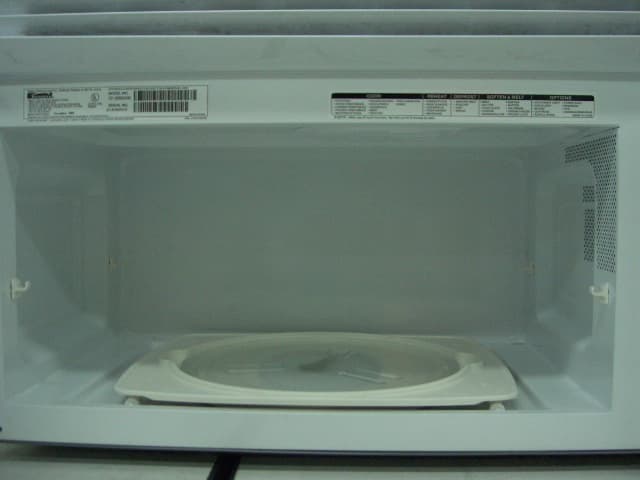
Click to zoom
Application Details
- Equipment Class
- 8CC - Part 18 Consumer Device
- Date of Grant
- Apr 19, 2005
- Application Purpose
- Original Equipment
- Date of Application
- Apr 19, 2005
- Equipment Note
- Microwave Oven
- Frequency Range
- 2450.00000000 - 2450.00000000
- Company
- LG Electronics USA, Inc.
- Country
- United States
Documents & Files
Document Text
Text extracted from the exhibit documents filed with the FCC. Open a document above to read the original.
Users Manual
Use & Care Guide Model MMV5207AA/AC Important Safety Instructions.................. 2-4 Features........................................................ 5-6 Operating Instructions ............................ 7-22 Care and Cleaning................................. 23-24 Cooking Utensils .......................................... 25 Troubleshooting ..................................... 26-27 Warranty......................................................... 28 Guide d’utilisation et d’entretien .............. 29 Guía de Uso y Cuidado ................................57 Keep instructions for future reference. Be sure manual stays with oven. Form No. A/04/04©2004 Maytag Appliances 3828W5A4122Part No. 8112P270-60 Over The Range Microwave Oven 2 Important Safety Instructions Installer: Please leave this guide with this appliance. Consumer: Please read and keep this Use & Care Guide for future reference. Keep sales receipt and/or cancelled check as proof of purchase. Model Number ________________________________ Serial Number_________________________________ Date of Purchase ______________________________ In our continuing effort to improve the quality and performance of our appliances, it may be necessary to make changes to the appliance without revising this guide. If you have questions, write us (include your model number and phone number) or call: Maytag Services SM Attn: CAIR ® Center P.O. Box 2370 Cleveland, TN 37320-2370 1-800-688-9900 U.S.A 1-800-688-2002 Canada 1-800-688-2080 (U.S.A TTY for hearing or speech impaired) (Mon.-Fri., 8 a.m.-8 p.m. Eastern Time) Internet: http://www.maytag.com What You Need to Know About Safety Instructions Warning and Important Safety Instructions appearing in this Use & Care Guide are not meant to cover all possible conditions and situations that may occur. Common sense, caution, and care must be exercised when installing, maintaining, or operating microwave. Always contact your dealer, distributor, service agent, or manufacturer about problems or conditions you do not understand. Recognize Safety Symbols, Words, Labels DANGER –– Immediate hazards which WILLresult in severe personal injury or death. WARNING –– Hazards or unsafe practices which COULD result in severe personal injury or death. CAUTION CAUTION –– Hazards or unsafe practices which COULD result in minor personal injury. To avoid personal injury or property damage, observe the following: 1. Do not deep fat fry in oven. Fat could overheat and be hazardous to handle. 2. Do not cook or reheat eggs in shell or with an unbroken yolk using microwave energy. Pressure may build up and erupt. Pierce yolk with fork or knife before cooking. 3. Pierce skin of potatoes, tomatoes, and similar foods before cooking with microwave energy. When skin is pierced, steam escapes evenly. 4. Do not operate oven without load or food in oven cavity. 5. Use only popcorn in packages designed and labeled for microwave use. Popping time varies depending on oven wattage. Do not continue to heat after popping has stopped. Popcorn will scorch or burn. Do not leave oven unattended. 6. Do not use regular cooking thermometers in oven. Most cooking thermometers contain mercury and may cause an electrical arc, malfunction, or damage to oven. 7. Do not use metal utensils in oven. 8. Never use paper, plastic, or other combustible materials that are not intended for cooking. 9. When cooking with paper, plastic, or other combustible materials, follow manufacturer's recommendations on product use. 10. Do not use paper towels which contain nylon or other synthetic fibers. Heated synthetics could melt and cause paper to ignite. 11. Do not heat sealed containers or plastic bags in oven. Food or liquid could expand quickly and cause container or bag to break. Pierce or open container or bag before cooking. 12. To avoid pacemaker malfunction, consult physician or pacemaker manufacturer about effects of microwave energy on pacemaker. CAUTION DANGER WARNING 3 Important Safety Instructions • To avoid risk of electrical shock or death, this oven must be grounded. • To avoid risk of electrical shock or death, do not alter the plug. Liquids such as water, coffee, or tea are able to be overheated beyond the boiling point without appearing to be boiling due to surface tension of the liquid. Visible bubbling or boiling when the container is removed from the microwave oven is not always present. THIS COULD RESULT IN VERY HOT LIQUIDS SUDDENLY BOILING OVER WHEN A SPOON OR OTHER UTENSIL IS INSERTED INTO THE LIQUID.To reduce the risk of injury to persons: 1. Do not overheat the liquid. 2. Stir the liquid both before and halfway through heating it. 3. Do not use straight-sided containers with narrow necks. 4. After heating, allow the container to stand in the microwave oven for a short time before removing the container. 5. Use extreme care when inserting a spoon or other utensil into the container. Grounding Instructions Oven MUST be grounded. Grounding reduces risk of electric shock by providing an escape wire for the electric current if an electrical short occurs. This oven is equipped with a cord having a grounding wire with a grounding plug. The plug must be plugged into an outlet that is properly installed and grounded. See Installation Instructions. Consult a qualified electrician or servicer if grounding instructions are not completely understood, or if doubt exists as to whether the oven is properly grounded. Do not use an extension cord. If the product power cord is too short, have a qualified electrician install a three-slot receptacle. This oven should be plugged into a separate 60 hertz circuit with the electrical rating as shown in specifications table. When the oven is on a circuit with other equipment, an increase in cooking times may be required and fuses can be blown. Microwave operates on standard household current, 110-120V. Federal Communications Commission Radio Frequency Interference Statement (U.S.A. Only) This equipment generates an…
Text truncated - open the document above for the full version.
Users Manual
43 Utilisation TABLEAU DE FUSION CATÉGORIE DIRECTIVES QUANTITÉ Le sortir de son emballage et le placer dans un récipient pour four à micro-ondes. Il n'est pas nécessaire de recouvrir le beurre. Remuer à la fin de la cuisson pour parfaire la fusion. On peut utiliser des pépites de chocolat ou des carrés de chocolat à cuire. Sortir les carrés de leur emballage et les placer dans un récipient pour four à micro- ondes. Remuer à la fin de la cuisson pour parfaire la fusion. Utiliser des préparations à base de fromage fondu seulement. Les découper en cubes. Les placer en une seule couche dans un récipient pour four à micro-ondes. Remuer à la fin de la cuisson pour parfaire la fusion. On peut utiliser des guimauves ordinaires ou miniatures. Les placer dans un récipient pour four à micro-ondes. Remuer à la fin de la cuisson pour parfaire la fusion. 1, 2 ou 3 bâtonnets 4 ou 8 oz (113 ou 227 g) 8 ou 16 oz (227 ou 454 g) 5 ou 10 oz (142 ou 284 g) Beurre ou margarine Chocolat Fromage Guimauves TABLEAU D'AMOLLISSEMENT CATÉGORIE DIRECTIVES QUANTITÉ Le sortir de son emballage et le placer dans un récipient pour four à micro-ondes. Le beurre sera à la température ambiante et prêt à être utilisé dans une recette. Placer le contenant au four. La crème glacée sera assez molle pour pouvoir s'en servir facilement. L'enlever de son emballage et le placer dans un récipient pour four à micro-ondes. Le fromage à la crème sera à la température ambiante et prêt à être utilisé dans une recette. Enlever le dessus. Le placer dans le four. Le jus congelé sera assez mou pour être facilement mélangé avec de l'eau. 1, 2 ou 3 bâtonnets 1 chopine, pinte ou ½ gal. (1/2 L, 0,95 L, 1,9 L) 3 ou 8 oz (85 g ou 227 g) 6, 12 ou 16 oz (180, 355 ou 475 mL) Beurre Crème glacée Fromage à la crème Jus congelé 44 Utilisation AUTO DEFROST (DÉCONGÉLATION AUTOMATIQUE) Quatre choix de décongélation sont présélectionnés dans le four. La fonction décongélation offre la meilleure méthode de décongélation des aliments surgelés, le four choisissant automatiquement les durées nécessaires selon chaque aliment, en fonction du poids entré. De plus, la fonction de DÉCONGÉLATION AUTOMATIQUE comprend un mécanisme de signalisation incorporé qui rappelle à l'utilisateur de vérifier, de retourner, de séparer ou de redisposer la nourriture pendant le cycle de décongélation. Quatre options sont disponibles : 1. VIANDE 2. VOLAILLE 3. POISSON 4. PAIN Après avoir appuyé une fois sur la touche AUTO DEFROST, sélectionner la catégorie d'aliment. Les gammes de poids vont de 0,1 à 6,0 lb (45 g à 2,7 kg) pour la viande, la volaille et le poisson, et de 0,1 à 1 lb (45 à 454 g) pour le pain. Exemple: Décongélation de 1,2 lb (0,5 kg) de viande. 1. Appuyer sur la touche AUTO DEFROST. 2. Choisir la catégorie d'aliment. 3. Entrer le poids. 4. Appuyer sur ENTER/START. REMARQUE : Après avoir appuyé sur ENTER/START, l'afficheur décompte la durée de décongélation. Le four émettra un signal sonore durant le cycle de décongélation. À ce moment, ouvrir la porte et tourner, séparer ou redisposer l'aliment selon le besoin. Retirer toutes les portions qui ont décongelé, puis remettre les portions encore congelées dans le four et appuyer sur le bouton ENTER /START pour poursuivre le cycle de décongélation. Le four ne s'arrêtera pas pendant l'émission du signal sonore, à moins que la porte ne soit ouverte. Pour de meilleurs résultats : • Retirer le poisson, les mollusques/ crustacés, la viande et la volaille de leur emballage plastique ou papier fermé d'origine. Sinon, l'emballage retient la vapeur et les jus près de l'aliment, ce qui peut entraîner la cuisson de la surface extérieure de l'aliment. • Façonner la viande en forme de beignes avant de la congeler. Lors de la décongélation, enlever la viande déjà décongelée sur l'extérieur lorsque le signal sonore retentit, et continuer la décongélation. • Placer l'aliment dans un plat de cuisson en verre peu profond ou sur une grille de rôtissage aux micro-ondes, afin de récolter les jus. • L'aliment comportera encore des parties congelées au centre, lorsqu'il sera retiré du four. TABLEAU DE DÉCONGÉLATION AUTOMATIQUE CONSEILS POUR LA DÉCONGÉLATION • Pour l’utilisation de la fonction de la DÉCONGÉLATION AUTOMATIQUE, on doit entrer le poids net de l’aliment en livres et dixièmes de livres (le poids du récipient plein moins le poids du récipient vide). • Utiliser la DÉCONGÉLATION AUTOMATIQUE uniquement pour un aliment cru. Elle produit les meilleurs résultats lorsque l’aliment à décongeler sort du congélateur (température de 0°F/-18 °C). Si l’aliment a été conservé dans le compartiment de congélation d’un réfrigérateur, qui ne maintient pas une température de 5 °F (-15 °C) ou moins, on doit toujours programmer un poids inférieur (correspondant à une durée de décongélation plus courte) pour éviter une cuisson partielle de l’aliment. • Si l’aliment a été conservé hors du congélateur pendant quelque temps (jusqu’à 20 minutes), entrer un poids inférieur. • La forme du paquet a une influence sur la durée de décongélation. Un paquet peu épais se décongèle plus rapidement qu’un bloc épais. • Séparer les morceaux après le début de la décongélation. Les morceaux séparés décongèlent plus facilement. • On peut utiliser de petits morceaux de feuille d’aluminium pour protéger certaines parties d’un aliment (ailes et extrémité des pattes de poulet, queue de poisson) mais on doit veiller à ce qu’aucun morceau d’aluminium n’entre en contact avec une paroi du four; ceci pourrait provoquer la formation d’arcs/étincelles qui détérioreraient la surface interne du four. • Protéger avec des morceaux de feuille d’aluminium les parties d’un aliment ou mets qui s’échauffent plus rapidement. • Pour la production des meilleurs résultats, la durée de décongélation sélectionnée par le four inclut une période d’attente prédéfinie. • Pour l’obtention des meilleurs résultats, placer un aliment à décongeler sur une grille de rôtissage aux micro-ondes; ceci évitera que les …
Text truncated - open the document above for the full version.
Attestation Statements
LG Electronics Changwon EMC Center 391-2, Ga Eum Jeong-Dong, Changwon City, Gyeong Nam, 641-711 Korea Tel.: + 82-55-260-3966 Fax: + 82-55-260-3968 PCTEST Engineering Laboratory Inc. Ref. No.: 05-LAE-M095 6660-B Dobbin Road Date: April 18, 2005 Columbia, MD 21045 USA Attn) Mr. Randy Ortanez, President Subject: Application for FCC Grant on LG Microwave Oven FCC ID: BEJV204XJA Dear Mr. Ortanez, We, LG Electronics Inc., hereby submit this application letter and test report to apply for FCC grant as follows. 1. FCC ID: BEJV204XJA 2. Application Model no.: MV-2044KMF (RF Power Output – IEC705: 1200 W) 3. Magnetron: 2M282J (LG Electronics Inc.) 4. Applied model is for household use. We have performed all tests using model MV-2044KMF with Magnetron (2M282J, LG) at our measurement facilities as enclosed. No out-of-band frequency measurement and over-limit radiated emission was discovered. Your prompt cooperation would be appreciated. If you have any comments, please feel free to contact me, Mr. Kenny Kim at LG Electronics Q&R Center or Mr. Daniel Kim at LG Electronics Chicago office. Best regards, Kwan-Young Sung, Chief Research Engineer Kenny Kim, General Manager Digital Appliance Company, EMC Center Q&R Center, LG Electronics Inc. LG Electronics Inc. E-Mail: [email protected] TEL#: 82-2-2630-3090 LG Electronics Inc. LG Electronics Changwon EMC Center 391-2, Ga Eum Jeong-Dong, Changwon City, Gyeong Nam, 641-711 Korea Tel.: + 82-55-260-3966 Fax: + 82-55-260-3968 FEDERAL COMMUNICATION COMMISSION Ref. No.: 05-LAE-M095 Authorization and Standards Branch Date: April 18, 2005 1919M St. North West Washington D.C. 20554-1330 Subject: Application for FCC Grant on LG Microwave Oven FCC ID: BEJV204XJA Gentleman, We, LG Electronics Inc., hereby submit this application letter and test report to apply for FCC grant as follows. 1. FCC ID: BEJV204XJA 2. Application Model no.: MV-2044KMF (RF Power Output – IEC705: 1200 W) 3. Magnetron: 2M282J (LG Electronics Inc.) 4. Applied model is for household use. We have performed all tests using model MV-2044KMF with Magnetron (2M282J, LG) at our measurement facilities as enclosed. No out-of-band frequency measurement and over-limit radiated emission was discovered. Your prompt cooperation would be appreciated. If you have any comments, please feel free to contact me, Mr. Daniel Kim at LG Electronics Chicago Office or Mr. Kenny Kim at LG Electronics Q&R Center. Best regards, Kwan-Young Sung, Chief Research Engineer Daniel Kim, General Manager Digital Appliance Company, EMC Center Engineering Department LG Electronics Inc. LG Electronics Chicago Office LG Electronics Inc.
External Photos
Test Report No.: 05-LAE-M095 FCC Part 18 (ISM) Test Date: April 18, 2005 Certification 22 / 26 LG Electronics Inc. FCC ID: BEJV204XJA APPENDIX E. EUT Photos Test Report No.: 05-LAE-M095 FCC Part 18 (ISM) Test Date: April 18, 2005 Certification 23 / 26 LG Electronics Inc. FCC ID: BEJV204XJA
ID Label/Location Info
Test Report No.: 05-LAE-M095 FCC Part 18 (ISM) Test Date: April 18, 2005 Certification 19 / 26 LG Electronics Inc. FCC ID: BEJV204XJA APPENDIX B. Labeling Requirements Labeling requirements per Section 2.925 and 15.19. The label shown shall be permanently affixed at a conspicuous location on the device and be readily visible to the user at the time purchase. <Fig. 1. Sample Label of Nameplate> < Fig. 2. Photo of the physical location of the label> LG INPUT 120V 14.5 A SINGLE PHASE WITH GROUNDING 60Hz AC OUTPUT FREQUENCY 2450MHz COMPLIES WITH DHHS RADIATION PERFORMANCE STANDARDS 21CFR SUBCHAPTER J. DHHS CODE NO.: GC FCC ID: BEJV204XJA MADE IN KOREA LISTE D 57B5 U L R MICROWAVE OVEN (HOUSEHOLD) MODEL NO. MV-2044KMF CATALOG NO. SERIAL NO: MANUFACTURED: Distributed by LG Electronics USA * Alternate location: The nameplate may be alternatively affixed on the left side of control panel or internal surface of oven cavity or rear surface of oven.
Internal Photos
Test Report No.: 05-LAE-M095 FCC Part 18 (ISM) Test Date: April 18, 2005 Certification 24 / 26 LG Electronics Inc. FCC ID: BEJV204XJA Test Report No.: 05-LAE-M095 FCC Part 18 (ISM) Test Date: April 18, 2005 Certification 25 / 26 LG Electronics Inc. FCC ID: BEJV204XJA
Schematics
Test Report No.: 05-LAE-M095 FCC Part 18 (ISM) Test Date: April 18, 2005 Certification 20 / 26 LG Electronics Inc. FCC ID: BEJV204XJA APPENDIX C. Block Diagram / Schematics ( O p t i o n a l ) <Fig. 3. Schematic Diagram>
Test Report
LG Electronics Inc. Digital Appliance Company, EMC Center 391-2, Ga Eum Jeong – Dong, Changwon City, Gyeong Nam 641-711, KOREA Tel: + 82 55 260 3966, Fax: +82 55 260 3968 CERTIFICATION OF COMPLIANCE Date of Issue: April 18, 2005 Test Report No: 05-LAE-M095 Test Site: LG Electronics Changwon EMC Center Applicant: LG Electronics Inc. Regulation: FCC Part 18 – ISM Consumer Device Test Procedure: MP-5: 1985 Equipment Class: Industrial, Scientific, and Medical equipment EUT Type: Microwave oven Magnetron Type: 2M282J (LG Electronics Inc.) Brand Name(s): LG Model No.: MV-2044KMF FCC ID: BEJV204XJA This device has been verified to comply with the applicable requirements in the FCC Part 18 and was tested in accordance with the measurement procedures specified in MP-5: 1985. I assure full responsibility for the completeness of these measurements and vouch for the qualifications of all persons taking them. Kwan Y. Sung / Chief Research Engineer Digital Appliance Company, EMC Center LG Electronics Inc. Test Report No.: 05-LAE-M095 FCC Part 18 (ISM) Test Date: April 18, 2005 Certification 1 / 26 LG Electronics Inc. FCC ID: BEJV204XJA REPORT FOR A MICROWAVE OVEN Scope - Measurement and determination of electromagnetic emissions (EME) of radio fre- quency devices including intentional and/or unintentional radiators for compliance with the technical rules and regulations of the Federal Communications Commission EUT Type: Microwave oven Model No.: MV-2044KMF FCC ID: BEJV204XJA Rule Part: FCC Part 18 Test Procedure: MP-5: 1985 Date of Test: March 31, 2005 – April 3, 2005 Date of Issue: April 18, 2005 Test Result: Pass EMC Center authorizes the above-named applicant to reproduce this report provided it is reproduced in its en- tirety. EMC Center reports apply only to the specific sample(s) tested under stated test conditions. It is the manufac- turer’s responsibility to assure that additional production unit of this model are manufactured with identical elec- trical and mechanical components. This report is the confidential property of the client. As a mutual protection to our clients, the public and our- selves, extracts from the test report shall not be reproduced except in full without our written approval. This report must not be used by the client to claim product endorsement by any agency of the U.S. Government. The EMC Center facilities has been placed on file and the name of our organization added to the FCC’s list for the FCC Part 15 and 18 of the Commission’s Rules under Registration Number 93197. Tested by: Reviewed by: Kwang M. Son / Research Engineer Digital Appliance Company, EMC Center LG Electronics Inc. Kwan Y. Sung / Chief Research Engineer Digital Appliance Company, EMC Center LG Electronics Inc. Test Report No.: 05-LAE-M095 FCC Part 18 (ISM) Test Date: April 18, 2005 Certification 2 / 26 LG Electronics Inc. FCC ID: BEJV204XJA CONTENTS Page 1. CLIENT INFORMATION ................................................................................................................................ 3 2. EQUIPMENT UNDER TEST (EUT) ............................................................................................................... 3 3. TEST SITE.......................................................................................................................................................... 4 4. CALIBRATIONS OF MEASURING INSTRUMENT................................................................................... 4 5. DESCRIPTION OF TEST CONDITION ........................................................................................................ 4 5.1 P OWER LINE CONDUCTED EMISSION MEASUREMENTS..................................................................................... 4 5.2 R ADIATED EMISSIONS MEASUREMENT............................................................................................................ 5 6. MEASURING INSTRUMENT ......................................................................................................................... 9 7. TEST DATA ..................................................................................................................................................... 10 7.1 I NPUT POWER............................................................................................................................................... 10 7.2 RF P OWER OUTPUT MEASUREMENT ACCORDING TO MP5. .......................................................................... 10 7.3 RF P OWER O UTPUT M EASUREMENT ACCORDING TO IEC 60705.................................................................. 11 7.4 F REQUENCY MEASUREMENTS....................................................................................................................... 12 7.5 P OWER DENSITY SAFETY CHECK.................................................................................................................. 13 7.6 C ONDUCTED EMISSIONS (SECTION 18.307) ................................................................................................... 13 7.7 R ADIATED EMISSIONS (SECTION 18.305) ...................................................................................................... 14 APPENDIX A. TEST PLOT ............................................................................................................................... 15 APPENDIX B. LABELING REQUIREMENTS ...............................................................................................19 APPENDIX C. BLOCK DIAGRAM / SCHEMATICS .................................................................................... 20 APPENDIX D. TEST PHOTOS.......................................................................................................................... 21 APPENDIX E. EUT PHOTOS ............................................................................................................................ 22 APPENDIX F. OWNER’S MANUAL WITH REGARD TO FCC INSTRUCTION.…
Text truncated - open the document above for the full version.
Test Setup Photos
Test Report No.: 05-LAE-M095 FCC Part 18 (ISM) Test Date: April 18, 2005 Certification 21 / 26 LG Electronics Inc. FCC ID: BEJV204XJA APPENDIX D. Test Photos Test photos show the worst case configuration and cable placement with a minimum margin to the specifications.
Contact Information
Applicant
David Kim(Team leader, LGEUS NA Policy & Regulatory Affairs)
Technical Contact
PCTEST Engineering Lab., Inc.Randy Ortanez
[email protected]410-290-6652
6660-B Dobbin Road · Columbia, Maryland · United States
Test Firm
LG Electronics Inc.Dae Woong Kim
Technical Specifications
| # | Rule Parts | Frequency Range | Power Output |
|---|---|---|---|
| 1 | 18 | 2.45 GHz - 2.45 GHz | 1200 W |
Other Applications from LG Electronics USA, Inc.
BEJTFHOBINI1F1
Jan 08, 2025Telematics
Equipment Class
DTS - Digital Transmission SystemBEJNT-16Z90TS
Oct 02, 2024Notebook Computer
Equipment Class
DSS - Part 15 Spread Spectrum TransmitterBEJSP-PEW8
Sep 26, 2024Stylus Pen
Equipment Class
DCD - Part 15 Low Power Transmitter Below 1705 kHzBEJ-RSMV2
Sep 24, 2024RF Module
Equipment Class
FDS - Part 15 Field Disturbance SensorBEJTFBMEIBN3EU
Sep 24, 2024Telematics
Equipment Class
NII - Unlicensed National Information Infrastructure TX