BOUCE150CAR AUDIO
Philips Consumer Lifestyle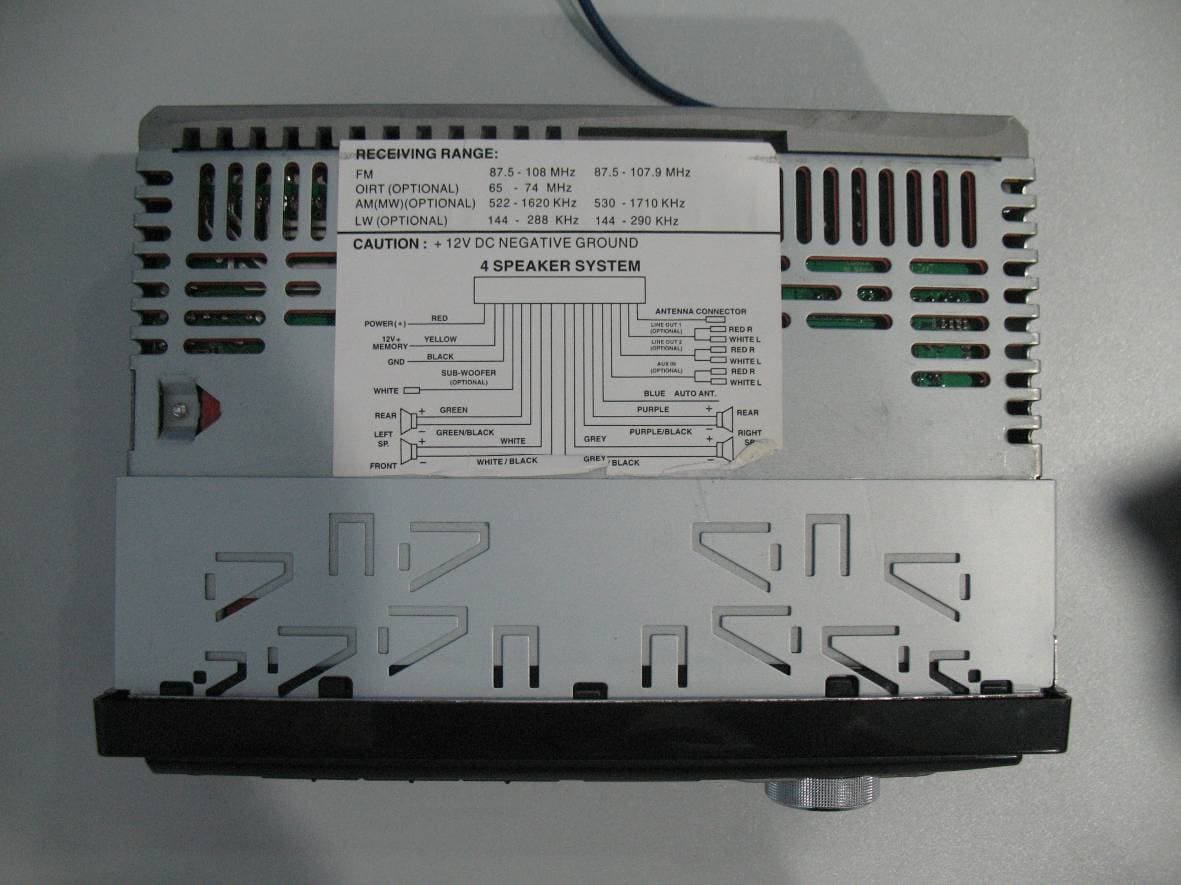
Click to zoom
Application Details
- Equipment Class
- DSS - Part 15 Spread Spectrum Transmitter
- Date of Grant
- Aug 10, 2010
- Application Purpose
- Original Equipment
- Date of Application
- Aug 09, 2010
- Equipment Note
- CAR AUDIO
- Frequency Range
- 2402.00000000 - 2480.00000000
- Company
- Philips Consumer Lifestyle
- Country
- Hong Kong
Documents & Files
Document Text
Text extracted from the exhibit documents filed with the FCC. Open a document above to read the original.
Users Manual
CE150_55_UM_EN_V1.0 wk10281 Safety Read and understand all instructions • before you use your apparatus. If damage is caused by failure to follow instructions, the warranty does not apply. This apparatus is designed for negative • ground (earth) 12 V DC operation only. To ensure safe driving, adjust the volume to • a safe and comfortable level. Improper fuses can cause damage or fire. • When you need to change the fuse, consult a professional. Use only the supplied mounting hardware • for a safe and secure installation. To avoid short circuit, do not expose the • apparatus, remote control or remote control batteries to rain or water. Never insert objects into the ventilation • slots or other openings on the apparatus. Clean the apparatus and frame with a soft, • damp cloth. Never use substances such as alcohol, chemicals or household cleaners on the apparatus. Never place any objects other than discs • into the apparatus. Never use solvents such as benzene, • thinner, cleaners available commercially, or anti-static sprays intended for discs. Visible and invisible laser radiation when • open. Avoid exposure to beam. Risk of damage to the apparatus screen! • Never touch, push, rub or strike the screen with any object. Caution Use of controls or adjustments or performance of procedures other than herein may result in hazardous radiation exposure or other unsafe operation. recordings, may be an infringement of copyrights and constitute a criminal offence. This equipment should not be used for such purposes. Recycling Your product is designed and manufactured with high quality materials and components, which can be recycled and reused. When you see the crossed-out wheel bin symbol attached to a product, it means the product is covered by the European Directive 2002/96/EC: Never dispose of your product with other household waste. Please inform yourself about the local rules on the separate collection of electrical and electronic products. The correct disposal of your old product helps prevent potentially negative consequences on the environment and human health. Your product contains batteries covered by the European Directive 2006/66/EC, which cannot be disposed of with nvormal household waste. Please inform yourself about the local rules on separate collection of batteries. The correct disposal of batteries helps prevent potentially negative consequences on the environment and human health. ImportantTroubleshooting Caution Never remove the casing of this apparatus. To keep the warranty valid, never try to repair the system yourself. If you encounter problems when using this apparatus, check the following points before requesting service. If the problem remains unsolved, go to the Philips web site (www. philips.com/support). When you contact Philips, ensure that your apparatus is nearby and the model number and serial number are available. No power or no sound Car engine is not on. Turn the car engine • on. Cable is not correctly connected. Check • connections. Fuse is burnt. Replace fuse .• Volume is too low. Adjust volume.• If the above solutions cannot help, press • the RESET button. Ensure that the track played is of a • compatible format. Noise in broadcasts Signals are too weak. Select other • stations with stronger signals. Check the connection of the car antenna.• Change broadcast from Stereo to mono .• Preset stations lost Battery cable is not correctly connected. • Connect the battery cable to the terminal that is always live. Display show ERR-1 The disc, USB or SD device cannot be • read in two minutes. Display show ERR-3 USB/SD data error.• Display show ERR-5 Communication error or component is • damaged. About Bluetooth device Cannot pair the Bluetooth enabled device with the car audio system. The device does not support the profiles • required for the system. The Bluetooth function of the device is • not enabled. Refer to the user manual of the device for how to enable the function. The audio quality is poor after connection with a Bluetooth-enabled device. The Bluetooth reception is poor. Move • the device closer to the car audio system or remove any obstacle between the device and the system. Music playback is unavailable on the system even after successful Bluetooth connection. The device cannot be used with the system to play music. The paired mobile phone connects and disconnects constantly. The Bluetooth reception is poor. Move • the mobile phone closer to the car audio system or remove any obstacle between the mobile phone and the system. Some mobile phones may connect and • disconnect constantly when you make or end calls. This does not indicate any malfunction of the system. For some mobile phones, the Bluetooth • connection may be deactivated automatically as a power-saving feature. This does not indicate any malfunction of • the system. Note Product information is subject to change without prior notice. Power supply12VDC (11V-16V), negative ground Fuse15A Suitable speaker impedance 4 - 8 Ω Maximum power output 45 W x 4 channels Continuous power output 22 W x 4 RMS (4Ω 10% T.H.D.) Pre-Amp output voltage 2.5 V Aux-in level≥500 mV Dimensions (W x H x D) 188 x 58 x 140 mm Weight0.8 kg Radio Frequency range - FM 87.5 - 108.0 MHz (100kHz per step in auto search and 50kHz per step in manual search) Frequency range - AM(MW) 522 - 1620 KHz (9 kHz) 530 - 1710 kHz (10 kHz) Usable sensitivity - FM 8 μV Usable sensitivity - AM(MW) (S/ N= 20 dB) 30 μV Bluetooth Output power 0 dBm (Class 2) Frequency band2.4000 GHz - 2.4835 GHz ISM Band Range3 meters(free space) Standard Bluetooth 2.0 specification Compatible USB devices USB flash memory: USB 1.1 host with • interface reading all speed support (1.1, 2.0) USB flash players: USB 1.1 host with • interface reading all speed support (1.1, 2.0) memory cards (SD / SDHC)• Supported formats USB or memory file format: FAT16, • FAT 32 MP3 bit rate (data rate): 32-320 Kbps and • variable bit rate WMA V4, V7, V8, V9 (L1, L2)• Maximum title numbe…
Text truncated - open the document above for the full version.
Cover Letter(s)
Philips Electronics Hong Kong Ltd. Date: 04 August, 2010 To: Federal Communications Commission, Authorization & Evaluation Division, 7435 Oakland Mills Road, Columbia, MD 21046 To Whom It May Concern: The Philips Electronics Hong Kong Ltd. , the undersigned, hereby authorizes Mr. Wu Xuewen from Shenzhen Morlab Communications Technology Co., Ltd., to act on the behalf of the Philips Electronics Hong Kong Ltd. solely in matters relating to the application for an FCC equipment authorization for FCC ID BOUCE150 including the signing of documents in connection with this Application. Necessary acts carried out by Shenzhen Morlab Communications Technology Co., Ltd. on our behalf of the Philips Electronics Hong Kong Ltd. in connection with the Application shall have the same effect as acts of the Philips Electronics Hong Kong Ltd.. The Philips Electronics Hong Kong Ltd. also hereby certify that no party to this application is subject to a denial of benefits, including FCC benefits, pursuant to Section 5301 of the Anti-Drug Abuse Act of 1988, 21 U.S.C. 853(a). Thank you for your attention to this matter. Yours Sincerely, ________________ Benson Lai [email protected] 852-2489-4406
Cover Letter(s)
Philips Electronics Hong Kong Ltd. Date: 04 August, 2010 To: Federal Communications Commission, Authorization & Evaluation Division, 7435 Oakland Mills Road, Columbia, MD 21046 Re: Philips Consumer Lifestyle FCC ID: BOUCE150 FCC Part 15 SubpartC Certification Confidentiality Request Gentlemen: This letter is to comply with 47 CFR 0.457 and 0.459 pertaining to confidentiality material. Philips Consumer Lifestyle requests that the following documents regarding this submission for FCC ID: BOUCE150 be kept confidential: Exhibit Type File Name Block Diagram CONF APPENDIX BOUCE150_Block Diagram.pdf Schematics CONF APPENDIX BOUCE150_Circuit Diagram.pdf Operational Description CONF APPENDIX BOUCE150_Operational description.pdf Part list CONF APPENDIX BOUCE150_BOM.pdf Tune-Up-Procedure CONF APPENDIX BOUCE150_Tune up procedure.pdf Those documents contain detailed system and equipment description and related information about the product which Philips Consumer Lifestyle considers to be confidential proprietary, a custom design and, otherwise, not releasable to the general public. Since this design is a basis form which future technological products will evolve, Philips Consumer Lifestyle considers this information would be of benefit to its competitors, and that the disclosure of the information in these documents would give competitors an unfair advantage in the market. Yours Sincerely,
External Photos
External Photos 1. Front View of EUT 2. Inside View of EUT 3. Side View of EUT
ID Label/Location Info
Label Label Location
Internal Photos
Internal Photos
Test Report
Report No.: SZ10070056E01 Page 2 of 34 TABLE OF CONTENTS 1. TEST CERTIFICATION ........................................................................................................... 4 2. GENERAL INFORMATION .................................................................................................... 5 2.1 EUT Description ......................................................................................................................... 5 2.2 Test Standards and Results ........................................................................................................ 6 2.3 Facilities and Accreditations ...................................................................................................... 7 2.3.1 Facilities .................................................................................................................................... 7 2.3.2 Test Environment Conditions .................................................................................................... 7 3. 47 CFR PART 15C REQUIREMENTS .................................................................................... 8 3.1 Number of Hopping Frequency ................................................................................................. 8 3.1.1 Requirement .............................................................................................................................. 8 3.1.2 Test Description ........................................................................................................................ 8 3.1.3 Test Result ................................................................................................................................. 8 3.2 Peak Output Power .................................................................................................................. 10 3.2.1 Requirement ............................................................................................................................ 10 3.2.2 Test Description ...................................................................................................................... 10 3.2.3 Test Result ............................................................................................................................... 10 3.3 20dB Bandwidth ....................................................................................................................... 13 3.3.1 Definition ................................................................................................................................ 13 3.3.2 Test Description ...................................................................................................................... 13 3.3.3 Test Result ............................................................................................................................... 13 3.4 Carried Frequency Separation ................................................................................................ 16 3.4.1 Definition ................................................................................................................................ 16 3.4.2 Test Description ...................................................................................................................... 16 3.4.3 Test Result ............................................................................................................................... 16 3.5 Time of Occupancy (Dwell time) ............................................................................................. 17 3.5.1 Requirement ............................................................................................................................ 17 3.5.2 Test Description ...................................................................................................................... 17 3.5.3 Test Result ............................................................................................................................... 17 3.6 Conducted Spurious Emissions ............................................................................................... 20 3.6.1 Requirement ............................................................................................................................ 20 3.6.2 Test Description ...................................................................................................................... 20 Report No.: SZ10070056E01 Page 3 of 34 3.6.3 Test Result ............................................................................................................................... 20 3.7 Band Edge ................................................................................................................................. 24 3.7.1 Requirement ............................................................................................................................ 24 3.7.2 Test Description ...................................................................................................................... 24 3.7.3 Test Result ............................................................................................................................... 25 3.8 Conducted Emission ................................................................................................................. 28 3.8.1 Requirement ............................................................................................................................ 28 3.9 Radiated Emission .................................................................................................................... 29 3.9.1 Requirement ............................................................................................................................ 29 3.9.2 Test Description ...................................................................................................................... 29 3.9.3 Test Result .................................…
Text truncated - open the document above for the full version.
Test Setup Photos
Test Setup Photos 1. CSE 2. RE 3. RSE
Contact Information
Applicant
Tee Wee Jaw(Director, Project Management)
Test Firm
Shenzhen Morlab Communications Technology Co.,LtdShu Luan
Technical Specifications
| # | Rule Parts | Frequency Range | Power Output |
|---|---|---|---|
| 1 | 15C | 2.40 GHz - 2.48 GHz | 1.00 mW |
Other Applications from Philips Consumer Lifestyle
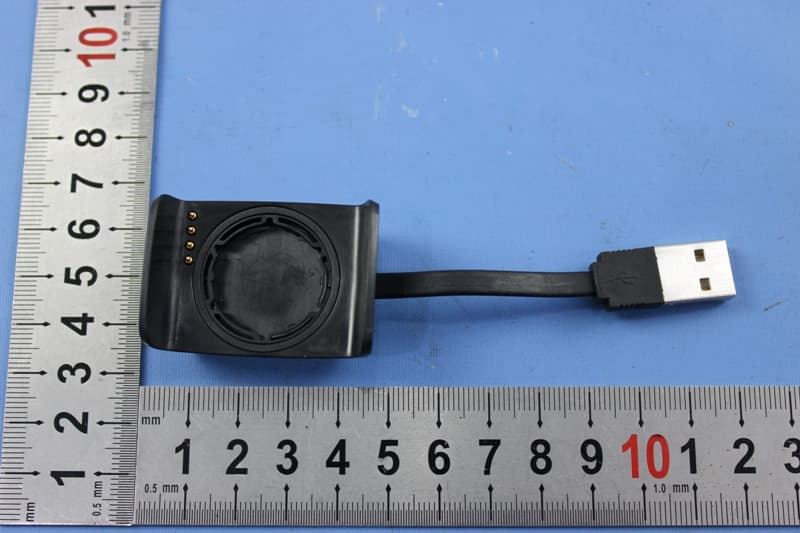
BOUDL8775
May 21, 2015BLE Activity Monitor with OHR
Equipment Class
DTS - Digital Transmission System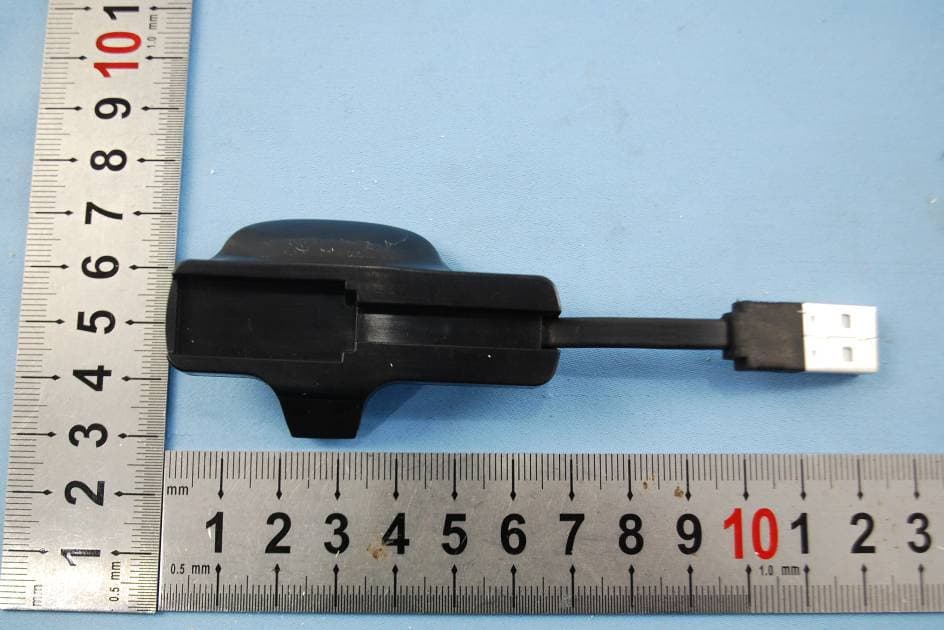
BOUDL8770
Sep 17, 2014Activity Monitor with OHR
Equipment Class
JBP - Part 15 Class B Computing Device Peripheral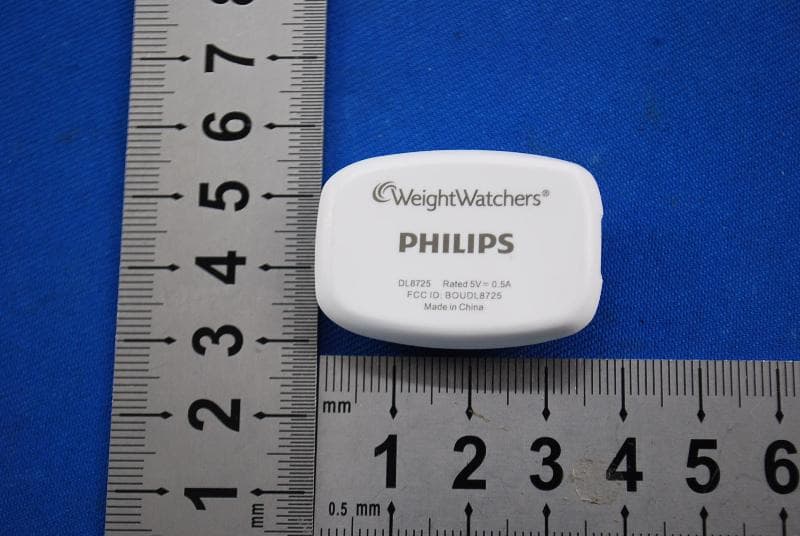
BOUDL8725
Jul 10, 2014Personal Activity Monitor with Bluetooth Function
Equipment Class
JBP - Part 15 Class B Computing Device Peripheral
BOUSCD501
May 28, 20141.9GHz DECT Baby Monitor - Baby Unit
Equipment Class
PUB - Part 15 Unlicensed PCS Base Station
BOUSCD501H
May 28, 20141.9GHz DECT Baby Monitor - Parent Unit
Equipment Class
PUT - Part 15 Unlicensed PCS portable Tx worn on body