BOUSCD6032.4GHz Baby Monitor - Baby Unit
Philips Consumer Lifestyle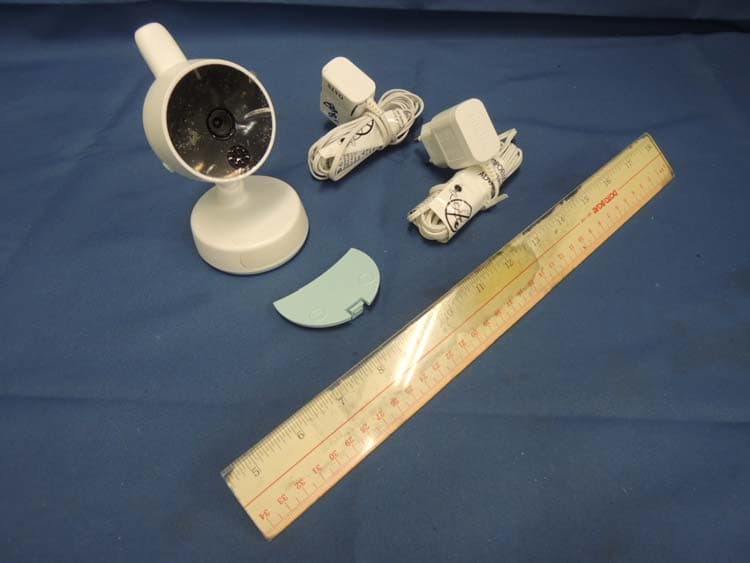
Click to zoom
Application Details
- Equipment Class
- DSS - Part 15 Spread Spectrum Transmitter
- Date of Grant
- Nov 22, 2012
- Application Purpose
- Original Equipment
- Date of Application
- Nov 22, 2012
- Equipment Note
- 2.4GHz Baby Monitor - Baby Unit
- Frequency Range
- 2408.62500000 - 2469.37500000
- Company
- Philips Consumer Lifestyle
- Country
- Hong Kong
Documents & Files
Document Text
Text extracted from the exhibit documents filed with the FCC. Open a document above to read the original.
Users Manual
EN User manual 3 SCD603 Always here to help you Register your product and get support at www.philips.com/welcome 1 a b c d e f g h i 3 1 Introduction Congratulations on your purchase and welcome to Philips AVENT! To fully benefit from the support that Philips AVENT offers, register your product at www.philips.com/welcome. The Philips AVENT video monitor provides you with round-the-clock support and it allows you to see your baby day and night from anywhere in the house. The latest digital technology guarantees clear sound and the clearest image of your baby. This gives you an additional sense of security without entering your baby’s room and disturbing its sleep. 2 General description I Parent unit 1 Antenna 2 Battery/power-on light 3 Voice activation light 4 Brightness adjustment buttons 5 Video display - icon explanation a. Parent unit and baby unit are not linked b. Battery status c. Signal strength symbol d. Volume level bar e. Brightness level bar f. Lullaby numbers g. ‘Repeat lullaby’ symbol h. Voice activation symbol i. Volume muted symbol 6 Volume up and down buttons 7 Sound level lights 8 Socket for appliance plug 9 Loudspeaker 10 Battery compartment lid 11 Belt clip/stand 12 On/off button 13 Voice activation button 14 Lullaby play/stop button 15 Next lullaby button 16 Rechargeable battery 17 Adapter 18 Appliance plug Table of contents 1 Introduction 3 2 General description 3 3 Preparing for use 4 3.1 Baby unit 4 3.2 Parent unit 5 4 Using the appliance 6 4.1 Positioning the baby monitor 7 5 Features 9 5.1 Adjusting loudspeaker volume 9 5.2 Adjusting display brightness 9 5.3 Sound level lights 10 5.4 Voice activation 10 5.5 Nightlight 10 5.6 Lullaby function 11 5.7 Out-of-range alert 12 5.8 Night vision 12 5.9 Belt clip/stand 12 5.10 Auto mute feature 12 5.11 Reset feature 12 6 Cleaning and maintenance 13 7 Storage 13 8 Ordering accessories 13 9 Assistance 13 10 Warranty 13 11 Frequently asked questions 14 ENgLiSh 4 3.1.2 Placing the non-rechargeable batteries in case of a power failure, the baby unit can run on four 1.5V R6 AAA alkaline batteries (not included). Do not use rechargeable batteries. The baby unit does not have a charging function and rechargeable batteries discharge slowly when they are not in use. B Warning: Unplug the baby unit and make sure your hands and the unit are dry when you insert non- rechargeable batteries. D Note: The baby unit has an operating time of 3 hours when you use it on non-rechargeable alkaline batteries with the night light turned on. 1 Remove the battery compartment lid. 2 insert four non-rechargeable alkaline batteries. D Note: Make sure the + and - poles point in the right direction. II Baby unit 1 Antenna 2 Power-on light 3 Microphone 4 Lens 5 Loudspeaker 6 Base 7 Nightlight and nightlight button 8 Wall-mounting holes 9 Battery compartment lid 10 Socket for appliance plug 11 On/off switch 12 Appliance plug 13 Adapter 3 Preparing for use IMPORTANT: Read the important safety instructions carefully before you use the video baby monitor and keep them for future reference. 3.1 Baby unit Always operate the baby unit connected to an electrical outlet. To guarantee automatic power backup in case of a power failure, we advise you to insert non-rechargeable batteries. 3.1.1 Connecting the baby unit 1 Put the appliance plug in the baby unit and insert the adapter into an electrical outlet. 5 1 Slide down the battery compartment lid to remove it. 2 insert the rechargeable battery. D Note: Make sure the + and - poles point in the right direction. 3 Reattach the lid. 3 Reattach the lid. 3.2 Parent unit 3.2.1 Operation on rechargeable battery B Warning: Unplug the parent unit and make sure your hands and the unit are dry when you insert the rechargeable battery. •The parent unit comes with a rechargeable Li-ion polymer 1100mAh battery. •Charge the parent unit before you use it for the first time or when the parent unit indicates that the battery is low. •The battery is low when the empty battery symbol flashes on the video display and the battery/power-on light on the parent unit flashes red. D Note: if the battery is completely empty, the parent unit automatically turns off and loses contact with the baby unit. ENgLiSh 6 D Note: •When the parent unit is charged for the first time, the operating time is less than 7 hours. The rechargeable battery only reaches its full capacity after four discharging and charging cycles. •The battery gradually discharges, even when the parent unit is turned off. 4 Using the appliance 1 Place the parent unit and the baby unit in the same room to test the connection. Make sure the baby unit is at least 1.5 meters (5 feet) away from the parent unit. 2 Set the on/off switch on the baby unit to the ON position. •The green power-on light goes on. >1.5m / 5ft 4 insert the appliance plug into the parent unit and insert the adapter into an electrical outlet. •The battery/power-on light on the parent unit lights up green and the animated battery charging image appears at the top of the video display. •When the battery is fully charged, the battery symbol at the top of the video display is full. •When you charge the parent unit for the first time or after a long period of disuse, turn it off and let it charge continuously for at least 4 hours. •Charging normally takes 2.5 hours, but it takes longer when the parent unit is turned on during charging. To keep the charging time as short as possible, turn off the parent unit during charging. •When the rechargeable battery is fully charged, the parent unit can be used cordlessly for approx. 7 hours if it is in voice activation mode. if the video display is on continuously, the parent unit can be used cordlessly at default setting for approx. 5.5 hours. 7 E Tip: Find out what the best position is for the parent unit by looking at the signal strength symbol. The number of stripes indicates the quality of the connection. •if no connection can be established, the parent unit beeps and the o…
Text truncated - open the document above for the full version.
Cover Letter(s)
Philips Consumer Lifestyle 5/F Philips Electronics Building, 5 Science Park East Avenue, Hong Kong Science Park, Shatin, Hong Kong Tel: (852) 68272015 _ _ _ Letter of Agency for FCC Certification August 17, 2012 To whom it may concern, Letter of Agency I, an officer of Philips Consumer Lifestyle do hereby authorize Intertek Testing Services (Mr. Ken Sit/Mr. Melvin Nip) to act on our behalf in front of the Federal Communications Commission with respect to all matters relating to certification of equipment under Part 15 and/or Part 95 of the FCC Rules until further notice. I further certify that no party (as defined in §1.2002(b) of CFR 47, 2004) to this application, including myself, is subject to a denial of federal benefits, that includes FCC benefits, pursuant to Section 5301 of the Anti-Drug Abuse Act of 1988, 21 U.S.C., 862. Agency Agreement Expiration Date: ___16 November, 2012_____ Regards, Benson Lai Lead Engineer, Safety and Compliance
Cover Letter(s)
Philips Consumer Lifestyle 5/F Philips Electronics Building, 5 Science Park East Avenue, Hong Kong Science Park, Shatin, Hong Kong Tel: (852) 68272015 _ _ _ August 17, 2012 To whom it may concern, Request for Permanent Confidentiality Under FCC Part 15 Certification FCC ID: BOUSCD603 Request is hereby submitted by Philips Consumer Lifestyle to withhold permanently from public review certain portions of the application for equipment certification for the referenced FCC identifiers. This request for confidentiality is made pursuant to 47 CFR § 0.457(d) and 0.459 of the FCC Rules. In particular, the following sections of the application are to be kept permanently confidential and Philips Consumer Lifestyle reserves the right to discern which parties can obtain access to these information: Schematics Detailed Block diagrams Detailed Operational/Functional Description The rationale for request for confidentiality is as followings: This information represents intellectual property of Philips Consumer Lifestyle and it is subject to competition. We have invested considerable time and materials in research and development to produce the referenced product. Disclosure of the permanently confidential portions of this application to competitors would not only give them significant competitive advantages in developing similar products, but would also disclose successful implementation of unpublished, leading edge technology developed by us. If you have questions or need further information, please contact the undersigned. Regards, Benson Lai Lead Engineer, Safety and Compliance
External Photos
INTERTEK TESTING SERVICES External Photos FCC ID: BOUSCD603 IC: 135M-SCD603external photos - 1 of 1 HK12081306 Job Number HK12081306 Job Number
ID Label/Location Info
Product Color & Printing None AGolden Kuo VL-BU(US)_C&P 2012.08.22 4006281 AUDIO, VIDEO AND SIMILAR ELECTRONIC APPARATUS-SAFETY REQUIREMENTS 1.1mm 0.8mm 0.8mm 1.3mm 0.8mm 5.4mm 4.0mm 75.8mm 141.8mm For applicable power supplies and batteries see user instructions.Pour connaitre les sources de courant adaptees et de piles merci de vous referer au manuel d’instructions. ' ' ' ' 0.8mm
Internal Photos
INTERTEK TESTING SERVICES Internal photos FCC ID: BOUSCD603 IC: 135M-SCD603 internal photos - 1 of 9 Baby Unit assembly (View 1) Baby Unit assembly (View 2) INTERTEK TESTING SERVICES Internal photos FCC ID: BOUSCD603 IC: 135M-SCD603 internal photos - 2 of 9 Baby Unit Main PCB comp side Baby Unit Main PCB solder side (View 1) INTERTEK TESTING SERVICES Internal photos FCC ID: BOUSCD603 IC: 135M-SCD603 internal photos - 3 of 9 Baby Unit Main PCB solder side (View 2) Baby Unit Cam & LED Board front side INTERTEK TESTING SERVICES Internal photos FCC ID: BOUSCD603 IC: 135M-SCD603 internal photos - 4 of 9 Baby Unit Cam & LED Board rear side Baby Unit LED Power Board front side INTERTEK TESTING SERVICES Internal photos FCC ID: BOUSCD603 IC: 135M-SCD603 internal photos - 5 of 9 Baby Unit LED Power Board rear side Baby Unit Power Board front side INTERTEK TESTING SERVICES Internal photos FCC ID: BOUSCD603 IC: 135M-SCD603 internal photos - 6 of 9 Baby Unit Power Board rear side Baby Unit Melody Board front side INTERTEK TESTING SERVICES Internal photos FCC ID: BOUSCD603 IC: 135M-SCD603 internal photos - 7 of 9 Baby Unit Melody Board rear side Baby Unit Antenna INTERTEK TESTING SERVICES Internal photos FCC ID: BOUSCD603 IC: 135M-SCD603 internal photos - 8 of 9 Baby Unit DMC Board front side Baby Unit DMC Board rear side INTERTEK TESTING SERVICES Internal photos FCC ID: BOUSCD603 IC: 135M-SCD603 internal photos - 9 of 9 Baby Unit Oscillator PCB comp side
RF Exposure Info
INTERTEK TESTING SERVICES Job no: HK12081307-1 RF exposure - 1 of 1 For Maximum Permissible Exposure (MPE) evaluation of the base unit, the maximum power density at 20 cm from this mobile transmitter shall be less than the General Population / Uncontrolled MPE limit in OET Bulletin 65. For the base unit of tested model of SCD603, the maximum field strength measured (FS) was 116.1 dBμV/m. The distance (D) between the antenna and the equipment under test (EUT) was 3 meters. And the maximum source-based time-averaging duty factor in one Parent Unit operation is 3.5%. From these data, the exposed power density at a distance (R) of 20cm from the center of radiation of the antenna can be calculated according to OET Bulletin 65 as follow: The radiated power = (FS*D) 2 / 30 = 122.21 mW The radiated (EIRP) source-based time-averaging output power = (122.21 * 0.035) mW = 4.28 mW The power density at 20 cm from the antenna = EIRP / 4πR 2 = 0.0009 mW cm -2 In the frequency range of 1,500 - 100,000MHz, the MPE limit is 1.0 mWcm -2 for general population and uncontrolled exposure. As the measured power density at 20cm from the transmitter is lower than the MPE limit, the compliance to the MPE limit can be ensured by indicating the minimum 20cm separation between the transmitter's radiating structures and body of the user or nearby persons. The following RF exposure statement is proposed to be included in the user manual: “ FCC RF Radiation Exposure Statement Caution: To maintain compliance with the FCC’s RF exposure guidelines, place the base unit at least 20cm from nearby persons.”
Test Report
Issuing Laboratory: Intertek Testing Services Hong Kong Limited Hong Kong Accreditation Service (HKAS) has accredited this laboratory under the Hong Kong Laboratory Accreditation Scheme (HOKLAS) for specific laboratory activities as listed in the HOKLAS directory of accredited laboratories. The results shown in this report were determined by this laboratory in accordance with its terms of accreditation. Test Report Number: HK12081307-1 Page 1 of 45 FCC ID: BOUSCD603 IC: 135M-SCD603 Intertek Testing Services Hong Kong Ltd. 2/F., Garment Centre, 576 Castle Peak Road, Kowloon, Hong Kong. Tel: (852) 2173 8888 Fax: (852) 2785 5487 Website: www.hk.intertek-etlsemko.com GENERAL INFORMATION Applicant Name: Philips Consumer Lifestyle Applicant Address: 5/F., Philips Electronics Building, 5 Science Park East Avenue, Hong Kong Science Park, Shatin, N.T., Hong Kong. FCC Specification Standard: FCC Part 15, October 1, 2011 Edition FCC ID: BOUSCD603 FCC Model(s): SCD603 IC Specification Standard: RSS-210 Issue 8, December 2010 RSS-Gen Issue 3, December 2010 IC: 135M-SCD603 IC Model(s): SCD603 Type of EUT: Spread Spectrum Transmitter Description of EUT: 2.4GHz Baby Monitor - Baby unit Serial Number: N/A Sample Receipt Date: August 28, 2012 Date of Test: September 07– November 02, 2012 Report Date: November 07, 2012 Environmental Conditions: Temperature: +10 to 40°C Humidity: 10 to 90% Issuing Laboratory: Intertek Testing Services Hong Kong Limited Hong Kong Accreditation Service (HKAS) has accredited this laboratory under the Hong Kong Laboratory Accreditation Scheme (HOKLAS) for specific laboratory activities as listed in the HOKLAS directory of accredited laboratories. The results shown in this report were determined by this laboratory in accordance with its terms of accreditation. Test Report Number: HK12081307-1 Page 2 of 45 FCC ID: BOUSCD603 IC: 135M-SCD603 Intertek Testing Services Hong Kong Ltd. 2/F., Garment Centre, 576 Castle Peak Road, Kowloon, Hong Kong. Tel: (852) 2173 8888 Fax: (852) 2785 5487 Website: www.hk.intertek-etlsemko.com Table of Contents 1.0 Test Results Summary & Statement of Compliance......................................... 4 1.1 Summary of Test Results ................................................................................... 4 1.2 Statement of Compliance ................................................................................... 4 2.0 General Description............................................................................................ 6 2.1 Product Description ............................................................................................ 6 2.2 Purpose of Change/ Application ......................................................................... 7 2.3 Test Methodology............................................................................................... 7 2.4 Test Facility........................................................................................................ 7 3.0 System Test Configuration................................................................................. 9 3.1 Justification ........................................................................................................ 9 3.2 EUT Exercising Software.................................................................................. 10 3.3 Details of EUT and Description of Accessories................................................. 11 3.4 Measurement Uncertainty ................................................................................ 11 4.0 Test Results....................................................................................................... 13 4.1 Maximum Conducted Output Power at Antenna Terminals ............................... 13 4.2 Maximum 20 dB RF Bandwidth........................................................................ 16 4.3 Minimum Number of Hopping Frequencies....................................................... 19 4.4 Minimum Hopping Channel Carrier Frequency Separation................................ 21 4.5 Average Channel Occupancy Time.................................................................. 23 4.6 Out of Band Conducted Emissions ................................................................... 26 4.7 Field Strength Calculation................................................................................. 31 4.8 Transmitter Radiated Emissions in Restricted Bands and Spurious Emissions.. 32 4.8.1 Radiated Emission Configuration Photograph ................................................ 33 4.8.2 Radiated Emission Data ................................................................................ 33 4.8.3 Transmitter Duty Cycle Calculation ................................................................ 38 4.9 AC Power Line Conducted Emission ................................................................ 40 4.9.1 AC Power Line Conducted Emission Configuration Photograph..................... 40 4.9.2 AC Power Line Conducted Emission Data ..................................................... 40 4.10 Radio Frequency Radiation Exposure............................................................. 43 5.0 Equipment List................................................................................................. 45 Issuing Laboratory: Intertek Testing Services Hong Kong Limited Hong Kong Accreditation Service (HKAS) has accredited this laboratory under the Hong Kong Laboratory Accreditation Scheme (HOKLAS) for specific laboratory activities as listed in the HOKLAS directory of accredited laboratories. The results shown in this report were determined by this laboratory in accordance with its terms of accreditation. Test Report Number: HK12081307-1 Page 3 of 45 FCC ID: BOUSCD603 IC: 135M-SCD603 Intertek Testing Services Hong Kong Ltd. 2/F., Garment Centre, 576 Castle Peak Road, Kowloon, Hong Kong. Tel: (852) 2173 8888 Fax: (852) 2785 5487 Website: www.hk.intertek-etlsemko.com EXHIBIT…
Text truncated - open the document above for the full version.
Test Setup Photos
INTERTEK TESTING SERVICES The Worst Case Configuration Photographs - Mode: Transmission FCC ID: BOUSCD603 IC: 135M-SCD603 config photos (radiated emission - baby unit) - 1 of 1 Radiated Emission - Baby Unit Front View Rear View INTERTEK TESTING SERVICES The Worst Case Configuration Photographs - Mode: TX with playing music FCC ID: BOUSCD603 IC: 135M-SCD603 config photos (conducted emission) - 1 of 2 Conducted Emission Front View Right Side View INTERTEK TESTING SERVICES The Worst Case Configuration Photographs - Mode: TX with playing music FCC ID: BOUSCD603 IC: 135M-SCD603 config photos (conducted emission) - 2 of 2 Conducted Emission Left Side View
Contact Information
Applicant
Tee Wee Jaw(Director, Project Management)
Technical Contact
Intertek Testing Services Hong Kong Ltd.Melvin Nip
[email protected]852-2173-8888
Flat D, 5/F., Garment Centre · Kowloon · Hong Kong
Non-Technical Contact
Intertek Testing Services Hong Kong Ltd.Melvin Nip
[email protected]852-2173-8888
Test Firm
Intertek Testing Services Hong Kong Ltd.Billy Chow
Technical Specifications
| # | Rule Parts | Frequency Range | Power Output |
|---|---|---|---|
| 1 | 15C | 2.41 GHz - 2.47 GHz | 115.00 mW |
Other Applications from Philips Consumer Lifestyle
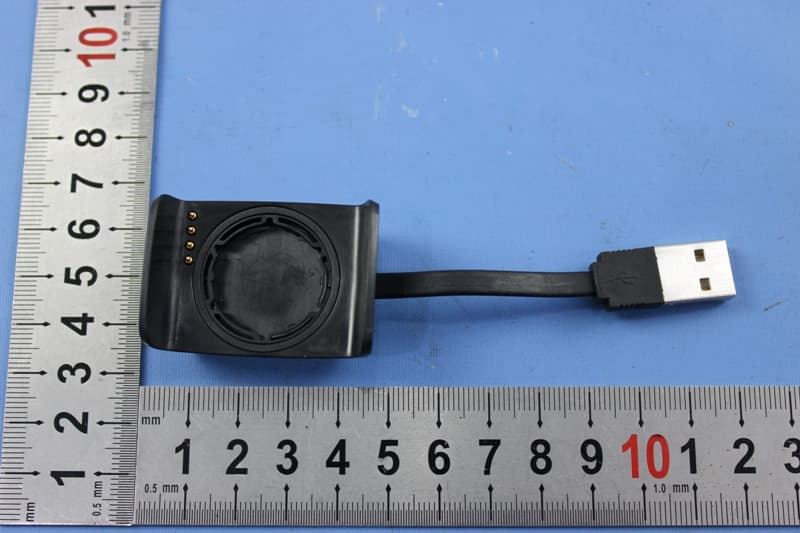
BOUDL8775
May 21, 2015BLE Activity Monitor with OHR
Equipment Class
DTS - Digital Transmission System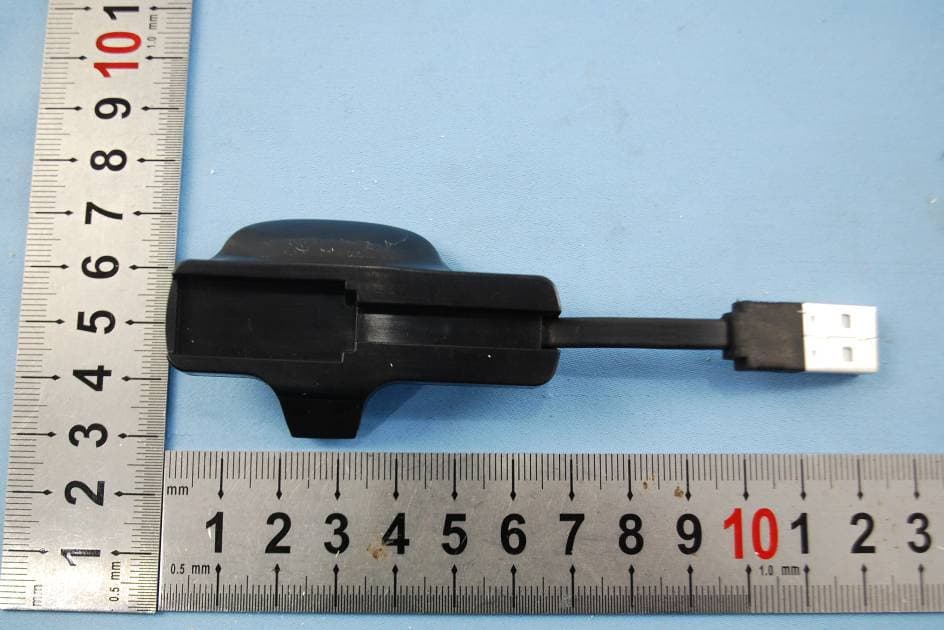
BOUDL8770
Sep 17, 2014Activity Monitor with OHR
Equipment Class
JBP - Part 15 Class B Computing Device Peripheral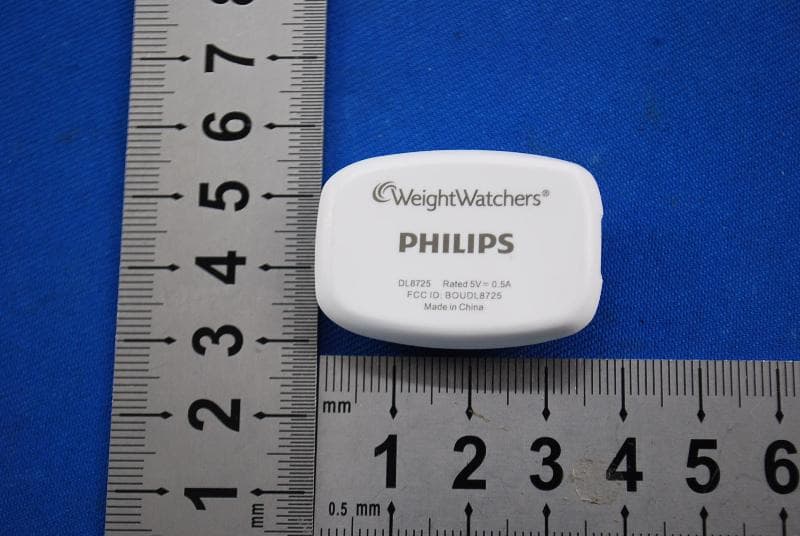
BOUDL8725
Jul 10, 2014Personal Activity Monitor with Bluetooth Function
Equipment Class
JBP - Part 15 Class B Computing Device Peripheral
BOUSCD501
May 28, 20141.9GHz DECT Baby Monitor - Baby Unit
Equipment Class
PUB - Part 15 Unlicensed PCS Base Station
BOUSCD501H
May 28, 20141.9GHz DECT Baby Monitor - Parent Unit
Equipment Class
PUT - Part 15 Unlicensed PCS portable Tx worn on body