BOUWUB1110Wi-Fi USB adapter
Philips Consumer Lifestyle
Click to zoom
Application Details
- Equipment Class
- DTS - Digital Transmission System
- Date of Grant
- May 12, 2010
- Application Purpose
- Original Equipment
- Date of Application
- May 12, 2010
- Equipment Note
- Wi-Fi USB adapter
- Frequency Range
- 2412.00000000 - 2462.00000000
- Company
- Philips Consumer Lifestyle
- Country
- Hong Kong
Documents & Files
Document Text
Text extracted from the exhibit documents filed with the FCC. Open a document above to read the original.
Users Manual
© Royal Philips Electronics N.V. 2010 All rights reserved. WUB1110_00_UM_V1.0_1015 Register your product and get support at www.philips.com/welcome Wi-Fi USB adapter WUB1110 English Safety The small parts of• this product can be swallowed by babies or small children. Keep these parts out of reach. Do not let water come into contact with this product. It may • damage the product. Keep this product away from direct sunlight, heat sources or fir• e (naked flames) at all times. * Wireless and Ethernet LAN functions are authorized for indoor use only. Hereby, Philips Consumer Lifestyle, declares that this wireless USB adapter (WUB1110) is in compliance with the essential requirements and other relevant provisions of Directive 1999/5/EC. Environmental notice Your product is designed and manufactured with high quality materials and components, which can be recycled and reused. When you see the crossed-out wheel bin symbol attached to a product, it means the product is covered by the European Directive 2002/96/EC. Never dispose of your product with other household waste. Please inform yourself about the local rules on the separate collection of electrical and electronic products. Correct disposal of your old product helps prevent potentially negative consequences on the environment and human health. WUB1110 introduction This Wi-Fi USB adapter, WUB1110, is used with selected Philips products (e.g. Philips Blu-ray disc players, Home and micro theatre systems). This adapter is not recommended for PC usage. Selected Philips products for use with WUB1110 BDP7500 MK II/ (BDP7500S2/ BDP7500B2)• BDP5100• HTS5220• HTS9140• HTS9520• MBD3000• Note: For optimal wireless performance, update the product that will be used with WUB1110 to the latest software (refer to the user manual of the related product on the product update). Install a Wi-Fi connection via WUB1110 For details on how to connect WUB1110 and set up a network, refer to the user manual of a related product. Connect WUB1110 to a related product.1. On the related product, install a Wi-Fi connection: 2. a. Select “Setup” in the Home Menu. b. Select “Network Setup” > “Network Installation”. c. Select “Wireless (Wi-Fi)” and follow the on screen instructions to complete the installation. Note: To avoid radio interference, ensure that the distance between the Wi-Fi product and a DECT phone or microwave oven is at least 5 meters. WUB1110 specifications Multimedia connections: Wi-Fi 802.11g/n• Connectivity: via USB (refer to the related product for details)• Ambient temperature: 5 deg C to 40 deg C.• Dongle dimensions (W x H x D): 28.4 x 82 x 13.4 mm• Guarantee and service For information, please visit www.philips.com/welcome. Español Seguridad Las piezas pequeñas de este producto pueden ser tragadas por los • bebés o por niños pequeños. Mantenga estas piezas fuera de su alcance. No deje que el agua entre en contacto con este producto ya que • puede dañarlo. No exponga el producto a la luz solar directa, fuentes de calor o • fuego (llamas) en ningún momento. * Las funciones inalámbricas y de Ethernet LAN únicamente están autorizadas para el uso en interiores. Por la presente, Philips Consumer Lifestyle, declara que el adaptador USB (WUB1110) cumple los requisitos fundamentales y otras disposiciones pertinentes de la Directiva 1999/5/EC. Aviso medioambiental El producto ha sido diseñado y fabricado con materiales y componentes de alta calidad que pueden reciclarse y reutilizarse. Cuando vea el símbolo de contenedor de ruedas tachado en un producto, significa que cumple la Directiva europea 2002/96/EC. Nunca se deshaga del producto con el resto de la basura doméstica. Infórmese de la legislación local sobre la recogida selectiva de productos eléctricos y electrónicos. La eliminación correcta de un producto usado ayuda a evitar consecuencias potencialmente negativas para el medio ambiente y la salud humana. Presentación del producto Este adaptador USB Wi-Fi, WUB1110, se utiliza con productos específicos de Philips (por ejemplo, los reproductores de Blu-ray Disc de Philips, los sistemas de cine en casa o de microcine). No se recomienda el uso de este adaptador con el ordenador. Productos específicos de Philips para usarlos con el WUB1110 BDP7500 MK II/ (BDP7500S2/ BDP7500B2)• BDP5100• HTS5220• HTS9140• HTS9520• MBD3000• Nota: Para obtener un rendimiento inalámbrico óptimo, actualice el dispositivo que se utilizará con el WUB1110 con la última versión de software (consulte el manual de usuario del producto relacionado sobre la actualización del producto). Configuración de una conexión inalámbrica mediante el WUB1110 Para obtener datos de cómo conectar el WUB1110 y configurar una red, consulte el manual de usuario del producto relacionado. Conecte el WUB1110 en el producto relacionado.1. Configure una conexión inalámbrica en el producto relacionado: 2. a. Seleccione la opción de configuración en el menú de inicio. b. Seleccione “Network Setup” (Configuración de red) > “Network Installation” (Instalación de red). c. Seleccione “Wireless (Wi-Fi)” (Inalámbrica (Wi-Fi)) y siga las instrucciones en pantalla para finalizar la instalación. Nota: para evitar interferencias de radio, asegúrese de que la distancia entre el producto Wi-Fi y el teléfono DECT o el microondas es de al menos 5 metros. Especificaciones del WUB1110 Conexiones multimedia: Wi-Fi 802.11g/n• Conectividad: mediante USB (para obtener más datos consulte el • producto relacionado) Temperatura ambiente: de 5 ºC a 40 ºC.• Dimensiones de la mochila (An. x Al. x Pr.): 28,4 x 82 x 13,4 mm• Garantía y servicio Para obtener información, visite www.philips.com/welcome. Français Sécurité Les petits éléments de ce produit peuvent être avalés par les bébés • et les enfants en bas âge. Tenez-les hors de leur portée. Ne laissez pas l’eau entrer en contact avec ce produit. Cela pourrait • endommager le produit. Éloignez ce produit de la lumière du soleil, des sources de chaleur • ou du feu (flammes) en toutes circo…
Text truncated - open the document above for the full version.
External Photos
Page 1 CONSTRUCTION PHOTOS OF EUT Page 2
ID Label/Location Info
WUB1110/00 Wi-Fi USB adapter
ID Label/Location Info
FCC ID: BOUWUB1110 FCC LABEL LOCATION The label will be permanently affixed at a conspicuous location on the device.
Internal Photos
Page 3 Page 4
Operational Description
FCC ID: BOUWUB1110 Report No.: RF980708H01C Operational Description This device is a Wi-Fi USB adapter, which operates in 2.4GHz band, the maximum data rate could be up to 150Mbps which OFDM technique. If the signal to noise radio is too poor which could not support 150Mbps, the 11Mbps data rate with DSSS technique will be applied. The transmitter of the EUT is powered by 5V±10%dc from the host equipment. The antenna is Printed antenna without antenna connector. The other instruction, please have a look at the users manual.
RF Exposure Info
Report No.: SA980708H01C 1 Report Format Version 3.0.1 Reference No.: 990114H03 RF EXPOSURE REPORT REPORT NO.: SA980708H01C MODEL NO.: WUB1110, WUB1110/xx, WUB1110/00 ACCORDING: FCC Guidelines for Human Exposure IEEE C95.1 APPLICANT: Philips Consumer Lifestyle ADDRESS: 3029 Governor John Sevier Hwy, Knoxville, TN 37914 ISSUED BY: Bureau Veritas Consumer Products Services (H.K.) Ltd., Taoyuan Branch Hsin Chu Laboratory ADDRESS: No. 81-1, Lu Liao Keng, 9th Ling, Wu Lung Tsuen, Chiung Lin Hsiang, Hsin Chu Hsien 307, Taiwan Report No.: SA980708H01C 2 Report Format Version 3.0.1 Reference No.: 990114H03 RF Exposure Measurement 1. Introduction In this document, we try to prove the safety of radiation harmfulness to the human body for our product. The limit for Maximum Permissible Exposure (MPE) specified in FCC 1.1310 is followed. The Gain of the antenna used in this product is measured in a Fully Anechoic Chamber (FAC) calibrated for antenna measurement in our lab, and also the maximum total power input to the antenna is measured. Through the Friis transmission formula and the maximum gain of the antenna, we can calculate the distance, away from the product, where the limit of MPE is reached. Although the Friis transmission formula is a far field assumption, the calculated result of that is an over-prediction for near field power density. We will take that as the worst case to specify the safety range. 2. RF Exposure Limit According to FCC 1.1310: The criteria listed in the following table shall be used to evaluate the environmental impact of human exposure to radio-frequency (RF) radiation as specified in 1.1307(b) LIMITS FOR MAXIMUM PERMISSIBLE EXPOSURE (MPE) Frequency Range (MHz) Electric Field Strength (V/m) Magnetic Field Strength (A/m) Power Density (mW/cm 2 ) Average Time (minutes) (A)Limits For Occupational / Control Exposures 300-1500 ... ... F/300 6 1500-100,000 ... ... 5 6 (B)Limits For General Population / Uncontrolled Exposure 300-1500 ... ... F/1500 30 1500-100,000 ... ... 1.0 30 F = Frequency in MHz Report No.: SA980708H01C 3 Report Format Version 3.0.1 Reference No.: 990114H03 3. Friis Formula Friis transmission formula : Pd = (Pout*G) / (4*pi*r 2 ) where Pd = power density in mW/cm 2 Pout = output power to antenna in mW G = gain of antenna in linear scale Pi = 3.1416 R = distance between observation point and center of the radiator in cm Pd is the limit of MPE, 1 mW/cm 2 . If we know the maximum Gain of the antenna and the total power input to the antenna, through the calculation, we will know the MPE value at distance 20cm. Ref. : David K. Cheng, Field and Wave Electromagnetics, Second Edition, Page 640, Eq. (11-133). 4. EUT Operating condition The software provided by Manufacturer enabled the EUT to transmit and receive data at lowest, middle and highest channel individually. 5. Classification The antenna of this product, under normal use condition, is at least 20cm away from the body of the user. Warning statement to the user for keeping at least 20cm or more separation distance with the antenna should be included in users manual. So, this device is classified as Mobile Device Report No.: SA980708H01C 4 Report Format Version 3.0.1 Reference No.: 990114H03 6. Test Results 6.1 Antenna Gain There is one antenna provided to this EUT, please refer to the following table: Gain (dBi) Antenna Type Connector 0.37 Printed NA 6.2 Output Power Into Antenna & RF Exposure value at distance 20cm: For 802.11b: Channel Channel Frequency (MHz) Output Power to Antenna (mW) Power Density (mW/cm 2 ) Limit of Power Density (mW/cm 2 ) 1 2412 125.900 0.027 1.0 6 2437 182.000 0.039 1.0 11 2462 182.000 0.039 1.0 For 802.11g: Channel Channel Frequency (MHz) Output Power to Antenna (mW) Power Density (mW/cm 2 ) Limit of Power Density (mW/cm 2 ) 1 2412 354.800 0.077 1.0 6 2437 537.000 0.116 1.0 11 2462 346.700 0.075 1.0 For 802.11n (20MHz) : Channel Channel Frequency (MHz) Output Power to Antenna (mW) Power Density (mW/cm 2 ) Limit of Power Density (mW/cm 2 ) 1 2412 269.200 0.058 1.0 6 2437 524.800 0.114 1.0 11 2462 354.800 0.077 1.0 For 802.11n (40MHz) : Channel Channel Frequency (MHz) Output Power to Antenna (mW) Power Density (mW/cm 2 ) Limit of Power Density (mW/cm 2 ) 1 2422 91.200 0.020 1.0 4 2437 263.000 0.057 1.0 7 2452 138.000 0.030 1.0
Test Report
Report No.: RF980708H01C 1 Report Format Version 3.0.1 Reference No.: 990114H03 FCC TEST REPORT REPORT NO.: RF980708H01C MODEL NO.: WUB1110, WUB1110/xx, WUB1110/00 RECEIVED: Jan. 14, 2010 TESTED: Jan. 26 to Feb. 02, 2010 ISSUED: Apr. 20, 2010 APPLICANT: Philips Consumer Lifestyle ADDRESS: 3029 Governor John Sevier Hwy, Knoxville, TN 37914 ISSUED BY: Bureau Veritas Consumer Products Services (H.K.) Ltd., Taoyuan Branch Hsin Chu Laboratory ADDRESS: No. 81-1, Lu Liao Keng, 9th Ling, Wu Lung Tsuen, Chiung Lin Hsiang, Hsin Chu Hsien 307, Taiwan This test report consists of 81 pages in total. It may be duplicated completely for legal use with the approval of the applicant. It should not be reproduced except in full, without the written approval of our laboratory. The client should not use it to claim product endorsement by TAF or any government agencies. The test results in the report only apply to the tested sample. Report No.: RF980708H01C 2 Report Format Version 3.0.1 Reference No.: 990114H03 Table of Contents 1. CERTIFICATION...........................................................................................4 2. SUMMARY OF TEST RESULTS...................................................................5 2.1 MEASUREMENT UNCERTAINTY................................................................6 3. GENERAL INFORMATION...........................................................................7 3.1 GENERAL DESCRIPTION OF EUT..............................................................7 3.2 DESCRIPTION OF TEST MODES................................................................9 3.2.1 TEST MODE APPLICABILITY AND TESTED CHANNEL DETAIL..............10 3.3 GENERAL DESCRIPTION OF APPLIED STANDARDS.............................12 3.4 DESCRIPTION OF SUPPORT UNITS........................................................13 3.5 CONFIGURATION OF SYSTEM UNDER TEST.........................................14 4. TEST TYPES AND RESULTS.....................................................................16 4.1 CONDUCTED EMISSION MEASUREMENT..............................................16 4.1.1 LIMITS OF CONDUCTED EMISSION MEASUREMENT............................16 4.1.2 TEST INSTRUMENTS................................................................................16 4.1.3 TEST PROCEDURES.................................................................................17 4.1.4 DEVIATION FROM TEST STANDARD.......................................................17 4.1.5 TEST SETUP..............................................................................................18 4.1.6 EUT OPERATING CONDITIONS................................................................18 4.1.7 TEST RESULTS..........................................................................................19 4.2 RADIATED EMISSION MEASUREMENT...................................................21 4.2.1 LIMITS OF RADIATED EMISSION MEASUREMENT.................................21 4.2.2 TEST INSTRUMENTS................................................................................22 4.2.3 TEST PROCEDURES.................................................................................23 4.2.4 DEVIATION FROM TEST STANDARD.......................................................23 4.2.5 TEST SETUP..............................................................................................24 4.2.6 EUT OPERATING CONDITIONS................................................................24 4.2.7 TEST RESULTS..........................................................................................25 4.3 6dB BANDWIDTH MEASUREMENT..........................................................54 4.3.1 LIMITS OF 6dB BANDWIDTH MEASUREMENT........................................54 4.3.2 TEST INSTRUMENTS................................................................................54 4.3.3 TEST PROCEDURE...................................................................................55 4.3.4 DEVIATION FROM TEST STANDARD.......................................................55 4.3.5 TEST SETUP..............................................................................................55 4.3.6 EUT OPERATING CONDITIONS................................................................55 4.3.7 TEST RESULTS..........................................................................................56 4.4 MAXIMUM PEAK OUTPUT POWER..........................................................60 4.4.1 LIMITS OF MAXIMUM PEAK OUTPUT POWER MEASUREMENT...........60 Report No.: RF980708H01C 3 Report Format Version 3.0.1 Reference No.: 990114H03 4.4.2 INSTRUMENTS..........................................................................................60 4.4.3 TEST PROCEDURES.................................................................................60 4.4.4 DEVIATION FROM TEST STANDARD.......................................................60 4.4.5 TEST SETUP..............................................................................................60 4.4.6 EUT OPERATING CONDITIONS................................................................61 4.4.7 TEST RESULTS..........................................................................................62 4.5 POWER SPECTRAL DENSITY MEASUREMENT......................................64 4.5.1 LIMITS OF POWER SPECTRAL DENSITY MEASUREMENT...................64 4.5.2 TEST INSTRUMENTS................................................................................64 4.5.3 TEST PROCEDURE...................................................................................65 4.5.4 DEVIATION FROM TEST STANDARD.......................................................65 4.5.5 TEST SETUP..............................................................................................65 4.5.6 EUT OPERATING CONDITION..................................................................65 4.5.7 TEST RESULTS......................................................…
Text truncated - open the document above for the full version.
Test Setup Photos
1 PHOTOGRAPHS OF THE TEST CONFIGURATION CONDUCTED EMISSION TEST 2 RADIATED EMISSION TEST(Below 1GHz) 3 RADIATED EMISSION TEST(Above 1GHz)
Contact Information
Applicant
Tee Wee Jaw(Director, Project Management)
Technical Contact
Bureau Veritas CPS (H.K.) Ltd. Taoyuan BranchGary Chang
[email protected]886-3-3183232
No. 19, Hwa Ya 2nd Rd., Kwei Shan Hsiang · Taoyuan Hsien · Taiwan
Non-Technical Contact
Bureau Veritas CPS (H.K.) Ltd. Taoyuan BranchZoe Chang
[email protected]886-3-3183232
Test Firm
Bureau Veritas CPS (H.K.) Ltd. Taoyuan BranchRichard Chen
Technical Specifications
| # | Rule Parts | Frequency Range | Power Output |
|---|---|---|---|
| 1 | 15C | 2.41 GHz - 2.46 GHz | 537.00 mW |
Other Applications from Philips Consumer Lifestyle
BOUDL8775
May 21, 2015BLE Activity Monitor with OHR
Equipment Class
DTS - Digital Transmission System
BOUDL8770
Sep 17, 2014Activity Monitor with OHR
Equipment Class
JBP - Part 15 Class B Computing Device Peripheral
BOUDL8725
Jul 10, 2014Personal Activity Monitor with Bluetooth Function
Equipment Class
JBP - Part 15 Class B Computing Device Peripheral
BOUSCD501
May 28, 20141.9GHz DECT Baby Monitor - Baby Unit
Equipment Class
PUB - Part 15 Unlicensed PCS Base Station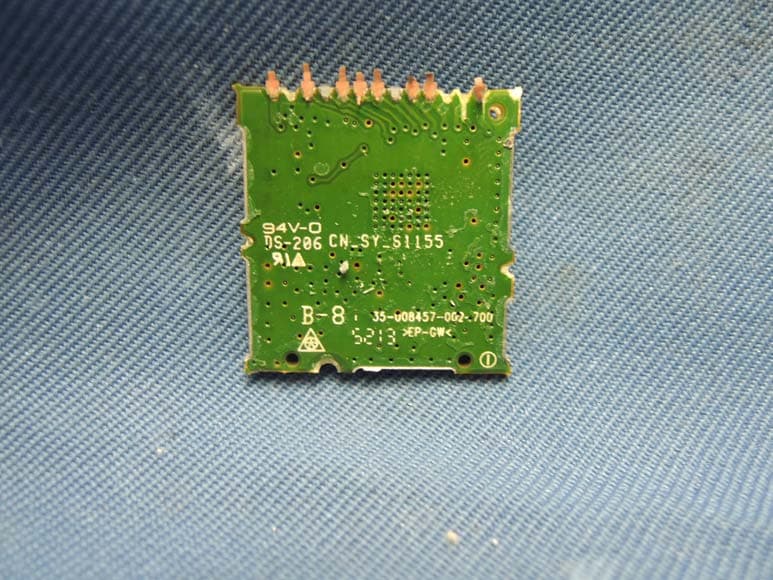
BOUSCD501H
May 28, 20141.9GHz DECT Baby Monitor - Parent Unit
Equipment Class
PUT - Part 15 Unlicensed PCS portable Tx worn on body