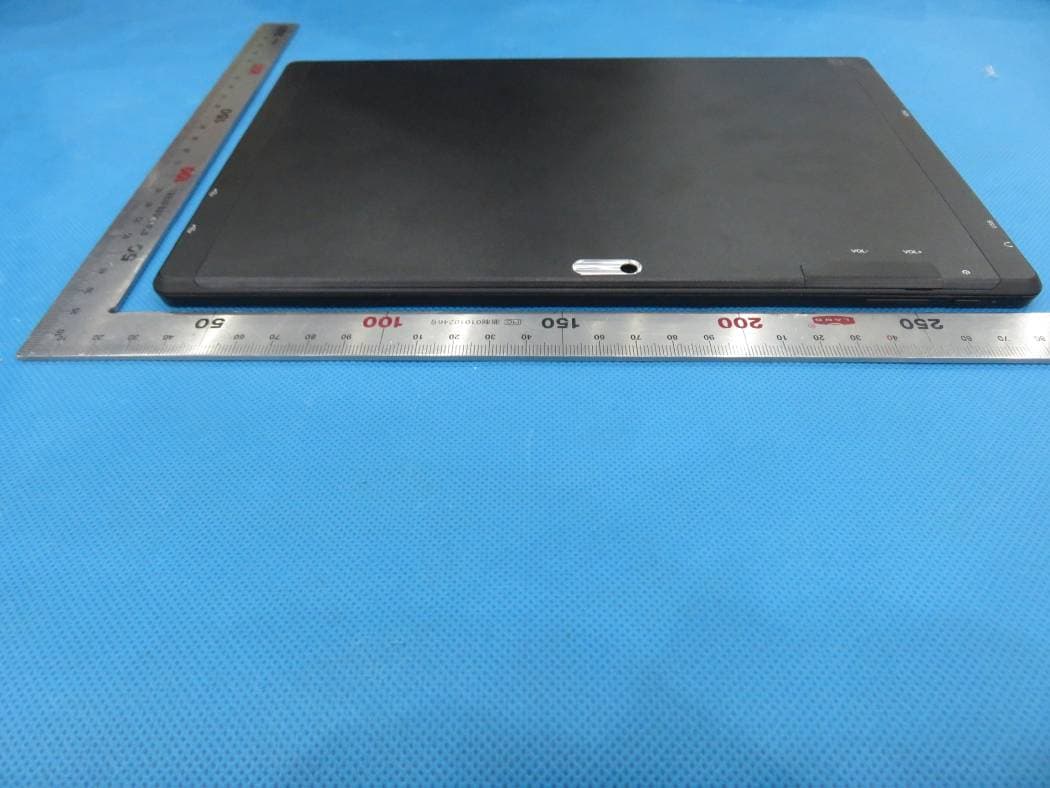
BRCPC7023METablet PC
Kintech Co. Ltd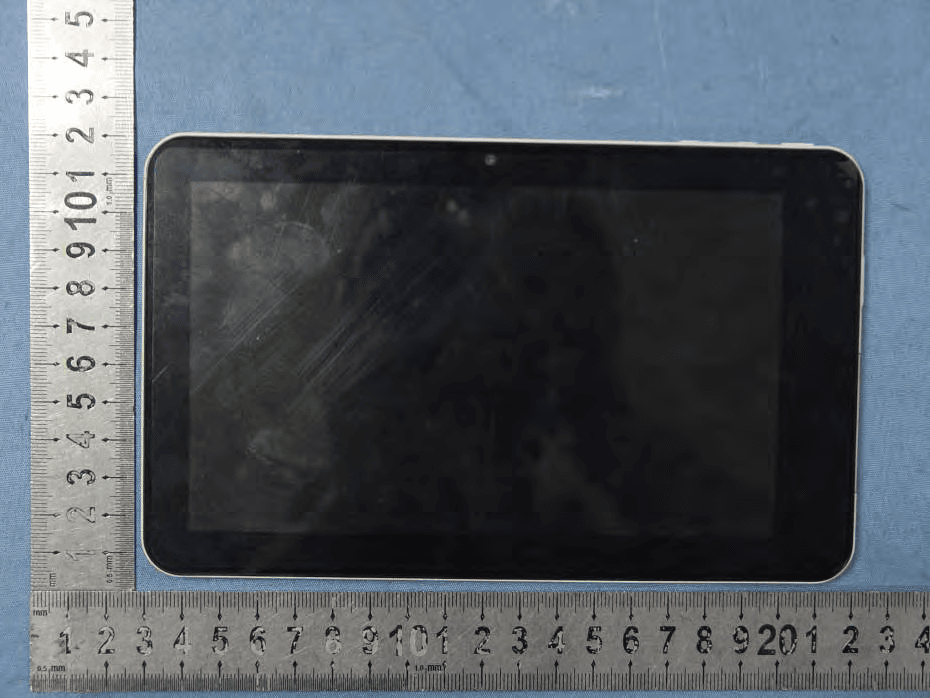
Click to zoom
Application Details
- Equipment Class
- DSS - Part 15 Spread Spectrum Transmitter
- Date of Grant
- Jan 29, 2013
- Application Purpose
- Original Equipment
- Date of Application
- Jan 29, 2013
- Equipment Note
- Tablet PC
- Frequency Range
- 2402.00000000 - 2480.00000000
- Company
- Kintech Co. Ltd
- Country
- China
Documents & Files
Document Text
Text extracted from the exhibit documents filed with the FCC. Open a document above to read the original.
Users Manual
Contents PC7023ME 1. Preface 2. Safety Notices 3. Ready to Use 3.1 Packing List 3.2 Product Appearance 3.3 Instructions on Keys 3.4 Features Overview 3.5 Technical Specifications 4. Quick Guides 4.1 Switch On/Off 4.2 Battery Management and Charging 4.3 Operation of the Function Icons 5. Operation Details 5.1 System 1 5.1.1 Music 5.1.2 Video 5.1.3 Picture 5.1.4 Recording 5.1.5 Explorer 5.2 System 2 5.2.1 Web Browser 5.2.2 E-Book Reader 5.3 System 3 5.3.1 Calculator 5.3.2 Clock 5.3.3 Camera Function 5.3.4 tf (Micro sd) Card Storage 5.3.5 APK Install and Manage 5.3.6 External Mouse and Keyboard 5.4 Movil Teacher 5.4.1 Device setting 5.4.2 Login application 5.4.3 Register your application 5.4.4 Navigation 5.4.5 User Interface 6. Settings 6.1 Wi-Fi 6.1.1 Wi-Fi Setting 6.1.2 External RJ45 USB Dongle Function 6.1.3 Bluetooth (Optional) 6.2 Sound 6.3 Display 6.4 HD 6.5 Storage 6.6 Battery 6.7 Apps 6.8 Location services 6.9 Security 6.10 Language & input 6.11 Backup & reset 6.12 Date and time 6.13 Accessibility 6.14 Developer options 6.15 About Tablet 7. Add, Move, or Delete Desktop Icon 8. Firmware Update 9. Troubleshooting and FAQ 10. FCC Statement Preface Dear Customers, Thank you very much for purchasing our product! This device is a built-in high performance Wifi receiver module, It supports picture browsing, e-book reading, games, online chat and other functions; various settings will fully show your individuality. To operate this player easily, please read this User Manual included with the player. Then you will have a better understanding of the operations. Before operating this player, please carefully read all data we provide about the player, so that you will have a better understanding of the product and its operations. The Company will not be responsible for any loss of personal data and damage caused by incorrect operation of the Software/Hardware, artificial damages, replacement of batteries or any other accident. To avoid loss of your data, please backup your data to your computer at all times. Also, since we can not control any dispute from users’ misunderstanding or incorrect operation against the manual, the Company will not take any relevant responsibility for any accidental loss potentially occurring in the process of using this manual. Due to constant product development, the information in this manual is subject to change without any prior notice. This manual is protected by copyright and no part is permitted to be copied or reproduced in any way without prior written permission of the Company. The Company reserves the final explanation right of this manual, warranty, as well as its related information. (Note: When compiling this manual, we are very careful to provide you completely reliable information. However, there is inevitably some error and oversight, please understand, and we welcome your suggestions. If any problem occurs during your use of this product, please immediately contact your local seller) Thanks for your support and please pay attention to our other products 2. Safety Notices 1) Please keep the device away from strong magnetic fields in order to avoid damage to the product. 2) Please do not let the device fall onto, rub against or knock against hard objects during use, because this may cause surface scratches on the device, battery damage, data loss or other damage to the hardware. 3) Never let this product be exposed to a humid environment or rain as the water leaking into the device could disable it to the extent of being beyond repair. 4) Never clean the device with any chemicals or detergent, this will damage the product surface and corrode the finish. 5) You are recommended not to use the headset with the volume at its highest settings, please adjust the volume to an appropriate safe level and limit the amount of time you spend using headphones to avoid possible damage to your hearing. Excessive volume will cause permanent hearing damage. 6) Please do not cut off the power abruptly during software updates or downloading, because this may cause data loss or system errors. 7) Over-voltage, power cable strain and bending or squeezing of the power cable by heavy objects must be avoided to prevent the possibility of overheating or fire. 8) In order to eliminate the risk of electric shock, do not touch the cable power plug with wet hands. 9) Some movies, music and pictures are under the protection of copyright, unauthorized usage is deemed as an infringement to the laws of copyright. 10) Please don’t turn on the device on in locations where wireless equipment is forbidden or when the usage of the device will cause interference and possible danger. 11) All the wireless equipment is subject to external interference and this can affect its performance. 12) Please comply with any related restrictions and rules, wireless equipment can influence the flight of the plane; please consult the relevant airline company if you intend to use the device on a plane. 13) Please don’t use the device in a petrol station, or near to fuel or chemicals. 14) Please comply with any related restrictions and rules; do not use the device where blasting operations are in progress. 15) Only qualified maintenance personnel can install or repair the device. Opening the device in any way will invalidate the warranty. 16) Please use the original accessories and battery provided with the device, do not use the incompatible products. 17) The device is not waterproof, please keep it dry. 18) For the sake of data safety, please back up any important information on the device, or keep a handwritten record. 19) When connecting with other devices, please read the user manual for detailed safety instructions. Don’t connect the device to incompatible products. NOTE: The Android 4. x OS adopts MTP protocol for file transfer, not the MSC protocol like the normal USB Disk. And only the Windows Media Player 10 and Windows Media Player 11(Or above version) could support MTP protocol at the present tim…
Text truncated - open the document above for the full version.
Cover Letter(s)
Kintech Co. Ltd January 6, 2013 To: SIEMIC, INC. 775 Montague Expressway Milpitas, CA 95035 USA Dear Sir/Madam, Re: Project and Product Certification Representative Authorization Letter We, ______Kintech Co. Ltd ___hereby authorize SIEMIC, INC. to act as a Certification Body for certifying for the following project(s): Product Description: Tablet PC Model name:PC7021, PC7021ME, PC7023ME, KW-PC7005C, KW-PC7021C, KW-PC7022C, PC7023, KW-PC7023C, KW-PC7024C, KW-PC7025C, KW-PC7026C, KW-PC7027C, KW- PC7028C, KW-PC7029C, KW-PC7030C, KW-PC7031C, KW-PC7032C, KW-PC7033C, KW -PC7034C, KW-PC7035C FCC ID: BRCPC7023ME We affirm that between SIEMIC and _ Kintech Co. Ltd __, any difference in understanding, including test plan, measurement methods, applicable standards and relevant procedures and processes have been resolved prior to commencement of testing activities.
Cover Letter(s)
SCS-F19: Confidentiality Request Letter Page 1 of 2 Rev 3.0 775 Montague Expressway Milpitas, CA 95035 Tel: 408-526-1188 Fax: 408-526-1088 Email: [email protected] Confidentiality Request Letter Revision History Reason for Amendment (current / obsolete) From To Approved Date Initial Release (obsolete) 1.0 1.0 Nov-14-2006 Adding CFR 2.459 (obsolete) 1.0 2.0 August – 11 - 2008 Updated company template & Added text box (current) 2.0 3.0 Jan-31-2012 SCS-F19: Confidentiality Request Letter Page 2 of 2 Rev 3.0 Kintech Co. Ltd January 6, 2013 To: Federal Communications Commission Authorization and Evaluation Division 7435 Oakland Mills Road Columbia, MD Subject: Permanent Confidentiality Request for FCC ID: BRCPC7023ME We hereby request confidential treatment of information accompanying this application as outlined below: - Block Diagram - Schematics - Operational Description The above materials contain trade secrets and proprietary information not customarily released to the public. The public disclosure of these materials may be harmful to the applicant and provide unjustified benefits to its competitors. The applicant understands that pursuant to Section 0.457 & 0.459 of the Rules, disclosure of this application and all accompanying documentation will not be made before the date of the Grant for this application.
Cover Letter(s)
Kintech Co. Ltd Date: January 6, 2013 To SIEMIC Inc 775 Montague Expressway Milpitas, CA 95035 Statement Model number: PC7021, PC7021ME, PC7023ME, KW-PC7005C, KW-PC7021C, KW-PC7022C, PC7023, KW-PC7023C, KW-PC7024C, KW-PC7025C, KW-PC7026C, KW-PC7027C, KW-PC7028C, KW-PC7029C, KW-PC7030C, KW-PC7031C, KW-PC7032C, KW-PC7033C, KW-PC7034C, KW-PC7035C We hereby state that these models are identical in interior structure, electrical circuits and components, and just model names, the plastics appearances such as color, shape are different for the marketing requirement Your assistance on this matter is highly appreciated. Sincerely,
Cover Letter(s)
Pipo Technology Co., Ltd. Date: Jan 6, 2013 To SIEMIC Inc 775 Montague Expressway Milpitas, CA 95035 Statement Model number: PC7021, PC7021ME, PC7023ME, KW-PC7005C, PC7023, KW-PC7023C, KW-PC7024C, KW-PC7025C, KW-PC7026C, KW-PC7027C, KW-PC7028C, KW-PC7029C, KW-PC7030C, KW-PC7031C, KW-PC7032C, KW-PC7033C, KW-PC7034C, KW-PC7035C, KW-PC7021C, KW-PC7022C We hereby state that these models have not FM function, FM is reserved function, and only in the information display. Your assistance on this matter is highly appreciated.
ID Label/Location Info
LabelLocation:
Internal Photos
Antenna
RF Exposure Info
FCC ID : BRCPC7023ME WIFI Transmitting Mode: Portable device According to §15.247(e)(i) and §1.1307(b)(1), systems operating under the provisions of this section shall be operated in a manner that ensures that the public is not exposed to radio frequency energy level in excess of the Commission’s guidelines. According to KDB 447498 D01 General RF Exposure Guidance v05, section 4.3.1 The 1-g and 10-g SAR test exclusion thresholds for 100 MHz to 6 GHz at test separation distances ≤ 50 mm are determined by: [(max. power of channel, including tune-up tolerance, mW)/(min. test separation distance, mm)] · [√f(GHz)] ≤ 3.0 for 1-g SAR and ≤ 7.5 for 10-g extremity SAR, 16 where f(GHz) is the RF channel transmit frequency in GHz Power and distance are rounded to the nearest mW and mm before calculation 17 The result is rounded to one decimal place for comparison The test exclusions are applicable only when the minimum test separation distance is ≤ 50 mm and for transmission frequencies between 100 MHz and 6 GHz. When the minimum test separation distance is < 5 mm, a distance of 5 mm is applied to determine SAR test exclusion. Maximum measured transmitter power Conducted Power (mw) Max Antenna Gain (dBi) 7.89 0 Remark: The best case gain of the antenna is 0dBi. 0dBi logarithmic terms convert to numeric result is nearly 1 [(max. power of channel, including tune-up tolerance, mW)/(min. test separation distance, mm)] · [√f(GHz)]=7.89/5*√2.437=2.46≤ 3.0 Threshold at which no SAR required is 10mw and ≤ 3.0 for 1-g SAR, Separation distance is 5mm. Maximum Tx power is 7.89mW (EIRP). Conclusion: No SAR is required. Bluetooth Transmitting Mode: Portable device According to §15.247(e)(i) and §1.1307(b)(1), systems operating under the provisions of this section shall be operated in a manner that ensures that the public is not exposed to radio frequency energy level in excess of the Commission’s guidelines. According to KDB 447498 D01 General RF Exposure Guidance v05, section 4.3.1 The 1-g and 10-g SAR test exclusion thresholds for 100 MHz to 6 GHz at test separation distances ≤ 50 mm are determined by: [(max. power of channel, including tune-up tolerance, mW)/(min. test separation distance, mm)] · [√f(GHz)] ≤ 3.0 for 1-g SAR and ≤ 7.5 for 10-g extremity SAR, 16 where f(GHz) is the RF channel transmit frequency in GHz Power and distance are rounded to the nearest mW and mm before calculation 17 The result is rounded to one decimal place for comparison The test exclusions are applicable only when the minimum test separation distance is ≤ 50 mm and for transmission frequencies between 100 MHz and 6 GHz. When the minimum test separation distance is < 5 mm, a distance of 5 mm is applied to determine SAR test exclusion. Maximum measured transmitter power Conducted Power (mw) Max Antenna Gain (dBi) 0.313 0 Remark: The best case gain of the antenna is 0dBi. 0dBi logarithmic terms convert to numeric result is nearly 1 [(max. power of channel, including tune-up tolerance, mW)/(min. test separation distance, mm)] · [√f(GHz)]=0.313/5*√2.402=0.097≤ 3.0 Threshold at which no SAR required is 10mw and ≤ 3.0 for 1-g SAR, Separation distance is 5mm. Maximum Tx power is 0.313mW (EIRP). Conclusion: No SAR is required. Bluetooth and WIFI Both Transmitting: Portable device According to §15.247(e)(i) and §1.1307(b)(1), systems operating under the provisions of this section shall be operated in a manner that ensures that the public is not exposed to radio frequency energy level in excess of the Commission’s guidelines. According to KDB 447498 D01 General RF Exposure Guidance v05, section 4.3.1 The 1-g and 10-g SAR test exclusion thresholds for 100 MHz to 6 GHz at test separation distances ≤ 50 mm are determined by: When standalone SAR test exclusion applies to an antenna that transmits simultaneously with other antennas, the standalone SAR must be estimated according to following to determine simultaneous transmission SAR test exclusion: (max. power of channel, inc luding tune-up tolerance, mW)/(min. test separation distance, mm)]·[√f(GHz)/x] W/kg for test separation distances ≤ 50 mm; where x = 7.5 for 1-g SAR, and x = 18.75 for 10-g SAR. Remark: The best case gain of the antenna is 0dBi. WIFI and Bluetooth Both Transmitting: (max. power of channel, including tune-up tolerance, mW)/(min. test separation distance, mm)]·[√f(GHz)/x] W/kg =7.89/5*[√2.437/7.5]+ 0.313/5*[√2.402/7.5] =0.329W/1-g SAR Threshold at which no SAR required is 10mw and ≤ 1.6W for 1-g SAR, Separation distance is 5mm. Conclusion: No SAR is required.
Test Report
Page 1 of 80 FCC ID: BRCPC7023ME ACCURATE TECHNOLOGY CO. LTD REPORT NO. ATE20130026 APPLICATION CERTIFICATION On Behalf of Kintech Co. Ltd Tablet PC Model No.:PC7021, PC7021ME, PC7023ME, KW-PC7005C, KW-PC7021C, KW-PC7022C, PC7023, KW-PC7023C, KW-PC7024C, KW-PC7025C, KW-PC7026C, KW-PC7027C, KW -PC7028C, KW-PC7029C, KW-PC7030C, KW-PC7031C, KW-PC7032C, KW-PC7033C, K W-PC7034C, KW-PC7035C FCC ID: BRCPC7023ME Prepared for : Kintech Co. Ltd Address : 1F-5F, Bldg 22, Chen Tian Industrial Zone, Xi Xiang Bao An District, Shenzhen, Guang Dong, China Prepared by : ACCURATE TECHNOLOGY CO. LTD Address : F1, Bldg. A, Changyuan New Material Port, Keyuan Rd. Science & Industry Park, Nanshan, Shenzhen, Guangdong P.R. China Tel: (0755) 26503290 Fax: (0755) 26503396 Report Number : ATE20130026 Date of Test : Jan 6- Jan 16, 2013 Date of Report : Jan 16, 2013 Page 2 of 80 FCC ID: BRCPC7023ME ACCURATE TECHNOLOGY CO. LTD REPORT NO. ATE20130026 TABLE OF CONTENTS Description Page Test Report Certification 1. GENERAL INFORMATION .......................................................................................................... 5 1.1. Description of Device (EUT)....................................................................................................................5 1.2. Description of Test Facility ......................................................................................................................6 1.3. Measurement Uncertainty.........................................................................................................................6 2. MEASURING DEVICE AND TEST EQUIPMENT ..................................................................... 7 3. OPERATION OF EUT DURING TESTING ................................................................................. 8 3.1. Operating Mode ........................................................................................................................................8 3.2. Configuration and peripherals ..................................................................................................................8 4. TEST PROCEDURES AND RESULTS ......................................................................................... 9 5. 20DB BANDWIDTH TEST............................................................................................................ 10 5.1. Block Diagram of Test Setup..................................................................................................................10 5.2. The Requirement For Section 15.247(a)(1) ............................................................................................10 5.3. EUT Configuration on Measurement .....................................................................................................10 5.4. Operating Condition of EUT ..................................................................................................................10 5.5. Test Procedure ........................................................................................................................................11 5.6. Test Result ..............................................................................................................................................11 6. CARRIER FREQUENCY SEPARATION TEST........................................................................ 15 6.1. Block Diagram of Test Setup..................................................................................................................15 6.2. The Requirement For Section 15.247(a)(1) ............................................................................................15 6.3. EUT Configuration on Measurement .....................................................................................................15 6.4. Operating Condition of EUT ..................................................................................................................15 6.5. Test Procedure ........................................................................................................................................16 6.6. Test Result ..............................................................................................................................................16 7. NUMBER OF HOPPING FREQUENCY TEST ......................................................................... 20 7.1. Block Diagram of Test Setup..................................................................................................................20 7.2. The Requirement For Section 15.247(a)(1)(iii) ......................................................................................20 7.3. EUT Configuration on Measurement .....................................................................................................20 7.4. Operating Condition of EUT ..................................................................................................................20 7.5. Test Procedure ........................................................................................................................................21 7.6. Test Result ..............................................................................................................................................21 8. DWELL TIME TEST ..................................................................................................................... 23 8.1. Block Diagram of Test Setup..................................................................................................................23 8.2. The Requirement For Section 15.247(a)(1)(iii) ......................................................................................23 8.3. EUT Configuration on Measurement .....................................................................................................23 8.4. Operating Condition of EUT ........................................................................................…
Text truncated - open the document above for the full version.
Test Setup Photos
Radiated spurious emission (up to 1G): Radiated spurious emission (above 1G): Conducted emission:
Contact Information
Applicant
Zhi Quan
Test Firm
Accurate Technology Co., Ltd.Sean Liu
Technical Specifications
| # | Rule Parts | Frequency Range | Power Output |
|---|---|---|---|
| 1 | 15C | 2.40 GHz - 2.48 GHz | 313.00 µW |
Other Applications from Kintech Co. Ltd
BRCPC1018
Jun 17, 2015tablet pc
Equipment Class
DXX - Part 15 Low Power Communication Device Transmitter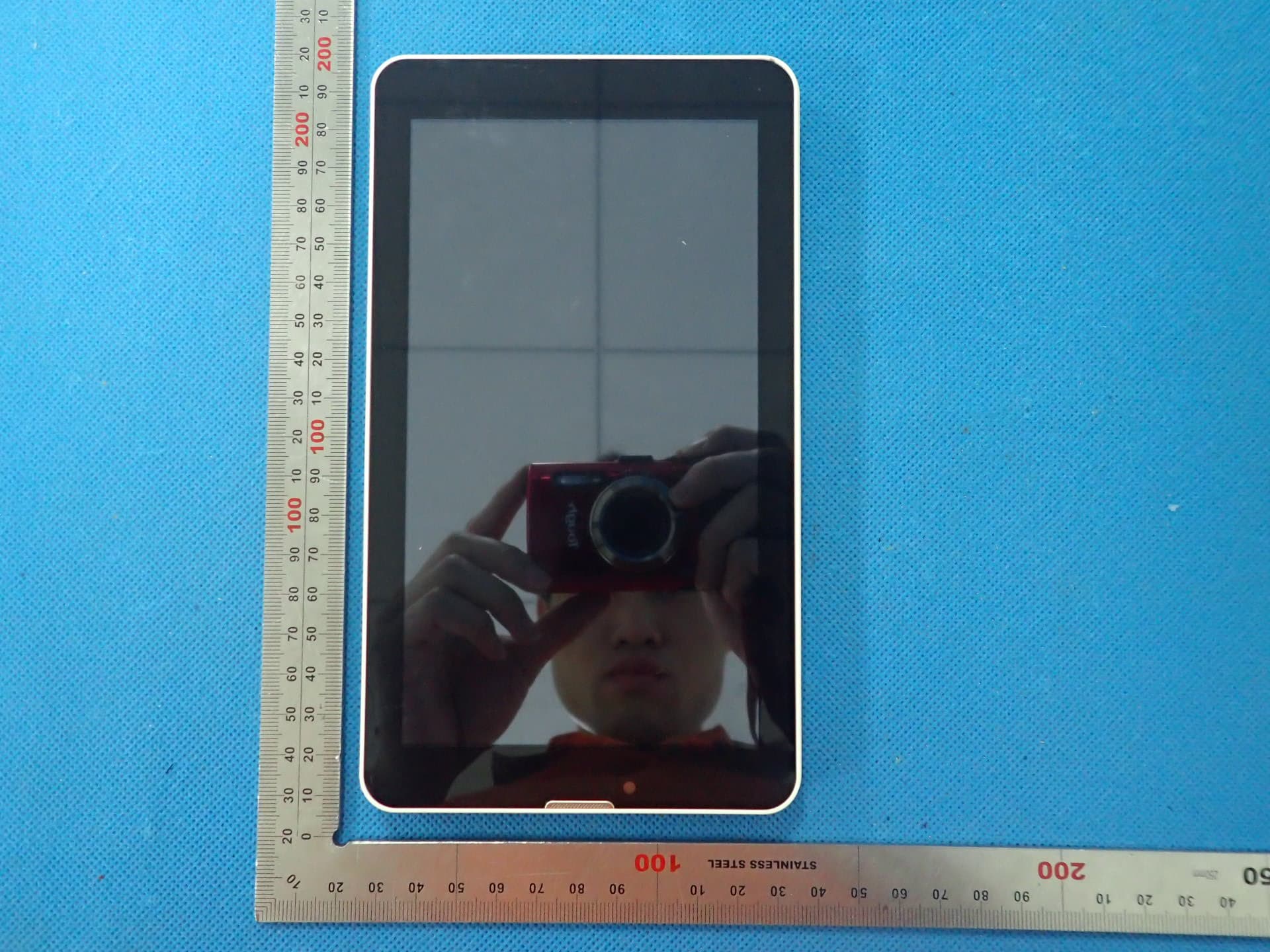
BRCPC7095ME
Jun 03, 2015Tablet PC
Equipment Class
DTS - Digital Transmission System
BRCPC8901
Apr 28, 2015Tablet PC
Equipment Class
JBP - Part 15 Class B Computing Device Peripheral
BRCPC7089
Apr 28, 2015Tablet PC
Equipment Class
DTS - Digital Transmission System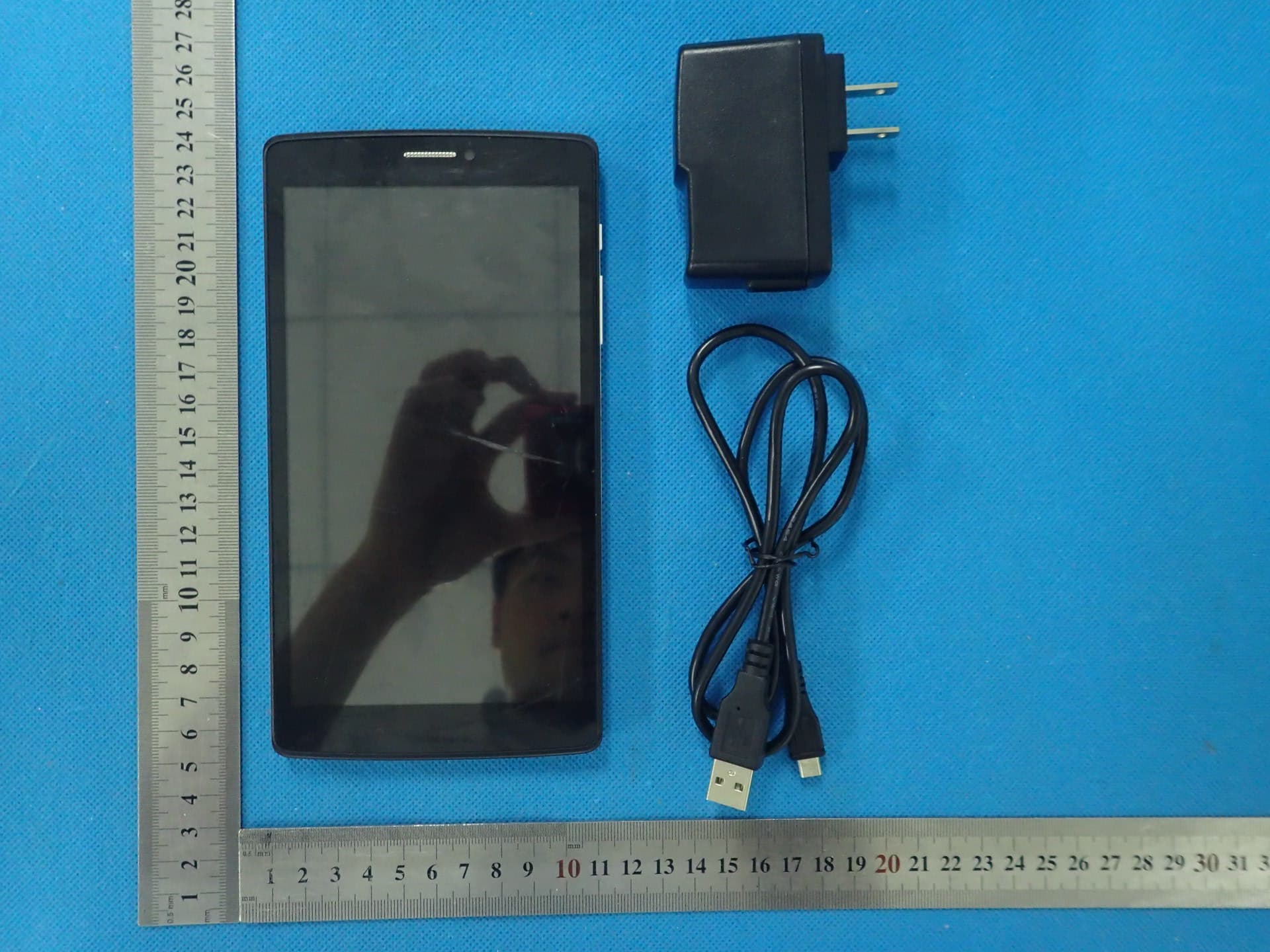
BRCPC6901
Apr 27, 2015Tablet PC
Equipment Class
PCE - PCS Licensed Transmitter held to ear