GMLRH-42Nokia 2220 single band cellphone
Microsoft Corporation
Click to zoom
Application Details
- Equipment Class
- TNE - Licensed Non-Broadcast Transmitter Held to Ear
- Date of Grant
- Aug 27, 2003
- Application Purpose
- Original Equipment
- Date of Application
- Aug 27, 2003
- Equipment Note
- Nokia 2220 single band cellphone
- Frequency Range
- 824.04000000 - 848.97000000
- Company
- Microsoft Corporation
- Country
- United States
Documents & Files
Document Text
Text extracted from the exhibit documents filed with the FCC. Open a document above to read the original.
Users Manual
Nokia 2220 User Guide What information is needed?NumbersWhere is the number? My numberWireless service provider Voice mail numberWireless service provider Wireless provider’s numberWireless service provider Provider’s customer careWireless service provider Model number2220Label on back of phone (under battery) Phone typeLabel on back of phone (under battery) Electronic serial number (ESN) Label on back of phone (under battery). See “Find phone information” on page 8. The wireless phone described in this guide is approved for use in TDMA and AMPS networks. LEGAL INFORMATION Part No. 9310029, Issue No. 2 Copyright © 2003 Nokia. All rights reserved. Nokia, Nokia Connecting People, Nokia 2220, and the Nokia Original Accessories logos, Xpress-on, and Space Impact are trademarks or registered trademarks of Nokia Corporation. All other product and company names mentioned herein may be trademarks or tradenames of their respective owners. Printed in Canada 07/2003 US Patent No 5818437 and other pending patents. T9 text input software Copyright ©1999-2003. Tegic Communications, Inc. All rights reserved. Includes RSA BSAFE cryptographic or security protocol software from RSA Security. The information in this user guide was written for the Nokia 2220 phone. Nokia operates a policy of continuous development. Nokia reserves the right to make changes and improvements to any of the products described in this document without prior notice. UNDER NO CIRCUMSTANCES SHALL NOKIA BE RESPONSIBLE FOR ANY LOSS OF DATA OR INCOME OR ANY SPECIAL, INCIDENTAL, AND CONSEQUENTIAL OR INDIRECT DAMAGES HOWSOEVER CAUSED. THE CONTENTS OF THIS DOCUMENT ARE PROVIDED “AS IS.” EXCEPT AS REQUIRED BY APPLICABLE LAW, NO WARRANTIES OF ANY KIND, EITHER EXPRESS OR IMPLIED, INCLUDING, BUT NOT LIMITED TO, THE IMPLIED WARRANTIES OF MERCHANTABILITY AND FITNESS FOR A PARTICULAR PURPOSE, ARE MADE IN RELATION TO THE ACCURACY AND RELIABILITY OR CONTENTS OF THIS DOCUMENT. NOKIA RESERVES THE RIGHT TO REVISE THIS DOCUMENT OR WITHDRAW IT AT ANY TIME WITHOUT PRIOR NOTICE. EXPORT CONTROLS This product contains commodities, technology or software exported from the United States in accordance with the Export Administration regulations. Diversion contrary to U.S. or Canadian law is prohibited. FCC/INDUSTRY CANADA NOTICE Your phone may cause TV or radio interference (for example, when using a telephone in close proximity to receiving equipment). The FCC or Industry Canada can require you to stop using your telephone if such interference cannot be eliminated. If you require assistance, contact your local service facility. This device complies with part 15 of the FCC rules. Operation is subject to the condition that this device does not cause harmful interference. Nokia 2220 User Guide Copyright © Nokia 2003 Nokia 2220 phone at a glance Talk key Display screen Scroll up key Left selection key Star key End key Microphone Earpiece Right selection key Power key Connection port Pound key Number keys Scroll down key Copyright © Nokia 2003 •QUICK GUIDE ActionDescription Make a callEnter a phone number, and press the Talk key. Answer a callPress the Talk key, or select Answer. Answer call during call Press the Talk key. End a callPress the End key. Decline a callPress the End key to send the call to voice mail. Mute a callSelect Options > Mute during a call. RedialPress the Talk key twice. Adjust call volumeDuring a call, press the Scroll up key to increase volume or the Scroll down key to decrease volume. Use in-call menuSelect Options during a call. Save name and numberEnter a number, select Save, enter a name, and select OK. Use 1-touch dialingPress and hold a key (2–9). You must assign a key to a number in contacts. Look up a nameSelect Contacts > Find. Check voice mailPress and hold the 1 key (contact your service provider for details). Write text messagesSelect Menu > Messages > Write Message. Write the message. Send text messagesFrom the message entry screen, select Options > Send. Enter the recipient’s number and select Send. Note: Message service is dependent on the service provider. Read new messageIf Message received appears on the display, select Read, highlight the message, then select Read again. Reply to a messageWhile reading a message, select Options > Reply. Select either As message or As e-mail. Write a reply, and select Options > Send. PressPress a key briefly and release it. Press and holdPress a key, hold it for two to three seconds, and release it. Nokia 2220 User Guide vCopyright © 2003 Nokia Contents Quick guide . . . . . . . . . . . . . . . . . . . . . . . . . . . . . . . . . . . . . . . . . . . . . . . . . . . . . . . . . iv 1For your safety . . . . . . . . . . . . . . . . . . . . . . . . . . . . . . . . . . . . . . . 1 2About your phone . . . . . . . . . . . . . . . . . . . . . . . . . . . . . . . . . . . . . 3 Wireless network services . . . . . . . . . . . . . . . . . . . . . . . . . . . . . . . . . . . . . . . . . . . . . 3 Register your phone . . . . . . . . . . . . . . . . . . . . . . . . . . . . . . . . . . . . . . . . . . . . . . . . . . 3 Updates . . . . . . . . . . . . . . . . . . . . . . . . . . . . . . . . . . . . . . . . . . . . . . . . . . . . . . . . . . . . 3 Terms . . . . . . . . . . . . . . . . . . . . . . . . . . . . . . . . . . . . . . . . . . . . . . . . . . . . . . . . . . . . . . 3 Icons . . . . . . . . . . . . . . . . . . . . . . . . . . . . . . . . . . . . . . . . . . . . . . . . . . . . . . . . . . . . . . 4 Start screen . . . . . . . . . . . . . . . . . . . . . . . . . . . . . . . . . . . . . . . . . . . . . . . . . . . . . . . . . 4 Scroll Bar . . . . . . . . . . . . . . . . . . . . . . . . . . . . . . . . . . . . . . . . . . . . . . . . . . . . . . . . . . . 5 Antenna . . . . . . . . . . . . . . . . . . . . . . . . . . . . . . . . . . . . . . . . . . . . . . . . . . . . . . . . . . . . 5 Battery . . . . . . . . . . . . . . . . . . . . . . . . . . . . . . . . . . . . . . . . . . . . . . . . . . . . . . . . …
Text truncated - open the document above for the full version.
External Photos
Applicant: Nokia, Inc FCC ID GMLRH-41 Copyright © 2003, Nokia, Inc.
ID Label/Location Info
FCC ID: GMLRH-42 IC: 661NRH-42 AWS Part#: 797553007739 MADE IN MEXICO ESN: 12345678901 Code: 0500000MYDDFL Model: 2220 Type: RH-42 1 . 5 4x1.5 0.2 0 . 2 Drw N Note Part name Type Label RH-39, RH-40, RH-41, RH-42 DMP07668 1.0 32.5 o. Note Dong Ho 062303 Lay out and dimensions 2:1 9.5 G076681dpi600.pcx PRINTING FILE Generic PRINTING FILE AWS A076681dpi600.pcx 1 . 5 0 . 2 1 3 . 0 0.2 2.0 Material Sheet 1 of 1 Original Scale Original Size A4 1:1 NMP Code Item Name Document Number Doc. Vers. Name / Date Change Ref. Approved / Date Original Designer FUNCTIONAL CHARACTERISTICS KEY MAIN FUNCTIONAL CHARACTERISTIC MAIN FUNCTIONAL CHARACTERISTIC ( Proof of Process Capability Required ) Copyright c Nokia Mobile Phones. All rights reserved THIS DRAWING IS PROTECTED BY COPYRIGHT AS AN UNPUBLISHED WORK UNAUTHORIZED REPRODUCTION OF THIS DRAWING IS NOT PERMITTED THIS DRAWING CONTAINS PROPRIETARY AND CONFIDENTIAL INFORMATION This document is the property of Nokia Mobile Phones Bar Code 128 B: Product Code Bar Code 128 B: Serial number Date and Factory Code (See table below) 11 x 6.5 (R=1.5) 01 T A . .Z A . .Z A . .Z A . .Z A . .Z P G R M . . . 31 MONTH (M) LETTER DATE (DD) FACTORY (FF) LINE (L) NUMBER LETTER YEAR (Y) 1993 1994 1995 1996 1997 1998 1999 2000 2001 2002 2003 2004 A B C D E F G H I J K L JANUARY FEBRUARY MARCH APRIL MAY JUNE JULY AUGUST SEPTEMBER OCTOBER NOVEMBER DECEMBER A B C D E F G H I J K L FW ALLIANCE FW DIPLOMACY BRAZIL MANAUS MEXICO REYNOSA KOREA DMC03344 NMP Code: 9370583 BLANK TYPE LABEL Bar Code 128 B/C: AWS Part # PRINTING FILE AWS 1:1 PRINTING FILE US GENERIC 1:1 EXAMPLE AWS part: 1:1 EXAMPLE US GENERIC: 1:1 0 . 2 3 8 . 5 NOTE: ARTWORK PICTURES ARE ONLY EXAMPLES; IN PRODUCTION THE CORRECT DATA IS READ FROM THE TRANSCEIVER CAN BE PRINTED IN NMP PRODUCTION USING: FLEXCON TC-200V-156 MATERIAL & THERMAL TRANSFER RIBBON ZEBRA 5095 CODE 9730000. Rtran 062303 A076681dpi300.pcx G076681dpi300.pcx --------- Dong Ho 062303 FCC ID: GMLRH-42 IC: 661NRH-42 AWS Part#: 797553007739 MADE IN MEXICO ESN: 12345678901 Code: 0500000MYDDFL Model: 2220 Type: RH-42 FCC ID: IC: AWS Part#: ESN: Code: Model: Type: MADE IN MEXICO ESN: 12345678901 Code: 0507070MYDDFL FCC ID: GMLRH-42 IC: 661NRH-42 Type: RH-42 Model: 2220 ESN: Code: FCC ID: IC: Type: Model: The wireless phone described in this guide is approved for use in TDMA and AMPS networks. LEGAL INFORMATION Part No. 9310029, Issue No. 2 Copyright © 2003 Nokia. All rights reserved. Nokia, Nokia Connecting People, Nokia 2220, and the Nokia Original Accessories logos, Xpress-on, and Space Impact are trademarks or registered trademarks of Nokia Corporation. All other product and company names mentioned herein may be trademarks or tradenames of their respective owners. Printed in Canada 07/2003 US Patent No 5818437 and other pending patents. T9 text input software Copyright ©1999-2003. Tegic Communications, Inc. All rights reserved. Includes RSA BSAFE cryptographic or security protocol software from RSA Security. The information in this user guide was written for the Nokia 2220 phone. Nokia operates a policy of continuous development. Nokia reserves the right to make changes and improvements to any of the products described in this document without prior notice. UNDER NO CIRCUMSTANCES SHALL NOKIA BE RESPONSIBLE FOR ANY LOSS OF DATA OR INCOME OR ANY SPECIAL, INCIDENTAL, AND CONSEQUENTIAL OR INDIRECT DAMAGES HOWSOEVER CAUSED. THE CONTENTS OF THIS DOCUMENT ARE PROVIDED “AS IS.” EXCEPT AS REQUIRED BY APPLICABLE LAW, NO WARRANTIES OF ANY KIND, EITHER EXPRESS OR IMPLIED, INCLUDING, BUT NOT LIMITED TO, THE IMPLIED WARRANTIES OF MERCHANTABILITY AND FITNESS FOR A PARTICULAR PURPOSE, ARE MADE IN RELATION TO THE ACCURACY AND RELIABILITY OR CONTENTS OF THIS DOCUMENT. NOKIA RESERVES THE RIGHT TO REVISE THIS DOCUMENT OR WITHDRAW IT AT ANY TIME WITHOUT PRIOR NOTICE. EXPORT CONTROLS This product contains commodities, technology or software exported from the United States in accordance with the Export Administration regulations. Diversion contrary to U.S. or Canadian law is prohibited. FCC/INDUSTRY CANADA NOTICE Your phone may cause TV or radio interference (for example, when using a telephone in close proximity to receiving equipment). The FCC or Industry Canada can require you to stop using your telephone if such interference cannot be eliminated. If you require assistance, contact your local service facility. This device complies with part 15 of the FCC rules. Operation is subject to the condition that this device does not cause harmful interference.
RF Exposure Info
Nokia 2220 User Guide 57Copyright © Nokia 2003 Reference information Certification Information (SAR) THIS MODEL PHONE MEETS THE GOVERNMENT'S REQUIREMENTS FOR EXPOSURE TO RADIO WAVES. Your wireless phone is a radio transmitter and receiver. It is designed and manufactured not to exceed the emission limits for exposure to radio frequency (RF) energy set by the Federal Communications Commission of the U.S. Government. These limits are part of comprehensive guidelines and establish permitted levels of RF energy for the general population. The guidelines are based on standards that were developed by independent scientific organizations through periodic and thorough evaluation of scientific studies. The standards include a substantial safety margin designed to assure the safety of all persons, regardless of age and health. The exposure standard for wireless mobile phones employs a unit of measurement known as the Specific Absorption Rate, or SAR. The SAR limit set by the FCC is 1.6W/kg.* Tests for SAR are conducted using standard operating positions accepted by the FCC with the phone transmitting at its highest certified power level in all tested frequency bands. Although the SAR is determined at the highest certified power level, the actual SAR level of the phone while operating can be well below the maximum value. This is because the phone is designed to operate at multiple power levels so as to use only the power required to reach the network. In general, the closer you are to a wireless base station antenna, the lower the power output. Before a phone model is available for sale to the public, it must be tested and certified to the FCC that it does not exceed the limit established by the government- adopted requirement for safe exposure. The tests are performed in positions and locations (for example, at the ear and worn on the body) as required by the FCC for each model. The following values are the highest SAR values for this model phone as reported to the FCC. When tested for use at the ear: FCCID # GMLRH40 is 1.2 W/kg FCCID # GMLRH42 is 1.19 W/Kg When worn on the body as described in this user guide: FCCID # GMLRH40 is 1.2 W/kg FCCID # GMLRH42 is 1.21 W/kg (Body-worn measurements differ among phone models, depending upon available accessories and FCC requirements). While there may be differences between the SAR levels of various phones and at various positions, they all meet the government requirement. 58Copyright © Nokia 2003 The FCC has granted an Equipment Authorization for this model phone with all reported SAR levels evaluated as in compliance with the FCC RF exposure guidelines. SAR information on this model phone is on file with the FCC and can be found under the Display Grant section of http://www.fcc.gov/oet/fccid after searching on FCC ID GMLRH-40 and FCC ID GMLRH-42. For body worn operation, this phone has been tested and meets the FCC RF exposure guidelines for use with an accessory that contains no metal and that positions the handset a minimum of 5/8 inch (1.5 cm) from the body. Use of other accessories may not ensure compliance with FCC RF exposure guidelines. If you do not use a body-worn accessory and are not holding the phone at the ear, position the handset a minimum of 5/8 inch (1.5 cm) from your body when the phone is switched on. *In the United States and Canada, the SAR limit for mobile phones used by the public is 1.6 watts/kilogram (W/kg) averaged over one gram of tissue. The standard incorporates a substantial margin of safety to give additional protection for the public and to account for any variations in measurements. SAR values may vary depending on national reporting requirements and the network band. For SAR information in other regions please look under product information at www.nokia.com/us. TCC FCC ID: GMLRH-42 Test & Certification Center (TCC) - Dallas Test Report #: 02-RF-0263 Accredited Laboratory Certificate Number: 1819-01 CONTENTS 1. QUALITY SYSTEM................................................................................................................................................................3 2. SUMMARY FOR SAR TEST REPORT.................................................................................................................................4 2.1 MAXIMUM RESULTS FOUND DURING SAR EVALUATION.....................................................................................................................4 3. DESCRIPTION OF TESTED DEVICE....................................................................................................................................5 3.1 PICTURE OF PHONE...............................................................................................................................................................................5 3.2 DESCRIPTION OF THE ANTENNA............................................................................................................................................................5 3.3 BATTERY OPTIONS................................................................................................................................................................................5 3.4 BODY WORN OPERATION.....................................................................................................................................................................5 4. TEST CONDITIONS...............................................................................................................................................................6 4.1 AMBIENT CONDITIONS.........................................................................................................................................................................6 4.2 RF CHARACTERISTICS OF THE TEST SITE................................................................................................................................................6 4.3 TEST SIGNAL, FREQUENCIES, AND OUTPUT POWER........…
Text truncated - open the document above for the full version.
Test Report
TCC Company Confidential 2 ( 53) FCC ID: GMLRH-42 Test & Certification Center (TCC) - Dallas Test Report #: 02-RF-0262.001 August 13, 2003 Ver 1.0 CFR 47 Part 2, 22 Test Report © 2003 Nokia Mobile Phones TABLE OF CONTENTS 1. GENERAL.................................................................................................................................................................. 4 1.1 QUALITY SYSTEM................................................................................................................................................. 4 1.2 LIST OF GENERAL INFORMATION REQUIRED FOR CERTIFICATION............................................................................ 4 1.3 OBJECTIVE........................................................................................................................................................... 6 1.4 TEST SUMMARY................................................................................................................................................... 6 2. STANDARDS BASIS ................................................................................................................................................ 7 3. LIST OF ABBREVIATIONS, ACRONYMS AND TERMS......................................................................................... 8 3.1 ABBREVIATIONS................................................................................................................................................... 8 3.2 ACRONYMS.......................................................................................................................................................... 8 3.3 TERMS................................................................................................................................................................. 8 4. EQUIPMENT-UNDER-TEST (EUT)........................................................................................................................... 9 4.1 DESCRIPTION OF TESTED DEVICE(S): .................................................................................................................... 9 4.2 PHOTOGRAPH OF TESTED DEVICE(S): ................................................................................................................... 9 5. TEST EQUIPMENT LIST......................................................................................................................................... 10 6. RF POWER OUTPUT (RADIATED)........................................................................................................................ 11 6.1 SETUP............................................................................................................................................................... 11 6.2 PASS/FAIL CRITERIA........................................................................................................................................... 11 6.3 DETAILED TEST RESULTS................................................................................................................................... 11 6.4 MEASUREMENT UNCERTAINTY............................................................................................................................ 12 7. OCCUPIED BANDWIDTH (TRANSMITTER CONDUCTED MEASUREMENTS) ................................................. 13 7.1 SETUP............................................................................................................................................................... 13 7.2 PASS/FAIL CRITERIA........................................................................................................................................... 13 7.3 DETAILED TEST RESULTS................................................................................................................................... 13 7.4 BLOCK EDGE REQUIREMENTS............................................................................................................................. 18 7.5 MEASUREMENT UNCERTAINTY............................................................................................................................ 42 8. SPURIOUS EMISSIONS AT ANTENNA TERMINALS........................................................................................... 43 8.1 SETUP............................................................................................................................................................... 43 8.2 PASS/FAIL CRITERIA........................................................................................................................................... 43 8.3 DETAILED TEST RESULTS................................................................................................................................... 43 8.4 MEASUREMENT UNCERTAINTY............................................................................................................................ 46 9. FIELD STRENGTH OF SPURIOUS RADIATION................................................................................................... 47 9.1 SETUP............................................................................................................................................................... 47 9.2 PASS/FAIL CRITERIA........................................................................................................................................... 47 9.3 DETAILED TEST RESULTS................................................................................................................................... 48 9.4 MEASUREMENT UNCERTAINTY............................................................................................................................ 49 10. FREQUENCY STABILITY (TEMPERATURE VARIATION / VOLTAGE VARIATION) ..................................... 50 10.1 SETUP.................................................................................................…
Text truncated - open the document above for the full version.
Contact Information
Applicant
Hasnain Syed(Director, EMC, SI and RF Compliance)
Technical Contact
Nokia CorporationNerina Walton
[email protected]972-668-9465
6000 Connection Drive · Irving, Texas · United States
Technical Specifications
| # | Rule Parts | Frequency Range | Power Output | Emission | Tolerance |
|---|---|---|---|---|---|
| 3 | 22.901(d) | 824.04 MHz - 848.97 MHz | 871.00 mW | 30K0DXW | 12 Hz |
Other Applications from Microsoft Corporation

GMLRM-88A
Apr 11, 2006GSM 850/900/1800/1900MHz Cellphone w/BT
Equipment Class
JBP - Part 15 Class B Computing Device Peripheral
GMLRM-88
Jan 19, 2006GSM 850/900/1800/1900MHz Cellphone w/BT
Equipment Class
DSS - Part 15 Spread Spectrum Transmitter
GMLNPM-10X
Oct 29, 2003Dual Band Mobile Phone
Equipment Class
PCE - PCS Licensed Transmitter held to ear
GMLRH-25
Sep 10, 2003Tri mode Dual Band Cellular Phone
Equipment Class
PCE - PCS Licensed Transmitter held to ear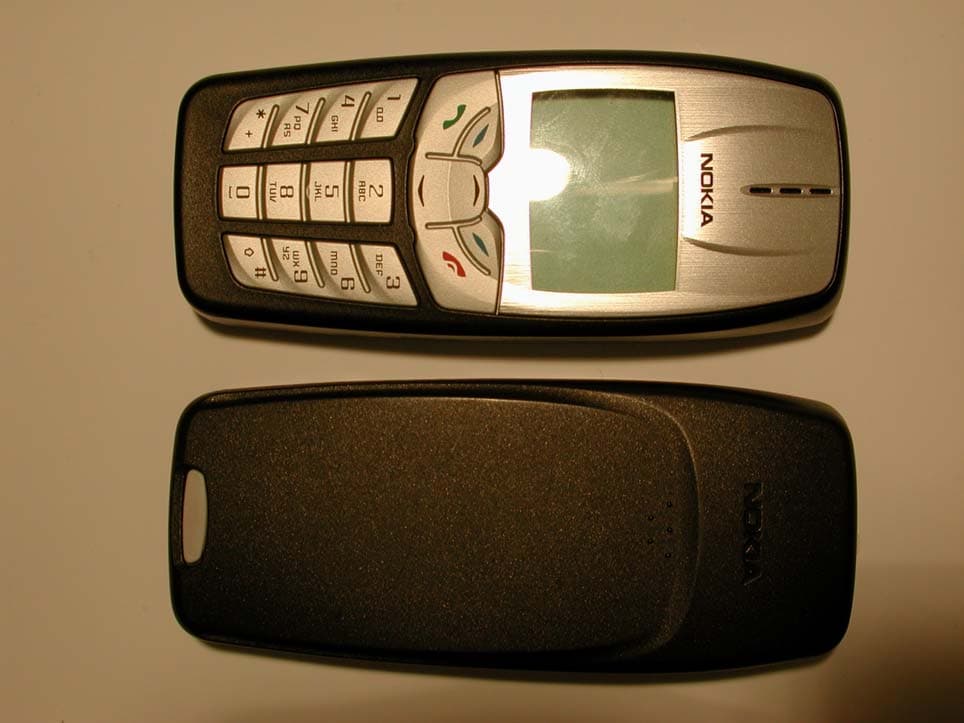
GMLRH-41
Aug 25, 2003Dual Band Dual Mode TDMA Phone
Equipment Class
PCE - PCS Licensed Transmitter held to ear