HYQ23AAKTire Pressure Monitoring System (Receiver)
Denso Corporation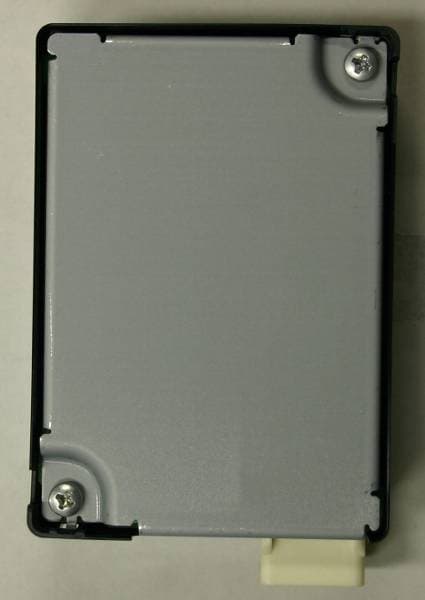
Click to zoom
Application Details
- Equipment Class
- CYY - Communications Receiver used w/Pt 15 Transmitter
- Date of Grant
- Jun 01, 2012
- Application Purpose
- Original Equipment
- Date of Application
- Jun 01, 2012
- Equipment Note
- Tire Pressure Monitoring System (Receiver)
- Frequency Range
- 314.98000000 - 314.98000000
- Company
- Denso Corporation
- Country
- Japan
Documents & Files
Document Text
Text extracted from the exhibit documents filed with the FCC. Open a document above to read the original.
Users Manual
Manual Requirement of FCC/IC Our product (23AAK) is one of vehicle parts incorporated into the vehicle as original equipment. Therefore, we will not supply the user’s manual. However, we will ask the vehicle manufacturer to include following statements in the vehicle user’s manual in accordance with FCC and IC requirements. 1. Requirement for User Manual 1.1. FCC Requirement 1.1.1. In accordance with 15.21 of FCC rule, following statement will be included in the user’s manual. 1.1.2. In accordance with requirement of FCC§15.19(a)(5), following statement will be included in the user’s manual. 1.2. IC Requirement 1.2.1. In accordance with requirement of RSS-GEN, following statement will be included in the user’s manual. FCC WARNING: Changes or modifications not expressly approved by the party responsible for compliance could void the user’s authority to operate the equipment. NOTE: This device complies with part 15 of the FCC Rules. Operation is subject to the following two conditions: (1) This device may not cause harmful interference, and (2) this device must accept any interference received, including interference that may cause undesired operation. NOTE: This device complies with Industry Canada license-exempt RSS Standard(s). Operation is subject to the following two conditions: (1) this device may not cause interference, and (2) this device must accept any interference, including interference that may cause undesired operation of the device.
Cover Letter(s)
1-1, Showa-cho, Kariya-shi, Aichi-ken, 448-8661, Japan Tel : +81-566-25-5947 Fax : +81-566-25-4548 Date: April 24, 2012 UL CCS 47173 Benicia Street, Fremont, CA 94538 Reference: Applicant: DENSO CORPORATION FCC ID: HYQ23AAK To whom it may concern: We, the undersigned, hereby authorize Yoshinobu Asai of Application Section, WiSE Japan, UL Verification Service, UL Japan, Inc. to act on our behalf in all manners relating to application for equipment authorization, including signing of all documents relating to these matters. Any and all acts carried out by UL Japan, Inc. on our behalf shall have the same effect as acts of our own. We, the undersigned, hereby certify that we are not subject to a denial of federal benefits, that includes FCC benefits, pursuant to Section 5301 of the Anti-Drug Abuse Act of 1988, 21 U.S.C. 853(a). This authorization is valid until further written notice from the applicant. The application for the subject equipment has not been submitted to another TCB for certification. Sincerely Yours, Kazuo Sakakibara General Manager Engineering Administration Division
Cover Letter(s)
1-1, Showa-cho, Kariya-shi, Aichi-ken, 448-8661, Japan Tel : +81-566-25-5947 Fax : +81-566-25-4548 UL CCS 47173 Benicia Street, Fremont, CA 94538 Subject: Request for Confidentiality FCC ID: HYQ23AAK To Whom It May Concern: Pursuant to the provisions of Sections 0.457 and 0.459 of the Commission’s rules (47 CFR §§ 0.457, 0.459), we are requesting the Commission to withhold the following attachments as confidential document from public disclosure indefinitely. Schematic Diagram Block Diagram Parts List Theory of Operation Above mentioned document contains detailed system and equipment description are considered as proprietary information in operation of the equipment. The public disclosure of above documents might be harmful to our company and would give competitor an unfair advantage in the market. It is our understanding that all measurement test reports, FCC ID label format and correspondent during certification review process cannot be granted as confidential documents and those information will be available for public review once the grant of equipment authorization is issued. Best Regards Kazuo Sakakibara General Manager Engineering Administration Division April 24, 2012
External Photos
DENSO CORPORATION Tire Pressure Monitoring System (Receiver) FCC ID: HYQ23AAK External Photos (1/3) Front Rear Note: Color of connector may vary. DENSO CORPORATION Tire Pressure Monitoring System (Receiver) FCC ID: HYQ23AAK External Photos (2/3) Top Bottom Note: Color of connector may vary. DENSO CORPORATION Tire Pressure Monitoring System (Receiver) FCC ID: HYQ23AAK External Photos (3/3) Right Left Note: Color of connector may vary.
ID Label/Location Info
8. Marking location and layout Unit: mm Note. Compliance statement of marking will not be changed. But marking layout, size and other indications maybe changed. Fig. Marking location and layout of Receiver (37) (47.2) (63.5) (90)
Internal Photos
DENSO CORPORATION Tire Pressure Monitoring System (Receiver) FCC ID: HYQ23AAK Internal Photos (Variation No. 7) Component Side Solder Side Antenna Inverse F Antenna: TYPE 1 Note: Color of connector may vary. DENSO CORPORATION Tire Pressure Monitoring System (Receiver) FCC ID: HYQ23AAK Internal Photos (Variation No. 11) Component Side Solder Side Antenna Inverse L Antenna: TYPE 1 Note: Color of connector may vary.
Test Report
Test report No. : 32IE0311-HO-01-B-R1 Page : 2 of 14 Issued date : May 29, 2012 Revosed date : May 30, 2012 FCC ID : HYQ23AAK UL Japan, Inc. Head Office EMC Lab. 4383-326 Asama-cho, Ise-shi, Mie-ken 516-0021 JAPAN Telephone : +81 596 24 8116 Facsimile : +81 596 24 8124 CONTENTS PAGE SECTION 1: Customer information ...................................................................................... 3 SECTION 2: Equipment under test (E.U.T.) ........................................................................ 3 SECTION 3: Test specification, procedures & results ......................................................... 4 SECTION 4: Operation of E.U.T. during testing ................................................................. 6 SECTION 5: Radiated Emission ............................................................................................ 7 APPENDIX 1: Data of EMI test ............................................................................................. 8 Radiated Emission ......................................................................................................................... 8 APPENDIX 2: Test instruments ........................................................................................... 12 APPENDIX 3: Photographs of test setup............................................................................. 13 Radiated Emission ....................................................................................................................... 13 Worst Case Position (Horizontal: X-axis/ Vertical:X-axis) ..................................................... 14 Test report No. : 32IE0311-HO-01-B-R1 Page : 3 of 14 Issued date : May 29, 2012 Revosed date : May 30, 2012 FCC ID : HYQ23AAK UL Japan, Inc. Head Office EMC Lab. 4383-326 Asama-cho, Ise-shi, Mie-ken 516-0021 JAPAN Telephone : +81 596 24 8116 Facsimile : +81 596 24 8124 SECTION 1: Customer information Company Name : DENSO CORPORATION Address : 1-1 Showa-cho, Kariya-shi, Aichi-ken, 448-8661 Japan Telephone Number : +81-566-61-7086 Facsimile Number : +81-566-25-4792 Contact Person : Nobuya Watabe SECTION 2: Equipment under test (E.U.T.) 2.1 Identification of E.U.T. Type of Equipment : Tire Pressure Monitoring System (Receiver) Model No. : 23AAK Serial No. : Refer to Section 4, Clause 4.2 Receipt Date of Sample : April 26, 2012 Country of Mass-production : Japan Condition of EUT : Engineering prototype (Not for Sale: This sample is not mass-produced items.) Modification of EUT : No Modification by the test lab 2.2 Product Description Model No: 23AAK (referred to as the EUT in this report) is the Tire Pressure Monitoring System (Receiver). 23AAK has 6 variations. For details of variations, see “Technical document for Type Approval”. Feature of EUT : Tire Pressure Monitoring System is used for monitoring and indicating information of air pressure in vehicle’s tires. Transmitter sends receiver the data that are information of air pressure in vehicle’s tire. The data also include temperature, battery voltage and identity code of transmitter. The receiver judges the data. If the data of air pressure and others are not normal condition, the receiver sends signal to a warning lamp. Then, the warning lamp warns drivers. Frequency of Operation : 314.98MHz Oscillator Frequency : 21.948717MHz (Crystal) Type of modulation : FSK (F1D) Type of receiver : Super-heterodyne Intermediate frequency : 10.7MHz Operating voltage (inner) : DC 12.0V Antenna type : Internal Antenna (Inverse F Antenna / Inverse L Antenna) FCC15.111(b) The receiving antenna (of this EUT) is installed inside the EUT and cannot be removed (permanently attached). Therefore, Radiated emission test was performed. Test report No. : 32IE0311-HO-01-B-R1 Page : 4 of 14 Issued date : May 29, 2012 Revosed date : May 30, 2012 FCC ID : HYQ23AAK UL Japan, Inc. Head Office EMC Lab. 4383-326 Asama-cho, Ise-shi, Mie-ken 516-0021 JAPAN Telephone : +81 596 24 8116 Facsimile : +81 596 24 8124 SECTION 3: Test specification, procedures & results 3.1 Test specification Test Specification : FCC Part 15 Subpart B: 2012, final revised on March 30, 2012 and effective April 30, 2012 Title : FCC 47CFR Part15 Radio Frequency Device Subpart B Unintentional Radiators 3.2 Procedures and results Item Test Procedure Limits Deviation Worst margin Result Conducted emission FCC: ANSI C63.4: 2003 7. AC powerline conducted emission measurements FCC: Part 15 Subpart B 15.107(a) N/A *1) N/A N/A IC: RSS-Gen 7.2.4 IC: RSS-Gen 7.2.4 Radiated emission FCC: ANSI C63.4: 2003 8. Radiated emission measurements FCC: Part 15 Subpart B 15.109(a) N/A 24.8dB 651.360MHz Horizontal, QP Complied IC: RSS-Gen 4.10 IC: RSS-Gen 6.1 *Note: UL Japan, Inc’s EMI Work Procedure 13-EM-W0420. *1) The test is not applicable since the EUT is not the device that is designed to be connected to the public utility (AC) power line. 3.3 Addition to standard No addition, exclusion nor deviation has been made from the standard. 3.4 Uncertainty EMI The following uncertainties have been calculated to provide a confidence level of 95% using a coverage factor k=2. Test room (semi- anechoic chamber) Radiated emission (3m*)(+dB) (1m*)(+dB) (0.5m*)(+dB) 9kHz -30MHz 30MHz -300MHz 300MHz -1GHz 1GHz -10GHz 10GHz -18GHz 18GHz -26.5GHz 26.5GHz -40GHz No.1 4.2dB 5.0dB 5.1dB 4.7dB 5.7dB 4.4dB 4.3dB No.2 4.1dB 5.2dB 5.1dB 4.8dB 5.6dB 4.3dB 4.2dB No.3 4.5dB 5.0dB 5.2dB 4.8dB 5.6dB 4.5dB 4.2dB No.4 4.7dB 5.2dB 5.2dB 4.8dB 5.6dB 5.1dB 4.2dB *3m/1m/0.5m = Measurement distance Radiated emission test(3m) The data listed in this test report has enough margin, more than the site margin. Test report No. : 32IE0311-HO-01-B-R1 Page : 5 of 14 Issued date : May 29, 2012 Revosed date : May 30, 2012 FCC ID : HYQ23AAK UL Japan, Inc. Head Office EMC Lab. 4383-326 Asama-cho, Ise-shi, Mie-ken 516-0021 JAPAN Telephone : +81 596 24 8116 Facsimile : +81 596 24 8124 3.5 Test Location UL Japan, Inc. Head Office EMC Lab. *NVLAP Lab. code: 200572-0…
Text truncated - open the document above for the full version.
Test Setup Photos
Test report No. : 32IE0311-HO-01-B-R1 Page : 13 of 14 Issued date : May 29, 2012 Revosed date : May 30, 2012 FCC ID : HYQ23AAK UL Japan, Inc. Head Office EMC Lab. 4383-326 Asama-cho, Ise-shi, Mie-ken 516-0021 JAPAN Telephone : +81 596 24 8116 Facsimile : +81 596 24 8124 APPENDIX 3: Photographs of test setup Radiated Emission Photo 1 Photo 2 Test report No. : 32IE0311-HO-01-B-R1 Page : 14 of 14 Issued date : May 29, 2012 Revosed date : May 30, 2012 FCC ID : HYQ23AAK UL Japan, Inc. Head Office EMC Lab. 4383-326 Asama-cho, Ise-shi, Mie-ken 516-0021 JAPAN Telephone : +81 596 24 8116 Facsimile : +81 596 24 8124 Worst Case Position (Horizontal: X-axis/ Vertical:X-axis) X-axis Y-axis Z-axis
Contact Information
Applicant
Keijiro Kumagai(Manager)
Technical Contact
UL Japan, Inc.Shinya Watanabe
[email protected]81-596-24-8116
4383-326 Asama-cho, Ise-shi · Mie-ken · Japan
Test Firm
UL Japan, Inc. Head office EMC Lab.Tetsuya Hashimoto
Technical Specifications
| # | Rule Parts | Frequency Range | Power Output |
|---|---|---|---|
| 1 | 15B | 314.98 MHz - 314.98 MHz | - |
Other Applications from Denso Corporation
HYQDNILR001
Aug 04, 2026LiDsEYE
Equipment Class
JAB - Part 15 Class B Digital DeviceHYQDNMWR020
Mar 27, 2026Millimeter Wave Radar Sensor
Equipment Class
VRD - Part 95 Vehicular Radar SystemsHYQDNMWR021
Mar 10, 2026Millimeter Wave Radar Sensor
Equipment Class
VRD - Part 95 Vehicular Radar SystemsHYQ23ABR
Mar 05, 2026Remote Keyless Entry System and TPMS (Receiver)
Equipment Class
CYY - Communications Receiver used w/Pt 15 TransmitterHYQDNMWR018RAM
Oct 10, 2024Millimeter Wave Radar Sensor
Equipment Class
VRD - Part 95 Vehicular Radar Systems