HZB-4900LRDual Band Wireless AP W/ Built in Amplifier
Proxim Wireless Corporation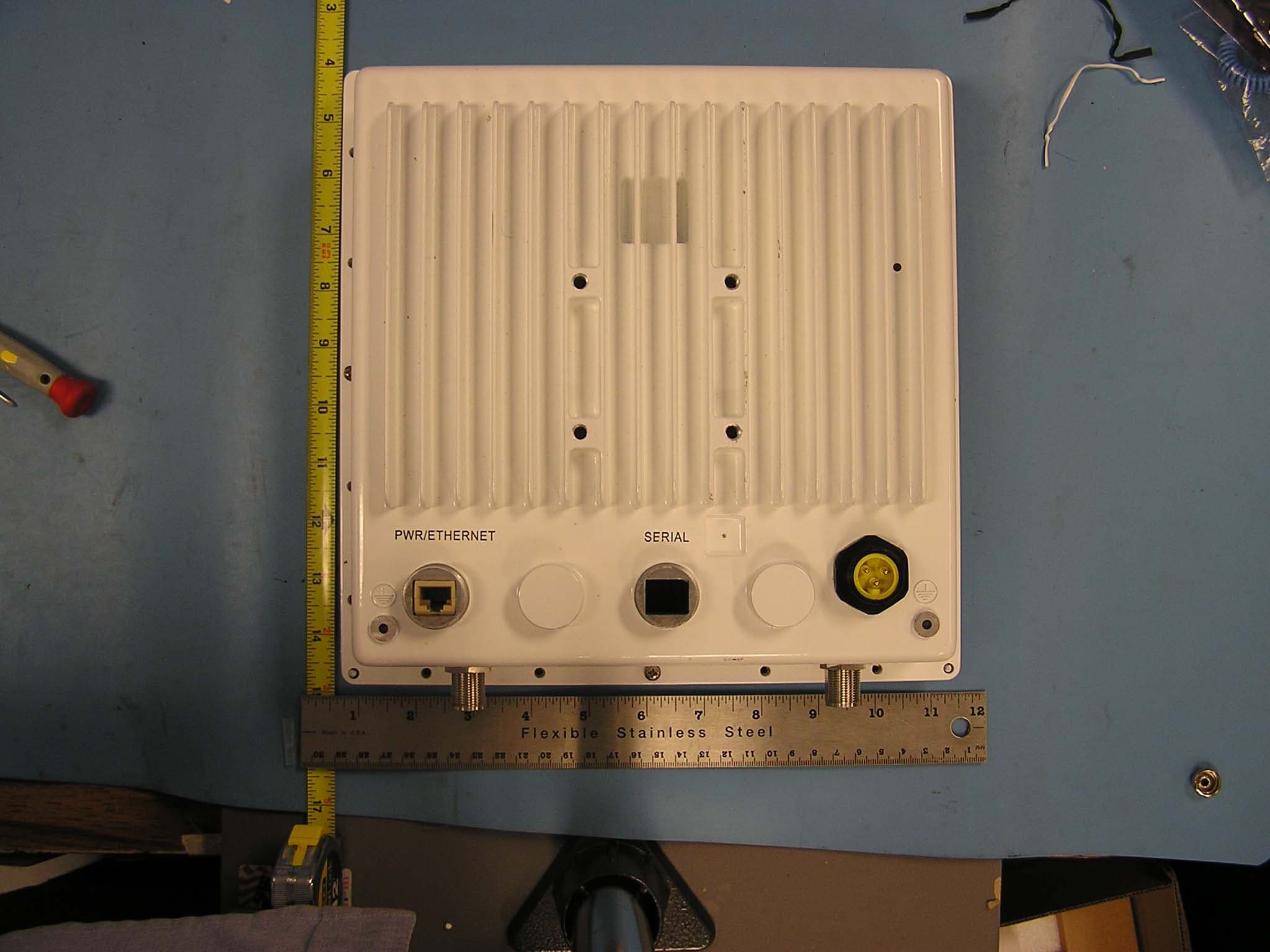
Click to zoom
Application Details
- Equipment Class
- TNB - Licensed Non-Broadcast Station Transmitter
- Date of Grant
- Oct 23, 2006
- Application Purpose
- Original Equipment
- Date of Application
- Oct 23, 2006
- Equipment Note
- Dual Band Wireless AP W/ Built in Amplifier
- Frequency Range
- 4950.00000000 - 4980.00000000
- Company
- Proxim Wireless Corporation
- Country
- United States
Documents & Files
Document Text
Text extracted from the exhibit documents filed with the FCC. Open a document above to read the original.
Users Manual
ORiNOCO AP-4900MR-LR Access Point Safety and Regulatory Compliance Information (October 2006) IMPORTANT! Visit http://support.proxim.com for the latest safety and regulatory compliance information for this product. AP-4900MR-LR Safety and Regulatory Information 2 Copyright © 2006 Proxim Corporation. All rights reserved. Covered by one or more of the following U.S. patents: 5,231,634; 5,875,179; 6,006,090; 5,809,060; 6,075,812; 5,077,753. This user’s guide and the software described in it are copyrighted with all rights reserved. No part of this publication may be reproduced, transmitted, transcribed, stored in a retrieval system, or translated into any language in any form by any means without the written permission of Proxim Corporation. Trademarks ORiNOCO and Proxim are registered trademarks, and the Proxim logo is a trademark, of Proxim Wireless Corporation. All other trademarks mentioned herein are the property of their respective owners. ORiNOCO AP-4900MR-LR Safety and Regulatory Compliance Information P/N 73071 October 2006 Products Covered in the Guide AP-4900MR-LR Safety and Regulatory Information 3 Products Covered in the Guide This document contains important safety and regulatory compliance information for the following products: Please see the following sections for more information: •Safety Information •FCC Compliance Information •Information for Professional Installers •Certification Summary IMPORTANT! Visit http://support.proxim.com for the latest safety and regulatory compliance information for this product. Please read this document before installing and using your product, and save these instructions. ProductModel Numbers ORiNOCO Tri-Mode Ruggedized Access Point AP-4900MR-LR8670-MR-LR-PS-US Safety Information AP-4900MR-LR Safety and Regulatory Information 4 Safety Information This product has been evaluated to, and complies with, the Safety requirements of UL60950:2000, and IEC60950:1999; the Standards for the Safety of Information Technology Equipment. When using this device, basic safety precautions should always be followed to reduce the risk of fire, electric shock and injury to persons, including the following: • Operate and install this product as described in this manual. This device must be installed and used in strict accordance with the manufacturer's instructions. • This product is suitable for installation in air handling spaces (plenum). • Use only the AC/DC power supply adapter provided. For replacement, contact your local supplier or distributor. • To avoid the risk of electric shock from lightning, do not use this product during an electrical storm. • Installation of this product must conform to local regulations and codes. • When using this product with an external antenna, see the installation documentation provided with the antenna system. • No user serviceable parts; all repairs and service must be handled by a qualified service center. FCC Compliance Information AP-4900MR-LR Safety and Regulatory Information 5 FCC Compliance Information This device operates in the 2.4 GHz band in compliance with Part 15 of the FCC Rules and in the licensed 4.9 GHz band in compliance with Part 90 of the FCC Rules. Operation in the 2.4 GHz band is subject to the following two conditions: 1. This device may not cause harmful interference, and 2. This device must accept any interference received, including interference that may cause undesired operation. Operation in the 4.9 GHz band requires an FCC license. As specified in Part 90.1203 of the FCC rules, eligibility requirements are as follows: 1. Entities providing public safety services as defined under section 90.523 are eligible to hold a Commission license for systems operating in the 4940–4990 MHz band. All of the requirements and conditions set forth in that section also govern authorizations in the 4940–4990 MHz band. 2. 4.9 GHz band licensees may enter into sharing agreements or other arrangements for use of the spectrum with entities that do not meet these eligibility requirements. However, all applications in the band are limited to operations in support of public safety. To comply with the FCC radio frequency exposure requirements, the following antenna installation and device operating configurations must be satisfied: •Product models using external antennas require professional installation. • The antennas used for professional installation must be fixed-mounted on indoor/outdoor permanent structures with a separation distance of at least 123 cm from all persons. • Antennas must not be co-located and must not operate in conjunction with any other antenna or transmitter. Modifications Changes or modifications to this device that are not expressly approved by the manufacturer of the product could void the user’s authority to operate the equipment. Warnings This equipment has been tested and found to comply with the limits for a Class B digital device, pursuant to Part 15 of the FCC Rules. These limits are designed to provide reasonable protection again harmful interference in a residential installation. This equipment generates, uses, and can radiate radio frequency energy, and, if not installed and used in accordance with the instructions, may cause harmful interference to radio communications. However, there is no guarantee that interference will not occur in a particular installation. If this equipment does cause harmful interference to radio or television reception, which can be determined by turning the equipment off and on, the user is encouraged to try and correct the interference by one or more of the following measures: • Reorient or relocate the receiving antenna. • Increase the separation between the equipment and the receiver. • Connect the equipment to an outlet on a circuit different from that to which the receiver is connected. • Consult the dealer or an experienced radio/TV technician for help. Information for Professional Installers AP-4900MR-LR Safety and Regulatory Information 6 Informatio…
Text truncated - open the document above for the full version.
Users Manual
Quick Install Guide AP-4900MR-LR Outdoor Access Point Software Version 3.3 Part Number 73064 r2 (Print version) Part Number 73065 r2 (CD version) Quick Install Page 2 Copyright © 2006 Proxim Wireless NotIces copyright Copyright ©2006 Proxim Wireless Corporation, San Jose, CA. All rights reserved. Covered by one or more of the following U.S. patents: 5,231,634; 5,875,179; 6,006,090; 5,809,060; 6,075,812; 5,077,753. This manual and the software described herein are copyrighted with all rights reserved. No part of this publication may be reproduced, transmitted, transcribed, stored in a retrieval system, or translated into any language in any form by any means without the written permission of Proxim Wireless Corporation. trademarks ORiNOCO and Proxim are registered trademarks, and the Proxim logo is a trademark, of Proxim Wireless Corporation. All other trademarks mentioned herein are the property of their respective owners. All rights reserved Page 3 coNteNts Notices............................................................................2 Copyright .............................................................................................2 Trademarks ..........................................................................................2 Introduction....................................................................4 Package.Contents............................................................6 Hardware.and.Software.Installation................................8 Step 1: Choose a Location ......................................................................9 Step 2: Pre-Assemble the Hardware ......................................................10 Step 3: Connect the Cables ..................................................................13 Step 4: Power on the Unit ....................................................................15 Step 5: View LEDs...............................................................................16 Step 6: Mount the Unit ........................................................................17 Step 7: Complete Installation ...............................................................18 Step 8: Install Documentation and Software ...........................................19 Unit.Initialization..........................................................20 Logging In .........................................................................................22 Using the Setup Wizard ........................................................................23 Installing the Software .........................................................................24 FREQUENCIES.AND.BANDWIDTHS.................................26 2.4 GHz Frequencies and Bandwidths.....................................................26 4.9 GHz Frequencies and Bandwidths.....................................................26 Technical.services.and.support......................................27 Support Options ..................................................................................27 Page 4 Copyright © 2006 Proxim Wireless INtroductIoN The AP-4900MR-LR is a ruggedized tri-mode AP optimized for outdoor deployments. It is equipped with one embedded 4.9 GHz radio and one embedded 2.4 GHz radio, enabling simultaneous support of 4.9 GHz Public Safety, 802.11b and 802.11g clients. The 4.9 GHz radio is for use in the licensed 4.9 GHz Public Safety band; only users with licenses to operate in this band should access it. The unit also supports Mesh operation on either the 2.4 or 4.9 GHz band. There are two versions of the AP-4900MR-LR hardware. Differences between hardware versions are highlighted in this manual as necessary. See Figure 1 and Figure 2. You can verify which hardware version you are using through either the HTTP Interface or CLI Interface. See the AP-4900MR-LR User Guide for information on locating your hardware version number. AP-4900MR-LR units can operate either using PoE with the combination DC power supply/injector provided or directly from a 100 - 240 VAC power source (AC cable ordered separately). The units feature internal lightning and surge protection on the AC and DC power ports, the Ethernet port, and on both antenna ports. External antenna lightning protection is not needed. Each unit is equipped with: Power/Ethernet.port:.used for Ethernet connection and Power over Ethernet (PoE) using the supplied power injector. Serial.connection: used for entering commands in the Command Line Interface (CLI). FC versions of the product are not equipped with a serial connection. LED.indicator(s):. dual LEDs used to indicate the power and operational states of the unit. FC versions of the product are equipped with a single power LED on the back of the unit in the cooling fin area. AC.power.input: enables direct power from external AC power source. External.antenna.connectors.(two):. one for 2.4 GHz operation, the other for 4.9 GHz operation. Grounding.screws.(two) For information on antennas authorized for use with this product, refer to the AP-4900MR-LR Safety and Regulatory Compliance Guide. ▪ ▪ ▪ ▪ ▪ ▪ All rights reserved Page 5 Figure.1:.AP-4900MR-LR.Unit.(Dual.LEDs.and.Serial.Connection) Figure.2:.AP-4900MR-LR.FC.Unit.(Single.LED.and.No.Serial.Connection) Page 6 Copyright © 2006 Proxim Wireless PackaGe coNteNts Each AP-4900MR-LR shipment includes the items in the following table. Verify that you have received all parts of the shipment. Note: Unless listed here, cables are not included with the unit. AP-4900MR-LR Unit RJ11 to DB9 serial connector (not included with FC units) Installation CD Power Injector and Cord (1) Cable Termination KitKit includes: A. RJ45 connectors (2) B. Sealing caps (2) C. Sealing nut D. Lock nut E. Grounding screws (2) . A.B.C.D.E All rights reserved Page 7 Mounting KitKit includes the following: A. Mounting clamp for wall/pole B. Extension arm C. Mounting plate to enclosure D. Mounting clamp for pole mounting .A.B.C.D Mounting HardwareThe …
Text truncated - open the document above for the full version.
Users Manual
Antennas Used for 2.4 GHz Testing For P-MP operation, the transmit power must be reduced if the gain of the antenna exceeds 12 dBi. The Transmit power must be set that +36 dBm EIPR is not exceeded. Antenna Type Gain Manufacturer and Model Number Operation Allowed Transmit Power Allowed Omni-directional 12 dBi Terabeam A2412 Point to Multipoint 24 dBm Flat Panel 18 dBi Terabeam FP18 Point to Point 24 dBm Sector Antenna 17 dBi Terabeam LP17 Point to Multipoint 19 dBm
Cover Letter(s)
2115 O'Nel Drive, San Jose, CA 95131 P 408.731.2700 F 408.731.3675 www.proxim.com Date: October 4, 2006 Compliance Certification Services Certification Division 561F Monterey Road Morgan Hill, CA 95037 To whom it may concern: We, the undersigned, hereby authorize the Testing Division of Compliance Engineering Services, Inc., d.b.a. Compliance Certification Services and hereafter referred to as CCS, to act on our behalf in all manners relating to application for equipment authorization, including signing of all documents relating to these matters. Any and all acts carried out by CCS on our behalf shall have the same effect as acts of our own. We, the undersigned, hereby certify that we are not subject to a denial of federal benefits, that includes FCC benefits, pursuant to Section 5301 of the Anti-Drug Abuse Act of 1988, 21 U.S.C. 853(a). In authorizing CCS Testing Division as our agent, we still recognize that we are responsible to: a) comply with the relevant provisions of the certification program; b) make all necessary arrangements for the conduct of the evaluation, including provision for examining documentation and access to all areas, records (including internal audit reports) and personnel for the purposes of evaluation (e.g. testing, inspection, assessment, surveillance, reassessment) and resolution of complaints; c) make claims regarding certification only in respect of the scope for which certification has been granted; d) do not use our product certification in such a manner as to bring the Certification Division into disrepute and not make any statement regarding our product certification which the Certification Division may consider misleading or unauthorized; e) upon suspension or cancellation of certification, discontinue use of all advertising matter that contains any reference thereto and return any certification documents as required by the Certification Division; 2115 O'Nel Drive, San Jose, CA 95131 P 408.731.2700 F 408.731.3675 www.proxim.com f) use certification only to indicate the products are certified as being in conformity with specified standards; g) endeavor to ensure that no certificate or report nor any part thereof is used in a misleading manner; h) ensure that any reference to our product certification in communication media such as documents, brochures or advertising, complies with the requirements of the Certification Division; i) keep a record of all complaints made known to the us relating to the product’s compliance with requirements of the relevant standard and to make these records available to the Certification Division when requested; j) take appropriate action with respect to such complaints and any deficiencies found in products or services that affect compliance with the requirements for certification; k) document the actions taken. This authorization is valid until further written notice from the applicant. Sincerely Yours, Caroline Yu Regulatory Compliance Manager Proxim Wireless Corporation
Cover Letter(s)
2115 O’Nel Drive, San Jose, CA 95131 Tel (408) 731 2700, Fax (408)731 3675 August 1, 2006 Federal Communications Commission 7435 Oakland Mills Road Columbia MD 21046 Subject: Request for Confidentiality FCC ID: HZB-4900LR To Whom It May Concern: Pursuant to the provisions of Sections 0.457 and 0.459 of the Commission’s rules (47 CFR §§ 0.457, 0.459), we are requesting the Commission to withhold the following attachments as confidential document from public disclosure indefinitely. Schematic Diagram Block Diagram Theory of Operation Above mentioned document contains detailed system and equipment description are considered as proprietary information in operation of the equipment. The public disclosure of above documents might be harmful to our company and would give competitor an unfair advantage in the market. It is our understanding that all measurement test reports, FCC ID label format and correspondent during certification review process cannot be granted as confidential documents and those information will be available for public review once the grant of equipment authorization is issued. Best Regards Caroline Yu Regulatory Compliance Manager Proxim
Cover Letter(s)
1 Chris Harvey From: Claire Hoque [[email protected]] Sent: Friday, October 20, 2006 8:07 PM To: Chris Harvey; Chris Harvey -TCB Cc: Erica Yueh; Michael Heckrotte Subject: answer: 06U10518 TCB questions(4.9GHz portion): Proxim Wireless Corporation, FCC ID: HZB-4900LR, Assessment NO.: AN06T6216, Notice#1 Attachments: 4900LR Schematic - Radios_3.5_0218.pdf; PRX9141 MPE Report rev2.pdf; 06U10518-1C FCC 90Y Report.pdf; Proxim Prof Installation 4900LR-r3.pdf; 4900LR Schematic - 4.9GHz.pdf 4900LR Schematic - Radios_3.5_... PRX9141 MPE Report rev2.pdf (3... 06U10518-1C FCC 90Y Report.pdf... Proxim Prof Installation 4900L... 4900LR Schematic - 4.9GHz.pdf ... Hi Chris, Pls see answer below. Thanks. Claire -----Original Message----- From: Chris Harvey Sent: Friday, October 13, 2006 6:24 AM To: Michael Heckrotte Cc: Chris Harvey; Claire Hoque Subject: Proxim Wireless Corporation, FCC ID: HZB-4900LR, Assessment NO.: AN06T6216, Notice#1 Dear Mike Heckrotte, You are listed as the technical contact for the above referenced composite application. The following items need to be addressed for the 90 Subpart Y TNB portion application: 1. Please provide the Antenna Installation Manual referenced in the professional Installation exhibit. <answer>pls see revised "Proxim Prof Installation 4900LR-r3" which has removed the reference to the Antenna Installation Manual. 2. The Schematics exhibit submitted for both the 2.4GHz and the 4.9GHz radio's consist of a single page labeled as 2.4GHz AMP. Please submit the complete RF Schematic Diagrams for both the 2.4GHz and the 4.9GHz radio devices. <answer>pls see attached "4900LR Schematic - Radios_3.5_0218" and "4900LR Schematic - 4.9GHz". 3. The application for the 4.9GHz radio contained antenna specification sheets for the 2.4GHz band. These are being removed from the list of exhibits. Please submit specification sheets for the 4.9GHz antennas if that was intended to be included in the application. <answer>No antennas for this 4.9GHz application. 4. The RF Exposure information provided (separate exhibit) indicated that the 4.9GHz band will have a maximum 21dBi gain antenna with a 25dBm conducted RF output. This combination will exceed the power limits of 90.1215 and is not supported in other portions of the application. This worst case combination was used to determine the minimum safe MPE distance. Please note that the MPE information in the 4.9GHz test report was calculated using a 0dBi antenna example. The Antenna Installation guidance will be reviewed once it is updated and provided to ensure consistency with the rest of the application. <answer>pls see revised report of MPE calculation: "PRX9141 MPE Report rev2.pdf" 2 5. The 4.9GHz test report states compliance for the 5MHz Channel bandwidth setting however the manual's do not include this operational mode in the descriptions (such as power settings and antenna selection). <answer>pls see revised "06U10518-1C FCC 90Y Report" which has removed 5 MHz nominal bandwidth data. 6. The FCC has indicated (in Q&A in September 2005) that the Authorized Bandwidth is the Channel Bandwidth listed in 90.1215 and that the measured bandwidth may not exceed the authorized channel bandwidth. The 26dB bandwidth measurements of the 5MHz, 10MHz and 20MHz Channel Bandwidth signal is actually greater than the corresponding Channel Bandwidth's. This appears not to meet the FCC requirements, even though the signals meet the Emission Mask L. Please confirm compliance with the current FCC policy. <answer> The 99% Bandwidth complies with the Channel Bandwidth requirement. The 26 dB bandwidth measurements are for reference purposes only. These measurements are neither required nor intended to be compared to any regulatory limits under Part 90Y. These measurements are only included to determine the parameters for other measurements. The 26 dB bandwidth measurements were originally utilized to determine the minimum integration bandwidth for the Maximum Power measurements as specified by the UNII procedures. During the course of testing this device, the FCC issued new guidance that the UNII measurement procedures are under consideration but not presently allowed under Part 90Y. Since the 26 dB bandwidth measurements had already been made, they were subsequently utilized to determine the integration bandwidth for the the Peak Power measurements currently required by this guidance. 7. The Radiated Emissions in the 4.9GHz Test Report are documented as being performed in accordance with ANSI C63.4, where the FCC requires relative measurements for field strength requirements of FCC 2.1053 for Licensed Devices in accordance with EIA/TIA-603. Please explain how the measurements performed meet the requirements of FCC 2.1053. <answer>pls see revised "06U10518-1C FCC 90Y Report" Section 7.3 8. Please note that the Emission Designators indicated on the Form 731 used the Channel Bandwidth values, when the FCC Policy is to use the 99% Necessary bandwidth measured values, which makes the Emission Designators 4M16W7D, 8M35W7D and 16M7W7D. Please update the Form 731 accordingly. <answer>Form 731 has been revised. The items indicated above must be submitted before processing can continue on the above referenced application. Failure to provide the requested information within 30 days of the original e-mail date may result in application dismissal and forfeiture of the filing fee. Also, please note that partial responses increase processing time and should not be submitted. Any questions about the content of this correspondence should be directed to the e-mail address listed below the name of the sender. Best regards, Chris Harvey [email protected]
Cover Letter(s)
2115 O'Nel Drive, San Jose, CA 95131 P 408.731.2700 F 408.731.3675 www.proxim.com Professional Installation Statement Model: AP4900MR-LR This statement is submitted with regards to professional installation of the HZB-4900LR radios and the antennas used for testing. The HZB-4900LR radios must be professionally installed and so is exempt from the antenna restrictions of FCC Part 15.203. The HZB-4900LR is a product manufactured by Proxim Wireless Corporation in San Jose, California. The HZB-4900LR is to be certified for operation under Part 15.247 of the FCC Rules in the 2400 – 2483.5 MHz and the 4.9 GHz Public Safety band. The equipment is designed for point-to-point or point-to-multipoint communications and will carry data signals using Ethernet interfaces. Due to the unique requirements of installation and integration of these systems, typical consumers or businesses will not have the proper training required for successful implementation of these systems. The HZB-4900LR is not designed for use by the general public, and will be sold as follows: Through the Proxim sales force to professional communications users Through designated and professionally trained Proxim Value Added Resellers to business users under individual reseller agreements. These companies will either use their professional telecommunications engineering staff to carry out the installation or will subcontract to professional installation firms. On occasion, a professional installation firm will purchase the HZB-4900LR radios directly. Due to the unique technical expertise required in installing and setting up the system, the product is not suitable for distribution to retail channels. Proxim offers extensive training the distributors, resellers and professional installers on the proper deployment and use of this equipment. It also instructs its resellers not to sell the units that require external antennas to retail channels in order to be compliant with FCC regulations. The HZB-4900LR radio will be used for fixed, permanent or temporary, outdoor environment. Professional installers will be needed to deploy this equipment and their antennas. The output power of the HZB-4900LR radio will be adjusted to meet any applicable EIRP limits by the professional installer. The installation is to be performed using standard commercial practices. At the time of sale, the installation engineer chooses from commercially available antennas compliant with the requirements found in the Safety and Regulatory Compliance Information brochure that is shipped with this product. The professional installation engineer is responsible to install only those types of antenna. Proxim has also included detailed instructions on how to determine the maximum output power based on EIRP limits for all professional installers to follow. Caroline Yu Regulatory Compliance Manager Proxim Wireless Corporation
ID Label/Location Info
PROPOSED FCC ID LABEL AND LOCATION FCC /IC Label Location Proxim Wireless Corporation This device complies with Part 15 of the FCC Rules. Operation is subject to the following two conditions: (1) this device may not cause harmful interference, and (2) this device must accept any interference received, including interference that may cause undesired operation. FCC ID: HZB-4900LR IC: 1856A-4900LR Model: AP4900MR -LR
Parts List/Tune Up Info
Transmit Power and Channel Selection There are no tuning adjustments in the unit. The channel selection is made by the user from a predefined set of channels that are within the authorized bands. During manufacturing the radio RF output is calibrated on a channel by channel basis using automatic test equipment to set the transmitter output power to a specified setting. The amplifiers are individually tested to ensure that it transmit power gain is within a specified limit. During final test and assembly, each unit is tested to ensure that the transit power does not exceed that which is authorized. The user cannot increase the TX power with his configuration software.
RF Exposure Info
Document PRX9176-MPE FCC ID: HZB-4900LR ; Rev 2 RF Exposure Test Report Washington Laboratories, Ltd October 2006 Maximum Permissible Exposure Evaluation for Proxim Corporation AP4900MR-LR FCC ID: HZB-4900LR June 19, 2006 Revised October 17, 2006 WLL PROJECT #: 9141 This report may not be reproduced, except in full, without the prior written consent of Washington Laboratories, Ltd. RF Exposure Evaluation Document PRX9141-MPE FCC ID: HZB-4000LR FCC ID: HZB-4900LR RF Exposure Test Report Washington Laboratories, Ltd October 2006 1 Maximum Permissible Exposure Test Report for FCC ID: HZB-4900LR 1.0 Introduction This report has been prepared on behalf of PROXIM CORPORATION AP4900MR-LR. Transmitter to show compliance with the RF exposure requirements as defined in FCC §1.1307. This device will operate with two radio frequency transmitters; one transmitter will be operating at the following frequencies: • 2.4GHz under Part 15.247 and • 4.9 GHz under Part 90Y 1.1 Requirements Three different categories of transmitters are defined by the FCC in OET Bulletin 65. These categories are fixed installation, mobile, and portable and are defined as follows: Fixed Installations: fixed location means that the device, including its antenna, is physically secured at a permanent location and is not able to be easily moved to another location. Additionally, distance to humans from the antenna is maintained to at least 2 meters. Mobile Devices: a mobile device is defined as a transmitting device designed to be used in other than fixed locations and to be generally used in such a way that a separation distance of at least 20 centimeters is normally maintained between the transmitter's radiating structures and the body of the user or nearby persons. Transmitters designed to be used by consumers or workers that can be easily re-located, such as a wireless modem operating in a laptop computer, are considered mobile devices if they meet the 20 centimeter separation requirement. The FCC rules for evaluating mobile devices for RF compliance are found in 47 CFR §2.1091. Portable Devices: a portable device is defined as a transmitting device designed to be used so that the radiating structure(s) of the device is/are within 20 centimeters of the body of the user. Portable device requirements are found in Section 2.1093 of the FCC's Rules (47 CFR§2.1093). Document PRX9141-MPE FCC ID: HZB-4000LR FCC ID: HZB-4900LR RF Exposure Test Report Washington Laboratories, Ltd October 2006 2 The FCC also categorizes the use of the device as based upon the user’s awareness and ability to exercise control over his or her exposure. The two categories defined are Occupational/ Controlled Exposure and General Population/Uncontrolled Exposure. These two categories are defined as follows: Occupational/Controlled Exposure: In general, occupational/controlled exposure limits are applicable to situations in which persons are exposed as a consequence of their employment, who have been made fully aware of the potential for exposure and can exercise control over their exposure. This exposure category is also applicable when the exposure is of a transient nature due to incidental passage through a location where the exposure levels may be higher than the general population/uncontrolled limits, but the exposed person is fully aware of the potential for exposure and can exercise control over his or her exposure by leaving the area or by some other appropriate means. Awareness of the potential for RF exposure in a workplace or similar environment can be provided through specific training as part of a RF safety program. If appropriate, warning signs and labels can also be used to es…
Text truncated - open the document above for the full version.
Contact Information
Applicant
Ken Lim(Accounting Manager)
Test Firm
Compliance Certification ServicesBarbara Judge
Technical Specifications
| # | Rule Parts | Frequency Range | Power Output | Emission | Tolerance |
|---|---|---|---|---|---|
| 2 | 9 | 4.95 GHz - 4.98 GHz | 97.72 mW | 16M7W7D | 0.0006 % |
Other Applications from Proxim Wireless Corporation
HZB-MEGA6
Aug 12, 2026EdgeAX 6GHz Radio Module
Equipment Class
6FC - 15E 6 GHz Fixed Client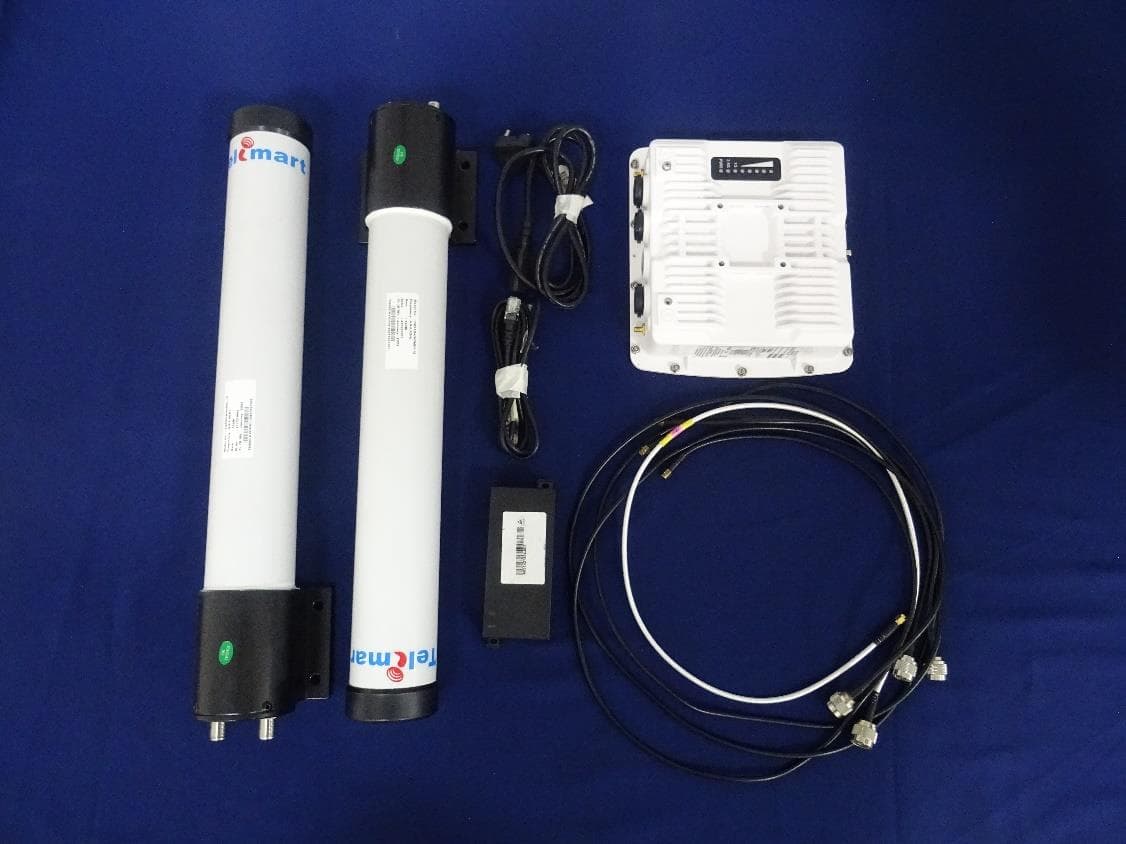
HZB-GIGA5
Sep 21, 2023Startum X5 Gigabit 5 GHz Radio
Equipment Class
NII - Unlicensed National Information Infrastructure TX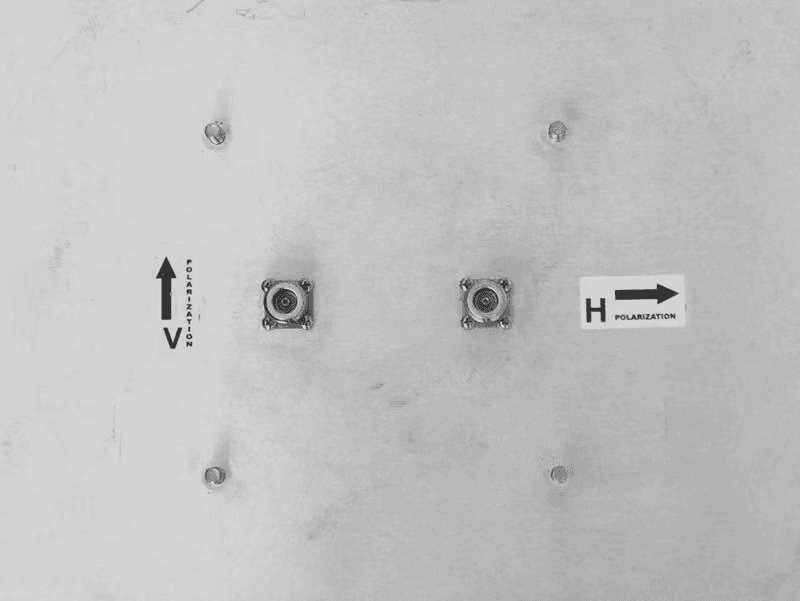
HZB-NGPAP
Apr 26, 2021NGP LC 2.4 & 5 GHz Radios
Equipment Class
NII - Unlicensed National Information Infrastructure TX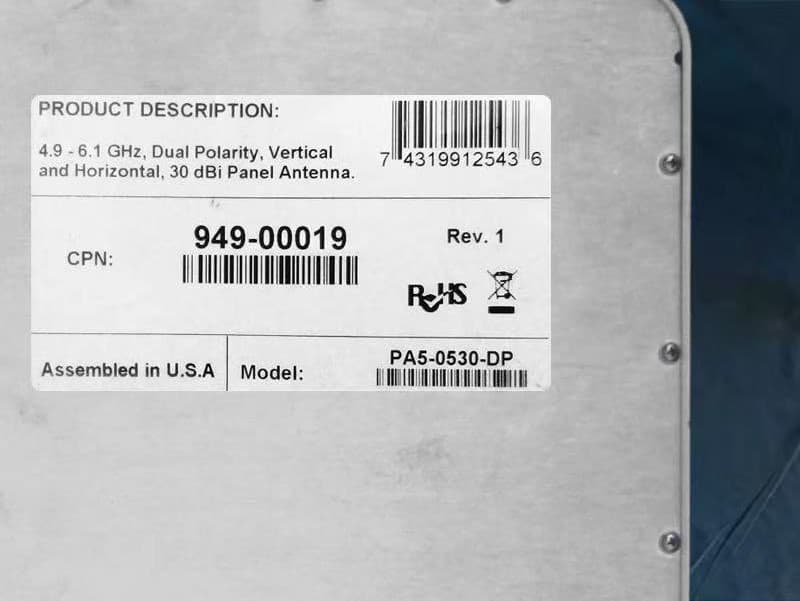
HZB-NGPLC
Mar 04, 2021NGP LC 5 GHz Radio
Equipment Class
DTS - Digital Transmission System
HZB-NGP1058W
Nov 03, 2015802.11 ac PCIe Module
Equipment Class
DTS - Digital Transmission System