IKQIPTMHeart Rate Monitor
Scosche Industries Inc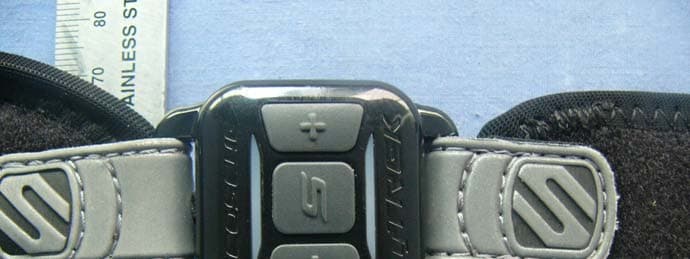
Click to zoom
Application Details
- Equipment Class
- DSS - Part 15 Spread Spectrum Transmitter
- Date of Grant
- Jul 13, 2011
- Application Purpose
- Original Equipment
- Date of Application
- Jul 13, 2011
- Equipment Note
- Heart Rate Monitor
- Frequency Range
- 2402.00000000 - 2480.00000000
- Company
- Scosche Industries Inc
- Country
- United States
Documents & Files
Document Text
Text extracted from the exhibit documents filed with the FCC. Open a document above to read the original.
Users Manual
Scosche IPTM USA FCC Information: This equipment has been tested and found to comply with the limits for a Class B digital device, pursuant to Part 15 of the FCC Rules. These limits are designed to provide reasonable protection against harmful interference in a residential installation. This equipment generates uses and can radiate radio frequency energy and, if not installed and used in accordance with the instructions, may cause harmful interference to radio communications. However, there is no guarantee that interference will not occur in a particular installation. If this equipment does cause harmful interference to radio or television reception, which can be determined by turning the equipment off and on, the user is encouraged to try to correct the interference by one of the following measures: - Reorient or relocate the receiving antenna. -Increase the separation between the equipment and receiver. -Connect the equipment into an outlet on a circuit different from that to which the receiver is connected. -Consult the dealer or an experienced radio/TV technician for help. This device complies with Part 15 of the FCC Rules. Operation is subject to the following two conditions: (1) This device may not cause harmful interference, and (2) this device must accept any interference received, including interference that may cause undesired operation. FCC Caution: Any changes or modifications not expressly approved by the party responsible for compliance could void the user's authority to operate this equipment. Canada Information: This device complies with Industry Canada licence-exempt RSS standard(s). Operation is subject to the following two conditions: (1) this device may not cause interference, and (2) this device must accept any interference, including interference that may cause undesired operation of the device. Le présent appareil est conforme aux CNR d'Industrie Canada applicables aux appareils radio exempts de licence. L'exploitation est autorisée aux deux conditions suivantes : (1) l'appareil ne doit pas produire de brouillage, et (2) l'utilisateur de l'appareil doit accepter tout brouillage radioélectrique subi, même si le brouillage est susceptible d'en compromettre le fonctionnement. RSS-102 Statement: This equipment complies with Industry Canada radiation exposure limits set forth for an uncontrolled environment. Cet équipement est conforme à l'exposition aux rayonnements Industry Canada limites établies pour un environnement non contrôlé.
Attestation Statements
Scosche IPTM / Bluetooth theoretical evaluation Statement concerning compliancy with 15.247(a)1: 1 Output power and channel separation of the Bluetooth device in the different operating modes: The different operating modes (data-mode, acquisition-mode) of the Bluetooth device doesn’t influence the output power and the channel spacing. There is only one transmitter which is driven by identical input parameters concerning these two parameters. Only a different hopping sequence will be used. For this reason, the RF parameters in one op-mode is sufficient. 2 Frequency range of the Bluetooth device: The maximum frequency of the device is: 2402 – 2480 MHz. This is according the Bluetooth Core Specification V 1.0B (+ critical errata) for devices which will be operated in the USA. Other frequency ranges ( e.g. for Spain, France, Japan) which are allowed according the Core Specification must not be supported by the device. 3 Co-ordination of the hopping sequence in data mode to avoid simultaneous occupancy by multiple transmitters: Bluetooth units which want to communicate with other units must be organized in a structure called piconet. This piconet consist of max. 8 Bluetooth units. One unit is the master the other seven are the slaves. The master co-ordinates frequency occupation in this piconet for all units. As the master hop sequence is derived from it’s BD address which is unique for every Bluetooth device, additional masters intending to establish new piconets will always use different hop sequences. 4 Example of a hopping sequence in data mode: Example of a 79 hopping sequence in data mode: 40, 21, 44, 23, 42, 53, 46, 55, 48, 33, 52, 35, 50, 65, 54, 67, 56, 37, 60, 39, 58, 69, 62, 71, 64, 25, 68, 27, 66, 57, 70, 59, 72, 29, 76, 31, 74, 61, 78, 63, 01, 41, 05, 43, 03, 73, 07, 75, 09, 45, 13, 47, 11, 77, 15, 00, 64, 49, 66, 53, 68, 02, 70, 06, 01, 51, 03, 55, 05, 04 5 Equally average use of frequencies in data mode and short transmissions: The generation of the hopping sequence in connection mode depends essentially on two input values: 1).LAP/UAP of the master of the connection 2). Internal master clock. The LAP (lower address part) are the 24 LSB’s of the 48 BD_ADDRESS. The BD_ADDRESS is an unambiguous number of every Bluetooth unit. The UAP (upper address part) are the 24 MSB’s of the 48 BD_ADDRESS. The internal clock of a Bluetooth unit is derived from a free running clock which is never adjusted and is never turned off. For synchronization with other units, only the offsets are used. It has no relation to the time of the day. Its resolution is at least half the RX/TX slot length of 312.5 μs. The clock has a cycle of about one day (23h30). In most case it is implemented as 28 bit counter. For the deriving of the hopping sequence the entire LAP (24 bits), 4 LSB’s (4 bits) (Input 1) and the 27 MSB’s of the clock (Input 2) are used. With this input values different mathematical procedures (permutations, additions, XOR-operations) are performed to generate the sequence. This will be done at the beginning of every new transmission. Regarding short transmissions, the Bluetooth system has the following behavior: The first connection between the two devices is established, a hopping sequence is generated. For transmitting the wanted data, the complete hopping sequence is not used and the connection ends. The second connection will be established. A new hopping sequence is generated. Due to the fact that the Bluetooth clock has a different value, because the period between the two transmission is longer (and it cannot be shorter) than the minimum resolution of the clock (312.5 μs). The hopping sequence will always differ from the first one. 6 Receiver input bandwidth, synchronization and repeated single or multiple packets: The input bandwidth of the receiver is 1 MHz. In every connection, one Bluetooth device is the master and the other one is the slave. The master determines the hopping sequence (see chapter 5). The slave follows this sequence. Both devices shift between RX and TX time slot according to the clock of the master. Additionally the type of connection (e.g. single or multi-slot packet) is set up at the beginning of the connection. The master adapts its hopping frequency and its TX/RX timing is according to the packet type of the connection. Also, the slave of the connection uses these settings. Repeating of a packet has no influence on the hopping sequence. The hopping sequence generated by the master of the connection will be followed in any case. That means, a repeated packet will not be send on the same frequency, it is send on the next frequency of the hopping sequence 7 Dwell time in data mode The dwell time of 0.3797s within a 30 second period in data mode is independent from the packet type (packet length). The calculation for a 30 second period is a follows: Dwell time = time slot length * hop rate / number of hopping channels *30s Example for a DH1 packet (with a maximum length of one time slot) Dwell time = 625 μs * 1600 1/s / 79 * 30s = 0.3797s (in a 30s period) For multi-slot packet the hopping is reduced according to the length of the packet. Example for a DH5 packet (with a maximum length of five time slots) Dwell time = 5 * 625 μs * 1600 * 1/5 *1/s / 79 * 30s = 0.3797s (in a 30s period) This is according the Bluetooth Core Specification V 1.0B (+ critical errata) for all Bluetooth devices. Therefore, all Bluetooth devices comply with the FCC dwell time requirement in the data mode. This was checked during the Bluetooth Qualification tests. The Dwell time in hybrid mode is approximately 2.6 ms (in a 12.8s period) 8 Channel Separation in hybrid mode The nominal channel spacing of the Bluetooth system is 1 MHz independent of the operating mode. The maximum “initial carrier frequency tolerance” which is allowed for Bluetooth is f-center = 75 kHz. This was checked during the Bluetooth Qualification tests for three frequencies (2402, 2441, 2480 MHz). 9 Derivation and exam…
Text truncated - open the document above for the full version.
Cover Letter(s)
Scosche Industries Inc 1550 Pacific Ave Oxnard, CA 93033, USA Authorization Letter We, (the approval holder) Company name Scosche Industries Inc Addresss 1550 Pacific Ave Oxnard, CA 93033, USA City Oxnard Country United States declare that the following representative (agent): Name (person) M. Koop Function Manager Certification Company name Teleconformity Address Rietven 31 City Enschede Country The Netherlands is hereby authorized to apply and sign the following equipment for certification, registration or filing on our behalf: Product Description Heart Rate Monitor Type or Model(s) IPTM Tradename or Brand(s) N/A Attestation: City and Country: Date: Name: (this must be a person) Function: Signature: (or official company stamp) Oxnard,United States July 11, 2011 Peter Butcher Vice President Operations
Cover Letter(s)
Scosche Industries Inc 1550 Pacific Ave Oxnard, CA 93033, USA FCC Confidentiality Request Number: CF303 Version: V02 Date:17-06-2011 To: Federal Communications Commission Equipment Authorization Branch 7435 Oakland Mills Road Columbia, MD 21046 Pursuant to 47 CFR Section 0.459(a) & (b), we, (the applicant / grantee) Company name Scosche Industries Inc Address 1550 Pacific Ave Oxnard, CA 93033 City Oxnard Country United States request for this certification filing under: Grantee Code Product Number FCC ID: IKQ IPTM to maintain permanent confidentiality for the following documents submitted within this application: (please cross what is applicable, or add other documents, provide the file name and description) Exhibit File Name Description X Operational Description Operational Description.pdf Explains the functioning of the block diagram / EUT X Block Diagrams Block diagram.pdf Shows the systematic building blocks of the EUT X Schematics Diagrams Schematics.pdf Shows components, their values and how they are interconnected Bill of Materials Above materials contain secrets, proprietary and technical information, which would customarily be guarded from competitors under 47 CFR, section 0.457(d)(2). Disclosure or publication or any portion of this company confidential material to other parties could cause substantial competitive harm and provide unjustified benefits for competitors. We understand that pursuant to 47 CFR section 0.457(d)(1)(ii) disclosure of the applicant and all accompanying documentation will not be made before the date of the grant. The documents indicated as confidential above, are not publicly available elsewhere. Attestation: City and Country: Date: Name: (this must be a person) Function: Signature: (or official company stamp) Enschede, The Netherlands July 11, 2011 M. Koop Manager (authorized)
External Photos
Report No: SZ110613B01-RP Page 1 / 5 Report No: SZ110613B01-RP Page 2 / 5 Report No: SZ110613B01-RP Page 3 / 5 Report No: SZ110613B01-RP Page 4 / 5 Report No: SZ110613B01-RP Page 5 / 5
ID Label/Location Info
Note: Unit: Tolerance: Product:Brand: Version: Design By:yoyo Date: Approved By: Date: 2011/07/08 PS-IPTM-SCOSCHE IPTM Scale: 1:1 Label Product Name : Heart Rate Monitor Model : IPTM IC : 6955A-IPTM Input : 5V 400-500mA Product Name : Heart Rate Monitor Model : IPTM IC : 6955A-IPTM Input : 5V 400-500mA 17.00 mm 14.00 mm
Internal Photos
Report No: SZ110613B01-RP Page 1 / 7 Internal Photos of EUT Report No: SZ110613B01-RP Page 2 / 7 Report No: SZ110613B01-RP Page 3 / 7 Report No: SZ110613B01-RP Page 4 / 7 Report No: SZ110613B01-RP Page 5 / 7 Report No: SZ110613B01-RP Page 6 / 7 Report No: SZ110613B01-RP Page 7 / 7
Test Report
Report No: SZ110613B01-RP Note: This report shall not be reproduced except in full, without the written approval of Compliance Certification Services Inc. This document may be altered or revised by Compliance Certification Services Inc. personnel only, and shall be noted in the revision section of the document. The client should not use it to claim product endorsement by TAF, A2LA, NVLAP, NIST or any government agencies. The test result of this report relate only to the tested sample identified in this report. FCC ID: IKQIPTM Page 1 of 60 This report shall not be reproduced except in full, without the written approval of Compliance Certification Services. FCC 47 CFR PART 15 SUBPART C TEST REPORT For Heart Rate Monitor Model: IPTM Brand: N/A Test Report Number: SZ110613B01-RP Prepared for Scosche Industries Inc 1550 Pacific Ave Oxnard, CA 93033, USA Prepared by Compliance Certification Services (Shenzhen) Inc. No.10-1 Mingkeda Logistics park, No.18 Huanguan South Road. Guan Lan Town, Baoan District, Shenzhen, China TEL: 86-755-28055000 FAX: 86-755-28055221 Issued Date: July 5, 2011 检 测 CNAS L4818 Report No: SZ110613B01-RP FCC ID: IKQIPTM Page 2 of 60 This report shall not be reproduced except in full, without the written approval of Compliance Certification Services. Revision History Rev. Issue No. Revisions Effect Page Revised By 00 SZ110613B01-RP Initial Issue ALL Tom Gan Report No: SZ110613B01-RP FCC ID: IKQIPTM Page 3 of 60 This report shall not be reproduced except in full, without the written approval of Compliance Certification Services. TABLE OF CONTENTS 1. TEST RESULT CERTIFICATION.............................................................................................. 4 2. EUT DESCRIPTION..................................................................................................................... 5 3. TEST METHODOLOGY.............................................................................................................. 6 3.1 DESCRIPTION OF TEST MODES ............................................................................................. 6 4. FACILITIES AND ACCREDITATIONS..................................................................................... 7 4.1 FACILITIES................................................................................................................................. 7 4.2 ACCREDITATIONS ................................................................................................................... 7 4.3 MEASUREMENT UNCERTAINTY........................................................................................... 7 5. SETUP OF EQUIPMENT UNDER TEST.................................................................................. 8 5.1 SETUP CONFIGURATION OF EUT.................................................................................................... 8 5.2 SUPPORT EQUIPMENT ........................................................................................................... 8 6. FCC PART 15.247 REQUIREMENTS....................................................................................... 9 6.1 20DB BANDWIDTH........................................................................................................................ 9 6.2 PEAK POWER...............................................................................................................................14 6.3 PEAK POWER SPECTRAL DENSITY............................................................................................... 16 6.4 BAND EDGES MEASUREMENT ............................................................................................ 17 6.5 FREQUENCY SEPARATION .................................................................................................. 27 6.6 NUMBER OF HOPPING FREQUENCY .................................................................................. 30 6.7 TIME OF OCCUPANCY (DWELL TIME) ............................................................................... 33 6.8 SPURIOUS EMISSIONS ............................................................................................................ 40 6.9 POWERLINE CONDUCTED EMISSIONS.......................................................................................... 58 Report No: SZ110613B01-RP FCC ID: IKQIPTM Page 4 of 60 This report shall not be reproduced except in full, without the written approval of Compliance Certification Services. 1. TEST RESULT CERTIFICATION Product: Heart Rate Monitor Model: IPTM Brand: N/A Tested: June 13~July 5, 2011 Applicant: Scosche Industries Inc 1550 Pacific Ave Oxnard, CA 93033, USA Manufacturer: Sunitec Enterprise Co., Ltd No.2, Qilin Road 2, RunTang Ind, Dan-Keng Village Fu Min Community, Guan-Lan Town, BaoAn District, Shenzhen Guangdong China APPLICABLE STANDARDS STANDARD TEST RESULT FCC 47 CFR Part 15 Subpart C No non-compliance noted We hereby certify that: The above equipment was tested by Compliance Certification Services Inc. The test data, data evaluation, test procedures, and equipment configurations shown in this report were made in accordance with the procedures given in ANSI C63.4: 2003 and the energy emitted by the sample EUT tested as described in this report is in compliance with conducted and radiated emission limits of FCC Rules Part 15.207, 15.209 and 15.247. The test results of this report relate only to the tested sample EUT identified in this report. Approved by: Reviewed by: Tom Gan Supervisor of EMC Dept. Compliance Certification Service Inc. Aven Zhou Supervisor of Report Dept. Compliance Certification Service Inc. Report No: SZ110613B01-RP FCC ID: IKQIPTM Page 5 of 60 This report shall not be reproduced except in full, without the written approval of Compliance Certification Services. 2. EUT DESCRIPTION Product Heart Rate Monitor Model Number IPTM Trade Name N/A Model Discrepancy N/A Identify Number SZ110613B01-RP Power Supply DC5V supplied by PC or DC3.7V supplied by the lith…
Text truncated - open the document above for the full version.
Test Setup Photos
Report No.: SZ110613B01-RP Page 1 / 2 FCC ID: IKQIPTM PHOTOGRAPHS OF THE TEST CONFIGURATION CONDUCTED EMISSION TEST Report No.: SZ110613B01-RP FCC ID: IKQIPTM Page 2 . RADIATED EMISSION TEST Below 1GHz Above 1GHz
Contact Information
Applicant
Mark Larson(SR Product Manager)
Technical Contact
Non-Technical Contact
TeleconformityMark Koop
[email protected]+31 84 8395876
Test Firm
Compliance Certification Services Inc.Kurt Chen
Technical Specifications
| # | Rule Parts | Frequency Range | Power Output |
|---|---|---|---|
| 1 | 15C | 2.40 GHz - 2.48 GHz | 5.98 mW |
Other Applications from Scosche Industries Inc
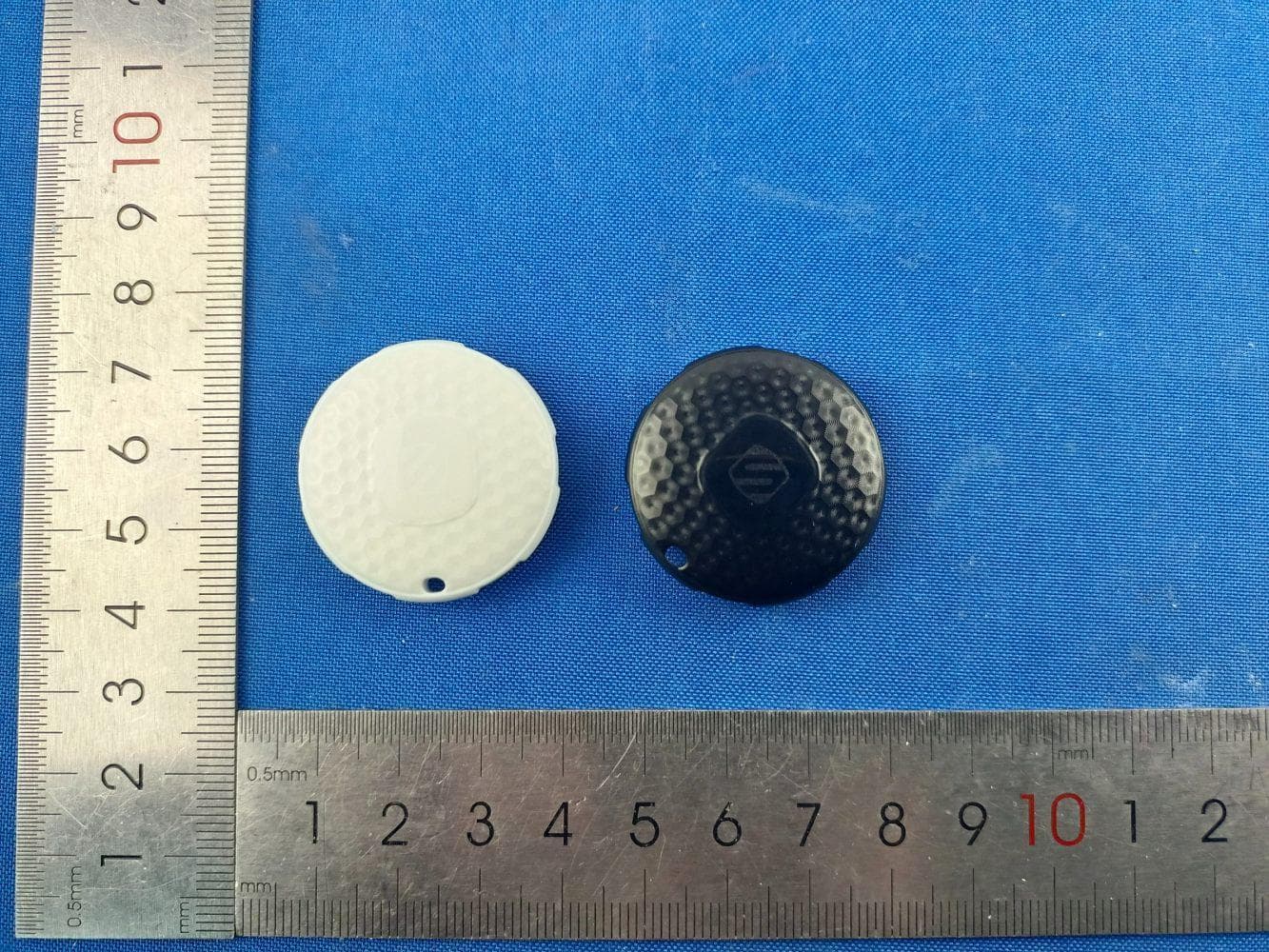
IKQLTBTN1
Jul 08, 2026FoundIT Locator Tag
Equipment Class
DTS - Digital Transmission System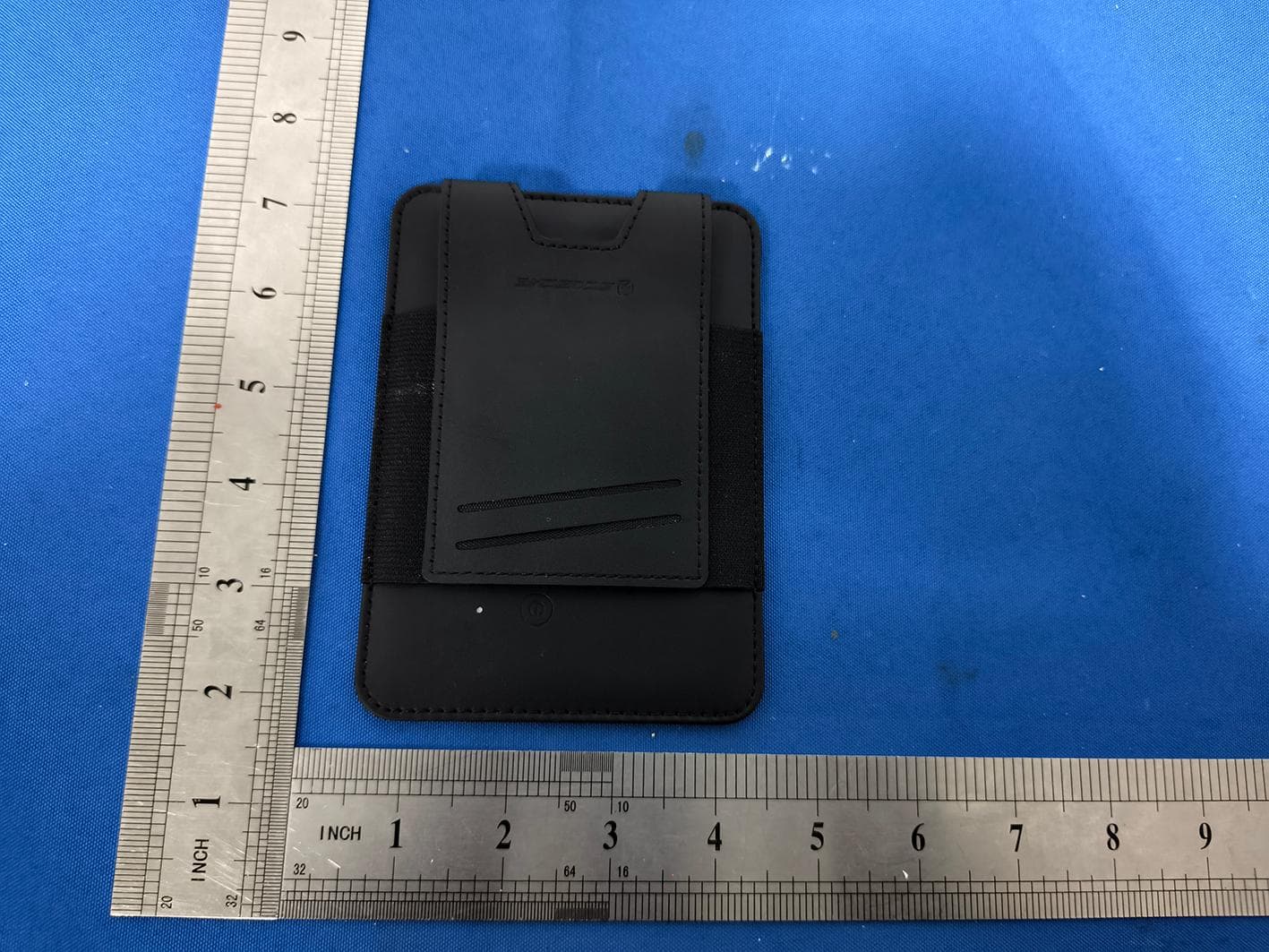
IKQLTPAS1
Jul 03, 2026FoundIT Passport
Equipment Class
DTS - Digital Transmission System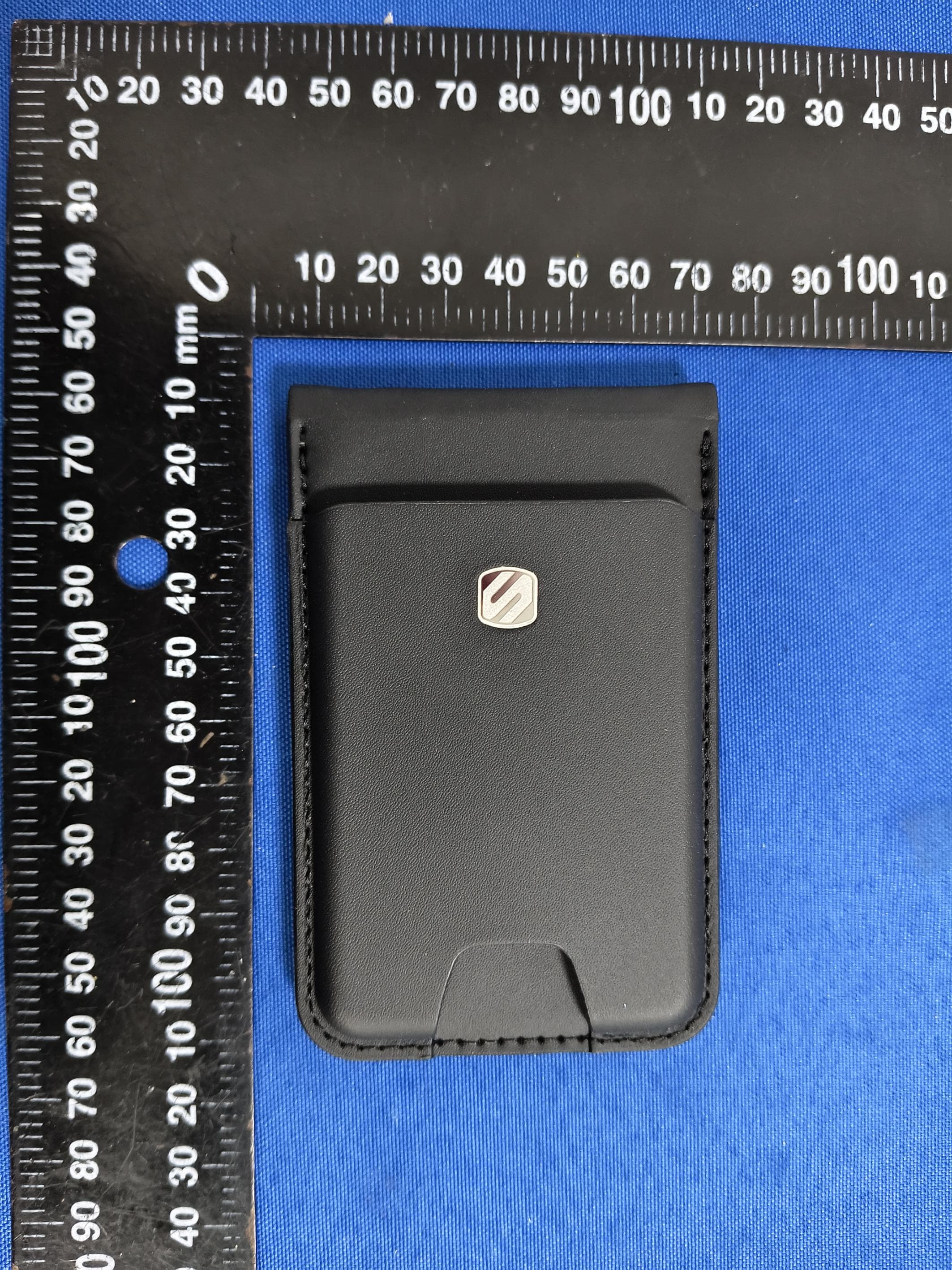
IKQLTWAL2
Jun 24, 2026FoundIT Wallet+
Equipment Class
DTS - Digital Transmission System
IKQMRQTR
Apr 10, 2026magicMOUNT RUGGED
Equipment Class
DCD - Part 15 Low Power Transmitter Below 1705 kHz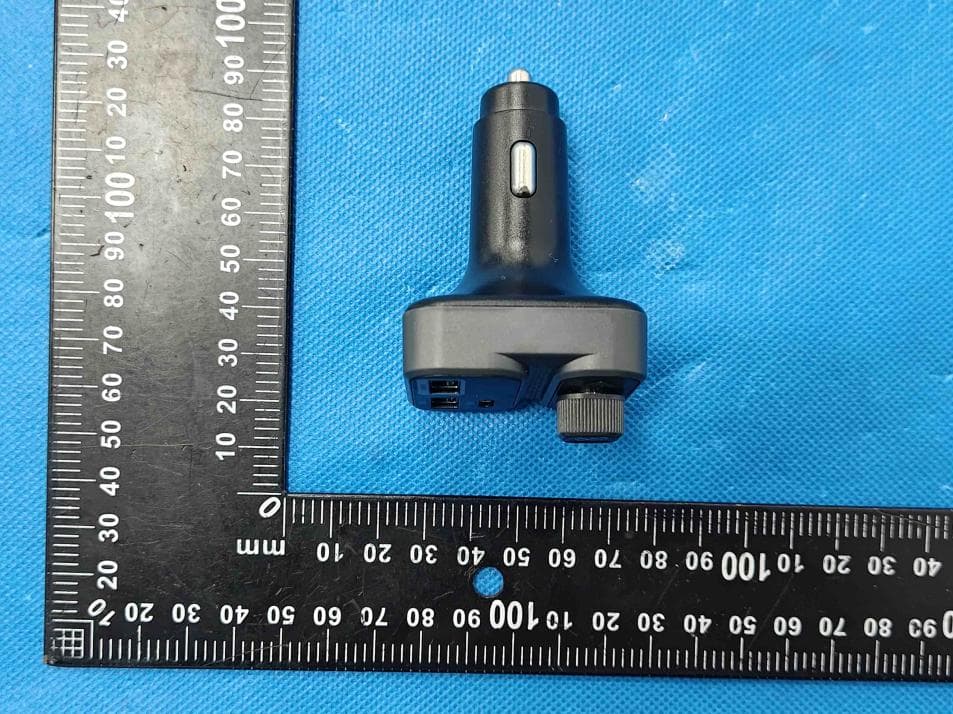
IKQ-SBTFM5
Apr 09, 2026BT FM Car Charger
Equipment Class
DXX - Part 15 Low Power Communication Device Transmitter