LF5MICSIMPLANTInternal to body medical implant
Medtronic, Inc.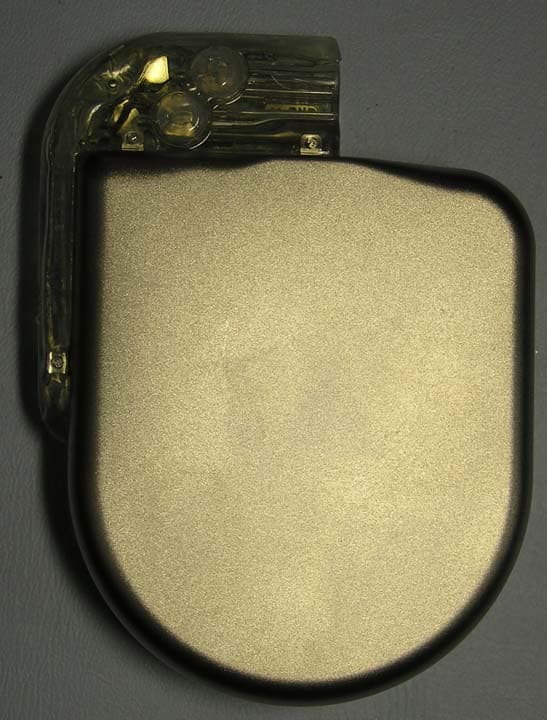
Click to zoom
Application Details
- Equipment Class
- TNT - Licensed Non-Broadcast Transmitter Worn on Body
- Date of Grant
- Apr 26, 2004
- Application Purpose
- Original Equipment
- Date of Application
- Sep 02, 2003
- Equipment Note
- Internal to body medical implant
- Frequency Range
- 402.00000000 - 405.00000000
- Company
- Medtronic, Inc.
- Country
- United States
Documents & Files
Document Text
Text extracted from the exhibit documents filed with the FCC. Open a document above to read the original.
Users Manual
ECOMarket ReleaseDBLxxxxxxxxxxx Pr intinginstructions:doc# xxxxxx;referto’Implantmanuals’rowintheapplicabletable. MARQUIS II DRXXXX DualChamberImplantableCardioverterDefibrillator -- DRAFT Implant Manual Caution:Federal law (USA)restrictsthis devicetosaleby orontheorderofa physicianorproperly licensedpractitioner. 198483001CMedtronicConfidentialComposed:2002-02-1411:48 MedtronCRM B,C xxxx-xx-xx ECOMarket ReleaseDBL:xxxxxxxxxxx Printinginstructions:doc# xxxxxx; refer to ’Implant manuals’ row in the applicable table. ThefollowingaretrademarksofMedtronic. Active Can,CapSure, CardiacCompass, Flashback, GEM,GEMDR,MarkerChannel, Marquis II, Medtronic, PR Logic, Patient Alert, Quick Look, Sigma 198483001CMedtronicConfidentialComposed: xxxx-xx-xx11:48 MedtronCRMB ,Cxxxx-xx-xx ECOMarket ReleaseDBL:xxxxxxxxxx Printinginstructions:doc#xxxxxxx; refer to ’Implant manuals’ row in the applicable table. TableofContents 1Description3 2Indicationsandusage3 3Contraindications3 4Warningsandprecautions3 4.1Storageandhandling4 4.2Resterilization4 4.3Deviceoperation4 4.4Leadevaluationandleadconnection5 4.5Follow-uptesting5 4.6Explantanddisposal6 4.7Medicaltherapy hazards6 4.8Homeandoccupationalenvironments7 5Adverseevents8 5.1Observedadverseevents8 5.2Potentialadverseevents10 6Clinicalstudies11 6.1Acutestudy11 6.2Implantstudy11 7Patientselectionandtreatment15 7.1Individualizationoftreatment15 7.2Specificpatientpopulations15 8Patientcounselinginformation16 9Conformancetostandards16 10How supplied16 11Clinicianuseinformation16 11.1Physiciantraining16 11.2Directionsforuse16 11.3Maintainingdeviceeffectiveness17 12Patientinformation17 13Implantprocedure17 13.1Pre-operative programming18 13.2Testingleadoperation18 13.3Connectingleadstotheimplanteddevice19 13.4Defibrillationthresholdtesting20 13.5Placingthedevice21 13.6Programming21 13.7ReplacinganoldICD21 14Featuresummary22 14.1Tachyarrhythmiaoperations22 14.2Pacingoperations22 1 198483001CMedtronicConfidentialComposed:2xxxx-xx-xx11:48 MedtronCRMB,Cxxxxx-xx-xx ECOMarket ReleaseDBL:xxxxxxxxxxx Printinginstructions:doc#xxxxxx; refer to ’Implant manuals’ row in the applicable table. 14.3Monitoringoperations23 15Productspecifications23 15.1Physicalspecifications(nominal)23 15.2Replacementindicators23 15.3Projectedlongevity24 15.4Magnetbehavior26 15.5Functionalparameters26 2 198483001CMedtronicConfidentialComposed: xxxx-xx-xx11:48 MedtronCRMB ,Cxxxx-xx-xx ECOMarket ReleaseDBL:xxxxxxxxxxx Printinginstructions:doc#xxxxxx; refer to ’Implant manuals’ row in the applicable table. 1Description TheMode lXXXXMarquis IIDR Implantable Cardioverter Defibrillator (ICD) System is a multiprogrammable, implantable cardioverterdefibrillatorthatmonitorsandregulatesa patient’s heart rateby providingventricular arrhythmiatherapy, andsingleordualchamberrateresponsive bradycardiapacing. TheModel XXXX MarquisII DR ICD, along with commercially available pace/sense leads and cardioversion/ defibrillationleads, constitutestheimplantable portionoftheICDsystem.Theleadsystemsforthe Marquis IIDR system are implanted using standard transvenous placement techniques. TheModel9790Cprogrammer, Model9966software, Model9466patientmagnet,Model9322SmartMagnet andModel9767(orModel9767L)programmingheadconstitute oneexternal portion of the ICD system. The Model 2090 programmer is compatible. Programmers from other manufacturers are not compatible. Contentsofsterilepackage–Thesterilepackagecontainsoneimplantable cardioverterdefibrillator, one torquewrench,andoneDF–1pinplug. Aboutthismanual–Thisdocumentis intendedprimarilyasanimplantmanual.Regularpatient follow-upsessionsshouldbescheduledafterimplant.Follow-upproceduressuchasmonitoringbattery measurementsandconfirmingtherapy parametersaredescribedin themanualincludedwiththesoftware supportingtheModel XXXXMarquisII DR ICD. (To obtain additional copies of this manual, contact your Medtronicrepresentative.) 2Indicationsandusage Theimplantable cardioverterdefibrillatoris intendedtoprovideventricularantitachycardiapacingand ventriculardefibrillationforautomatedtreatmentoflife threateningventriculararrhythmias. 3Contraindications TheMarquis IIDR system is contraindicated for • patientswhosetachyarrhythmiasmay have transientorreversible causes, suchas:acutemyocardial infarction,digitalisintoxication,drowning,electrocution,electrolyteimbalance, hypoxia,orsepsis. • patientswithincessantVTorVF • patientswhohave a unipolarpacemaker • patientswhoseprimary disorderis bradyarrhythmiasoratrialarrhythmias 4Warningsandprecautions Avoidingshock duringhandling–ProgramtachyarrhythmiadetectionOffduringsurgicalimplantand explantorpost-mortemproceduresbecausetheICDcandelivera seriousshock if youtouchthedefibrillation terminalswhiletheICDis charged. Electricalisolationduringimplantation–Donotpermitthepatienttocontactgroundedequipment, whichcouldproducehazardousleakagecurrentduringimplantation.Resultingarrhythmiainductioncould resultin thepatient’sdeath. Leadsystem–Donotuseanothermanufacturer’sleadsystemwithoutdemonstratedcompatibility, as undersensingofcardiacactivityandfailuretodelivernecessary therapy couldresult. Resuscitationavailability–DonotperformICDtestingunlessanexternaldefibrillatorandmedical personnelskilledin cardiopulmonary resuscitation(CPR)arereadilyavailable. 3 198483001CMedtronicConfidentialComposed:2xxxx-xx-xx11:48 MedtronCRMB,C xxxx-xx-xx ECOMarket ReleaseDBL:xxxxxxxxxxxx Printinginstructions:doc#xxxxrefer to ’Implant manuals’ row in the applicable table. 4.1Storage andhandling Checkingandopeningthepackage–Beforeopeningthesterilepackagetray, visuallycheck forany signs ofdamagethatmightinvalidatethesterilityofitscontents. Return damagedpackagestothemanufacturer. Forinstructionsonopeningthesterilepackage, seethediagraminsidethelidof theshelfbox. Devicestorage–Storethedevicein a cleanarea,away frommagnets, kitscontainingmagnets, and sourcesofelectromagneticinterferencetoavoiddevicedamage. Droppeddevice–Donotimplantthedeviceif it hasbeendroppedona hardsurfacefroma heighto…
Text truncated - open the document above for the full version.
Cover Letter(s)
TRP Inc. 14085 Howard Rd Dayton, MD 21036 September 3, 2003 Federal Communications Commission Laboratory Division 7435 Oakland Mills Road Columbia, MD 21045 In re: Application for certification of a Medical Implant Transceiver FCC ID:LF5MICSIMPLANT Dear Sir or Madam: Submitted herewith on behalf of Medtronic Incorporated, 710 Medtronic Parkway, Minneapolis, Minnesota 55432, is an application for an implant to be used in a medical implant communications system that operates in the Medical Implant Communications Service (MICS) band from 402 to 405 MHz under Part 95 of the FCC Rules and Regulations. This application contains a separate request for post grant confidential treatment of certain portions of the application material as identified in that letter. Medtronic is requesting that the application be processed in a timely manner with the actual grant of equipment authorization to be deferred, pursuant to Section 0.457(d)(1)(ii), until the date specified on the application for equipment authorization, Form 731, or alternatively, to an earlier date to be specified by Medtronic Inc., via written or email correspondence to the Chief, Equipment Authorization Branch. Deferral of the grant date is requested in order to allow the grant to be coordinated with the public release of the start of clinical evaluation of the product by the Food and Drug Administration (FDA). Medical products, such as this new implant technology, require development a pre-market clinical approval regimen through a negotiated process between the manufacture and the FDA. These negotiations and development of the required testing protocols typically take anywhere from 6 to 18 months or in rare instances, longer. Thus Medtronic is requesting deferral for an extended period of time due to the uncertainty associated with the FDA pre-market product approval process. Pursuant to Section 95.1217, the FCC ID number associated with the transmitter and the information required by Section 2.925 of the FCC Rules will be placed in the instruction manual for the transmitter and on the shipping container for the transmitter, in lieu of being placed directly on the transmitter. The application contains a separate attachment showing the format of the information to be placed in the manual. Each implant is given a specific serial number that is permanently encoded in the electronics contained on the internal printed circuit board. Sincerely, Phillip Inglis Consultant to Medtronic.
Cover Letter(s)
D D a a v v i i d d E E . . H H i i l l l l i i a a r r d d 2 2 0 0 2 2 . . 7 7 1 1 9 9 . . 7 7 0 0 5 5 8 8 d d h h i i l l l l i i a a r r d d @ @ w w r r f f . . c c o o m m 1776 K STREET NW WASHINGTON, DC 20006 PHONE 202.719.7000 FAX 202.719.7049 Virginia Office 7925 JONES BRANCH DRIVE SUITE 6200 McLEAN, VA 22102 PHONE 703.905.2800 FAX 703.905.2820 www.wrf.com September 3, 2003 VIA ELECTRONIC FILING Equipment Authorization Branch Federal Communications Commission Columbia, MD 21046 Re: Medtronic, Inc. Request For Confidentiality FCC ID No.: LF5MICSIMPLANT Ladies and Gentlemen: Medtronic, Inc. (“Medtronic”) requests that the information contained in the items enumerated below pertaining to the above-referenced application be withheld from public disclosure in accordance with Section 0.459 of the Commission’s Rules, 47 C.F.R. § 0.459 (2001), following grant of the application. In support of this request, Medtronic submits the following: (1) identification of the specific information for which confidential treatment is sought: Schematics Parts List Block Diagram Operational Description Internal Photographs The materials set forth in these exhibits, which are segregated from the non- confidential exhibits of the application, are those for which confidentiality is sought. (2) identification of the Commission proceeding in which the information was submitted or a description of the circumstances giving rise to the submission: The proceeding is that involving the application for equipment authorization (certification) under FCC ID No.: LF5MICSIMPLANT Equipment Authorization Branch September 3, 2003 Page 2 (3) explanation of the degree to which the information is commercial or financial, or contains a trade secret or is privileged: This information is embodied in circuit diagrams, detailed explanations, parts lists, a block diagram and internal photographs of a sterile, sealed device designed for implantation in humans. As such, this material is treated as highly confidential business information and information that could convey trade secrets pertaining to manufacturing and design techniques. (4) explanation of the degree to which the information concerns a service that is subject to competition: The information for which confidentiality is sought is employed in the design and manufacture of medical implant devices that are offered on a highly competitive basis. Customers for this equipment have a variety of competing sources of supply from both domestic and foreign suppliers. (5) explanation of how disclosure of the information could result in substantial competitive harm: Disclosure would, in effect, give away the fruits of the labors of Medtronic’s engineering personnel, who have designed the equipment and the manufacturing processes. Disclosure would also offer competitors additional unwarranted insight into the state of product development thereby allowing such competitors an advantage that would not be available to Medtronic. (6) identification of any measures taken by the submitting party to prevent unauthorized disclosure: The information for which confidential treatment is sought is kept confidential by Medtronic and not made available to third parties except pursuant to arrangements designed to prevent public disclosure. (7) identification of whether the information is available to the public and the extent of any previous disclosure of the information to third parties: To the knowledge of those preparing this application, the information has not been disclosed publicly heretofore. The protection sought is narrowly drawn Equipment Authorization Branch September 3, 2003 Page 3 and pertains to certain specific implementations of the technology incorporated into the device for which certification is sought.. (8) justification of the period during which the submitting party asserts that material should not be available for public disclosure: This material should not be disclosed for at least ten years. While improvements in design are likely to be made during this period, disclosure of the design information would lead to insights into both designs and manufacturing techniques and could have an adverse competitive effect for many years to come. This application contains information that will be used in future applications for similar devices. Moreover, the communications aspects of this device are employed in the programming of a medical implant device and in the transmission of highly private medical information to and from the device. Disclosure of the information for which confidentiality is sought could jeopardize the protection of such personal private medical information generated for the benefit of patients into whom the device has been implanted. As such, it is important that information pertaining to the design and operation of this device not be made available to unauthorized persons who might attempt to use knowledge of the design to compromise the applications for which the equipment will be employed. Equipment Authorization Branch September 3, 2003 Page 4 (9) any other information that the party seeking confidential treatment believes may be useful in assessing whether its request for confidentiality should be granted: See item 8 above. Note that the equipment for which approval is being sought will be employed in applications that inherently carry a premium on security. Respectfully, David E. Hilliard David E. Hilliard Counsel for Medtronic, Inc.
Cover Letter(s)
III: SPECIFIC INFORMATION FOR SAR COMPUTATIONS 1) Computational resources a) a summary of the computational resource required to perform the SAR computations for the test transmitter and phantom configurations Response: The human body model used for these analyses is the High Fidelity Human Body Model, which is provided with the Remcom XFDTD software. MICS modeling started with a human body model obtained from REMCOM, Inc. The software used for the computational analyses is Remcom XFDTD version 5.3. b) a summary of the computational requirements with respect to modeling and computing parameters for determining the highest exposure expected for normal device operation, such as minimal computational requirements and those used in the computation Response: A uniform cell size of 5 mm was used. This allowed modelling of the antenna, which is the only source of RF energy and the human body. The number of cells, in this case, was about 4 million. Experience with the 5mm model has determined that the region of maximum SAR is concentrated very near the antenna. This allowed the second analysis with 1mm model in a box of a homogeneous muscle tissue (cell space requirement of about 8.5 million cells). 2) FDTD algorithm implementation and validation a) a summary of the basic algorithm implementation applicable to the particular SAR evaluation, including absorbing boundary conditions, source excitation methods, certain standard algorithms for handling thin metallic wires, sheets or dielectric materials etc Response: The human body model can be used to evaluate the safety of the MICS implant by examining the Specific Absorption Rate (SAR) in the body. In general, the Finite-Difference Time-Domain (FDTD) method calculates the time-domain vector E and H fields at every location inside and outside of the body. These can be converted to frequency domain fields (magnitude and phase at given frequencies). From them, values commonly of interest in bioelectromagnetic simulations can be calculated, including SAR, current density, total power absorbed, temperature rise, etc. The analysed structure was surrounded by the Absorbing Boundary Conditions (ABC). The excitation was a sinusoidal source with the frequency 403MHz. Please see figures 7 and 8 in the main report for additional information. b) descriptions of the procedures used to validate the basic computing algorithms described in a) and analysis of the computing accuracy based on these algorithms for the particular SAR evaluation Response: The computing algorithm using the FDTD method has been known since 1966, when it was invented by K.S. Yee (see: Yee, K.S., “Numerical solution of initial boundary value problems involving Maxwell’s equations in isotropic media”, IEEE Trans. Ant. Prop., 14(3), 302, 1966). Since that time, an extensive list of books and scientific articles appeared, describing and validating the algorithm. A detail analysis of FDTD method and its computing accuracy may be found in: Piotr Przybyszewski: “Fast finite-difference numerical techniques for the time and frequency domain solution of electromagnetic problems'', Ph.D. Thesis, WETI, Technical University of Gdansk, Gdansk, Jul. 2001, available at: http://www.pg.gda.pl/mwave-mim/THESES/pip.pdf . 3) Computational parameters a) a tabulated list of computational parameters such as cell size, domain size, time step size, tissue and device model separation from the absorbing boundaries and other essential parameters relating to the computational setup requirements for the SAR evaluation Response: The computational parameters for both 5mm and 1mm are listed in the following table: Human body model Muscle box model Cell size 5mm 1mm Domain size 128 x 80 x 390 212 x 232 x 172 Time step 9.629 ps 1.626 ps Separation from the ABC 7 cells 7 cells Excitation sinusoidal sinusoidal Frequency 403 MHz 403 MHz Number of Time Steps 1546 7730 b) a description of the procedures used to handle computation efficiency and modeling accuracy for the phantom and the test device Response: The computations are performed using xfdtd software from Remcom. This software is widely used for solving problems of SAR exposure in the human body. Its efficiency and modeling accuracy has been demonstrated by a lot of examples in literature and at the Remcom’s web page (http://www.remcom.com ). 4) Phantom model implementation and validation a) identify the source of the phantom model, its original resolution and the procedures used to code and assign tissue dielectric parameters for the SAR evaluation Response: The phantom is the High Fidelity Human Body model from Remcom. (http://www.remcom.com/xfdtd6/HiFi.htm ). It is made up of 5 mm cubical FDTD mesh cells, 23 different tissue types, and an overall mesh size of 136 x 87 x 397 cells (about 4 million cells). b) verify the phantom model is appropriate for determining the highest exposure expected for normal device operation Response: Here is an excerpt from "Evaluating Compliance with FCC Guidelines for Human Exposure to Radio-frequency Electromagnetic Fields-Additional Information for Evaluating Compliance of Mobile and Portable Devices with FCC Limits for Human Exposure to Radio-frequency Emissions--Supplement C (Edition 97-01) to OET Bulletin 65 (Edition 97-01), December 1997," (http://www.remcom.com/pdfs/oet65c.pdf) written by Kwok Chan, Robert F. Cleveland, Jr., and David L. Means, Office of Engineering and Technology, Federal Communications Commission, Washington, D.C. 20554: Currently, the finite-difference time-domain (FDTD) algorithm is the most widely accepted computational method for SAR modeling.... This method adapts very well to the tissue models which are usually derived from MRI or CT scans...such as those available from the visible man project.. FDTD offers great flexibility in modeling the inhomogeneous structures of anatomical tissues and organs. The FDTD method has been used in many far-field electromagnetic applications during the last three decades. Wi…
Text truncated - open the document above for the full version.
Cover Letter(s)
March 12, 2004 VIA ELECTRONIC FILIING Equipment Authorization Branch Federal Communications Commission Columbia, MD 21046 Re: Medtronic, Inc. Request For Confidentiality FCC ID No.:LF5MICSIMPLANT Ladies and Gentlemen: Medtronic, Inc. (“Medtronic”) requests that the information contained in the items enumerated below pertaining to the above-referenced application be withheld from public disclosure in accordance with Section 0.459 of the Commission’s Rules, 47 C.F.R. § 0.459 (2001), following grant of the application. In support of this request, Medtronic submits the following: (1) identification of the specific information for which confidential treatment is sought: Schematics Parts List Block Diagram Operational Description Internal Photographs The materials set forth in these exhibits, which are segregated from the non- confidential exhibits of the application, are those for which confidentiality is sought. (2) identification of the Commission proceeding in which the information was submitted or a description of the circumstances giving rise to the submission: The proceeding is that involving the application for equipment authorization (certification) under FCC ID No.: LF5MICSIMPLANT. (3) explanation of the degree to which the information is commercial or financial, or contains a trade secret or is privileged: Equipment Authorization Branch March 12, 2004 Page 2 This information is embodied in circuit diagrams, detailed explanations, parts lists, a block diagram and internal photographs of a sealed device designed for implantation in humans. As such, this material is treated as highly confidential business information and information that could convey trade secrets pertaining to manufacturing and design techniques. (4) explanation of the degree to which the information concerns a service that is subject to competition: The information for which confidentiality is sought is employed in the design and manufacture of medical implant devices that are offered on a highly competitive basis. Customers for this equipment have a variety of competing sources of supply from both domestic and foreign suppliers. (5) explanation of how disclosure of the information could result in substantial competitive harm: Disclosure would, in effect, give away the fruits of the labors of Medtronic’s engineering personnel, who have designed the equipment and the manufacturing processes. Disclosure would also offer competitors additional unwarranted insight into the state of product development thereby allowing such competitors an advantage that would not be available toMedtronic. (6) identification of any measures taken by the submitting party to prevent unauthorized disclosure: The information for which confidential treatment is sought is kept confidential by Medtronic and not made available to third parties except pursuant to arrangements designed to prevent public disclosure. (7) identification of whether the information is available to the public and the extent of any previous disclosure of the information to third parties: To the knowledge of those preparing this application, the information has not been disclosed publicly heretofore. The protection sought is narrowly drawn and pertains to certain specific implementations of the technology incorporated into the device for which certification is sought.. (8) justification of the period during which the submitting party asserts that material should not be available for public disclosure: This material should not be disclosed for at least ten years. While improvements in design are likely to be made during this period, disclosure of the design information would lead to insights into both designs and manufacturing techniques and could have an adverse competitive effect Equipment Authorization Branch March 12, 2004 Page 3 for many years to come. This application contains information that will be used in future applications for similar devices. Moreover, the communications aspects of this device are employed in the programming of a medical implant device and in the transmission of highly private medical information to and from the device. Disclosure of the information for which confidentiality is sought could jeopardize the protection of such personal private medical information generated for the benefit of patients into whom the device has been implanted. As such, it is important that information pertaining to the design and operation of this device not be made available to unauthorized persons who might attempt to use knowledge of the design to compromise the applications for which the equipment will be employed. (9) any other information that the party seeking confidential treatment believes may be useful in assessing whether its request for confidentiality should be granted: See item 8 above. Note that the equipment for which approval is being sought will be employed in applications that inherently carry a premium on security. Respectfully, Phillip Inglis Consultant for Medtronic, Inc.
Cover Letter(s)
TRP Inc. 14085 Howard Rd Dayton, MD 21036 September 2, 2003 Federal Communications Commission Laboratory Division 7435 Oakland Mills Road Columbia, MD 21045 In re: Application for certification of a Medical Implant Transceiver FCC ID:LF5MICSIMPLANT Dear Sir or Madam: Submitted herewith on behalf of Medtronic Incorporated, 710 Medtronic Parkway, Minneapolis, Minnesota 55432, is an application for an implant to be used in a medical implant communications system that operates in the Medical Implant Communications Service (MICS) band from 402 to 405 MHz under Part 95 of the FCC Rules and Regulations. This application contains a separate request for post grant confidential treatment of certain portions of the application material as identified in that letter. Medtronic is requesting that the application be processed in a timely manner with the actual grant of equipment authorization to be deferred, pursuant to Section 0.457(d)(1)(ii), until the date specified on the application for equipment authorization (09/03/05) or alternatively, to an earlier date to be specified by Medtronic Inc., via written or email correspondence to the Chief, Equipment Authorization Branch. Deferral of the grant date is requested in order to allow the grant to be coordinated with the public release of the start of clinical evaluation of the product by the Food and Drug Administration (FDA). Medical products, such as this new implant technology, require development a pre-market clinical approval regimen through a negotiated process between the manufacture and the FDA. These negotiations and developed of the required testing protocols typically take anywhere from 6 to 18 months or in rare instances, longer. Thus Medtronic is requesting deferral for an extended period of time due to the uncertainty associated with the FDA pre-market product approval process. Pursuant to Section 95.1217, the FCC ID number associated with the transmitter and the information required by Section 2.925 of the FCC Rules will be placed in the instruction manual for the transmitter and on the shipping container for the transmitter, in lieu of being placed directly on the transmitter. The application contains a separate attachment showing the format of the information to be placed in the manual. Each implant is given a specific serial number that is permanently encoded in the electronics contained on the internal printed circuit board. Sincerely, Phillip Inglis Consultant to Medtronic.
Cover Letter(s)
April 26, 2004 VIA ELECTRONIC FILIING Equipment Authorization Branch Federal Communications Commission Columbia, MD 21046 Re: Medtronic, Inc. Request To Issue Grant FCC ID No.:LF5MICSIMPLANT Ladies and Gentlemen: Medtronic, Inc. (“Medtronic”) requests that the Grant of Certification for FCC ID:LF5MICSIMPLANT be granted as soon as possible. Respectfully, Phillip Inglis Consultant for Medtronic, Inc.
ID Label/Location Info
FCC REGULATORY LABELING REQUIREMENTS The transmitter covered by this manual has been certified under FCC ID:LF5MICSIMPLANT. This transmitter is authorized by rule under the Medical Implant Communications Service (47 C.F.R. Part 95) and must not cause harmful interference to stations operating in the 400.150 - 406.000 MHz band in the Meteorological Aids (i.e. transmitters and receivers used to communicate weather data), the Meteorological Satellite, or the Earth Exploration Satellite Services and must accept interference that may be caused by such aids, including interference that may cause undesired operation. This transmitter shall be used only in accordance with the FCC Rules governing the Medical Implant Communications Service. Analog and digital voice communications are prohibited. Although this transmitter has been approved by the Federal Communications Commission, there is no guarantee that it will not receive interference or that any particular transmission from this transmitter will be free from interference. This device may not interfere with stations operating in the 400.150 - 406.000 MHz band in the Meteorological Aids, Meteorological Satellite, and Earth Exploration Satellite Services and must accept any interference received, including interference that may cause undesired operation.
ID Label/Location Info
FCC REGULATORY LABELING REQUIREMENTS The transmitter covered by this manual has been certified under FCC ID:LF5MICSIMPLANT. This transmitter is authorized by rule under the Medical Implant Communications Service (47 C.F.R. Part 95) and must not cause harmful interference to stations operating in the 400.150 - 406.000 MHz band in the Meteorological Aids (i.e. transmitters and receivers used to communicate weather data), the Meteorological Satellite, or the Earth Exploration Satellite Services and must accept interference that may be caused by such aids, including interference that may cause undesired operation. This transmitter shall be used only in accordance with the FCC Rules governing the Medical Implant Communications Service. Analog and digital voice communications are prohibited. Although this transmitter has been approved by the Federal Communicat…
Text truncated - open the document above for the full version.
Contact Information
Applicant
Guillaume Girard(Sr. RF Regulatory Program Manager)
Technical Contact
TRP Inc.Phillip Inglis
[email protected]410-531-3439
14085 Howard Road · Dayton, Maryland · United States
Non-Technical Contact
TRP Inc.Phillip Inglis
[email protected]410-531-3439
Test Firm
PCTEST Engineering Laboratory, Inc.Randy Ortanez
Technical Specifications
| # | Rule Parts | Frequency Range | Power Output | Emission | Tolerance |
|---|---|---|---|---|---|
| 1 | 95I | 402 MHz - 405 MHz | 0.10 µW | 240KF1D | 100.0000000000 ppm |
Other Applications from Medtronic, Inc.
LF5BLEIMPLANT5
Jul 09, 2026Confirma DR/SR MRI SureScan, Effectra DR/SR MRI SureScan, Refina CSP DR/SR MRI SureScan, Restoria CSP DR/SR MRI SureScan, ReSyncra CSP DR MRI SureScan, HarmoniaBP DR MRI SureScan
Equipment Class
DTS - Digital Transmission System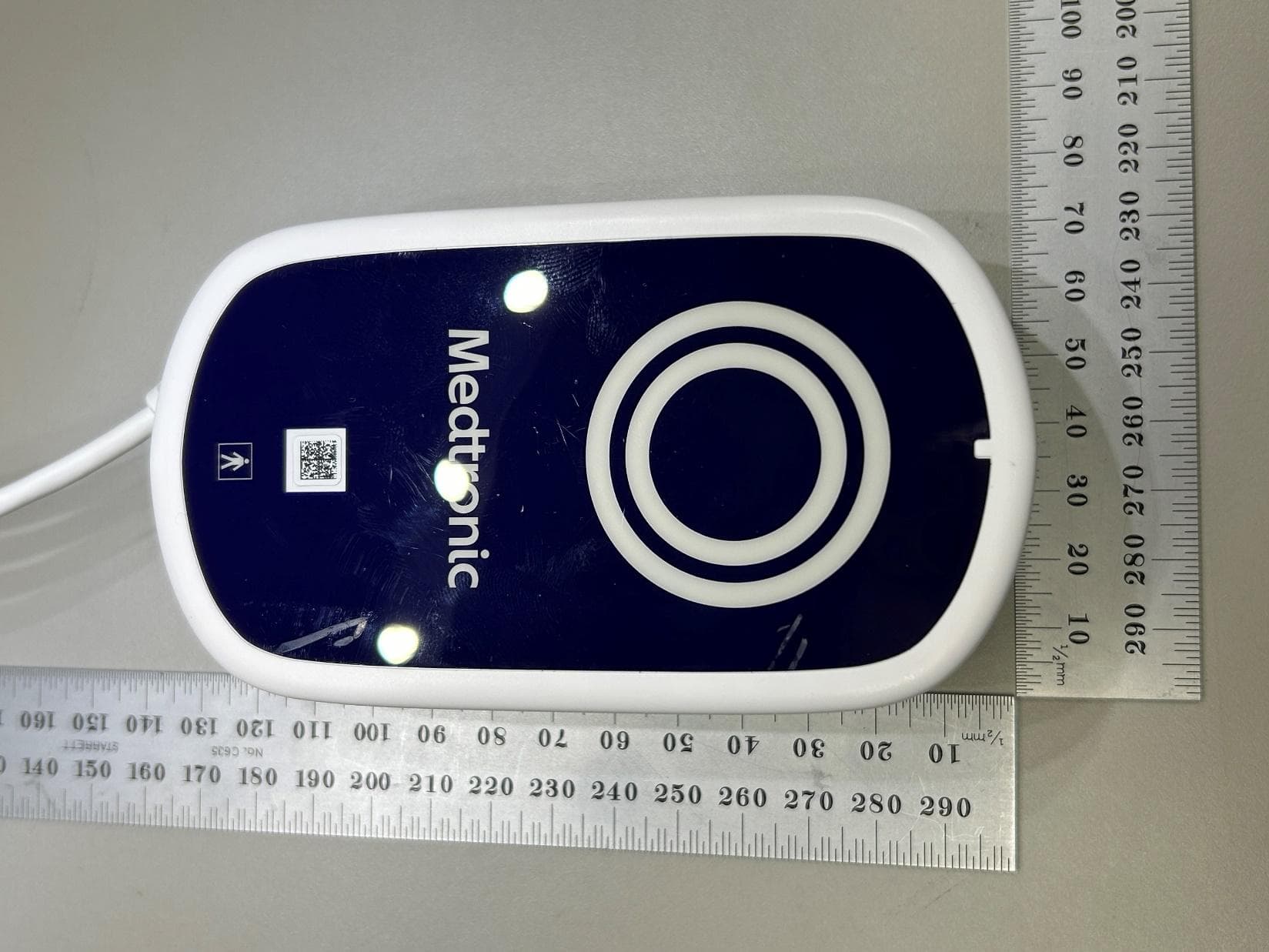
LF526950
Mar 27, 2026MyCareLink Home Communicator Model 26950
Equipment Class
DTS - Digital Transmission System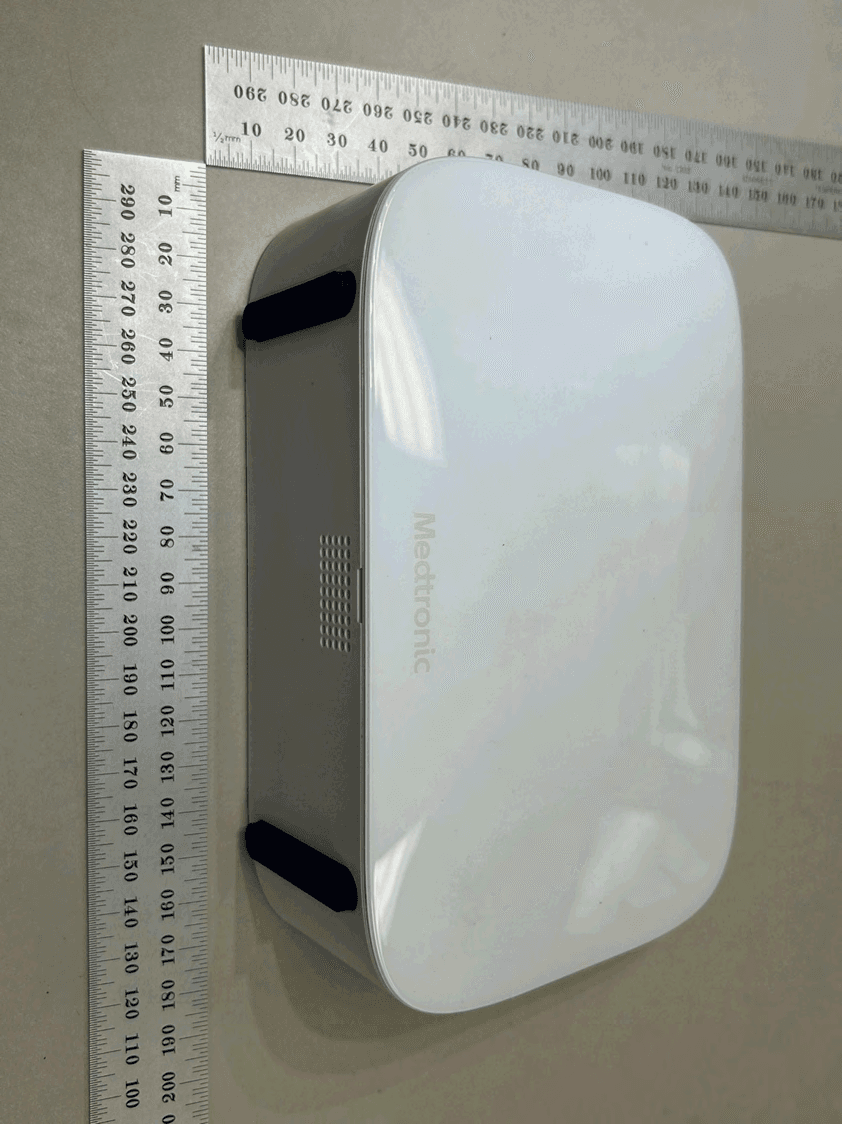
LF526900
Mar 27, 2026MyCareLink Home Communicator Model 26900
Equipment Class
DTS - Digital Transmission System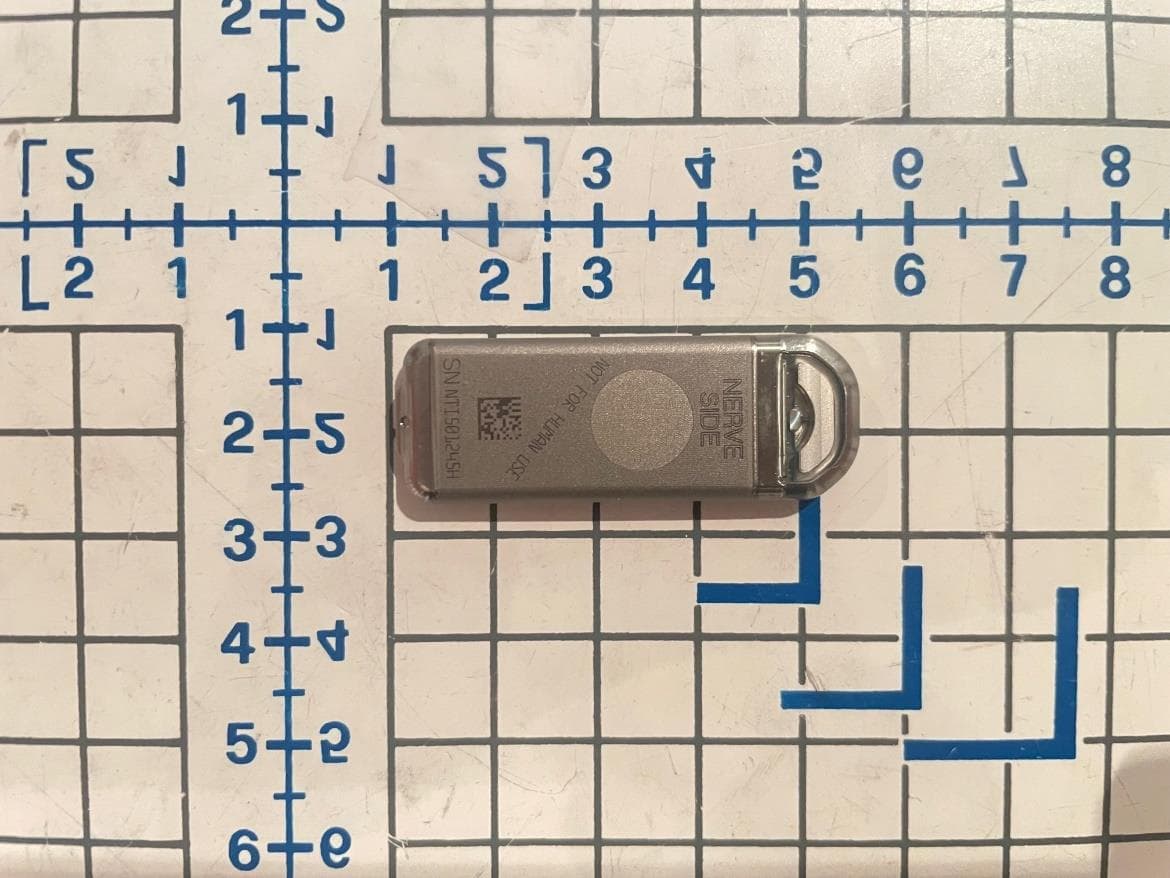
LF5P7850N
Sep 24, 2023Implantable Neurostimulator
Equipment Class
DCD - Part 15 Low Power Transmitter Below 1705 kHz
LF5MCS3101CO
May 14, 2020MCS3101CO
Equipment Class
DTS - Digital Transmission System