NRKTXPProfessional Body-Worn Wireless Microphone Transmitter
Audio Limited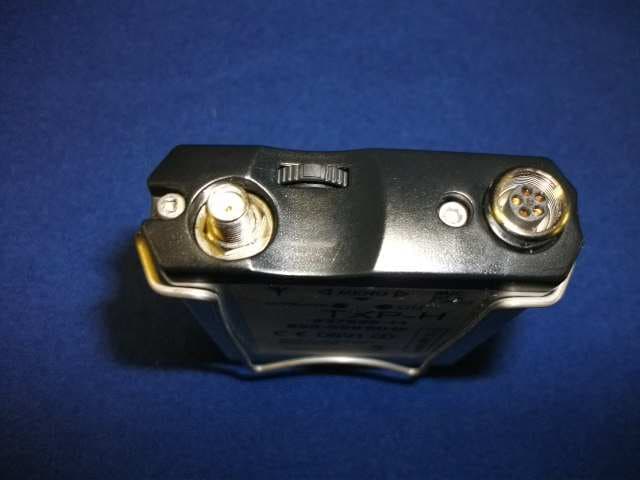
Click to zoom
Application Details
- Equipment Class
- TBT - Licensed Broadcast Transmitter Worn on Body
- Date of Grant
- Dec 18, 2014
- Application Purpose
- Original Equipment
- Date of Application
- Dec 18, 2014
- Equipment Note
- Professional Body-Worn Wireless Microphone Transmitter
- Frequency Range
- 614.10000000 - 697.10000000
- Company
- Audio Limited
- Country
- United Kingdom
Documents & Files
Document Text
Text extracted from the exhibit documents filed with the FCC. Open a document above to read the original.
Users Manual
User guide for the En2 TXPH Transmitter Installing and removing batteries To open the battery compartment, slide the grip to the right. This will unlock it and the battery can be placed inside with the positive end uppermost. To close the battery compartment, gently push down the flap until you hear a clicking sound. The transmitter is now ready to use. Switching the transmitter on and off To turn the transmitter on, slide the switch to the left. To turn it off, slide the switch to the right. The TXP will turn on and the OLED screen will display the following: Default screen Slide grip to the right to open the battery compartment. On/Off Switch Key 1 Battery level icon (displays ‘EXT’ when externally powered). 2 Menus Locked icon. 3 Current gain setting. 4 LF Cut active icon. 5 RF Output Power icon (Only displayed when ‘Low’ setting selected). 6 AF level indicator 7 Frequency 8 Frequency selection mode (P = PRESET, U = USER, TUNE = TUNE mode). 9 Selected channel number (PRESET or USER modes only). 10 Overload indicator. Enter Main Menu To access the various transmitter parameters press and hold the navigation switch located on the top of the transmitter, for 2 seconds to enter the menu. The main menu will be displayed. Accessing the Frequency option After accessing the main menu, use the navigation switch to scroll to the Frequency option. Once the frequency option is highlighted, press down on the nav switch to enter the frequency menu to view the range of frequencies. A range of frequencies will be displayed and the desired one can be highlighted using the scroll. To confirm the desired frequency press down on the navigation switch to make the selection. The transmitter will then return to the main menu. AF Gain option After accessing the main menu, use the navigation switch to scroll to the AF gain option. Once the AF gain option is highlighted, press the nav switch to select one of 10 AF gain settings. Use the navigation switch to highlight the desired AF Gain option. To confirm this choice press navigation switch and the transmitter will save the setting and return to the main menu. LF Cut option After accessing the main menu, use the navigation switch to scroll to the LF Cut option. Select the required filter setting. Options After accessing the main menu, use the navigation switch to scroll to the Options menu. When the Options icon is highlighted, press the navigation switch. On doing so, the Options menu will be displayed as shown below: Frequency Mode In selecting the frequency mode the user can select one of three frequency modes, Factory set Preset, User, or manual Tune. In Tune mode the user can select any frequency within the switching bandwidth of the frequency table in 25kHz steps and then save them to the User memory. The User memory is initially programmed with a copy of the Preset frequencies until the user selects and saves a frequency in Tune mode. Frequency tables Units which are programmed with multiple tables will show frequency table selection on the menu. Entering the frequency table selection screen will show the frequency table number. The user can select any one of up to 10 tables. RF Power In selecting the RF Power from the Options menu the user can select High or Low power settings. In selecting the low power setting the user will extend the battery life of the transmitter. Brightness The brightness menu selection allows the user to set the brightness of the OLED display. There are 5 selectable levels available. Screensaver The OLED display can be placed into screen saver mode to extend battery life and also reduce light emission from the transmitter when it is bodyworn. There are 4 settings available :– X - display on all the time 5 - screen enters screen saver after 5 seconds 20- screen enters screen saver after 20 seconds 60 - screen enters screen saver after 60 seconds Restore If for any reason, the user wants to restore the transmitter to the original factory supplied settings then the user can use the restore function. Please note this will overwrite any user memory settings and gain settings. Information option From the top level menu the Info provides the serial number, Firmware revision and frequency table information. After accessing the main menu, use the navigation switch to scroll to the Info option. Once the Information option is highlighted, press the navigation switch to view the options. To view the information for any of these, there is no need to press down the middle button. Simply scrolling from left to right will enable you to view the data for any of the three headings. Pressing down on the navigation switch will instantly take the transmitter back to the Main Menu. Lock option After accessing the main menu, use the navigation switch to scroll to the Lock option. Once the Lock option is highlighted, press the middle part of the navigation switch to view the options: To lock the transmitter, scroll using the navigation switch to the Yes option. The transmitter will then return to the main menu, with an unlock symbol to replace the lock symbol. To unlock the transmitter, scroll to the unlock symbol and use the middle part of the navigation switch to select the Yes option. The transmitter will then return to the main menu. Recommended mounting of TXP(H) transmitter The TXPH transmitter is supplied with a wire belt-clip allowing the transmitter to be attached to a belt or waist line of trouser or skirt. This is to ensure that the transmitter is orientated in a vertical plane at the correct height and separation from the body. Placing the transmitter in a pocket of a shirt or trousers is not allowed in order to avoid that the separation distance between the device, antenna, and the body of the user will be less than the separation distance which is guaranteed by using the belt clip. Batteries Upon finishing with any used batteries please dispose of them as special waste. In order to protect the environment, only dispose of exhausted batter…
Text truncated - open the document above for the full version.
External Photos
External Photographs
ID Label/Location Info
AUDIO LIMITED 09/10/2012 Page 1 of 1
Internal Photos
Internal Photographs
RF Exposure Info
Page 1 of 121 SAR Test Report Report Number: M130336R This report is replacement for M130336 SAR report Test Sample: Wireless Microphone Transceiver Model Number: En2 TXP Tested For: Audio Limited Date of Issue: 21 st October 2014 EMC Technologies Pty Ltd reports apply only to the specific samples tested under stated test conditions. It is the manufacturer’s responsibility to assure that additional production units of this model are manufactured with identical electrical and mechanical components. EMC Technologies Pty Ltd shall have no liability for any deductions, inferences or generalisations drawn by the client or others from EMC Technologies Pty Ltd issued reports. This report shall not be used to claim, constitute or imply product endorsement by EMC Technologies Pty Ltd. Accredited for compliance with ISO/IEC 17025. The results of the test, calibrations and/or measurement included in this document are traceable to Australian/national standards. NATA is a signatory to the ILAC Mutual Recognition Arrangement for the mutual recognition of the equivalence of testing, calibration and inspection reports. This document shall not be reproduced, except in full. EMC Technologies Pty Ltd ABN 82 057 105 549 176 Harrick Road Keilor Park Victoria Australia 3042 Ph: + 613 9365 1000 Fax: + 613 9331 7455 email: [email protected] Report No.: M130336R Page 2 of 121 Accredited for compliance with ISO/IEC 17025. The results of the test, calibrations and/or measurement included in this document are traceable to Australian/national standards. NATA is a signatory to the ILAC Mutual Recognition Arrangement for the mutual recognition of the equivalence of testing, calibration and inspection reports. This document shall not be reproduced except in full. CONTENTS 1.0 GENERAL INFORMATION ..................................................................................................... 3 2.0 DESCRIPTION OF DEVICE .................................................................................................... 4 2.1 Description of Test Sample ................................................................................................. 4 2.2 Test sample Accessories .................................................................................................... 4 2.2.1 Battery Types ...................................................................................................................................... 4 2.3 Test Signal, Frequency and Output Power .......................................................................... 4 2.4 Conducted Power Measurements ....................................................................................... 5 2.5 Battery Status...................................................................................................................... 5 2.6 Details of Test Laboratory ................................................................................................... 6 2.6.1 Location .............................................................................................................................. 6 2.6.2 Accreditations...................................................................................................................... 6 2.6.3 Environmental Factors ........................................................................................................ 6 3.0 DESCRIPTION OF SAR MEASUREMENT SYSTEM .............................................................. 7 3.1 Probe Positioning System ................................................................................................... 7 3.2 E-Field Probe Type and Performance ................................................................................. 7 3.3 Data Acquisition Electronics ................................................................................................ 7 3.4 Calibration and Validation Procedures and Data ................................................................. 7 3.4.1 Validation Results @ 450, 750 MHz ................................................................................................. 7 3.4.2 Deviation from reference validation values ...................................................................................... 8 3.4.3 Liquid Depth 15cm ............................................................................................................................. 8 3.5 Phantom Properties (Size, Shape, Shell Thickness) ........................................................... 9 Liquid Depth 15cm ............................................................................................................................................ 9 Phantom Properties .......................................................................................................................................... 9 3.6 Tissue Material Properties ................................................................................................. 10 3.6.1 Liquid Temperature and Humidity .................................................................................................. 10 3.7 Simulated Tissue Composition Used for SAR Test ........................................................... 10 3.8 Device Holder for DASY5 .................................................................................................. 10 4.0 SAR MEASUREMENT PROCEDURE USING DASY5 .......................................................... 11 5.0 MEASUREMENT UNCERTAINTY ........................................................................................ 12 6.0 EQUIPMENT LIST AND CALIBRATION DETAILS ............................................................... 15 7.0 SAR TEST METHOD ............................................................................................................. 16 7.1 Description of the Test Positions (Belt Clip) ...................................................................... 16 7.1.1 “Belt Clip” Position ..…
Text truncated - open the document above for the full version.
RF Exposure Info
Report No.: M130336R Page 19 of 121 Accredited for compliance with ISO/IEC 17025. The results of the test, calibrations and/or measurement included in this document are traceable to Australian/national standards. NATA is a signatory to the ILAC Mutual Recognition Arrangement for the mutual recognition of the equivalence of testing, calibration and inspection reports. This document shall not be reproduced except in full. APPENDIX A1 Test Sample Photographs Battery DUT1 Report No.: M130336R Page 20 of 121 Accredited for compliance with ISO/IEC 17025. The results of the test, calibrations and/or measurement included in this document are traceable to Australian/national standards. NATA is a signatory to the ILAC Mutual Recognition Arrangement for the mutual recognition of the equivalence of testing, calibration and inspection reports. This document shall not be reproduced except in full. DUT2 DUT3 DUT4 Report No.: M130336R Page 21 of 121 Accredited for compliance with ISO/IEC 17025. The results of the test, calibrations and/or measurement included in this document are traceable to Australian/national standards. NATA is a signatory to the ILAC Mutual Recognition Arrangement for the mutual recognition of the equivalence of testing, calibration and inspection reports. This document shall not be reproduced except in full. DUT5 DUT6 Report No.: M130336R Page 22 of 121 Accredited for compliance with ISO/IEC 17025. The results of the test, calibrations and/or measurement included in this document are traceable to Australian/national standards. NATA is a signatory to the ILAC Mutual Recognition Arrangement for the mutual recognition of the equivalence of testing, calibration and inspection reports. This document shall not be reproduced except in full. DUT7 Report No.: M130336R Page 23 of 121 Accredited for compliance with ISO/IEC 17025. The results of the test, calibrations and/or measurement included in this document are traceable to Australian/national standards. NATA is a signatory to the ILAC Mutual Recognition Arrangement for the mutual recognition of the equivalence of testing, calibration and inspection reports. This document shall not be reproduced except in full. APPENDIX A2 Test Setup Photographs Body Worn Belt Clip Position
RF Exposure Info
Report No.: M130336R Page 24 of 121 Accredited for compliance with ISO/IEC 17025. The results of the test, calibrations and/or measurement included in this document are traceable to Australian/national standards. NATA is a signatory to the ILAC Mutual Recognition Arrangement for the mutual recognition of the equivalence of testing, calibration and inspection reports. This document shall not be reproduced except in full. APPENDIX B Plots Of The SAR Measurements Test Lab: EMCTech Test File: M130336 483 MHz Belt Clip 31-07-13.da52:0 DUT Name: Audio Limited Wireless Microphone, Type: En2 HTP, Serial: 638735-01 Configuration: Body Worn Belt Clip Communication System: 0 - n/a - CW (0); Communication System Band: Audio Limited; Frequency: 470.1 MHz, Communication System PAR: 0.00 dB; PMF: 0.00; Duty Cycle: 1:1.00 Medium Parameters used: f=469.7 MHz; σ = 0.93 S/m; ε r = 55.4; ρ = 1.0g/cm 3 Phantom section: Flat Section DASY Configuration: Probe: ET3DV6 - SN1380; ConvF: (7.57,7.57,7.57); Calibrated: 10/12/2012; Sensor-Surface: 4 mm (Mechanical Surface Detection) Electronics: DAE3 Sn442; Calibrated: 4/12/2012 Phantom: ELI 4.0; Type: QDOVA001BA; Serial: 1101 DASY52 52.8.7(1137); SEMCAD X Version 14.6.9 (7117) Body Worn Belt Clip/Channel 1 Test/Area Scan (81x181x1): Interpolated grid: dx=1.5 mm, dy=1.5 mm; Maximum value of SAR (interpolated) = 0.326 W/kg Body Worn Belt Clip/Channel 1 Test/Zoom Scan (21x21x36)/Cube 0: Interpolated grid: dx=1.6 mm, dy=1.6 mm, dz=1.0 mm; Reference Value = 16.735 V/m; Power Drift = -0.03 dB Averaged SAR: SAR(1g) = 0.325 W/kg; SAR(10g) = 0.208 W/kg Maximum value of SAR (interpolated) = 0.513 W/kg 0 dB = 0.326 W/kg = -4.87 dBW/kg SAR Measurement Plot 1 Report No.: M130336R Page 25 of 121 Accredited for compliance with ISO/IEC 17025. The results of the test, calibrations and/or measurement included in this document are traceable to Australian/national standards. NATA is a signatory to the ILAC Mutual Recognition Arrangement for the mutual recognition of the equivalence of testing, calibration and inspection reports. This document shall not be reproduced except in full. Report No.: M130336R Page 26 of 121 Accredited for compliance with ISO/IEC 17025. The results of the test, calibrations and/or measurement included in this document are traceable to Australian/national standards. NATA is a signatory to the ILAC Mutual Recognition Arrangement for the mutual recognition of the equivalence of testing, calibration and inspection reports. This document shall not be reproduced except in full. Test Lab: EMCTech Test File: M130336 483 MHz Belt Clip 31-07-13.da52:0 DUT Name: Audio Limited Wireless Microphone, Type: En2 HTP, Serial: 638735-01 Configuration: Body Worn Belt Clip Communication System: 0 - n/a - CW (0); Communication System Band: Audio Limited; Frequency: 483.0 MHz, Communication System PAR: 0.00 dB; PMF: 0.00; Duty Cycle: 1:1.00 Medium Parameters used: f=469.7 MHz; σ = 0.94 S/m; ε r = 55.4; ρ = 1000.0g/cm 3 Phantom section: Flat Section DASY Configuration: Probe: ET3DV6 - SN1380; ConvF: (7.57,7.57,7.57); Calibrated: 10/12/2012; Sensor-Surface: 4 mm (Mechanical Surface Detection) Electronics: DAE3 Sn442; Calibrated: 4/12/2012 Phantom: ELI 4.0; Type: QDOVA001BA; Serial: 1101 DASY52 52.8.7(1137); SEMCAD X Version 14.6.9 (7117) Body Worn Belt Clip/Channel 2 Test/Area Scan (81x181x1): Interpolated grid: dx=1.5 mm, dy=1.5 mm; Maximum value of SAR (interpolated) = 0.339 W/kg Body Worn Belt Clip/Channel 2 Test/Zoom Scan (21x21x36)/Cube 0: Interpolated grid: dx=1.6 mm, dy=1.6 mm, dz=1.0 mm; Reference Value = 17.226 V/m; Power Drift = -0.02 dB Averaged SAR: SAR(1g) = 0.334 W/kg; SAR(10g) = 0.214 W/kg Maximum value of SAR (interpolated) = 0.533 W/kg 0 dB = 0.326 W/kg = -4.87 dBW/kg SAR Measurement Plot 2 Report No.: M130336R Page 27 of 121 Accredited for compliance with ISO/IEC 17025. The results of the test, calibrations and/or measurement included in this document are traceable to Australian/national standards. NATA is a signatory to the ILAC Mutual Recognition Arrangement for the mutual recognition of the equivalence of testing, calibration and inspection reports. This document shall not be reproduced except in full. Report No.: M130336R Page 28 of 121 Accredited for compliance with ISO/IEC 17025. The results of the test, calibrations and/or measurement included in this document are traceable to Australian/national standards. NATA is a signatory to the ILAC Mutual Recognition Arrangement for the mutual recognition of the equivalence of testing, calibration and inspection reports. This document shall not be reproduced except in full. Test Lab: EMCTech Test File: M130336 483 MHz Belt Clip 31-07-13.da52:0 DUT Name: Audio Limited Wireless Microphone, Type: En2 HTP, Serial: 638735-01 Configuration: Body Worn Belt Clip Communication System: 0 - n/a - CW (0); Communication System Band: Audio Limited; Frequency: 495.9 MHz, Communication System PAR: 0.00 dB; PMF: 0.00; Duty Cycle: 1:1.00 Medium Parameters used: f=482.9 MHz; σ = 0.95 S/m; ε r = 55.2; ρ = 1000.0g/cm 3 Phantom section: Flat Section DASY Configuration: Probe: ET3DV6 - SN1380; ConvF: (7.57,7.57,7.57); Calibrated: 10/12/2012; Sensor-Surface: 4 mm (Mechanical Surface Detection) Electronics: DAE3 Sn442; Calibrated: 4/12/2012 Phantom: ELI 4.0; Type: QDOVA001BA; Serial: 1101 DASY52 52.8.7(1137); SEMCAD X Version 14.6.9 (7117) Body Worn Belt Clip/Channel 3 Test/Area Scan (81x181x1): Interpolated grid: dx=1.5 mm, dy=1.5 mm; Maximum value of SAR (interpolated) = 0.313 W/kg Body Worn Belt Clip/Channel 3 Test/Zoom Scan (21x21x36)/Cube 0: Interpolated grid: dx=1.6 mm, dy=1.6 mm, dz=1.0 mm; Reference Value = 16.294 V/m; Power Drift = -0.03 dB Averaged SAR: SAR(1g) = 0.307 W/kg; SAR(10g) = 0.197 W/kg Maximum value of SAR (interpolated) = 0.496 W/kg 0 dB = 0.339 W/kg = -4.70 dBW/kg SAR Measurement Plot 3 Report No.: M130336R Page 29 of 121 Accredited for compliance with ISO/IEC 17025. The results of the test, calibrations and/or measuremen…
Text truncated - open the document above for the full version.
RF Exposure Info
Report No.: M130336R Page 86 of 121 Accredited for compliance with ISO/IEC 17025. The results of the test, calibrations and/or measurement included in this document are traceable to Australian/national standards. NATA is a signatory to the ILAC Mutual Recognition Arrangement for the mutual recognition of the equivalence of testing, calibration and inspection reports. This document shall not be reproduced except in full. APPENDIX C CALIBRATION DOCUMENTS 1. SN: 1380 Probe Calibration Certificate 2. SN: 1380 Probe Calibration Data for 650 MHz 3. SN: 1074 D450V3 Dipole Calibration Certificate 4. SN: 1051 D750V3 Dipole Calibration Certificate 5. SN: 442 DAE3 Data Acquisition Electronics Calibration Certificate Report No.: M130336R Page 87 of 121 Accredited for compliance with ISO/IEC 17025. The results of the test, calibrations and/or measurement included in this document are traceable to Australian/national standards. NATA is a signatory to the ILAC Mutual Recognition Arrangement for the mutual recognition of the equivalence of testing, calibration and inspection reports. This document shall not be reproduced except in full. Report No.: M130336R Page 88 of 121 Accredited for compliance with ISO/IEC 17025. The results of the test, calibrations and/or measurement included in this document are traceable to Australian/national standards. NATA is a signatory to the ILAC Mutual Recognition Arrangement for the mutual recognition of the equivalence of testing, calibration and inspection reports. This document shall not be reproduced except in full. Report No.: M130336R Page 89 of 121 Accredited for compliance with ISO/IEC 17025. The results of the test, calibrations and/or measurement included in this document are traceable to Australian/national standards. NATA is a signatory to the ILAC Mutual Recognition Arrangement for the mutual recognition of the equivalence of testing, calibration and inspection reports. This document shall not be reproduced except in full. Report No.: M130336R Page 90 of 121 Accredited for compliance with ISO/IEC 17025. The results of the test, calibrations and/or measurement included in this document are traceable to Australian/national standards. NATA is a signatory to the ILAC Mutual Recognition Arrangement for the mutual recognition of the equivalence of testing, calibration and inspection reports. This document shall not be reproduced except in full. Report No.: M130336R Page 91 of 121 Accredited for compliance with ISO/IEC 17025. The results of the test, calibrations and/or measurement included in this document are traceable to Australian/national standards. NATA is a signatory to the ILAC Mutual Recognition Arrangement for the mutual recognition of the equivalence of testing, calibration and inspection reports. This document shall not be reproduced except in full. Report No.: M130336R Page 92 of 121 Accredited for compliance with ISO/IEC 17025. The results of the test, calibrations and/or measurement included in this document are traceable to Australian/national standards. NATA is a signatory to the ILAC Mutual Recognition Arrangement for the mutual recognition of the equivalence of testing, calibration and inspection reports. This document shall not be reproduced except in full. Report No.: M130336R Page 93 of 121 Accredited for compliance with ISO/IEC 17025. The results of the test, calibrations and/or measurement included in this document are traceable to Australian/national standards. NATA is a signatory to the ILAC Mutual Recognition Arrangement for the mutual recognition of the equivalence of testing, calibration and inspection reports. This document shall not be reproduced except in full. Report No.: M130336R Page 94 of 121 Accredited for compliance with ISO/IEC 17025. The results of the test, calibrations and/or measurement included in this document are traceable to Australian/national standards. NATA is a signatory to the ILAC Mutual Recognition Arrangement for the mutual recognition of the equivalence of testing, calibration and inspection reports. This document shall not be reproduced except in full. Report No.: M130336R Page 95 of 121 Accredited for compliance with ISO/IEC 17025. The results of the test, calibrations and/or measurement included in this document are traceable to Australian/national standards. NATA is a signatory to the ILAC Mutual Recognition Arrangement for the mutual recognition of the equivalence of testing, calibration and inspection reports. This document shall not be reproduced except in full. Report No.: M130336R Page 96 of 121 Accredited for compliance with ISO/IEC 17025. The results of the test, calibrations and/or measurement included in this document are traceable to Australian/national standards. NATA is a signatory to the ILAC Mutual Recognition Arrangement for the mutual recognition of the equivalence of testing, calibration and inspection reports. This document shall not be reproduced except in full. Report No.: M130336R Page 97 of 121 Accredited for compliance with ISO/IEC 17025. The results of the test, calibrations and/or measurement included in this document are traceable to Australian/national standards. NATA is a signatory to the ILAC Mutual Recognition Arrangement for the mutual recognition of the equivalence of testing, calibration and inspection reports. This document shall not be reproduced except in full. Report No.: M130336R Page 98 of 121 Accredited for compliance with ISO/IEC 17025. The results of the test, calibrations and/or measurement included in this document are traceable to Australian/national standards. NATA is a signatory to the ILAC Mutual Recognition Arrangement for the mutual recognition of the equivalence of testing, calibration and inspection reports. This document shall not be reproduced except in full. Report No.: M130336R Page 99 of 121 Accredited for compliance with ISO/IEC 17025. The results of the test, calibrations and/or measurement included in this document are traceable to Australian/nati…
Text truncated - open the document above for the full version.
RF Exposure Info
Report No.: M130336R Page 100 of 121 Accredited for compliance with ISO/IEC 17025. The results of the test, calibrations and/or measurement included in this document are traceable to Australian/national standards. NATA is a signatory to the ILAC Mutual Recognition Arrangement for the mutual recognition of the equivalence of testing, calibration and inspection reports. This document shall not be reproduced except in full. Report No.: M130336R Page 101 of 121 Accredited for compliance with ISO/IEC 17025. The results of the test, calibrations and/or measurement included in this document are traceable to Australian/national standards. NATA is a signatory to the ILAC Mutual Recognition Arrangement for the mutual recognition of the equivalence of testing, calibration and inspection reports. This document shall not be reproduced except in full. Report No.: M130336R Page 102 of 121 Accredited for compliance with ISO/IEC 17025. The results of the test, calibrations and/or measurement included in this document are traceable to Australian/national standards. NATA is a signatory to the ILAC Mutual Recognition Arrangement for the mutual recognition of the equivalence of testing, calibration and inspection reports. This document shall not be reproduced except in full. Report No.: M130336R Page 103 of 121 Accredited for compliance with ISO/IEC 17025. The results of the test, calibrations and/or measurement included in this document are traceable to Australian/national standards. NATA is a signatory to the ILAC Mutual Recognition Arrangement for the mutual recognition of the equivalence of testing, calibration and inspection reports. This document shall not be reproduced except in full. Report No.: M130336R Page 104 of 121 Accredited for compliance with ISO/IEC 17025. The results of the test, calibrations and/or measurement included in this document are traceable to Australian/national standards. NATA is a signatory to the ILAC Mutual Recognition Arrangement for the mutual recognition of the equivalence of testing, calibration and inspection reports. This document shall not be reproduced except in full. Report No.: M130336R Page 105 of 121 Accredited for compliance with ISO/IEC 17025. The results of the test, calibrations and/or measurement included in this document are traceable to Australian/national standards. NATA is a signatory to the ILAC Mutual Recognition Arrangement for the mutual recognition of the equivalence of testing, calibration and inspection reports. This document shall not be reproduced except in full. Report No.: M130336R Page 106 of 121 Accredited for compliance with ISO/IEC 17025. The results of the test, calibrations and/or measurement included in this document are traceable to Australian/national standards. NATA is a signatory to the ILAC Mutual Recognition Arrangement for the mutual recognition of the equivalence of testing, calibration and inspection reports. This document shall not be reproduced except in full. Report No.: M130336R Page 107 of 121 Accredited for compliance with ISO/IEC 17025. The results of the test, calibrations and/or measurement included in this document are traceable to Australian/national standards. NATA is a signatory to the ILAC Mutual Recognition Arrangement for the mutual recognition of the equivalence of testing, calibration and inspection reports. This document shall not be reproduced except in full. Report No.: M130336R Page 108 of 121 Accredited for compliance with ISO/IEC 17025. The results of the test, calibrations and/or measurement included in this document are traceable to Australian/national standards. NATA is a signatory to the ILAC Mutual Recogniti…
Text truncated - open the document above for the full version.
Contact Information
Applicant
Lee Stone
Technical Contact
Test Firm
R.N. Electronics Ltd.Roger Ray
Technical Specifications
| # | Rule Parts | Frequency Range | Power Output | Emission | Tolerance |
|---|---|---|---|---|---|
| 2 | 74.861 | 614.1 MHz - 697.1 MHz | 84.00 mW | 200KF3E | 35 ppm |
Other Applications from Audio Limited
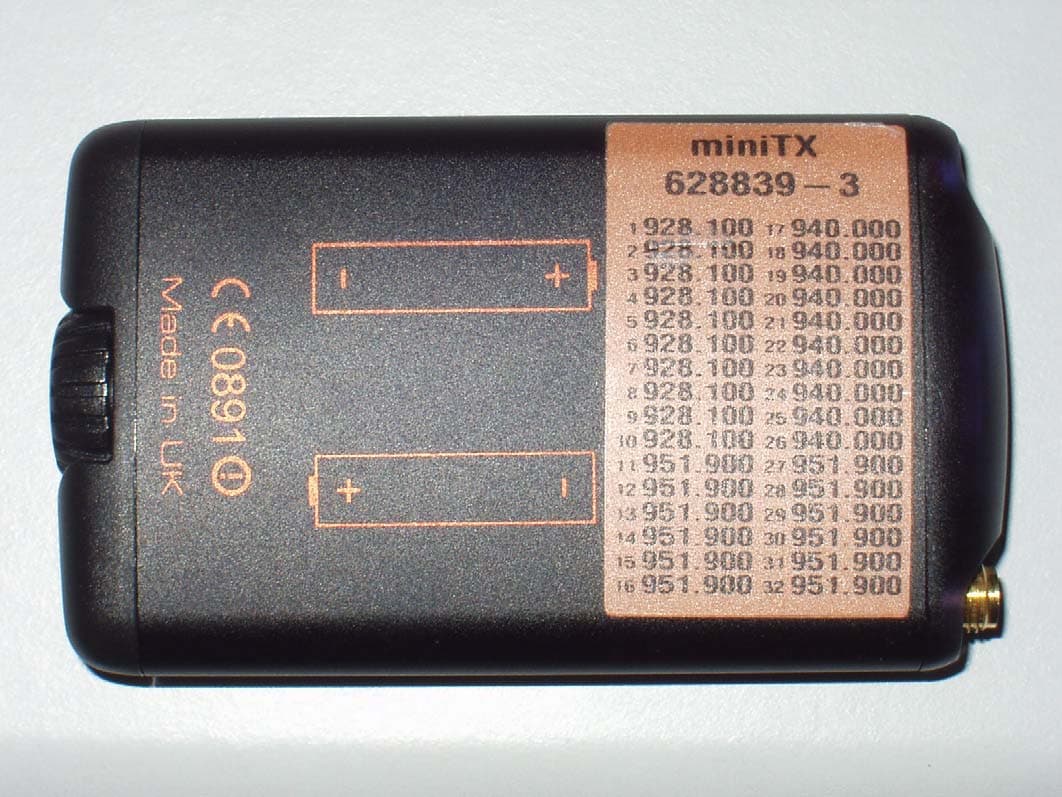
NRKMINITX
Sep 21, 2007MINITX Wireless Microphone Transmitter
Equipment Class
TNT - Licensed Non-Broadcast Transmitter Worn on Body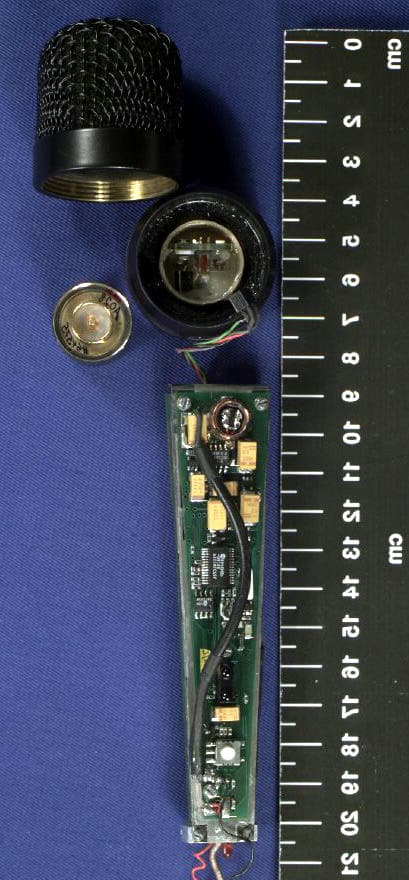
NRKHXIR
Jul 22, 2001Hand Held Radio Microphone
Equipment Class
TBF - Licensed Broadcast Transmitter Held to Face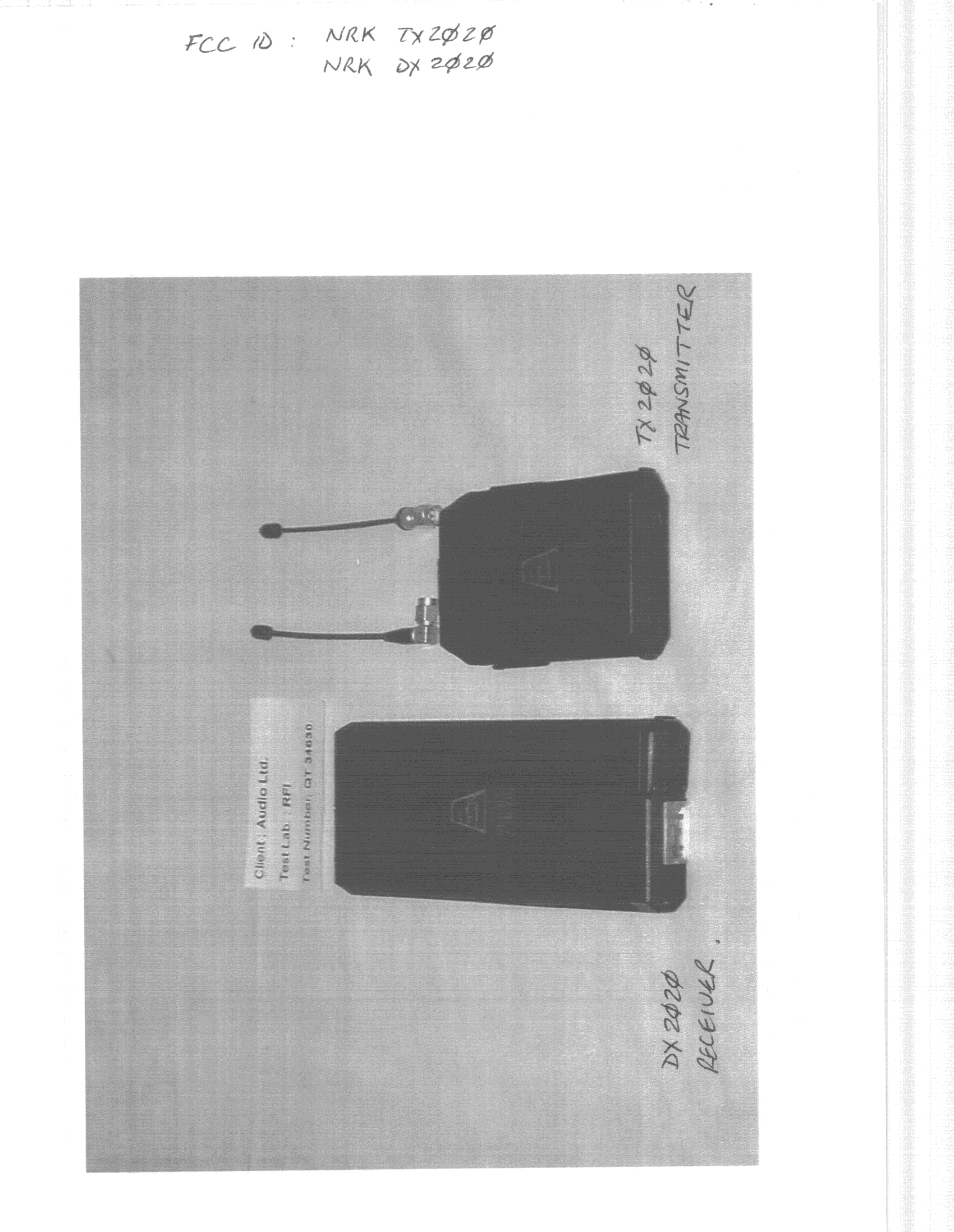
NRKTX2020
Sep 09, 1998TBT - Licensed Broadcast Transmitter Worn on Body
Equipment Class
TBT - Licensed Broadcast Transmitter Worn on Body