OHH-HS805BLUETOOTH HEADSET
Cal-Comp Electronics (Thailand) Co. Ltd.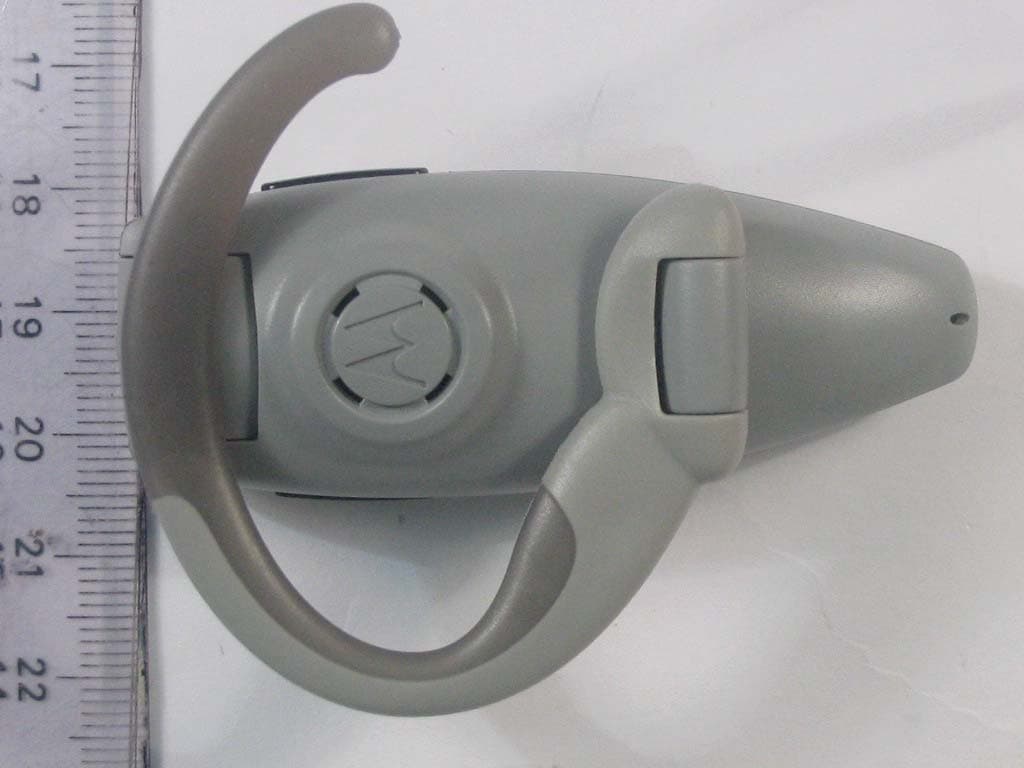
Click to zoom
Application Details
- Equipment Class
- DSS - Part 15 Spread Spectrum Transmitter
- Date of Grant
- Jul 21, 2004
- Application Purpose
- Original Equipment
- Date of Application
- Jul 21, 2004
- Equipment Note
- BLUETOOTH HEADSET
- Frequency Range
- 2402.00000000 - 2480.00000000
- Country
- Thailand
Documents & Files
Document Text
Text extracted from the exhibit documents filed with the FCC. Open a document above to read the original.
Users Manual
START HERE > HS805 Wireless Headset with Bluetooth ® Technology 1 Welcome The Motorola Wireless Headset HS805 with Bluetooth ® technology defies traditional expectations. This latest product by Motorola makes connectivity invisible and reliable. It is astonishingly advanced, yet intuitive and simple to use. It is decidedly smaller than its predecessors, yet more eye- catching than ever. And although you are no longer connected by wires, you are intrinsically connected to a growing group of leading-edge technology pioneers who are embracing the global Bluetooth movement. Innovation is a recognized part of Motorola’s 75-year heritage. A company that understands the way the world is moving...and then jumps in to intelligently shape its direction. Motorola consumer products with Bluetooth wireless technology are challenging the expected and defying the traditional rules. Connectivity is bringing us together–need it be hampered by wires? Technology is making life more integrated–must it be complicated? Motorola is actively creating Bluetooth solutions for work, for play, for home, for life–everywhere around the globe. Welcome to the movement. And thank you for choosing the Motorola Wireless Headset HS805! 6809489A63-O Draft 2 Contents Safety and General Information. . . . . . . . . . . . . . . . . . . . 3 Introduction. . . . . . . . . . . . . . . . . . . . . . . . . . . . . . . . . . . . 6 What Is Bluetooth Wireless Technology? . . . . . . . . . . . . 6 How Can I Use My Wireless Headset? . . . . . . . . . . . . . . 6 Headset Features . . . . . . . . . . . . . . . . . . . . . . . . . . . . . . 7 Using Your Headset . . . . . . . . . . . . . . . . . . . . . . . . . . . . . 8 Replaceing Your Headset Battery. . . .. . . . . . . . . . . . . . . 8 Wearing Your Headset . . . . . . . . . . . . . . . . . . . . . . . . . 10 Pairing Your Headset and Phone . . . . . . . . . . . . . . . . . 12 Adjusting Headset Volume . . . . . . . . . . . . . . . . . . . . . . 13 Making and Receiving Calls . . . . . . . . . . . . . . . . . . . . . 14 Using Your Headset Indicator LED . . . . . . . . . . . . . . . . 16 3 Safety and General Information IMPORTANT INFORMATION ON SAFE AND EFFICIENT OPERATION. READ THIS INFORMATION BEFORE USING YOUR DEVICE. Users are not permitted to make changes or modify the device in any way. Changes or modifications not expressly approved by the party responsible for compliance could void the user’s authority to operate the equipment. See 47 CFR Sec. 15.21. This device complies with part 15 of the FCC Rules. Operation is subject to the following two conditions: (1) This device may not cause harmful interference, and (2) this device must accept any interference received, including interference that may cause undesired operation. See 47 CFR Sec. 15.19(3). Electromagnetic Interference/Compatibility Note: Nearly every electronic device is susceptible to electromagnetic interference (EMI) if inadequately shielded, designed, or otherwise configured for electromagnetic compatibility. Facilities To avoid electromagnetic interference and/or compatibility conflicts, turn off your device in any facility where posted 4 notices instruct you to do so. Hospitals or health care facilities may be using equipment that is sensitive to external RF energy. Aircraft When instructed to do so, turn off your device when on board an aircraft. Any use of a device must be in accordance with applicable regulations per airline crew instructions. Medical Devices Hearing Aids Some devices may interfere with some hearing aids. In the event of such interference, you may want to consult with your hearing aid manufacturer to discuss alternatives. Other Medical Devices If you use any other personal medical device, consult the manufacturer of your device to determine if it is adequately shielded from RF energy. Your physician may be able to assist you in obtaining this information. Industry Canada Notice to Users Operation is subject to the following two conditions: (1) This device may not cause interference and (2) This device must accept any interference, including interference that may cause undesired operation of the device Ref IC RSS 210 Sec. 5.11. The term “IC:” before the certification/registration number only signifies that registration was performed based on a Declaration of Conformity indicating that Industry Canada technical specifications were met. It does not imply that Industry Canada approved the equipment. See Ref IC Self-Marking 6(f) and RSP-100 Sec. 4. 5 FCC Notice to Users This equipment has been tested and found to comply with the limits for a Class B digital device, pursuant to part 15 of the FCC Rules. These limits are designed to provide reasonable protection against harmful interference in a residential installation. This equipment generates, uses and can radiate radio frequency energy and, if not installed and used in accordance with the instructions, may cause harmful interference to radio communications. However, there is no guarantee that interference will not occur in a particular installation. If this equipment does cause harmful interference to radio or television reception, which can be determined by turning the equipment off and on, the user is encouraged to try to correct the interference by one or more of the following measures: •Reorient or relocate the receiving antenna. •Increase the separation between the equipment and the receiver. •Connect the equipment to an outlet on a circuit different from that to which the receiver is connected. •Consult the dealer or an experienced radio/TV technician for help. 6 Introduction What Is Bluetooth Wireless Technology? Bluetooth devices communicate without wires, using built-in radio transceivers that operate on a globally available radio frequency to ensure worldwide compatibility. Your Bluetooth Wireless Headset can communicate with other Bluetooth devices within a range of approximately 10 meters (33 feet). How Can I Use My Wireless Headset? Your Wire…
Text truncated - open the document above for the full version.
External Photos
TEST PHOTOGRAPHS / DIAGRAMS ANNEX B 56S040553/01 EUT PHOTOGRAPHS Front View Rear View TEST PHOTOGRAPHS / DIAGRAMS ANNEX B 56S040553/01 EUT PHOTOGRAPHS Left View Right View TEST PHOTOGRAPHS / DIAGRAMS ANNEX B 56S040553/01 EUT PHOTOGRAPHS Top View Bottom View
Internal Photos
TEST PHOTOGRAPHS / DIAGRAMS ANNEX B 56S040553/01 EUT PHOTOGRAPHS EUT Top Housing External View EUT Top Housing Internal View TEST PHOTOGRAPHS / DIAGRAMS ANNEX B 56S040553/01 EUT PHOTOGRAPHS EUT Bottom Housing External View EUT Bottom Housing Internal View TEST PHOTOGRAPHS / DIAGRAMS ANNEX B 56S040553/01 EUT PHOTOGRAPHS EUT Internal View TEST PHOTOGRAPHS / DIAGRAMS ANNEX B 56S040553/01 EUT PHOTOGRAPHS EUT PCB Top View TEST PHOTOGRAPHS / DIAGRAMS ANNEX B 56S040553/01 EUT PHOTOGRAPHS EUT PCB Bottom View RF Antenna
Test Report
TEST REPORT Your Ref: Date: 3 Jul 2004 Our Ref: 56S040553/01Page: 1 of 33 DID: +65-6885 1448 Fax: +65-6777 6409 NOTE: This report is issued subject to PSB Corporation's "Terms and Conditions Governing Technical Services". The terms and conditions governing the issue of this report are set out as attached within this report. LA-2001-0212-A LA-2001-0213-F LA-2001-0214-E LA-2001-0215-B LA-2001-0216-G LA-2001-0217-G The results reported herein have been performed in accordance with the laboratory’s terms of accreditation unde r the Singapore Accreditation Council - Singapore Laboratory Accreditation Scheme Head Office: PSB Corporation • Testing Group • 1 Science Park Drive Singapore 118221 • Hotline:+65 6885 1333 • Fax:+65 6775 9725 • Email: [email protected] • Website: www.psbcorp.com Regional Offices: Bangkok • Guangzhou • Jakarta • Kuala Lumpur • Shanghai • Taipei FORMAL REPORT ON TESTING IN ACCORDANCE WITH FCC Parts 15C : 2003 OF A BLUETOOTH HEADSET [ MODEL : HS805 ] [ FCC ID : OHH-HS805 ] TEST FACILITY Telecoms & EMC, Testing Group, PSB Corporation Pte Ltd 1 Science Park Drive, Singapore 118221 FCC REG. NO. 90937 (3m & 10m OATS) 99142 (10m Anechoic Chamber) 871638 (5m Anechoic Chamber) IND. CANADA REG. NO. IC 4257 (10m Anechoic Chamber) PREPARED FOR Cal-Comp Electronics (Thailand) Co. Ltd 191/54, 57, 18 th Floor, Rachadapisek Road Klongtoey Bangkok Thailand (10110) Tel : 886 2 89 13 2001-32Fax : 886 2 8913 2043-44 JOB NUMBER 56S040553 TEST PERIOD 23 Jun 2004 – 3 Jul 2004 PREPARED BYAPPROVED BY ____________________ Lim Cher Hwee Engineer ____________________ Deng Jun Hong Assistance Vice President 56S040553/01 Cal-Comp Electronics (Thailand) Co. Ltd.Page 2 of 33 Bluetooth Headset [ Model : HS805 ] [ FCC ID : OHH-HS805 ] TABLE OF CONTENTS TEST SUMMARY PRODUCT DESCRIPTION SUPPORTING EQUIPMENT LIST EUT OPERATING CONDITION TEST RESULTS ANNEX A-TEST INSTRUMENTATION & GENERAL PROCEDURES ANNEX B-EUT PHOTOGRAPHS / DIAGRAMS ANNEX C-USER MANUAL, TECHNICAL DESCRIPTION, BLOCK & CIRCUIT DIAGRAMS ANNEX D-FCC LABEL & POSITION 56S040553/01 Cal-Comp Electronics (Thailand) Co. Ltd.Page 3 of 33 Bluetooth Headset [ Model : HS805 ] [ FCC ID : OHH-HS805 ] TEST SUMMARY The product was tested in accordance with the customer's specifications. Test Results Summary Test StandardDescriptionPass / Fail FCC Part 15: 2003 15.205Radiated Emissions (Restricted Band Requirements)Pass 15.209Radiated Emissions (Spurious Emissions)Pass Carrier Frequency SeparationPass 15.247 (a)(1) Spectrum Bandwidth (20dB Bandwidth Measurement)Pass Number of Hopping FrequenciesPass 15.247 (a)(1)(iii) Average Frequency Dwell TimePass 15.247 (b)(1)Maximum Peak PowerPass 15.247 (c)RF Conducted Spurious Emissions & Band Edge Compliance at the Transmitter Antenna Terminal Pass 15.247 (d)Peak Power Spectral DensityPass Notes 1.The conducted emissions test was not applicable as the Equipment Under test (EUT), i.e Bluetooth Headset is a battery operated device and contains no provision to connect to public mains switch. 2.Three channels as listed below, which respectively represent the lower, middle and upper channels of the equipment under test (EUT) were chosen and tested. For each channel, the EUT was configured to operate in the Bluetooth test mode Transmit Channel Frequency (GHz) Channel 02.402 Channel 392.441 Channel 782.480 3.All the measurements in section 15.247 were done based on conducted measurements. 4.The EUT meets the verification requirement of a receiver as stated in FCC Part 15B Clause 15.101(b). Modifications No modifications were done. 56S040553/01 Cal-Comp Electronics (Thailand) Co. Ltd.Page 4 of 33 Bluetooth Headset [ Model : HS805 ] [ FCC ID : OHH-HS805 ] PRODUCT DESCRIPTION Description: The Equipment Under Test (EUT) is a V1.2 Bluetooth Headset. Manufacturer: Cal-Comp Electronics (Thailand) Public Company Limited 60 Moo 8, Sethakji Road, Klong Maduea, Kratoom Bean Samuthsakorn 74110 Thailand Model Number: HS805 FCC ID: OHH-HS805 Serial Number: Nil Microprocessor: CSR BC219159A-BN-E4 Operating / Transmitting Frequency : 2.402GHz to 2.480GHz 79 channels. Starting at 2.402MHz with subsequent channel at 1MHz interval from the preceding channel. Clock Frequency: 16MHz Modulation: Gaussian Frequency Shift Keying (GFSK) with BT = 0.5 Pulse Train Cycle: 1.25ms / 3.75ms / 6.25ms / Continuos signal (in testing) Port / Connectors: Nil Rated Input Power: 1.5VDC AAA alkaline battery 56S040553/01 Cal-Comp Electronics (Thailand) Co. Ltd.Page 5 of 33 Bluetooth Headset [ Model : HS805 ] [ FCC ID : OHH-HS805 ] SUPPORTING EQUIPMENT DESCRIPTION The EUT was tested was a stand-alone unit during radiated emissions test. It was tested with following supporting devices during RF Conducted tests. Equipment Description (Including Brand Name) Model, Serial & FCC ID Number Cable Description (List Length, Type & Purpose) M/N: Versa Note S/N: 1186100011 NEC Notebook FCC ID: Doc Nil M/N: ADP-50MB S/N: 9201421DA NEC Notebook AC/DC Adapter FCC ID: DoC 2.0m unshielded AC power cable 2.0m unshielded DC power cable with moulded ferrite bead M/N: SCL1 S/N: Nil CSR Headset Development Board FCC ID: Nil 2.0m UTP Ethernet cable 2.0m shielded RS232 cable M/N: E3620A S/N: MY40000448 Agilent DC Power Supply (as a power source to CSR Headset Development Board) FCC ID: Nil 2.0m unshielded AC power cable 2.0m unshielded DC power cable 56S040553/01 Cal-Comp Electronics (Thailand) Co. Ltd.Page 6 of 33 Bluetooth Headset [ Model : HS805 ] [ FCC ID : OHH-HS805 ] EUT OPERATING CONDITIONS The Bluetooth Headset was powered from a 1.5VDC AAA alkaline battery. TestsDescription Of Operation 1. Radiated Emissions 2. Carrier Frequency Separation 3. Spectrum Bandwidth (20dB Bandwidth Measurement) 4. Number Of Hopping Frequencies 5. Average Frequency Dwell Time 6. Maximum Peak Power 7. RF Conducted Spurious Emissions at the Transmitter Antenna Terminal 8. Band Edge Compliance at the Transmitter Antenna Terminal 9. Peak Power Spectral Density The EUT was exercised by operating in the…
Text truncated - open the document above for the full version.
Test Setup Photos
56S040553/01 Cal-Comp Electronics (Thailand) Co. Ltd.Page 11 of 33 Bluetooth Headset [ Model : HS805 ] [ FCC ID : OHH-HS805 ] TEST RESULTS Radiated Emissions Setup (Front View) Radiated Emissions Setup (Rear View) 56S040553/01 Cal-Comp Electronics (Thailand) Co. Ltd.Page 12 of 33 Bluetooth Headset [ Model : HS805 ] [ FCC ID : OHH-HS805 ] TEST RESULTS FCC Part 15C (15.247(a)(1)) Carrier Frequency Separation Results The EUT shows compliance to the requirements of this section, which states the adjacent carrier frequencies must be separated by a minimum of 25kHz or the 20dB bandwidth of the hopping channel, whichever is greater. Adjacent ChannelsChannel Separation (MHz) 0 and 1 (2.402GHz and 2.403GHz)1.010 38 and 39 (2.440GHz and 2.441GHz)1.010 39 and 40 (2.441GHz and 2.442GHz)1.015 77 and 78 (2.479GHz and 2.480GHz)1.010 Please refer to the attached Plots 1 - 4 for details. Tested by: LCH Notes : 1.Environmental Conditions Temperature24 o C Relative Humidity60% Atmospheric Pressure1030mbar Carrier Frequency Separation Measurement Test Setup 56S040553/01 Cal-Comp Electronics (Thailand) Co. Ltd.Page 24 of 33 Bluetooth Headset [ Model : HS805 ] [ FCC ID : OHH-HS805 ] TEST RESULTS FCC Part 15C (15.247(b)(1)) Maximum Peak Power Results The EUT shows compliance to the requirements of this section, which states the peak power of an intentional radiator (EUT) shall not exceed 30dBm (1 Watt). The maximum peak power for Channels 0, 39 and 78 at 2.402GHz, 2.441GHz and 2.480GHz respectively were investigated and found below 30dBm (1Watt). ChannelChannel Frequency (GHz) Maximum Peak Power (W) Limit (W) 02.4020.0021 392.4410.0021 782.4800.0021 Tested by: LCH Notes : 1.Environmental Conditions Temperature24 o C Relative Humidity60% Atmospheric Pressure1030mbar 2.Power analyser of Universal Radio Communication Tester was used for power measurement with peak detection as mode of measurement. The power analyser mode supports a wideband power measurement ranging from 100kHz to 2700MHz. Maximum Peak Power Measurement Test Setup 56S040553/01 Cal-Comp Electronics (Thailand) Co. Ltd.Page 25 of 33 Bluetooth Headset [ Model : HS805 ] [ FCC ID : OHH-HS805 ] TEST RESULTS FCC Part 15C (15.247(c)) RF Conducted Spurious Emissions & Band Edge Compliance at the Transmitter Antenna Results The EUT shows compliance to the requirements of this section, which states in any 100kHz bandwidth outside the frequency band in which the spread spectrum intentional radiator (EUT) is operating, the RF power that is produced by the intentional radiator shall be at least 20dB below that in the 100kHz bandwidth within the band that contains the highest level of desired power. The RF conducted spurious emissions were scanned from 10MHz to 25GHz for Channels 0, 39, and 78 with channel frequency at 2.402GHz, 2.441GHz and 2.480GHz respectively. No significant signal was found and they were below the specified limit. Please refer to the attached Plots 15 – 20 for details. The conducted spurious at lower and upper band-edges (2.4000GHz and 2.4835GHz) were scanned. The spurious emissions at band-edges were found below the specified limit. Please refer to the attached Plots 21 – 22 for details. Tested by: LCH Notes : 1.Environmental Conditions Temperature24 o C Relative Humidity60% Atmospheric Pressure1030mbar RF Conducted Spurious & Band Edge Measurement Test Setup 56S040553/01 Cal-Comp Electronics (Thailand) Co. Ltd.Page 21 of 33 Bluetooth Headset [ Model : HS805 ] [ FCC ID : OHH-HS805 ] TEST RESULTS FCC Part 15C (15.247(a)(1)(iii)) Average Frequency Dwell Time Results The EUT shows compliance to the requirements of this section, which states the average time of occupancy on any frequency shall not be greater than 0.4 seconds within a period of 0.4second multiplied by the number of hopping channels employed. EUT hopping rate = 1600 hops/s Number of EUT hopping frequencies = 79 hops DH1packet was used as a transmission packet Average Frequency Dwell Time = measured time slot length (l) x hopping rate (h) / number of hopping frequencies x 30 seconds period ChannelChannel Frequency (GHz) Measured Time Slot Length for DH1 Packet(μs) Average Frequency Dwell Time (s) Average Occupancy Limit (s) 02.4026250.3800.4 392.4416250.3800.4 782.4806250.3800.4 Please refer to the attached Plots 12 – 14 for details. Tested by: LCH Notes : 1.Environmental Conditions Temperature24 o C Relative Humidity60% Atmospheric Pressure1030mbar Average Frequency Dwell Time Measurement Test Setup 56S040553/01 Cal-Comp Electronics (Thailand) Co. Ltd.Page 18 of 33 Bluetooth Headset [ Model : HS805 ] [ FCC ID : OHH-HS805 ] TEST RESULTS FCC Part 15C (15.247(a)(1)(iii)) Number of Hopping Frequencies Results The EUT shows compliance to the requirements of this section, which states the number of hopping frequencies shall be at least 75. The EUT was found t to have 79 hopping frequencies. Please refer to the attached Plots 8 - 11 for details. Tested by: LCH Notes : 1.Environmental Conditions Temperature24 o C Relative Humidity60% Atmospheric Pressure1030mbar Number of Hopping Frequencies Measurement Test Setup 56S040553/01 Cal-Comp Electronics (Thailand) Co. Ltd.Page 15 of 33 Bluetooth Headset [ Model : HS805 ] [ FCC ID : OHH-HS805 ] TEST RESULTS FCC Part 15C (15.247(a)(1)) Spectrum Bandwidth (20dB Bandwidth Measurement) Results The EUT shows compliance to the requirements of this section, which states that the 20dB bandwidth of the hopping channel shall be the channel frequency separation by a minimum of 25kHz or the 20dB bandwidth of the hopping channel, whichever is greater. Channel Channel Frequency (GHz) 20dB Bandwidth (MHz) 02.4020.775 392.4410.808 782.4800.733 Note: The EUT is a Bluetooth device, which supports no overlapping for each channel. Please refer to attached Plots 5 - 7 for details. Tested by: LCH Notes : 1.Environmental Conditions Temperature24 o C Relative Humidity60% Atmospheric Pressure1030mbar Spectrum Bandwidth Measurement Test Setup 56S040553/01 Cal-Comp Elec…
Text truncated - open the document above for the full version.
Contact Information
Applicant
Jeffrey Hsu(Product Manager)
Test Firm
PSB Corporation Pte Ltd.Damien Lee
Technical Specifications
| # | Rule Parts | Frequency Range | Power Output |
|---|---|---|---|
| 1 | 15C | 2.40 GHz - 2.48 GHz | 2.00 mW |
Other Applications from Cal-Comp Electronics (Thailand) Co. Ltd.
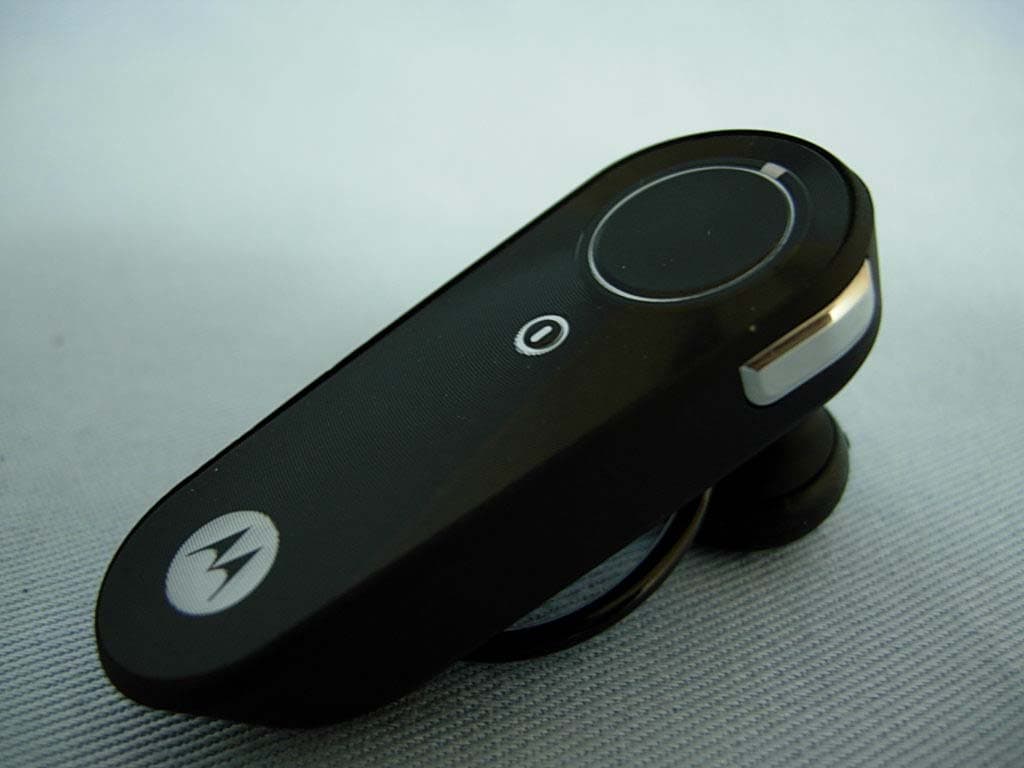
OHH-H371M
Oct 31, 2007BLUETOOTH HEADSET
Equipment Class
DSS - Part 15 Spread Spectrum Transmitter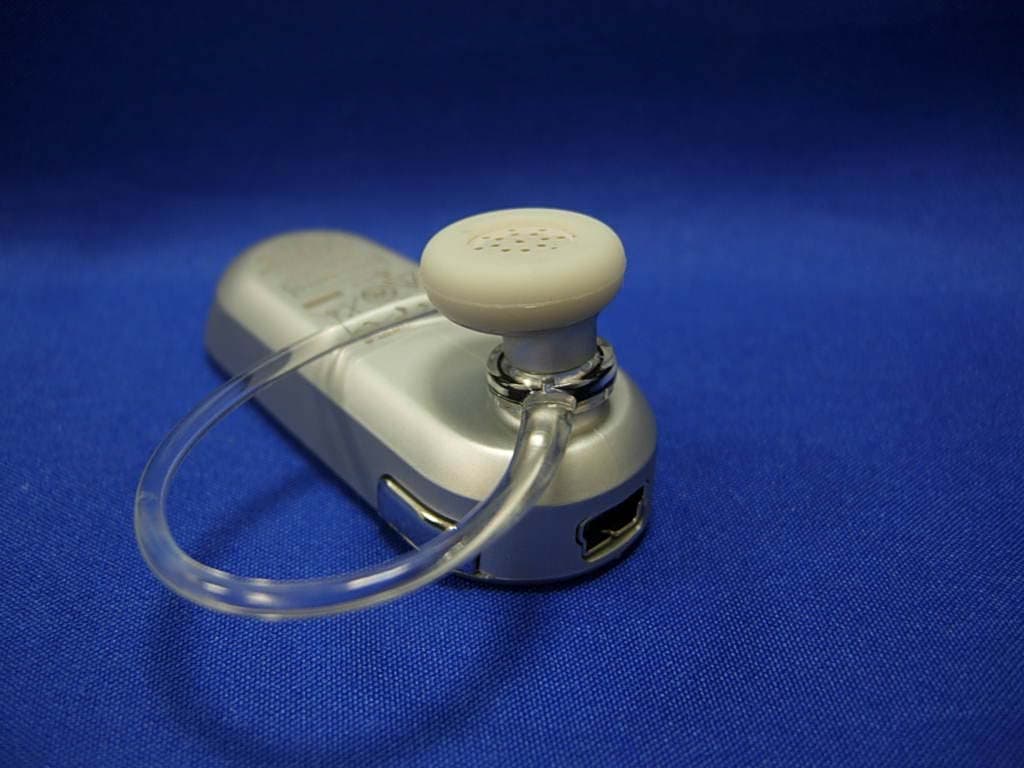
OHH-H385M
Oct 24, 2007BLUETOOTH HEADSET
Equipment Class
DSS - Part 15 Spread Spectrum Transmitter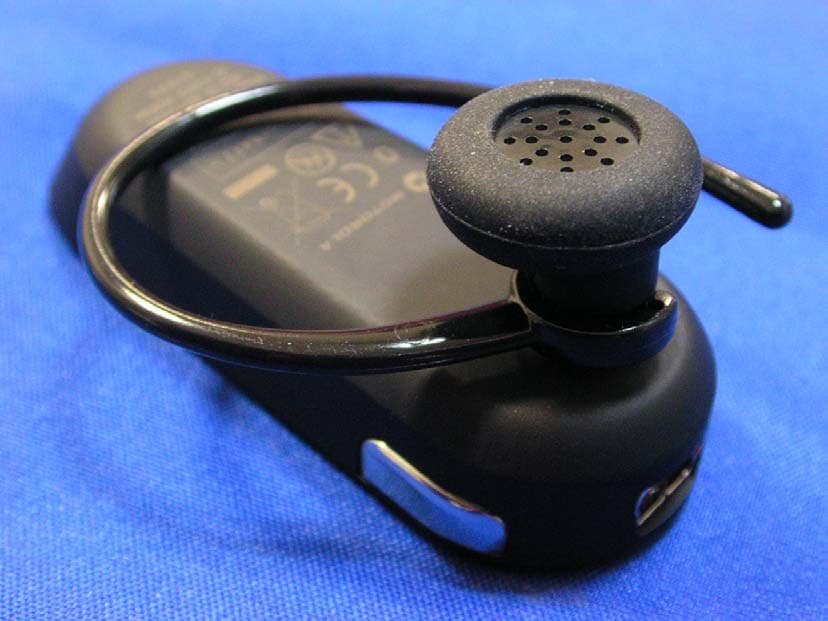
OHH-H385H
Sep 12, 2007Bluetooth Headset
Equipment Class
DSS - Part 15 Spread Spectrum Transmitter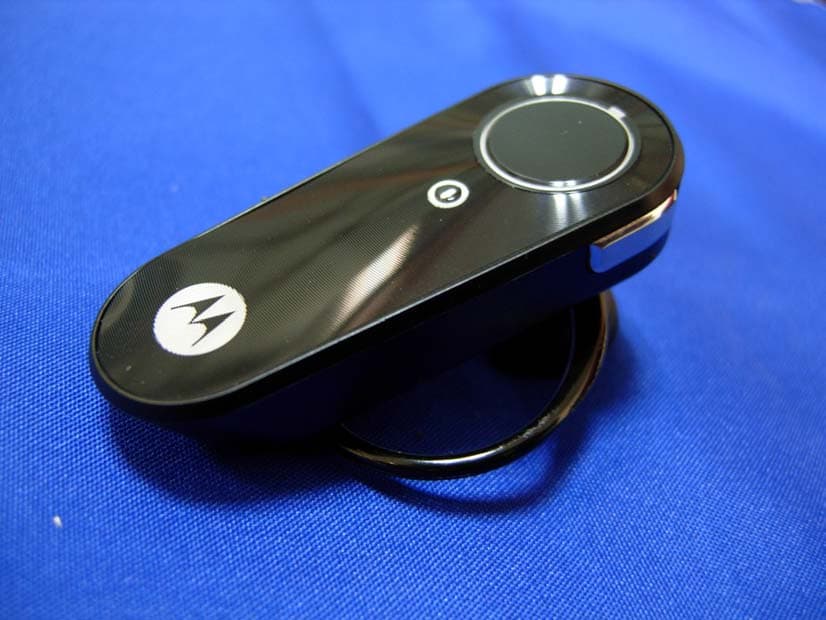
OHH-H371H
Sep 12, 2007Bluetooth Headset
Equipment Class
DSS - Part 15 Spread Spectrum Transmitter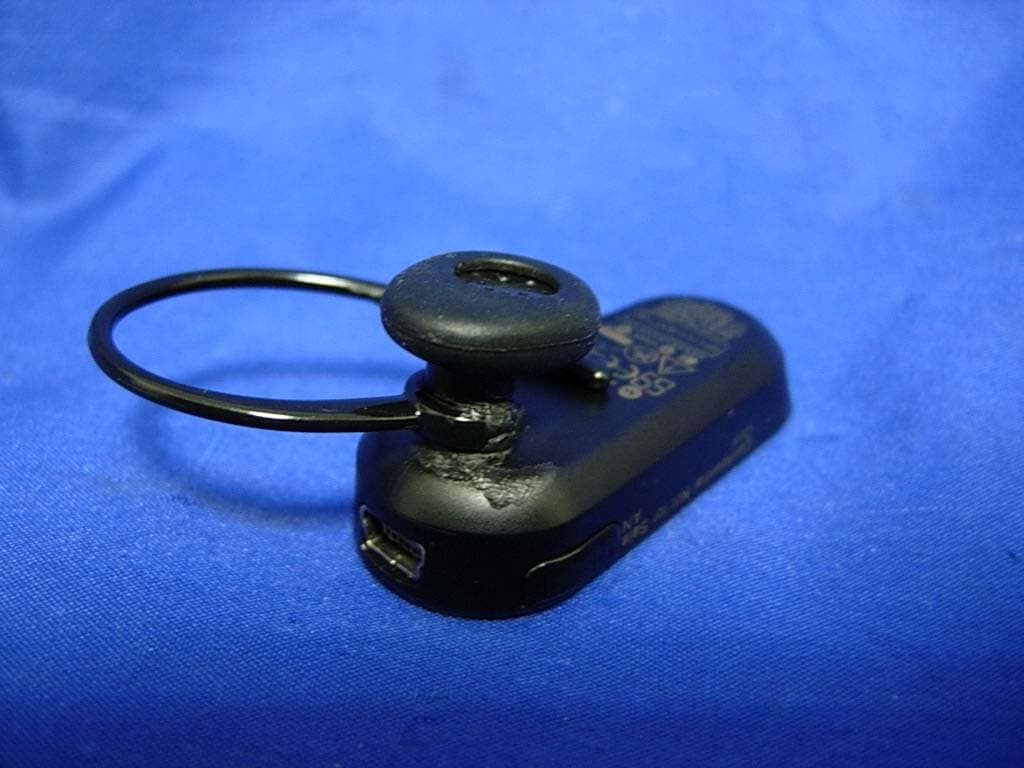
OHH-H375M
Jul 24, 2007BLUETOOTH HEADSET
Equipment Class
DSS - Part 15 Spread Spectrum Transmitter