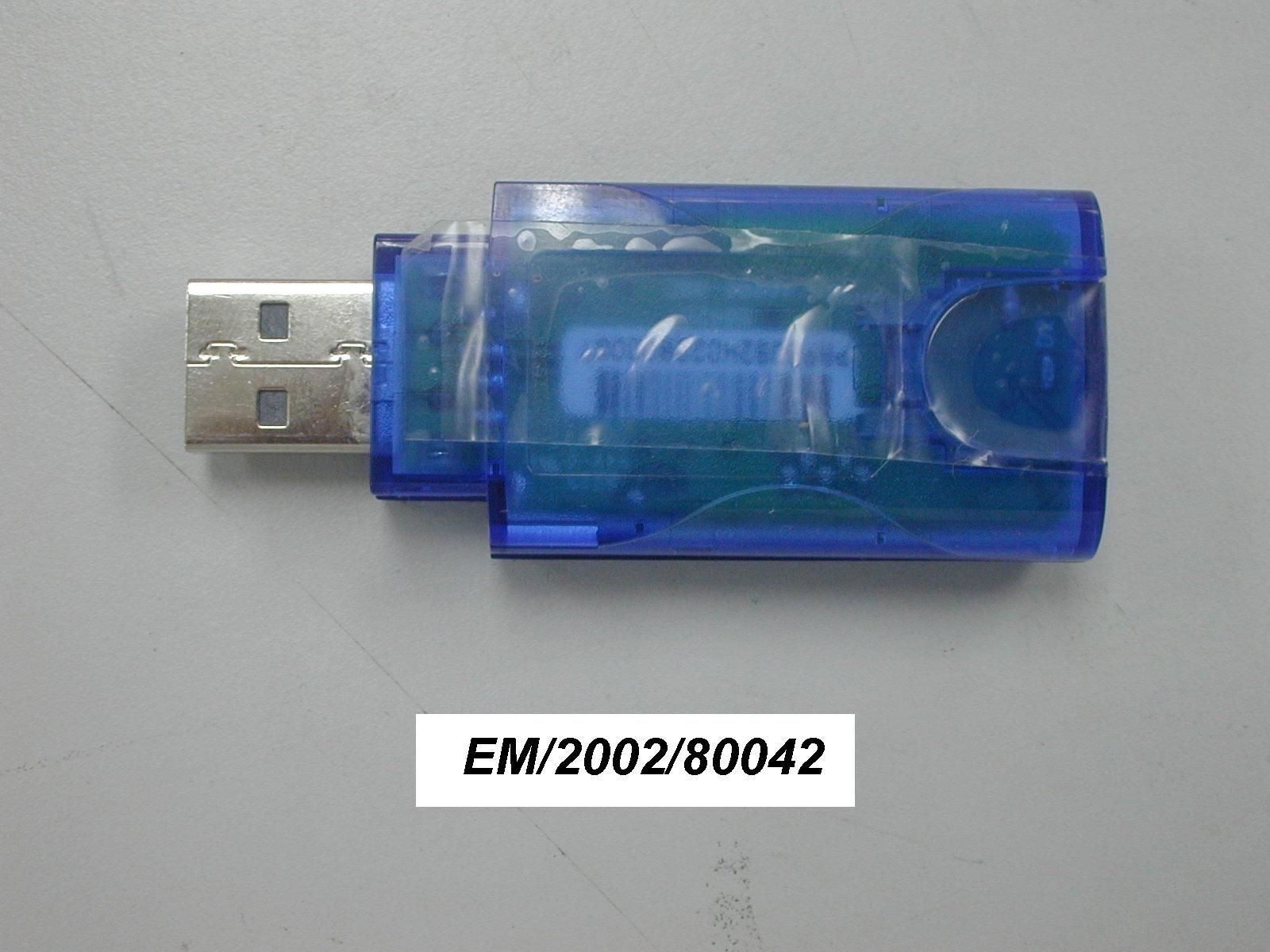
P3BB092H0Mini Bluetooth USB Dongle
Uniwill Computer Corporation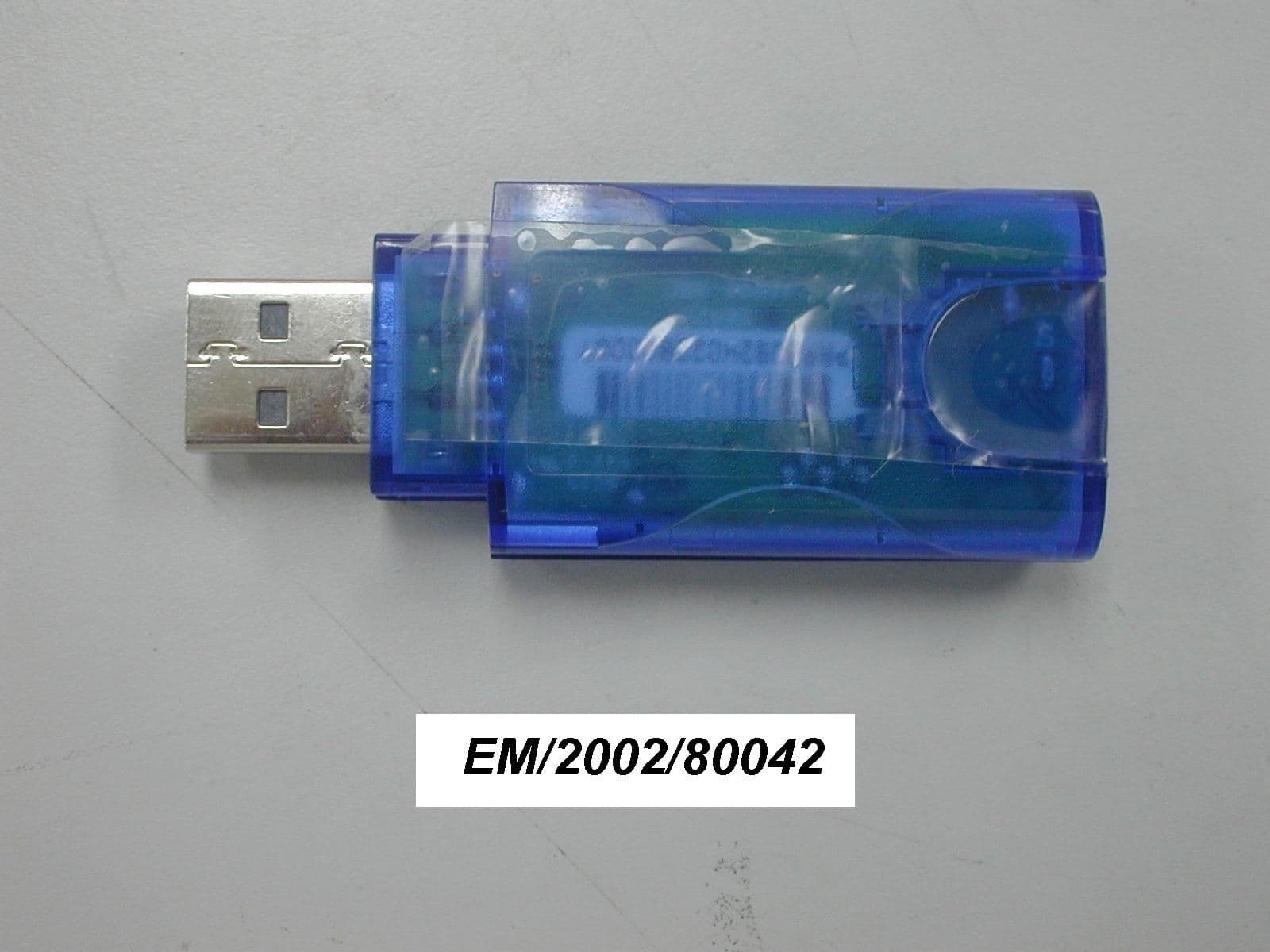
Click to zoom
Application Details
- Equipment Class
- DXX - Part 15 Low Power Communication Device Transmitter
- Date of Grant
- Oct 13, 2002
- Application Purpose
- Original Equipment
- Date of Application
- Oct 13, 2002
- Equipment Note
- Mini Bluetooth USB Dongle
- Frequency Range
- 2401.00000000 - 2480.00000000
- Company
- Uniwill Computer Corporation
- Country
- Taiwan
Documents & Files
Document Text
Text extracted from the exhibit documents filed with the FCC. Open a document above to read the original.
Users Manual
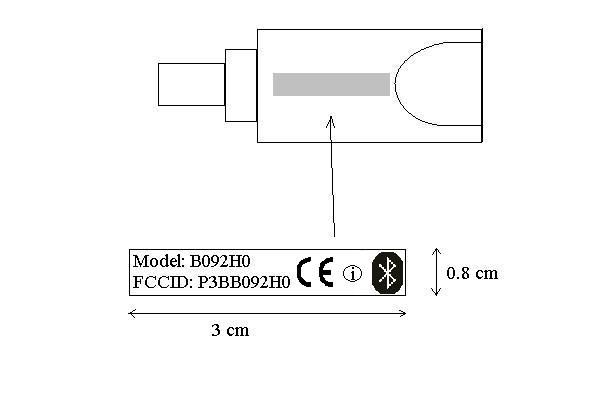
Bluetooth Wireless Home-Networking System 1 Bluetooth Wireless Home-Networking System User’s Manual Bluetooth Wireless Home-Networking System 2 Table of Contents 1. Overview............................................................ .......................................3 2. Installation of Bluetooth Wireless Home-NetworkingSystem.................................4 2.1 Software Installation............................................................ .......................4 2.2 Hardware Installation..................................................................................6 2.3 Removal of Bluetooth Wireless Home-Networking System..................................7 3. Settings for Internet Sharing Using Home IP Locator...........................................8 3.1 Start Home IP Locator................................................................................9 3.2 Setting up a computer to be a server sharing Internet with clients.....................10 3.3 Setting up a computer to be a client sharing Internet from server.......................12 3.4 Start surfing the Internet on client computers.................................................12 4. Running MiniBluelet_Pan...........................................................................13 5. Establishing a Bluetooth Wirelss Network Using MiniBluelet_Pan........................15 5.1 How to establish your first Bluetooth Wireless Network ...................................15 5.2 MiniBluelet_Pan pop-up menu and optional settings........... .............................19 6. NAP Settings Configuration..........................................................................26 6.1 Setting up NAP on the server....................... ..............................................26 6.2 NAP client computers..............................................................................26 7. Internet Sharing Concept............................................................................26 Model: B092H0 FCC ID: P3BB092H0 THIS DEVICE COMPLIES WITH PART 15 OF THE FCCRULES. OPERATIONS IS SUBJECT TO THE FOLLOWING TWO CONDITIONS: (1)THIS DEVICE MAY NOT CAUSE HARMFUL INTERFERENCE AND (2)THIS DEVICE MUST ACCEPT ANY INTERFERENCE RECEIVED, INCLUDING INTERFERENCE THAT MAY CAUSE UNDESIRED OPERATION Bluetooth Wireless Home-Networking System 3 1. Overview - Basic Concept of MiniBluelet_Pan (Personal Area Networking) This document is for providing a step-by-step guide for users to setup B091H1 USB Bluetooth Dogle. Before getting into details, we will now introduce some basic concepts about the usages of Bluetooth Wireless Home-Networking System software. MiniBluelet_Pan is basically implementing Bluetooth wireless technology for building up the personal area network, so its functions follow standards defined in Bluetooth specifications. It is a very powerful tool but with some limitations. In the following content or sub-sequent chapters, we will use the general terms client or server to represent the computer hosting Bluetooth slave or masterdevices respectively. The terms, client and server, can be commonly seen or used in technical documents for computer applications. Slave and master are frequently used in Bluetooth technical documents. For detailed definition of Bluetooth slave and master devices, please refer to Bluetooth’s official website: http://www.bluetooth.com or related official Bluetooth technical documents for more information. Also from time to time, we will use the acronym, PAN, for representing personal area network – a terminology defined in Bluetooth 1.1 specifications. 1)MiniBluelet_Pan can be installed on either desktop PC or notebook computer, please refer to the quick installation guide for system requirements. 2)The computer installed with MiniBluelet_Pan can be used as either a server or a client. 3)There can only be one server within a PAN, besides, one server can connect up to 7 clients. So there can be up to 8 computers interconnected within a PAN. 4)One server can serve seven clients for different requests concurrently. 5)Each client can only connect to one and only server. 6)The data transmission in and out of each client will slow down when the number of clients served by the server increases. This is due to the limitation of the Bluetooth specified bandwidth portioned out by connected clients respectively. 7)Due to the radio characteristics of Bluetooth technology, when the distance between the client and server is getting farther the data transmission speed will slow down respectively. 8)There could be multiple stand-alone PANs coexisting within the same environment without mutual interference . 9)Every client can join any coexistent PANs for accessing the network resources but only one at a time. 10)Once the server is shut down or disconnected from the PAN, all connections from the clients will be disconnected as well. 11)If the user wants to add one more client in the PAN, the user will only need to buy one more Bluetooth wireless Home-Networking System USB dongle. 12)The software is used to build the PAN with Bluetooth wireless Home-Networking System USB dongles. It cannot be used for other Bluetooth PAN profiles manufactured by third-party companies. 13)The software may not be compatible with the third-party companies’ software used by their Bluetooth devices. If you run into trouble using this software on your computer installed with third- party Bluetooth software, please contact our customer service representatives for assistance. Bluetooth Wireless Home-Networking System 4 2. Installation of Bluetooth Wireless Home-Networking System Before getting start, please notice the installation sequence below to ensure your smooth installation process: Step 1: Insert CD and install software Step 2: Plug USB Bluetooth Dongle into USB Port Step 3: Start software installation Step 4: Join the BlueNetwork 2.1 Software Installation 1). Insert the Bluetooth Wireless Home-Networking system utility CD and run th…
Text truncated - open the document above for the full version.
Block Diagram
Uniwill Computer Corp.
Cover Letter(s)
Federal Communication Commission Equipment Authorization Division, Application Process Branch 7435 Oakland Mills Road Columbia, MD 21048 U.S.A September 4, 2002 TO WHOM IT MAY CONCERN Pursuant to Paragraphs §0.457 and 0.459 of the Commission Rules (47 C.F.R.) and the Section §552(b)(4) of the Freedom of Information Act, Uniwill Computer Cor p. requests confidentiality for the following products: FCCID P3BB092H0 For the product stated above, we request that the following information be held confidential: 1)Electrical Schematics of the Circuitry No other items submitted as part of the equipment authorization filing process are deemed confidential. The above exhibits contain Uniwill Computer Cor p. trade secrets and proprietary information that could be of benefit to our competitors regarding the design of our usb dongle. This material is not customarily available to the general public and we request that it be withheld from public inspection. If you have any questions, please feel free to contact me. Sincerely, Jason Lin Assistant Manager E&E department , SGS Taiwan
Internal Photos
Internal Photos
Operational Description
Document update : 2002/06/20 B092H0 Dongle Design Application Product Name : Mini Bluetooth USB Dongle Product ID : B092H0 Hardwave Version : REV.A Softwave Version : 14.3 Features lWireless communication module corresponding to Bluetooth Specification V1.1 lSupport up to 7 ACL connections and 3 SCO connections lHigh sensitivity supports communications of up to 20m(Open Site) lSupports Bluetooth Class2. lBuilt-in Link controller and Link Manager Protocol. lHCI interface over USB,Compliant with USB 1.1 lBuilt-in flash memory、system clock lSize: 63mm x 26mm x 9.6mm, Weight: 12.9g Application Notebook,PCs Common physical layer specifications Operating Frequency2402 MHz to 2480 MHz Carrier Spacing1.0MHz Channel79 DuplexingTDD Symbol Rate1Mbps Binary one : Positive FrequencyTX Modulation Polarity Binary zero: Negative Frequency Fc +dF : “H”RX Data Out Polarity Fc –dF : “L” Uniwill Computer Corp.
Test Report
Repor t No.: EM/2002/80042 Page : 1 of 18 FCC TEST REPORT Equipment Under Test :Mini Bluetooth USB Dongle Model No.:B092H0 Applicant :UNIWILL COMPUTER CORP. 5F, No.9, WuChiuan Rd. , Wu Gu Ind. Park,Address of Applicant : Taipei, Taiwan, R.O.C. Standards: FCC Part 15 subpart C In the configuration tested, the EUT complied with the standards specified above. Remarks: This report details the results of the testing carried out on one sample, the results contained in this test report do not relate to other samples of the same product. The manufacturer should ensure that all products in series production are in conformity with the product sample detailed in this report. This report may only be reproduced and distributed in full. If the product in this report is used in any configuration other than that detailed in the report, the manufacturer must ensure the new system complies with all relevant standards. Any mention of SGS Taiwan EMC Services or testing done by SGS Taiwan EMC Services in connection with distribution or use of the product described in this report must be approved by SGS Taiwan EMC Services in writing. Tested by : Robert ChangDate :Aug. 26, 2002 Approved by : Jason LinDate :Aug. 27, 2002 Repor t No.: EM/2002/80042 Page : 2 of 18 Contents 1. General Information 1.1 Testing Laboratory 3 1.2 Details of Applicant 3 1.3 Description of EUT(s) 3 1.4 Operation Procedure 4 2. Summary of Results 5 3. Instruments List 6 4. Measurements 7 4.1 Conducted Limits 7 4.2 Radiated emission Limits, general requirement 10 4.3 Field Strength of emission 13 4.4 Emissions radiated outside of the specified frequency bands 14 APPENDIX Photographs of Test Setup 15-16 Photographs of EUT 17-18 Repor t No.: EM/2002/80042 Page : 3 of 18 1. Gener al Information 1.1 Testing Laboratory SGS Taiwan Ltd. ( FCC Registration number: 94644 ) 1F, No. 134, Wukung Road, Wuku industrial zone Taipei county , Taiwan , R.O.C. Telephone: +886-2-2299-3279 Fax: +886-2-2298-2698 Internet: http://www.sgs.com.tw 1.2 Details of Applicant Name: UNIWILL COMPUTER CORP. Address: 5F, No.9, WuChiuan Rd. , Wu Gu Ind. Park, Taipei, Taiwan, R.O.C. Contact: Ms. Sunny Chien Telephone: +886-2-22995668 ext. 3401 1.3 Description of EUT(s) 1Product nameMini Bluetooth USB Dongle 2Product IDB092H0 3Hardware VersionREV.A 4Software Version14.3 5Supply Voltage USB Power Supply 5V±10% 6Carrier Frequency 2400MHz to 2483.5MHz(USA,Spain,France) 7Modulation MethodGFSK,1Mbps,0.5BT Gaussian 8Hopping1600hops/sec, 1MHz channel space 9Output InterfaceUSB 10Operation Temperature0 to +60 degree 11CompliantBluetooth Specification Ver1.1 12Storage Temperature-40 to +85 degree Repor t No.: EM/2002/80042 Page : 4 of 18 1. 4 Operation Procedure Since Bluetooth is a FHSS system, it is difficult to measure the parameters under hopping mode. The output power and operating frequency are NOT End-user adjustable. Applicant offer a engineering software “BlueSuite” to control the EUT. Setting of the software parameters are set as default. Operating frequency are set as testing required. The output power is set as Ext=255, Int=40. The lowest operating frequency within Bluetooth specification is 2402Mhz, and highest operating frequency is 2480Mhz. So the frequency above are used as the lowest and highest frequency in the testing, and the middle frequency is set as 2441Mhz. Due to cable loss, the real value will equal to measured value(show on the instrument) add cable loss. Repor t No.: EM/2002/80042 Page : 5 of 18 2.Summar y of Results subclauseParameter to be measuresVerdictPage 15.207Conducted LimitsPASS7 15.209Radiated emission Limits, general requirement PASS10 15.249(a)Field Strength of emissionPASS13 15.249(d)Emissions radiated outside of the specified frequency bands PASS14 Repor t No.: EM/2002/80042 Page : 6 of 18 3. Instruments List InstrumentModelSerial numberCalibration date Desktop PCAcer Veriton 7200N/AN/A Spectrum AnalyzerAgilent 7405AUS40240202May 22, 2002 AntennaSchwarzbeck BBHA9120D A292Jan 21, 2002 AntennaSchwarzbeck VULB9163 152July 01, 2002 EMC AnalyzerHP 8594EM3624A00203Dec. 13, 2001 EMI Test ReceiverR&S ESCS 30828985/ 004Oct. 11, 2001 Transient LimiterHP 11947A3107A02062Jul. 24, 2002 L.I.S.NRolf-Heine NNB- 2/16Z 99012Oct. 08, 2001 Repor t No.: EM/2002/80042 Page : 7 of 18 4. Measur ements 4.1Conducted Limits SUBCLAUSE 15.207 Repor t No.: EM/2002/80042 Page : 8 of 18 Repor t No.: EM/2002/80042 Page : 9 of 18 Line Neutral Repor t No.: EM/2002/80042 Page : 10 of 18 4.2Radiated emission Limits, general requirement SUBCLAUSE 15.209 Part 1: 30Mhz-300Mhz Repor t No.: EM/2002/80042 Page : 11 of 18 Part2: 300Mhz- 1Ghz Repor t No.: EM/2002/80042 Page : 12 of 18 4.2.1 Limits Repor t No.: EM/2002/80042 Page : 13 of 18 4.3Field Strength of emission SUBCLAUSE 15.249(a) Transmitting Frequency: 2402Mhz Emission Frequency (Mhz) Meter Reading- H Meter Reading- V Correction factor Results (dB μ V/m) -H Results (dB μ V/m) -V 2401.97053.558.6+33.386.891.9 4803.94042.842.6+2.545.345.1 Transmitting Frequency: 2441Mhz Emission FrequencyMeter Reading- H Meter Reading- V Correction factor Results (dB μ V/m) -H Results (dB μ V/m) -V 2440.94755.060.3+33.388.393.6 4881.89442.041.8+2.744.744.5 Transmitting Frequency: 2480Mhz Emission FrequencyMeter Reading- H Meter Reading- V Correction factor Results (dB μ V/m) -H Results (dB μ V/m) -V 2479.97351.757.8+33.385.391.4 4959.94641.241.4+2.944.144.3 4.3.1Limits Repor t No.: EM/2002/80042 Page : 14 of 18 4.4Emissions radiated outside of the specified frequency bands SUBCLAUSE 15.249(d) Repor t No.: EM/2002/80042 Page : 15 of 18 4.4.1Limits Emissions radiated outside of the specified frequency bands, except for harmonics, shall be attenuated by a least 50dB below the level of fundamental or to the general radiated emission limits in Section 15.209, whichever is lesser attenuation. Repor t No.: EM/2002/80042 Page : 16 of 18 APPENDIX: Photographs of Test Setup (The photos are saved separately) Repor t No.: EM/2002/80042 Page : 17 of 18 (The …
Text truncated - open the document above for the full version.
Test Setup Photos
Photographs of Test Setup
Contact Information
Applicant
Amber Huang(Product Manager)
Test Firm
SGS Taiwan Ltd.Wyse Chiu
Technical Specifications
| # | Rule Parts | Frequency Range | Power Output |
|---|---|---|---|
| 1 | 15C | 2.40 GHz - 2.48 GHz | - |
Other Applications from Uniwill Computer Corporation
P3B755SI4
Jan 04, 2005Notebook Computer W/ 802.11b/g WLAN
Equipment Class
DTS - Digital Transmission System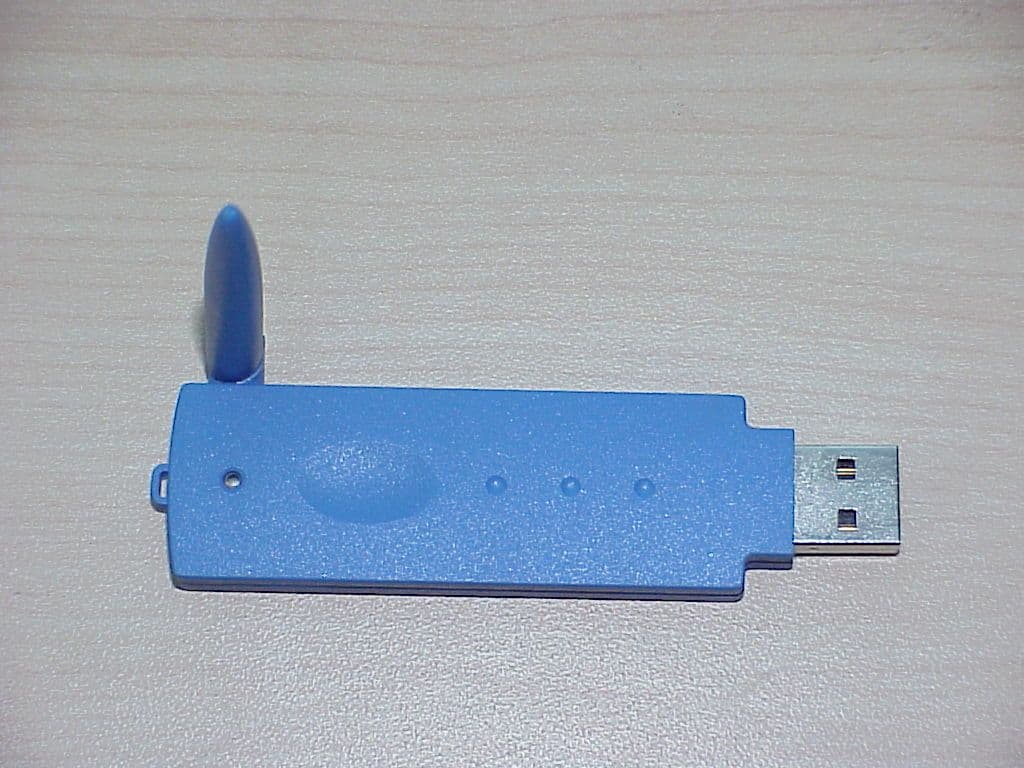
P3BB091H1
Dec 17, 2001Bluetooth USB mini Dongle
Equipment Class
DSS - Part 15 Spread Spectrum Transmitter
P3BB090H2
Dec 17, 2001Bluetooth USB Dongle
Equipment Class
DSS - Part 15 Spread Spectrum Transmitter