PKRNVWMC727Cellular/ PCS CDMA USB Modem
Inseego Corp.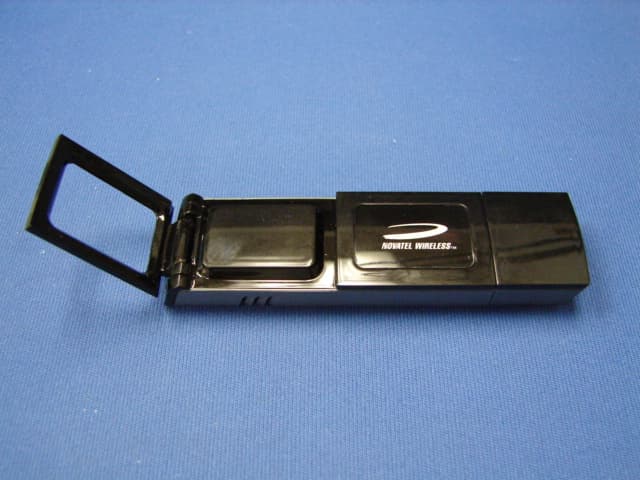
Click to zoom
Application Details
- Equipment Class
- PCB - PCS Licensed Transmitter
- Date of Grant
- Jul 24, 2007
- Application Purpose
- Original Equipment
- Date of Application
- Jul 24, 2007
- Equipment Note
- Cellular/ PCS CDMA USB Modem
- Frequency Range
- 1851.25000000 - 1908.75000000
- Company
- Inseego Corp.
- Country
- United States
Documents & Files
Document Text
Text extracted from the exhibit documents filed with the FCC. Open a document above to read the original.
Users Manual
BROADBANDACCESS / NATIONALACCESS™ USB727 M ODEM HARDWARE USER MANUAL Contents Welcome....................................................................................................................................1 Wireless communications .......................................................................................................................................... 1 Safety hazards............................................................................................................................................................ 1 Limitation of liability .................................................................................................................................................... 2 Copyright..................................................................................................................................................................... 2 Patents and licenses .................................................................................................................................................. 2 USB727 Modem Hardware: Overview.....................................................................................3 Customer Service ....................................................................................................................................................... 4 USB727 Modem System Requirements ................................................................................................................... 4 Your Verizon Wireless USB727 ................................................................................................................................ 5 Care of Your USB727 Modem................................................................................................................................... 6 The USB727 Modem Package .................................................................................................................................. 6 Supported Services.................................................................................................................................................... 6 Installation and Configuration.................................................................................................8 Basics .......................................................................................................................................................................... 8 Inserting and Removing the USB727 Modem.......................................................................................................... 9 USB727 Accessories..............................................................................................................12 How to Insert and Use the microSD Memory Card................................................................................................ 13 How to Use the Lanyard Accessory........................................................................................................................ 15 How to Use the Clip Holder and USB Cable .......................................................................................................... 16 Technical Support..................................................................................................................17 Data Technical Support........................................................................................................................................... 17 Troubleshooting.....................................................................................................................18 USB727 Modem ....................................................................................................................................................... 18 Product Specification.............................................................................................................19 Regulatory Notices.................................................................................................................20 Federal Communications Commission Notice (FCC -- United States)................................................................ 20 RF Exposure/Specific Absorption Rate (SAR) Information ................................................................................... 21 Limited Warranty and Liability..............................................................................................22 Glossary..................................................................................................................................23 Trademarks and Service Marks.............................................................................................25 USB727 Modem USER GUIDE 1 Welcome Congratulations on purchasing the Verizon Wireless USB727 Modem for BroadbandAccess and NationalAccess service! Before installing the USB727 Modem VZAccess Manager software and drivers, review this manual which outlines the features of the USB727 Modem hardware. Important: Do not plug the USB727 Modem into the Type A USB port until you have installed VZAccess Manager and have activated BroadbandAccess and NationalAccess service for your USB727 Modem. (See the VZAccess Manager User Guide for detailed instructions on installation and software features, located on the Installation CD.) This dual-band USB Modem operates over the high-speed BroadbandAccess and NationalAccess networks in the 800/1900 bands enabling you to connect at high speeds to the Internet, your corporate Intranet, and your email while you're away from the office. Wireless communications Important Notice Due to the transmission and reception properties of wireless communications, data can occasionally be lost or delayed. This can be due to the variation in radio signal strength that results from changes in the characteristics of the radio transmission path. Although data loss is rare, the environment where you operate the modem may adversely a…
Text truncated - open the document above for the full version.
Cover Letter(s)
Date: July 16, 2007 Federal Communications Commission Equipment Authorization Division, Application Processing Branch 7435 Oakland Mills Road Columbia, MD 21048 Subject: Request for Confidentiality FCC ID: PKRNVWMC727 To Whom It May Concern: In accordance with 47CFR0.459, Novatel Wireless Inc. requests confidentiality for the following items 1. MC727 BOM (Bill of Material) 2. MC727 Tuning Procedure 3. MC727 Schematics Diagrams 4. MC727 Theory of Operation and Active Components 5. MC727 Block Diagram These items contain detailed system and equipment description and related information about the product which Novatel Wireless Inc. considers to be proprietary, confidential, and a custom design which otherwise would not be released to the general public. Since this design is a basis from which future technological products will evolve, Novatel Wireless Inc. also feels that this information would be of benefit to its competitors, and that the disclosure of the information in these exhibits would give our competitors an unfair advantage in the market. Sincerely, Kwun Ho Senior Project Manager Novatel Wireless Inc. (P) 858-812-0653
Cover Letter(s)
Date: July 16, 2007 Federal Communications Commission Equipment Authorization Division, Application Processing Branch 7435 Oakland Mills Road Columbia, MD 21048 Subject: Request for Short-Term Confidentiality FCC ID: PKRNVWMC727 To Whom It May Concern: In accordance with 47CFR0.457 and 0.459, Novatel Wireless Inc. requests short-term confidentiality for the following items 1. MC727 External, Internal and Test Setup Photos 2. MC727 User’s Manual These items contain detailed system and equipment description and related information about the product which Novatel Wireless Inc. considers to be proprietary, confidential, and a custom design which otherwise would not be released to the general public. Since this design is a basis from which future technological products will evolve, Novatel Wireless Inc. also feels that this information would be of benefit to its competitors, and that the disclosure of the information in these exhibits would give our competitors an unfair advantage in the market. Sincerely, Kwun Ho Senior Project Manager Novatel Wireless Inc. (P) 858-812-0653
External Photos
MC727 Photos Figure 1: External Picture - Top Figure 2: External Pictures – Bottom with FCC ID
Internal Photos
Figure 3: Internal Picture - Top Figure 4: Internal Picture - Bottom Figure 5: Internal Bare PCB Picture - Top Figure 6: Internal Bare PCB Picture – Bottom
RF Exposure Info
Reviewed by: FCC ID: PKRNVWM727 CERTIFICATION REPORT Quality Manager Filename: Test Dates: EUT Type: 0707020673.PKR July 17, 2007 EVDO USB Wireless Modem Page 1 of 24 © 2007 PCTEST Engineering Laboratory, Inc. REV 4.2W 04/09/07 Applicant Name: Date of Testing: Novatel Wireless July 17, 2007 9645 Scranton Road, Suite 205 Test Site/Location: San Diego, CA 92121 PCTEST Lab, Columbia, MD, USA United States Test Report Serial No.: 0707020673.PKR FCC ID: PKRNVWM727 APPLICANT: NOVATEL WIRELESS EUT Type: EVDO USB Wireless Modem Application Type: Certification FCC Rule Part(s): §2.1093; FCC/OET Bulletin 65 Supplement C [July 2001] FCC Classification: PCS Licensed Transmitter (PCB) Model(s): MC727 Tx Frequency: 824.70 - 848.31 MHz (Cellular CDMA) 1851.25 - 1908.75 MHz (PCS CDMA) Conducted Power: 24.56 dBm Cellular CDMA / 24.72 dBm PCS CDMA Max. SAR Measurement: 0.602 W/kg Cellular EVDO Body SAR 0.775 W/kg PCS EVDO Body SAR Test Device Serial No.: Pre-Production [S/N: 5B102602] This wireless portable device has been shown to be capable of compliance for localized specific absorption rate (SAR) for uncontrolled environment/general population exposure limits specified in ANSI/IEEE Std. C95.1- 2005 and has been tested in accordance with the measurement procedures specified in FCC/OET Bulletin 65 Supplement C (2001) and IEEE Std. 1528-2003. I attest to the accuracy of data. All measurements reported herein were performed by me or were made under my supervision and are correct to the best of my knowledge and belief. I assume full responsibility for the completeness of these measurements and vouch for the qualifications of all persons taking them. PCTEST certifies that no party to this application has been denied the FCC benefits pursuant to Section 5301 of the Anti-Drug Abuse Act of 1988, 21 U.S.C. 862. PCTEST ENGINEERING LABORATORY, INC. 6660-B Dobbin Road, Columbia, MD 21045 USA Tel. 410.290.6652 / Fax 410.290.6554 http://www.pctestlab.com CERTIFICATE OF COMPLIANCE (SAR EVALUATION) Reviewed by: FCC ID: PKRNVWM727 CERTIFICATION REPORT Quality Manager Filename: Test Dates: EUT Type: 0707020673.PKR July 17, 2007 EVDO USB Wireless Modem Page 2 of 24 © 2007 PCTEST Engineering Laboratory, Inc. REV 4.2W 04/09/07 TABLE OF CONTENTS 1 INTRODUCTION....................................................................................................................3 2 TEST SITE LOCATION...........................................................................................................4 3 SAR MEASUREMENT SETUP................................................................................................5 4 DASY E-FIELD PROBE SYSTEM............................................................................................7 5 PROBE CALIBRATION PROCESS..........................................................................................8 6 PHANTOM AND EQUIVALENT TISSUES................................................................................9 7 DOSIMETRIC ASSESSMENT & PHANTOM SPECS..............................................................10 8 TEST CONFIGURATION POSITIONS...................................................................................11 9 FCC 3G MEASUREMENT PROCEDURES – JUNE 2006.......................................................14 10 ANSI/IEEE C95.1-2005 RF EXPOSURE LIMITS....................................................................16 11 MEASUREMENT UNCERTAINTIES......................................................................................17 12 SYSTEM VERIFICATION......................................................................................................18 13 SAR DATA SUMMARY.........................................................................................................19 14 EQUIPMENT LIST................................................................................................................21 15 CONCLUSION.....................................................................................................................22 16 REFERENCES.....................................................................................................................23 Reviewed by: FCC ID: PKRNVWM727 CERTIFICATION REPORT Quality Manager Filename: Test Dates: EUT Type: 0707020673.PKR July 17, 2007 EVDO USB Wireless Modem Page 3 of 24 © 2007 PCTEST Engineering Laboratory, Inc. REV 4.2W 04/09/07 1 INTRODUCTION The FCC has adopted the guidelines for evaluating the environmental effects of radio frequency (RF) radiation in ET Docket 93-62 on Aug. 6, 1996 to protect the public and workers from the potential hazards of RF emissions due to FCC-regulated portable devices.[1] The safety limits used for the environmental evaluation measurements are based on the criteria published by the American National Standards Institute (ANSI) for localized specific absorption rate (SAR) in IEEE/ANSI C95.1-2005 Standard for Safety Levels with Respect to Human Exposure to Radio Frequency Electromagnetic Fields, 3 kHz to 300 GHz ©2005 by the Institute of Electrical and Electronics Engineers, Inc., New York, New York 10017.[2] The measurement procedure described in IEEE/ANSI C95.3-2002 Recommended Practice for the Measurement of Potentially Hazardous Electromagnetic Fields - RF and Microwave [3] is used for guidance in measuring the Specific Absorption Rate (SAR) due to the RF radiation exposure from the Equipment Under Test (EUT). These criteria for SAR evaluation are similar to those recommended by the International Committee for Non-Ionizing Radiation Protection (ICNIRP) in Biological Effects and Exposure Criteria for Radiofrequency Electromagnetic Fields,” Report No. Vol 74. SAR is a measure of the rate of energy absorption due to exposure to an RF transmitting source. SAR values have been related to threshold levels for potential biological hazards. 1.1 SAR Definition Specific Absorption Rate is defined as the time derivative (rate) of the incremental energy (dU) abso…
Text truncated - open the document above for the full version.
RF Exposure Info
APPENDIX A: SAR TEST DATA PCTEST ENGINEERING LABORATORY, INC. DUT: MC727; Type: Wireless USB Modem with Compaq Notebook PC; ESN:5B102602 Communication System: Cellular CDMA; Frequency: 836.52 MHz;Duty Cycle: 1:1 Medium: 835 Muscle (σ = 0.95 mho/m, ε r = 55.34, ρ = 1000 kg/m 3 ) Phantom section: Flat Section; Space: 1.7 cm from DUT to Flat Phantom Test Date: 07-17-2007; Ambient Temp: 23.8°C; Tissue Temp: 21.6°C Probe: EX3DV4 - SN3561; ConvF(7.92, 7.92, 7.92); Calibrated: 11/23/2006 Sensor-Surface: 3mm (Mechanical Surface Detection) Electronics: DAE4 Sn649; Calibrated: 1/23/2007 Phantom: SAM Main; Type: SAM 4.0; Serial: TP-1114 Measurement SW: DASY4, V4.7 Build 53; Postprocessing SW: SEMCAD, V1.8 Build 172 Mode: Cellular EVDO Rev.0, RTAP, Laptop Position, Mid Ch. Antenna Up Area Scan (9x18x1): Measurement grid: dx=15mm, dy=15mm Zoom Scan (5x5x7)/Cube 0: Measurement grid: dx=8mm, dy=8mm, dz=5mm Reference Value = 26.4 V/m Peak SAR (extrapolated) = 0.827 W/kg SAR(1 g) = 0.602 mW/g; SAR(10 g) = 0.419 mW/g 0 dB = 0.693mW/g PCTEST ENGINEERING LABORATORY, INC. DUT: MC727; Type: Wireless USB Modem with Compaq Notebook PC; ESN:5B102602 Communication System: PCS CDMA; Frequency: 1880 MHz;Duty Cycle: 1:1 Medium: 1900 Muscle ( σ = 1.52 mho/m, ε r = 53.68, ρ = 1000 kg/m 3 ) Phantom section: Flat Section; Space: 1.7 cm from DUT to Flat Phantom Test Date: 07-17-2007; Ambient Temp: 23.8°C; Tissue Temp: 21.6°C Probe: EX3DV4 - SN3561; ConvF(6.47, 6.47, 6.47); Calibrated: 11/23/2006 Sensor-Surface: 3mm (Mechanical Surface Detection) Electronics: DAE4 Sn649; Calibrated: 1/23/2007 Phantom: SAM Sub; Type: SAM 4.0; Serial: TP-1357 Measurement SW: DASY4, V4.7 Build 53; Postprocessing SW: SEMCAD, V1.8 Build 172 Mode: PCS EVDO Rev. 0 RTAP, Laptop Position, Mid ch. Antenna Up Area Scan (9x18x1): Measurement grid: dx=15mm, dy=15mm Zoom Scan (5x5x7)/Cube 0: Measurement grid: dx=8mm, dy=8mm, dz=5mm Reference Value = 19.1 V/m Peak SAR (extrapolated) = 1.12 W/kg SAR(1 g) = 0.673 mW/g; SAR(10 g) = 0.409 mW/g 0 dB = 0.809mW/g PCTEST ENGINEERING LABORATORY, INC. DUT: MC727; Type: Wireless USB Modem with Toshiba Notebook PC; ESN:5B102602 Communication System: Cellular CDMA; Frequency: 836.52 MHz;Duty Cycle: 1:1 Medium: 835 Muscle ( σ = 0.95 mho/m, ε r = 55.34, ρ = 1000 kg/m 3 ) Phantom section: Flat Section; Space: 1.4 cm from DUT to Flat Phantom Test Date: 07-17-2007; Ambient Temp: 23.8°C; Tissue Temp: 21.6°C Probe: EX3DV4 - SN3561; ConvF(7.92, 7.92, 7.92); Calibrated: 11/23/2006 Sensor-Surface: 3mm (Mechanical Surface Detection) Electronics: DAE4 Sn649; Calibrated: 1/23/2007 Phantom: SAM Main; Type: SAM 4.0; Serial: TP-1114 Measurement SW: DASY4, V4.7 Build 53; Postprocessing SW: SEMCAD, V1.8 Build 172 Mode: Cellular EVDO Rev. 0 RTAP, Laptop Position, Mid.ch, Antenna Up Area Scan (9x18x1): Measurement grid: dx=15mm, dy=15mm Zoom Scan (7x7x7)/Cube 0: Measurement grid: dx=5mm, dy=5mm, dz=5mm Reference Value = 10.7 V/m Peak SAR (extrapolated) = 0.521 W/kg SAR(1 g) = 0.372 mW/g; SAR(10 g) = 0.262 mW/g 0 dB = 0.399mW/g PCTEST ENGINEERING LABORATORY, INC. DUT: MC727; Type: Wireless USB Modem with Toshiba Notebook PC; ESN:5B102602 Communication System: PCS CDMA; Frequency: 1880 MHz;Duty Cycle: 1:1 Medium: 1900 Muscle ( σ = 1.52 mho/m, ε r = 53.68, ρ = 1000 kg/m 3 ) Phantom section: Flat Section; Space: 1.4 cm from DUT to Flat Phantom Test Date: 07-17-2007; Ambient Temp: 23.8°C; Tissue Temp: 21.6°C Probe: EX3DV4 - SN3561; ConvF(6.47, 6.47, 6.47); Calibrated: 11/23/2006 Sensor-Surface: 3mm (Mechanical Surface Detection) Electronics: DAE4 Sn649; Calibrated: 1/23/2007 Phantom: SAM Sub; Type: SAM 4.0; Serial: TP-1357 Measurement SW: DASY4, V4.7 Build 53; Postprocessing SW: SEMCAD, V1.8 Build 172 Mode: PCS EVDO Rev. 0 RTAP, Laptop Position, Mid.ch, Antenna Up Area Scan (9x18x1): Measurement grid: dx=15mm, dy=15mm Zoom Scan (5x5x7)/Cube 0: Measurement grid: dx=8mm, dy=8mm, dz=5mm Reference Value = 23.9 V/m Peak SAR (extrapolated) = 1.30 W/kg SAR(1 g) = 0.775 mW/g; SAR(10 g) = 0.449 mW/g 0 dB = 0.943mW/g PCTEST ENGINEERING LABORATORY, INC. DUT: MC727; Type: Wireless USB Modem with HP Notebook PC; ESN:5B102602 Communication System: Cellular CDMA; Frequency: 836.52 MHz;Duty Cycle: 1:1 Medium: 835 Muscle ( σ = 0.95 mho/m, ε r = 55.34, ρ = 1000 kg/m 3 ) Phantom section: Flat Section; Space: 2.4 cm from DUT to Flat Phantom Test Date: 07-17-2007; Ambient Temp: 23.8°C; Tissue Temp: 21.6°C Probe: EX3DV4 - SN3561; ConvF(7.92, 7.92, 7.92); Calibrated: 11/23/2006 Sensor-Surface: 3mm (Mechanical Surface Detection) Electronics: DAE4 Sn649; Calibrated: 1/23/2007 Phantom: SAM Main; Type: SAM 4.0; Serial: TP-1114 Measurement SW: DASY4, V4.7 Build 53; Postprocessing SW: SEMCAD, V1.8 Build 172 Mode: Cellular EVDO Rev. 0 RTAP, Laptop Position, Mid.ch, Antenna Up Area Scan (9x19x1): Measurement grid: dx=15mm, dy=15mm Zoom Scan (7x7x7)/Cube 0: Measurement grid: dx=5mm, dy=5mm, dz=5mm Reference Value = 8.53 V/m Peak SAR (extrapolated) = 0.194 W/kg SAR(1 g) = 0.150 mW/g; SAR(10 g) = 0.106 mW/g 0 dB = 0.162mW/g PCTEST ENGINEERING LABORATORY, INC. DUT: MC727; Type: Wireless USB Modem with HP Notebook PC; ESN:5B102602 Communication System: PCS CDMA; Frequency: 1880 MHz;Duty Cycle: 1:1 Medium: 1900 Muscle ( σ = 1.52 mho/m, ε r = 53.68, ρ = 1000 kg/m 3 ) Phantom section: Flat Section; Space: 2.4 cm from DUT to Flat Phantom Test Date: 07-17-2007; Ambient Temp: 23.8°C; Tissue Temp: 21.6°C Probe: EX3DV4 - SN3561; ConvF(6.47, 6.47, 6.47); Calibrated: 11/23/2006 Sensor-Surface: 3mm (Mechanical Surface Detection) Electronics: DAE4 Sn649; Calibrated: 1/23/2007 Phantom: SAM Sub; Type: SAM 4.0; Serial: TP-1357 Measurement SW: DASY4, V4.7 Build 53; Postprocessing SW: SEMCAD, V1.8 Build 172 Mode: PCS EVDO Rev. 0 RTAP, Laptop Position, Mid.ch, Antenna Up Area Scan (9x19x1): Measurement grid: dx=15mm, dy=15mm Zoom Scan (7x7x7)/Cube 0: Measurement grid: dx=5mm, dy=5mm, dz=5mm Reference Value = 5.65 V/m Peak SAR (extrapolated) = 0.367 W/kg SAR(1 g) = 0.208 mW/g; SAR(10 g) = 0.125…
Text truncated - open the document above for the full version.
RF Exposure Info
Reviewed by: FCC ID: PKRNVWMC727 MAXIMUM PERMISSIBLE EXPOSURE (MPE) EVALUATION Quality Manager Test Report S/N: Test Dates: EUT Type: 0707020675.PKR July 18, 2007 Cellular/PCS CDMA Wireless USB Modem Page 1 of 7 © 2007 PCTEST Engineering Laboratory, Inc. REV 3.0MPE 03/09/07 Applicant Name: Date of Testing: Novatel Wireless Inc. July 18, 2007 9645 Scranton Road, Suite 205 Test Site/Location: San Diego, CA 92121-3030 PCTEST Lab, Columbia, MD, USA United States Test Report Serial No.: 0707020675.PKR FCC ID: PKRNVWMC727 APPLICANT: Novatel Wireless Inc. EUT Type: Cellular/PCS CDMA Wireless USB Modem FCC Rule Part(s): FCC Part 1 (§1.1310) and Part 2 (§2.1091) FCC Classification: PCS Licensed Transmitter (PCB) Test Procedure: OET Bulletin 65 The device bearing the FCC Identifier specified above has been shown to comply with the applicable technical standards as indicated in the measurement report and has been tested in accordance with the measurement procedures specified in FCC OET Bulletin 65 (See Test Report). These measurements were performed with no deviation from the standards. I authorize and attest to the accuracy of data. All measurements reported herein were performed by me or were made under my supervision and are correct to the best of my knowledge and belief. I assume full responsibility for the completeness of these measurements and vouch for the qualifications of all persons taking them. NVLAP accreditation does not constitute any product endorsement by NVLAP or any agency of the United States Government. PCTEST certifies that no party to this application has been denied the FCC benefits pursuant to Section 5301 of the Anti-Drug Abuse Act of 1988, 21 U.S.C. 862. PCTEST ENGINEERING LABORATORY, INC. 6660-B Dobbin Road, Columbia, MD 21045 USA Tel. 410.290.6652 / Fax 410.290.6554 http://www.pctestlab.com RF EXPOSURE EVALUATION (MAXIMUM PERMISSIBLE EXPOSURE) Reviewed by: FCC ID: PKRNVWMC727 MAXIMUM PERMISSIBLE EXPOSURE (MPE) EVALUATION Quality Manager Test Report S/N: Test Dates: EUT Type: 0707020675.PKR July 18, 2007 Cellular/PCS CDMA Wireless USB Modem Page 2 of 7 © 2007 PCTEST Engineering Laboratory, Inc. REV 3.0MPE 03/09/07 TABLE OF CONTENTS 1.0 RF EXPOSURE EVALUATION – MAXIMUM PERMISSIBLE EXPOSURE (MPE) .........................3 1.1 INTRODUCTION ................................................................................................................................... 3 1.2 EUT DESCRIPTION .............................................................................................................................. 3 1.3 MPE REQUIREMENTS OVERVIEW..................................................................................................... 4 1.4 PROCEDURE........................................................................................................................................ 5 1.5 SUMMARY OF RESULTS ..................................................................................................................... 6 2.0 CONCLUSION..................................................................................................................................7 Reviewed by: FCC ID: PKRNVWMC727 MAXIMUM PERMISSIBLE EXPOSURE (MPE) EVALUATION Quality Manager Test Report S/N: Test Dates: EUT Type: 0707020675.PKR July 18, 2007 Cellular/PCS CDMA Wireless USB Modem Page 3 of 7 © 2007 PCTEST Engineering Laboratory, Inc. REV 3.0MPE 03/09/07 1.0 RF EXPOSURE EVALUATION – MAXIMUM PERMISSIBLE EXPOSURE (MPE) 1.1 Introduction This document is prepared on behalf of Novatel Wireless Inc. to show compliance with the RF Exposure requirements as required in §1.1310 of the FCC Rules and Regulations and RSS-102 of Industry Canada. The limit for Maximum Permissible Exposure (MPE), specified in FCC §1.1310, is listed in Table 1-1. According to FCC §1.1310 and RSS-102: the criteria listed in the following table shall be used to evaluate the environmental impact of human exposure to radio-frequency (RF) radiation as specified in §1.1307(b). Frequency Range (MHz) Electric Field Strength (V/m) Magnetic Field Strength (A/m) Power Density (mW/cm 2 ) Average Time (Minutes) (A) Limits For Occupational / Control Exposures (f = frequency) 30-300 61.4 0.163 1.0 6 300-1500 ... ... f/300 6 1500-100,000 ... ... 5.0 6 (B) Limits For General Population / Uncontrolled Exposure (f = frequency) 30-300 27.5 0.073 0.2 30 300-1500 ... ... f/1500 30 1500-100,000 ... ... 1.0 30 Table 1-1. Limits for Maximum Permissible Exposure (MPE) 1.2 EUT Description EUT: Model: MC727 Grantee: Novatel Wireless Inc. EUT Type: Cellular/PCS CDMA Wireless USB Modem FCC ID: PKRNVWMC727 The setup is comprised of a notebook computer connected to the Cellular/PCS CDMA Wireless USB Modem through a male-to-female USB cable. The EUT was placed into the provided holder which was placed on the top edge of the notebooks lid. This configuration provides a greater than 20cm separation for mobile device criterion. Reviewed by: FCC ID: PKRNVWMC727 MAXIMUM PERMISSIBLE EXPOSURE (MPE) EVALUATION Quality Manager Test Report S/N: Test Dates: EUT Type: 0707020675.PKR July 18, 2007 Cellular/PCS CDMA Wireless USB Modem Page 4 of 7 © 2007 PCTEST Engineering Laboratory, Inc. REV 3.0MPE 03/09/07 1.3 MPE Requirements Overview Three different categories of transmitters are defined by the FCC in OET Bulletin 65. These categories are fixed installation, mobile, and portable and are defined as follows: o Fixed Installations: fixed location means that the device, including its antenna, is physically secured at a permanent location and is not able to be easily moved to another location. Additionally, distance to humans from the antenna is maintained to at least 2 meters. o Mobile Devices: a mobile device is defined as a transmitting device designed to be used in other than fixed locations and to be generally used in such a way that a separation distance of at least 20 centimeters is normally maintained between the transmitter's radiating structures and…
Text truncated - open the document above for the full version.
Test Report
Reviewed by: FCC ID: PKRNVWMC727 FCC Pt. 22/24 CDMA / EvDO MEASUREMENT REPORT (CERTIFICATION) Quality Manager Test Report S/N: Test Dates: EUT Type: 0707020672.PKR July 17, 2007 Cellular/PCS CDMA Wireless USB Modem with EvDO Page 1 of 35 © 2007 PCTEST Engineering Laboratory, Inc. REV 6.5C 05/24/07 Applicant Name: Date of Testing: Novatel Wireless Inc. July 17, 2007 9645 Scranton Road, Suite 205 Test Site/Location: San Diego, CA 92121-3030 PCTEST Lab., Columbia, MD, USA United States Test Report Serial No.: 0707020672.PKR FCC ID: PKRNVWMC727 APPLICANT: NOVATEL WIRELESS INC. Application Type: Certification FCC Classification: PCS Licensed Transmitter (PCB) FCC Rule Part(s): §2; §22(H), §24(E) EUT Type: Cellular/PCS CDMA Wireless USB Modem with EvDO Model(s): MC727 Tx Frequency Range: 824.70 - 848.31MHz (Cell. CDMA) / 1851.25 - 1908.75MHz (PCS CDMA) Max. RF Output Power: 0.243 W ERP Cell. CDMA (23.85 dBm) 0.655 W EIRP PCS CDMA (28.16 dBm) Emission Designator(s): 1M26F9W (CDMA) / 1M27F9W (PCS) Test Device Serial No.: identical prototype [S/N: 5B102603] This equipment has been shown to be capable of compliance with the applicable technical standards as indicated in the measurement report and was tested in accordance with the measurement procedures specified in §2.947. I attest to the accuracy of data. All measurements reported herein were performed by me or were made under my supervision and are correct to the best of my knowledge and belief. I assume full responsibility for the completeness of these measurements and vouch for the qualifications of all persons taking them. Grant Conditions: Power output listed is ERP for Part 22 and EIRP for Part 24. PCTEST certifies that no party to this application has been denied the FCC benefits pursuant to Section 5301 of the Anti-Drug Abuse Act of 1988, 21 U.S.C. 862. PCTEST ENGINEERING LABORATORY, INC. 6660-B Dobbin Road, Columbia, MD 21045 USA Tel. 410.290.6652 / Fax 410.290.6554 http://www.pctestlab.com CERTIFICATE OF COMPLIANCE FCC Part 22 & 24 Certification Reviewed by: FCC ID: PKRNVWMC727 FCC Pt. 22/24 CDMA / EvDO MEASUREMENT REPORT (CERTIFICATION) Quality Manager Test Report S/N: Test Dates: EUT Type: 0707020672.PKR July 17, 2007 Cellular/PCS CDMA Wireless USB Modem with EvDO Page 2 of 35 © 2007 PCTEST Engineering Laboratory, Inc. REV 6.5C 05/24/07 TABLE OF CONTENTS FCC PART 22 & 24 MEASUREMENT REPORT...........................................................................3 1.0 INTRODUCTION ..............................................................................................................................4 1.1 MEASUREMENT PROCEDURE......................................................................................................... 4 1.2 SCOPE ................................................................................................................................................ 4 1.3 TESTING FACILITY............................................................................................................................. 4 2.0 PRODUCT INFORMATION..............................................................................................................5 2.1 EQUIPMENT DESCRIPTION .............................................................................................................. 5 2.2 EMI SUPPRESSION DEVICE(S)/MODIFICATIONS ........................................................................... 5 2.3 LABELING REQUIREMENTS..........................................................…
Text truncated - open the document above for the full version.
Contact Information
Applicant
Roman Olmos(Sr. Staff Regulatory Engineer)
Technical Contact
PCTEST Engineering Laboratory, Inc.Randy Ortanez
[email protected]410-290-6652
6660-B Dobbin Road · Columbia, Maryland · United States
Test Firm
PCTEST Engineering Laboratory, Inc.Randy Ortanez
Technical Specifications
| # | Rule Parts | Frequency Range | Power Output | Emission | Tolerance |
|---|---|---|---|---|---|
| 2 | 24E | 1.85 GHz - 1.91 GHz | 655.00 mW | 1M27F9W | 2.5 ppm |
Other Applications from Inseego Corp.
PKRISGM4330
Jun 18, 2026Wireless Portable Hotspot
Equipment Class
CBE - Citizens Band End User DevicesPKRISGM4010
Jan 30, 2026Wireless Hotspot
Equipment Class
JBP - Part 15 Class B Computing Device Peripheral
PKRISGM3000D
Dec 21, 2022Wireless Hotspot
Equipment Class
NII - Unlicensed National Information Infrastructure TXPKRISGM3100
Jul 24, 2022Wireless Hotspot
Equipment Class
5GM - Part 30 Mobile TransmitterPKRISGM3000A
Jul 24, 2022Wireless Hotspot
Equipment Class
DTS - Digital Transmission System