PQHCU410Single-Mode Cellular CDMA Phone
Langchao LG (YANTAI) Digital Mobile Technology Research & Development Co., Ltd.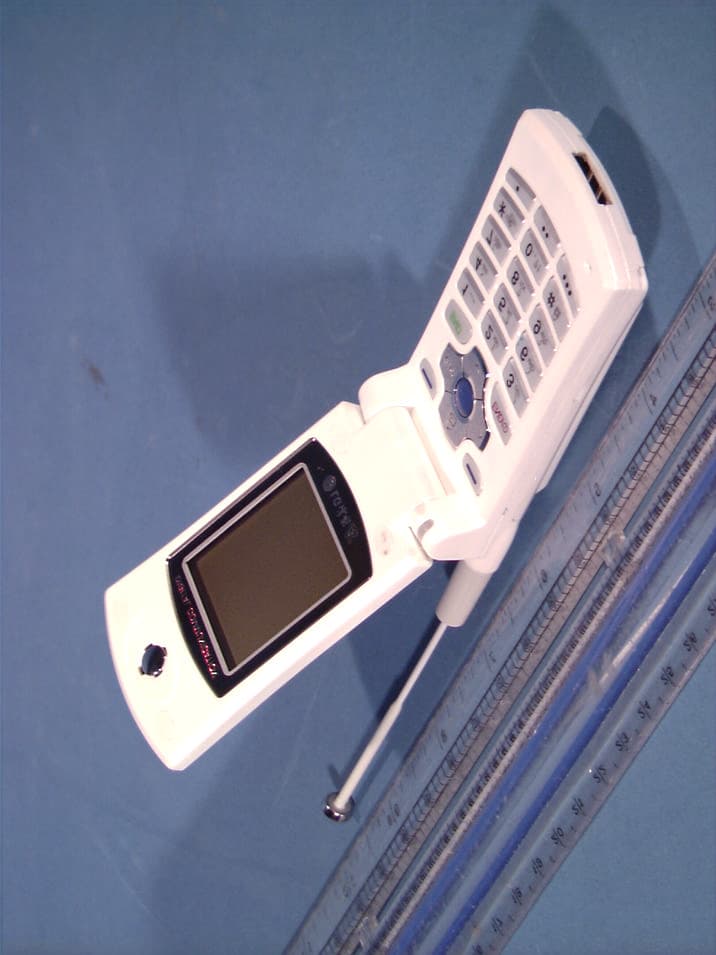
Click to zoom
Application Details
- Equipment Class
- TNE - Licensed Non-Broadcast Transmitter Held to Ear
- Date of Grant
- Dec 20, 2001
- Application Purpose
- Original Equipment
- Date of Application
- Nov 18, 2001
- Equipment Note
- Single-Mode Cellular CDMA Phone
- Frequency Range
- 824.70000000 - 848.31000000
- Country
- China
Documents & Files
Document Text
Text extracted from the exhibit documents filed with the FCC. Open a document above to read the original.
Users Manual
Langchao LG (YANTAI) Digital Mobile Technology R&D Co., Ltd Oct 16. 2001 1/24 CU410 User’s Manual For more information about RF exposure, please visit the FCC website at www.fcc.gov FCC RF EXPOSURE INFORMATION In August 1996 the Federal Communications Commission (FCC) of the United States with its action in Report and Order FCC 96-326 adopted an updated safety standard for human exposure to radio frequency electromagnetic energy emitted by FCC regulated transmitters. Those guidelines are consistent with the safety standard previously set by both U.S. and international standards bodies. The design of this phone complies with the FCC guidelines and these international standards. Use only the supplied or an approved antenna. Unauthorized antennas, modifications, or attachments could impair call quality, damage the phone, or result in violation of FCC regulations. Do not use the phone with a damaged antenna. If a damaged antenna comes into contact with the skin, a minor burn may result. Please contact your local dealer for replacement antenna. Body-worn Operation This device was tested for typical body-worn operations with the back of the phone kept 1.0 cm. from the body. To maintain compliance with FCC RF exposure requirements, use only belt-clips, holsters or similar accessories that maintain a 1.0 cm. separation distance between the user’s body and the back of the phone, including the antenna, whether extended or retracted. The use of third-party belt-clips, holsters and similar accessories should not contain metallic components in its assembly. The use of accessories that do not satisfy these requirements may not comply with FCC RF exposure requirements, and should be avoided. WARNING! Read this information before using your phone Langchao LG (YANTAI) Digital Mobile Technology R&D Co., Ltd Oct 16, 2001 1/24 Introduction Highlights Congratulations on your purchase of the “CU410” cellular phone that been designed to operate with the latest digital mobile communication technology, code division multiple access (CDMA). - Large, easy-to-read, backlight LCD with status icons. - Paging, Messaging, Voice mail and Caller ID capability. - 24-button keypad, Front 1 key. - Long battery standby and talk times. - Menu-driven interface with prompts for easy operation and configuration. - auto redialing, one-touch and speed dialing with 200 memory locations. - Optional accessories. - Front LCD - CMX(supporting the midi file) - Avatar(making the idle character and the phone character) Chapter 1. Getting Started You have just purchased the “CU410” cellular phone, and we are sure you must be anxious to call someone. Just a moment ! You will get much more enjoyment and use, if you take a moment to check the contents of this manual so that you can recognize and be familiar with the basic parts, functions of the buttons, and the LCD display screen. Do not connect the personal Handsfree kit to handsets because it causes unnecessary battery reduction. Phone Overview Lamp: The red light goes on when you use the power key to turn on the phone and when there are incoming calls and messages. END: When turning power on/off. This key disconnects a call. Using this key, you can also exit out of a menu back to the phone’s standby display without changing the setting. SEND: When making/receiving a call. Soft Key 1: Used to display the function setting menu. Soft Key 2: Used to search through the stored phone numbers and select the function. Up Navigation: When search a character/voice message and scroll through menu items Langchao LG (YANTAI) Digital Mobile Technology R&D Co., Ltd Oct 16. 2001 2/24 vertically. Down Navigation: When search today schedules and scroll through menu items vertically. Left Navigation(<) : Used to connect Internet service and scroll through menu items horizontally. Right Navigation(>) : Used to scroll through menu items horizontally. CLR: If you press this key once, you can erase one digit or character. If you press and hold this key, you can erase all digits. (When enter the phone number) If you press this key once in a menu, you can go back one level and if you press and hold the key in a menu, you can go back to the standby display. - In the standby status, set the manner mode by pressing the # button. (for 2 seconds) - In the standby status, set the lock function by pressing the * button. (for 2 seconds) Alphanumeric keypad: These keys enable you to enter numbers and characters and choose menu items. Hotkey1, Hotkey2, Hotkey3 : These keys use bookmark Battery Charge Level The battery charge level is shown at the top right of the LCD screen on the phone. When the battery charge level becomes low, the low battery sensor will alert you in three ways: Sounding an audible tone, blinking the battery icon outline, and displaying “LOW BATTERY WARNING”. After a short period of time, the power is automatically shut down to prevent any battery damage. Using the Desktop Charger The “CU410” desktop charger has a slot for recharging batteries. The slot accommodates phone and battery pack for charging. Warning! Use only the desktop charger provided with the phone. Using the wrong charger may cause damage to your phone or battery. 1. Plug the charger into a wall outlet. ¢∫ The charger should operate on a 220V source. 2. Insert the phone with an installed battery pack or a battery pack into the charger’s slot. ¢∫ Fit the battery terminal and charger terminal properly. The lamp on the front of the charger should be red. Langchao LG (YANTAI) Digital Mobile Technology R&D Co., Ltd Oct 16. 2001 3/24 If completely discharged, the battery will take about 3 hours to recharge. If you leave the phone on while it is in the desktop charger, the battery will take longer to charge. Chapter 2. Basic Functions Making a Call Whenever you make a call, follow these simple steps: 1. Make sure the phone is turned on. ¢∫ If not, press [END] 2. Enter the phone number with area code, if needed. 3. Press [SND] ¢∫ If the phone is …
Text truncated - open the document above for the full version.
Attestation Statements
November 1, 2001 Federal Communications Commission Equipment Approval Services 7435 Oakland Mills Road Columbia, MD 21046 SUBJECT: Langchao LG (YANTAI) Digital Mobile Technology FCC ID: PQHCU410 Users Manual RF Exposure Warning Statement Gentlemen : Langchao LG (YANTAI) Digital Mobile Technology hereby confirms that the attached RF exposure warning page will be readily visible to the user, and will be placed at a prominent location in the front section of the users manual. If you have any further questions regarding this matter, please do not hesitate to contact me or PCTEST Lab at (410) 290-6652. Sincerely, Gi Sup Lee Assistant Manager Langchao LG (YANTAI) Digital Mobile Technology
Attestation Statements
November 1, 2001 Federal Communications Commission Equipment Authorization Branch 7435 Oakland Mills Road Columbia, MD 21 046 In re: Langchao LG (YANTAI) Digital Mobile Technology FCC ID: PQHCU410 FCC Part 22 Certification Request for Confidentiality Gentlemen: In accordance with 0.459 of CFR 47, Langchao LG (YANTAI) Digital. Mobile Technology hereby requests confidentiality of the Block Diagrams, Schematic Diagrams, Circuit Description, Parts List, Tune-up Procedure, Operational Description) attachments for the subject application. These documents contain detailed system and equipment description and related information about the product, which Langchao LG (YANTAI) Digital Mobile Technology considers to be proprietary, confidential, and a custom design and, otherwise, would not release to the general public. Since this design is a basis from which future technological products will evolve, Langchao LG (YANTAI) Digital Mobile Technology considers that this information would be of benefit to its competitors, and that the disclosure of the information in these documents would give competitors an unfair advantage in the market . Sincerely, Gi Sup Lee Assistant Manager Langchao LG (YANTAI) Digital Mobile Technology
Cover Letter(s)
November 12, 2001 Federal Communications Commission Equipment Approval Services 7435 Oakland Mills Road Columbia, MD 21046 SUBJECT: Langchao LG (YANTAI) Digital Mobile Technology FCC ID: PQHCU410 Part 22 Certification Gentlemen: Attached herewith, on behalf of Langchao LG (YANTAI) Digital Mobile Technology is an application for Part 22 Certification of the following Single-Mode Cellular CDMA Phone: FCC ID: PQHCU410 TRADE / MODEL(s): LGE CU410 EUT TYPE: Non-Broadcast transmitter Held to Ear (TNE) Tx Freq. Range: 824.70 — 848.31 MHz Rx Freq. Range: 869.70 — 893.31 MHz Max. RF Output Power: 0.319 W ERP (25.03 dBm) Attached is the applicant’s Letter of Authorization, Confidentiality Request, measurement report data and plots, RF Exposure measurement report, FCC ID label and location, test setup photographs, internal and external photographs, block diagrams (confidential), schematic diagrams & circuit description (confidential), operational description (confidential), parts list & tune-up procedure (confidential), and the user's manual. Should you have any questions or comments concerning the above, please contact the undersigned. cc: Mr. Gi Sup Lee, Assistant Manager Langchao LG (YANTAI) Digital Mobile Technology
External Photos
© 2001 PCTEST Lab FCC ID: PQHCU410 (Model: CU410) NVLAP Lab Code: 100431-0 Single-Mode Cellular CDMA Phone (CDMA) © 2001 PCTEST Lab FCC ID: PQHCU410 (Model: CU410) NVLAP Lab Code: 100431-0 Single-Mode Cellular CDMA Phone (CDMA) © 2001 PCTEST Lab FCC ID: PQHCU410 (Model: CU410) NVLAP Lab Code: 100431-0 Single-Mode Cellular CDMA Phone (CDMA) © 2001 PCTEST Lab FCC ID: PQHCU410 (Model: CU410) NVLAP Lab Code: 100431-0 Single-Mode Cellular CDMA Phone (CDMA) © 2001 PCTEST Lab FCC ID: PQHCU410 (Model: CU410) NVLAP Lab Code: 100431-0 Single-Mode Cellular CDMA Phone (CDMA) © 2001 PCTEST Lab FCC ID: PQHCU410 (Model: CU410) NVLAP Lab Code: 100431-0 Single-Mode Cellular CDMA Phone (CDMA) © 2001 PCTEST Lab FCC ID: PQHCU410 (Model: CU410) NVLAP Lab Code: 100431-0 Single-Mode Cellular CDMA Phone (CDMA)
ID Label/Location Info
© 2001 PCTEST Lab FCC ID SAMPLE LABEL & LOCATION LABELLING REQUIREMENTS The Label shown shall be permanently affixed at a conspicuous location on the device and be readily visible to the user at the time of purchase. SEE NEXT PAGE
Internal Photos
© 2001 PCTEST Lab FCC ID: PQHCU410 (Model: CU410) NVLAP Lab Code: 100431-0 Single-Mode Cellular CDMA Phone (CDMA) © 2001 PCTEST Lab FCC ID: PQHCU410 (Model: CU410) NVLAP Lab Code: 100431-0 Single-Mode Cellular CDMA Phone (CDMA) © 2001 PCTEST Lab FCC ID: PQHCU410 (Model: CU410) NVLAP Lab Code: 100431-0 Single-Mode Cellular CDMA Phone (CDMA) © 2001 PCTEST Lab FCC ID: PQHCU410 (Model: CU410) NVLAP Lab Code: 100431-0 Single-Mode Cellular CDMA Phone (CDMA) © 2001 PCTEST Lab FCC ID: PQHCU410 (Model: CU410) NVLAP Lab Code: 100431-0 Single-Mode Cellular CDMA Phone (CDMA) © 2001 PCTEST Lab FCC ID: PQHCU410 (Model: CU410) NVLAP Lab Code: 100431-0 Single-Mode Cellular CDMA Phone (CDMA) © 2001 PCTEST Lab FCC ID: PQHCU410 (Model: CU410) NVLAP Lab Code: 100431-0 Single-Mode Cellular CDMA Phone (CDMA) © 2001 PCTEST Lab FCC ID: PQHCU410 (Model: CU410) NVLAP Lab Code: 100431-0 Single-Mode Cellular CDMA Phone (CDMA)
RF Exposure Info
LGE FCC ID:PQHCU410 -- Cellular CDMA Head SAR Generic Twin Phantom; Left Hand Section; Probe: ET3DV6 - SN1560 -- Probe Cal Date 20/02/01 Med. Parameters 835 MHz Brain: σ = 0.90 mho/m ε r = 41.5 ρ = 1.00 g/cm 3 ; Antenna Position -- In; Crest Factor 1.0 SAR (1g): 0.814 mW/g, SAR (10g): 0.567 mW/g LGE Cellular CDMA Only phone Model: CU410 Cellular CDMA Mode, Ch.1013 [824.70MHz]; Standard Battery; Flip = Open Conducted Power = 25.0dBm; Left Head Phantom, Cheek/Touch position Test Date -- 11/08/2001 SAR Tot [mW/g] 7.90E-2 2.37E-1 3.95E-1 5.53E-1 7.11E-1 PCTEST Engineering Laboratory, Inc. LGE FCC ID:PQHCU410 -- Cellular CDMA Head SAR Generic Twin Phantom; Left Hand Section; Probe: ET3DV6 - SN1560 -- Probe Cal Date 20/02/01 Med. Parameters 835 MHz Brain: σ = 0.90 mho/m ε r = 41.5 ρ = 1.00 g/cm 3 ; Antenna Position -- Out; Crest Factor 1.0 SAR (1g): 0.631 mW/g, SAR (10g): 0.440 mW/g LGE Cellular CDMA Only phone Model: CU410 Cellular CDMA Mode, Ch.1013 [824.70MHz]; Standard Battery; Flip = Open Conducted Power = 25.0dBm; Left Head Phantom, Cheek/Touch position Test Date -- 11/08/2001 SAR Tot [mW/g] 6.11E-2 1.83E-1 3.05E-1 4.28E-1 5.50E-1 PCTEST Engineering Laboratory, Inc. LGE FCC ID:PQHCU410 -- Cellular CDMA Head SAR Generic Twin Phantom; Left Hand Section; Probe: ET3DV6 - SN1560 -- Probe Cal Date 20/02/01 Med. Parameters 835 MHz Brain: σ = 0.90 mho/m ε r = 41.5 ρ = 1.00 g/cm 3 ; Antenna Position -- In; Crest Factor 1.0 SAR (1g): 1.25 mW/g, SAR (10g): 0.868 mW/g LGE Cellular CDMA Only phone Model: CU410 Cellular CDMA Mode, Ch.0383 [836.49MHz]; Standard Battery; Flip = Open Conducted Power = 25.0dBm; Left Head Phantom, Cheek/Touch position Test Date -- 11/08/2001 SAR Tot [mW/g] 1.21E-1 3.62E-1 6.03E-1 8.44E-1 1.08E+0 PCTEST Engineering Laboratory, Inc. LGE FCC ID:PQHCU410 -- Cellular CDMA Head SAR Generic Twin Phantom; Left Hand Section; Probe: ET3DV6 - SN1560 -- Probe Cal Date 20/02/01 Med. Parameters 835 MHz Brain: σ = 0.90 mho/m ε r = 41.5 ρ = 1.00 g/cm 3 ; Antenna Position -- Out; Crest Factor 1.0 SAR (1g): 1.10 mW/g, SAR (10g): 0.765 mW/g LGE Cellular CDMA Only phone Model: CU410 Cellular CDMA Mode, Ch.0383 [836.49MHz]; Standard Battery; Flip = Open Conducted Power = 25.0dBm; Left Head Phantom, Cheek/Touch position Test Date -- 11/08/2001 SAR Tot [mW/g] 1.07E-1 3.21E-1 5.35E-1 7.50E-1 9.64E-1 PCTEST Engineering Laboratory, Inc. LGE FCC ID:PQHCU410 -- Cellular CDMA Head SAR Generic Twin Phantom; Left Hand Section; Probe: ET3DV6 - SN1560 -- Probe Cal Date 20/02/01 Med. Parameters 835 MHz Brain: σ = 0.90 mho/m ε r = 41.5 ρ = 1.00 g/cm 3 ; Antenna Position -- In; Crest Factor 1.0 SAR (1g): 0.970 mW/g, SAR (10g): 0.674 mW/g LGE Cellular CDMA Only phone Model: CU410 Cellular CDMA Mode, Ch.0777 [848.31MHz]; Standard Battery; Flip = Open Conducted Power = 25.0dBm; Left Head Phantom, Cheek/Touch position Test Date -- 11/08/2001 SAR Tot [mW/g] 9.44E-2 2.83E-1 4.72E-1 6.61E-1 8.50E-1 PCTEST Engineering Laboratory, Inc. LGE FCC ID:PQHCU410 -- Cellular CDMA Head SAR Generic Twin Phantom; Left Hand Section; Probe: ET3DV6 - SN1560 -- Probe Cal Date 20/02/01 Med. Parameters 835 MHz Brain: σ = 0.90 mho/m ε r = 41.5 ρ = 1.00 g/cm 3 ; Antenna Position -- Out; Crest Factor 1.0 SAR (1g): 0.910 mW/g, SAR (10g): 0.633 mW/g LGE Cellular CDMA Only phone Model: CU410 Cellular CDMA Mode, Ch.0777 [848.31MHz]; Standard Battery; Flip = Open Conducted Power = 25.0dBm; Left Head Phantom, Cheek/Touch position Test Date -- 11/08/2001 SAR Tot [mW/g] 8.79E-2 2.64E-1 4.39E-1 6.15E-1 7.91E-1 PCTEST Engineering Laboratory, Inc. LGE FCC ID:PQHCU410 -- Cellular CDMA Head SAR Generic Twin Phantom; Left Hand Section; Probe: ET3DV6 - SN1560 -- Probe Cal Date 20/02/01 Med. Parameters 835 MHz Brain: σ = 0.90 mho/m ε r = 41.5 ρ = 1.00 g/cm 3 ; Antenna Position -- In; Crest Factor 1.0 SAR (1g): 0.489 mW/g, SAR (10g): 0.342 mW/g LGE Cellular CDMA Only phone Model: CU410 Cellular CDMA Mode, Ch.1013 [824.70MHz]; Standard Battery; Flip = Open Conducted Power = 25.0dBm; Left Head Phantom, Ear/15degree Tilt position Test Date -- 11/08/2001 SAR Tot [mW/g] 4.81E-2 1.44E-1 2.40E-1 3.37E-1 4.33E-1 PCTEST Engineering Laboratory, Inc. LGE FCC ID:PQHCU410 -- Cellular CDMA Head SAR Generic Twin Phantom; Left Hand Section; Probe: ET3DV6 - SN1560 -- Probe Cal Date 20/02/01 Med. Parameters 835 MHz Brain: σ = 0.90 mho/m ε r = 41.5 ρ = 1.00 g/cm 3 ; Antenna Position -- Out; Crest Factor 1.0 SAR (1g): 0.384 mW/g, SAR (10g): 0.269 mW/g LGE Cellular CDMA Only phone Model: CU410 Cellular CDMA Mode, Ch.1013 [824.70MHz]; Standard Battery; Flip = Open Conducted Power = 25.0dBm; Left Head Phantom, Ear/15degree Tilt position Test Date -- 11/08/2001 SAR Tot [mW/g] 3.83E-2 1.15E-1 1.92E-1 2.68E-1 3.45E-1 PCTEST Engineering Laboratory, Inc. LGE FCC ID:PQHCU410 -- Cellular CDMA Head SAR Generic Twin Phantom; Left Hand Section; Probe: ET3DV6 - SN1560 -- Probe Cal Date 20/02/01 Med. Parameters 835 MHz Brain: σ = 0.90 mho/m ε r = 41.5 ρ = 1.00 g/cm 3 ; Antenna Position -- In; Crest Factor 1.0 SAR (1g): 0.750 mW/g, SAR (10g): 0.521 mW/g LGE Cellular CDMA Only phone Model: CU410 Cellular CDMA Mode, Ch.0383 [836.49MHz]; Standard Battery; Flip = Open Conducted Power = 25.0dBm; Left Head Phantom, Ear/15degree Tilt position Test Date -- 11/08/2001 SAR Tot [mW/g] 7.35E-2 2.21E-1 3.67E-1 5.14E-1 6.61E-1 PCTEST Engineering Laboratory, Inc. LGE FCC ID:PQHCU410 -- Cellular CDMA Head SAR Generic Twin Phantom; Left Hand Section; Probe: ET3DV6 - SN1560 -- Probe Cal Date 20/02/01 Med. Parameters 835 MHz Brain: σ = 0.90 mho/m ε r = 41.5 ρ = 1.00 g/cm 3 ; Antenna Position -- Out; Crest Factor 1.0 SAR (1g): 0.689 mW/g, SAR (10g): 0.480 mW/g LGE Cellular CDMA Only phone Model: CU410 Cellular CDMA Mode, Ch.0383 [836.49MHz]; Standard Battery; Flip = Open Conducted Power = 25.0dBm; Left Head Phantom, Ear/15degree Tilt position Test Date -- 11/08/2001 SAR Tot [mW/g] 6.78E-2 2.03E-1 3.39E-1 4.75E-1 6.10E-1 PCTEST Engineering Laboratory, Inc. LGE FCC ID:PQHCU410 -- Cellular CDMA Head SAR Generic…
Text truncated - open the document above for the full version.
RF Exposure Info
© 2001 PCTEST Lab FCC ID: PQHCU410 (Model: CU410) NVLAP Lab Code: 100431-0 Single-Mode Cellular CDMA Phone (CDMA) © 2001 PCTEST Lab FCC ID: PQHCU410 (Model: CU410) NVLAP Lab Code: 100431-0 Single-Mode Cellular CDMA Phone (CDMA) © 2001 PCTEST Lab FCC ID: PQHCU410 (Model: CU410) NVLAP Lab Code: 100431-0 Single-Mode Cellular CDMA Phone (CDMA) © 2001 PCTEST Lab FCC ID: PQHCU410 (Model: CU410) NVLAP Lab Code: 100431-0 Single-Mode Cellular CDMA Phone (CDMA) © 2001 PCTEST Lab FCC ID: PQHCU410 (Model: CU410) NVLAP Lab Code: 100431-0 Single-Mode Cellular CDMA Phone (CDMA) © 2001 PCTEST Lab FCC ID: PQHCU410 (Model: CU410) NVLAP Lab Code: 100431-0 Single-Mode Cellular CDMA Phone (CDMA) © 2001 PCTEST Lab FCC ID: PQHCU410 (Model: CU410) NVLAP Lab Code: 100431-0 Single-Mode Cellular CDMA Phone (CDMA) © 2001 PCTEST Lab FCC ID: PQHCU410 (Model: CU410) NVLAP Lab Code: 100431-0 Single-Mode Cellular CDMA Phone (CDMA) © 2001 PCTEST Lab FCC ID: PQHCU410 (Model: CU410) NVLAP Lab Code: 100431-0 Single-Mode Cellular CDMA Phone (CDMA) © 2001 PCTEST Lab FCC ID: PQHCU410 (Model: CU410) NVLAP Lab Code: 100431-0 Single-Mode Cellular CDMA Phone (CDMA) © 2001 PCTEST Lab FCC ID: PQHCU410 (Model: CU410) NVLAP Lab Code: 100431-0 Single-Mode Cellular CDMA Phone (CDMA) © 2001 PCTEST Lab FCC ID: PQHCU410 (Model: CU410) NVLAP Lab Code: 100431-0 Single-Mode Cellular CDMA Phone (CDMA) © 2001 PCTEST Lab FCC ID: PQHCU410 (Model: CU410) NVLAP Lab Code: 100431-0 Single-Mode Cellular CDMA Phone (CDMA) © 2001 PCTEST Lab FCC ID: PQHCU410 (Model: CU410) NVLAP Lab Code: 100431-0 Single-Mode Cellular CDMA Phone (CDMA) © 2001 PCTEST Lab FCC ID: PQHCU410 (Model: CU410) NVLAP Lab Code: 100431-0 Single-Mode Cellular CDMA Phone (CDMA)
RF Exposure Info
© 2001 PCTEST Engineering Lab., Inc. PCTEST Engineering Laboratory, Inc. 6660-B Dobbin Road • Columbia, MD 21045 • U.S.A. TEL (410) 290-6652 • FAX (410) 290-6654 http://www.pctestlab.com CERTIFICATE OF COMPLIANCE (SAR EVALUATION) Langchao LG (YANTAI) Digital Mobile Technology Dates of Tests: Nov. 8-9, 2001 F4, Fu Xing Building, #57 Chang Jiang Road Test Report S/N: SAR.211105637.PQH Yantai Economy & Technology Development Zone 264006, PRC Test Site: PCTEST Lab, Columbia, MD USA Attn: Gi Sup Lee, Assistant Manager FCC ID PQHCU410 APPLICANT Langchao LG (YANTAI) Digital Mobile Technology EUT Type: Single-Mode Cellular Phone (CDMA) Tx Frequency: 824.70 — 848.31 MHz (CDMA) Rx Frequency: 869.70 — 893.31 MHz (CDMA) Max. RF Output Power: 0.319 W ERP (25.03 dBm) Max. SAR Measurement: 1.25 W/kg (1g) Cellular CDMA Brain SAR; 1.22 W/kg (1g) Cellular CDMA Body SAR Trade Name/Model(s): LGE CU410 FCC Classification: Licensed Portable Transmitter Held to Ear (PCE) FCC Rule Part(s): §2.1093; FCC/OET Bulletin Supplement C [July 2001] Application Type: Certification This wireless portable device has been shown to be capable of continued compliance for localized specific absorption rate (SAR) for uncontrolled environment/general population exposure limits specified in ANSI/IEEE Std. C95.1-1992 and had been tested in accordance with the measurement procedures specified in ANSI/IEEE Std. C95.3-1992 and IEEE Std. 1528 (Draft Aug.2000). I attest to the accuracy of data. All measurements reported herein were performed by me or were made under my supervision and are correct to the best of my knowledge and belief. I assume full responsibility for the completeness of these measurements and vouch for the qualifications of all persons taking them. NVLAP accreditation does not constitute any product endorsement by NVLAP or any agency of the United States Government. PCTEST certifies that no party to this application has been denied the FCC benefits pursuant to Section 5301 of the Anti-Drug Abuse Act of 1988, 21 U.S.C. 862. 211105637.PQH SAR Measurement Report FCC Part 22 Certification © 2001 PCTEST Lab i Table of Contents 1.1 SCOPE 1 2.1 INTRODUCTION / SAR DEFINITION 2 3.1 SAR MEASUREMENT SET-UP 3 4.1 E-FIELD PROBE SYSTEM 4 5.1 E-FIELD PROBE CALIBRATION PROCESS 5-6 6.1 PHANTOM, HOLDER, & EQUIVALENT TISSUE 7 7.1 SYSTEM SPECIFICATIONS 8 8.1 MEASUREMENT PROCESS 9 9.1 HEAD SAR TEST POSITIONS OF THE PHONE 10 10.1 BODY SAR TEST SETUP 11 11.1 ANSI/IEEE C95.1 RF EXPOSURE LIMITS 12 12.1 MEASUREMENT UNCERTAINTIES 13 13.1 TEST DATA SUMMARY 14-18 14.1 SAR TEST EQUIPMENT LIST 19 15.1 CONCLUSION 20 16.1 REFERENCES 21 Test Report S/N: SAR.211105637.PQH SAR Measurement Report Test Date(s): Nov. 8-9, 2001 FCC Part 22 Certification © 2001 PCTEST Lab FCC ID: PQHCU410 (Model: CU410) 1 Single-Mode Cellular Phone (CDMA) SAR MEASUREMENT REPORT 1.1 Scope Environmental evaluation measurements of specific absorption rate 1 (SAR) distributions in simulated human head and body tissues exposed to radiofrequency (RF) radiation from wireless portable devices for compliance with the rules and regulations of the U.S. Federal Communications Commission (FCC). 2 Company Name: Langchao LG (YANTAI) Digital Mobile Technolog y Address: F4, Fu Xing Building, #57 Chang Jiang Road Yantai Economy & Technology Development Zone 264006, PRC Attention: Gi Sup Lee, Assistant Manager • EUT Type: Single-Mode Cellular Phone (CDMA) • Trade Name / Model: LGE-CU410 • FCC IDENTIFIER: PQHCU410 • Tx Frequency: 824.70 — 848.31 MHz (CDMA) • Rx Frequency: 869.70 — 893.31 MHz (CDMA) • FCC Classification: Non-Broadcast Transmitter Held to Ear • Modulation(s): CDMA • FCC Rule Part(s): §2.1093, OET Bulletin 65, Supplement C (July 2001) • Max. RF Output Power: 0.319 W ERP (25.03 dBm) • Max SAR Measurement: 1.25 W/kg (1g) Cellular CDMA Brain SAR; 1.22 W/kg (1g) Cellular CDMA Body SAR • Application Type: Certification • Dates of Tests: Nov. 8-9, 2001 Place of Tests: PCTEST Engineering Lab. Columbia, MD, U.S.A. • Report Serial No.: SAR.211105637.PQH 1 Specific Absorption Rate (SAR) is a measure of the rate of energy absorption due to exposure to an RF transmitting source (wireless portable device). 2 IEEE/ANSI Std. C95.1-1992 limits are used to determine compliance with FCC ET Docket 93-62. Fig. 1 SAR Test Setup Test Report S/N: SAR.211105637.PQH SAR Measurement Report Test Date(s): Nov. 8-9, 2001 FCC Part 22 Certification © 2001 PCTEST Lab FCC ID: PQHCU410 (Model: CU410) 2 Single-Mode Cellular Phone (CDMA) 2.1 INTRODUCTION The FCC has adopted the guidelines for evaluating the environmental effects of radiofrequency radiation in ET Docket 93-62 on Aug. 6, 1996 to protect the public and workers from the potential hazards of RF emissions due to FCC-regulated portable devices.[1] The safety limits used for the environmental evaluation measurements are based on the criteria published by the American National Standards Institute (ANSI) for localized specific absorption rate (SAR) in IEEE/ANSI C95.1-1992 Standard for Safety Levels with Respect to Human Exposure to Radio Frequency Electromagnetic Fields, 3 kHz to 300 GHz. (c) 1992 by the Institute of Electrical and Electronics Engineers, Inc., New York, New York 10017.[2] The measurement procedure described in IEEE/ANSI C95.3-1992 Recommended Practice for the Measurement of Potentially Hazardous Electromagnetic Fields - RF and Microwave[3] is used for guidance in measuring SAR due to the RF radiation exposure from the Equipment Under Test (EUT). These criteria for SAR evaluation are similar to those recommended by the National Council on Radiation Protection and Measurements (NCRP) in Biological Effects and Exposure Criteria for Radiofrequency Electromagnetic Fields,” NCRP Report No. 86 (c) NCRP, 1986, Bethesda, MD 20814.[5] SAR is a measure of the rate of energy absorption due to exposure to an RF transmitting source. SAR values have been related to threshold levels for potential biological hazards. 2.2 SAR Definition Specific Absorption Rat…
Text truncated - open the document above for the full version.
RF Exposure Info
Probe ET3DV6 SN:1560 Manufactured:December 1, 2000 Calibrated:February 20, 2001 Calibrated for System DASY3 Page 1 of 8 ET3DV6 SN:1560 DASY3 - Parameters of Probe: ET3DV6 SN:1560 Sensitivity in Free SpaceDiode Compression NormX1.48 μV/(V/m) 2 DCP X98mV NormY1.51 μV/(V/m) 2 DCP Y98mV NormZ1.43 μV/(V/m) 2 DCP Z98mV Sensitivity in Tissue Simulating Liquid Head450MHz ε r =43.5 ± 5% σ = 0.87 ± 10% mho/m ConvF X7.17 extrapolatedBoundary effect: ConvF Y7.17 extrapolatedAlpha0.25 ConvF Z7.17 extrapolatedDepth3.21 Head900MHz ε r =42 ± 5% σ = 0.97 ± 10% mho/m ConvF X6.59 ± 7% (k=2)Boundary effect: ConvF Y6.59 ± 7% (k=2)Alpha0.32 ConvF Z6.59 ± 7% (k=2)Depth2.93 Head1500MHz ε r =40.4 ± 5% σ = 1.23 ± 10% mho/m ConvF X5.82 interpolatedBoundary effect: ConvF Y5.82 interpolatedAlpha0.41 ConvF Z5.82 interpolatedDepth2.55 Head1800MHz ε r =40 ± 5% σ = 1.40 ± 10% mho/m ConvF X5.43 ± 7% (k=2)Boundary effect: ConvF Y5.43 ± 7% (k=2)Alpha0.46 ConvF Z5.43 ± 7% (k=2)Depth2.36 Sensor Offset Probe Tip to Sensor Center2.7mm Optical Surface Detection2.0 ± 0.2mm Page 2 of 8 ET3DV6 SN:1560 Receiving Pattern (φ), θ = 0° f = 30 MHz, TEM cell ifi110 0 10 20 30 40 50 60 70 80 90 100 110 120 130 140 150 160 170 180 190 200 210 220 230 240 250 260 270 280 290 300 310 320 330 340 350 XYZTot f = 100 MHz, TEM cell ifi110 0 10 20 30 40 50 60 70 80 90 100 110 120 130 140 150 160 170 180 190 200 210 220 230 240 250 260 270 280 290 300 310 320 330 340 350 XYZTot f = 300 MHz, TEM cell ifi110 0 10 20 30 40 50 60 70 80 90 100 110 120 130 140 150 160 170 180 190 200 210 220 230 240 250 260 270 280 290 300 310 320 330 340 350 XYZTot f = 900 MHz, TEM cell ifi110 0 10 20 30 40 50 60 70 80 90 100 110 120 130 140 150 160 170 180 190 200 210 220 230 240 250 260 270 280 290 300 310 320 330 340 350 XYZTot Page 3 of 8 ET3DV6 SN:1560 Isotropy Error (φ), θ = 0° -1.00 -0.80 -0.60 -0.40 -0.20 0.00 0.20 0.40 0.60 0.80 1.00 060120180240300360 error[dB] 30 MHz 100 MHz 300 MHz 900 MHz 1800 MHz 2500 MHz f = 1800 MHz, WG R22 0 10 20 30 40 50 60 70 80 90 100 110 120 130 140 150 160 170 180 190 200 210 220 230 240 250 260 270 280 290 300 310 320 330 340 350 XYZTot f = 2500 MHz, WG R26 0 10 20 30 40 50 60 70 80 90 100 110 120 130 140 150 160 170 180 190 200 210 220 230 240 250 260 270 280 290 300 310 320 330 340 350 XYZTot Page 4 of 8 ET3DV6 SN:1560 Frequency Response of E-Field ( TEM-Cell:ifi110, Waveguide R22) 0.50 0.60 0.70 0.80 0.90 1.00 1.10 1.20 1.30 1.40 1.50 050010001500200025003000 f [MHz] frequency response TEMR22 Page 5 of 8 ET3DV6 SN:1560 Dynamic Range f(SAR brain ) ( TEM-Cell:ifi110 ) ET3DV6 SN:1560 1.E+0 1.E+1 1.E+2 1.E+3 1.E+4 1.E+5 1.E+6 1.E+7 0.00010.0010.010.11.10.100. mW/cm 3 μ V not compensatedcompensated -2.0 -1.0 0.0 1.0 0.0010.010.1110100 mW/cm 3 errror[dB] Page 6 of 8 Conversion Factor Assessment Head900MHz ε r =42 ± 5% σ = 0.97 ± 10% mho/m ConvF X6.59 ± 7% (k=2)Boundary effect: ConvF Y6.59 ± 7% (k=2)Alpha0.32 ConvF Z6.59 ± 7% (k=2)Depth2.93 Head1800MHz ε r =40 ± 5% σ = 1.40 ± 10% mho/m ConvF X5.43 ± 7% (k=2)Boundary effect: ConvF Y5.43 ± 7% (k=2)Alpha0.46 ConvF Z5.43 ± 7% (k=2)Depth2.36 ET3DV6 SN:1560 f = 900 MHz, WG R9 (head) 0.00 0.10 0.20 0.30 0.40 0.50 0.60 0.70 0.80 0.90 0204060 z[mm] SAR[mW/cm 3 ] / W AnalyticalMeasuremets f = 1800 MHz, WG R22 (head) 0.00 1.00 2.00 3.00 4.00 5.00 6.00 7.00 0204060 z[mm] SAR[mW/cm 3 ] / W AnalyticalMeasuremets Page 7 of 8 Deviation from Isotropy in HSL Error (θ,φ), f = 900 MHz 0 40 80 120 160 200 240 280 320 0 10 20 30 40 50 60 -1.00 -0.80 -0.60 -0.40 -0.20 0.00 0.20 0.40 0.60 0.80 1.00 Error [dB] θ φ -1.00--0.80-0.80--0.60-0.60--0.40-0.40--0.20-0.20-0.00 0.00-0.200.20-0.400.40-0.600.60-0.800.80-1.00 Page 8 of 8
RF Exposure Info
8335MHz Brain Dipole Validation Generic Twin Phantom; Flat Section; Probe: ET3DV6 - SN1560 -- Probe Cal Date 20/02/01 Med. Parameters 835 MHz Brain: σ = 0.90 mho/m ε r = 41.5 ρ = 1.00 g/cm 3 ; Antenna Position -- Out; Crest Factor 1.0 SAR (1g): 2.10 mW/g, SAR (10g): 1.40 mW/g 835MHz Brain Dipole Validation (D835V2 S/N: 406) Frequency: 835 MHz; Antenna Input Power: 250 [mW] PCTEST Brain Tissue Simulating Liquid [11/09/2001] SAR Tot [mW/g] 2.12E-1 6.35E-1 1.06E+0 1.48E+0 1.91E+0 PCTEST Engineering Laboratory, Inc. 835MHz Muscle Dipole Validation Generic Twin Phantom; Flat Section; Probe: ET3DV6 - SN1560 -- Probe Cal Date 20/02/01 Med. Parameters 835 MHz Muscle: σ = 0.97 mho/m ε r = 55.2 ρ = 1.00 g/cm 3 ; Antenna Position -- Out; Crest Factor 1.0 SAR (1g): 2.18 mW/g, SAR (10g): 1.47 mW/g 835MHz Muscle Dipole Validation (D835V2 S/N: 406) Frequency: 835 MHz; Antenna Input Power: 250 [mW] PCTEST Muscle Tissue Simulating Liquid [11/09/2001] SAR Tot [mW/g] 2.18E-1 6.55E-1 1.09E+0 1.53E+0 1.96E+0 PCTEST Engineering Laboratory, Inc.
Test Report
© 2001 PCTEST Engineering Lab., Inc. PCTEST Engineering Laboratory, Inc. 6660-B Dobbin Road • Columbia, MD 21045 • U.S.A. TEL (410) 290-6652 • FAX (410) 290-6654 http://www.pctestlab.com CERTIFICATE OF COMPLIANCE FCC Part 22 Certification Langchao LG (YANTAI) Digital Mobile Technology Dates of Tests: Nov. 8-9, 2001 F4, Fu Xing Building, #57 Chang Jiang Road Test Report S/N: 22.211105638.PQH Yantai Economy & Technology Development Zone 264006, PRC Test Site: PCTEST Lab, Columbia, MD USA Att…
Text truncated - open the document above for the full version.
Contact Information
Applicant
Gi Sup Lee(Assistant Manager)
Technical Contact
PCTEST Engineering Laboratory Inc.Randy Ortanez
[email protected]410-290-6652
6660-B Dobbin Road · Columbia, Maryland · United States
Non-Technical Contact
PCTEST Engineering Laboratory Inc.Randy Ortanez
[email protected]410-290-6652
Test Firm
PCTEST Engineering Laboratory, Inc.Randy Ortanez
Technical Specifications
| # | Rule Parts | Frequency Range | Power Output | Emission | Tolerance |
|---|---|---|---|---|---|
| 1 | 22.901(d) | 824.7 MHz - 848.31 MHz | 319.00 mW | 1M25F9W | 2.5000000000 ppm |
Other Applications from Langchao LG (YANTAI) Digital Mobile Technology Research & Development Co., Ltd.
PQHCU100
Aug 29, 2001Single-Mode Cellular CDMA Phone
Equipment Class
TNE - Licensed Non-Broadcast Transmitter Held to Ear