PY7-65375KGSM/WCDMA/LTE Phone with BT, DTS/UNII a/b/g/n/ac/ax, GPS, WPC and NFC
Sony Corporation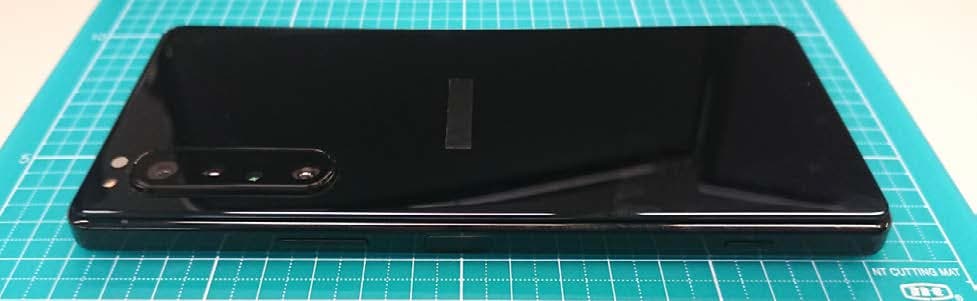
Click to zoom
Application Details
- Equipment Class
- DXX - Part 15 Low Power Communication Device Transmitter
- Date of Grant
- Apr 21, 2020
- Application Purpose
- Original Equipment
- Date of Application
- Apr 06, 2020
- Equipment Note
- GSM/WCDMA/LTE Phone with BT, DTS/UNII a/b/g/n/ac/ax, GPS, WPC and NFC
- Frequency Range
- 13.56000000 - 13.56000000
- Company
- Sony Corporation
- Country
- Japan
Documents & Files
Document Text
Text extracted from the exhibit documents filed with the FCC. Open a document above to read the original.
Users Manual
Safety Guidelines Important information about hearing aid compatibility FCC Statement Safety Guidelines Before a device model is available for sale to the public, it must be tested and certified to the FCC that it does not exceed the limit established by the government-adopted requirement for safe exposure. The tests are performed in positions and locations (i.e., at the ear and worn on the body) as required by the FCC for each model. Body worn measurements are made while the device is in use and worn on the body with a Sony Mobile accessory. The design and composition of an accessory can affect the body worn Specific Absorption Rate (SAR) levels for the device. Sony Mobile has not measured, and makes no representation about, the body worn SAR levels when the device is used with non-Sony Mobile accessories. Consumer Update on Wireless Devices Supplied by the U.S. Food and Drug Administration (FDA) - Center for Devices and Radiological Health Do wireless devices pose a health hazard? The available scientific evidence does not show that any health problems are associated with using wireless devices. There is no proof, however, that wireless devices are absolutely safe. Wireless devices emit low levels of radio frequency energy (RF) in the microwave range while being used. They also emit very low levels of RF when in the stand-by mode. Whereas high levels of RF can produce health effects (by heating tissue), exposure to low level RF that does not produce heating effects causes no known adverse health effects. Many studies of low level RF exposures have not found any biological effects. Some studies have suggested that some biological effects may occur, but such findings have not been confirmed by additional research. In some cases, other researchers have had difficulty in reproducing those studies, or in determining the reasons for inconsistent results. What is FDA’s role concerning the safety of wireless devices? Under the law, FDA does not review the safety of radiation-emitting consumer products such as wireless devices before they can be sold, as it does with new drugs or medical devices. However, the agency has authority to take action if wireless devices are shown to emit radio frequency energy (RF) at a level that is hazardous to the user. In such a case, FDA could require the manufacturers of wireless devices to notify users of the health hazard and to repair, replace or recall the devices so that the hazard no longer exists. Although the existing scientific data do not justify FDA regulatory actions, FDA has urged the wireless device industry to take a number of steps, including the following: • Support needed research into possible biological effects of RF of the type emitted by wireless devices; • Design wireless devices in a way that minimizes any RF exposure to the user that is not necessary for device function; and • Cooperate in providing users of wireless devices with the best possible information on possible effects of wireless device use on human health. FDA belongs to an interagency working group of the federal agencies that have responsibility for different aspects of RF safety to ensure coordinated efforts at the federal level. The following agencies belong to this working group: • National Institute for Occupational Safety and Health • Environmental Protection Agency • Federal Communications Commission • Occupational Safety and Health Administration • Na tional Telecommunications and Information Administration The National Institutes of Health participates in some interagency working group activities, as well. FDA shares regulatory responsibilities for wireless devices with the Federal Communications Commission (FCC). All devices that are sold in the United States must comply with FCC safety guidelines that limit RF exposure. FCC relies on FDA and other health agencies for safety questions about wireless devices. FCC also regulates the base stations that the wireless device networks rely upon. While these base stations operate at higher power than do the wireless devices themselves, the RF exposures that people get from these base stations are typically thousands of times lower than those they can get from wireless devices. Base stations are thus not the subject of the safety questions discussed in this document. What kinds of devices are the subject of this update? The term wireless device refers here to hand-held wireless devices with built-in antennas, often called “cell,” “mobile,” or “PCS” devices. These types of wireless devices can expose the user to measurable radio frequency energy (RF) because of the short distance between the device and the user’s head. These RF exposures are limited by Federal Communications Commission safety guidelines that were developed with the advice of FDA and other federal health and safety agencies. When the device is located at greater distances from the user, the exposure to RF is drastically lower because a person’s RF exposure decreases rapidly with increasing distance from the source. The so-called “cordless devices,” which have a base unit connected to the telephone wiring in a house, typically operate at far lower power levels, and thus produce RF exposures far below the FCC safety limits. What are the results of the research done already? The research done thus far has produced conflicting results, and many studies have suffered from flaws in their research methods. Animal experiments investigating the effects of radio frequency energy (RF) exposures characteristic of wireless devices have yielded conflicting results that often cannot be repeated in other laboratories. A few animal studies, however, have suggested that low levels of RF could accelerate the development of cancer in laboratory animals. However, many of the studies that showed increased tumor development used animals that had been genetically engineered or treated with cancer-causing chemicals so as to be pre-disposed to develop cancer in the absence of RF expo…
Text truncated - open the document above for the full version.
Users Manual
1 2 SIM PWR ON OR OR XQ-AT51 XQ-AT52 Startup guide Ръководство „Бърз старт“ Úvodní příručka Kurzanleitung Installationsvejledning Alustusjuhend Guía de inicio Aloitusopas Guide de démarrage Οδηγός εκκίνησης Priručnik Használatbavételi útmutató Ræsihandbók Guida introduttiva Paleisties vadovas Sākšanas ceļvedis Opstartgids Oppstartsveiviser Instrukcja obsługi Manual de Iniciação Ghid de pornire Starthandbok Vodič za začetek uporabe Úvodná príručka Руководство по запуску Посібник з запуску Бастапқы нұсқаулық คู่มือเริ ่ มต้นการใช้งาน 用戶指南 XQ-AT51/XQ-AT52 Printed in XXX (Printers logotype) https://rd1.sony.net/help/mobile/xperia-1m2/h_zz/ 501902331_PDX203_SG leaflet RoW_GB ES RU UA KZ TH CT Declaration of Conformity PM-1260-BV (XQ-AT51) / PM-1261-BV (XQ-AT52) [GB] Hereby, Sony Mobile declares that this equipment is in compliance with Directive 2014/53/EU. The full text of the EU declaration of conformity is available at the following internet address: http://www.compliance.sony.eu/ [GB] Notice for customers: the following information is only applicable to equipment sold in countries applying EU directives This product has been manufactured by or on behalf of Sony Mobile Communications Inc. EU Importer: Sony Europe B.V. Inquiries to the EU Importer or related to product compliance in Europe should be sent to the manufacturer’s authorized representative, Sony Belgium, bijkantoor van Sony Europe B.V., Da Vincilaan 7-D1, 1930 Zaventem, Belgium. Supported frequency bands XQ-AT51/XQ-AT52 For customers in countries/regions other than the United States: UMTS HSPA+ (Bands 1, 2, 4, 5, 6, 8, 19) GSM GPRS/EDGE 850, 900, 1800, 1900 LTE (Bands 1, 2, 3, 4, 5, 7, 8, 12, 13, 17, 19, 20, 25, 26, 28, 29, 32, 34, 38, 39, 40, 41, 46, 66) 5GNR (n1, n3, n28, n77, n78) WLAN, 2.4GHz/5GHz, NFC GSM 850/900 : 33dBm, DCS(1800)/PCS(1900) : 30dBm, UMTS : 24dBm, LTE : 24dBm, 5GNR : 24dBm, 2.4GHz<100mW, 5.15-5.35GHz<200mW, 5.47-5.725GHz<200mW, 5.735-5.835GHz<25mW, NFC 13.56MHz For customers in the United States: UMTS HSPA+ (Bands 1, 2, 4, 5, 6, 8, 19) GSM GPRS/EDGE 850, 900, 1800, 1900 LTE (Bands 1, 2, 3, 4, 5, 7, 8, 12, 13, 17, 19, 20, 25, 26, 28, 29, 32, 34, 38, 39, 40, 41, 46, 66) WLAN, 2.4GHz/5GHz, NFC GSM 850/900 : 33dBm, DCS(1800)/PCS(1900) : 30dBm, UMTS : 24dBm, LTE : 24dBm, 2.4GHz<100mW, 5.15-5.35GHz<200mW, 5.47-5.725GHz<200mW, 5.735-5.835GHz<25mW, NFC 13.56MHz [GB] For customers in countries/regions other than the United States and Singapore: The 5150 – 5350MHz band is restricted to indoor use only. [CT] 美國及新加坡以外之國家/地區的客戶: 5150 – 5350MHz兆赫段只限於室內使用。 [GB] Supported frequency bands Some frequency bands might be turned off in certain markets or by certain operators. You can find your model number under Settings > About phone. [ES] Bandas de frecuencia admitidas Es posible que algunas bandas de frecuencia estén desactivadas en determinados mercados o por operadores específicos. Puede consultar el número de modelo en Ajustes > Información del teléfono. [RU] Поддерживаемые диапазоны частот Доступные диапазоны частот зависят от конкретной страны и оператора. Чтобы выяснить номер модели, выберите Настройки > О телефоне. [UA] Підтримуваний частотний діапазон Деякі частотні діапазони можуть бути вимкнені на певних ринках або певними операторами. Номер моделі можна знайти в розділі Налаштування > Про телефон. [KZ] Қолдау көрсетілетін жиілік диапазондары Кейбір жиілік диапазондары кейбір нарықтарда өшірілген болуы мүмкін немесе кейбір операторлар тарапынан өшірілуі мүмкін. Үлгі нөмірін Параметрлер > Телефон туралы тармағынан таба аласыз. [TH] ย่านความถี่ที่รองรับ ย่านความถี่บางย่านอาจปิ ดใช้งานในบางประเทศหรือโดยผู้ให้บริการบางราย คุณสามารถค้นหาหมายเลขรุ่นได้ที่ การตั ้ งค่า > เกี่ยวกับโทรศ ั พท์ [CT] 支援的頻段 某些市場或服務商可能會關閉部分頻段。 您可以在設定>系統>關於手機中找到您裝置的型號。 For the XQ-AT52 [GB] 5G network connectivity is supported in Single SIM Activated mode only. [CT] 5G連網功能僅於單卡模式使用時支援。 FCC Statement This device complies with Part 15 of the FCC rules. Operation is subject to the following two conditions: (1) This device may not cause harmful interference, and (2) This device must accept any interference received, including interference that may cause undesired operation. For additional information, please read the FCC Statement provided under Settings > About phone > Legal information > Important information > Declaration of Conformity and statements on your device. High-temperature warning [GB] High-temperature warning This mark is displayed when the surface temperature of the product rises during use. When the mark is displayed, there is a risk of burns if you continue using the product while holding it in your hands. In this case, please refrain from holding it in your hands. [ES] Advertencia de temperatura alta Esta marca aparece cuando la temperatura superficial del producto aumenta durante su uso. Cuando esta marca aparece, significa que existe el riesgo de quemaduras si se continúa usando y sosteniendo el producto con la mano. En tal caso, deje de sostener el producto con la mano. [RU] Предупреждение о высокой температуре Этот значок отображается, когда температура поверхности изделия во время использования повышается. Когда отображается значок, существует риск получения ожогов при продолжении использования изделия, если удерживать его в руках. В этом случае не рекомендуется держать изделие в руках. [UA] Попередження про високу температуру Ця позначка відображається, коли під час використання підвищується температура поверхні виробу. Якщо ви й надалі користуватиметеся виробом, тримаючи його в руках, коли відображається ця позначка, існує ризик опіків. У такому разі не беріть виріб у руки. [KZ] Жоғары температура туралы ескерту Осы белгі өнім бетінің температурасы пайдалану барысында көтерілгенде көрсетіледі. Белгі көрсетілгенде, өнімді қолға ұстап әрі қарай пайдалансаңыз, күйіп қалуыңыз мүмкін. Мұндай жағдайда, оны қолға ұстамауыңызды өтінеміз. [TH] ค� าเตือนเกี่ยวกับอุณหภูมิสูง เครื ่ องหมายนี้จะแสดงขึ้นเมื ่ ออุณหภูมิพื ้ นผิวของผลิตภัณฑ์สู…
Text truncated - open the document above for the full version.
Users Manual
sar_j8170_1_us SAR Information XXXXX sar_j8170_1_us Radio wave exposure and Specific Absorption Rate (SAR) information United States THIS PHONE MODEL HAS BEEN CERTIFIED IN COMPLIANCE WITH THE GOVERNMENT’S REQUIREMENTS FOR EXPOSURE TO RADIO WAVES. The XXXXX mobile phone has been designed to comply with the applicable safety requirements for exposure to radio waves. Your wireless phone is a radio transmitter and receiver. It is designed to not exceed the limits of exposure to radio frequency (RF) energy set by governmental authorities. These limits establish permitted levels of RF energy exposure for the general population. The guidelines are based on standards that were developed by international scientific organizations through periodic and thorough evaluation in scientific studies. The standards include a safety margin designed to assure the safety of all individuals, regardless of age and health. The radio wave exposure guidelines employ a unit of measurement known as the Specific Absorption Rate (SAR). Tests for SAR are conducted using standardised methods with the phone transmitting at its highest certified power level in all used frequency bands. While there may be differences between the SAR levels of various phone models, they are all designed to meet the relevant guidelines for exposure to radio waves. The highest SAR value as reported to the authorities for this phone model when tested for use by the ear is 0.41 W/kg and when worn on the body is 0.48 W/kg and for WiFi hotspot mode is 0.77 W/kg. For body-worn operation, the phone has been tested when positioned a minimum of 15 mm from the body without any metal parts in the vicinity of the phone or when properly used with an appropriate accessory and worn on the body. For devices which include “WiFi hotspot” functionality, SAR measurements for the device operating in WiFi hotspot mode were taken using a separation distance of 10 mm. Use of third- party accessories may result in different SAR levels than those reported. Before a phone model is available for sale to the public in the US, it must be tested and certified by the Federal Communications Commission (FCC) that it does not exceed the limit established by the government-adopted requirement for safe exposure. The tests are performed in positions and 2 sar_j8170_1_us 3 locations (i.e., by the ear and worn on the body) as required by the FCC for each model. The FCC has granted an Equipment Authorization for this phone model with all reported SAR levels evaluated as in compliance with the FCC RF exposure guidelines. While there may be differences between the SAR levels of various phones, all mobile phones granted an FCC equipment authorization meet the government requirement for safe exposure. SAR information on this phone model is on file at the FCC and can be found under the Display Grant section of http://transition.fcc.gov/oet/ea/fccid/ after searching on FCC ID PY7-65375K. Additional information on SAR can be found on the Mobile Manufacturers Forum EMF website at http:// www.emfexplained.info/. * In the United States, the SAR limit for mobile phones used by the public is 1.6 watts/kilogram (W/kg) averaged over one gram of tissue. The standard incorporates a margin of safety to give additional protection for the public and to account for any variations in measurements.
Cover Letter(s)
Sony Mobile Communications, Inc. 4-12-3 Higashi-shinagawa, Shinagawa-ku, Tokyo, 140-0002, Japan Remarks This document is managed in Infodoc. It is the responsibility of the user to ensure that they have a correct and valid version. Any outdated hard copy is invalid and must be removed from possible use. Date: January 16, 2020 Federal Communications Commission 7435 Oakland Mills Road Columbia MD 21046 Power of Attorney for FCC applications To Whom It May Concern: Below individual is hereby authorized to sign applications, attestations and cover letters in regards of Sony Mobile Communications INC. applications, Grantee Code PY7. Tomonori Nagano Senior Manager Sony Mobile Communications Inc. Tel: +81367103241 Address: 4-12-3 Higashi-shinagawa, Shinagawa-ku, Tokyo, 140-0002, Japan E-mail: [email protected] Yours sincerely, ________________________________ Mika Kaneko Chief Regulatory Compliance Manager Sony Mobile Communications Inc. Tel: +81 3 6710 3225 Address: 4-12-3 Higashi-shinagawa, Shinagawa-ku, Tokyo, 140-0002, Japan E-mail: [email protected]
Cover Letter(s)
Sony Mobile Communications, Inc. 4-12-3 Higashi-shinagawa, Shinagawa-ku, Tokyo, 140-0002, Japan Remarks This document is managed in Infodoc. It is the responsibility of the user to ensure that they have a correct and valid version. Any outdated hard copy is invalid and must be removed from possible use. Date: March 19, 2020 SPORTON INTERNATIONAL, INC No. 52, Hwa Ya 1st Road Hwa Ya Technology Park Kwei-Shan Hsiang, Tao Yuan Hsien, Taiwan R.O.C Authorization Letter for Sporton FCC ID: PY7-6 5375K To Whom It May Concern: I, the undersigned, hereby authorize Sporton to act on our behalf in all manners relating to application for equipment authorization, including signing of all documents relating to these matters. Any and all acts carried out by Sporton on our behalf shall have the same effect as acts of our own. I, the undersigned, hereby certify that we are not subject to a denial of federal benefits, that includes FCC benefits, pursuant to Section 5301 of the Anti-Drug Abuse Act of 1988, 21 U.S.C. 853(a). In authorizing Sporton as our representative, we still recognize that we are responsible to: a) comply with the relevant provisions of the certification program; b) make all necessary arrangements for the conduct of the evaluation, including provision for examining documentation and access to all areas, records (including internal audit reports) and personnel for the purposes of evaluation (e.g. testing, inspection, assessment, surveillance, reassessment) and resolution of complaints; c) make claims regarding certification only in respect of the scope for which certification has been granted; d) do not use our product certification in such a manner as to bring the Certification Division into disrepute and not make any statement regarding our product certification which the Certification Division may consider misleading or unauthorized; e) upon suspension or cancellation of certification, discontinue use of all advertising matter that contains any reference thereto and return any certification documents as required by the Certification Division; Sony Mobile Communications, Inc. 4-12-3 Higashi-shinagawa, Shinagawa-ku, Tokyo, 140-0002, Japan Remarks This document is managed in Infodoc. It is the responsibility of the user to ensure that they have a correct and valid version. Any outdated hard copy is invalid and must be removed from possible use. f) use certification only to indicate the products are certified as being in conformity with specified standards; g) endeavor to ensure that no certificate or report nor any part thereof is used in a misleading manner; h) ensure that any reference to our product certification in communication media such as documents, brochures or advertising, complies with the requirements of the Certification Division; i) keep a record of all complaints made known to the us relating to the product’s compliance with requirements of the relevant standard and to make these records available to the when requested; j) take appropriate action with respect to such complaints and any deficiencies found in products or services that affect compliance with the requirements for certification; k) document the actions taken. Yours sincerely, ________________________________ Tomonori Nagano Head of Type Approval, Product Compliance Quality Assurance & Customer Services Sony Mobile Communications Inc.
Cover Letter(s)
Sony Mobile Communications, Inc. 4-12-3 Higashi-shinagawa, Shinagawa-ku, Tokyo, 140-0002, Japan Remarks This document is managed in Infodoc. It is the responsibility of the user to ensure that they have a correct and valid version. Any outdated hard copy is invalid and must be removed from possible use. Date: March 19, 2020 Federal Communications Commission 7435 Oakland Mills Road Columbia MD 21046 Confidentiality Request Letter FCC ID: PY7-6 5375K To Whom It May Concern: Pursuant to the provisions of Sections 0.457 and 0.459 of the Commission’s rules (47 CFR §§ 0.457, 0.459), we are requesting the Commission to withhold the following attachments as confidential document from public disclosure indefinitely. - Schematic Diagram - Block Diagram - Theory of Operation - Antenna Specification - Parts List - Tune up Information Above mentioned document contains detailed system and equipment description are considered as proprietary information in operation of the equipment. The public disclosure of above documents might be harmful to our company and would give competitor an unfair advantage in the market. In additional to above mentioned documents, pursuant to Public Notice DA 04-1705 of the Commission’s policy, in order to comply with the marketing regulations in 47 CFR §2.803 and the importation rules in 47 CFR §2.1204, while ensuring that business sensitive information remains confidential until the actual marketing of newly authorized devices. We are requesting the commission to grant short-term confidentiality request on the following attachments for 180days from date of the Grant of Equipment Authorization. - External Photos - Internal Photos - Test Setup Photos - User Manual It is our understanding that all measurement test reports, FCC ID label format and correspondent during certification review process cannot be granted as confidential documents and those information will be available for public review once the grant of equipment authorization is issued. Yours sincerely, ________________________________ Tomonori Nagano Head of Type Approval, Product Compliance Quality Assurance & Customer Services Sony Mobile Communications Inc.
Cover Letter(s)
Sony Mobile Communications Public General 1(1) Document number: Revision: 000229033 2 Prepared by: Date: 2020-04-02 Contents responsible if other than preparer: Remarks: Approved by: r to ensure that they have a correct and valid version. Any outdated hard copy is invalid and must be removed from possible use. PY7-65375K Data Reuse justification and summary Sony Mobile Communications Inc., hereby declares FCC ID PY7-65375K (variant model) and FCC ID PY7-87261H (parent model) share the same PCB layout, antennas and most of the components. The difference between PY7-65735K and PY7-87261H is described in the appendix of the technical description. The unlicensed band data for the parent model remains representative for the variant model (equipment classes DSS, DTS and NII) and test reports for the parent model PY7-87261H plus spot check reports for the variant model have been submitted. The power to be listed on the F-731 and FCC grants for these bands are the values detailed in the parent report as the spot check data shows all values within expected tolerances of parent model. For the licensed bands (equipment class PCE) we have submitted test reports for the parent model and variant model. The variant model report has full test data for the new bands and the bands with higher power than the parent model plus spot check data for the bands that are common to parent and variant. The power to be listed on the F-731 and FCC grants for the PCE bands are the values detailed in the parent report for the common bands and from variant report for the new bands and bands with increased radiated / conducted power. FCC ID LTE WCDMA GSM 2 4 5 7 12 13 17 25 26 41 46 66 II IV V 850 1900 PY7-87261H Parent Test Report: FG9O1542-0B – Parts 22/24/27 FG9O1542-02A – Parts 22/24 PY7-65375K Variant Test Report: FG9O1534-03C for band 26 Part 90 Test Report: FG9O1534-03B for Parts 22/24/27 FG9O1534-03A for parts 22/24/27 Indicates full set of test data. Values in this report to be listed on the grant for these bands. Partial test data used to confirm that parent model data is representative for the variant model. Data for these bands is for reference only Partial test data for test cases affected by increase in conducted and radiated power or increase in radiated power. Values in this report to be listed on the grant for these bands. Bands not supported in the parent model Band is downlink only SAR, HAC have been fully tested on the variant model.
External Photos
Sony Mobile Communications Confidential REPORT 1(3) Document number Revision PA1 Date 2019-06-28 Remarks This document is managed in Infodoc. It is the responsibility of the user to ensure that they have a correct and valid version. Any outdated hard copy is invalid and must be removed from possible use. FCC ID: PY7-65375K External Photo Front Rear Confidential REPORT 2(3) Document number Revision PA1 Side view: Top/Bottom view: Confidential REPORT 3(3) Document number Revision PA1 SIM SLOT:
ID Label/Location Info
Sony Mobile Communications Internal Use Only General 1(1) Document number: Revision: 000228821 1 Prepared by: Date: 12 Contents responsible if other than preparer: Remarks: Approved by: It is the responsibility of the user to ensure that they have a correct and valid version. Any outdated hard copy is invalid and must be removed from possible use. E- Label and Label Location PY7-65375K 1 E-Label Location Users can access the FCC ID information within 3 step as the followings. Setting from Main Menu Settings -> About Phone -> Certificates 2 Access to the required information on the e-label (1) The user manual directs the user where to find the FCC ID E-Label. To view the regulatory compliance mark Find and tap [Settings]->[About Phone]->[Certificates] Regulatory compliance mark such as FCC ID is displayed on the screen. Special codes or permissions are not required the above steps beyond the normal security protection to unlock the screen. (2) Products must not require special accessories or supplemental plug-ins. (3) The regulatory information is clearly legible without the aid of magnification. (4) The regulatory information is secure. The user can not access and modify the regulatory information. (5) The physical temporary label or the label on the packaging for purchasing and importation is attached in case of the device is sold in the United States. 3 FCC Statement FCC15.19(a) statement can be seen in the manual. FCC ID: PY7-65375K
Internal Photos
Sony Mobile Communications Confidential REPORT 1(5) Document number Revision PA1 Date 2019-06-28 It is the responsibility of the user to ensure that they have a correct and valid version. Any outdated hard copy is invalid and must be removed from possible use. FCC ID: PY7-65375K Internal Photo Without Rear panel Rear panel Without PBA and Battery Confidential REPORT 2(5) Document number Revision PA1 Internal Main-PWB with Shield cases (Front-side) Internal Main-PWB without Shield cases (Front-side) Internal Main-PWB of Rear (Front-side) Confidential REPORT 3(5) Document number Revision PA1 Internal Main-PWB with Shield cases (Rear-side) Internal Main-PWB without Shield cases (Rear-side) Internal Main-PWB of Rear (Rear-side) Confidential REPORT 4(5) Document number Revision PA1 Internal Sub-PWB (Front-side) Internal Sub-PWB (Rear-side) Confidential REPORT 5(5) Document number Revision PA1 Battery:
Test Report
TEL : 886-3-327-3456 Page Number : 1 of 22 FAX : 886-3-328-4978 Issued Date : Mar. 04, 2020 Report Template No.: BU5-FR15CNFC Version 2.4 Report Version : 01 FCC RADIO TEST REPORT Report No. : FR9O1534-03D FCC RADIO TEST REPORT FCC ID : PY7-65375K Equipment : GSM/WCDMA/LTE Phone with BT, DTS/UNII a/b/g/n/ac/ax, GPS, WPC and NFC Brand Name : Sony Applicant : Sony Mobile Communications Inc. 4-12-3 Higashi-Shinagawa, Shinagawa-ku, Tokyo, 140-0002, Japan Manufacturer : Sony Mobile Communications Inc. 4-12-3 Higashi-Shinagawa, Shinagawa-ku, Tokyo, 140-0002, Japan Standard : FCC Part 15 Subpart C §15.225 The product was received on Dec. 04, 2019 and testing was started from Jan. 16, 2020 and completed on Jan. 23, 2020. We, SPORTON INTERNATIONAL INC., EMC & Wireless Communications Laboratory, would like to declare that the tested sample has been evaluated in accordance with the test procedures and has been in compliance with the applicable technical standards. The report must not be used by the client to claim product certification, approval, or endorsement by TAF or any agency of government. The test results in this report apply exclusively to the tested model / sample. Without written approval of SPORTON INTERNATIONAL INC. EMC & Wireless Communications Laboratory, the test report shall not be reproduced except in full. Approved by: Louis Wu SPORTON INTERNATIONAL INC. EMC & Wireless Communications Laboratory No. 52, Huaya 1st Rd., Guishan Dist., Taoyuan City, Taiwan (R.O.C.) TEL : 886-3-327-3456 Page Number : 2 of 22 FAX : 886-3-328-4978 Issued Date : Mar. 04, 2020 Report Template No.: BU5-FR15CNFC Version 2.4 Report Version : 01 FCC RADIO TEST REPORT Report No. : FR9O1534-03D Table of Contents History of this test report .................................................................................................................................... 3 Summary of Test Result ...................................................................................................................................... 4 1. General Description ......................................................................................................................................... 5 1.1 Product Feature of Equipment Under Test ................................................................................................................. 5 1.2 Modification of EUT ...................................................................................................................................................... 5 1.3 Testing Location .........................................................................................................................................................…
Text truncated - open the document above for the full version.
Contact Information
Applicant
Mika Kaneko(Chief Regulatory Compliance Manager)
Test Firm
SPORTON International Inc.Alex Chen
Technical Specifications
| # | Rule Parts | Frequency Range | Power Output |
|---|---|---|---|
| 1 | 15C | 13.56 MHz - 13.56 MHz | - |
Other Applications from Sony Corporation
PY7-75158T
Jul 16, 2026GSM/WCDMA/LTE Phone with BT, DTS/UNII a/b/g/n/ac/ax, NFC and GNSS
Equipment Class
NII - Unlicensed National Information Infrastructure TXPY7-52715J
Jul 16, 2026GSM/WCDMA/LTE Phone with BT, DTS/UNII a/b/g/n/ac/ax, NFC and GNSS
Equipment Class
DXX - Part 15 Low Power Communication Device TransmitterPY7-84526Y
Jul 16, 2026GSM/WCDMA/LTE Phone with BT, DTS/UNII a/b/g/n/ac/ax, NFC and GNSS
Equipment Class
PCE - PCS Licensed Transmitter held to earPY7-30515Z
Apr 13, 2026GSM/WCDMA/LTE/NR Phone with BT, DTS/UNII a/b/g/n/ac/ax/be, NFC, GNSS and WPT
Equipment Class
DXX - Part 15 Low Power Communication Device TransmitterPY7-73716J
Apr 11, 2024GSM/WCDMA/LTE Phone with BT, DTS/UNII a/b/g/n/ac, NFC and GNSS
Equipment Class
PCE - PCS Licensed Transmitter held to ear