PY71272101Licensed Transmitter
Sony Corporation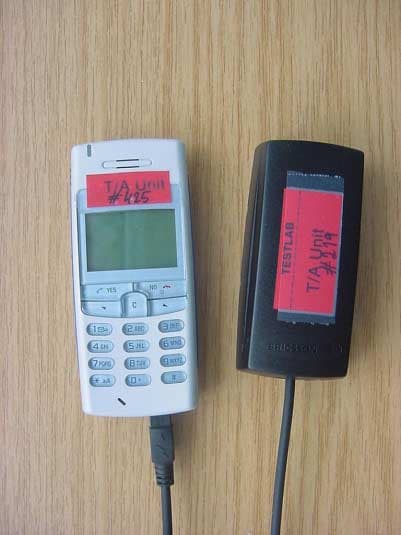
Click to zoom
Application Details
- Equipment Class
- TNE - Licensed Non-Broadcast Transmitter Held to Ear
- Date of Grant
- Jun 23, 2003
- Application Purpose
- Original Equipment
- Date of Application
- Jun 23, 2003
- Equipment Note
- Licensed Transmitter
- Frequency Range
- 824.20000000 - 848.80000000
- Company
- Sony Corporation
- Country
- Japan
Documents & Files
Document Text
Text extracted from the exhibit documents filed with the FCC. Open a document above to read the original.
Users Manual
Mobile Phone T106 850 T106.book Page 1 Friday, June 20, 2003 1:14 PM T106.book Page 2 Friday, June 20, 2003 1:14 PM 3 ContentsQuick guide 5Easy access to certain functions.Getting started 8Make and receive the first call.Getting to know your phone 11Key functions, quick keys, entering l etters. Personalizing your phone 18Choose ring signal, cr eate pictures and more. Calling 27Use the phone book, call options.Messaging 43E-mail and text messages. Using mobile Internet 48WAP browser, bookmarks.More features 52Calendar, alarm clock, games and more.Security 55SIM card lock, phone lock.Troubleshooting 57Why doesn’t the phone work the way I want?Additional information 60Safe and efficient use, warranty, declaration of conformityDisplay icons 69What do the icons mean?Index 71 T106.book Page 3 Friday, June 20, 2003 1:14 PM 4 Sony Ericsson T106 850 GSM 850First edition (December 2002)This manual is published by Sony Ericsson Mobile Communications AB, without any warranty. Improvements and changes to this manual necessitated by typographical errors, inaccuracies of current information, or improvements to programs and/or equipment, may be made by Sony Ericsson Mobile Communications AB at any time and without notice. Such changes will, however, be incorporated into new editions of this manual.All rights reserved.©Sony Ericsson Mobile Communications AB, 2002Publication number: AE/LZT 108 6571 R1AINNOVATRON PATENTSPlease note:Some of the services in this manual are not supported by all networks. This also applies to the GSM International Emergency Number 112 . Please contact your network operator or service provider if you are in doubt whether you can use a particular service or not.Please read the Guidelines for safe and efficient use and the Limited warranty chapters before you use your mobile phone.T9™ Text Input is a registered trademark of Tegic Communications.T9™ Text Input is licensed under one or more of the following: U.S. Pat. Nos. 5,818,437, 5,953,541, 5,187,480, 5,945,928, and 6,011,554; Canadian Pat. No. 1,331,057, United Kingdom Pat. No. 2238414B; Hong Kong Standard Pat. No. HK0940329; Republic of Singapore Pat. No. 51383; Euro.Pat. No. 0 842 463(96927260.8) DE/DK, FI, FR, IT, NL, PT, ES, SE, GB; and additional patents are pending worldwide. T106.book Page 4 Friday, June 20, 2003 1:14 PM Quick guide 5 Quick guide To... Do this: enter the Call List press from standby to enter the first function in the menu My Shortcuts press and hold from standby to enter the Find and Call menu press and hold from standby Call your voice mail service press and hold from standby enter the + sign to make an international phone call press and hold from standby set the phone to silent press and hold from standby turn off the microphone press and hold during a call speed dial (phone book positions 1–9) press any of the number keys – and from standby find a phone book entry beginning with the first letter (or the closest following) on a key press and hold any of the keys – from standby find a phone book entry enter the position number and press from standby put a call on hold press switch between two calls press enter the Options menu when writing a text message press and hold To... Do this: T106.book Page 5 Friday, June 20, 2003 1:14 PM 6 Quick guide T106.book Page 6 Friday, June 20, 2003 1:14 PM 7 Front Back Indicator lightVolume keyDisplayMicrophone On/off keyKeypadOption key Back cover T106.book Page 7 Friday, June 20, 2003 1:14 PM 8 Getting started Getting startedAbout this User’s GuideSome services and functions described in this User’s Guide are network- and subscription-dependent. Because of this, all menus may not be available in your phone and the shortcut numbers to menus and functions may vary between phones. This symbol indicates that a service or function is network- or operator-dependent. Please refer to the information provided by your network operator for more information about your subscription. We recommend that you read the chapter “Getting to know your phone” on page 11 for information about how to move through the menus.The SIM cardWhen you register as a subscriber with a network operator, you get a SIM (Subscriber Identity Module) card. The SIM card contains a computer chip that keeps track of your phone number, the services included in your subscription, and your Phone Book information, among other things. AssemblyBefore you can use your phone you need to:• insert the SIM card.• attach and charge the battery.Note: Always turn off the phone and detach the charger before you insert or remove a SIM card. T106.book Page 8 Friday, June 20, 2003 1:14 PM Getting started 9 SIM card and battery informationIt may take up to 30 minutes before an icon appears in the display when charging. 1. Insert the SIM card. Make sure the SIM card is placed under the silvery holders. 2. Place the battery on the back of the phone and push until you hear a click. 3. Connect the charger to the phone at the flash symbol. The flash symbol on the charger plug must face upwards. 4. It can take up to 30 minutes before an icon is shown in the display. 5. Wait approximately four hours or until you see the battery is fully charged. 6. Remove the charger by tilting the plug upwards. You have to insert the SIM card and charge the battery before you can use the phone. T106.book Page 9 Friday, June 20, 2003 1:14 PM 10 Getting started Making and receiving calls To turn on the phone • Press and hold until you hear a tone. • Enter your PIN (Personal Identity Number), if you have one for your SIM card.Your PIN is provided by your network operator. On/off My Network 12:18 SIM locked PIN: If you make a mistake while entering your PIN, delete the wrong number by pressing . If you enter your PIN incorrectly three times in a row, the SIM card is blocked. This is indicated by the message PIN blocked. To unblock it you need to enter your PUK (Personal Unblocking Key). Your PUK is provided by your network operator.To make and receive cal…
Text truncated - open the document above for the full version.
Attestation Statements
Company Internal APPLICATION INFO. 1 (1) Prepared (also subject responsible if other) No. LD/SEM/GUG/NB Håkan Sjöberg +46 46 193559 GUG/N03:172 Uen Approved Checked Date Rev Reference LD/SEM/GUG/N Bo Johansson 2003-06-16 A Receiver Federal Communication Commission Application PY71272101 Statement on hardware Sony Ericsson mobile phone T106 850 (FCC ID PY71272101) uses the exact same hardware and software as T106 (FCC ID PY71222101) except that the GSM 1900 band is turned off in the production (via a SW switch) on T106 850. This band lock can only be done in the production and cannot be activated by the end user. Best regards, ____________________ Håkan Sjöberg Type Approval Department Sony Ericsson Mobile Communications AB
Cover Letter(s)
FCC ID: PY71272101 Applicant: Sony Ericsson Mobile Communications AB Correspondence Reference Number: 8952 Dated: 2003-07-17 731 Confirmation Number: TC844371 CETECOM GmbH Im Teelbruch 122 45219 Essen Germany Phone: +49 (0) 2054 9519-0 Fax: +49 (0) 2054 9519-9 Request for additional response time for submitting requested information To whom it may concern, we herewith request additional response time of 15 days for filing the answers to your request for additional information on the application PY71272101 of the company SONY ERICSSON MOBILE COMMUNICATIONS AB. The delivery of the answers to your correspondance 8952 does need additional time due to documentation preparation as you have requested. Thanks in advance for your understanding Best regards, Karin Silberhorn FCC ID: Response to e-mail8952_2003_07_17.doc Page 2 of 2 CETECOM Certification and Testing in Communications GmbH Im Teelbruch 122 45219 Essen Germany Phone: +49 (0) 2054 9519-0 Fax: +49 (0) 2054 9519-9
External Photos
CETECOM ICT Services GmbH Test report no..: 2_3127-01-01/03Issue Date: 2003-01-23Page 105 (112) Photographs of the equipment CETECOM ICT Services GmbH Test report no..: 2_3127-01-01/03Issue Date: 2003-01-23Page 106 (112) Photographs of the equipment CETECOM ICT Services GmbH Test report no..: 2_3127-01-01/03Issue Date: 2003-01-23Page 107 (112) Photographs of the equipment
ID Label/Location Info
Picture of label Application: PY71272101 Public 1 (3) Prepared (also subject responsible if other) No. LD/SEM/BGUU Magnus Nilsson 151 86-SVV 107 057/3 Uen Approved Checked Date Rev Reference LD/SEM/BGUU (Magnus Nilsson) ecsniln 2003-06-02 A Approved according to: 000 21 – LXE 107 42/1 Type 1272101-BV. Label The label used for marking is defined in the Manufacturing Specification on the SVF 930 808. Placing The label shall be placed on the back of the telephone according to the Assembly Drawing (151 88) for the KRH. Print layout Sony Ericsson stylized name Model Name Type number G – H field Productionweek KRC number R-state Repair week Country approval mark 1 CDA number Country approval mark 2 IMEI-numbers as barcode IMEI-numbers as characters Serial number as barcode Serial number as characters Additional Field Approval marks (1, 2,) Marking of origin Definitions: Sony Ericsson trademark Sony Ericsson and the Sony Ericsson trademark shall be according to the corporate standard 190 89-EN/LZT 108 5347. Additional field The field shall be left blank unless otherwise stated in a separate 151 86 document for the SVV. Type number The type number is 1272101-BV and shall be printed “Type 1272101-BV” G-field R-state identification of the CXC-module according to the Marking data 1/151 86 for the SVV. H-field R-state identification of the hardware according to the Marking data 1/151 86 for the SVV. Country approval mark 1 Consist of text: FCC ID: PY71272101 Within a frame with height > 1,5 mm. CDA number The number of the CDA file loaded including the R-state of the file. Country approval mark 2 Consist of text: IC:4170B-1272101 ”DPY” number R - state Public 2 (3) Prepared (also subject responsible if other) No. LD/SEM/BGUU Magnus Nilsson 151 86-SVV 107 057/3 Uen Approved Checked Date Rev Reference LD/SEM/BGUU (Magnus Nilsson) ecsniln 2003-06-02 A Repair week The field shall be left blank unless a repair centre repairs the unit. The repair week shall then be given as Rywwxx (R = repair, y = year, ww = week, xx = Revision eg. 1A) Production week The production week shall be given as yyWww (yy = year, ww = week) according to the ISO 8601 standard. IMEI number as bar code See below for definition of IMEI-number. The bar code shall only contain the digits of the IMEI number (no-). IMEI number as characters The IMEI number has format: TAC-SNR-CD TAC = 01016400 Example: 01016400-000 000-0 SNR = A serial number from 000 000 to 999 999 Arima use: 000 000 to 299 999 Flextronics, MX use: 300 000 to 999 999 CD = A check digit, from 0-9, calculated according to the Luhn formula (ISO/IEC 7812), GSM 02.16. Serial number as bar code According to Ericsson corporate standard 102 01 - 109. Serial number as characters According to Ericsson group standard 0012-101. Ericsson group factory number system according the Ericsson corporate standard 1120-101 Factory codes: Beijing CB5 Dashi TP7 Yingko Factory TP8 Flex, Mexico TF5 Flex, Brazil SOR Approval marks 1. According to 1424 - SVF 930 52 2. The notified body number according to the TTE Annex III certificate for the production plant. If this is not available, use the notified body number from the type approval certificate (normally 0682). The print size (height) for the notified body number (e.g. 0682) and the corresponding approval marks shall be minimum 5 mm. This is a regulatory requirement. 3. According to 1424 - SVF 930 196 Model name The model name T106 Marking of origin The field shall be left blank unless otherwise stated in a separate 2/151 86-SVV document. “DPY” number The DPY number for the product without DPY 101 e.g. if you are producing DPY 101 2595/2 the Public 3 (3) Prepared (also subject responsible if other) No. LD/SEM/BGUU Magnus Nilsson 151 86-SVV 107 057/3 Uen Approved Checked Date Rev Reference LD/SEM/BGUU (Magnus Nilsson) ecsniln 2003-06-02 A printing should be 2595/2. R-state The R-state for the DPY according to the 1095 for the DPY. Print regulations The printing shall be well readable and permanent. Typeface OCR-B Type size min 1.1 mm Line spacing min 1.5 mm Trademark min 1.5 mm Approval marks min 5.0 mm
Internal Photos
CETECOM ICT Services GmbH Test report no..: 2_3127-01-01/03Issue Date: 2003-01-23Page 107 (112) Photographs of the equipment CETECOM ICT Services GmbH Test report no..: 2_3127-01-01/03Issue Date: 2003-01-23Page 108 (112) Photographs of the equipment CETECOM ICT Services GmbH Test report no..: 2_3127-01-01/03Issue Date: 2003-01-23Page 109 (112) Photographs of the equipment CETECOM ICT Services GmbH Test report no..: 2_3127-01-01/03Issue Date: 2003-01-23Page 110 (112) Photographs of the equipment CETECOM ICT Services GmbH Test report no..: 2_3127-01-01/03Issue Date: 2003-01-23Page 111 (112) Photographs of the equipment CETECOM ICT Services GmbH Test report no..: 2_3127-01-01/03Issue Date: 2003-01-23Page 112 (112) Photographs of the equipment
RF Exposure Info
SAR Information T106-SAR-USA-EN.fm Page 1 Monday, June 23, 2003 4:00 PM This phone model has been certified in compliance with the government’s requirements for exposure to radio waves. This mobile phone model T106 850 has been designed to comply with applicable safety requirements for exposure to radio waves. Your wireless phone is a radio transmitter and receiver. It is designed to not exceed the limits for exposure to radio frequency (RF) energy set by the Federal Communications Commission (FCC) of the U.S. Government. These limits establish permitted levels of RF energy for the general population. The guidelines are based on standards that were developed by international scientific organizations through periodic and thorough evaluation of scientific studies. The standards include a safety margin designed to assure the safety of all persons, regardless of age and health. The exposure standard for wireless mobile phones employs a unit of measurement known as the Specific Absorption Rate, or SAR. The SAR limit set by the FCC is 1.6 W/kg.* Tests for SAR are conducted using standard operating positions accepted by the FCC with the phone transmitting at its highest certified power level in all tested frequency bands. Although the SAR is determined at the highest certified power level, the actual SAR level of the phone while operating can be well below the maximum value. This is because the phone is designed to operate at multiple power levels so as to use only the power required to reach the network. In general, the closer you are to a wireless base station antenna, the lower the power output. Before a phone model is available for sale to the public, it must be tested and certified to the FCC that it does not exceed the limit established by the government-adopted requirement for safe exposure. The tests are performed in positions and locations (i.e., at the ear and worn on the body) as required by the FCC for each model. The highest SAR value as reported to the FCC for this model phone when tested for use at the ear is 1,10 W/kg (1g) W/kg and when worn on the body is 0,83 W/kg (1g) W/kg. Body worn measurements are made while the phone is in use and worn on the body with an Ericsson or Sony Ericsson accessory. Accessories can significantly affect SAR compliance. The Federal Communication Commission requires that some manufacturers' accessories be tested, and Sony Ericsson has done so with respect to its products. Sony Ericsson has only tested Ericsson and Sony Ericsson original accessories in conjunction with Sony Ericsson phones. It is therefore recommended that only Ericsson and Sony Ericsson original accessories be used in conjunction with Sony Ericsson phones. The FCC has granted an Equipment Authorization for this model phone with all reported SAR levels evaluated as in compliance with the FCC RF exposure guidelines. While there may be differences between the SAR levels of various phones, all mobile phones granted an FCC equipment authorization meet the government requirement for safe exposure. SAR information on this model phone is on file with the FCC and can be found under the Display Grant section of http://www.fcc.gov/oet/fccid after searching on FCC ID PY71272101. Additional information on Specific Absorption Rates (SAR) can be found on the Cellular Telecommunications & Internet Association (CTIA) web-site at http://www.phonefacts.net/ . * In the United States and Canada, the SAR limit for mobile phones used by the public is 1.6 watts/kilogram (W/kg) averaged over one gram of tissue. The standard incorporates a margin of safety to give additional protection for the public and to account for any variations in measurements. AE/LZT 108 4721/12 T106-SAR-USA-EN.fm Page 2 Monday, June 23, 2003 4:00 PM
RF Exposure Info
SecurityClass REPORT 1 (19) Prepared (also subject responsible if other) No. LD/SEM/GUG/NM/H. Kami Shirazi GUG/N03 :012 Approved Checked Date Rev Reference LD/SEM/GUG/NMC/Mats Hansson 030320 B File SAR Test Report: T106 (PY71272101) Date of test: January 15 to 22, 2003 Laboratory: Electromagnetic Near Field and Radio Frequency Dosimetry Lab Sony Ericsson Mobile Communications AB Nya Vatenttornet SE-221 82 LUND, Sweden Test Responsible: H. Kami Shirazi Type Approval Engineer [email protected] + 46 46 23 26 44 Statement of Compliance Sony Ericsson Mobile Communications AB declares under its sole responsibility that the product Sony Ericsson Type 1272101-BV (T106); FCC ID: PY71272101 to which this declaration relates, is in conformity with the appropriate RF exposure standards recommendations and guidelines. It also declares that the product was tested in accordance with the appropriate measurement standards, guidelines and recommended practices. Any deviations from these standards, guidelines and recommended practices are noted below: (None) © Sony Ericsson Mobile Communications AB, 2002 This test report shall not be reproduced except in full, without written approval of the laboratory. The results and statements contained herein relate only to the items tested. The names of individuals involved may be mentioned only in connection with the statements or results from this report. Sony Ericsson encourages all feedback, both positive and negative, on this report. SecurityClass REPORT 2 (19) Prepared (also subject responsible if other) No. LD/SEM/GUG/NM/H. Kami Shirazi GUG/NV 03:012 Approved Checked Date Rev Reference LD/SEM/GUG/NMC/Mats Hansson 030320 B File 1 Table of contents 1 TABLE OF CONTENTS.............................................................................................................................2 2 INTRODUCTION........................................................................................................................................3 3 DEVICE UNDER TEST..............................................................................................................................3 3.1 ANTENNA DESCRIPTION.........................................................................................................................3 3.2 DEVICE DESCRIPTION..............................................................................................................................3 4 TEST EQUIPMENT.....................................................................................................................................4 4.1 DOSIMETRIC SYSTEM..............................................................................................................................4 4.2 ADDITIONAL EQUIPMENT........................................................................................................................4 5 ELECTRICAL PARAMETERS ON THE TISSUE..................................................................................4 SIMULATING LIQUID.......................................................................................................................................4 6 SYSTEM ACCURACY VERIFICATION .................................................................................................5 7 SAR MEASUREMENT UNCERTAINTY .................................................................................................6 8 TEST RESULTS...........................................................................................................................................7 9 REFERENCES.............................................................................................................................................8 10 APPENDIX ..............................................................................ERROR! BOOKMARK NOT DEFINED. 10.1 SAR DISTRIBUTION COMPARISON FOR SYSTEM ACCURACY VERIFICATION..ERROR! BOOKMARK NOT DEFINED . 10.2 SAR DISTRIBUTION PLOT................................................................ERROR! BOOKMARK NOT DEFINED. 10.3 PHOTOGRAPHS OF THE DEVICE UNDER TEST..........................................................................................13 10.4 DEVICE POSITION ON SAM TWINS PHANTOM.......................................................................................16 10.5 PROBE CALIBRATION PARAMETERS.......................................................................................................18 10.6 Reference SAR value for system validation using body material with No. EUS/CV/R-01:1118/REP SecurityClass REPORT 3 (19) Prepared (also subject responsible if other) No. LD/SEM/GUG/NM/H. Kami Shirazi GUG/NV 03:012 Approved Checked Date Rev Reference LD/SEM/GUG/NMC/Mats Hansson 030320 B File 2 Introduction In this test report, compliance of the Sony Ericsson T106 portable telephone with RF safety guidelines is demonstrated. The applicable RF safety guidelines and the SAR measurement specifications used for the test are described in the SAR Measurement Specifications of Wireless Handsets [1]. 3 Device under Test 3.1 Antenna Description Type Internal antenna Location Inside the back cover, near the top Max length 38mm Dimensions Max width 14mm Configuration PIFA 3.2 Device description Device model T106 Serial number M12C27B13163 Mode GSM 850 Multiple Access Scheme TDMA Maximum Output Power Setting 32.5dBm Factory Tolerance in Power Setting ± 0.5dB Maximum Peak Output Power 33dBm Crest Factor 8 Transmitting Frequency Range (824.2 – 848.8) MHz) Prototype or Production Unit Preproduction Device Category Portable RF exposure environment General population / uncontrolled SecurityClass REPORT 4 (19) Prepared (also subject responsible if other) No. LD/SEM/GUG/NM/H. Kami Shirazi GUG/NV 03:012 Approved Checked Date Rev Reference LD/SEM/GUG/NMC/Mats Hansson 030320 B File 4 Test equipment 4.1 Dosimetric system SAR measurements were made using the DASY3 professional system (software version 3.1c) with …
Text truncated - open the document above for the full version.
Test Report
CETECOM ICT Services GmbH Radio Satellite Communication Untertürkheimer Straße 6-10 . D-66117 Saarbrücken Telefon: +49 (0)681 598-9100 Telefax: -9075 RSC11 issue test report consist of 17 Pages Page 1 (17) BLUETOOTH TM is a trademark owned by Bluetooth SIG, Inc. and licensed to CETECOM Recognized by the Federal Communications Commission FCC–Identification Number: 90462 TCB ID: DE 001 Accredited by the German Accreditation Council DAR–Registration Number TTI–P–G 166/98 Independent ETSI compliance test house ETSI Accredited Bluetooth™ Test Facility (BQTF) Addendum to report no.: 2_3127-01-01/03 FCC Part 22 1222101-BV FCC ID: PY71222101 IC : 4170B-1222101 CETECOM – ICT Services GmbH Untertürkheimerstr. 6-10 66117 Saarbrücken, Germany Telephone: + 49 (0) 681 / 598-0 Fax: + 49 (0) 681 / 9075 CETECOM ICT Services GmbH Addendum to report no..: 2_3127-01-01/03Issue Date: 2003-08-18 Page 2 (17) Table of Contents 1 General information 1.1 Notes 1.2 Testing laboratory 1.3 Details of applicant 1.4 Application details 1.5 Test item 1.6 Test standards 2 Technical test 2.1 Summary of test results 2.2 Test report 1 General information 1.1 Notes The test results of this test report relate exclusively to the test item specified in 1.5. The CETECOM ICT Services GmbH does not assume responsibility for any conclusions and generalizations drawn from the test results with regard to other specimens or samples of the type of the equipment represented by the test item. The test report may only be reproduced or published in full. Reproduction or publication of extracts from the report requires the prior written approval of the CETECOM ICT Services GmbH. 1.2 Testing laboratory CETECOM ICT Services GmbH Untertürkheimer Straße 6 - 10 66117 Saarbrücken Germany Telefone : + 49 681 598 - 9100 Telefax : + 49 681 598 - 9075 E-mail : [email protected] Internet : www.cetecom-ict.de Accredited testing laboratory The Test laboratory (area of testing) is accredited according to DIN EN ISO/IEC 17025. DAR registration number: TTI-P-G-166/98 Listed by : Federal Communications Commission (FCC) Identification/Registration No : 90462 Accredited Bluetooth TM Test Facility (BQTF) BLUETOOTH TM is a trademark owned by Bluetooth SIG, Inc. and licensed to CETECOM CETECOM ICT Services GmbH Addendum to report no..: 2_3127-01-01/03Issue Date: 2003-08-18 Page 3 (17) 1.3 Details of applicant Name : Sony Ericsson Mobile Communication AB Street : Nya Vattentornet City : 22188 Lund Country : Sweden Telephone : +46-46-193-242 Telefax : +46-46-193-295 Contact : Mr. Bo G. Johansson Telephone : +46-46-193-242 e-mail : 1.4 Application details Date of receipt of application : 2003-08-18 Date of receipt of test item : 2003-08-18 Date of test : 2003-08-18 1.5 Test item Type of equipment : Dual Band GSM Mobile Phone (PCS 850/1900 MHz) Type designation : 1222101-BV Manufacturer : Applicant Street : City : Country : Serial number : IMEI : 00.1003.00.059014.0 Additional informations: : Frequency : 1850 – 1910 MHz and 824 – 849 MHz Type of modulation : 300KGXW Number of channels : 300 (PCS1900) and 125 (PCS850) Antenna : Integral antenna Power supply : 3,6V DC Li-Ion Output power GSM 850 : cond.: 33.0dBm Peak , ERP: 26.5 dBm (Burst); EIRP: 28.6 dBm (Burst) Output power GSM 1900 : cond : 30.4 dBm Peak , ERP: 30.3 dBm (Burst); EIRP: 32.4 dBm (Burst) Type of equipment : Temperature range : -30°C - +60°C FCC – ID : PY71222101 IC : 4170B-1222101 Hardware : P2A Software : P1B 1.6 Test standards: FCC Part 22 CETECOM ICT Services GmbH Addendum to report no..: 2_3127-01-01/03Issue Date: 2003-08-18 Page 4 (17) 2 Technical test FCC PART 22H / 24E BLOCK EDGE REQUIREMENTS 2.1 Summary of test results No deviations from the technical specification(s) were ascertained in the course of the tests performed. FINAL VERDICT: PASS Technical responsibility for area of testing : 2003-08-18 RSC 8411 Berg M. Date Section Name Signature Technical responsibility for area of testing : 2003-08-18 RSC8412 Hausknecht D. Date Section Name Signature CETECOM ICT Services GmbH Addendum to report no..: 2_3127-01-01/03Issue Date: 2003-08-18 Page 5 (17) 2.2 Testreport TEST REPORT Addendum to Test report no. : 2_3127-01-01/03 CETECOM ICT Services GmbH Addendum to report no..: 2_3127-01-01/03Issue Date: 2003-08-18 Page 6 (17) TEST REPORT REFERENCE LIST OF MEASUREMENTS PARAMETER TO BE MEASURED PAGE BLOCKEDGE COMPLIANCE 7 TEST EQUIPMENT AND ANCILLARIES USED FOR TESTS 16 CETECOM ICT Services GmbH Addendum to report no..: 2_3127-01-01/03Issue Date: 2003-08-18 Page 7 (17) PART PCS850 BLOCKEDGE COMPLIANCE FCC PART 22H / 24E BLOCK EDGE REQUIREMENTS We recently decided that the Rules require compliance to be shown at ALL block edges for Part 22H and 24E devices whether portable, mobile or base transmitters. In the past, we had relied on just the upper and lower band edge plots/data tables to represent block edge compliance for radiated and conducted emissions for all blocks. However, we now believe that the potential use of these blocks requires the submission of plots/data tables for all blocks. Therefore, we will be requiring all test labs and TCB's to submit plots or data showing compliance for all block edges in accordance with the following paragraph. Each block will require 2 plots/data tables... one upper edge, and one lower edge, for the worse- case modulation type only. The worse-case modulation type may be determined by the applicant or test lab through preliminary testing. For Cellular transmitters, this will require 8 plots/data tables to be submitted for the 4 blocks (See diagram below). For PCS transmitters, this will require 12 plots/data tables to be submitted for the 6 blocks (See diagram below). The plots/data tables should represent compliance with out-of-block emissions as tested using spectrum analyzer settings specified in 22.917(b) or 24.238, as appropriate. BLOCK 1: 824 – 835 MHz (A* Low + A) BLOCK 2: 835 – 845 MHz (B) BLOCK 3: 845 – 846.5 MHz (A* High) BLOCK 4: 846.5 – 849…
Text truncated - open the document above for the full version.
Test Report
CETECOM ICT Services GmbH Radio Satellite Communication Untertürkheimer Straße 6-10 . D-66117 SaarbrückenTelefon: +49 (0)681 598-9100Telefax: -9075 RSC11issue test report consist of 112 PagesPage 1 (112) BLUETOOTH TM is a trademark owned by Bluetooth SIG, Inc. and licensed to CETECOM Recognized by the Federal Communications Commission FCC–Identification Number: 90462 TCB ID: DE 001 Accredited by the German Accreditation Council DAR–Registration Number TTI–P–G 166/98 Independent ETSI compliance test house ETSI Accredited Bluetooth™ Test Facility (BQTF) Test report no.: 2_3127-01-01/03 FCC Part 24/22 1222101-BV FCC ID: PY71222101 IC : 4170B-1222101 CETECOM – ICT Services GmbH Untertürkheimerstr. 6-10 66117 Saarbrücken, Germany Telephone: + 49 (0) 681 / 598-0 Fax: + 49 (0) 681 / 9075 CETECOM ICT Services GmbH Test report no..: 2_3127-01-01/03Issue Date: 2003-01-23Page 2 (112) Table of Contents 1 General information 1.1 Notes 1.2 Testing laboratory 1.3 Details of applicant 1.4 Application details 1.5 Test item 1.6 Test standards 2 Technical test 2.1 Summary of test results 2.2 Test report 1 General information 1.1 Notes The test results of this test report relate exclusively to the test item specified in 1.5. The CETECOM ICT Services GmbH does not assume…
Text truncated - open the document above for the full version.
Contact Information
Applicant
Mika Kaneko(Chief Regulatory Compliance Manager)
Technical Contact
Sony Ericsson Mobile Communications ABH�kan Sj�berg
[email protected]+46 46 193 000
Nya Vattentornet · Lund · Sweden
Test Firm
CETECOM GmbHWolfgang Richter
Technical Specifications
| # | Rule Parts | Frequency Range | Power Output | Emission | Tolerance |
|---|---|---|---|---|---|
| 1 | 22H | 824.2 MHz - 848.8 MHz | 447.00 mW | 300KGXW | 0.1000000000 ppm |
Other Applications from Sony Corporation
PY7-75158T
Jul 16, 2026GSM/WCDMA/LTE Phone with BT, DTS/UNII a/b/g/n/ac/ax, NFC and GNSS
Equipment Class
NII - Unlicensed National Information Infrastructure TXPY7-52715J
Jul 16, 2026GSM/WCDMA/LTE Phone with BT, DTS/UNII a/b/g/n/ac/ax, NFC and GNSS
Equipment Class
DXX - Part 15 Low Power Communication Device TransmitterPY7-84526Y
Jul 16, 2026GSM/WCDMA/LTE Phone with BT, DTS/UNII a/b/g/n/ac/ax, NFC and GNSS
Equipment Class
PCE - PCS Licensed Transmitter held to earPY7-30515Z
Apr 13, 2026GSM/WCDMA/LTE/NR Phone with BT, DTS/UNII a/b/g/n/ac/ax/be, NFC, GNSS and WPT
Equipment Class
DXX - Part 15 Low Power Communication Device TransmitterPY7-73716J
Apr 11, 2024GSM/WCDMA/LTE Phone with BT, DTS/UNII a/b/g/n/ac, NFC and GNSS
Equipment Class
PCE - PCS Licensed Transmitter held to ear