PY78505003Bluetooth Headset
Sony Corporation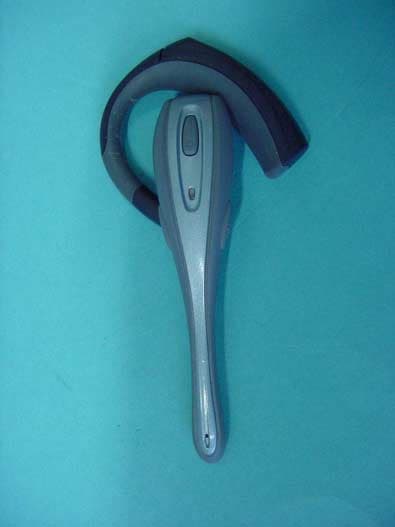
Click to zoom
Application Details
- Equipment Class
- DSS - Part 15 Spread Spectrum Transmitter
- Date of Grant
- May 13, 2002
- Application Purpose
- Original Equipment
- Date of Application
- May 13, 2002
- Equipment Note
- Bluetooth Headset
- Frequency Range
- 2402.00000000 - 2480.00000000
- Company
- Sony Corporation
- Country
- Japan
Documents & Files
Document Text
Text extracted from the exhibit documents filed with the FCC. Open a document above to read the original.
Users Manual
Bluetooth ™ Headset HBH-30 Engli sh 3 Deutsch 17 Español 3 3 Français 49 Italiano 65 FCC S tatemen t This device complies with Part 15 of the FCC rules. Operat ion is subject to the following two conditions: (1) This device may not cause harmful interference, and (2) This device must accept any interference recei ved, including interference that may cause undesired operation. HB H30_E N.boo k Page 1 Wednes day, Febr uary 6, 2002 10 :16 AM 81 ଼ᄏᒦᆪ HB H30_E N.boo k Page 2 Wednes day, Febr uary 6, 2002 10 :16 AM 3 EnglishIntroduction 4 Preparing the headse t 5 Using the headset 10 Troubleshooting 12 Additional information 13 Decla ration of conformity 96 Sony Erics son HBH-30 First edition (January 2 002) This manual is published by Son y Ericsson Mobi le Communications AB, without an y warranty. Improve ments and changes to this manual necessitated by typogr aphical errors, inaccur acies of current information, or improvem ents to p rograms and/or equipment, may be m ade by Sony Eri csson Mobile Communications AB at any time and w ithout noti ce. Such changes will, however, be incorporated into new editions of this manual. All rights reserved . ©Sony Ericsson M obile Comm unications AB, 2002 Publication number: LZT 108 5 356 R1A Some of the services in this manual are not suppo rted by al l networks. This also applies to the GSM International Emergency Number 112. Contact your network operator or ser vice provider if you a re in doubt whether you can u se a p articular service or not. BLUE T OOTH is a trademark of t he Bluetoo th SIG , Inc. (Speci al Interest Gro up). The B l ue tooth trade marks are owned by Bluetoo th SIG , Inc. USA . HB H30_E N.boo k Page 3 Wednes day, Febr uary 6, 2002 10 :16 AM 4 Introduction IntroductionThe Bluetooth ™ he adset HBH-30 is a portable handsfree solution based on Bluetooth wireless technology. See “Guidelines for safe and efficient use” on page 13 and “Limited Warranty” on page 15 before using your headset. What is Bluetoot h wireless tec hnology ? The Bluetooth wireless te chnology makes it possible to connect any compatible portable and stationary communications device without using cables. The technology is ba sed on a radio link that offers fast and reliable transmissi on of voice and da ta information. It does not require a line-of-sight connection in order to establish communication. Bluetooth wireless technol ogy uses a globally availab le frequency range intended to ensure commun ication compatibility worldwide. How can I use my heads et? You can connect your HBH-30 headset to your mobile phone or PC – or any device with Bluetooth wireless technology that suppo rts the Headset profile. This user’s guide focuses on how to use the headset with your mo bile phone. When the headset is connected to your mo bile phone, you can use voice control to make calls (if your phone supp orts this function). The phone can be tucked away in your pocket or in a bag. You can handle incoming and outgoing calls, and adjust the volume, u sing the buttons on the headset. HB H30_E N.boo k Page 4 Wednes day, Febr uary 6, 2002 10 :16 AM Preparing the headset 5 Preparing the headsetTo be able to use the headset together with a mo bile phone, you need to have a phone with built-in Bluetooth capability, or a phone with a Bluetooth adapter connected to it. Front BackNote: Always handle the headset with care! Car ho lder Use the adhesive tape on the back of the car holder to fasten it to the dashboard in your car. Call handling button Volume u p Volume d own Indicator light Microphone Charging conn ector Speaker HB H30_E N.boo k Page 5 Wednes day, Febr uary 6, 2002 10 :16 AM 6 Preparing the headset Getting Started Before you start using the headset with a pho ne or other device for the first time, you sho uld: • Charge the headset battery, using an appropriate Sony Ericsson charger. • Pair the headset with a device, for example, a mobile phone. Charging The headset comes with a built-in rechargeable battery. The battery is not fully charged when you buy the headset. We recommend that you charge the battery until the headset indicator light turns green before using the headset for the first time. • To remind you that you will soon need to recharge the battery, the headset indicator light flashes red when the headset is on. • It takes 1 to 1.5 hours to fully recharge the battery. • During charging, the indicator ligh t shows a steady red light if the headset is turned off, and flashes re d if the headset is on. • When the battery is fully charged, the indicator shows a steady green light if the headset is off, or a flashing green light if the headset is on. Compatible charger s You can attach the following Sony Ericsson or Ericsson chargers to the HBH-30: • Travel Charger CTR-10 • Standard Charger CST-13 • Cigarette Lighter Adapter CLA-11 To charge the batt ery • Connect the charger to the headset and to the mai ns. Make sure the flash symbol on the plug faces the speaker . HB H30_E N.boo k Page 6 Wednes day, Febr uary 6, 2002 10 :16 AM Preparing the headset 7 To disconn ect the charger • Tilt the charger plug downwards to remove it. Instructions Instructions in this user ’ s guide are based on headset buttons and phone keys. For example, the button or the YES key on the phone can be used to answer a call. To turn the hea dset on • Press and ho ld until you hear a short low tone followed by a sho rt high tone. The headset indicator light flashes green. If the battery is low, the light flashes red. Note: The first time the headset is turn ed on, it will automatically be ready for pairing. To turn the headset off • Press and hold until you hear a short high tone followed by a short low tone. Th e headset indicator light is switched off. Pairing the h eads et Before you can use your headset, you must pa ir it with the device you want to use it with, for example, a mobile phone. Once you have p aired your headset with the phone, you do not ne ed to pair it again until you want to us…
Text truncated - open the document above for the full version.
External Photos
CETECOM ICT Services GmbH Test report nr..: 2_2860-01-01/02Issue Date:14.08.2001Page 59 (64) Photographs of the equipment Photograph no.: 1
ID Label/Location Info
Limited Internal MARKING DRAWING 1 (1) Prepared (also subject responsible if other) No. ELN/L/B Bennie Rolink 151 86 - KRY 901 79 Uen Approved Checked Date Rev Reference ELN/L/B (Marten van Wijhe) 2002-03-15 A HAAKON - BLUETOOTH HEADSET HBH-30 The marking is by means of laser writing. Content: Line X1: ìSony Ericssonî stylized name logo Line A1: Actual product number (including R-state); ìKRY nnn nnn/x rrrî Line A2: a: Bluetooth Device Address; BDA: nnnnnnnnnnn b; CE0682î-logo with ì!î-symbol c; C-tic logo with number N173 Line A3: a; Type number and FCC approval number; PY7 8505003 b; Made in <country code of production> MY Line A4: a; Canada approval number; IC: 4170B-8505003 b; Production date c; Commercial product ID; HCB-30 Format Coˆrdination (0, 0) is the left lower corner of capital letter K of the productnumber Line X1: (28.5, 1.5): Graphics; height 1 mm; According to EN/LZT 108 5347 Line A1: (0, 0); Text, Arial 1 mm Line A2: a, (0, 1.1) Text, Arial 1 mm b, (9.5, 1.1) Graphics; 1 mm; according to SVF 930 182 Ux and SVF 930 196 Ux c, (14, 1.1) Graphics; 1 mm; according to SVF 930 110 Ux Line A3: a, (0, 2.2); Text, Arial 1 mm, Type and number underlined b, (13.5, 2.2) Text, Arial 1 mm Line A4: a, (0, 3.3); Text, Arial 1 mm, b, (9, 3.3); Text, Arial 1 mm, yy = year, ww = week c, (18.5, 3.3) Text, Arial 1mm Marking illustration Conceptual picture of the marking. Scale 2:1. Information shown might be incorrect. KRY 901 79/01 R1A BDA: 012345678902 Type & FCC ID: PY78505003 Made in MY IC: 4170B-8505003 yyWww HBH-30 N173 0682
Internal Photos
CETECOM ICT Services GmbH Test report nr..: 2_2860-01-01/02Issue Date:14.08.2001Page 60 (64) Photographs of the equipment Photograph no.: 2 CETECOM ICT Services GmbH Test report nr..: 2_2860-01-01/02Issue Date:14.08.2001Page 61 (64) Photographs of the equipment Photograph no.: 3 CETECOM ICT Services GmbH Test report nr..: 2_2860-01-01/02Issue Date:14.08.2001Page 62 (64) Photographs of the equipment Photograph no.: 4 CETECOM ICT Services GmbH Test report nr..: 2_2860-01-01/02Issue Date:14.08.2001Page 63 (64) Photographs of the equipment Photograph no.: 5 CETECOM ICT Services GmbH Test report nr..: 2_2860-01-01/02Issue Date:14.08.2001Page 64 (64) Photographs of the equipment Photograph no.: 6
Test Report
H Philips Semiconductors Nijmegen M:\@Compliance_folder\Accessories\8505003\Product_ Doc\proc_gain_020107.doc 1 Author: Bart Smolders Date : April 18, 2002 Department: BL RF Modules, MST Consumer/Bluetooth Processing Gain Document for BGB100+BlueBerry GPV2b Preliminary Version 0.2 1. Introduction This document presents the measured results on processing gain for the Philips Bluetooth radio BGB100 in combination with the Philips baseband processor BlueBerry GPV2b. The processing gain is measured according to FCC’s CW jamming margin method as proposed by FCC for the US market, Part 15.247. According to FCC part 15.247 the measurement procedure should be as follows: “ As measured using the CW jamming margin method: a signal generator is stepped in 50 kHz increments across the passband of the system, recording at each point the generator level required to produce the recommended Bit Error Rate (BER). This level is the jammer level. The output power of the intentional radiator is measured at the same point. The jammer to signal ratio (J/S) is then calculated, discarding the worst 20% of the J/S data points. The lowest remaining J/S ratio is used to calculate the processing gain, as follows: sysjp LM N S G++= , (1.1) where G p is the processing gain of the system, S/N is the signal to noise ratio required for the chosen BER, M j is the jammer-to-signal ratio and L sys are the system losses. Note that total losses in a system, including intentional radiator and receiver, should be assumed to be no more than 2dB.” The de-spreading in Bluetooth is obtained by correlation of the received bit stream with the bit pattern of the access code. Therefore, in Bluetooth the “Bit Error Rate” corresponds to a false rejection (or false acception) of the access code. Neglecting false acception, we can use the recorded Frame-Error- Rate (FER), due to errors in the access code, as a measure to find the processing gain of the system. Bluetooth is considered to be a hybrid system (combination of direct sequence (DS) and frequency hopping (FH)) in page and inquiry mode. For such systems FCC requires a minimum processing gain of 17 dB. During inquiry and paging 32 channels are used. Therefore, the processing gain from frequency hopping is 10log 10 (32MHz/1MHz) = 15 dB (approx). The remaining 17-15 =2 dB should be obtained by the DS operation of the access code during paging and inquiry. In this document it will be shown that the measured processing gain from the DS operation (with FH off) is higher than 2 dB. 2 2. Test set-up and procedure 2.1 Test set-up Figure 2.1 shows the test set-up that was used. The Frame-Error-Rate (FER) due to errors in the access code is measured with the Agilent Bluetooth test set E1852A, based on information provided by the BlueBerry baseband processor. The FER was measured at a single frequency f c , arbitrary chosen from the inquiry/paging hopping sequence (f c =2.432 GHz). The nominal signal level of the Bluetooth signal at the input of the DUT is set to –60 dBm. During the tests, the required power level of the jammer or noise source for a 0.1% FER is recorded. Figure 2.1: Test set-up for testing processing gain at single frequency The Device Under Test consists of a BGB100 module (version 2) mounted on a demoboard (version 2) and a TB81 development board with the BlueBerry GP (Version 2b) baseband processor. Agilent ESG E4433B RF Signal Generator Agilent E1852A Bluetooth test set -10 dB -10 dB Comb DUT BGB100 + BBy GPV2b (TB81) PC 3 2.2 Test procedure The test procedure is as follows: 1) A Bluetooth link is set-up between the Agilent Bluetooth test set (E1852A, LAP=BDBDBDBD) and the DUT at a single frequency f c =2.432 GHz (which is one of the frequency channels used during the inquiry/paging hopping sequence). 800 access codes are send per second (poll period is set to 1, DH1 packets). 2) CW jammer signal is generated by the ESG RF signal generator and set to f 0 -500 kHz. 3) The E1852A sends packets at signal level S 0 . 4) The Frame Error Rate (FER) is counted by the E1825A based on the information on incorrect received frames by the BlueBerry baseband. The measured FER represents the number of incorrectly received access codes. 5) The jammer level J is increased to a level where the FER=0.1%, based on a measurement time of at least 60 seconds (60*800=48000 received access codes). This jammer level J is then recorded. 6) 3) up to 6) are repeated for jammer frequencies [f 0 -450kHz,f 0 +500kHz] with stepsize of 50 kHz. 4 3. Measurement results 3.1 Signal to Noise Ratio (S/N) The required minimum Signal-to-Noise ratio (S/N) was measured that resulted in a FER=0.1%. This was done by adding noise to the wanted signal. The recorded S/N value is 17.5 dB. 3.2 Jammer to Signal Ratio (J/S) Figure 3.1 shows the measured Jammer-to-Signal (J/S) level for a FER of 0.1% as measured with the test set-up as shown in figure 2.1. Figure 3.1: Measured Jammer-to-Signal for FER=0.1%. Discarding the worst 20% of the data points in figure 3.1 (-450,-400,-350,-250) kHz, we find that the lowest J/S ratio is –17 dB. -500-400-300-200-1000100200300400500 -30 -25 -20 -15 -10 -5 0 Offset Frequency [kHz] (J/S) [dB] Measured Jammer-to-Signal ratio, Signal level at -60 dBm, module 18 5 3.3 Calculation of processing gain With the data from section 3.1 and section 3.2 we find the following value for processing gain: dBL S J N S G sys ds p 5.22175.17=+−=++= (3.1) So combined with frequency hopping the total processing gain during paging/inquiry mode is G p =15+2.5=17.5 dB. 4. Conclusion The device under test passes the requirements on processing gain for hybrid system as stated by FCC part 15.247.
Test Report
CETECOM ICT Services GmbH Radio Satellite Communication Untertürkheimer Straße 6-10 . D-66117 SaarbrückenTelefon: +49 (0)681 598-9100Telefax: -9075 RSC14issue test report consist of 64 PagesPage 1 (64) Accredited Bluetooth™ Test Facility (BQTF) Test report no.: 2_2860-01-01/02 FCC Part 15.247 / CANADA RSS-210 FCC ID : PY78505003 CETECOM – ICT Services GmbH Untertürkheimerstr. 6-10 66117 Saarbrücken, Germany Telephone: + 49 (0) 681 / 598-0 Fax: + 49 (0) 681 / 9075 BLUETOOTH is a trademark owned by Bluetooth SIG, Inc. and licensed to CETECOM CETECOM ICT Services GmbH Test report nr.:2_2860-01-01/02Issue date: 2002-04-17Page 2 (64) Table of Contents 1 General information 1.1 Notes 1.2 Testing laboratory 1.3 Details of applicant 1.4 Application details 1.5 Test item 1.6 Test standards 2 Technical test 2.1 Summary of test results 2.2 Test report 1 General information 1.1 Notes The test results of this test report relate exclusively to the test item specified in 1.5. The CETECOM ICT Services GmbH does not assume responsibility for any conclusions and generalisations drawn from the test results with regard to other specimens or samples of the type of the equipment represented by the test item. The test report may only be reproduced or published in full. Reproduction or publication of extracts from the report requires the prior written approval of the CETECOM ICT Services GmbH. 1.2Testing laboratory CETECOM ICT Services GmbH Untertürkheimer Straße 6 - 10 66117 Saarbrücken Germany Telefone: + 49 681 598 - 9100 Telefax : + 49 681 598 - 9075 E-mail : [email protected] Internet : www.cetecom.de Accredited testing laboratory DAR-registration number : TTI-P-G 166/98-30 Accredited Bluetooth™ Test Facility (BQTF) BLUETOOTH is a trademark owned by Bluetooth SIG, Inc. and licensed to CETECOM CETECOM ICT Services GmbH Test report nr.:2_2860-01-01/02Issue date:2002-04-17Page 3 (64) 1.3Details of applicant Name : SonyEricsson Mobile Comunications AB Street : Nya Vattentornet City : SE-22188 Lund Country : Sweden Telephone : +46 46 193 242 Telefax : +46 46 193 295 Contact : Mr. Bo Johansson Telephone : +46 46 193 242 1.4Application details Date of receipt of application : 10.04.2002 Date of receipt of test item : 12.04.2002 Date of test : 16.-17.04.2002 1.5Test item Type of equipment : Bluetooth Headset Type designation: 8505003 Manufacturer: applicant Street: City: Country: Serial number: -.- Hardware: EP2 Software : CAH109737 R1A Additional informations: : Frequency: 2400 – 2483.5 MHz Type of modulation: 1M00FXD / 79M8FXD (FHSS) Number of channels : 79 Antenna: integral antenna / print antenna Power supply: 2,4 DC NiMH Accu Output power: EIRP: 0.473 mW Temperature range: -10°C to +50°C FCC ID: PY78505003 1.6Test standards: FCC Part 15 §15.247 CANADA RSS-210 CETECOM ICT Services GmbH Test report nr.:2_2860-01-01/02Issue date:2002-04-17Page 4 (64) 2 Technical test 2.1Summary of test results The radiated measurements were performed vertical andhorizontal over the whole frequency range.We start at 1 m high with vertical receiving antenna and rotate the dish continuously. During rotation we use the antenna lift system to vary the high from 1 to 4 m. So we find maximum radiation output. At this points we do manual remeasurements. After this we do the same measurements in horizontal position of the receiving antenna. This (horizontal and vertical) is made for all the three planes of the test sample. We use the maximum received results. The detector function and selection of bandwidth are according ANSI C63.2-1996 item 8.2.1 and ANSI C63.4-1992 Item 4.2. Antennas are conform with ANSI C63.2-1996 item 15. 150 kHz - 30 MHz: Quasi Peak measurement, 9kHz Bandwidth, passive loop antenna. 30 MHz - 200 MHz: Quasi Peak measurement, 120KHz Bandwidth, biconical antenna 200MHz - 1GHz: Quasi Peak measurement, 120KHz Bandwidth, log periodic antenna 1GHz: Average, RBW 1MHz, VBW 10 MHz, waveguide horn The product fullfills also the requirements for CANACA RSS-210 No deviations from the technical specification(s) were ascertained in the course of the tests performed. Final verdict : PASS Technical responsibility for area of testing : 26.02.02RSC 8411 Berg M. DateSectionNameSignature Technical responsibility for area of testing : 26.02.02RSC8412Hausknecht D. DateSectionNameSignature CETECOM ICT Services GmbH Test report nr.:2_2860-01-01/02Issue date:2002-04-17Page 5 (64) 2.2Testreport TEST REPORT Testreport no. : 2_2860-01-01/02 CETECOM ICT Services GmbH Test report nr.:2_2860-01-01/02Issue date:2002-04-17Page 6 (64) TEST REPORT REFERENCE LIST OF MEASUREMENTS ParagraphPARAMETER TO BE MEASUREDPAGE Transmitter parameters § 15.204Antenna gain 7 § 15.247 (a) Carrier frequency separation8 § 15.247 (a)Number of hopping channels9 § 15.247 (a)Time of occupancy (dwell time)11 § 15.247 (d) Power spectral density (Inquiry/Page mode)16 § 15.247 (a)(1) Spectrum bandwidth of a FHSS System17 § 15.247 (b)(2) Maximum peak output power21 §15.247Band edge compliance26 § 15.247 (c)(1) Emission limitations 34 Receiver parameters § 15.109Spurious radiations - Radiated50 Test equipment listing58 Photographs of the equipment60 CETECOM ICT Services GmbH Test report nr..: 2_2860-01-01/02Issue Date: 2002-04-17Page 7 (64) Equipment under test : 8505003 Ambient temperature : 23.9° °° °C Relative humidity : 33% REFERENCE NUMBER(S) OF TEST EQUIPMENT USED (for reference numbers see test equipment listing) - Antenna GainSUBCLAUSE § 15.204 The gain is 0.0 dBi (manufacturer declarartion) CETECOM ICT Services GmbH Test report nr..: 2_2860-01-01/02Issue Date: 2002-04-17Page 8 (64) Equipment under test : 8505003 Ambient temperature : 23.9° °° °C Relative humidity : 33% REFERENCE NUMBER(S) OF TEST EQUIPMENT USED (for reference numbers see test equipment listing) 64 Carrier frequency separation §15.247(a) 1 dB Offset1 dB Offset A 1MA Unit dBm RBW 30 kHz VBW 30 kHz SWT 8.5 ms 1MAX RF Att 40 dB Ref Lvl 31 dBm Ref Lvl 31 dBm 300 kHz/Center 2.441 GHzSpan 3 MHz -60 -5…
Text truncated - open the document above for the full version.
Test Setup Photos
CETECOM ICT Services GmbH Test report nr..: 2_2860-01-01/02Issue Date:14.08.2001Page 57 (64) Test site CETECOM ICT Services GmbH Test report nr..: 2_2860-01-01/02Issue Date:14.08.2001Page 58 (64) Test site
Contact Information
Applicant
Mika Kaneko(Chief Regulatory Compliance Manager)
Technical Contact
Sony Ericsson Mobile Communications ABH�kan Sj�berg
[email protected]46 46 193 000
Nya Vattentornet · Lund · Sweden
Non-Technical Contact
Sony Ericsson Mobile Communications ABMats Hansson
[email protected]+46 46 193 000
Test Firm
CETECOM GmbHWolfgang Richter
Technical Specifications
| # | Rule Parts | Frequency Range | Power Output | Emission | Tolerance |
|---|---|---|---|---|---|
| 1 | 15C | 2.40 GHz - 2.48 GHz | 473.00 µW | 1M00FXD | 1.0000000000 ppm |
Other Applications from Sony Corporation
PY7-75158T
Jul 16, 2026GSM/WCDMA/LTE Phone with BT, DTS/UNII a/b/g/n/ac/ax, NFC and GNSS
Equipment Class
NII - Unlicensed National Information Infrastructure TXPY7-52715J
Jul 16, 2026GSM/WCDMA/LTE Phone with BT, DTS/UNII a/b/g/n/ac/ax, NFC and GNSS
Equipment Class
DXX - Part 15 Low Power Communication Device TransmitterPY7-84526Y
Jul 16, 2026GSM/WCDMA/LTE Phone with BT, DTS/UNII a/b/g/n/ac/ax, NFC and GNSS
Equipment Class
PCE - PCS Licensed Transmitter held to earPY7-30515Z
Apr 13, 2026GSM/WCDMA/LTE/NR Phone with BT, DTS/UNII a/b/g/n/ac/ax/be, NFC, GNSS and WPT
Equipment Class
DXX - Part 15 Low Power Communication Device TransmitterPY7-73716J
Apr 11, 2024GSM/WCDMA/LTE Phone with BT, DTS/UNII a/b/g/n/ac, NFC and GNSS
Equipment Class
PCE - PCS Licensed Transmitter held to ear