PY7A3624011Licensed transmitter
Sony Corporation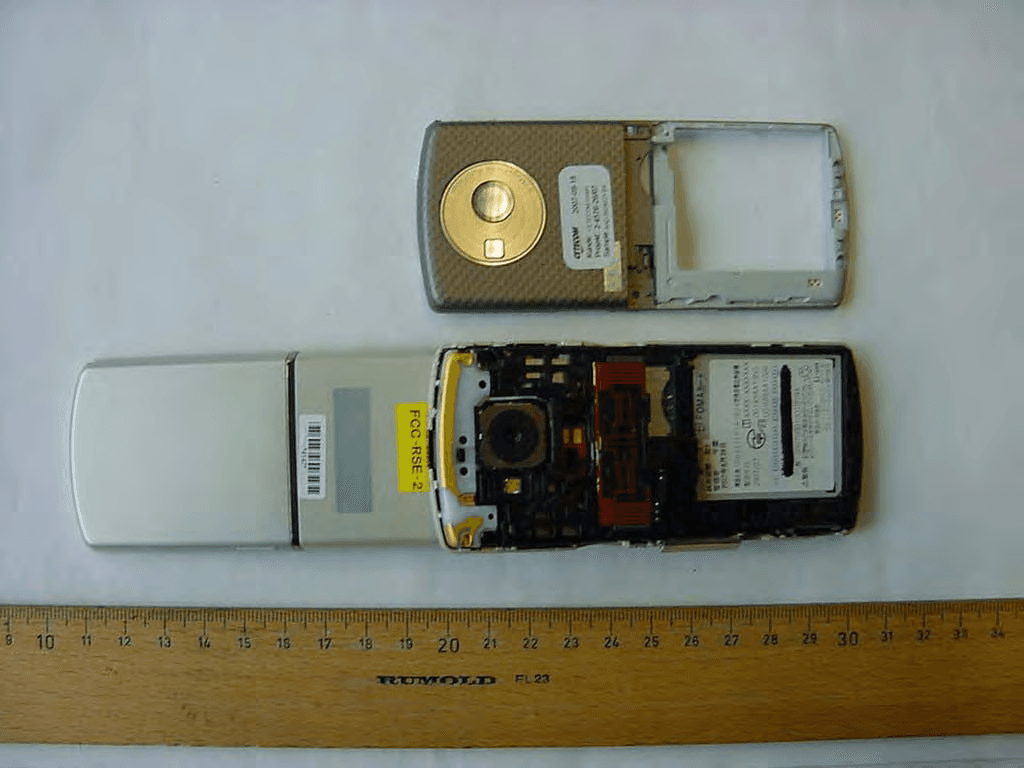
Click to zoom
Application Details
- Equipment Class
- PCE - PCS Licensed Transmitter held to ear
- Date of Grant
- Oct 31, 2007
- Application Purpose
- Original Equipment
- Date of Application
- Oct 31, 2007
- Equipment Note
- Licensed transmitter
- Frequency Range
- 1850.20000000 - 1909.80000000
- Company
- Sony Corporation
- Country
- Japan
Documents & Files
Document Text
Text extracted from the exhibit documents filed with the FCC. Open a document above to read the original.
Users Manual
Manual for Easy Search/Contents/ Precautions Before Using the Handset Voice/ Videophone Calls PushTalk Phonebook Sound/Display/ Light Settings Security Settings Camera i-mode/i-motion/ i-Channel Mail i-ppli Osaifu-Keitai/ ToruCa Index/ Quick Manual GPS Function Full Browser Overseas Use Appendix/External Devices/ Troubleshooting One Seg Data Display/Edit/ Management Music&Video Channel/ Music Playback Other Convenient Functions Network Services PC Connection Character Entry ’07.11 NTT DoCoMo W-CDMA/GSM/GPRS System Mobile Phone Thank you for your purchase of the new “FOMA SO905i” mobile phone. For proper use of the FOMA SO905i, read this manual and each manual attached to devices such as the battery pack carefully before and while you use the FOMA SO905i. For more information on manuals, contact the inquiries on the backcover of this manual. The FOMA SO905i is the efficient partner of yours. Please handle the FOMA SO905i with care and use it regularly for a long time. Before using the FOMA terminal Because a FOMA terminal operates using radio frequencies, it cannot be used inside a tunnel, underground, in a building or other locations where radio waves do not reach the FOMA terminal, in locations with weak radio wave condition, or outside of the FOMA’s service area. The FOMA services may not be available on high upper floors of high-rise apartments or buildings, even if you can see no obstructions around you. On occasion, your calls may become disconnected even in areas with strong radio wave condition, even if you are not moving, or even if there are 3-antenna marks in the FOMA terminal’s display. Please use discretion and mind your manners when using the FOMA terminal in public areas or crowded/quiet places to keep from bothering others. Note that because the FOMA terminal operates on radio frequencies, your calls are at risk of being intercepted by the third party. However, the W-CDMA/GSM/GPRS system automatically scrambles all calls through a private call feature. Therefore, even if the third party successfully intercepts your call, they will only hear noise. The FOMA terminal operates on radio frequencies by converting voice into digital signals. If the caller moves into an area of adverse radio wave condition, the digital signal may not be restored accurately, and the voice received in the call may differ slightly from the actual voice. The user hereby agrees that the user shall be solely responsible for the result of the use of SSL. Neither DoCoMo nor the certifiers as listed herein make any representation and warranty as for the security in the use of SSL. In the event that the user shall sustain damage or loss due to the use of SSL, neither DoCoMo nor the certifiers shall be responsible for any such damage or loss. Certifiers: VeriSign Japan K.K., Cybertrust, Inc., GlobalSign K.K., RSA Security Inc., and SECOM Trust Systems Co., Ltd. The FOMA terminal has FOMA Plus-Area and FOMA HIGH-SPEED Area support. The FOMA terminal can be used only via the FOMA network provided by DoCoMo and DoCoMo’s roaming area. Always keep the information you save in the FOMA terminal (e.g. phonebook entries, schedules, text memos, record messages, voice memos, videophone messages) in a separate note. Even if the data may be lost as a result of malfunction, repair, change, or other handling of the FOMA terminal, under no condition will DoCoMo be held liable for any lost data saved in the FOMA terminal. It is strongly recommended to save important data in the microSD memory card. Also, if you have a PC, you can transfer/save data such as phonebook entries, mail, schedules in your PC using the DoCoMo keitai datalink. Before using this manual The FOMA terminal supports the Kisekae tool (P.115). When you use the Kisekae tool to change the design of the menu display, some menu types may change the menu structure depending on the frequency in use. The digits assigned to menu items may not be applied. In this case, you cannot operate the FOMA terminal as explained in this manual, so please change the menu to the Standard menu or reset the menu settings (P.35, 116). The latest information on this manual is ready for download at the NTT DoCoMo’s website. ˎ “User’s Manual Download” (http://www.nttdocomo.co.jp/english/support/manual/index.html) The URL and contents of the website are subject to change without notice. 1 Information on Using the Manual and How to Look up in the Manual This manual guides you through the operating instructions with step-by-step screen examples for each operating procedure to ensure that you operate the FOMA terminal properly. How to Look up in the Manual This manual employs several search methods so that it can provide the most appropriate way to find a page relating to your desired function or service flexibly according to your need or situation. For details, see the next page. Index (P.418) Search by a function or service name known to you or a function name to be displayed on the FOMA terminal’s display. Easy Search (P.4) Search a function that you want to know or you consider useful to know from a listing sorted by purpose or by a function name. Headings on the cover (Cover page) Search the description page of a desired function in the order of “Cover page” “Chapter opening page (the first page of a chapter)” “Description page”. The opening page of each chapter contains detailed contents of the chapter. Contents (P.6) Search by purpose or a function name starting from chapters that are categorized by functions. Main functions (P.8) Search for main functions of SO905i, such as new and useful functions. List of menus (P.374) The menu items, which appear on the display of the FOMA SO905i, and default settings at the time of purchase are listed. Quick Manual (P.426) The basic operations of the FOMA terminal are explained briefly. Cut and fold these pages into a booklet and take it with you for convenient reference. The Quick Manual for “Overseas Use” is also included for convenient ref…
Text truncated - open the document above for the full version.
Users Manual
249 One Seg You can also set a timer for watching/recording a program using a program information provided by the program guide i- ppli, site, mail, etc. If the Alarm, Schedule alarm, and Booking alarm are set to start at the same time, the following priority is applied. 1. Schedule alarm 2. Booking alarm 3. Alarm If there is a timer that is set to start at the same time as the new timer for recording a program, the confirmation screen appears. If you select [Yes], the previously saved timer for recording a program is overwritten by the new one. When the ending or starting date and time set for the previously saved timer for recording a program is the same as the starting or ending date and time set for the newly saved one respectively, the confirmation screen appears. If you select [Yes], the preceding timer terminates slightly earlier than the specified time. If the Booking list is updated because of the saved reservation being started while editing a reservation or other reason, the reservation may not be saved successfully. If the repeat type of the schedule set for the 31st is set to [Month], the schedule is set for the last day of the month for months with less than 31 days. At the Booking Alarm Time The alarm tone sounds for about 30 seconds with the indicator flashing. To stop the alarm tone Press any key. When you stop the alarm tone, the display informing the release of the alarm appears. To turn off the display, press (OK) or . When you do not stop the alarm tone The display informing the release of the alarm appears. To turn off the display, press (OK) or . When the Cfm. activation is set to [ON] After you turn off the display informing the release of the alarm, the Cfm. activation display appears. Select [Yes] to activate One Seg. When the Cfm. activation is set to [OFF] Press for over a second to activate One Seg. If you set an i-motion with video and sound tracks to the alarm tone, a movie in the i-motion is displayed. If the alarm time comes during a voice/videophone call or PushTalk communication, the default alarm tone sounds and default alarm image is displayed. The vibrator does not operate. The Booking alarm does not operate in the following cases. - When the FOMA terminal is powered off - While the Lock all is set - While the Personal data lock is set - While the Omakase Lock is set - While updating the software If the alarm time comes in the following cases, the alarm may operate when the status changes to during a call or stand-by. - While placing/receiving a voice/videophone call or originating/receiving a PushTalk call - During packet communication - During the infrared communication/while the infrared remote control is being used - During the iC communication - During data communication or while reading/writing data from/into a microSD memory card on a PC with the FOMA terminal connected using the USB cable - While recording a still image/movie - While the Schedule alarm is sounding - Beep while receiving Area Mail, while sounding Area Mail ring tone, or displaying Area Mail If you leave the FOMA terminal with the battery pack removed or fully expended for a long period of time, the date and time is reset, and the Booking alarm may not operate correctly. At the Timer Recording Starting Time A recording is automatically started. When the timer for recording a program starts while One Seg is not activated, “ ” appears. After the recording is completed, the notification icon “ ” (Timer Rec result) appears in the stand-by display. ˎ Extend the One Seg Antenna fully while recording a program. To check the reservation result Press (Link) in the stand-by display and select “”. Continued 250 One Seg When the timer recording starting time comes while watching One Seg The Preparing to Rec display appears. To cancel recording, press and select [Yes]. To cancel the recording during timer recording Press while recording and select [Yes]. Even if the Dur multitask Rec is set to [Prefer recording], the timer for recording a program may be canceled in a case such as when there are too many active functions or there is not enough memory. Also, while transferring data to the microSD memory card, the recording does not start. If the Dur multitask Rec is set to [Prefer operat.] and when functions that cannot be run simultaneously are active, the screen for confirming whether to start the timer recording appears. When you select [Yes], the timer recording starts. However, regardless of selecting [Yes] on the confirmation screen, the timer for recording a program may not start in a case such as when there are too many active functions or there is not enough memory. Even if the FOMA terminal is outside of the broadcast service area when the timer recording starting time comes, the timer recording works effectively. However, the timer recording fails if the FOMA terminal is outside of the broadcast service area all the time from the beginning to the end of the scheduled recording time. The message “Could not receive broadcast wave” appears in the Result detail display (P.251). Timer recording does not start in the following cases. - When the FOMA terminal is powered off - When the UIM is not inserted - While the Lock all is set - While the Personal data lock is set - While the Omakase Lock is set - During packet communication - During 64K data communication - During the infrared communication - During the iC communication - While using the Data Security Service - While updating the software Setting the Operation for the Booking Alarm You can set the detailed operation for the Booking alarm. 1 Press (Func) in the Res. data list display. The Function menu appears. 2 Select [Booking ALM set] and press . 3 Select an alarm tone from MUSIC/i-motion/Melody of the Data Box at [Alarm tone]. ˎ You can set the following files. You can select a Chaku- Uta ® from [i-motion]. Category File format File sizeImage size MUSIC AAC-LC/ HE-AAC Max. 5M bytes i-motion MP4Max. 10M bytes Max. [VGA(640 480)] M…
Text truncated - open the document above for the full version.
External Photos
CETECOM ICT Services GmbH Annex to Test report no.: 2-4576-26-02/07 2007-09-28 Page 17 of 27 7 Photographs of t he E UT Photo No.: 1 Photo No.: 2 CETECOM ICT Services GmbH Annex to Test report no.: 2-4576-26-02/07 2007-09-28 Page 18 of 27 Photo No.: 3 Photo No.: 4 CETECOM ICT Services GmbH Annex to Test report no.: 2-4576-26-02/07 2007-09-28 Page 19 of 27 Photo No.: 5 Photo No.: 6 CETECOM ICT Services GmbH Annex to Test report no.: 2-4576-26-02/07 2007-09-28 Page 20 of 27 Photo No.: 7 Photo No.: 8 CETECOM ICT Services GmbH Annex to Test report no.: 2-4576-26-02/07 2007-09-28 Page 21 of 27 Photo No.: 9 Photo No.: 10
ID Label/Location Info
Company Internal MARKING DRAWING 1(4) Document number Revision Error! Uk Prepared by Date SEM/BJJPA Masayuki Chiba 2007-10-18 Contents responsible if other than preparer Remarks Contents responsible if other than preparer SEM/BJRCA Takayuki Misawa Mobile phone label content, No mark of origin Type number: AAD-3624011-BV (PTX-824) Final marketing name: SO905i 1. General Information This is NTT DoCoMo’s OEM product. The label is based on the requirement of NTT DoCoMo and it has been approved already. 2. Printing Information Content Format Line 1a Sony Ericsson stylized name Graphics, height 1.8 Line 1b Type: AAD-3624011-BV Graphics, height 1.8 Line 2a Operator's name Text, height 1.8 Line 2b Color of the phone Text, height 1.8 Line3 Device name Text, height 1.8 Line 4a Date of manufacture Text, height 1.8 Line 4b Telecommunications mark Graphics, height □1.8 Line 4c JATE number: AD07-0400001 Text, height 1.8 Line 5a Production week: Year/Month Text, height 1.8 Line 5b TELEC number (for W-CDMA): 001XYAA1382 Text, height 1.8 Line 6a Radio Law certification number mark Graphics, height □1.8 Line 6b TELEC number (for HSDPA): 001MWAA1046 Text, height 1.8 Line 7 TELEC symbol Graphics, height φ5.0 Line 8a FCC ID: PY7A3624011 Text, height 1.8 Company Internal MARKING DRAWING 2(4) Document number Revision Error! Uk Prepared by Date SEM/BJJPA Masayuki Chiba 2007-10-18 Contents responsible if other than preparer Remarks Contents responsible if other than preparer SEM/BJRCA Takayuki Misawa Line 8b IC: 4170B-A3624011 Text, height 1.8 Line 9 Line 10 in bar code. Bar code height 3.0 Line 10 IMEI number Text, height 1.8 Line 11a Caution symbol Graphics, height 1.5 Line 11b Caution message. "Please turn off power in an airplane" Graphics, height 1.4 Line 12 Caution message. "Please do not peel off this sticker" Graphics, height 1.4 Line 13 Recycling Li-ion symbol Graphics, height 4.0 Line 14 Manufacture : Applicant Graphics, height 1.4 Line 15a CE approved symbol Graphics, height 5.0 Line 15b The notified body number "0682" Graphics, height 1.8 Line 15c & Line 16 Name of the manufacture (Sony Ericsson mobile communications Inc.) Graphics, height 1.4 3. Layout Company Internal MARKING DRAWING 3(4) Document number Revision Error! Uk Prepared by Date SEM/BJJPA Masayuki Chiba 2007-10-18 Contents responsible if other than preparer Remarks Contents responsible if other than preparer SEM/BJRCA Takayuki Misawa 4. Dimensions Company Internal MARKING DRAWING 4(4) Document number Revision Error! Uk Prepared by Date SEM/BJJPA Masayuki Chiba 2007-10-18 Contents responsible if other than preparer Remarks Contents responsible if other than preparer SEM/BJRCA Takayuki Misawa 5. Label placement To find the label follow these steps: 1. Open the cover at the rear side of the product. 2. Remove the battery. 3. The label is located under the battery. Rear side of the phone Place for battery Label placement
Internal Photos
CETECOM ICT Services GmbH Annex to Test report no.: 2-4576-26-02/07 2007-09-28 Page 22 of 27 Photo No.: 11 Photo No.: 12 CETECOM ICT Services GmbH Annex to Test report no.: 2-4576-26-02/07 2007-09-28 Page 23 of 27 Photo No.: 13 Photo No.: 14 CETECOM ICT Services GmbH Annex to Test report no.: 2-4576-26-02/07 2007-09-28 Page 24 of 27 Photo No.: 15 Photo No.: 16 CETECOM ICT Services GmbH Annex to Test report no.: 2-4576-26-02/07 2007-09-28 Page 25 of 27 Photo No.: 17 Photo No.: 18 CETECOM ICT Services GmbH Annex to Test report no.: 2-4576-26-02/07 2007-09-28 Page 26 of 27 Photo No.: 19 Photo No.: 20 CETECOM ICT Services GmbH Annex to Test report no.: 2-4576-26-02/07 2007-09-28 Page 27 of 27 Photo No.: 21 Photo No.: 22
RF Exposure Info
Company Internal REPORT 1 (12) Prepared (also subject responsible if other) No. LD/SEMC/BGLIM Hamid Kami Shirazi BGLI07:524 Approved Checked Date Rev Reference LD/SEMC/BGLIMC Peter Lindeborg 070930 070928 A File Report issued by Accredited SAR Laboratory For PY7A3624011 (SO905i) Date of test: 18 th to 21 st Sept. 2007 Laboratory: SAR Test Laboratory Sony Ericsson Mobile Communications AB Nya Vattentornet SE-221 82 LUND, Sweden Testing Engineer: Hamid Kami Shirazi [email protected] +46 46232644 Testing Approval Peter Lindeborg [email protected] +46462126180 Statement of Compliance Sony Ericsson Mobile Communications AB declares under its sole responsibility that the product Sony Ericsson Type AAD-3624011-BV; FCC ID: PY7A3624011; IC:4170B-A3624011 to which this declaration relates, is in conformity with the appropriate RF exposure standards recommendations and guidelines. It also declares that the product was tested in accordance with the appropriate measurement standards, guidelines and recommended practices. Any deviations from these standards, guidelines and recommended practices are noted below: (None) This laboratory is accredited to ISO/IEC 17025 (SWEDAC accreditation no. 1847). Laboratories are accredited by the Swedish Board for Accreditation and Conformity Assessment (SWEDAC) under the terms of Swedish legislation. The accredited laboratory activities meet the requirements in SS-EN ISO/IEC 17025 (2005). This report may not be reproduced other than in full, except with the prior written approval of the issuing laboratory. The results and statements contained herein relate only to the items tested. The names of individuals involved may be mentioned only in connection with the statements or results from this report. Sony Ericsson encourages all feedback, both positive and negative, on this report. © Sony Ericsson Mobile Communication AB, 2007 Company Internal REPORT 2 (12) Prepared (also subject responsible if other) No. LD/SEMC/BGLIM Hamid Kami Shirazi BGLI07:524 Approved Checked Date Rev Reference LD/SEMC/BGLIMC Peter Lindeborg 070930 070924 A File 1 Table of contents 2 INTRODUCTION..................................................................................................................................................................3 3 DEVICE UNDER TEST........................................................................................................................................................3 3.1 A NTENNA DESCRIPTION.......................................................................................................................................................3 3.2 D EVICE DESCRIPTION...........................................................................................................................................................3 4 TEST EQUIPMENT ..............................................................................................................................................................4 4.1 D OSIMETRIC SYSTEM............................................................................................................................................................4 4.2 A DDITIONAL EQUIPMENT.....................................................................................................................................................4 5 ELECTRICAL PARAMETERS ON THE TISSUE SIMULATING LIQUID ..............................................................4 6 SYSTEM ACCURACY VERIFICATION..........................................................................................................................5 7 SAR MEASUREMENT UNCERTAINTY .........................................................................................................................6 8 TEST RESULTS ....................................................................................................................................................................7 9 REFERENCES .......................................................................................................................................................................8 10 APPENDIX .............................................................................................................................................................................9 10.1 P HOTOGRAPHS OF THE DEVICE UNDER TEST....................................................................................................................9 10.2 D EVICE POSITION ON SAM TWINS PHANTOM...............................................................................................................11 10.3 A TTACHMENTS...............................................................................................................................................................12 Company Internal REPORT 3 (12) Prepared (also subject responsible if other) No. LD/SEMC/BGLIM Hamid Kami Shirazi BGLI07:524 Approved Checked Date Rev Reference LD/SEMC/BGLIMC Peter Lindeborg 070930 070924 A File 2 Introduction In this test report, compliance of the Sony Ericsson PY7A3624011 (SO905i) portable telephone with RF safety guidelines is demonstrated. The applicable RF safety guidelines and the SAR measurement specifications used for the test are described in the SAR Measurement Specifications of Wireless Handsets [1]. 3 Device under Test 3.1 Antenna Description Type Internal antenna Location Inside, rear, at the Middle Max length 35mm Dimensions Max width 25mm Configuration PIFA 3.2 Device description Device model PY7A3624011(SO905i) Serial number (EUT #) 5166#9019 Mode GSM1900 Crest Factor 8.3 Multiple Access Scheme TDMA Ch512 Ch661 Ch810 Maximum Output Power Setting (dBm) 30.0 30.0 30.0 Factory Tolerance in Power Setting ±0.5dB Maximum Peak Output Power (dBm) 30.5 30.5 30.5 Data and connectivity GPRS Class: 8 ; Capability Class: B Ch512 Ch661 Ch810 Maximum Output Power Setting (dBm) 30.0 30.0 30.0 Factory Tolerance in P…
Text truncated - open the document above for the full version.
Test Report
CETECOM ICT Services GmbH Untertürkheimer Straße 6-10 . D-66117 Saarbrücken Phone: +49 (0) 681-598-0 Fax:-9075 RSC-Laboratory 2007-09-27 Page 1 of 37 Accredited testing-laboratory DAR registration number: DAT-P-176/94-D1 Federal Motor Transport Authority (KBA) DAR registration number: KBA-P 00070-97 Recognized by the Federal Communications Commission Anechoic chamber registration no.: 90462 (FCC) Anechoic chamber registration no.: 3463A-1 (IC) Certification ID: DE 0001 Accreditation ID: DE 0002 Accredited Bluetooth ® Test Facility (BQTF) The Bluetooth word mark and logos are owned by the Bluetooth SIG, Inc. and any use of such marks by Cetecom ICT is under license Test report no. : 2-4576-26-02/07 Type identification : AAD-3624011-BV Applicant : Sony Ericsson Mobile Communications AB FCC ID : PY7A3624011 IC Certification No : 4170B-A3624011 Test standards : 47 CFR Part 24 RSS - 133 Issue 3 CETECOM ICT Services GmbH Test report no.: 2-4576-26-02/07 2007-09-27 Page 2 of 37 Table of contents 1 G e n e r a l i n f o r m a t i o n . . . . . . . . . . . . . . . . . . . . . . . . . . . . . . . .. . . . . . . . . . . . . . . . . . . . . . . . . . . . . . . . . . . . . . . . . . . . . . . . . . .. . . . . . . . . . . . . . . . . 3 1.1 Notes ...................................................................................................................................................................3 1.2 Testing laboratory ...............................................................................................................................................4 1.3 Details of applicant .............................................................................................................................................4 1.4 Application details ..............................................................................................................................................4 2 T e s t s t a n d a r d / s : . . . . . . . . . . . . . . . . . . . . . . . . . . . . . . . . . . .. . . . . . . . . . . . . . . . . . . . . . . . . . . . . . . . . . . . . . . . . . . . . . . . . . .. . . . . . . . . . . . . . . . . . . . 5 3 T e c h n i c a l t e s t s . . . . . . . . . . . . . . . . . . . . . . . . . . . . . . . . . . . .. . . . . . . . . . . . . . . . . . . . . . . . . . . . . . . . . . . . . . . . . . . . . . . . . . .. . . . . . . . . . . . . . . . . . . . . 6 3.1 Details of manufacturer .......................................................................................................................................6 3.1.1 Test item......................................................................................................................................................6 3.2 Test Setup............................................................................................................................................................7 4 S t a t e m e n t o f C o m p l i a n c e . . . . . . . . . . . . . . . . . . . . . . . . . . . .. . . . . . . . . . . . . . . . . . . . . . . . . . . . . . . . . . . . . . . . . . . . . . . . . . .. . . . . . . . . . . . . . 8 4.1 Summary of Measurement Results......................................................................................................................8 4.1.1 PCS 1900.....................................................................................................................................................8 5 M e a s u r e m e n t s a n d r e s u l t s . . . . . . . . . . . . . . . . . . . . . . . . . . .. . . . . . . . . . . . . . . . . . . . . . . . . . . . . . . . . . . . . . . . . . . . . . . . . . .. . . . . . . . . . . . . 9 5.1 PART PCS 1900 .................................................................................................................................................9 5.1.1 RF Power Output.........................................................................................................................................9 5.1.2 Frequency Stability ...................................................................................................................................13 5.1.3 Radiated Emissions ...................................................................................................................................16 5.1.4 Receiver Radiated Emissions ....................................................................................................................24 5.1.5 Conducted Spurious Emissions .................................................................................................................27 5.1.6 Block Edge Compliance............................................................................................................................30 5.1.7 Occupied Bandwidth .................................................................................................................................32 6 T e s t e q u i p m e n t a n d a n c i l l a r i e s u s e d f o r t e s t s . . . . . .. . . . . . . . . . . . . . . . . . . . . . . . . . . . . . . . . . . . . . . . . . . . . . . . . . .. . . . 3 6 CETECOM ICT Services GmbH Test report no.: 2-4576-26-02/07 2007-09-27 Page 3 of 37 1 General infor mat ion 1 . 1 N o t e s The test results of this test report relate exclusively to the test item specified in 1.5. The CETECOM ICT Services GmbH does not assume responsibility for any conclusions and generalisations drawn from the test results with regard to other specimens or samples of the type of the equipment represented by the test item. The test report may only be reproduced or published in full. Reproduction or publication of extracts from the report requires the prior written approval of the CETECOM ICT Services GmbH. Test laboratory manager: 2007-09-28 Detlev Gillmann Date Name Signature Technical responsibility for area of testing: 2007-09-28 Harro Ames Date Name Signature CETECOM ICT Services GmbH Test report no.: 2-4576-26-0…
Text truncated - open the document above for the full version.
Test Setup Photos
Company Internal REPORT 9 (12) Prepared (also subject responsible if other) No. LD/SEMC/BGLIM Hamid Kami Shirazi BGLI07:524 Approved Checked Date Rev Reference LD/SEMC/BGLIMC Peter Lindeborg 070930 070924 A File 10 Appendix 10.1 Photographs of the device under test Close Open Close Front and rear Rear with battery Headset and connector System connector Close Open Sides Company Internal REPORT 10 (12) Prepared (also subject responsible if other) No. LD/SEMC/BGLIM Hamid Kami Shirazi BGLI07:524 Approved Checked Date Rev Reference LD/SEMC/BGLIMC Peter Lindeborg 070930 070924 A File 10.2 Device position on SAM Twins Phantom Close Open Device position towards the head: Cheek (touch) phone position Close Open Device position towards the head: Tilt (cheek+15deg) phone position Company Internal REPORT 11 (12) Prepared (also subject responsible if other) No. LD/SEMC/BGLIM Hamid Kami Shirazi BGLI07:524 Approved Checked Date Rev Reference LD/SEMC/BGLIMC Peter Lindeborg 070930 070924 A File Display towards body Rear towards body Device position towards body: Phone on 15mm distance against Phantom
Contact Information
Applicant
Kazuyuki Hori(Senior EMC/RF Compliance Manager)
Technical Specifications
| # | Rule Parts | Frequency Range | Power Output | Emission | Tolerance |
|---|---|---|---|---|---|
| 1 | 24E | 1.85 GHz - 1.91 GHz | 1.349 W | 300KGXW | 0.0282000000 ppm |
Other Applications from Sony Corporation
PY7-75158T
Jul 16, 2026GSM/WCDMA/LTE Phone with BT, DTS/UNII a/b/g/n/ac/ax, NFC and GNSS
Equipment Class
NII - Unlicensed National Information Infrastructure TXPY7-52715J
Jul 16, 2026GSM/WCDMA/LTE Phone with BT, DTS/UNII a/b/g/n/ac/ax, NFC and GNSS
Equipment Class
DXX - Part 15 Low Power Communication Device TransmitterPY7-84526Y
Jul 16, 2026GSM/WCDMA/LTE Phone with BT, DTS/UNII a/b/g/n/ac/ax, NFC and GNSS
Equipment Class
PCE - PCS Licensed Transmitter held to earPY7-30515Z
Apr 13, 2026GSM/WCDMA/LTE/NR Phone with BT, DTS/UNII a/b/g/n/ac/ax/be, NFC, GNSS and WPT
Equipment Class
DXX - Part 15 Low Power Communication Device TransmitterPY7-73716J
Apr 11, 2024GSM/WCDMA/LTE Phone with BT, DTS/UNII a/b/g/n/ac, NFC and GNSS
Equipment Class
PCE - PCS Licensed Transmitter held to ear