PY7A3880067GSM 850/900/1800/1900 GPRS / EDGE / UMTS FDD1 / HSPA mobile phone with Bluetooth, FM receiver
Sony Corporation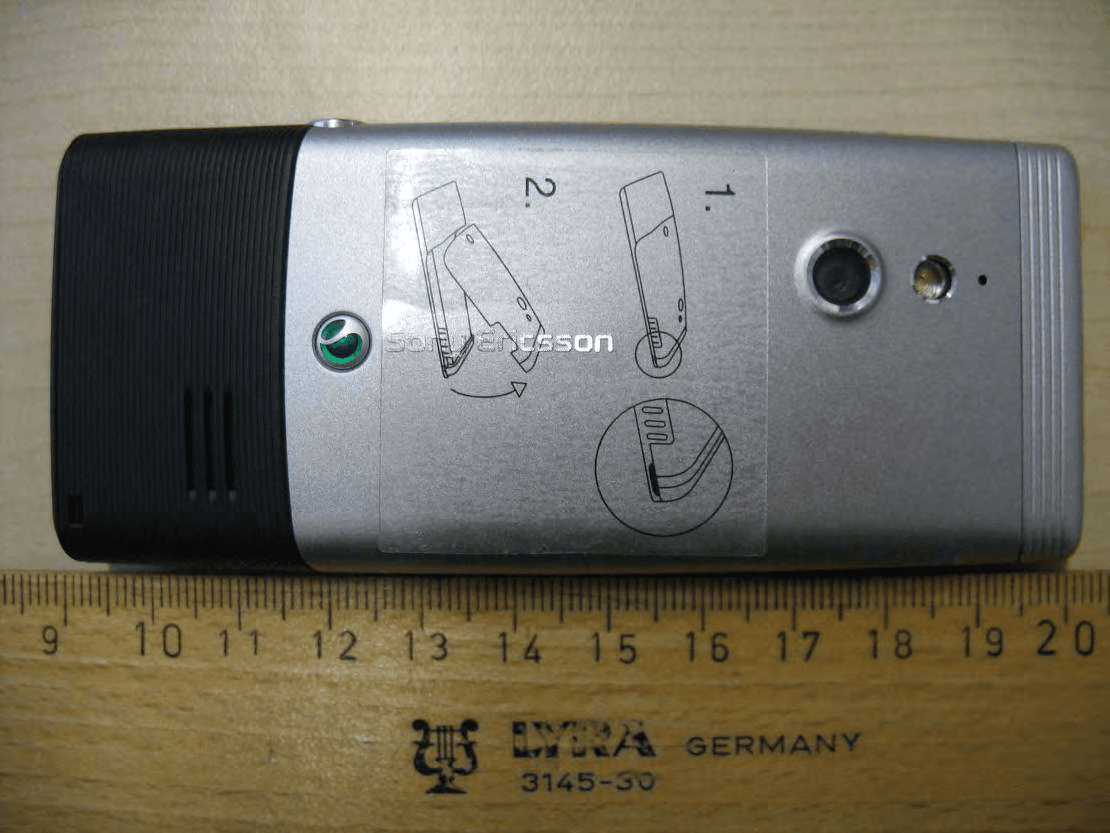
Click to zoom
Application Details
- Equipment Class
- PCE - PCS Licensed Transmitter held to ear
- Date of Grant
- Feb 15, 2010
- Application Purpose
- Original Equipment
- Date of Application
- Feb 15, 2010
- Equipment Note
- GSM 850/900/1800/1900 GPRS / EDGE / UMTS FDD1 / HSPA mobile phone with Bluetooth, FM receiver
- Frequency Range
- 1850.20000000 - 1909.80000000
- Company
- Sony Corporation
- Country
- Japan
Documents & Files
Document Text
Text extracted from the exhibit documents filed with the FCC. Open a document above to read the original.
Users Manual
J10 User guide Important information Please read the Important information leaflet before you use your mobile phone. Experience more. Discover how. Fill it with pop and let it rock. Share your life in pictures. Or why not go online for the latest updates? Your new phone is the key to a wider world. And it's just around the corner. Get started with this User guide. And join us online to get the full picture. Music, games, apps, updates, downloads, support and more. All in one place: www.sonyericsson.com/J10 Don't forget to update your phone software. See Updating your phone on page 33. User guide in the phone An extended User guide is available in your phone. To access the User guide in your phone • Select Menu > Settings > User help > User guide. 2 Phone overview 1Ear speaker 1 11 10 12 13 14 2 3 4 5 6 7 9 8 2Light sensor 3Connector for charger, handsfree, and USB cable 4Screen 5Selection keys 6Call key 7Activity menu key 8Navigation key 9Keylock key 10Video call camera* 11End key, On/off key 12C key (Clear) 13Silent key 14Microphone 3 15Microphone 15 17 16 18 19 20 21 16Flash light 17Volume, digital zoom key 18Main camera lens 19Camera key 20Speaker 21Strap hole * The video call camera may not be available in your phone. 4 Getting started To insert the SIM card 1 Remove the battery cover. 2 Slide the SIM card into its holder with the gold-coloured contacts facing down. 5 To insert the battery 1 Insert the battery with the label side up and the connectors facing each other. 2 Attach the battery cover. Turning on the phone To turn on the phone 1 Press and hold down . 6 2 Enter your SIM card PIN (Personal Identification Number), if requested, and select OK. 3 Select a language. 4 Follow the instructions that appear. If you want to correct a mistake when you enter your PIN, press . Help In addition to this User guide, Feature guides and more information are available at www.sonyericsson.com/cn. There are also help functions in your phone. See the following instructions on how to access them. To view tips and tricks • Select Menu > Settings > User help > Tips and tricks. To view information about functions • Scroll to a function and select Info, if available. In some cases, Info appears under Options. To view the phone status • Press a volume key. Phone, memory and battery information is shown. Supported services and features Some of the services and features described in this User guide are not supported by all networks and/or service providers in all areas. Without limitation, this applies to the GSM International Emergency Number 112. Please contact your network operator or service provider to determine availability of any specific 7 service or feature and whether additional access or usage fees apply. Charging the battery The phone battery is partly charged when you buy it. It may take 30 minutes for the battery icon to appear on the screen. To charge the battery 1 Connect the charger to the phone. 2 Remove the charger by tilting the plug upwards. Note • If there are two USB cables in the kit (a USB cable for charging and a USB cable for data transfer), the USB cable for charging is only intended for charging your phone. Do not use it for transferring data. The USB cable for the USB charger is only intended for connection 8 to the AC adapter to charge your phone. It must not be used for connection to a PC. It can only be used for charging your phone. Never use it for charging accessories. USB cable for charging USB cable for transferring • If there is only one USB cable in the kit, it is intended for charging your phone as well as transferring data. • If there is only one USB cable for the USB charger in the phone kit, this USB cable is only intended for charging your phone. • To charge your phone, Sony Ericsson strongly recommends that you use only Sony Ericsson branded original batteries, a power supply which is in accordance with specification YD/T 1591-2006 (a Communications Industry standard of P. R. China), and the USB cable supplied with your phone. The use 9 of third-party products may decrease the performance of your phone and/or pose a risk to your health or safety. You can charge the battery for more or less than 3 hours. Interrupted charging will not damage the battery. Performance depends on temperatures, signal strength, usage patterns, features selected and voice or data transmissions. The stand-by time for this battery is up to 430 hours in GSM network; up to 446 hours in UMTS network (the test results are based on GSMA battery life test technology). Use only Sony Ericsson branded original batteries intended for use with your mobile phone. If you use other batteries you may not be able to charge your phone. Maximising battery performance • Charge your phone often. The battery lasts longer if you charge it frequently. • If you are in an area with no coverage, your phone repeatedly scans for available networks. This consumes power. If you cannot move to an area with better coverage, turn off your phone temporarily. • Turn off 3G and Bluetooth™ wireless technology when you do not need these functions. • Do not cover the phone antenna when you are engaged in a call. Go to www.sonyericsson.com/support to learn more about how to maximise the battery performance. 10 Menu overview* PlayNow™ Camera Alarms Calls** All Answered Dialled Missed Internet Messaging Write new, Inbox/ Conversations, Messages, Email, Call voicemail Contacts Myself, New contact Organiser Applications, File manager ** , File transfer, Tasks, Notes, Video call, Synchronisation, Timer, Stopwatch, Torch, Calculator Entertainment Online services* , Radio, TrackID™, Location services, Games, Record sound, Demo tour Media Photo, Music, Video, Games, Web feeds, Settings Calendar Settings General Profiles, Time & date, Language, Update software, Voice control, Shortcuts, Flight mode, 11 Automatic keylock, PIN codes, Security, Accessibility* , Phone status, Master reset Sounds & alerts Ring volume, Ringtone, Silent m…
Text truncated - open the document above for the full version.
Cover Letter(s)
Sony Ericsson Confidentiality Request 2010-01-13 CVVA10005 SEMC/CVVALE Afrah Sadiq +46 10 80 12250 Receiver Federal Communications Commission Subject: Request for Confidentiality FCC ID: PY7A3880067 To Whom It May Concern: In accordance with §0.459 of CFR 47, Sony Ericsson Mobile Communications AB requests confidentiality for the below listed items for our mobile phone type AAD 3880067-BV, FCC ID: PY7A3880067: 1. Block Diagram 2. Schematic Diagram 3. Part List 4. OperationallTechnical Descriptions These items contain detailed system and equipment description and related information about the product which Sony Ericsson Mobile Communications AB considers to be proprietary, confidential and a custom design which otherwise would not be released to the general public. Since this design is a basis from which future technological products will evolve, Sony Ericsson Mobile Communications AB also feels that this information would be of benefit to its competitors, and that the disclosure of the information in these exhibits would give our competitors an unfair advantage in the market. Please contact the undersigned if there are any further questions or additional information needed in this matter. Best Regards, Afrah Sadiq Development Engineer - Global Type Approval Sony Ericsson Mobile Communications AB / Sony Ericsson Mobile Communications AS Styrelsens sate: Lund Momsnr· v,A. TNo: SE556615665801 Registered office: Lund Organisationsnr • Reg No: 556615-6658 Postadress • Mail Besbksadress • Office address Telefon • Telephone Telefax· Telefax SE-221 88 Lund Nya Vattentornet Nat 010-8000000 Nat 010-80 02040 Sweden Lund Int +46 10 80 00000 Int +46 10 80 02040
External Photos
CETECOM ICT Services GmbH Annex to Test report no.: 1-1954-01-02/10 2010-01-19 Page 17 of 24 8 Photographs of t he E UT Photo documentation Photo 4: CETECOM ICT Services GmbH Annex to Test report no.: 1-1954-01-02/10 2010-01-19 Page 18 of 24 Photo 5: Photo 6: CETECOM ICT Services GmbH Annex to Test report no.: 1-1954-01-02/10 2010-01-19 Page 19 of 24 Photo 7: Photo 8: CETECOM ICT Services GmbH Annex to Test report no.: 1-1954-01-02/10 2010-01-19 Page 20 of 24 Photo 9: Photo 10:
ID Label/Location Info
Company Internal MARKING DRAWING 1 (3) Prepared (also subject responsible if other) No. Flora Kang (28848956) xxxx-xxxx Approved Checked Date Rev Reference Flora Kang (28848956) 2009-11-10 1 4 Label Content Specification J10, Mobile Phone, Made in, CN Type Number: AAD-3880067-BV FCC ID: PY7A3880067 Canada IC: 4170B-A3880067 1 General information Mobile Phone label part no • 1001-2238 Bar code • Standard: according to Ericsson corporate standard 102 01–109 Uen • Print quality: C, according to ANSI X3.182-1990 as stated in Ericsson corporate standard 102 01– 1003 Uen • Quiet zone: No bar codes are allowed to be closer to a label edge than 2 mm! Text If applicable, or nothing else specified, Zebra printer Scaleable Smooth Font CG Triumvirate Bold Condensed is imposed. When needed, the text is adjusted to fit the label. Coordinates “(x/y)” under each line number specifies the bottom / left alignment for text, graphics and bar codes, x is measured vertically, and y horizontally from the upper left corner of the label (landscape format), both in mm. When needed, the alignment is adjusted to fit the label. 2 Printing information Content Format Line 1a (2,0/1,0) Sony Ericsson stylized name. Graphics, height 1,5 mm. According to 1200-1925. Line 1b (2,0/15,0) Location code of where the phone is flashed, if applicable, “XXX” Text, height 1,2 mm. Line 2a (4,0/1,0) Type number of the phone, “Type: AAD-3880067-BV”. Text, height 1,2 mm. Line 2b (4,0/15,0) HW & SW identification field, if applicable; “FFGG” Text, height 1,2 mm. According to Type-testing report under Product Model Specifying Document Line 3 (5,5/19,5) CE approval symbol Graphics, height 5 mm. According to 1210-0131. Line 4a (5,8/1,0) “FCC ID: PY7A3880067” Text, height 1,2 mm. Line 4b (5,8/15,0) Repair week, if applicable. “Ry’W’ww” (y = year, ww = week) Text, height 1,2 mm. Line 4c (5,8/27,0) WEE trashcan without bar symbol Graphics, height 5,0 mm, According to 1202-5537. Line 5a (7,5/1,0) “IC: 4170B-A3880067” Text, height 1,2 mm. Line 5b (7,5/13,2) Product number without revision of the Sales Item in which the phone is packed, if applicable. “SI XXXX-XXXX” Text, height 1,2 mm. Line 5c (7,5/23,3) The notified body number “0682” Text, height 1,2 mm. Line 6 (9,5/1,0) Line 7a in bar code. As desired by supplier (e.g. only actual number). Bar code, height 2,0 mm. As desired by supplier (e.g. Code 128 symbology). Line 7a (11,5/1,0) Supplier’s identification for trace-ability of the telephone, as desired by supplier (e.g. “S/N: nnn....” for serial number). Text, height 1,2 mm. Defined by supplier. Company Internal MARKING DRAWING 2 (3) Prepared (also subject responsible if other) No. Flora Kang (28848956) xxxx-xxxx Approved Checked Date Rev Reference Flora Kang (28848956) 2009-11-10 1 4 Line 7b (11,5/14,0) Actual electronic serial number (IMEI) of the mobile phone, “00000000-000000-0” Text, height 1,2 mm. In the format TAC-SNR-CD. TAC and SNR derived from pos 500 in BOM. CD = check digit according to the Luhn formula (ISO/IEC 7812), GSM 02.16. Line 7c (11,5/29,0) Production week (flash), “yy’W’ww” (yy = year, ww = week) Text, height 1,2 mm. Rotated 90 degree counter-clockwise Line 8 (13,5/1,0) Line 7b in bar code (only actual number, without data identifier). Bar code, height 2,0 mm. Code 128 symbology, code C subset. If uneven number of digits, code B subset shall be used for the last digit. Line 9a (16,0/10,0) Marking of origin: Text or graphics according to 1200-4285, height 1,2 mm. Line 9b (16,0/17,5) Text, height 1,2 mm. Line 9c (16,0/21,0) Model Name “J10” Text, height 1,2 mm. Line 10 (16,8/1,0) Text, height 3,0 mm. Line 11a (18,5/1,0) Text, height 1,5 mm. Line 11b (18,5/29,5) CCC-sticker with S&E Graphics, height 5 mm, width 6,5mm Rotated 90 degree counter-clockwise According to 1201-7981. Line 11c (18,5/31,5) “CMIIT ID: 2009XXXXXX” Text, height 1,5mm with frame around. Rotated 90 degree counter-clockwise According to Chapter 3.1.3 in MLCI. 3 Layout The conceptual picture (for Zebra 90XiII printer, or equivalent) should not be considered as specifications, but as an additional help for setting up the label. 3.1 Conceptual picture double underlined = major changes since last revision. Company Internal MARKING DRAWING 3 (3) Prepared (also subject responsible if other) No. Flora Kang (28848956) xxxx-xxxx Approved Checked Date Rev Reference Flora Kang (28848956) 2009-11-10 1 4 Label placement To find the label follow these steps: 1. Remove the cover on the rear side of the product. 2. Remove the battery. 3. The label is located behind the battery. Rear side of the phone Place for battery Label placement
Internal Photos
CETECOM ICT Services GmbH Annex to Test report no.: 1-1954-01-02/10 2010-01-19 Page 21 of 24 Photo 11: Photo 12: CETECOM ICT Services GmbH Annex to Test report no.: 1-1954-01-02/10 2010-01-19 Page 22 of 24 Photo 13: Photo 14: CETECOM ICT Services GmbH Annex to Test report no.: 1-1954-01-02/10 2010-01-19 Page 23 of 24 Photo 15: Photo 16: CETECOM ICT Services GmbH Annex to Test report no.: 1-1954-01-02/10 2010-01-19 Page 24 of 24 Photo 17:
RF Exposure Info
Company Internal REPORT 1 (14) Prepared (also subject responsible if other) No. BA/SEMC/CCMVAU Rob Carr CCDA09:639. Approved Checked Date Rev Reference LD/SEMC/CCMVALEC Peter Lindeborg PL 091215 A File Report issued by Accredited SAR Laboratory for FCC ID: PY7A3880067 (J10) Date of test: November 27 th to December 9 th 2009 Laboratory: Sony Ericsson SAR Test Laboratory Sony Ericsson Mobile Communications AB Maplewood, Chineham Business Park Basingstoke, RG24 8YB, England Testing Engineer: Robert Carr [email protected] +44 1256 77 48 91 Testing Approval: Peter Lindeborg [email protected] +46 10 802 43 68 Statement of Compliance Sony Ericsson Mobile Communications AB declares under its sole responsibility that the product Sony Ericsson Type AAD-3880067-BV; FCC ID PY7A3880067; IC 4170B-A3880067 to which this declaration relates, is in conformity with the appropriate RF exposure standards recommendations and guidelines. It also declares that the product was tested in accordance with the appropriate measurement standards, guidelines and recommended practices. Any deviations from these standards, guidelines and recommended practices are noted below: (None) This laboratory is accredited to ISO/IEC 17025 (SWEDAC accreditation no. 1847). Laboratories are accredited by the Swedish Board for Accreditation and Conformity Assessment (SWEDAC) under the terms of Swedish legislation. The accredited laboratory activities meet the requirements in SS-EN ISO/IEC 17025 (2005). This report may not be reproduced other than in full, except with the prior written approval of the issuing laboratory. The results and statements contained herein relate only to the items tested. The names of individuals involved may be mentioned only in connection with the statements or results from this report. Sony Ericsson encourages all feedback, both positive and negative, on this report. © Sony Ericsson Mobile Communication AB, 2009 Company Internal REPORT 2 (14) Prepared (also subject responsible if other) No. BA/SEMC/CCMVAU Rob Carr CCDA09:639. Approved Checked Date Rev Reference LD/SEMC/CCMVALEC Peter Lindeborg PL 091215 A File Table of contents 1 INTRODUCTION ............................................................................................................................................................. 3 2 CUSTOMER DETAILS .................................................................................................................................................... 3 3 DEVICE UNDER TEST ................................................................................................................................................... 3 3.1 ANTENNA DESCRIPTION .............................................................................................................................................. 3 3.2 DEVICE DESCRIPTION .................................................................................................................................................. 4 4 TEST EQUIPMENT.......................................................................................................................................................... 5 4.1 DOSIMETRIC SYSTEM ................................................................................................................................................... 5 4.2 ADDITIONAL EQUIPMENT ............................................................................................................................................. 5 5 ELECTRICAL PARAMETERS ON THE TISSUE SIMULATING LIQUID ............................................................ 6 6 SYSTEM ACCURACY VERIFICATION ...................................................................................................................... 7 7 SAR MEASUREMENT UNCERTAINTY ...................................................................................................................... 8 8 TEST RESULTS ................................................................................................................................................................ 9 9 REFERENCES ................................................................................................................................................................ 11 APPENDIX ............................................................................................................................................................................... 12 9.1 PHOTOGRAPHS OF THE DEVICE UNDER TEST ............................................................................................................... 12 9.2 DEVICE POSITION AT SAM TWIN PHANTOM .............................................................................................................. 13 9.3 ATTACHMENTS .......................................................................................................................................................... 14 Company Internal REPORT 3 (14) Prepared (also subject responsible if other) No. BA/SEMC/CCMVAU Rob Carr CCDA09:639. Approved Checked Date Rev Reference LD/SEMC/CCMVALEC Peter Lindeborg PL 091215 A File 1 Introduction In this test report, compliance of the Sony Ericsson FCC ID: PY7A3880067 (J10) portable telephone with RF safety guidelines is demonstrated. The applicable RF safety guidelines and the SAR measurement specifications used for the test are described in the SAR Measurement Specifications of Wireless Handsets [1]. 2 Customer details Company Name: Sony Ericsson Mobile China Address: 3/F, Building A, Wang Jing High-Tech Park, Beijing, China Contact Name: Jacky Liu 3 Device Under Test 3.1 Antenna Description Type Internal antenna Location Bottom of phone Main and BT antennas distance 80 mm Dimensions Max length 30 mm Max width 15 mm Configuration Semi-PIFA Company Internal REPORT 4 (14) Prepared (also subject responsible if other) No. BA/SEMC/CCMVAU Rob Carr CCDA09:639. Approved Checked D…
Text truncated - open the document above for the full version.
Test Report
CETECOM ICT Services GmbH Untertürkheimer Straße 6-10 . D-66117 Saarbrücken Phone: +49 (0) 681-598-0 Fax: -9075 RSC-Laboratory 2010-01-19 Page 1 of 63 Accredited testing-laboratory DAR registration number: DGA-PL-176/94-D1 Federal Motor Transport Authority (KBA) DAR registration number: KBA-P 00070-97 Recognized by the Federal Communications Commission Anechoic chamber registration no.: 90462 (FCC) Anechoic chamber registration no.: 3462C-1 (IC) Certification ID: DE 0001 Accreditation ID: DE 0002 Accredited Bluetooth ® Test Facility (BQTF) The Bluetooth word mark and logos are owned by the Bluetooth SIG, Inc. and any use of such marks by Cetecom ICT is under license Test report no. : 1-1954-01-02/10 Type identification : AAD-3880067-BV Applicant : Sony Ericsson Mobile Communications AB FCC ID : PY7A3880067 IC Certification No : 4170B-A3880067 Test standards : 47 CFR Part 22 47 CFR Part 24 RSS - 132 Issue 2 RSS - 133 Issue 5 CETECOM ICT Services GmbH Test report no.: 1-1954-01-02/10 2010-01-19 Page 2 of 63 Table of contents 1 G e n e r a l i n f o r m a t i o n . . . . . . . . . . . . . . . . . . . . . . . . . . . . . . . .. . . . . . . . . . . . . . . . . . . . . . . . . . . . . . . . . . . . . . . . . . . . . . . . . . .. . . . . . . . . . . . . . . . . 3 1.1 Notes ...................................................................................................................................................................3 1.2 Testing laboratory ...............................................................................................................................................4 1.3 Details of applicant .............................................................................................................................................4 1.4 Application details ..............................................................................................................................................4 2 T e s t s t a n d a r d / s . . . . . . . . . . . . . . . . . . . . . . . . . . . . . . . . . . . .. . . . . . . . . . . . . . . . . . . . . . . . . . . . . . . . . . . . . . . . . . . . . . . . . . .. . . . . . . . . . . . . . . . . . . . 5 3 T e c h n i c a l t e s t s . . . . . . . . . . . . . . . . . . . . . . . . . . . . . . . . . . . .. . . . . . . . . . . . . . . . . . . . . . . . . . . . . . . . . . . . . . . . . . . . . . . . . . .. . . . . . . . . . . . . . . . . . . . . 6 3.1 Details of manufacturer .......................................................................................................................................6 3.1.1 Test item......................................................................................................................................................6 3.2 Test Setup............................................................................................................................................................7 4 S t a t e m e n t o f C o m p l i a n c e . . . . . . . . . . . . . . . . . . . . . . . . . . . .. . . . . . . . . . . . . . . . . . . . . . . . . . . . . . . . . . . . . . . . . . . . . . . . . . .. . . . . . . . . . . . . . 8 4.1 Summary of Measurement Results......................................................................................................................8 4.1.1 PCS 1900.....................................................................................................................................................8 4.1.2 GSM 850 .....................................................................................................................................................8 4.1.3 Receiver ......................................................................................................................................................8 5 M e a s u r e m e n t s a n d r e s u l t s . . . . . . . . . . . . . . . . . . . . . . . . . . .. . . . . . . . . . . . . . . . . . . . . . . . . . . . . . . . . . . . . . . . . . . . . . . . . . .. . . . . . . . . . . . . 9 5.1 PART PCS 1900 .................................................................................................................................................9 5.1.1 RF Power Output.........................................................................................................................................9 5.1.2 Frequency Stability ...................................................................................................................................14 5.1.3 Radiated Emissions ...................................................................................................................................17 5.1.4 Conducted Spurious Emissions .................................................................................................................21 5.1.5 Block Edge Compliance............................................................................................................................24 5.1.6 Occupied Bandwidth .................................................................................................................................27 5.2 PART GSM 850 ................................................................................................................................................34 5.2.1 RF Power Output.......................................................................................................................................34 5.2.2 Frequency Stability ...................................................................................................................................37 5.2.3 Radiated Emissions ...................................................................................................................................40 5.2.4 Conducted Spurious Emissions .................................................................................................................44 5.2.5 Block Edge Compliance...............…
Text truncated - open the document above for the full version.
Contact Information
Applicant
Mika Kaneko(Chief Regulatory Compliance Manager)
Technical Contact
Sony Ericsson Mobile Communications ABPeter Lindeborg
Nya Vattentornet · Lund · Sweden
Technical Specifications
| # | Rule Parts | Frequency Range | Power Output | Emission | Tolerance |
|---|---|---|---|---|---|
| 4 | 24E | 1.85 GHz - 1.91 GHz | 460.00 mW | 300KG7W | 0.0218 ppm |
Other Applications from Sony Corporation
PY7-75158T
Jul 16, 2026GSM/WCDMA/LTE Phone with BT, DTS/UNII a/b/g/n/ac/ax, NFC and GNSS
Equipment Class
NII - Unlicensed National Information Infrastructure TXPY7-52715J
Jul 16, 2026GSM/WCDMA/LTE Phone with BT, DTS/UNII a/b/g/n/ac/ax, NFC and GNSS
Equipment Class
DXX - Part 15 Low Power Communication Device TransmitterPY7-84526Y
Jul 16, 2026GSM/WCDMA/LTE Phone with BT, DTS/UNII a/b/g/n/ac/ax, NFC and GNSS
Equipment Class
PCE - PCS Licensed Transmitter held to earPY7-30515Z
Apr 13, 2026GSM/WCDMA/LTE/NR Phone with BT, DTS/UNII a/b/g/n/ac/ax/be, NFC, GNSS and WPT
Equipment Class
DXX - Part 15 Low Power Communication Device TransmitterPY7-73716J
Apr 11, 2024GSM/WCDMA/LTE Phone with BT, DTS/UNII a/b/g/n/ac, NFC and GNSS
Equipment Class
PCE - PCS Licensed Transmitter held to ear