PY7A3880123Mobile phone with Bluetooth, WLAN 802.11bgn, GPS/A-GPS, ANT+ and FM Rx
Sony Corporation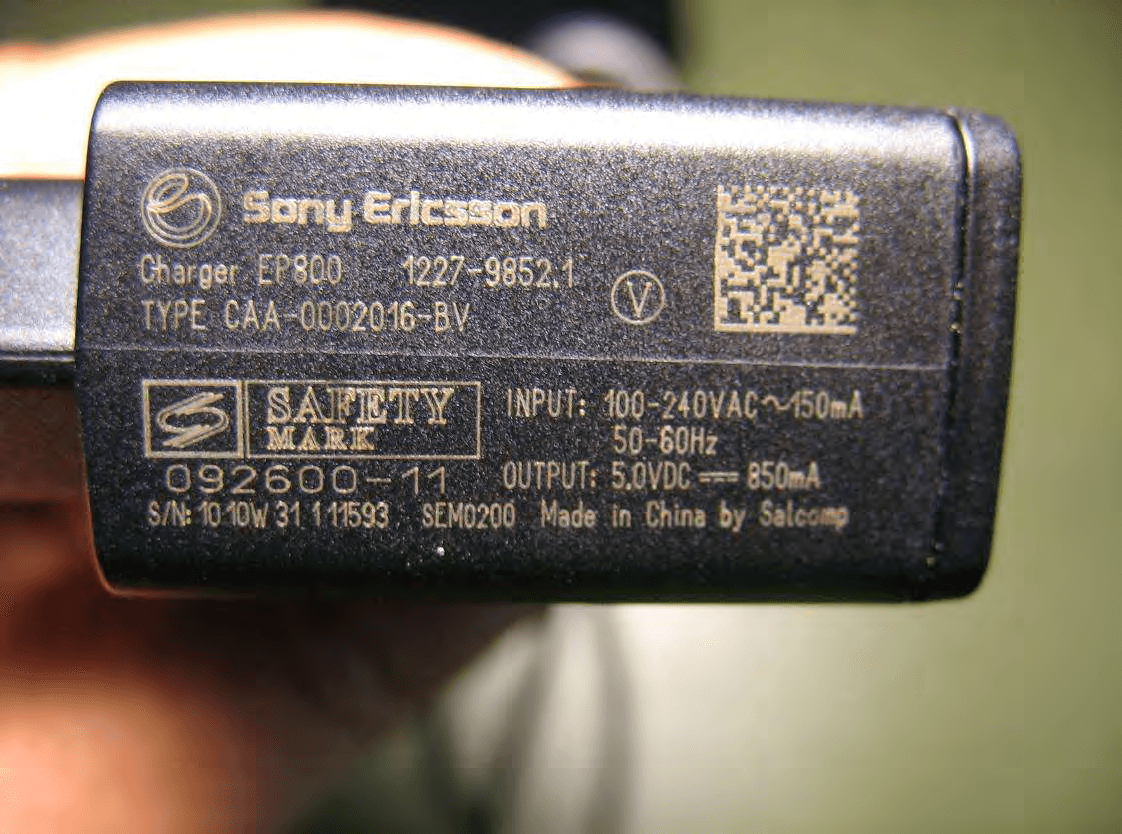
Click to zoom
Application Details
- Equipment Class
- PCE - PCS Licensed Transmitter held to ear
- Date of Grant
- Sep 08, 2011
- Application Purpose
- Original Equipment
- Date of Application
- Sep 08, 2011
- Equipment Note
- Mobile phone with Bluetooth, WLAN 802.11bgn, GPS/A-GPS, ANT+ and FM Rx
- Frequency Range
- 1850.20000000 - 1909.80000000
- Company
- Sony Corporation
- Country
- Japan
Documents & Files
Document Text
Text extracted from the exhibit documents filed with the FCC. Open a document above to read the original.
Users Manual
Live with Walkman ™ Startup guide Sony Ericsson Mobile Communications AB SE-221 88 Lund, Sweden www.sonyericsson.com Phone basics Phone overview 4 11 8 6 9 7 14 5 12 13 213 10 15 18 21 16 19 20 17 22 1. Power key 2. Headset connector 3. Dedicated Walkman™ key 4. Proximity sensor 1 5. Proximity sensor 2 6. Touch screen 7. Back key 8. Home key 9. Microphone 10. Strap hole 11. Menu key 12. Front camera lens 13. Light sensor 14. Notification/Battery status LED 15. Ear speaker 16. Stereo speaker 17. Camera LED light 18. Volume key/Zoom key 19. Main camera lens 20. Camera key 21. Stereo speaker 22. Micro USB port Turning on the phone To turn on the phone It may take a while for the phone to start up. Waking up the screen To activate the screen • Press or press briefly. To unlock the screen • Drag the icon to the right across the screen. Using the keys Back • Go back to the previous screen • Close the on-screen keypad, a dialog box, an options menu, or the Notification panel Home • Go to the Home screen • Activate the screen if the screen goes dark • Press and hold to open a window showing your most recently used applications Menu • Open a list of options available in the current screen or application Set up your phone What is Android? Android is your phone's operating system. Since it's developed by Google™, your phone is preloaded with several Google™ services, such as Google Maps™ and Google™ web search. To use some of the services provided by Google™, you need a Google account. With a Google account you can access Android Market™ – an application store providing both free and paid applications for easy download to your phone. What is different about Android? Android™ is an open system, which means that you're not limited to using applications and services from only one provider. Google™ account Use Gmail™ to send emails, Google Talk™ to chat with friends, and Android Market™ to download applications. To add an account 1 From your Home screen, tap . 2 Tap Settings > Accounts & sync > Add account. 3 Tap the account type you want to add and then follow the registration wizard. Basic settings The first time you start your phone, a setup guide explains basic phone functions and helps you enter essential settings. You can also access the setup guide later. To access the setup guide 1 From the Home screen, tap . 2 Find and tap Setup guide. Transferring contacts from your old phone When you buy a new phone, one of the first challenges is to transfer your contacts and phone numbers from your old phone. This procedure can sometimes be complicated. In this section we give you the big picture and outline solutions based on the type of your old phone. We also tell you where you can find detailed step-by-step instructions. My old phone is a non- Android™ phone Sony Ericsson Transfer the contacts from your old Sony Ericsson phone to your new phone in a few steps: 1 New phone: Connect your new phone to an Internet-connected PC using a USB cable. 2 New phone: If prompted, tap the screen to launch the installation of PC Companion on the PC. 3 PC: In PC Companion, select the option to transfer or synchronise your contacts. 4 With your old phone and its USB cable at hand, follow the instructions on the PC screen to transfer your contacts from the old phone to your new one. To view detailed step-by-step instructions, visit www.sonyericsson.com/support/contacts. Nokia Transfer the contacts from your old Nokia Symbian™ phone to your new phone in a few steps. This method only works for Nokia phones using the S60 platform. 1 New phone: Connect your new phone to an Internet-connected PC using a USB cable. 2 New phone: If prompted, tap the screen to launch the installation of PC Companion on the PC. 3 PC: In PC Companion, select the option to transfer or synchronise your contacts. 4 With your old phone and its USB cable at hand, follow the instructions on the PC screen to transfer your contacts from the old phone to your new one. To view detailed step-by-step instructions, visit www.sonyericsson.com/support/contacts. iPhone™ Transfer your iPhone™ contacts to your new phone via a Google™ account: 1 Connect your iPhone to a PC and start the iTunes™ application. Click the Info tab in iTunes™ and select to sync the phone with Google™ Contacts. If you use a Mac® computer, you need to export your contacts in vCard format from the Mac® Address Book into a vCard file, and then import the vCard file into your Google™ account. 2 Once your iPhone contacts are moved to your Google™ account, you need to synchronise your new phone with your Google™ account. To view detailed step-by-step instructions, visit www.sonyericsson.com/support/contacts. Other phone Transfer the contacts from your old phone to a computer and then use Google Sync™ to transfer the contacts to your new phone. 1 Old phone: Transfer the contacts from your old phone to a computer. The most practical way to do this is by using a memory card. 2 Make a note of where you copy the contacts file. This kind of file is usually in vCard (.vcf) or a .csv format. 3 Computer: Go to www.google.com/contacts and sign in, or create a new Google™ account. Click Import and browse to the location of the contacts file, then click Open. Your contacts are now stored in your Google account. 4 New phone: Set up your Google account to work in the phone and then synchronise your contacts. You can also use a mobile phone management software application to transfer the contacts to a computer. To view detailed step-by-step instructions, visit www.sonyericsson.com/support/contacts. My old phone is an Android™ phone Transfer the contacts from your old Android phone directly to your new phone with Google sync™: 1 Synchronise the contacts from your old phone with your Google™ account, if you haven't done so already. You can only synchronise contacts that are saved as Google™ account contacts. 2 Set up your Google account to work in the new phone. As part of the setup, your contacts get downloade…
Text truncated - open the document above for the full version.
Attestation Statements
Prepared by SEM/CVGAERB FOREST YAN Contents responsible if other than preparer Approved by SEM/CVGAERA (YI ZHANG) the responsibility of the user to ensure that they have a correct and valid version. Any outdated hard copy is invalid and mu FCC/SAR Hotspot Power Back Off implementation in PY7A3880123 This document is regarding the power back off implementation in PY7A3880124 during Wifi Hotspot mode for SAR measurement. When Hotspot mode is activated, an automatic RF power reduction is activated and reduces the maximum output RF power Hotspot mode is deactivated, the RF output power levels return to their normal RF power level. Confidential REPORT Document number 3/0360-17/FCP 119 0390 Uen Date 2011-08-26 Remarks This document is managed in metaDoc. the responsibility of the user to ensure that they have a correct and valid version. Any outdated hard copy is invalid and must be FCC/SAR Hotspot Power Back Off implementation in PY7A3880123 and PY7A3880124 RF Team, Sony Ericsson Mobile Communications This document is regarding the power back off implementation in PY7A3880123 during Wifi Hotspot mode for SAR measurement. When Hotspot mode is activated, an automatic RF power reduction is activated and reduces the maximum output RF power level, please refer to below table for detailed info. When Wifi Hotspot mode is deactivated, the RF output power levels return to their normal RF power level. 1(2) Revision A This document is managed in metaDoc. st be removed from possible use. FCC/SAR Hotspot Power Back Off implementation in 26 th /Aug/2011 RF Team, Sony Ericsson Mobile Communications Beijing PY7A3880123 and When Hotspot mode is activated, an automatic RF power reduction is activated and reduces level, please refer to below table for detailed info. When Wifi Hotspot mode is deactivated, the RF output power levels return to their normal RF power level. Band 18(PY7A3880123) band GPRS850 1 slot GPRS850 2 slot GPRS 850 3 slot GPRS 850 4 slot Band 125(PY7A3880124) band GPRS850 1 slot GPRS850 2 slot GPRS 850 3 slot GPRS 850 4 slot GPRS 1900 4 slot UMTS 5 Confidential REPORT Document number 3/0360-17/FCP 119 0390 Uen power reduction (dB) 2 2 2 2 power reduction (dB) 2 2 2 2 3 2 2(2) Revision A
External Photos
Annex to Test Report No.: 1-2977-83-02/11 2011-08-30 Page 20 of 41 An ne x B E x te rna l ph ot ogra phs o f the E UT Photo documentation Photo 4: Annex to Test Report No.: 1-2977-83-02/11 2011-08-30 Page 21 of 41 Photo 5: Photo 6: Annex to Test Report No.: 1-2977-83-02/11 2011-08-30 Page 22 of 41 Photo 7: Photo 8: Annex to Test Report No.: 1-2977-83-02/11 2011-08-30 Page 23 of 41 Photo 9: Photo 10: Annex to Test Report No.: 1-2977-83-02/11 2011-08-30 Page 24 of 41 Photo 11: Photo 12: Annex to Test Report No.: 1-2977-83-02/11 2011-08-30 Page 25 of 41 Photo 13: Photo 14: Annex to Test Report No.: 1-2977-83-02/11 2011-08-30 Page 26 of 41 Photo 15: Photo 16: Annex to Test Report No.: 1-2977-83-02/11 2011-08-30 Page 27 of 41 Photo 17: Photo 18: Annex to Test Report No.: 1-2977-83-02/11 2011-08-30 Page 28 of 41 Photo 16: Charger used for AC Line conducted Photo 17: Cable used for AC Line conducted
ID Label/Location Info
Company Internal MARKING DRAWING 1 (2) Prepared (also subject responsible if other) No. Flora Kang (28848956) 1251-9145 Approved Checked Date Rev Reference Flora Kang (28848956) 2011-08-12 1 2State: Released WT19i, Mobile Phone Label Content, Made in 1 General information Mobile Phone label part no • 1250-4745 Bar code • Standard: according to Ericsson corporate standard 102 01–109 Uen • Print quality: C, according to ANSI X3.182-1990 as stated in Ericsson corporate standard 102 01– 1003 Uen • Quiet zone: No bar codes are allowed to be closer to a label edge than 2 mm! Text If applicable, or nothing else specified, Zebra printer Scaleable Smooth Font CG Triumvirate Bold Condensed is imposed. When needed, the text is adjusted to fit the label. Coordinates “(x/y)” under each line number specifies the bottom / left alignment for text, graphics and bar codes, x is measured vertically, and y horizontally from the upper left corner of the label (landscape format), both in mm. When needed, the alignment is adjusted to fit the label. 2 Printing information Content Format Line 1a (4,0/3,0) Sony Ericsson stylized name. Graphics, height 1,5 mm. According to 1200-1925. Line 1b (4,0/20,0) Model Name “WT19i” Text, height 1,2 mm. Line 2a (6,5/3,0) Type number of the phone, “TYPE: AAD-3880123-BV”. Text, height 1,2 mm. Line 2b (6,5/20,0) HW & SW identification field, if applicable; “FFGG” Text, height 1,2 mm. According to Type-testing report under Product Model Specifying Document Line 2c (6,5/32,0) Location code of where the phone is flashed, if applicable, “XXX” Text, height 1,2 mm. Line 3a (8,5/3,0) “FCC ID: PY7A3880123” Text, height 1,2 mm. Line 3b (8,5/20,0) Product number without revision of the Sales Item in which the phone is packed, if applicable. “SI XXXX-XXXX” Text, height 1,2 mm. Line 3c (8,5/32,0) Repair week, if applicable. “Ry’W’ww” (y = year, ww = week) Text, height 1,2 mm. Line 4a (10,5/3,0) “IC: 4170B-A3880123” Text, height 1,2 mm. Line 4b (10,5/20,0) Production week (flash), “yy’W’ww” (yy = year, ww = week) Text, height 1,2 mm. Line 4c (10,5/32,0) Marking of origin; “Made in Xxx” “Xxx” = actual country of production of the included telephone, in English Text, height 1,2 mm. Line 5 (13,0/3,0) Line 6a in bar code. As desired by supplier (e.g. only actual number). Bar code, height 2,0 mm. As desired by supplier (e.g. Code 128 symbology). Line 6a (15,5/3,0) Supplier’s identification for trace-ability of the telephone, as desired by supplier (e.g. “S/N: nnn....” for serial number). Text, height 1,2 mm. Defined by supplier. Company Internal MARKING DRAWING 2 (2) Prepared (also subject responsible if other) No. Flora Kang (28848956) 1251-9145 Approved Checked Date Rev Reference Flora Kang (28848956) 2011-08-12 1 2State: Released Line 6b (15,5/20,0) Actual electronic serial number (IMEI) of the mobile phone, “00000000-000000-0” Text, height 1,2 mm. In the format TAC-SNR-CD. TAC and SNR derived from pos 500 in BOM. CD = check digit according to the Luhn formula (ISO/IEC 7812), GSM 02.16. Line 7 (17,5/3,0) Line 6b in bar code (only actual number, without data identifier). Bar code, height 2,0 mm. Code 128 symbology, code C subset. If uneven number of digits, code B subset shall be used for the last digit. Line 8a (24,0/3,0) CE approval symbol Graphics, height 5 mm. According to 1210-0131. Line 8b (24,0/10,5) The notified body number “0682” Text, height 5,0 mm. Line 8c (24,0/22,0) “Alert Symbol” Graphics, height 5,0 mm According to 1001-5859 Line 8d (24,0/32,0) WEE trashcan without bar symbol Graphics, height 5,0 mm, According to 1202-5537. Line 9 (33,0/14,0) SIM-card logo Graphics height 6,0 mm, rotated 180 degrees clockwise. According to 1001-6195. 3 Layout The conceptual picture (for Zebra 90XiII printer, or equivalent) should not be considered as specifications, but as an additional help for setting up the label. 3.1 Conceptual picture double underlined = major changes since last revision.
Internal Photos
Annex to Test Report No.: 1-2977-83-02/11 2011-08-30 Page 29 of 41 An ne x C Inte r na l p ho to gra phs o f the E UT Photo documentation Photo 19: Annex to Test Report No.: 1-2977-83-02/11 2011-08-30 Page 30 of 41 Photo 20: Photo 21: Annex to Test Report No.: 1-2977-83-02/11 2011-08-30 Page 31 of 41 Photo 22: Photo 23: Annex to Test Report No.: 1-2977-83-02/11 2011-08-30 Page 32 of 41 Photo 24: Photo 25: Annex to Test Report No.: 1-2977-83-02/11 2011-08-30 Page 33 of 41 Photo 26: Photo 27: Annex to Test Report No.: 1-2977-83-02/11 2011-08-30 Page 34 of 41 Photo 28: Photo 29: Annex to Test Report No.: 1-2977-83-02/11 2011-08-30 Page 35 of 41 Photo 30: Photo 31: Annex to Test Report No.: 1-2977-83-02/11 2011-08-30 Page 36 of 41 Photo 32: Photo 33: Annex to Test Report No.: 1-2977-83-02/11 2011-08-30 Page 37 of 41 Photo 34: Photo 35: Annex to Test Report No.: 1-2977-83-02/11 2011-08-30 Page 38 of 41 Photo 36: Photo 37: Annex to Test Report No.: 1-2977-83-02/11 2011-08-30 Page 39 of 41 Photo 38: Photo 39: Annex to Test Report No.: 1-2977-83-02/11 2011-08-30 Page 40 of 41 Photo 40: Annex to Test Report No.: 1-2977-83-02/11 2011-08-30 Page 41 of 41 An ne x D Doc u me n t his to r y Version Applied changes Date of release 1.0 Initial release 2011-08-30 An ne x E Fur the r in for ma ti o n Glossary AVG - Average DUT - Device under test EMC - Electromagnetic Compatibility EN - European Standard EUT - Equipment under test ETSI - European Telecommunications Standard Institute FCC - Federal Communication Commission FCC ID - Company Identifier at FCC HW - Hardware IC - Industry Canada Inv. No. - Inventory number N/A - Not applicable PP - Positive peak QP - Quasi peak S/N - Serial number SW - Software
RF Exposure Info
2011-08-18 Page 1 of 125 TEST REPORT Test Report No.: 1-2977-79-02/11 Testing Laboratory Applicant CETECOM ICT Services GmbH Untertürkheimer Straße 6 – 10 66117 Saarbrücken/Germany Phone: + 49 681 5 98 - 0 Fax: + 49 681 5 98 - 9075 Internet: http://www.cetecom.com e-mail: [email protected] Accredited Test Laboratory: The test laboratory (area of testing) is accredited according to DIN EN ISO/IEC 17025 DAkkS registration number: D-PL-12076-01-01 Sony Ericsson Mobile Communications AB Nya Vattentornet 22188 Lund/SWEDEN Phone: +46 46 19 30 00 Contact: Håkan Sjöberg e-mail: [email protected] Phone: +46 46 19 35 59 Fax: +46 46 19 32 95 Manufacturer Sony Ericsson Mobile Communications AB Nya Vattentornet 22188 Lund/SWEDEN Test Standard/s IEEE 1528-2003 Recommended Practice for Determining the Peak Spatial-Average Specific Absorption Rate (SAR)in the Human Head from Wireless Communications Devices: Measurement Techniques OET Bulletin 65 Supplement C Evaluating Compliance with FCC Guidelines for Human Exposure to Radiofrequency Electromagnetic Fields RSS-102 Issue 4 Radio Frequency Exposure Compliance of Radiocommunication Apparatus (All Frequency Bands) For further applied test standards please refer to section 3 of this test report. Test Item Kind of test item: Mobile Phone Device type: portable device Model name: AAD-3880123-BV S/N serial number: BX902GJNRZ / BX902GJNT2 (WLAN) FCC-ID: PY7A3880123 IC: 4170B-A3880123 IMEI-Number: 00440214-308390-9 / 00440214-308364-4 (for WLAN) Hardware status: AP2 Software status: 4.0.1.A.0.99 / s_atp_coconut_1_0_36 (for WLAN) Frequency: see technical details Antenna: integrated antenna Battery option: Li-Polymer 3.7V / 1200mAh Accessories: Stereo headset Test sample status: production unit Exposure category: general population / uncontrolled environment Test Report authorised: Test performed: 2011-08-18 Thomas Vogler 2011-08-18 Oleksandr Hnatovskiy Test report no.: 1-2977-79-02/11 2011-08-18 Page 2 of 125 1 Table of contents 1 Table of contents ....................................................................................................................................... 2 2 General information .................................................................................................................................. 3 2.1 Notes ................................................................................................................................................ 3 2.2 Application details ......................................................................................................................... 3 2.3 Statement of compliance ............................................................................................................... 3 2.4 Technical details............................................................................................................................. 4 3 Test standard/s: ......................................................................................................................................... 5 3.1 RF exposure limits ......................................................................................................................... 5 4 Summary of Measurement Results ......................................................................................................... 6 5 Test Environment ...................................................................................................................................... 6 6 Test Set-up ................................................................................................................................................. 7 6.1 Measurement system ..................................................................................................................... 7 6.1.1 System Description ................................................................................................................ 7 6.1.2 Test environment ................................................................................................................... 8 6.1.3 Probe description ................................................................................................................... 8 6.1.4 Phantom description .............................................................................................................. 9 6.1.5 Device holder description ...................................................................................................... 9 6.1.6 Scanning procedure ............................................................................................................ 10 6.1.7 Spatial Peak SAR Evaluation .............................................................................................. 11 6.1.8 Data Storage and Evaluation............................................................................................... 12 6.1.9 Tissue simulating liquids: dielectric properties .................................................................... 14 6.1.10 Tissue simulating liquids: parameters ................................................................................. 15 6.1.11 Measurement uncertainty evaluation for SAR test .............................................................. 16 6.1.12 Measurement uncertainty evaluation for system validation ................................................ 17 6.1.13 System validation ................................................................................................................ 18 6.1.14 Validation procedure ............................................................................................................ 19 7 Detailed Test Results .............................................................................................................................. 20 7.1 Conducted power measurements ............................................................................................... 20 7.1.1 Conducted power m…
Text truncated - open the document above for the full version.
RF Exposure Info
2011-08-18 Page 1 of 60 TEST REPORT Test Report No.: 1-2977-79-02/11 Testing Laboratory CETECOM ICT Services GmbH Untertürkheimer Straße 6 – 10 66117 Saarbrücken/Germany Phone: + 49 681 5 98 - 0 Fax: + 49 681 5 98 - 9075 Internet: http://www.cetecom.com e-mail: [email protected] Accredited Test Laboratory: The test laboratory (area of testing) is accredited according to DIN EN ISO/IEC 17025 DAR registration number: DAT-P-176/94-D1 Appendix with Calibration data, Phantom certificate and system validation information 2011-08-18 Test report no.: 1-2977-79-02/11 2011-08-18 Page 2 of 60 1 Table of contents 1 Table of contents ....................................................................................................................................... 2 2 Calibration report “Probe ET3DV6” ......................................................................................................... 3 3 Calibration report “Probe ET3DV6” ....................................................................................................... 14 4 Calibration report “900 MHz System validation dipole” ...................................................................... 25 5 Calibration report “1900 MHz System validation dipole” .................................................................... 34 6 Calibration report “2450 MHz System validation dipole” .................................................................... 43 7 Calibration certificate of Data Acquisition Unit (DAE) ........................................................................ 52 8 Calibration certificate of Data Acquisition Unit (DAE) ........................................................................ 53 9 Certificate of “SAM Twin Phantom V4.0/V4.0C’’ ................................................................................. 54 10 Application Note System Performance Check .............................................................................. 55 10.1 Purpose of system performance check ................................................................................. 55 10.2 System Performance check procedure .................................................................................. 55 10.3 Uncertainty Budget ................................................................................................................... 56 10.4 Power set-up for validation ...................................................................................................... 59 10.5 Laboratory reflection ................................................................................................................ 60 10.6 Additional system checks ........................................................................................................ 60 Test report no.: 1-2977-79-02/11 2011-08-18 Page 3 of 60 2 Calibration report “Probe ET3DV6” Test report no.: 1-2977-79-02/11 2011-08-18 Page 4 of 60 Test report no.: 1-2977-79-02/11 2011-08-18 Page 5 of 60 Test report no.: 1-2977-79-02/11 2011-08-18 Page 6 of 60 Test report no.: 1-2977-79-02/11 2011-08-18 Page 7 of 60 Test report no.: 1-2977-79-02/11 2011-08-18 Page 8 of 60 Test report no.: 1-2977-79-02/11 2011-08-18 Page 9 of 60 Test report no.: 1-2977-79-02/11 2011-08-18 Page 10 of 60 Test report no.: 1-2977-79-02/11 2011-08-18 Page 11 of 60 Test report no.: 1-2977-79-02/11 2011-08-18 Page 12 of 60 Test report no.: 1-2977-79-02/11 2011-08-18 Page 13 of 60 Test report no.: 1-2977-79-02/11 2011-08-18 Page 14 of 60 3 Calibration report “Probe ET3DV6” Test report no.: 1-2977-79-02/11 2011-08-18 Page 15 of 60 Test report no.: 1-2977-79-02/11 2011-08-18 Page 16 of 60 Test report no.: 1-2977-79-02/11 2011-08-18 Page 17 of 60 Test report no.: 1-2977-79-02/11 2011-08-18 Page 18 of 60 Test report no.: 1-2977-79-02/11 2011-08-18 Page 19 of 60 Test report no.: 1-2977-79-02/11 2011-08-18 Page 20 of 60 Test report no.: 1-2977-79-02/11 2011-08-18 Page 21 of 60 Test report no.: 1-2977-79-02/11 2011-08-18 Page 22 of 60 Test report no.: 1-2977-79-02/11 2011-08-18 Page 23 of 60 Test report no.: 1-2977-79-02/11 2011-08-18 Page 24 of 60 Test report no.: 1-2977-79-02/11 2011-08-18 Page 25 of 60 4 Calibration report “900 MHz System validation dipole” Test report no.: 1-2977-79-02/11 2011-08-18 Page 26 of 60 Test report no.: 1-2977-79-02/11 2011-08-18 Page 27 of 60 Test report no.: 1-2977-79-02/11 2011-08-18 Page 28 of 60 Test report no.: 1-2977-79-02/11 2011-08-18 Page 29 of 60 Test report no.: 1-2977-79-02/11 2011-08-18 Page 30 of 60 Test report no.: 1-2977-79-02/11 2011-08-18 Page 31 of 60 Test report no.: 1-2977-79-02/11 2011-08-18 Page 32 of 60 Test report no.: 1-2977-79-02/11 2011-08-18 Page 33 of 60 Test report no.: 1-2977-79-02/11 2011-08-18 Page 34 of 60 5 Calibration report “1900 MHz System validation dipole” Test report no.: 1-2977-79-02/11 2011-08-18 Page 35 of 60 Test report no.: 1-2977-79-02/11 2011-08-18 Page 36 of 60 Test report no.: 1-2977-79-02/11 2011-08-18 Page 37 of 60 Test report no.: 1-2977-79-02/11 2011-08-18 Page 38 of 60 Test report no.: 1-2977-79-02/11 2011-08-18 Page 39 of 60 Test report no.: 1-2977-79-02/11 2011-08-18 Page 40 of 60 Test report no.: 1-2977-79-02/11 2011-08-18 Page 41 of 60 Test report no.: 1-2977-79-02/11 2011-08-18 Page 42 of 60 Test report no.: 1-2977-79-02/11 2011-08-18 Page 43 of 60 6 Calibration report “2450 MHz System validation dipole” Test report no.: 1-2977-79-02/11 2011-08-18 Page 44 of 60 Test report no.: 1-2977-79-02/11 2011-08-18 Page 45 of 60 Test report no.: 1-2977-79-02/11 2011-08-18 Page 46 of 60 Test report no.: 1-2977-79-02/11 2011-08-18 Page 47 of 60 Test report no.: 1-2977-79-02/11 2011-08-18 Page 48 of 60 Test report no.: 1-2977-79-02/11 2011-08-18 Page 49 of 60 Test report no.: 1-2977-79-02/11 2011-08-18 Page 50 of 60
Test Report
2011-08-31 Page 1 of 67 TEST REPORT Test report no.: 1-2977-83-02/11 Testing laboratory Applicant CETECOM ICT Services GmbH Untertuerkheimer Strasse 6 – 10 66117 Saarbruecken / Germany Phone: + 49 681 5 98 - 0 Fax: + 49 681 5 98 - 9075 Internet: http://www.cetecom.com e-mail: [email protected] Accredited test laboratory: The test laboratory (area of testing) is accredited according to DIN EN ISO/IEC 17025 DAkkS registration number: D-PL-12076-01-01 Area of Testing: Radio/Satellite Communications Sony Ericsson Mobile Communications AB Nya Vattentornet 22188 Lund / SWEDEN Phone: +46 46 19 30 00 Fax: +46 46 19 32 95 Contact: Håkan Sjöberg e-mail: [email protected] Phone: +46 46 19 35 59 Manufacturer Sony Ericsson Mobile Communications AB Nya Vattentornet 22188 Lund / SWEDEN Test standard/s 47 CFR Part 22 Title 47 of the Code of Federal Regulations; Chapter I Part 22 - Public mobile services 47 CFR Part 24 Title 47 of the Code of Federal Regulations; Chapter I Part 24 - Personal communications services RSS - 132 Issue 2 Spectrum Management and Telecommunications Policy - Radio Standards Specifications Cellular Telephones Employing New Technologies Operating in the Bands 824-849 MHz and 869-894 MHz For further applied test standards please refer to section 3 of this test report. Test item Kind of test item: Mobile Phone GPRS/EGPRS 850/900/1800/1900; UMTS HSDPA/HSUPA FDDI/FDDVIII; BT+EDR; WLAN; A-GPS; FM-Rx; ANT+ Model name: AAD-3880123-BV FCC ID: PY7A3880123 IC: 4170B-A3880123 Frequency: GSM: 824.2 – 848.8 MHz, 1850.2 – 1909.8 MHz Power supply: 3.7 V DC by Lithium Ion battery or power supply Temperature range: -30 °C to +60 °C Test performed: Test report authorised: p. o. 2011-08-31 Stefan Bös 2011-08-31 Marco Bertolino Test report no.: 1-2977-83-02/11 2011-08-31 Page 2 of 67 1 Table of contents 1 Table of contents ............................................................................................................................................ 2 2 General information ....................................................................................................................................... 3 2.1 Notes ..................................................................................................................................................... 3 2.2 Application details ............................................................................................................................... 3 3 Test standard/s ............................................................................................................................................... 3 4 Test environment ............................................................................................................................................ 3 5 Test item .......................................................................................................................................................... 4 6 Test laboratories sub-contracted ................................................................................................................. 4 7 Summary of measurement results ............................................................................................................... 5 7.1 GSM 850 ..............................................................................................................................…
Text truncated - open the document above for the full version.
Contact Information
Applicant
Mika Kaneko(Chief Regulatory Compliance Manager)
Technical Contact
Sony Ericsson Mobile Communications ABH�kan Sj�berg
Nya Vattentornet · Lund · Sweden
Technical Specifications
| # | Rule Parts | Frequency Range | Power Output | Emission | Tolerance |
|---|---|---|---|---|---|
| 4 | 24E | 1.85 GHz - 1.91 GHz | 479.00 mW | 300KG7W | 0.0096 ppm |
Other Applications from Sony Corporation
PY7-75158T
Jul 16, 2026GSM/WCDMA/LTE Phone with BT, DTS/UNII a/b/g/n/ac/ax, NFC and GNSS
Equipment Class
NII - Unlicensed National Information Infrastructure TXPY7-52715J
Jul 16, 2026GSM/WCDMA/LTE Phone with BT, DTS/UNII a/b/g/n/ac/ax, NFC and GNSS
Equipment Class
DXX - Part 15 Low Power Communication Device TransmitterPY7-84526Y
Jul 16, 2026GSM/WCDMA/LTE Phone with BT, DTS/UNII a/b/g/n/ac/ax, NFC and GNSS
Equipment Class
PCE - PCS Licensed Transmitter held to earPY7-30515Z
Apr 13, 2026GSM/WCDMA/LTE/NR Phone with BT, DTS/UNII a/b/g/n/ac/ax/be, NFC, GNSS and WPT
Equipment Class
DXX - Part 15 Low Power Communication Device TransmitterPY7-73716J
Apr 11, 2024GSM/WCDMA/LTE Phone with BT, DTS/UNII a/b/g/n/ac, NFC and GNSS
Equipment Class
PCE - PCS Licensed Transmitter held to ear