PY7A5880008CDMA2000 / GSM Mobile Phone with BT
Sony Corporation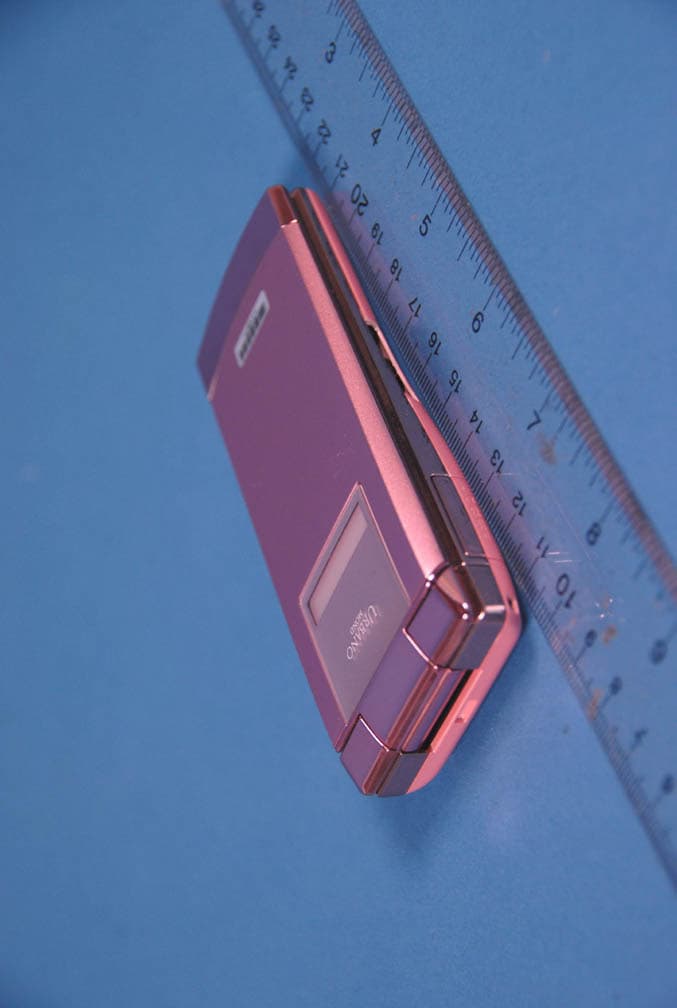
Click to zoom
Application Details
- Equipment Class
- JBP - Part 15 Class B Computing Device Peripheral
- Date of Grant
- Oct 25, 2010
- Application Purpose
- Original Equipment
- Date of Application
- Oct 25, 2010
- Equipment Note
- CDMA2000 / GSM Mobile Phone with BT
- Company
- Sony Corporation
- Country
- Japan
Documents & Files
Document Text
Text extracted from the exhibit documents filed with the FCC. Open a document above to read the original.
Users Manual
Introduction Thank you for purchasing the URBANO MOND. Before using your cell phone, be sure to read the cell phone Basic Manual (this PDF manual) to ensure correct usage. After you have finished reading this manual, store this PDF manual and the printed manuals in safe places so you can retrieve them whenever you need them.Manuals for the cell phoneThere are three manuals for the cell phone: the Basic Manual, printed Instruction Manual (Japanese) and full Instruction Manual (Japanese). For learning the basics: Read the cell phone Basic Manual (this manual) or printed cell phone Instruction Manual (Japanese). For learning details of each function: The full Instruction Manual (Japanese) gives detailed instructions on using each function and can be downloaded from the au homepage: http://www.au.kddi.com/torisetsu/index.html To ensure proper usage of the cell phone, be sure to read the Safety Precautions " " in the Instruction Manual. To access from EZweb (free of packet communication charge): R Top Menu/Search (au Customer Support) (Online Manual) Scan this QR code to access the au Online Manual. • 1 Illustrations and Screenshots in This Manual Illustrations and Screenshots in This Manual Note on Illustrations The illustrations in this manual may look different from the actual cell phone in shape, color and typeface. The key illustrations are also simplified as shown below. Key Illustration Key Illustration cjs % & R L C N F 123456789*0# i v( ) Note on Screenshots The screenshots in this manual are simplified and may look different from the actual cell phone screens. 2 Notes on Cell Phone Use Notes on Cell Phone Use Cell Phone EtiquetteThe cell phone always emits weak radio waves when power is on.Use the cell phone in an enjoyable and safe manner without forgetting to be considerate of others around you. Use of cell phones is not allowed in some places.Do not use the cell phone while you are driving. Doing so is both dangerous and prohibited by law.Using a cell phone in an aircraft is prohibited by law. Set Airplane Mode to ON and turn the cell phone power off.Radio waves from cell phones may interfere with medical electrical equipment.Some people close to you in crowded places such as packed trains may be using a cardiac pacemaker. Turn the cell phone off in such places.Abide by the rules of hospitals and other medical institutions where it is forbidden to use or carry cell phones.Be considerate of where you use the cell phone and how loudly you talk.Do not make calls in theaters, museums, libraries, and other similar places. Turn power off or turn on manner mode not to disturb others around you by ring tones.Do not use the cell phone on a street where you might interrupt the flow of pedestrians.Move to areas where you will not inconvenience others on trains or in hotel lobbies.Refrain from talking in a loud voice. •• •• •••• Obtain the permission of other people before you take their photos with the cell phone's camera.Do not record information with the cell phone's camera in bookstores and other locations where taking photos is not permitted. Do Not Use the Cell Phone While Driving!Turn off your cell phone or put it in Drive Mode while driving. Do not use the cell phone while driving a car/motorcycle or riding a bicycle. It may result in a traffic accident. Using a cell phone while driving is prohibited by law. Using a cell phone while riding a bicycle may also be punishable by law. Prohibited! Looking at a cell phone displayTalking on a cell phone while holding it Drive ModeIn Drive Mode, a Japanese message meaning "I am driving right now. Please leave your name and message after the beep." is played when a call is received, and asks the caller to leave a message on the answer memo. When the standby screen is displayed, press , use to select Drive , and then press (Set). •• • • 3 Notes on Cell Phone Use Disaster Message Board Service When a large scale disaster occurs, you can register your safety information from EZweb. The registered information can be referred from anywhere in Japan from EZweb or Internet. When a large scale disaster occurs, from an au phone, you can register your safety information (i.e. your condition and comments) to the (Disaster Message Board) created on the EZweb.After registration of your safety information, e-mail is sent to your family or acquaintances you have previously designated to notify that your safety information has been uploaded to the (Disaster Message Board).You can inquire for safety information of a person by entering his/her phone number from EZweb or Internet.** To inquire from other carriers' cell phone, a PHS or PC, access "http://dengon.ezweb.ne.jp/". Access R Top Menu/Search (Disaster Message Board)http://dengon.ezweb.ne.jp/ ••• Registered information is stored until the service set up for the disaster ends.The maximum available number of registrations is 10 per phone number. When the number of registrations exceeds 10, the oldest one is overwritten.The demonstration of this service can be referred to anytime by pressing Top Menu/Search (au Customer Support) (Search ) (Disaster Message Board (Demo Version)).To view the Disaster Message Board in English, select English from the top menu of the Disaster Message Board. •••• Registering safety information Registering safety information Inquiring for safety information Inquiring for safety information 4 Contents Contents IntroductionIllustrations and Screenshots in This Manual 1 Notes on Cell Phone Use 2 Cell Phone Etiquette ..................................................... 2 Do Not Use the Cell Phone While Driving! ................... 2Disaster Message Board Service ................................. 3 Contents 4Getting Ready 6 Checking the Contents of the Box ................................ 6Names of Parts ............................................................. 7 Charging the Battery Pack............................................ 8Learning the Basics ............................…
Text truncated - open the document above for the full version.
Users Manual
52 Radio Wave Exposure and Specific Absorption Rate (SAR) Information Mobile Phone GSM/GPRS 900/1800/1900 United States & Canada THIS PHONE MODEL HAS BEEN CERTIFIED IN COMPLIANCE WITH THE GOVERNMENT’S REQUIREMENTS FOR EXPOSURE TO RADIO WAVES.The CDMA SOY04 mobile phones have been designed to comply with applicable safety requirements for exposure to radio waves. Your wireless phone is a radio transmitter and receiver. It is designed to not exceed the limits* of exposure to radio frequency (RF) energy set by governmental authorities. These limits establish permitted levels of RF energy for the general population. The guidelines are based on standards that were developed by international scientific organizations through periodic and thorough evaluation of scientific studies. The standards include a safety margin designed to assure the safety of all individuals, regardless of age and health.The radio wave exposure guidelines employ a unit of measurement known as the Specific Absorption Rate (SAR). Tests for SAR are conducted using standardized methods with the phone transmitting at its highest certified power level in all used frequency bands. While there may be differences between the SAR levels of various phone models, they are all designed to meet the relevant guidelines for exposure to radio waves. For more information on SAR, please refer to the safe and efficient use chapter in the User Guide.The highest SAR value as reported to the authorities for this phone model when tested for use by the ear is 0.76 W/kg*, and when worn on the body is 0.69 W/kg* for speech and 0.71 W/kg* for data calls. Body worn measurements are made while the phone is in use and worn on the body with a Sony Ericsson accessory supplied with or designated for use with this phone. It is therefore recommended that only Ericsson and Sony Ericsson original accessories be used in conjunction with Sony Ericsson phones.**Before a phone model is available for sale to the public in the US, it must be tested and certified by the Federal Communications Commission (FCC) that it does not exceed the limit established by the government-adopted requirement for safe exposure*. The tests are performed in positions and locations (i.e., by the ear and worn on the body) as required by the FCC for each model. The FCC has granted an Equipment Authorization for this phone model with all reported SAR levels evaluated as in compliance with the FCC RF exposure guidelines. While there may be differences between the SAR levels of various phones, all mobile phones granted an FCC equipment authorization meet the government requirement for safe exposure. SAR information on this phone model is on file at the FCC and can be found under the Display Grant section of http://www.fcc.gov/oet/ea after searching on FCC ID AAH-5880008-BV. Additional information on SAR can be found on the Cellular Telecommunications & Internet Association (CTIA) website 53 at http://www.ctia.org.* In the United States and Canada, the SAR limit for mobile phones used by the public is 1.6 watts/kilogram (W/kg) averaged over one gram of tissue. The standard incorporates a margin of safety to give additional protection for the public and to account for any variations in measurements. ** This paragraph is only applicable to authorities and customers in the United States. Europe This mobile phone model CDMA SOY04 has been designed to comply with applicable safety requirements for exposure to radio waves. These requirements are based on scientific guidelines that include safety margins designed to assure the safety of all persons, regardless of age and health.The radio wave exposure guidelines employ a unit of measurement known as the Specific Absorption Rate, or SAR. Tests for SAR are conducted using standardized methods with the phone transmitting at its highest certified power level in all used frequency bands.While there may be differences between the SAR levels of various phone models, they are all designed to meet the relevant guidelines for exposure to radio waves.For more information on SAR, please refer to the safety chapter in the User’s Guide.SAR data information for residents in countries that have adopted the SAR limit recommended by the International Commission of Non-lonizing Radiation Protection (ICNIRP), which is 2 W/kg averaged over ten (10) gram of tissue (for example European Union, Japan, Brazil and New Zealand):The highest SAR value for this model phone tested by Sony Ericsson for use at the ear is 0.34 W/kg (10g).FCC Statement for the USAThis device complies with Part 15 of the FCC rules. Operation is subject to the following two conditions:(1) This device may not cause harmful interference, and (2) This device must accept any interference received, including interference that may cause undesired operation. Any change or modification not expressly approved by Sony Ericsson may void the user's authority to operate the equipment.This equipment has been tested and found to comply with the limits for a Class B digital device, pursuant to Part 15 of the FCC Rules. These limits are designed to provide reasonable protection against harmful interference in a residential installation. This equipment generates, uses and can radiate radio frequency energy and, if not installed and used in accordance with the instructions, may cause 54 harmful interference to radio communications. However, there is no guarantee that interference will not occur in a particular installation.If this equipment does cause harmful interference to radio or television reception, which can be determined by turning the equipment off and on, the user is encouraged to try to correct the interference by one or more of the following measures:- Reorient or relocate the receiving antenna. - Increase the separation between the equipment and receiver. - Connect the equipment into an outlet on a circuit different from that to which the receiver is connected. - Consult the dealer or an experienced radio/T…
Text truncated - open the document above for the full version.
Users Manual
Guidelines for Safe and Efficient Use Please follow these guidelines. Failure to do so might entail a potential health risk or product malfunction. If in doubt as to its proper function, have the product checked by a certified service partner before charging or using it. Recommendations for care and safe use of our products• Handle with care and keep in a clean and dust-free place.• Warning! May explode if disposed of in fire. • Do not expose to liquid or moisture or excess humidity.• For optimum performance, the product should not be operated in temperatures below +5°C (+41°F) or above +35°C (+95°F). Do not expose the battery to temperatures above +35°C (+95°F). • Do not expose to flames or lit tobacco products. • Do not drop, throw or try to bend the product.• Do not paint or attempt to disassemble or modify the product. • Consult with authorized medical staff and the instructions of the medical device manufacturer before using the product near pacemakers or other medical devices or equipment. • Discontinue use of electronic devices or disable the radio transmitting functionality of the device where required or requested to do so. • Do not use where a potentially explosive atmosphere exists.• Do not place your product or install wireless equipment in the area above an air bag in a car. • Caution :Cracked or broken displays may create sharp edges or splinters that could be harmful upon contact. • Do not use the Bluetooth Headset in positions where it is uncomfortable or will be subject to pressure. Children Warning! Keep out of the reach of children. Do not allow children to play with mobile phones or accessories. They could hurt themselves or others. Products may contain small parts that could become detached and create a choking hazard.Power supply (Charger)Connect the charger to power sources as marked on the product. Do not use outdoors or in damp areas. Do not alter or subject the cord to damage or stress. Unplug the unit before cleaning it. Never alter the plug. When a power supply is connected there is a small drain of power. To avoid this small energy waste, disconnect the power supply when the product is fully charged.BatteryNew or idle batteries can have short-term reduced capacity. Fully charge the battery before initial use. Use for the intended purpose only. Charge the battery in temperatures between +5°C (+41°F) and +35°C (+95°F). Do not put the battery into your mouth. Do not let the battery contacts touch another metal object. Turn off the product before removing the battery. Performance depends on temperatures, signal strength, usage patterns, features selected and voice or data transmissions. Use of an unqualified battery may present a risk of fire, explosion, leakage or other hazard. Personal medical devicesMobile phones may affect implanted medical equipment. Reduce risk of interference by keeping a minimum distance of 22cm (8.7 inches) between the phone and the device. Use the phone at your right ear. Do not carry the phone in your breast pocket. Turn off the phone if you suspect interference. For all medical devices, consult a physician and the manufacturer.DrivingSome vehicle manufactures forbid the use of phones in their vehicles unless a handsfree kit with an external antenna supports the installation. Check with the vehicle manufacturer's representative to be sure that the mobile phone or Bluetooth handsfree will not affect the electronic systems in the vehicle. Full attention should be given to driving at all times and local laws and regulations restricting the use of wireless devices while driving must be observed.GPS/Location based functionsSome products provide GPS/Location based functions. Location determining functionality is provided "As is" and "With all faults". KDDI/Sony Ericsson does not make any representation or warranty as to the accuracy of such location information.Use of location-based information by the device may not be uninterrupted or error free and may additionally be dependent on network service availability. Please note that functionality may be reduced or prevented in certain environments such as building interiors or areas adjacent to buildings.Caution : Do not use GPS functionality in a manner which causes distraction from driving. Emergency callsCalls cannot be guaranteed under all conditions. Never rely solely upon mobile phones for essential communication. Calls may not be possible in all areas, on all networks, or when certain network services and/or phone features are used. Radio Frequency (RF) exposure and Specific Absorption Rate (SAR)When your phone or Bluetooth handsfree is turned on, it emits low levels of radio frequency energy. International safety guidelines have been developed through periodic and thorough evaluation of scientific studies. These guidelines establish permitted levels of radio wave exposure. The guidelines include a safety margin designed to assure the safety of all persons and to account for any variations in measurements.Specific Absorption Rate (SAR) is used to measure radio frequency energy absorbed by the body when using a m obile phone. The SAR value is determined at the highest certified power level in laboratory conditions, but because the phone is designed to use the minimum power necessary to access the chosen network, the actual SAR level can be well below this value. There is no proof of difference in safety based on difference in SAR value.Products with radio transmitters sold in the US must be certified by the Federal Communications Commission (FCC). When required, tests are performed when the phone is placed at the ear and when worn on the body. For body-worn operation, the phone has been tested when positioned a minimum of 15 mm from the body without any metal parts in the vicinity of the phone or when properly used with an appropriate Sony Ericsson accessory and worn on the body. Use of the phone other than as tested may impact SAR and result in non-compliance with such RF exposure limits.…
Text truncated - open the document above for the full version.
Cover Letter(s)
Sony Ericsson Confidentiality Request 2010-08-27 CVVA10:382 SEMC/CVVALE Afrah Sadiq +46 10 80 12250 Receiver Federal Communications Commission Subject: Request for Confidentiality FCC 10: PY7A5880008 To Whom It May Concern: In accordance with §0.459 of CFR 47, Sony Ericsson Mobile Communications AS requests confidentiality for the below listed items for our mobile phone type AAH 5880008-BV, FCC 10: PY7A5880008: 1. Block Diagram 2. Schematic Diagram 3. Part List 4. OperationallTechnical Descriptions These items contain detailed system and equipment description and related information about the product which Sony Ericsson Mobile Communications AS considers to be proprietary, confidential and a custom design which otherwise would not be released to the general public. Since this design is a basis from which future technological products will evolve, Sony Ericsson Mobile Communications AS also feels that this information would be of benefit to its competitors, and that the disclosure of the information in these exhibits would give our competitors an unfair advantage in the market. Please contact the undersigned if there are any further questions or additional information needed in this matter. Best Regards, L~ ~J0~/ Afrah Sadiq Development Engineer - Global Type Approval Sony Ericsson Mobile Communications AS Sony Ericsson Mobile Communications AS Styrelsens sate: Lund Momsnr. VA. TNo: SE556615665801 Registered office: Lund Organisationsnr • Reg No: 556615-6658 Postadress • Mail Besoksadress • Office address Telefon • Telephone Telefax • Telefax SE-221 88 Lund Nya Vattentornet Nat 010-80 00000 Nat 010-80 02040 Sweden Lund In! +46 10 80 00000 Int +46 10 80 02040
Cover Letter(s)
Sony Ericsson Short Term Confidentiality Request 2010-08-31 CWA10:389 SEM/CCDALE Afrah Sadiq +46 108012250 Receiver Federal Communications Commission Subject: Request for Temporary Confidentiality FCC ID: PY7A5880008 To Whom It May Concern: In accordance with §0.459 of CFR 47 and Public Notice OA 04-1705, Sony Ericsson Mobile Communications AB requests in addition to confidentiality request CVVA10:382 temporary confidentiality for 180 days of the below listed items for our mobile phone type AAH-5880008-BV, FCC 10: PY7A5880008: 1. User Manual 2. Test set-up 3. External and Internal photos When the announcement of the product is done, the TCB will be notified to remove the Short Term Confidentiality. Please contact the undersigned if there are any further questions or additional information needed in this matter. Best Regards, ~----~ ~ Afrah Sadiq Development Engineer - Global Type Approval Sony Ericsson Mobile Communications AB Sony Ericsson Mobile Communications AS Slyrelsens sale: Lund Momsnr· v.A. T.No: SE556615665801 Registered office: Lund Organisalionsnr· Reg No: 556615-6658 Posladress • Mail Besbksadress • Office address Telelon • Telephone Telelax • Telelax SE-221 88 Lund Nya Vallenlornel Nal 010-80 00000 Na! 010-80 02040 Sweden Lund Inl +46 10 80 00000 In! +46 10 80 02040
External Photos
Sony Ericsson Mobile Communications AB FCC ID: PY7A5880008 Model: CDMA SOY04 External Photos EUT Type: Cellular CDMA and PCS GSM/GPRS Phone with Bluetooth Page 1 of 5 © 2010 PCTEST Engineering Laboratory Inc. E X T E R N A L P H O T O G R A P H S Sony Ericsson Mobile Communications AB FCC ID: PY7A5880008 Model: CDMA SOY04 External Photos EUT Type: Cellular CDMA and PCS GSM/GPRS Phone with Bluetooth Page 2 of 5 © 2010 PCTEST Engineering Laboratory Inc. Sony Ericsson Mobile Communications AB FCC ID: PY7A5880008 Model: CDMA SOY04 External Photos EUT Type: Cellular CDMA and PCS GSM/GPRS Phone with Bluetooth Page 3 of 5 © 2010 PCTEST Engineering Laboratory Inc. Sony Ericsson Mobile Communications AB FCC ID: PY7A5880008 Model: CDMA SOY04 External Photos EUT Type: Cellular CDMA and PCS GSM/GPRS Phone with Bluetooth Page 4 of 5 © 2010 PCTEST Engineering Laboratory Inc. Sony Ericsson Mobile Communications AB FCC ID: PY7A5880008 Model: CDMA SOY04 External Photos EUT Type: Cellular CDMA and PCS GSM/GPRS Phone with Bluetooth Page 5 of 5 © 2010 PCTEST Engineering Laboratory Inc.
ID Label/Location Info
Confidential MARKING DRAWING 1(4) Document number Revision 8/151 86-1/FCP 119 1038 Uen PA1 Prepared by Date SEM/CVVBAT ERIKO MAEDA 2010-10-26 Contents responsible if other than preparer Remarks This document is managed in metaDoc. Approved by Note: Any hard copy of this document is for reference only. Due to template and application dependencies the header and footer may fail to display correct data. It is the responsibility of the user to ensure that they have a correct and valid version. Any outdated hard copy is invalid and must be removed from possible use. AAH-5880008-BV SOY04 Marking Drawing- Mobile Phone Label 1. General Information This is KDDI’s OEM product. The label is based on the requirement of KDDI and it has been approved. 2. Printing Information Content Format Line 1 au IC card Text, height : 1.2 mm Line 2 Please be careful with inserting direction Text, height : 1.2 mm Line 3 Symbol of insertion direction for auIC card Graphic, height : 2.8 mm Line 4 & 5a Operator's name (Logo: au by KDDI) Graphic, height : 2.5 mm Line 5b Official name (CDMA SOY04) Text, height : 1.4 mm Line 6 & 7a Sony Ericsson stylized name Graphic, height : 2.0 mm Line 7b FCC ID: PY7A5880008 Text, height : 1.0 mm Line 8 IC ID: 4170B-A5880008 Text, height : 1.0 mm Line 9a Operator’s product code Text, height : 1.5 mm Line 9b JATE number: AD10-0182001 Text, height : 1.0 mm Line 10 TELEC number (for CDMA): 001XZAA1310 Text, height : 1.0 mm Line 11 Telecommunications mark Graphic, height : 1.5 mm Line 12 SOY04XXX (Operator's product code) Text, height : 1.5 mm Line 13 TELEC number (for MC-CDMA): 001ZYAA1108 Text, height : 1.0 mm Line 14a The name of distribution company: KDDI Inc and Okinawa Cellular Telephone Company Text, height : 1.2 mm Line 14b TELEC number (for T-CDMA): 001NXAA1175 Text, height : 1.0 mm Line 15 Radio Law certification number mark Graphic, height : 1.5 mm Line 16 TELEC symbol Graphic, height : 5.2 mm Line 17a Manufacture : Applicant Text, height : 1.2 mm Line 17b & 18a Sony Ericsson Mobile Communications AB (The name of manufacture) Text, height : 1.2 mm Confidential MARKING DRAWING 2(4) Document number Revision 8/151 86-1/FCP 119 1038 Uen PA1 Line 17c TELEC number (for Bluetooth): 001WWDA1398 Text, height : 1.0 mm Line 18b Type number: AAH-5880008-BV Text, height : 1.2 mm Line 18c HW&SW identification field: AAAA Text, height : 1.2 mm Line 19 Date of manufacture Text, height : 1.5 mm Line 20 Line 22 in bar code for Manufacturing number for KDDI Bar code height : 2.5 mm Line 21 20XX/XX (Year/Month: Date of manufacture) Text, height : 1.5 mm Line 22 Manufacturing number for KDDI (SSOXXXXXXXX) Text, height : 1.5 mm Line 23 Line 24 in bar code for IMEI number Bar code height : 2.5 mm Line 24 IMEI number (IMEI XXXXXXXXXXXXXXX) Text, height : 1.5 mm Line 25 Bluetooth figure mark (Bluetooth logo) Graphic, height : 3.0 mm Line 26a CE approved symbol Graphic, height : 5.0 mm Line 26b ARIB mark Graphic, height : 2.25 mm Line 26c Trash can mark Graphic, height : 5.0 mm Line 27a Caution symbol Graphic, height : 1.2 mm Line 27b Caution message. "Please turn off power in an airplane and in a hospital Text, height : 1.2 mm Line 28 Recycling Li-ion symbol Graphic, height : 5.9 mm Line 29a Caution message. "Please do not peel off this sticker" Text, height : 1.2 mm Line 29b Marking of Origin: Made in Japan Text, height : 1.2 mm 3. Layout Confidential MARKING DRAWING 3(4) Document number Revision 8/151 86-1/FCP 119 1038 Uen PA1 4. Dimensions Confidential MARKING DRAWING 4(4) Document number Revision 8/151 86-1/FCP 119 1038 Uen A Note: Any hard copy of this document is for reference only. Due to template and application dependencies the header and footer may fail to display correct data. It is the responsibility of the user to ensure that they have a correct and valid version. Any outdated hard copy is invalid and must be removed from possible use. Label placement To find the label follow these steps: 1. Remove the cover on the rear side of the product. 2. Remove the battery. 3. The label is located behind the battery. Rear side of the phone Place for battery Label placement
Internal Photos
Sony Ericsson Mobile Communications AB FCC ID: PY7A5880008 Model: CDMA SOY04 Internal Photos EUT Type: Cellular CDMA and PCS GSM/GPRS Phone with Bluetooth Page 1 of 13 © 2010 PCTEST Engineering Laboratory Inc. I N T E R N A L P H O T O G R A P H S Sony Ericsson Mobile Communications AB FCC ID: PY7A5880008 Model: CDMA SOY04 Internal Photos EUT Type: Cellular CDMA and PCS GSM/GPRS Phone with Bluetooth Page 2 of 13 © 2010 PCTEST Engineering Laboratory Inc. Sony Ericsson Mobile Communications AB FCC ID: PY7A5880008 Model: CDMA SOY04 Internal Photos EUT Type: Cellular CDMA and PCS GSM/GPRS Phone with Bluetooth Page 3 of 13 © 2010 PCTEST Engineering Laboratory Inc. Sony Ericsson Mobile Communications AB FCC ID: PY7A5880008 Model: CDMA SOY04 Internal Photos EUT Type: Cellular CDMA and PCS GSM/GPRS Phone with Bluetooth Page 4 of 13 © 2010 PCTEST Engineering Laboratory Inc. Sony Ericsson Mobile Communications AB FCC ID: PY7A5880008 Model: CDMA SOY04 Internal Photos EUT Type: Cellular CDMA and PCS GSM/GPRS Phone with Bluetooth Page 5 of 13 © 2010 PCTEST Engineering Laboratory Inc. Sony Ericsson Mobile Communications AB FCC ID: PY7A5880008 Model: CDMA SOY04 Internal Photos EUT Type: Cellular CDMA and PCS GSM/GPRS Phone with Bluetooth Page 6 of 13 © 2010 PCTEST Engineering Laboratory Inc. Sony Ericsson Mobile Communications AB FCC ID: PY7A5880008 Model: CDMA SOY04 Internal Photos EUT Type: Cellular CDMA and PCS GSM/GPRS Phone with Bluetooth Page 7 of 13 © 2010 PCTEST Engineering Laboratory Inc. Sony Ericsson Mobile Communications AB FCC ID: PY7A5880008 Model: CDMA SOY04 Internal Photos EUT Type: Cellular CDMA and PCS GSM/GPRS Phone with Bluetooth Page 8 of 13 © 2010 PCTEST Engineering Laboratory Inc. Sony Ericsson Mobile Communications AB FCC ID: PY7A5880008 Model: CDMA SOY04 Internal Photos EUT Type: Cellular CDMA and PCS GSM/GPRS Phone with Bluetooth Page 9 of 13 © 2010 PCTEST Engineering Laboratory Inc. Sony Ericsson Mobile Communications AB FCC ID: PY7A5880008 Model: CDMA SOY04 Internal Photos EUT Type: Cellular CDMA and PCS GSM/GPRS Phone with Bluetooth Page 10 of 13 © 2010 PCTEST Engineering Laboratory Inc. Sony Ericsson Mobile Communications AB FCC ID: PY7A5880008 Model: CDMA SOY04 Internal Photos EUT Type: Cellular CDMA and PCS GSM/GPRS Phone with Bluetooth Page 11 of 13 © 2010 PCTEST Engineering Laboratory Inc. Sony Ericsson Mobile Communications AB FCC ID: PY7A5880008 Model: CDMA SOY04 Internal Photos EUT Type: Cellular CDMA and PCS GSM/GPRS Phone with Bluetooth Page 12 of 13 © 2010 PCTEST Engineering Laboratory Inc. Sony Ericsson Mobile Communications AB FCC ID: PY7A5880008 Model: CDMA SOY04 Internal Photos EUT Type: Cellular CDMA and PCS GSM/GPRS Phone with Bluetooth Page 13 of 13 © 2010 PCTEST Engineering Laboratory Inc.
Test Report
Reviewed by: Model: PTX-945 FCC Pt. 15B VERIFICATION TEST REPORT Quality Manager Test Report S/N: Test Dates: EUT Type: 0Y1008051299.PY7 August 23-25, 2010 Travel Adapter Page 1 of 20 © 2010 PCTEST Engineering Laboratory, Inc. REV 4.8VT 10/30/2009 Manufacturer Name & Address: Date of Testing: Sony Ericsson Mobile Communications AB August 23-25, 2010 Nay Vattentornet Test Site/Location: Lund PCTEST Lab, Columbia, MD, USA Sweden 22188 Test Report Serial No.: 0Y1008051299.PY7 TRADE NAME: SONY ERICSSON MODEL: PTX-945 U.S. RESPONSIBLE PARTY Sony Ericsson Mobile Communications AB Address: Nya Vattentornet Lund Sweden 22188 EUT Type: Travel Adapter used with phone Model: PTX-945 FCC Rule Part(s): FCC Part 15 Subpart B, Part 2 (Verification) FCC Classification: FCC Class B Digital Device Test Procedure: ANSI C63.4-2003 The device bearing the FCC Identifier specified above has been shown to comply with the applicable technical standards as indicated in the measurement report and has been tested in accordance with the m…
Text truncated - open the document above for the full version.
Contact Information
Applicant
Mika Kaneko(Chief Regulatory Compliance Manager)
Test Firm
cetecom advanced GmbHGerald Schmidt
Technical Specifications
| # | Rule Parts | Frequency Range | Power Output |
|---|---|---|---|
| 1 | 15B | - | - |
Other Applications from Sony Corporation
PY7-75158T
Jul 16, 2026GSM/WCDMA/LTE Phone with BT, DTS/UNII a/b/g/n/ac/ax, NFC and GNSS
Equipment Class
NII - Unlicensed National Information Infrastructure TXPY7-52715J
Jul 16, 2026GSM/WCDMA/LTE Phone with BT, DTS/UNII a/b/g/n/ac/ax, NFC and GNSS
Equipment Class
DXX - Part 15 Low Power Communication Device TransmitterPY7-84526Y
Jul 16, 2026GSM/WCDMA/LTE Phone with BT, DTS/UNII a/b/g/n/ac/ax, NFC and GNSS
Equipment Class
PCE - PCS Licensed Transmitter held to earPY7-30515Z
Apr 13, 2026GSM/WCDMA/LTE/NR Phone with BT, DTS/UNII a/b/g/n/ac/ax/be, NFC, GNSS and WPT
Equipment Class
DXX - Part 15 Low Power Communication Device TransmitterPY7-73716J
Apr 11, 2024GSM/WCDMA/LTE Phone with BT, DTS/UNII a/b/g/n/ac, NFC and GNSS
Equipment Class
PCE - PCS Licensed Transmitter held to ear