QEUFODDRA1Foreign Object Debris Radar
Trex Aviation Systems Corporation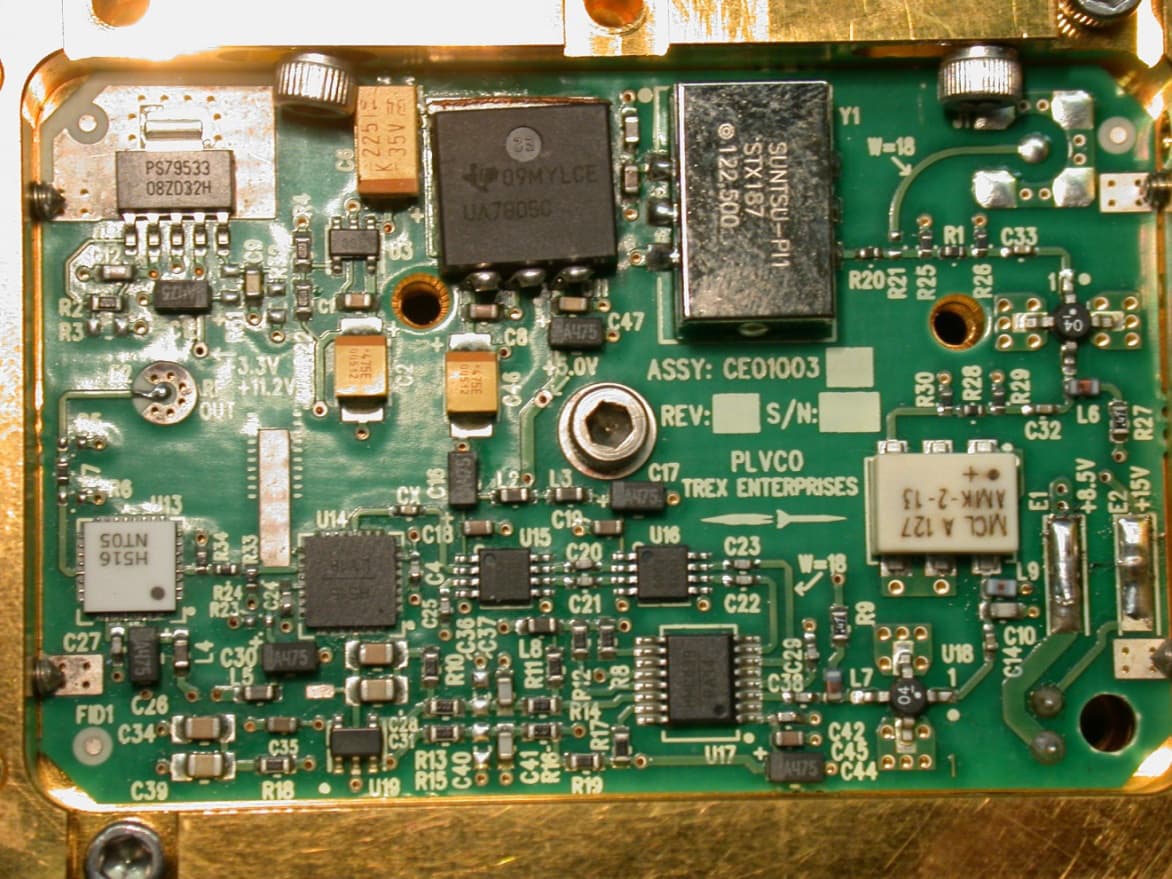
Click to zoom
Application Details
- Equipment Class
- TNB - Licensed Non-Broadcast Station Transmitter
- Date of Grant
- Oct 03, 2012
- Application Purpose
- Original Equipment
- Date of Application
- Oct 03, 2012
- Equipment Note
- Foreign Object Debris Radar
- Frequency Range
- 78000.00000000 - 81000.00000000
- Country
- United States
Documents & Files
Document Text
Text extracted from the exhibit documents filed with the FCC. Open a document above to read the original.
Users Manual
FODRA OPERATIONAL MANUAL Foreign Object Debris Radar Assembly Operation Manual -- June 11, 2012 WARNING: This system Transmits low power Millimeter wave energy. When the system is in operation the operator must stay in the vehicle and keep the Vehicle at least 4 meters from all other persons in the direction the system is searching for foreign objects. This unit shall not be co-located or operating in conjunction with any other antenna or transmitter. This equipment complies with FCC Part 90 rules. Operation 1) Turn on power to system and Laptop Computer 2) Double click on “Fodfinderqui.exe” to start the program 3) Click on Yellow Caution Warning Icon to progress 4) Click on the unlock button in the lower right corner of the screen. 5) Click on the” Radar / FOD” button in the upper left corner of the screen. 6) Click on the “ Show Graphs” button in the top center of the screen 7) Click on the “ Connect “ button in the top center of the screen The Radar is now running and the Display will shows any target in the radar beam as shown below. The computer arrow can be positioned over any of the graphs and when clicked will bring the marker to the nearest X position. The Left /Right arrow keys can be toggled to move the cursor from data point to data point. There are no adjustments that the operator can make to the radar assembly.
Attestation Statements
10455 Pacific Center Court ● San Diego, CA 92121‐4339 ● Phone: 858.646.5740 ● Fax: 858.646.5301 To: Curtis Straus LLC, Bureau Veritas Littleton Distribution Center One Distribution Center Circle, #100 Littleton, MA 01460 USA From: Richard Chedester August 30, 2012 Engineering Manager Re: FOD detection radar equipment FCC certification This letter is to certify that the radar assembly is not intended operate at a temperature of -30 C as is specified by the FCC. The Radar assembly is mounted under a protective cover with air heaters. When the ambient temperature drops below +5 Centigrade a thermostat turns on the six, 100 watt heaters to maintain this min air temperature required for operation of the mechanical pointing system and to minimize moisture condensation. If there is any additional questions regarding the operation of the Radar system please feel free to ask. Sincerely Richard Chedester Richard Chedester
Cover Letter(s)
Federal Communications Commission Washington, D.C. 20554 August 20, 2012 Randall W. Sifers Kelley, Drye & Warren LLP Washington Harbour, Suite 400 3050 K Street, NW Washington, D.C. 20007-5108 Dear Mr. Sifers: This letter responds to your July 9, 2012 request, as supplemented on August 9, 2012,' on behalf of Trex Enterprises Corporation (Trex), for clarification of the waiver granted to permit certification and use of Trex's Foreign Object Debris (FOD) detection radar equipment. We grant the request to the extent indicated below. On December 20, 2011, the Commission granted a waiver to Trex to permit certification and use of its FOD detection radar in the 78-81 GHz band. The Order specified technical parameters that were based on information in Trex's waiver request.3 One of those parameters was a 3 dB transmit beamwidth of 1 deg (el) x 0.2 deg (az).4 In prior presentations to Commission staff, however, Trex had indicated that its FOD detection radar equipment operated with a 3 dB transmit beamwidth of I deg (el) x 0.4 deg (az). Trex now indicates that its equipment cannot meet a specification of a 3 dB transmit beamwidth of I deg (el) x 0.2 deg (az) in conjunction with the other technical parameters set forth in the Order. In the instant request, Trex seeks either a) clarification that that the technical specification for transmit azimuthal beamwidth may be interpreted as a typical or minimum value rather than an absolute value or that beamwidth is not a value that needs to be specified for FOD detection radar operations at airports, or b) that the beamwidth parameter for its waiver be specified as a 3 dB transmit beamwidth of I deg (el) x 0.4 deg (az) rather than 0.2 deg (az). The Commission's intent in the Order was to authorize the certification and use of Trex's FOD detection radar pending the resolution of the rulemaking proceeding because a waiver would serve the public interests Requiring adherence to an erroneous specification that differs from information previously provided by Trex and does not reflect the equipment's actual technical characteristics would frustrate that intent. In addition, as noted by the Commission, the public interest will be served by authorizing the certification and use of Trex's FOD detection radar pending the resolution of the 1 Letter dated July 9, 2012 from Randall W. Sifers to Marlene H. Dortch, Secretary, Federal Communications Commission; Letter dated August 9, 2012 from Randall W. Sifers to Marlene H. Dortch, Secretary, Federal Communications Commission. 2 Amendment of the Commission's Rules to Permit Radiolocation Operations in the 78-81 GHz Band; Request by Trex Enterprises Corporation for Waiver of Section 90.103(b) of the Commission's Rules, Notice of Proposed Rule Making and Order, WT Docket No. 11-202,26 FCC Red 17476 (2011). 3 See id.at 174819118. 4 See id. 5 See id. at 17481 9[ 16. Trex Enterprises Corporation Page 2 rulemaking proceeding. We also note that license applications for FOD detection radar use at airports will be coordinated with the National Telecommunications and Information Administration (NTIA).6 Thus, NTIA, with guidance from the Federal Aviation Administration, will review all applications for FOD detection radar operations at airports. We therefore conclude that it is appropriate to grant Trex a waiver of the technical parameters in the Order to permit it to meet a specification of a 3 dB transmit beamwidth of 1 deg (el) x 0.4 deg (az).' Accordingly, IT IS ORDERED that the request of Trex Enterprises Corporation, dated July 9, 2012, and supplemented August 9, 2012, for clarification of the waiver granted in WT Docket 11-202 on December 20, 2011, IS GRANTED to the extent indicated above. This action is taken under delegated authority pursuant to Sections 0.131 and 0.331 of the Commission's Rules, 47 C.F.R. §§ 0.131, 0.331. FEDERAL COMMUNICATIONS COMMISSION Scot Stone Deputy Chief, Mobility Division Wireless Telecommunications Bureau 6 See id. at 17481-82 T 18. 7 See 47 C.F.R. § 1.925(b)(3)(i).
Cover Letter(s)
Federal Communications CommissionFCC 11-185 Beforethe Federal Communications Commission Washington, D.C. 20554 In the Matter of Amendment of the Commission’s Rules to Permit Radiolocation Operations in the 78-81 GHz Band Request by the Trex Enterprises Corporation for Waiver of Section 90.103(b) of the Commission’s Rules ) ) ) ) ) ) ) ) ) WT Docket No. 11-202 RM-11612 NOTICE OF PROPOSED RULE MAKING AND ORDER Adopted: December 15, 2011Released: December 20, 2011 Comment Date: [30 days after Federal Register publication] Reply Comment Date: [45 days after Federal Register publication] By the Commission: I.INTRODUCTION 1.Foreign object debris (FOD) at airports, including any substance, debris, or object in a location that can damage aircraft or equipment, can seriously threaten the safety of airport personnel and airline passengers and can have a negative impact on airport logistics and operations. 1 According to the Federal Aviation Administration (FAA), FOD “has the potential to damage aircraft during critical phases of flight,which can lead to catastrophic loss of life and airframe, and at the very least increased maintenance and operating costs.” 2 Moreover, the direct maintenance costs to airlines caused by FOD have been estimated to be one to four billion dollars per year. 3 Trex Enterprises Corporation (Trex) has developed radar technology that meets the FAA’s guidance and performance specifications for FOD detection equipment and can reduce this risk to personal safety and property by detecting the presence of FOD on airport runways. 4 In this Notice of Proposed Rule Making and Order, we seek comment on the best way to enable the use of this new safety-related technology, and in the interim we grant Trex’s request for a waiver to permit certification and use of FOD radar detection equipment operating in the 78- 81 GHz band, pending the outcome of this rulemaking proceeding. 1 Advisory Circular No. 150/5210-24, Airport Foreign Object Debris (FOD) Management, Federal Aviation Administration, U.S. Department of Transportation, September 30, 2010, at ¶ 1.1.d. FOD varies in size and form and includes a wide range of items such as parts fallen from aircraft; misplaced tools, equipment and supplies; rocks and pavement fragments; luggage; and wildlife. Id. at ¶ 2.2.c. Dark-colored items that are difficult to detect visually against the tarmac make up almost half of FOD. Id. 2 Id. at ¶ 2.1. 3 See Insight SRI Ltd., “The economic cost of FOD to airlines,” at 9 (2008). Indirect costs (delays, plane changes, fuel inefficiencies, etc.) are estimated to be another eleven billion dollars. Id. 4 See Petition for Rulemaking to Amend Part 90.103(b) to Add the 78-81 GHz Band to the Table Specifying Frequencies Available for Assignment to Stations in the Radiolocation Service (filed August 10, 2010) (Petition) at 4. Federal Communications CommissionFCC 11-185 2 2.The 78-81 GHz band in which Trex’s equipment operates is allocated on a primary basis for Federal and non-Federal radio astronomy and radiolocation systems 5 but is not listed in the table of frequencies available under Part 90, which authorizes non-Federal radiolocation operations such as Trex’s FOD detection equipment. 6 Trex proposes that the Commission commence a rulemaking to make such a listing, and inthe interim, grant Trex a waiver to permit the certification, licensing, and use of its FOD detection technology in the 78-81 MHz band. 3.In this Notice of Proposed Rule Making (NPRM), we seek comment on a proposal by Trex to amend Part 90 of our rules to permit non-Federal radiolocation operations, including Trex’s FOD radar detection technology, in the 78-81 GHz band and to impose a specific assignment limitation to protect radio astronomy service operations in this band from harmful interference. 7 We also seek comment on whether we should instead amend Part 15 to open the band to non-Federal radiolocation operations (including FOD detection devices) on an unlicensed basis. And we seek comment on whether we should amend Part 90 to permituse of the 78-81 GHz band by FOD detection devices at airports on a licensed basis, while permitting other uses on an unlicensed basis pursuant to Part 15 of our Rules. 4.In the Order, we grant Trex’s request for a waiver to permit certification and use of FOD radar detection equipment operating in the 78-81 GHz band, pending the outcome of this rulemaking proceeding. 8 In light of the FAA guidance that the presence of FOD on airport runways, taxiways, aprons, and ramps “poses a significant threat to the safety of air travel,” we find that this waiver is in the public interest. II.NOTICE OF PROPOSED RULE MAKING 5.Trex and commenters in the record have made a strong case that, for both safety and cost savings reasons, the public interest would be served by amending our rules to permit use of the 78-81 GHz band for FOD detection radar. We seek comment below on how best to amend the rules to reach this result. 6.Permissible use. Trex seeks the use of the 78-81 GHz band for FOD detection at airports but also supports the availability of the band for any conforming radiolocation use. 9 Permitting only FOD detection at airports, which Trex asserts is a safety of life service, would effectively prevent any potential co-channel interference between 78-81 GHz band radiolocation operations. 10 We propose to amend our Part 90 rules to permit radiolocation use of the 78-81 GHz band for FOD detection at airports,andwe seek comment on whether to amend those rules to permit radiolocation use of the bandfor any other conforming radiolocation use. We also seek comment on any costs associated with our proposal, as well as any costs associated with of allowing other conforming radiolocation use, including but not limited to any other use of the spectrum that might be precluded by the amendment to ourrules. 7.We are concerned, however, that limiting use of the 78-81 GHz band to use by FOD 5 See47 C.F.R. §2.106. Space research…
Text truncated - open the document above for the full version.
External Photos
FODRA1 Pictures External June 25, 2012 Front View Rear View Radar covered by protective Radome
ID Label/Location Info
Label size is 1 by 2-5/8 inches The material we use is and Avery 5520 Laser labels. These are Weatherproof, White labels that are self adhesive and durable construction that is guaranteed to stand up to extremes of weather and temperature. We have been using this product successfully for over five years without any noticeable degradation of unit in the field so expect the labels to easy withstand the 10 year life of the radar system.
Internal Photos
Internal Photo’s Receive Module with cover LSM module with cover removed no absorber LSM with absorber LS-18-1/2 LSM board Front Side LSM board Rear side Tx Module with cover Tx Module with cover removed from back side Showing PLO circuit board \ PLO circuit board back side Tx Module Bias Board Front Side Tx Module Bias Board Rear Side Control board Top Side Control Board Bottom Side
RF Exposure Info
Prediction of MPE limit at a given distance Equation from page 18 of OET Bulletin 65, Edition 97-01 where:S = power density P = power input to the antenna G = power gain of the antenna in the direction of interest relative to an isotropic radiator R = distance to the center of radiation of the antenna Maximum peak output power at the antenna terminal: 18.65(dBm) Maximum peak output power at the antenna terminal:73.28245331(mW) Antenna gain(typical):45(dBi) Maximum antenna gain:31622.7766(numeric) Prediction distance:430(cm) Prediction frequency: 79500(MHz) MPE limit for uncontrolled exposure at prediction frequency:1(mW/cm^2) Power density at prediction frequency:0.997363(mW/cm^2) 2 4R PG S π =
Test Report
Curtis-Straus LLC is accredited by the American Association for Laboratory Accreditation for the specific scope of accreditation under Certificate Number 1627-01. This report may contain data which is not covered by the A2LA accreditation. ____________________________________________________________ Curtis-Straus LLC, a wholly owned subsidiary of BV CPS One Distribution Center Circle, #1 • •• • Littleton, MA • •• • TEL (978) 486-8880 • •• • FAX (978) 486-8828 page 1 of 29 Test Report Curtis-Straus LLC, a wholly owned subsidiary of BV CPS Report No EM0848-1 Client Trex Aviation Corporation Address 10455 Pacific Center Court San Diego, CA 92121-4339 Phone 1-413-247-9440 ext. 10 Items tested FOD FCC ID QEUFODDRA1 FRN 0021795323 Equipment Type Radiolocation Service Equipment Code TNB Emission Designator 2G82F3N FCC Rule Parts WT Docket No. 11-202 Test Dates May 10-18, 2012 Results As detailed within this report Prepared by Matthew Burman – Test Engineer Authorized by Mairaj Hussain – EMC Supervisor Issue Date July 3, 2012 Conditions of Issue This Test Report is issued subject to the conditions stated in the ‘Conditions of Testing’ section on page 28 of this report. Test Report for Trex Aviation Corporation • •• • Report No. EM0848-1 June 12, 2012 ______________________________________________________________________ ____________________________________________________________ Curtis-Straus LLC, a wholly owned subsidiary of BV CPS One Distribution Center Circle, #1 • •• • Littleton, MA • •• • TEL (978) 486-8880 • FAX (978) 486-8828 page 2 of 29 Contents Contents..................................................................................................................................2 Summary.................................................................................................................................3 Test Methodology ....................................................................................................................3 Product Tested - Configuration Documentation .......................................................................4 Modifications Required for Compliance ...................................................................................5 Test Results ............................................................................................................................7 Frequency Stability..............................................................................................................7 EIRP..................................................................................................................................13 Occupied Bandwidth..........................................................................................................14 Radiated Spurious Emissions............................................................................................19 Conducted Spurious Emissions.........................................................................................22 Antenna Radiation Pattern.....................................................................................................24 Measurement Uncertainty......................................................................................................25 Test Equipment Used ............................................................................................................26 Product Documentation .........................................................................................................27 Conditions Of Testing ............................................................................................................28 Form Final Report REV 7-20-07 (DW) Test Report for Trex Aviation Corporation • •• • Report No. EM0848-1 June 12, 2012 ______________________________________________________________________ Release Control Record Issue No. Reason for change Date Issued 1 Original Release June 12, 2012 _____________________________________________________________ Curtis-Straus LLC, a wholly owned subsidiary of BV CPS One Distribution Center Circle, #1 • •• • Littleton, MA • •• • TEL (978) 486-8880 • •• • FAX (978) 486-8828 page 3 of 29 Summary This test report supports an application for certification of a transmitter operating pursuant to FCC WT Docket No. 11-202. The product is the FOD. It is a transmitter that operates in the range 78-81GHz. This technical report is to support the amendment of the commission’s rules to permit radiolocation operation in the 78-81GHz band. It is a request for the waiver of section 90.103(b) of the commission’s rules. We found that the product met the above requirements with modification (see Modifications Required for Compliance section on page 5). Richard Chedester from Trex Aviation was present during the testing. The test sample was received in good condition. The EUT is intended to be installed in an automobile. Test Methodology Radiated emission testing was performed according to the procedures specified in FCC millimeter wave test procedures. Radiated Emissions were maximized by rotating the device around base as well as varying the test antenna’s height and polarity. The device antenna cannot be maximized separately. Conducted emission at the antenna port was performed, as required by rule section. The EUT operating voltage is 12Vdc. EUT operates on one frequency centered at 79.5GHz The local oscillator frequency Stability is set by a crystal at +/- 5ppm. Approximately one 1mhz drift over the temperature range. The crystal oscillator is a Conner Winfield TFLD646. The following bandwidths were used during radiated spurious emissions. Frequency RBW VBW 30-1000MHz 120kHz 1MHz 1-200GHz 1MHz 3MHz Test Report for Trex Aviation Corporation • •• • Report No. EM0848-1 June 12, 2012 ______________________________________________________________________ _____________________________________________________________ Curtis-Straus LLC, a wholly owned subsidiary of BV CPS One Distribution Center…
Text truncated - open the document above for the full version.
Test Setup Photos
EM0848-1 Test Setup Photographs Conductive power measurements Environmental conditions EM0848-1 Test Setup Photographs Radiated Measurements below 1GHz – Anechoic Chamber - Rear EM0848-1 Test Setup Photographs Radiated Measurements below 1GHz – Anechoic Chamber - Front EM0848-1 Test Setup Photographs Radiated Measurements – 1 to 18GHz – Anechoic Chamber - Rear Radiated Measurements – 1 to 18GHz – Anechoic Chamber - Front EM0848-1 Test Setup Photographs Radiated Measurements – 1 to 18GHz – OATS - Rear Radiated Measurements – 1 to 18GHz – OATS - Front EM0848-1 Test Setup Photographs Radiated Measurements – 18 to 26.5GHz – Anechoic Chamber EM0848-1 Test Setup Photographs Radiated Measurements – Above 26.5GHz – Anechoic Chamber EM0848-1 Test Setup Photographs Radiated Measurements – Above 26.5GHz – OATS
Contact Information
Applicant
Richard Chedester(Engineering Manager)
Test Firm
BUREAU VERITAS CONSUMER PRODUCTS SERVICES, INC.Ozgur Ozturk
[email protected]978-486-8880
Technical Specifications
| # | Rule Parts | Frequency Range | Power Output | Emission | Tolerance |
|---|---|---|---|---|---|
| 1 | 90 | 78.00 GHz - 81.00 GHz | 73.30 mW | 2G82F3N | 5.0000000000 ppm |
Other Applications from Trex Aviation Systems Corporation
QEUFODXFV2
Jan 10, 2021Foreign Object Debris Radar
Equipment Class
VRD - Part 95 Vehicular Radar Systems