QQ6-BTR12BLUETOOTH MODULE
Code Corporation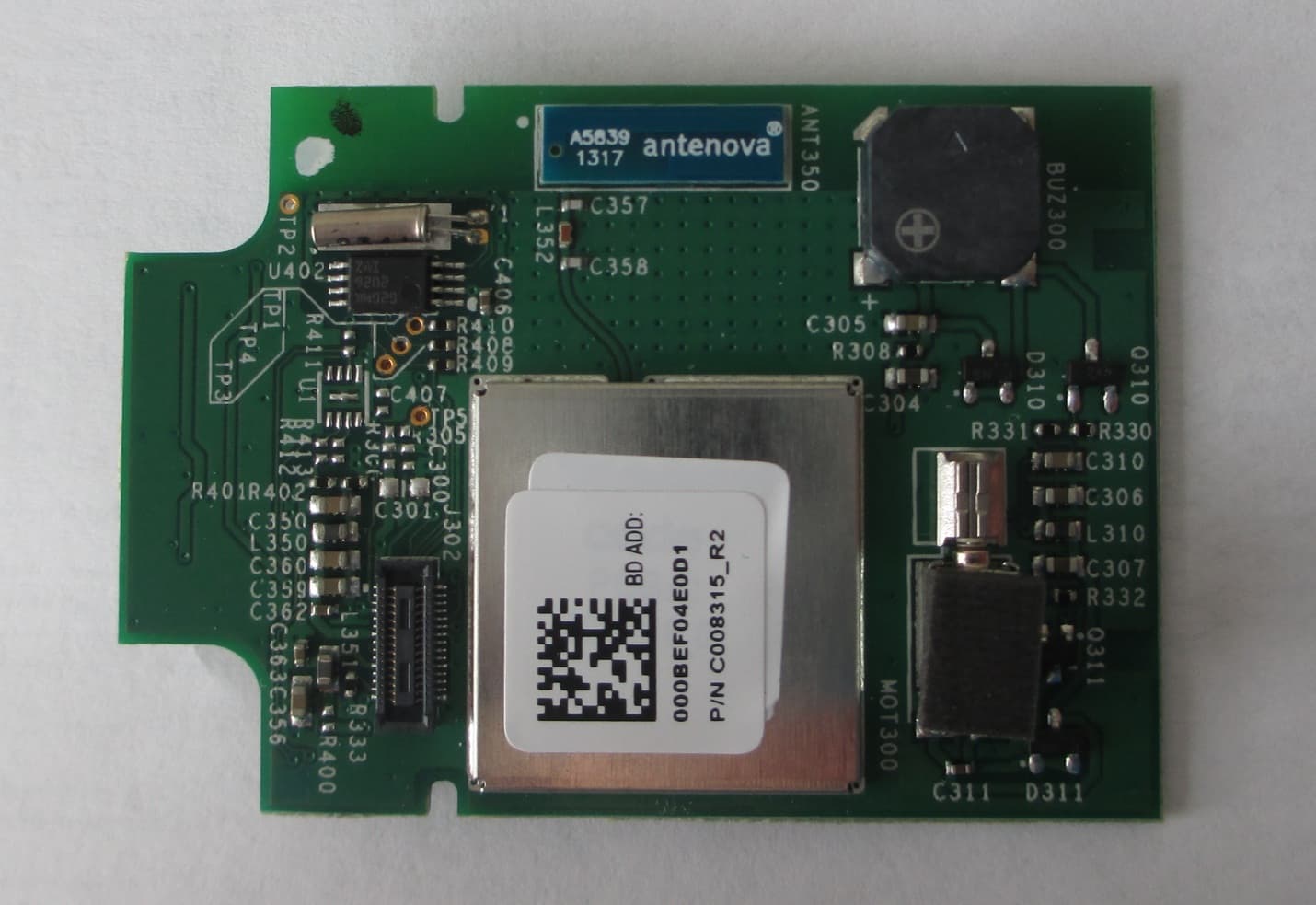
Click to zoom
Application Details
- Equipment Class
- DSS - Part 15 Spread Spectrum Transmitter
- Date of Grant
- Dec 18, 2013
- Application Purpose
- Original Equipment
- Date of Application
- Dec 18, 2013
- Equipment Note
- BLUETOOTH MODULE
- Frequency Range
- 2402.00000000 - 2480.00000000
- Company
- Code Corporation
- Country
- United States
Documents & Files
Document Text
Text extracted from the exhibit documents filed with the FCC. Open a document above to read the original.
Users Manual
C007964_04_CR2600_User_Manual C007964_04_CR2600_UserManual User Manual Code Reader™ 2600 Manual Version 04 Release Date: February 2013 C007964_04_CR2600_User_Manual Statement of Agency Compliance The Code Reader™ 2600 (CR2600) has been tested for compliance with FCC regulations and was found to be compliant with all applicable FCC Rules and Regulations. IMPORTANT NOTE: To comply with FCC RF exposure compliance requirements, this device must not be co-located or operate in conjunction with any other antenna or transmitter. CAUTION: Changes or modifications not expressly approved by the party responsible for compliance could void the user’s authority to operate the equipment. The CR2600 has been tested for compliance to CE standards and guidelines and was found to conform to applicable CE standards, specifically the EMC requirements EN 55024, ESD EN 61000-4-2, Radiated RF Immunity EN 61000-4-3, ENV 50204, EFT EN 61000-4-4, Conducted RF Immunity EN 61000-4-6, EN 55022, Class B Radiated Emissions, and Class B Conducted Emissions. The CR2600 has been tested and certified in compliance with the Technical Regulations Conformity Certification of Specified Radio Equipment (ordinance of MPT N°.37. 1981), Article 2, Paragraph 1, Item 19. Code voids product warranty if the hard case has been opened or tampered with in any way. The CR2600 meets all safety and quality standards in accordance to EN 60950-1:2006/A11:2009/A1:2010. CR2600 CodeXML® Modem FCC and ICES Compliance NOTE: This equipment has been tested and found to comply with the limits for a Class B digital device, pursuant to part 15 of the FCC Rules. These limits are designed to provide reasonable protection against harmful interference in a residential installation. This equipment generates, uses and can radiate radio frequency energy and, if not installed and used in accordance with the instructions, may cause harmful interference to radio communications. However, there is no guarantee that interference will not occur in a particular installation. If this equipment does cause harmful interference to radio or television reception, which can be determined by turning the equipment off and on, the user is encouraged to try to correct the interference by one or more of the following measures: • Reorient or relocate the receiving antenna. • Increase the separation between the equipment and receiver. • Connect the equipment into an outlet on a circuit different from that to which the receiver is connected. • Consult the dealer or an experienced radio/TV technician for help. This device complies with part 15 of the FCC Rules. Operation is subject to the following two conditions: (1) This device may not cause harmful interference, and (2) this device must accept any interference received, including interference that may cause undesired operation. This device complies with Industry Canada licence-exempt RSS standard(s). Operation is subject to the following two conditions: (1) this device may not cause interference, and (2) this device must accept any interference, including interference that may cause undesired operation of the device. Le présent appareil est conforme aux CNR d’Industrie Canada applicables aux appareils radio exempts de licence. L’exploitation est autorisée aux deux conditions suivantes : (1) l’appareil ne doit pas produire de brouillage, et (2) l’utilisateur de l’appareil doit accepter tout brouillage radioélectrique subi, même si le brouillage est susceptible d’en compromettre le fonctionnement. This Class B digital apparatus complies with Canadian ICES-003. Cet appareil numérique de la classe B est conforme à la norme NMB-003 du Canada. C007964_04_CR2600_User_Manual Code Reader™ 2600 User Manual Copyright © 2013 Code Corporation. All Rights Reserved. The software described in this manual may only be used in accordance with the terms of its license agreement. No part of this publication may be reproduced in any form or by any means without written permission from Code Corporation. This includes electronic or mechanical means such as photocopying or recording in information storage and retrieval systems. NO WARRANTY. This technical documentation is provided AS-IS. Further, the documentation does not represent a commitment on the part of Code Corporation. Code Corporation does not warrant that it is accurate, complete or error free. Any use of the technical documentation is at the risk of the user. Code Corporation reserves the right to make changes in specifications and other information contained in this document without prior notice, and the reader should in all cases consult Code Corporation to determine whether any such changes have been made. Code Corporation shall not be liable for technical or editorial errors or omissions contained herein; nor for incidental or consequential damages resulting from the furnishing, performance, or use of this material. Code Corporation does not assume any product liability arising out of or in connection with the application or use of any product or application described herein. NO LICENSE. No license is granted, either by implication, estoppel, or otherwise under any intellectual property rights of Code Corporation. Any use of hardware, software and/or technology of Code Corporation is governed by its own agreement. The following are trademarks or registered trademarks of Code Corporation: CodeXML®, Maker, QuickMaker, CodeXML® Maker, CodeXML® Maker Pro, CodeXML® Router, CodeXML® Client SDK, CodeXML® Filter, HyperPage, CodeTrack, GoCard, GoWeb, ShortCode, GoCode®, Code Router, QuickConnect Code, Rule Runner®, Cortex®, CortexRM, CortexMobile, Code, Code Reader, CortexAG, CortexStudio, CortexTools, Affinity®, CortexDecoder, CortexJPOS, and CortexOPOS. All other product names mentioned in this manual may be trademarks of their respective companies and are hereby acknowledged. The software and/or products of Code Corporation include inventions that are patented or that are the subject of patent…
Text truncated - open the document above for the full version.
Users Manual
D013597_1.0_CR3600_User_Manual User Manual Code Reader™ 3600 Manual Version 01 Release Date: October 2013 D013597_1.0_CR3600_User_Manual Statement of Agency Compliance The Code Reader™ 3600 (CR3600) has been tested for compliance with FCC regulations and was found to be compliant with all applicable FCC Rules and Regulations. IMPORTANT NOTE: To comply with FCC RF exposure compliance requirements, this device must not be co-located or operate in conjunction with any other antenna or transmitter. CAUTION: Changes or modifications not expressly approved by the party responsible for compliance could void the user’s authority to operate the equipment. The CR3600 has been tested for compliance to CE standards and guidelines and was found to conform to applicable CE standards, specifically the EMC requirements EN 55024, ESD EN 61000-4-2, Radiated RF Immunity EN 61000-4-3, ENV 50204, EFT EN 61000-4-4, Conducted RF Immunity EN 61000-4-6, EN 55022, Class B Radiated Emissions, and Class B Conducted Emissions. The CR3600 has been tested and certified in compliance with the Technical Regulations Conformity Certification of Specified Radio Equipment (ordinance of MPT N°.37. 1981), Article 2, Paragraph 1, Item 19. Code voids product warranty if the hard case has been opened or tampered with in any way. The CR3600 meets all safety and quality standards in accordance to EN 60950-1:2006/A11:2009/A1:2010. CR3600 CodeXML® Modem FCC and ICES Compliance NOTE: This equipment has been tested and found to comply with the limits for a Class B digital device, pursuant to part 15 of the FCC Rules. These limits are designed to provide reasonable protection against harmful interference in a residential installation. This equipment generates, uses and can radiate radio frequency energy and, if not installed and used in accordance with the instructions, may cause harmful interference to radio communications. However, there is no guarantee that interference will not occur in a particular installation. If this equipment does cause harmful interference to radio or television reception, which can be determined by turning the equipment off and on, the user is encouraged to try to correct the interference by one or more of the following measures: • Reorient or relocate the receiving antenna. • Increase the separation between the equipment and receiver. • Connect the equipment into an outlet on a circuit different from that to which the receiver is connected. • Consult the dealer or an experienced radio/TV technician for help. This device complies with part 15 of the FCC Rules. Operation is subject to the following two conditions: (1) This device may not cause harmful interference, and (2) this device must accept any interference received, including interference that may cause undesired operation. This device complies with Industry Canada licence-exempt RSS standard(s). Operation is subject to the following two conditions: (1) this device may not cause interference, and (2) this device must accept any interference, including interference that may cause undesired operation of the device. Le présent appareil est conforme aux CNR d’Industrie Canada applicables aux appareils radio exempts de licence. L’exploitation est autorisée aux deux conditions suivantes : (1) l’appareil ne doit pas produire de brouillage, et (2) l’utilisateur de l’appareil doit accepter tout brouillage radioélectrique subi, même si le brouillage est susceptible d’en compromettre le fonctionnement. This Class B digital apparatus complies with Canadian ICES-003. Cet appareil numérique de la classe B est conforme à la norme NMB-003 du Canada. D013597_1.0_CR3600_User_Manual Code Reader™ 3600 User Manual Copyright © 2013 Code Corporation. All Rights Reserved. The software described in this manual may only be used in accordance with the terms of its license agreement. No part of this publication may be reproduced in any form or by any means without written permission from Code Corporation. This includes electronic or mechanical means such as photocopying or recording in information storage and retrieval systems. NO WARRANTY. This technical documentation is provided AS-IS. Further, the documentation does not represent a commitment on the part of Code Corporation. Code Corporation does not warrant that it is accurate, complete or error free. Any use of the technical documentation is at the risk of the user. Code Corporation reserves the right to make changes in specifications and other information contained in this document without prior notice, and the reader should in all cases consult Code Corporation to determine whether any such changes have been made. Code Corporation shall not be liable for technical or editorial errors or omissions contained herein; nor for incidental or consequential damages resulting from the furnishing, performance, or use of this material. Code Corporation does not assume any product liability arising out of or in connection with the application or use of any product or application described herein. NO LICENSE. No license is granted, either by implication, estoppel, or otherwise under any intellectual property rights of Code Corporation. Any use of hardware, software and/or technology of Code Corporation is governed by its own agreement. The following are trademarks or registered trademarks of Code Corporation: CodeXML®, Maker, QuickMaker, CodeXML® Maker, CodeXML® Maker Pro, CodeXML® Router, CodeXML® Client SDK, CodeXML® Filter, HyperPage, CodeTrack, GoCard, GoWeb, ShortCode, GoCode®, Code Router, QuickConnect Code, Rule Runner®, Cortex®, CortexRM, CortexMobile, Code, Code Reader, CortexAG, CortexStudio, CortexTools, Affinity®, CortexDecoder, CortexJPOS, and CortexOPOS. All other product names mentioned in this manual may be trademarks of their respective companies and are hereby acknowledged. The software and/or products of Code Corporation include inventions that are patented or that are the subject of patents pending. U.S. Patents: 69…
Text truncated - open the document above for the full version.
Cover Letter(s)
12393 South Gateway Park Place, Suite 600, Draper UT 84020 USA I +1 801 495‐2200 Office I +1 801 495‐0280 Fax I www.codecorp.com Modular Approval Request Applicant: Code Corporation BT Module FCC ID: QQ6‐BTR12 December 16, 2013 Pursuant to section 15.212(a)(1) of the FCC rules, Code Corporation is seeking FCC authorization as a limited single‐ modular transmitter. The equipment under test meets the requirements for a limited single‐modular transmitter and is compliant to the requirements as outlined below. Requirements Justification RF Shielding i The radio elements must have the radio frequency circuitry shielded. Physical components and tuning capacitor(s) may be located external to the shield, but must be on the module assembly. The modular transmitter has its own RF shielding. Buffered modulation/Data inputs ii The module must have buffered modulation/data inputs to ensure that the device will comply with Part 15 requirements with any type of input signal. The modular transmitter has buffered modulation/data inputs. Power Supply Regulation iii The module must contain power supply regulation on the module. The modular transmitter has its own power supply regulation, which is 1.8V for the radio. Antenna iv The module must contain a permanently attached antenna, or contain a unique antenna connector, and be marketed and operated only with specific antenna(s), per Sections 15.203, 15.204(b), 15.204(c), 15.212(a), 2.929(b). The module contains a permanently attached antenna and will only be marketed and operated with this antenna. Stand‐alone Configuration v The module must demonstrate compliance in a stand‐alone configuration. The module was tested in a stand‐ alone configuration. Labeling vi The module must be labelled with its permanently affixed FCC ID label, or use an electronic display (See KDB Publication 784748 about labelling requirements). The module has a permanently affixed label that includes the FCC ID number. The external product is also labeled as containing the FCC ID number. Transmitter Rules or Operating Requirements vii The module must comply with all specific rules applicable to the transmitter including all the conditions provided in the integration instructions by the grantee. The module will only be used within Code Corporation products and will not be sold separately to third‐parties. The schematics, datasheets, and block diagram provide adequate integration instructions for engineers to understand the proper usage, antenna, and power supply requirements. 12393 South Gateway Park Place, Suite 600, Draper UT 84020 USA I +1 801 495‐2200 Office I +1 801 495‐0280 Fax I www.codecorp.com RF Exposure viii The module must comply with RF exposure requirements. The module was tested and complies with applicable RF exposure requirements. Sincerely, Ryan Hoobler Director of Engineering
External Photos
Top View of the EUT View of the Bottom of the PCB – Configuration With Apple IC, Without RTC View of the Bottom of the PCB – Configuration Without Apple IC, With RTC
ID Label/Location Info
Product Labels for Readers (CR2611, CR2612, CR3621, CR3622) CR2611 CR2612 CR3622 CR3621 All Chargers Code (Manufacturer Name) Print Sample Label Placement CR2600 CR2611 CR2612 CR3600 CR3621 CR3622
ID Label/Location Info
Label Location
ID Label/Location Info
Label Sample
Internal Photos
View of the Circuitry Under the RF Shield – Configuration with RTC and Apple Chip
RF Exposure Info
12393 South Gateway Park Place, Suite 600, Draper, UT 84020 USA | +1 801 495-2200 Office | +1 801 495-2202 Fax I www.codecorp.com Code Corporation 12393 S. Gateway Park Place, Suite 600 Draper, UT 84020 Product: CRA-R12 (CR2600/CR3600 BT Module) RF Exposure / Power Information § 1.1310 Radiofrequency radiation exposure limits: LIMITS FOR MAXIMUM PERMISSIBLE EXPOSURE (MPE): Used to evaluate the environmental impact of human exposure to radiofrequency (RF) radiation as specified in §1.1307(b), except in the case of portable devices which shall be evaluated according to the provisions of § 2.1093. Further information on evaluating compliance with these limits can be found in the FCC’s OST/OET Bulletin Number 65, ‘‘Evaluating Compliance with FCC-Specified Guidelines for Human Exposure to Radiofrequency Radiation’’. Table 1 Frequency Range (MHz) Electric field strength (V/m) Magnetic field strength (A/m) Power density (mW/cm²) Ave time (minutes) Limits for Occupational / Controlled Exposures 0.3 - 3.0 614 1.63 *(100) 6 3.0 - 30 1842/f 4.89/f *(900/f²) 6 30 – 300 61.4 0.136 1.0 6 300 – 1500 ........................... ........................... f/300 6 1500 – 100,000 ........................... ........................... 5 6 Table 2 Frequency Range (MHz) Electric field strength (V/m) Magnetic field strength (A/m) Power density (mW/cm²) Ave time (minutes) Limits for General Population / Uncontrolled Exposure 0.3 – 1.34 614 1.63 *(100) 30 1.34 – 30 824/f 2.19/f *(180/f² 30 30 – 300 27.5 0.073 0.2 30 300 – 1500 ........................... ........................... f/1500 30 1500 – 100,000 ........................... ........................... 1.0 30 f = frequency in MHz * = Plane-wave equivalent power density Table1: Apply in situations in which persons are exposed as a consequence of their employment provided those persons are fully aware of the potential for exposure and can exercise control over their exposure. Limits for occupational/controlled exposure also apply in situations when an individual is transient through a location where occupational/ controlled limits apply provided he or she is made aware of the potential for exposure. Table 2: Apply in situations where the general public may be exposed, where persons that are exposed as a consequence of their employment may not be fully aware of the potential for exposure, or they cannot exercise control over their exposure. Calculations: The limit for radio frequency exposure for an uncontrolled environment is 1mW/cm 2 for the frequencies used in this device. The worst-cast antenna gain is used for the calculation below. The power density is calculated at 20 cm distance. Assume 100% duty cycle for this calculation. Pd = (Pout * G) / (4 * π * r 2 ) or Pd = EIRP / (4 * π * r 2 ) Where Pd = power density in mW/cm 2 Pout = output power to antenna in mW G = gain of antenna in linear scale π = 3.1416 r = distance from transmitter in cm Antenna type: Antenova A5839; Peak gain of 2.1 dBi (gain of 1.62 in linear scale [1.62= 10^(2.1/10)]) Calculated Peak Conducted RF output power from section 6.2.6 of FCC Part 15, subpart C report: 1.96mW 12393 South Gateway Park Place, Suite 600, Draper, UT 84020 USA | +1 801 495-2200 Office | +1 801 495-2202 Fax I www.codecorp.com From equations above: Pd = (Pout * G) / (4 * π * r 2 ) Pd = (1.96mW *1.62) / (4 * 3.1416 * (20cm) 2 ) = 0.000632mW/cm 2 Conclusion: The calculated power density is below the specified limit of 1.0mW/cm 2 Specific Absorption Rate limits: Standalone SAR test exclusion: Per FCC publication 447498 D01, “General RF Exposure Guidance V05,” SAR (Specific Absorption Rate) evaluation is not required when the SAR Exclusion Threshold is met. The 1-g and 10-g SAR Test Exclusion Thresholds for 100 MHz to 6 GHz at test separation distances ≤ 50 mm are determined by: [(max. power of channel, including tune-up tolerance, mW)/(min. test separation distance, mm)] ·[√f(GHz)] ≤ 3.0 for 1-g SAR and ≤ 7.5 for 10-g extremity SAR where: • f(GHz) is the RF channel transmit frequency in GHz • Power and distance are rounded to the nearest mW and mm before calculation • The result is rounded to one decimal place for comparison The device under test has the following specifications: Rated RF Output Power: +3 dBm (Basic Data Rate) +1 dBm (Enhanced Data Rate) +4 dBm or 2.5 mW maximum (rounds to 3mW) For reference, Calculated Peak Conducted RF output power (from section 6.2.6 of FCC Part 15, subpart C report) is 1.96mW Minimum test separation distance between user and antenna: 5mm This separation distance occurs when the user places their hand on the case, directly over the location of the internal antenna. This is an expected use scenario for the reader because it can be used as a handheld device. RF Channel Transmit Frequency: 2.40GHz to 2.480GHz Calculations: [(max. power of channel, including tune-up tolerance, mW)/(min. test separation distance, mm)] ·[√f(GHz)] [(3)/ (5)]*[√2.480] = 0.94 Note: To provide a worst-case scenario, this calculation uses the maximum rated power for the RF module. In actual use, the module is configured to transmit less than its maximum. A lower value, more representative of the actual configuration, can be calculated by using the measured conducted RF output power. Conclusion: The calculated value of 0.94 for this device meets the SAR test exclusion threshold of both the 3.0 limit for 1-g SAR and the 7.5 limit for 10-g extremity SAR. No SAR testing is required.
Test Setup Photos
Appendix 1 Test Procedures and Test Equipment of the Test Report states the test procedures used for testing and the other items of test equipment used to make measurements. The antennas used for testing are listed in the table of test equipment in that section. The antennas used for testing are listed in the table in Appendix 1 Test Procedures and Test Equipment with current calibration information. The third paragraph of Appendix 1 Test Procedures and Test Equipment states the requirement to use a loop antenna to measure emissions below 30 MHz. The antenna used is shown below. Loop Antenna The fifth paragraph of Appendix 1 Test Procedures and Test Equipment states the requirement to use a biconilog antenna. A biconilog antenna was used to measure the frequency range of 30 to 1000 MHz. The antenna used is shown below. Biconilog Antenna The fifth paragraph of Appendix 1 Test Procedures and Test Equipment states the requirement to use a horn type antenna for measurement above 1 GHz. The Double Ridge Guide antenna is used for frequencies between 1GHz and 18GHz. The Pyramidal horn antennas are used for frequencies between 18 GHz and 40 GHz. Photographs of the antennas used for testing are included below. Double Ridge Guide Horn Antenna Pyramidal Horn Antennas
Test Setup Photos
Front View Radiated Disturbance Worst Case Configuration – EUT on Edge Back View Radiated Disturbance Worst Case Configuration – EUT on Edge View of Radiated Disturbance – EUT Flat Configuration View of Radiated Disturbance – EUT Vertical Configuration Front View Conducted Disturbance Worst Case Configuration Back View Conducted Disturbance Worst Case Configuration
Contact Information
Applicant
Ryan W Hoobler(Director of Engineering)
Test Firm
VPI TechnologyJason Stewart
[email protected]801-495-2310
Technical Specifications
| # | Rule Parts | Frequency Range | Power Output |
|---|---|---|---|
| 1 | 15C | 2.40 GHz - 2.48 GHz | 2.00 mW |
Other Applications from Code Corporation
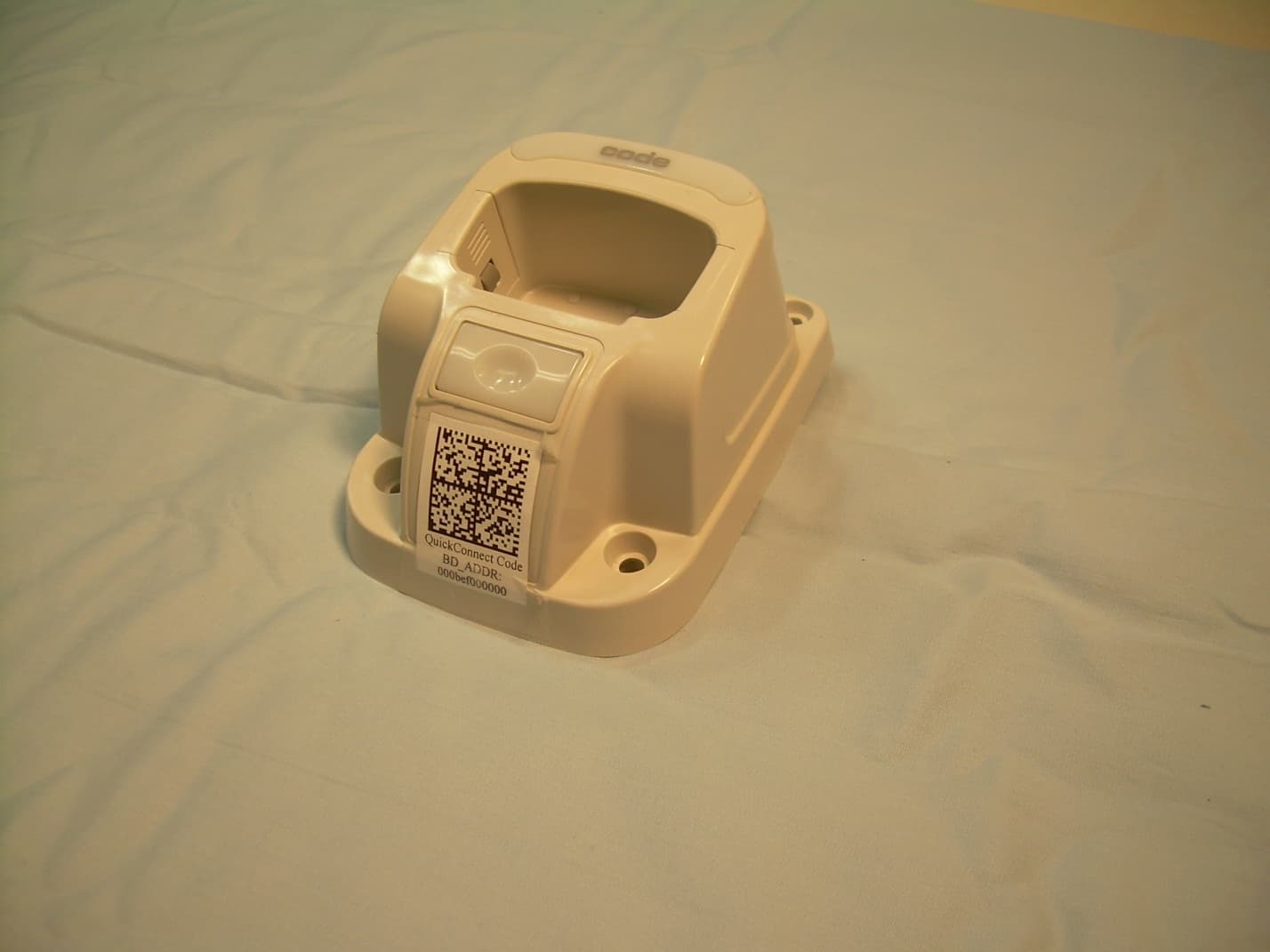
QQ6-BTC02
Dec 05, 2013CHARGER WITH BLUETOOTH TRANSCEIVER
Equipment Class
DSS - Part 15 Spread Spectrum Transmitter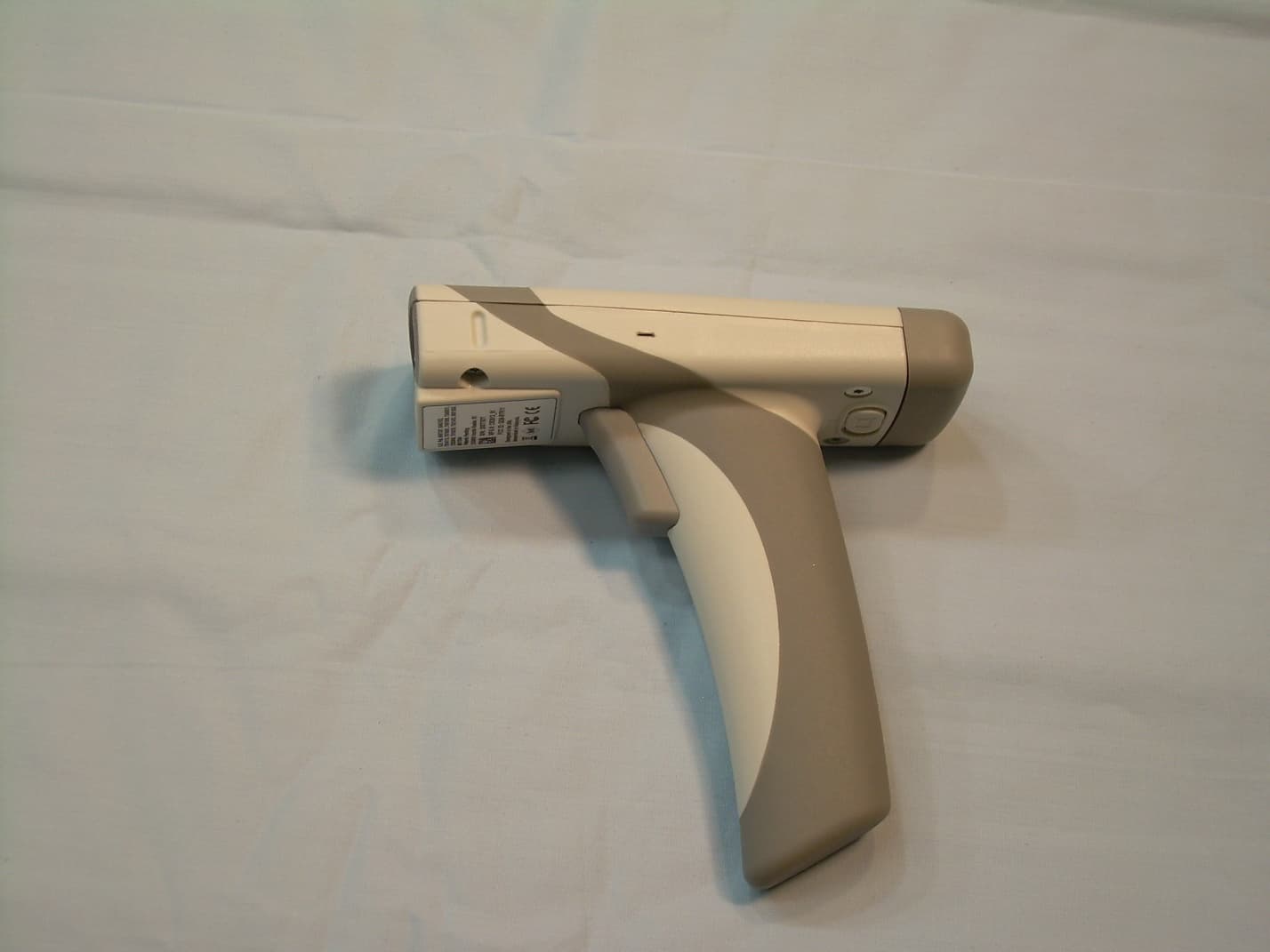
QQ6-BTR11
Feb 13, 2013BAR CODE READER
Equipment Class
DSS - Part 15 Spread Spectrum Transmitter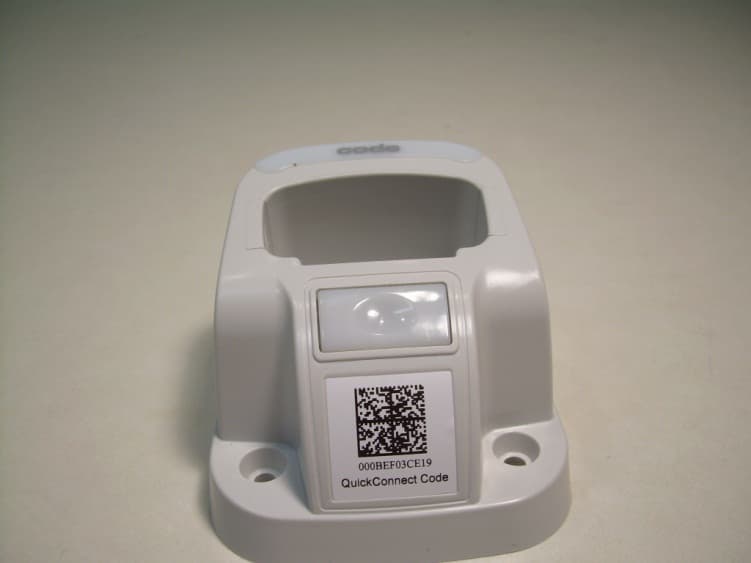
QQ6-BTC01
Feb 12, 2013CHARGING STATION WITH BLUETOOTH
Equipment Class
DSS - Part 15 Spread Spectrum Transmitter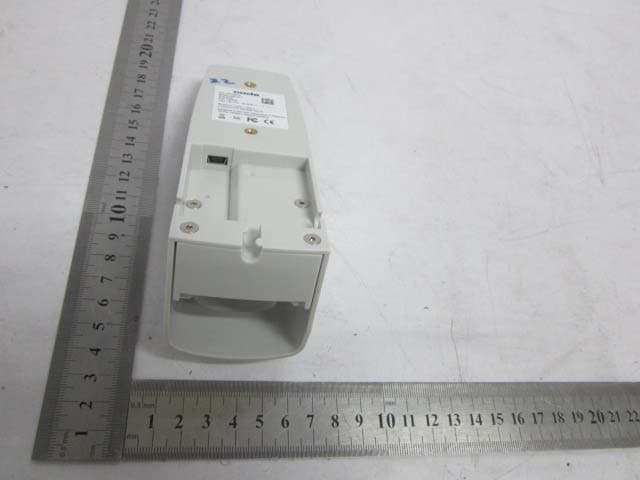
QQ6-RMS02
Apr 26, 2012ECS-RMS
Equipment Class
DSS - Part 15 Spread Spectrum Transmitter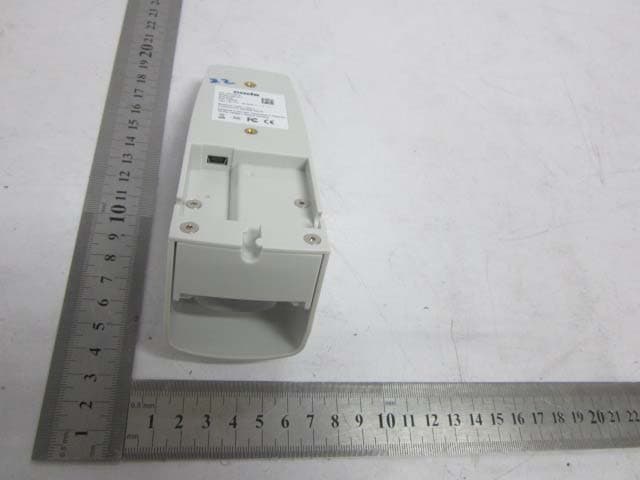
QQ6-RMS01
Feb 23, 2012ECS-RMS
Equipment Class
DSS - Part 15 Spread Spectrum Transmitter