RWT-ER88IiPod Dongle
Etymotic Research, Inc.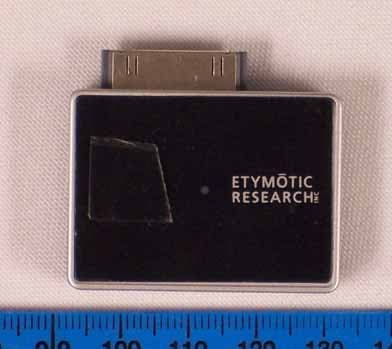
Click to zoom
Application Details
- Equipment Class
- DSS - Part 15 Spread Spectrum Transmitter
- Date of Grant
- Sep 26, 2006
- Application Purpose
- Original Equipment
- Date of Application
- Sep 24, 2006
- Equipment Note
- iPod Dongle
- Frequency Range
- 2402.00000000 - 2480.00000000
- Company
- Etymotic Research, Inc.
- Country
- United States
Documents & Files
Document Text
Text extracted from the exhibit documents filed with the FCC. Open a document above to read the original.
Users Manual
E T Y M O T I C R E S E A R C H INC. ety8 earphones™ Bluetooth™ High-fidelity Noise-Isolating Earphones User Guide TABLE OF CONTENTS What’s included ......................................................................................... Identification and Controls ..................................................................... Pairing...................................................................................................... Volume Adjustment .......................................................................................... Charging Earphones................................................................................ Overcharging .................................................................................................. Battery Life ................................................................................ Auto Shutoff ......................................................................................... Charging the Adapter................................................................. Using the Earphones ................................................................................ Power On Power Off Made for iPod® adapter: On/Off ......................................................................... Troubleshooting ........................................................................................... Insertion/Removal of Earphones................................................................ Eartip Insertion Eartip Removal Proper Care Earphone Filters Changing Filters ............................................................................... Proper Care . . . . . . . . . . . . . . . . . . . . . . . . . . . . . . . . . . . . . . . . . ....... . . . Cleaning ....................................................................................... Cautions .......................................................................................... Listen Safely ......................................................................... Specifications . . . . . . . . . . . . . . . . . . . . . . . . . . . . . . . . . . . . . . . . . . . ....... Warranty.......................................................................................... FCC Information ............................................................................. About Etymotic Research............................................................................ What’s Included • ety8 Bluetooth earphones • USB charging cable • Made for iPod® Adapter • 5 ft. cord with 3.5 mm stereo phone plug • 1 pair gray 3-flange eartips • 1 pair gray 2-flange eartips (small) • 1 pair gray 2flange eartips (large) • 1 pair foam eartips (medium) • Filter changing tool • 2 replacement filters • Carrying case • Storage box • User instructions Replacement items and accessories are available at www.etymotic.com . Identification and Controls USE PICTURES HERE Identifying right and left earphones Earphones are clearly marked L for the left ear and R for the right ear. Note: Some users have found that the earphones are more comfortable with the left earphone in the right ear and vice versa. If correct channel representation is critical to the user’s enjoyment of recorded materials, the earphones can be reprogrammed so that left and right channels are reversed, but the earphone labels will retain the same L and R designators. Controls • Play/Pause • Volume Up • Volume Down • Previous Track • Next Track Pairing Made for iPod® Adapter. Ety8 and the iPod adapter are paired together at the factory. To pair the earphones with another Bluetooth device. Follow the instructions of the other device with the following specific instructions for the ety8 earphones. To allow ety8 earphones to be “found,” they need to be in a “discoverable” mode: • Make sure the earphones are powered off. • Then press and hold the ON button for about 10 seconds. • The LED on the earphones will flash rapidly. • The earphones will stay in a discoverable mode for five minutes or until the pairing completes. • Follow the instructions for the other device. If a passkey is requested, enter “0000” Volume Adjustment When using the earphones with the iPod via the adapter, the volume adjustment is made on the earphones, not on the iPod. This ensures the highest quality signal at the earphones. Charging the Earphones Charge the earphones for at least one hour before first use. A complete charge from a near- empty battery will take about two hours. When charging, the LED glows yellow. When charging is complete, the LED glows green if the unit is on. If the unit is off, the LED turns off when charging is complete. Overcharging It is not possible to overcharge the earphones. Battery life • Up to 10 hours of listening time, depending on the iPod or other device. • When there is less than one hour of use left, the LED slowly blinks green. Auto Shut Off: If the earphones are turned on but there is no music playing, the earphones will turn off after five minutes. Charging the Made for iPod® Adapter The Made for iPod® adapter uses the power provided by the iPod battery and does not need charging. Since it uses the iPod battery, use of the Made for iPod® adapter will reduce the battery life of the iPod. Using the Earphones Power On with an iPod • iPod should be OFF. • Press the On/Play/Pause button for three seconds to turn the earphones on. The green LED will light when the earphones are turned on. • Plug the adapter into the iPod. • When the earphones have connected to the iPod source and the device is playing audio, the Made for iPod® adapter LED glows green. • The following key presses are available to the user from the earphone: 1. Play/Pause 2. Volume Up 3. Volume Down 4. Previous Track 5. Next Track Power Off • While the earphones are on, press the On/Play/Pause button for three seconds to turn the earphones off. The green LED goes out when the earphones are turned off. Troubleshooting Problem: No Music is playing through the earp…
Text truncated - open the document above for the full version.
Cover Letter(s)
Response to ATCB Comments FCC ID: RWT-ER88I 1 Washington Laboratories, Ltd. 7560 LINDBERGH DRIVE GAITHERSBURG, MD 20879 (301) 417 – 0220 FAX # (301) 417 - 9069 September 22, 2006 Mr. Tim Johnson American Telecommunications Certification Body Inc. 6731 Whittier Ave McLean, VA 22101 RE: Comments of September 15, 2006 APPLICATION: RWT-ER88I Etymotic Research, Inc. Dear Mr. Johnson: Below are the comments that you have provided regarding the application for certification referenced above. Our responses to those comments are in bold italic. Many responses refer you to additional exhibit(s) which has been uploaded to the application folder at the ATCB website. Thank you for your attention. Please feel free to contact us for any additional information that you may require. Regards, Gregory M. Snyder Chief EMC Engineer, Wireless/Telco Services Manager Brian J. Dettling Documentation Specialist WLL Project: 9318 1) The 731 form cites RWT-88I while exhibits appear to cite RWT-ER88I. Which is correct? Please correct affected exhibits. R. The 731 form has been corrected. See “ER88I Application Form – 731 revised”. 2) Please update the 731 to include the power. R. See revised form. 3) The block diagram should show the frequencies of all oscillators in the TX portion of the device (CFR 2.1033(a)(5)). Please update. Response to ATCB Comments FCC ID: RWT-ER88I 2 R. There is a single 12 MHz crystal on the board. The other frequencies are derived from it by 2 PLL’s. Please see revised Operational Description; “RWT-ER88I - Operational Description revised”. 4) According to recent FCC interpretations, the confidentiality letter must be signed by either the contact given on the FCC site for the applicant, or someone listed in the technical or non-technical portions of the 731 form. H Stephen Berger does not appear to be listed on the FCC site as the appropriate contact (FCC site shows Mead Killion). Please help correct the cover letters as necessary. R. Please see “RWT-ER88I - Cover Letter - RFC revised” 5) BOM does not appear complete. Please review. Note that generally for a Part 15 device, this is typically not required. If removed from the application, please adjust the confidentiality letter as well. R. Please remove the Parts List from the application package. 6) Schematics are not high enough resolution to read. Please update. R. Please see “RWT-ER88I - Schematic new” 7) Information in the application (731, report, etc.) mentions a frequency range of 2401 – 2480MHz. Please review as BT is normally 2402 – 2480 MHz. R. The frequency range is 2402 – 2480MHz. The typo has been corrected in the affected documents. 8) RF exposure info in the manual should include no co-location information. R. Please see “RWT-ER88I - User Manual revised”. 9) Is the preamp and spectrum analyzer listed in proper calibration. Please review. Also, note that the preamp is also listed in the associated application FCC ID: RWT-ER88. R. The calibration due date of the preamp and spectrum analyzer have been corrected. The test report for the FCC ID: RWT-ER88 has also been corrected with the correct due dates. 10) Calculations appear unusual and off for duty cycle. Generally if 79 channels are used, the period appears unusually. Was the device in proper end use configuration or test modes? See BT theory of operation for more information. R. The device was set in this test mode to obtain a continuous transmission on a single channel. The Bluetooth chip (BroadCom BCM2037) is a Bluetooth 2.0 chip that meets the Bluetooth Core Specification V 1.0B (+ critical errata) and therefore complies with the Dwell Time requirements. 11) The device is considered portable. All 3 axis positioning of the EUT should have been investigated in effort to obtain worse case data. Please explain. R. The device was initially scanned for radiated emissions in three orientations. The worst case orientation was tested and reported. This information has been added to Section 2.3 of the revised test report. 12) This device does not show compliance to the requirement 15.247 (a)(1). Note that 2/3 of the bandwidth measured is 1.1 MHz. Response to ATCB Comments FCC ID: RWT-ER88I 3 R. The actual data listed in the bandwidth measurements table (Table 4) was incorrect. The table has been corrected and now corresponds to the data from the plots. 13) The test report appears to contain a few “Error! Reference source not found” errors. Please correct. R. The errors have been corrected in the revised test report. 14) Test Report page 55 appears to have errors in the corrected uV/m column. Please review. R. The table has been corrected to show the correct uV/m levels.
Cover Letter(s)
1 Etymotic Research, Inc. 61 Martin Lane Elk Grove Village, IL 60007 USA Federal Communication Commission Equipment Authorization Division, Application Processing Branch 7435 Oakland Mills Road Columbia, MD 21048 July 18, 2006 TO WHOM IT MAY CONCERN Etymotic Research request confidentiality for portions of this application. Pursuant to Paragraph §0.475(d) of the Commission's Rules (47 C.F.R.) and Section §552(b)(4) of the Freedom of Information Act, Etymotic Research requests confidentiality for the following products: FCC ID Number Product Title/Model RWT-ER88I Dongle M/N ER88i We request that the following information be held confidential: 1) Electrical Schematics & Layout of the Circuitry 2) Operational Description 3) Block Diagram No other items submitted as part of the equipment authorization filing process are deemed confidential. The above exhibits contain Etymotic Research’s trade secrets and proprietary information that could be of benefit to our competitors regarding the design of our product. This material is not customarily available to the general public and we request that it be withheld from public inspection. If you have any questions, please feel free to contact me at the address shown below. Sincerely,
Cover Letter(s)
TEM Consulting LP 140 River Rd. Georgetown, Tx. 78628 140 River Rd. (512) 864-3365 Phone Georgetown, Tx. 78628 (512) 869-8709 FAX www.temconsulting.com [email protected] E-MAIL July 18, 2006 Subject: Type Acceptance Application: FCC ID RWT-ER88i To Whom It May Concern: DELEGATION OF AUTHORITY Etymotic Research by its agent TEM Consulting hereby authorizes Washington Laboratories, Ltd. of Gaithersburg, MD to operate on its behalf in the matter of FCC approval for the following: Dongle (FCC ID RWT-ER88i) Washington Laboratories, Ltd. is authorized to act on our behalf, until otherwise notified, for applications submitted to American Telecommunications Certification Body, Inc. (ATCB). Washington Laboratories, Ltd. is authorized to file the necessary forms, exhibits and fees required to facilitate this application. We certify that we are not subject to denial of federal benefits, which includes FCC benefits, pursuant to Section 5301 of the Anti-Drug Abuse ACT of 1988, U.S.C. 862. Further, no party, as defined in 47 CFR 1.2002(b), to the application is subject to denial of federal benefits, that includes FCC benefits. If you have any further questions, please contact me: Stephen Berger 140 River Rd. Georgetown, TX 78628 [email protected] 512-864-3365
Test Report
FCC Certification Test Report For the Etymotic Research, Inc. ER88i Bluetooth Dongle FCC ID: RWT-ER88I WLL JOB# 9318 August 15, 2006 Prepared for: Etymotic Research, Inc. 61 Martin Lane Elk Grove Village, IL 60007 Prepared By: Washington Laboratories, Ltd. 7560 Lindbergh Drive Gaithersburg, Maryland 20879 Etymotic Research, Inc. ER88i Bluetooth Earphones Dongle FCC Certification Test Report August 2006 FCC Certification Test Report for the Etymotic Research, Inc. ER88i Bluetooth Dongle FCC ID: RWT-ER88I August 11, 2006 WLL JOB# 9318 Prepared by: Brian J. Dettling Documentation Specialist Reviewed by: Gregory M. Snyder Chief EMC Engineer Etymotic Research, Inc. ER88i Bluetooth Earphones Dongle FCC Certification Test Report August 2006 WLL Report #9318-01 - ii - © 2006 Washington Laboratories, Ltd. Abstract This report has been prepared on behalf of Etymotic Research, Inc. to support the attached Application for Equipment Authorization. The test report and application are submitted for a Frequency Hopping Spread Spectrum Transmitter under Part 15.247 of the FCC Rules and Regulations. This Certification Test Report documents the test configuration and test results for an Etymotic Research, Inc. ER88i Bluetooth Dongle. Testing was performed on an Open Area Test Site (OATS) of Washington Laboratories, Ltd, 7560 Lindbergh Drive, Gaithersburg, MD 20879. Site description and site attenuation data have been placed on file with the FCC's Sampling and Measurements Branch at the FCC laboratory in Columbia, MD. The Industry Canada OATS numbers are 3035A-1 and 3035A-2 for Washington Laboratories, Ltd. Site 1 and Site 2, respectively. Washington Laboratories, Ltd. has been accepted by the FCC and approved by NIST NVLAP (NVLAP Lab Code: 200066-0) as an independent FCC test laboratory. The Etymotic Research, Inc. ER88i Bluetooth Dongle complies with the limits for a Frequency Hopping Spread Spectrum Transmitter device under FCC Part 15.247. Etymotic Research, Inc. ER88i Bluetooth Earphones Dongle FCC Certification Test Report August 2006 WLL Report #9318-01 - iii - © 2006 Washington Laboratories, Ltd. Table of Contents Abstract ........................................................................................................................................... ii 1 Introduction..........................................................................................................................1 1.1 Compliance Statement .....................................................................................................1 1.2 Test Scope ........................................................................................................................1 1.3 Contract Information........................................................................................................1 1.4 Test Dates ........................................................................................................................1 1.5 Test and Support Personnel .............................................................................................1 2 Equipment Under Test .........................................................................................................2 2.1 EUT Identification & Description ...................................................................................2 2.2 Test Configuration ...........................................................................................................3 2.3 Testing Algorithm............................................................................................................3 2.4 Test Location ...................................................................................................................3 2.5 Measurements ..................................................................................................................3 2.5.1 References....................................................................................................................3 2.6 Measurement Uncertainty................................................................................................4 3 Test Equipment ....................................................................................................................5 4 Test Results ..........................................................................................................................6 4.1 Duty Cycle Correction and Time of Occupancy..............................................................6 4.2 RF Power Output: (FCC Part §2.1046) ...........................................................................7 4.3 Occupied Bandwidth: (FCC Part §2.1049) ......................................................................7 4.4 RF Peak Power Spectral Density (§15.247(e) and RSS-210, Annex 8.2) .....................11 4.5 Channel Spacing and Number of Hop Channels (FCC Part §15247(a)(1) ....................14 4.6 Conducted Spurious Emissions at Antenna Terminals (FCC Part §2.1051) .................20 4.7 Radiated Spurious Emissions: (FCC Part §2.1053).......................................................44 4.7.1 Test Procedure.........................................................................................................44 List of Tables Table 1. Device Summary............................................................................................................... 2 Table 2: Test Equipment List.......................................................................................................... 5 Table 3. RF Power Output .............................................................................................................. 7 Table 4. Occupied Bandwidth Results.......................................................................................... 10 Table 5. RF Power Spectral Density.............................................................................................13 Table 6: Radiated Emission Test Data, Low Frequen…
Text truncated - open the document above for the full version.
Contact Information
Applicant
Susan Reid(Director of Quality Assurance & Regulatory Affairs)
Technical Contact
Washington Laboratories, Ltd.Gregory M. Snyder
[email protected]301-471-0220
7560 Lindbergh Drive · Gaithersburg, Maryland · United States
Non-Technical Contact
Washington Laboratories, Ltd.Brian J. Dettling
[email protected]301-417-0220
Test Firm
Washington Laboratories, Ltd.Michael Violette
Technical Specifications
| # | Rule Parts | Frequency Range | Power Output |
|---|---|---|---|
| 1 | 15C | 2.40 GHz - 2.48 GHz | 1.20 mW |
Other Applications from Etymotic Research, Inc.
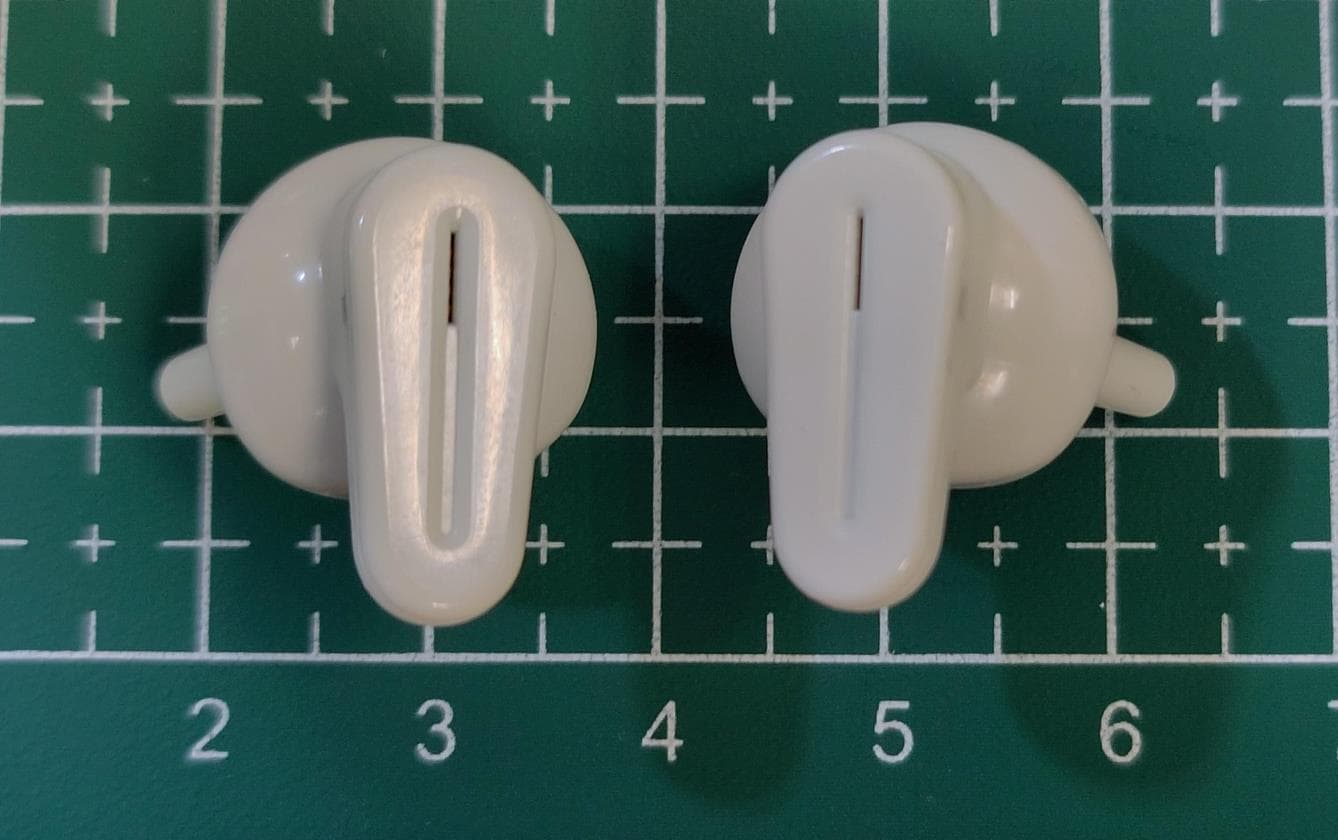
RWT-BAVOTW
Jul 04, 2023Hearing Aid with Bluetooth Connectivity
Equipment Class
DTS - Digital Transmission System
RWT-ER200
Jan 13, 2021Etymotion BT Bluetooth Cable
Equipment Class
DSS - Part 15 Spread Spectrum Transmitter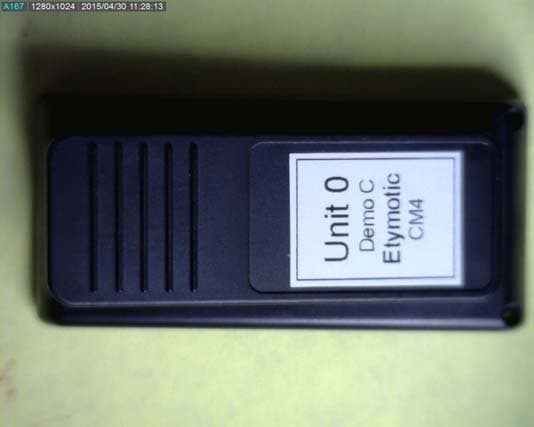
RWT-ER84
Nov 15, 2015Companion Mic - CM4
Equipment Class
DTS - Digital Transmission System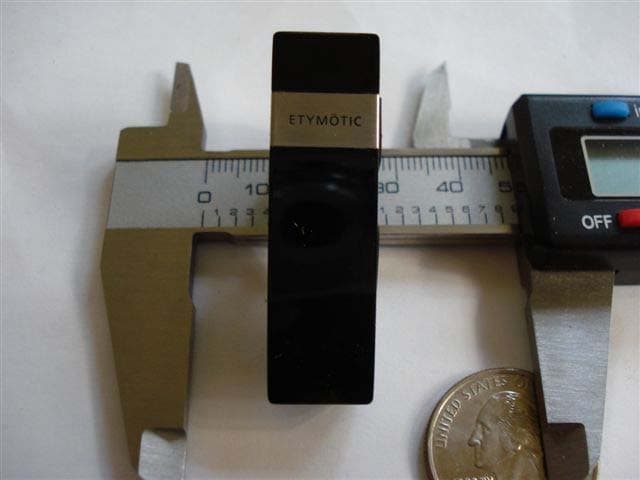
RWT-ER89
Dec 21, 2007Bluetooth Headset
Equipment Class
DSS - Part 15 Spread Spectrum Transmitter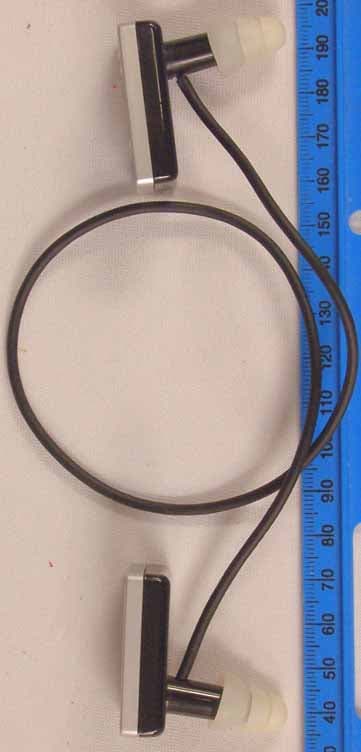
RWT-ER88
Sep 24, 2006Bluetooth Headset
Equipment Class
DSS - Part 15 Spread Spectrum Transmitter