T2Z-23444PERSONAL TRANSPORTER TRANSCEIVER
Segway Inc
Click to zoom
Application Details
- Equipment Class
- DTS - Digital Transmission System
- Date of Grant
- Dec 18, 2013
- Application Purpose
- Original Equipment
- Date of Application
- Dec 18, 2013
- Equipment Note
- PERSONAL TRANSPORTER TRANSCEIVER
- Frequency Range
- 2405.00000000 - 2480.00000000
- Company
- Segway Inc
- Country
- United States
Documents & Files
Document Text
Text extracted from the exhibit documents filed with the FCC. Open a document above to read the original.
Users Manual
1 DRAFT User Manual Segway Personal Transporter (PT) i2 SE, x2 SE XXXXX-00001 aa 2 DRAFT Copyright, Trademarks, Patent, and Contact Information Copyright © 2013 Segway Inc. All rights reserved. Trademarks Segway Inc. ("Segway") owns a number of trademarks including, but not limited to, Segway and the Segway "Rider Design" logo that have been registered in the United States and in other countries. Those trademarks followed by ® are registered trademarks of Segway. All other marks are trademarks or common law marks of Segway. Failure of a mark to appear in this manual does not mean that Segway does not use the mark, nor does it mean that the product is not actively marketed or is not significant within its relevant market. Segway reserves all rights in its trademarks. All other trademarks are the property of their respective companies. Segway Inc. Patent Information The Segway Personal Transporter (PT) is covered by U.S. and foreign patents. For more information go to http://www.segway.com/patents.pdf Contact Information For support, please contact the company from which you bought the products. For a listing of Authorized Segway Dealers and Distributors, visit the Segway website at: http://www.segway.com. Segway Customer Care: 1-866-4SEGWAY (1-866-473-4929) Fax: 1-603-222-6001 E-mail: [email protected] Website: http://www.segway.com 3 DRAFT Table of Contents Copyright, Trademarks, Patent, and Contact Information 2 Table of Contents 3 Preface 7 About This Manual 7 The Risk of Injury 7 Before You Begin 7 Related User Materials 8 Safety Messaging 8 Introduction 9 Recording Serial Numbers 9 Segway PT Model Descriptions 11 Segway PT Specifications 12 Operating Limits 14 Maximizing Range 16 Setting Up Your Segway PT 17 Unpacking Your Segway PT 17 Assembling Your Segway PT 17 The Segway PT 25 How the Segway PT Works 25 Segway PT Components and Subsystems 27 The InfoKey Controller 39 InfoKey Controller 39 Safety Alerts 51 Speed Limiter 52 4 DRAFT Stick Shake Warning 54 Safety Shutdown 57 Riding Your Segway PT 61 Riding Form 61 Avoiding Hazards 62 Step 1: Preparing for Your Ride 65 Step 2: Powering On the Segway PT 66 Step 3: Confirming the Beginner Setting 67 Step 4: Before Stepping On 68 Step 5: Stepping On 69 Step 6: Moving Forward and Backward 71 Step 7: Stopping 72 Step 8: Turning 73 Step 9: Stepping Off 74 Step 10: Securing Your Segway PT 75 Step 11: Powering Off the Segway PT 76 Practice Riding 77 Riding Etiquette 79 Riding Tips and Safety Guidelines Recap 80 Report All Incidents 84 Segway PT Batteries 85 Battery Safety 85 Charging Your Batteries 87 Replacing Batteries 94 Battery Transportation, Shipping, and Disposal 95 Table of Contents (cont.) 5 DRAFT Maintaining Your Segway PT 97 Lifting Your Segway PT 97 Maintaining Tires and Wheels 98 Cleaning Your Segway PT 99 Storing Your Segway PT 100 Servicing Your Segway PT 101 General Information 101 Service Procedures 104 Troubleshooting the Segway PT 119 Troubleshooting Procedures 119 InfoKey Controller Error Icons 127 Contact and Legal Information 133 Report All Incidents 133 How to Reach Us 133 California Warning 133 Obey All Laws and Regulations 133 Limited Warranty 134 Radio Frequency Interference 134 Miscellaneous Regulatory Compliance Information 135 Product Life and Recycling 138 Patent Information 138 Index 139 Notes: 141 Recommended Maintenance Schedule–i2 SE, x2 SE, x2 SE Turf 142 Your Segway PT 144 Table of Contents 6 DRAFT 7 DRAFT Preface Congratulations on the purchase of your new Segway Personal Transporter (PT)! The Segway PT is the standard term used to refer to the self- balancing Segway products described in this manual. Each PT model (i2 SE or x2 SE) is different, but the fundamentals found in this manual apply to both models. About This Manual To learn to ride your PT, you must read and follow all instructions and warnings in the User Manual and watch the Safety Video. It is important that you follow all safety warnings and cautions that appear throughout the User Manual and that you use good judgment when riding your PT. Remember to pass on this User Manual and the Safety Video if you ever resell your PT. If you have questions, or need another copy of the User Manual or Safety Video, contact an Authorized Segway Dealer or Distributor, or Segway Inc. before you attempt to use your PT. For a list of Authorized Segway Dealers and Distributors, call 1-866-473-4929 or visit http://www.segway.com. Check our website regularly for updates to PT User Materials: http://www.segway.com The Risk of Injury The PT is a self-balancing, personal transporter that uses patented balancing technology. Balancing technology cannot prevent injury if you do not ride the PT safely. WARNING Whenever you ride the Segway PT, you risk death or serious injury from loss of control, collisions, and falls. To reduce risk of injury, you must read and follow all instructions and warnings in the user materials. Before You Begin Before you begin, it may be necessary to assemble your PT. The Batteries should be charged for 12 hours. To assemble the PT and charge the Batteries for the first time, refer to the instructions in this manual. 8 DRAFT Related User Materials USB drive that contains: • PDF file of this manual. Segway provides an electronic copy of this User Manual on a USB drive for your convenience. The content of the electronic copy is the same as the printed book. You will need Adobe Reader® to access the PDF files. If you prefer a printed book, please contact your Segway dealer. • Safety Video. A Safety Video is included on the same USB drive as the User Manual. It provides important information on how to use your Segway PT. To reduce the risk of injury, you must watch and follow all instructions and warnings in the Safety Video before you ride. If you have any problems reading the User Manual or viewing the Safety Video, contact your Segway dealer as soon as possible. Safety Messaging Segway takes all aspects of safety very seriously. Our…
Text truncated - open the document above for the full version.
External Photos
External Photos – Segway Model: PT SE Complete Outer Cover off Translucent Cover Off Translucent cover off
ID Label/Location Info
REVISIONS CHANGE #REVDESCRIPTIONAPPROVEDDATE 1 2 3 4 5 6 7 8 C D 1 2 34 5678 D C B A MODEL FILE DATABASE IS REFERENCE ONLY UNLESS MODEL FILE VERSION = 0 All dimensions are for reference only. Use Illustrator file for geometry. B Drawing, Label, IEC Door Voltage, Agency Markings 23594-00000 23594-00001 5d 5d B.Collins 3/25/13 ECR-002386 ECR-002391 5a 5b Initial release. Changed FCC and IC numbers to generic XXXXX’s as placeholders for quote. J Peters J Peters 3/26/13 3/27/13 ECR-002466 ECR-XXXXXX 5c 5d Added notes for material and Pantone colors. Changed size of label and adjusted text/markings to fit new location. J Karlotski 7/19/13 3 100-240 VAC 50-60 Hz: 2A Model: PT SE FCC ID: T2Z-23444 IC: 6395A-23444 23594-00001 aa Pantone Process Black Mater ial: GE .007 Velvet/Matt e 8B35 Adhesive: 3M 350 REVISIONS CHANGE #REVDESCRIPTIONAPPROVEDDATE 1 2 3 4 5 6 7 8 C D 1 2 34 5678 D C B A MODEL FILE DATABASE IS REFERENCE ONLY UNLESS MODEL FILE VERSION = 0 All dimensions are for reference only. Use Illustrator file for geometry. B LABEL, COVER WARNING 17332-00001 17332-00001 ab ab B.Collins J.R.Hoell 3/25/13 3/25/13 1820 ECR-002387 aa ab INITIAL RELEASE. Change: HT to PT throughout; safety colors/icons to ANSI 2011. Add label P/N to label. P/N updated to 17332-00001 from 1733200001. LI COLOM J. Karlotski 2/27/03 6/7/13 DO NOT RIDE UNLESS THE SEGWAY PT MAT IS INSTALLED ON TOP OF THIS PLATFORM. RISQUE DE BLESSURES GRAVES OU MORTELLES PAR SUITE D’UN CHOC ÉLECTRIQUE. NE PAS OUVRIR CETTE PLATE-FORME. AUCUNE PIÈCE RÉPARABLE PAR L’UTILISATEUR À L’INTERIÉUR. CETTE PLATE-FORME NE PEUT ÊTRE OUVERTE QUE PAR DES TECHNICIENS AUTORISÉS ET FORMÉS PAR SEGWAY. AU TECHNICIENS: DÉBRANCHER DE LA SOURCE D’ALIMENTATION CA ET RETIRER LES BATTERIES AVANT D’OUVRIR CETTE PLATE-FORME. RISK OF DEATH OR SERIOUS INJURY FROM ELECTRIC SHOCK. DO NOT OPEN THIS PLATFORM. NO USER SERVICEABLE PARTS INSIDE. ONLY SEGWAY® TRAINED AND AUTHORIZED SERVICE TECHNICIANS SHOULD OPEN THIS PLATFORM. TECHNICIAN MUST DISCONNECT FROM AC POWER AND REMOVE BATTERIES BEFORE OPENING THIS PLATFORM. NE PAS UTILISER LE TRANSPORTEUR SEGWAY PT SANS LE TAPIS NE SOIT EN PLACE SUR LA PLATE-FORME. THIS DEVICE COMPLIES WITH PART 15 OF THE FCC RULES. OPERATION IS SUBJECT TO THE FOLLOWING TWO CONDITIONS: (1) THIS DEVICE MAY NOT CAUSE HARMFUL INTERFERENCE, AND (2) THIS DEVICE MUST ACCEPT ANY INTERFERENCE RECEIVED, INCLUDING INTERFERENCE THAT MAY CAUSE UNDESIRED OPERATION. THIS CLASS B DIGITAL APPARATUS COMPLIES WITH CANADIAN ICES-003. CET APPAREIL NUMERIQUE DE LA CLASSE B EST CONFORME A LA NORME NMB-003 DU CANADA` Colors: Safety Orange: Pantone 152 C Safety Yellow: Pantone 109 C (Refer to ANSI Z535 2011 Color Chart) 17332-00001 ab Notes: 1. Dimensions in inches 2. Materials: Label: over laminated polyester Style: #36019 or Segway approved equivalent. Adhesive: 3M 9471 or Segway approved equivalent.
Internal Photos
Internal Photos – Segway Model PT SE Front - module Rear Module
RF Exposure Info
Test Number: 470-13 Issue Date: 10/18/2013 Page 41 of 49 Compliance Worldwide, Inc. - 357 Main Street - Sandown, NH 03873 (603) 887 3903 Fax 887 6445 http://www.cw-inc.com 7. Measurement Data (continued) 7.13. Public Exposure to Radio Frequency Energy Levels (15.247(i) (1.1307 (b)(1)) RSS-GEN 5.5, RSS 102 Requirement: (15.247(i)) Systems operating under the provisions of this section shall be operated in a manner that ensures that the public is not exposed to radio frequency energy levels in excess of the Commission’s guidelines. Devices are subject to the radio frequency radiation exposure requirements specified in 47CFR 1.1307(b), FCC 47 CFR 2.1091 and 47 CFR 2.1093, as appropriate. All equipment shall be considered to operate in a ‘‘general population/uncontrolled’’ environment. Procedure: The power density is calculated from the maximum peak output power of the device under test using the following formula: • PD = Power Density (mW/cm 2 ) • OP = DUT Output Power (dBm) • AG = DUT Antenna Gain (dBi) • d = MPE Distance (cm) Conclusion: The device under test is meets radio frequency radiation exposure requirements specified in 47CFR 1.1307(b), § 2.1091 and § 2.1093. Power Density MPE Distance (cm) DUT Output Power (dBm) DUT Antenna Gain (dBi) (mW/cm2) (W/m2) Limit (mW/cm2) Channel Frequency (1) (2) (3) (4) (5) Result 2405 2.5 -12.28 1.0 0.000000005 0.0000000481 Compliant 2440 2.5 -13.92 1.0 0.000000003 0.0000000331 Compliant 2480 2.5 -13.10 1.0 0.000000004 0.0000000401 Compliant 1. Reference CFR 2.1093(b): For purposes of this section, a portable device is defined as a transmitting device designed to be used so that the radiating structure(s) of the device is/are within 20 centimeters of the body of the user. 2. Section 7.4 of this test report. 3. Data supplied by the client. Antenna specification data of worst case antenna used by the DUT. 4. Power density is calculated from the maximum peak output power of the device under test. 5. Reference CFR 1.1310, Table 1: Limits for Maximum Permissible Exposure (MPE), Section (B): Limits for General Population/Uncontrolled Exposure. OP + AG (4 x π x d²) PD =
Test Report
Compliance Worldwide, Inc. - 357 Main Street - Sandown, NH 03873 (603) 887 3903 Fax 887 6445 http://www.complianceworldwide.com COMPLIANCE WORLDWIDE INC. TEST REPORT 470-13 In Accordance with the Requirements of FCC PART 15.247, SUBPART C INDUSTRY CANADA RSS 210, ISSUE 8 Low Power License-Exempt Radio Communication Devices Intentional Radiators Issued to Segway Inc. 14 Technology Drive Bedford, NH 03110 for the Model PT SE FCC ID: T2Z-23444 IC: 6395A-23444 Report Issued on October 18, 2013 Tested by This test report shall not be reproduced, except in full, without written permission from Compliance Worldwide, Inc. Test Number: 470-13 Issue Date: 10/18/2013 Page 2 of 49 Compliance Worldwide, Inc. - 357 Main Street - Sandown, NH 03873 (603) 887 3903 Fax 887 6445 http://www.cw-inc.com Table of Contents 1. Scope .................................................................................................................................. 3 2 .Product Details.................................................................................................................... 3 2.1 Manufacturer ............................................................................................................................ 3 2.3 Serial Number........................................................................................................................... 3 2.4 Description................................................................................................................................ 3 2.5 Power Source ........................................................................................................................... 3 2.6 EMC Modifications.................................................................................................................... 3 3. Product Configuration ......................................................................................................... 3 3.1 Operational Characteristics & Software ................................................................................... 3 3.2 EUT Hardware.......................................................................................................................... 3 3.3 EUT Connected Hardware ....................................................................................................... 3 3.4 EUT Cables/Transducers ......................................................................................................... 4 3.5 Support Equipment................................................................................................................... 4 3.6 Block Diagram .......................................................................................................................... 4 4. Measurements Parameters.................................................................................................5 4.1 Measurement Equipment Used to Perform Test...................................................................... 5 4.2 Measurement & Equipment Setup ........................................................................................... 5 4.3 Measurement Procedures ........................................................................................................ 5 4.4 Duty Cycle ................................................................................................................................ 6 4.4 Measurement Uncertainty ........................................................................................................ 6 5. Choice of Equipment for Test Suits.....................................................................................7 5.1 Choice of Model........................................................................................................................ 7 5.2 Presentation ............................................................................................................................. 7 5.3 Choice of Operating Frequencies.............................................................................................7 5.4 Modes of Operation .................................................................................................................. 7 6. Measurement Summary......................................................................................................8 7. Measurement Data.............................................................................................................. 9 7.1 Antenna Requirement .............................................................................................................. 9 7.2 Minimum 6 dB Bandwidth......................................................................................................... 9 7.3 99% Bandwidth....................................................................................................................... 12 7.4 Maximum Peak Conducted Output Power ............................................................................. 14 7.5 Operation with directional antenna gains greater than 6 dBi ................................................. 17 7.6 Transmitter Spurious Radiated Emissions ............................................................................. 17 7.7 Unwanted Emissions into Non-Restricted Bands .................................................................. 24 7.8 Harmonic Emissions in the Restricted Bands of Operation .................................................. 31 7.9 Band Edge Measurements.....................................................................................................32 7.10 Maximum Power Spectral Density ....................................................................................... 35 7.11 Duty Cycle ............................................................................................................................ 37 7.12 Conducted Emissions...................................................................................…
Text truncated - open the document above for the full version.
Test Setup Photos
Test Set Up Photos – Segway Model PT SE Conducted Front View Conducted Rear View Microwave Front View Microwave Rear View Radiated Emissions Front Radiated Emissions Rear Bilog Radiated Emissions Rear Loop
Contact Information
Applicant
Stephen Clark Phillips(Principal Compliance Engineer)
Test Firm
Compliance Worldwide, Inc.Deb Bourbeau
Technical Specifications
| # | Rule Parts | Frequency Range | Power Output |
|---|---|---|---|
| 1 | 15C | 2.40 GHz - 2.48 GHz | 60.00 µW |
Other Applications from Segway Inc

T2Z-GC261515
Apr 17, 2012PERSONAL TRANSPORTER TRANSCEIVER
Equipment Class
DTS - Digital Transmission System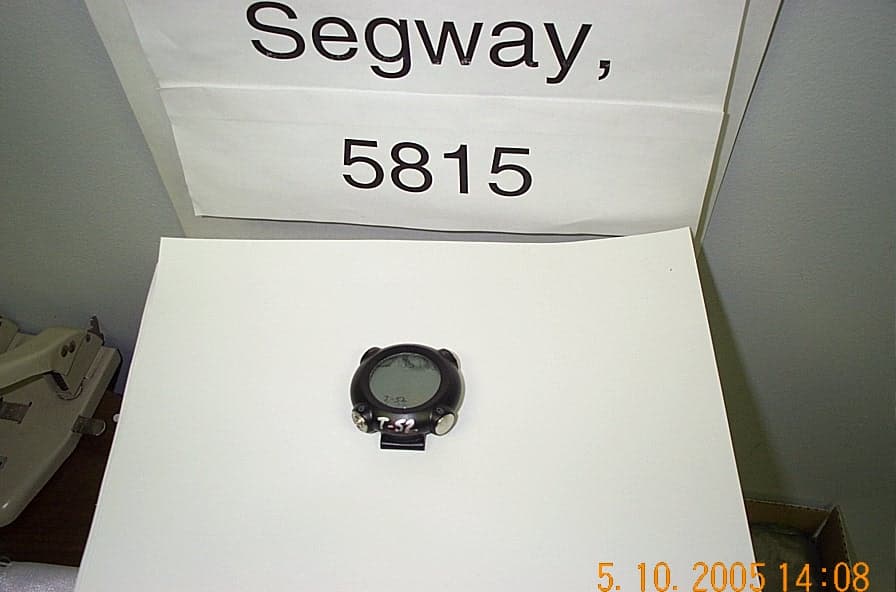
T2Z2420-02
Aug 01, 20062.4GHz for Human Transporter
Equipment Class
DTS - Digital Transmission System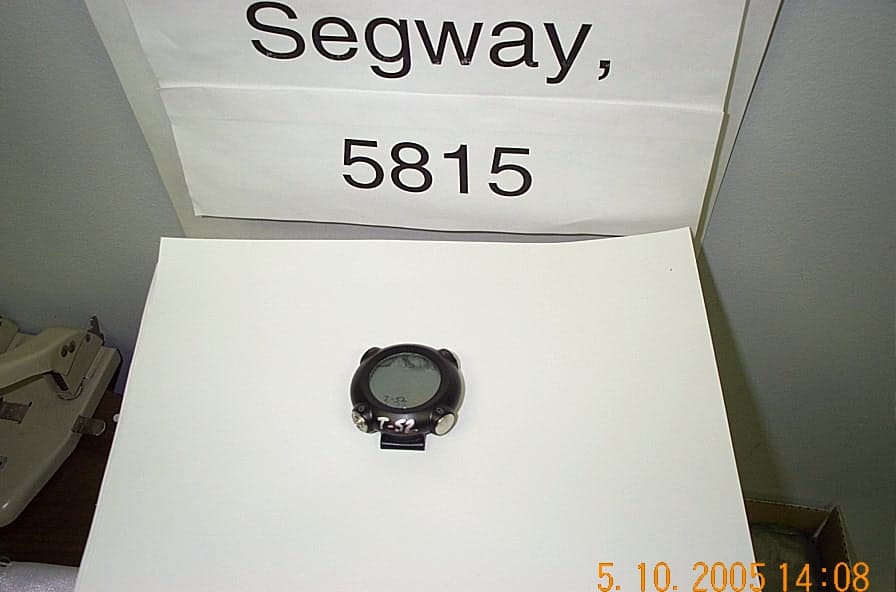
T2Z2420-01
Aug 01, 20062.4GHz FOB for Human Transporter
Equipment Class
DTS - Digital Transmission System