USE746927Battery powered lock and access control system
Paxton Access Ltd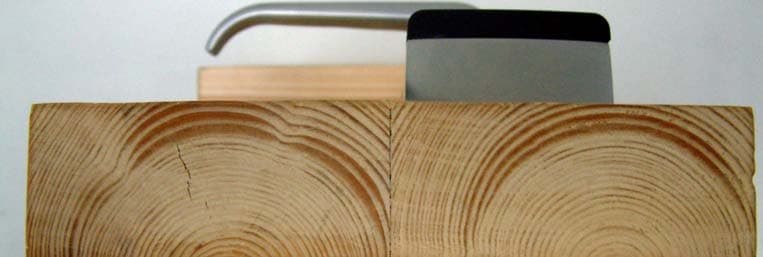
Click to zoom
Application Details
- Equipment Class
- DCD - Part 15 Low Power Transmitter Below 1705 kHz
- Date of Grant
- Oct 24, 2007
- Application Purpose
- Original Equipment
- Date of Application
- Oct 24, 2007
- Equipment Note
- Battery powered lock and access control system
- Frequency Range
- 0.12500000 - 0.12500000
- Company
- Paxton Access Ltd
- Country
- United Kingdom
Documents & Files
Document Text
Text extracted from the exhibit documents filed with the FCC. Open a document above to read the original.
Users Manual
Ins-30056 Easyprox compact reader Technical Support Technical help is available: Monday - Friday from 07:00 - 01:00 (GMT) Saturday from 09:00 - 13:00 (GMT) Further documentation on all Paxton products can be found on our web site - http://www.paxton.co.uk/ [email protected] +44(0)845 8381716 Quickstart guide Easyprox compact is an all-in-one battery powered lock and access control system. The unit combines a 125kHz proximity reader with a bi-stable locking mechanism and batteries that will last for 5 years (assuming 40,000 operations). The Bi-stable locking mechanism makes the lock extremely efficient. A PIR sensor is built in to detect the presence of a user. The proximity circuit and lock circuit remain switched off to save battery power unless a user is detected. The unit is easy to install as it uses a standard dead locking latch. The housing and DDA compliant door handles have a robust metal die cast assembly. The unit uses an alkaline battery pack and has a low battery system warning system. In addition, emergency battery terminals are provided for connection of a PP9 battery pack to power the device should the internal batteries fail. Fitting Recovery from a flat battery Should the battery pack become discharged, the unit will no longer function and the door mechanism will then fail to operate. There is provision on the underside of the lock to apply an external PP9 battery that will provide voltage to allow the circuitry to operate as normal. NOTE: This does not release the lock directly but allows it to operate in its normal secure operation. Once the door is open, access to the lock will then allow the internal battery pack to be replaced. When the battery has discharged to within the 3.5-4V minimum operating threshold. The user will experience a delay between the card being read and access being granted. This delay is by- design and acts as a warning that the battery pack is low and should be replaced. As an example; the delay will at first be 5 seconds. The user will present their card as normal then the LED will show green for the 5 second delay, after which access is granted normally. The delay will increase in increments up to 25 seconds as the battery continues to discharge. Low battery warning Battery replacement 1. Remove the access plate at the rear of the unit. (top two standoff screws) 2. Unplug the battery pack lead. 3. Replace the battery pack with a Paxton supplied unit. (NOTE: The unit will retain its settings and should not be reset) 4. Replace the access plate. Enrolment Card - must be presented when the system is first powered on 1. Take the enrolment card from the new pack of user cards 2. Present the enrolment card to the reader 3. The reader beeps and the LED’s become lit as the enrolment card is acknowledged 4. All cards in the pack are now valid. The enrolment card can now be returned to it’s pack. Issuing tokens 1. On each page there are 4 ‘pairs’ of cards - a ‘User card’ and a corresponding ‘Shadow card’ 2. Write the name of the user on the shadow card 3. Take the user card from the opposite pouch and issue to the user 4. Keep the card pack containing the shadow cards in a safe place. 1234 Bar a user 1. When a card is lost or stolen it is important to bar the card from your system to avoid unauthorized access 2. To bar a card or token take it’s corresponding shadow card from the card pack 3. Present/swipe the shadow card through the reader. This will remove the lost card or token from your system 4. A barred card can re-validated by swiping the enrolment card followed by the user card through the reader. Door open time (seconds) 1. Take the door open time function card from the starter pack 2. Present/swipe the card to the reader. The reader will start beeping 3. Wait for the required period you wish the door to remain open 4. Present/swipe the card again at the end of the period to set the open time. The beeping will Silent operation 1. Take the silent operation function card from the starter pack 2. Present/swipe the card to the reader. The reader will beep 3. The reader is now in silent operation mode 4. Present/swipe the card again to disable silent operation mode. The reader will beep twice. Factory reset 1. Remove the access plate at the rear of the unit. (top two standoff screws) 2. Unplug the battery pack lead. 3. Locate the reset push button at the lower right corner of the circuit board. 4. Hold the button down while reconnecting the battery power. - The unit will bleep 3 times. 5. Press and release the reset button 4 more times - The unit will bleep and reset. 6. Replace the access plate. - The unit will now require re-enrolling 25/09/2007© Paxton Access 2007 Ins-30056 Easyprox compact reader 110,000 1100 1 sec60 sec 13 yes 0 °C55 °C NO 60 mm194 mm30 mm Environment Dimensions Features Waterproof Min Width Height Max Depth Min Max Specifications Door open time Number of Packs Silent operation Number of Users Access levels (Colour Zones) Operating temperature - Battery limits The declaration of conformity may be consulted at: http://paxton.info/596
Cover Letter(s)
RF_160, Issue 01 Declaration of Authorization We Name: Paxton Access Ltd Address: Paxton House, Home Farm Road City: Brighton, East Sussex, BN1 9HU Country: UK Declare that: Name: RFI Global Services Ltd. Address: Ewhurst Park, Ramsdell, City: Basingstoke, Hampshire RG26 5RQ Country: UK is authorized to apply for Certification of the following product: Product description: Easyprox Compact Type designation: 746-927-US Trademark: Easyprox on our behalf. Date: 09 th October 2007 City: Brighton Name: Brett Glass Signature:
Cover Letter(s)
1(1) Attention: Application Examiner Re: Request for confidentiality Applicant: Paxton Access Ltd FCC ID: USE746927 20th September 2007 To whom it may concern, Permanent Confidentiality Request is hereby submitted by Paxton Access Ltd to withhold permanently from public review certain portions of the application for equipment certification for the referenced FCC identifiers. This request for confidentiality is made pursuant to 47 CFR 0.457(d) and 0.459 of the FCC Rules. In particular, the following sections of the application are to be kept permanently confidential: 1. Schematics 2. Detailed Block diagrams 3. Detailed Operational/Functional Description 4. Parts Lists 5. Internal Photos Rationale for request for confidentiality of all items above. Paxton Access Ltd has invested considerable time and materials in research and development to produce the referenced product. Disclosure of the permanently confidential portions of this application to competitors would not only give them significant competitive advantages in developing similar products, but would also disclose successful implementation of unpublished, leading edge technology developed by us. Sincerely, Quality Manager Paxton Access Ltd
External Photos
Front view (door entry unit) Front view (door exit unit) Exhibit 3: External Photographs Page 1 Side view Top view Exhibit 3: External Photographs Page 2
ID Label/Location Info
Part No. Part Name Unit Scale Issue Description Date Drawn Paxton Access Brett Glass ils-ec1 mm 1:1 A DIMS. & DWG. FRAME ADDED 05.07.07 ID & Ratings Label: Artwork for Easyprox Compact 20mm 27mm Paxton Access Battery pack to be replaced with Paxton Access part number xxx-xxx only Model No: 746-927 FCC-ID: USE746927 Example of Easyprox Compact label locations Located on the battery compartment cover at the back of the door entry unit.
Test Report
TEST REPORT FROM RFI GLOBAL SERVICES LTD Test of: Paxton Access Ltd Easyprox Compact To: FCC Part 15.215: 2006 Test Report Serial No: RFI/RPTE1/RP49343JD06A This Test Report Is Issued Under The Authority Of Brian Watson, Operations Director: Checked By: Brian Watson Report Copy No: PDF01 Issue Date: 03 October 2007 Test Dates: 10 September 2007 This report may be reproduced in full. Partial reproduction may only be made with the written consent of RFI Global Services Ltd. The results in this report apply only to the sample(s) tested. RFI GLOBAL SERVICES LTD TEST REPORT S.No. RFI/RPTE1/RP49343JD06A Page 2 of 16 Issue Date: 03 October 2007 Test of: Paxton Access Ltd Easyprox Compact To: FCC Part 15.215: 2006 This page has been left intentionally blank. RFI GLOBAL SERVICES LTD TEST REPORT S.No. RFI/RPTE1/RP49343JD06A Page 3 of 16 Issue Date: 03 October 2007 Test of: Paxton Access Ltd Easyprox Compact To: FCC Part 15.215: 2006 Table of Contents 1. Client Information............................................................................................................................ 4 2. Equipment Under Test (EUT)......................................................................................................... 5 3. Test Specification, Methods and Procedures............................................................................... 7 4. Deviations from the Test Specification......................................................................................... 8 5. Operation of the EUT During Testing............................................................................................ 9 6. Summary of Test Results............................................................................................................. 10 7. Measurements, Examinations and Derived Results.................................................................. 11 8. Measurement Uncertainty............................................................................................................ 15 Appendix 1. Test Equipment Used.................................................................................................. 16 RFI GLOBAL SERVICES LTD TEST REPORT S.No. RFI/RPTE1/RP49343JD06A Page 4 of 16 Issue Date: 03 October 2007 Test of: Paxton Access Ltd Easyprox Compact To: FCC Part 15.215: 2006 1. Client Information Company Name: Paxton Access Ltd Address: Paxton House Home Farm Brighton BN1 9HU UK Contact Name: Mr B Glass RFI GLOBAL SERVICES LTD TEST REPORT S.No. RFI/RPTE1/RP49343JD06A Page 5 of 16 Issue Date: 03 October 2007 Test of: Paxton Access Ltd Easyprox Compact To: FCC Part 15.215: 2006 2. Equipment Under Test (EUT) The following information (with the exception of the Date of Receipt) has been supplied by the client: 2.1. Identification of Equipment Under Test (EUT) Brand Name: Easyprox Compact Model Name or Number: 746-927 Serial Number: None stated Hardware Version Number: z-ec01 Rev. 4, ppc-esyc Rev.. C FCC ID Number: USE746927 Country of Manufacture: UK Date of Receipt: 10 September 2007 2.2. Description of EUT The equipment under test is a standalone battery powered lock and access control reader. 2.3. Modifications Incorporated in EUT During the course of testing the EUT was not modified. RFI GLOBAL SERVICES LTD TEST REPORT S.No. RFI/RPTE1/RP49343JD06A Page 6 of 16 Issue Date: 03 October 2007 Test of: Paxton Access Ltd Easyprox Compact To: FCC Part 15.215: 2006 2.4. Additional Information Related to Testing Power Supply Requirement: Internal battery supply of 6V Equipment Category: Short Range Device Type of Unit: Base Station (Fixed use) Power Characteristics: <1nW Modulation Type: AM Data Rate: 4000 Bit/s Temperature Range: 0ºC to 55ºC Transmit Frequency Range: 125 kHz RFI GLOBAL SERVICES LTD TEST REPORT S.No. RFI/RPTE1/RP49343JD06A Page 7 of 16 Issue Date: 03 October 2007 Test of: Paxton Access Ltd Easyprox Compact To: FCC Part 15.215: 2006 3. Test Specification, Methods and Procedures 3.1. Test Specifications Reference: FCC Part 15: 2006 (Sections 15.215). Title: Code of Federal Regulations, Part 15 (47CFR215) Radio Frequency Devices. 3.2. Methods and Procedures The methods and procedures used were as detailed in: ANSI/TIA-603-B-2003 Land Mobile Communications Equipment, Measurements and performance Standards ANSI C63.2 (1987) Title: American National Standard for Instrumentation - Electromagnetic noise and field strength. ANSI C63.4 (2001) Title: American National Standard Methods of Measurement of Electromagnetic Emissions from Low Voltage Electrical and Electronic Equipment in the Range of 9 kHz to 40 GHz. ANSI C63.5 (1988) Title: American National Standard for the Calibration of antennas used for Radiated Emission measurements in Electromagnetic Interference (EMI) control. ANSI C63.7 (1988) Title: American National Standard Guide for Construction of Open Area Test Sites for performing Radiated Emission Measurements. CISPR 16-1: (1999) Title: Specification For Radio Disturbance and Immunity Measuring Apparatus and Methods. Part 1: Radio Disturbance and Immunity Measuring Apparatus. 3.3. Definition of Measurement Equipment The measurement equipment used complied with the requirements of the standards referenced in the Methods & Procedures section above. Appendix 1 contains a list of the test equipment used. RFI GLOBAL SERVICES LTD TEST REPORT S.No. RFI/RPTE1/RP49343JD06A Page 8 of 16 Issue Date: 03 October 2007 Test of: Paxton Access Ltd Easyprox Compact To: FCC Part 15.215: 2006 4. Deviations from the Test Specification There were no deviations from the test specification. RFI GLOBAL SERVICES LTD TEST REPORT S.No. RFI/RPTE1/RP49343JD06A Page 9 of 16 Issue Date: 03 October 2007 Test of: Paxton Access Ltd Easyprox Compact To: FCC Part 15.215: 2006 5. Operation of the EUT During Testing 5.1. Operating Modes The EUT was tested in the following operating modes, unless otherwise stated. • Single operating mode as the 125kHz field is continuous 5.2. Configuration and Per…
Text truncated - open the document above for the full version.
Contact Information
Applicant
Brett David Glass(Mr)
Test Firm
UL VS LtdDarren Rust
Technical Specifications
| # | Rule Parts | Frequency Range | Power Output |
|---|---|---|---|
| 1 | 15C | 0.125 MHz - 0.125 MHz | - |
Other Applications from Paxton Access Ltd
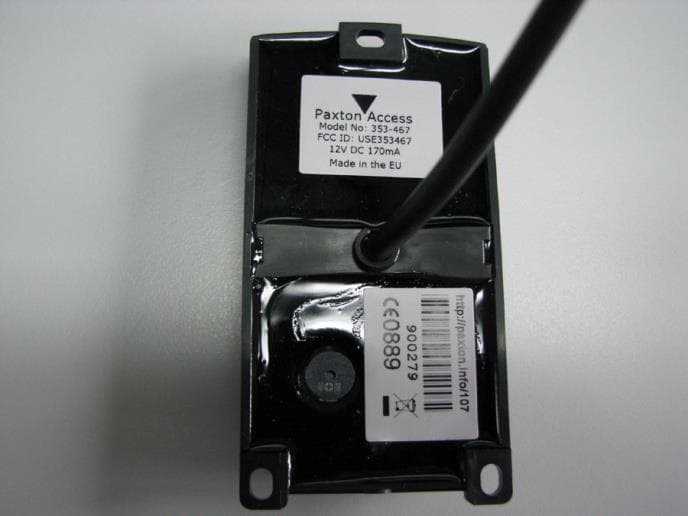
USE353467V2
Nov 25, 2020Secure access proximity reader
Equipment Class
JAB - Part 15 Class B Digital Device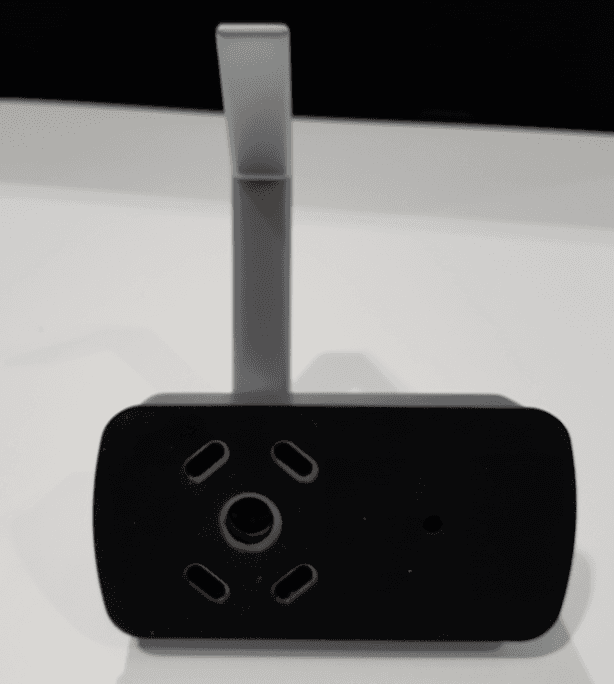
USE900650
Mar 09, 2020Smart electronic lock
Equipment Class
DCD - Part 15 Low Power Transmitter Below 1705 kHz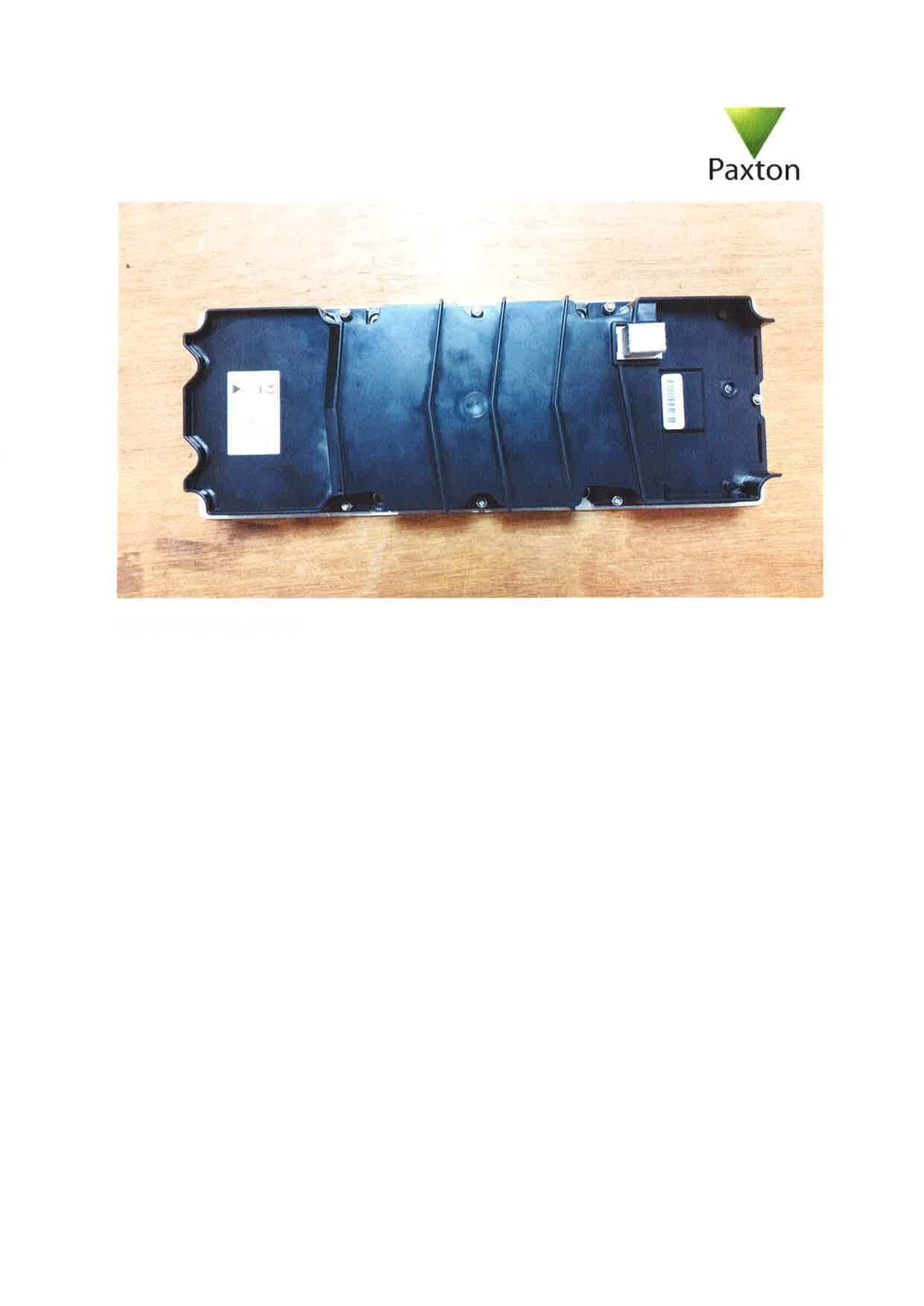
USE337520
Sep 17, 2015Door entry panel with integral radio transmitter
Equipment Class
DCD - Part 15 Low Power Transmitter Below 1705 kHz
USE337420
Sep 17, 2015Door access system operating on 125kHz and 13.56MHz
Equipment Class
DCD - Part 15 Low Power Transmitter Below 1705 kHz
USE010387
Apr 29, 2015net10 desktop reader
Equipment Class
DCD - Part 15 Low Power Transmitter Below 1705 kHz