UYXRSK2010-01Recon Scout
ReconRobotics, Inc.
Click to zoom
Application Details
- Equipment Class
- TNB - Licensed Non-Broadcast Station Transmitter
- Date of Grant
- Apr 21, 2010
- Application Purpose
- Original Equipment
- Date of Application
- Apr 19, 2010
- Equipment Note
- Recon Scout
- Frequency Range
- 433.00000000 - 445.00000000
- Company
- ReconRobotics, Inc.
- Country
- United States
Documents & Files
Document Text
Text extracted from the exhibit documents filed with the FCC. Open a document above to read the original.
Users Manual
Phone: 952-935-5515 Fax: 952-935-5508 E-mail: [email protected] www.ReconRobotics.com ReconRobotics 7620 West 78th Street Edina, MN 55439 User’s Manual User’s Manual Edition 2.7.1 March 2010 Product Identification This manual applies to the ReconRobotics Recon Scout Platform and Recon Scout OCU model number OCU02. FCC Class B Product Compliance NOTE: This equipment has been tested and found to comply with the limits for a Class B digital device, pursuant to Part 15 of the FCC Rules except where waived by waiver DA 10-291. This equipment generates, uses and can radiate radio frequency energy and, if not in stalled and used in accordance with the instruction, may caus e harmful interference to radio communication. However, th ere is no guarantee that interference will not occur in a particular installation. If this equipment does cause harmful interference to radio or television reception, which can be determined by turning the equipment off and on, the user is encouraged to try to correct the interference by one or more of the following measures: Reorient or relocate the receiving antenna. Increase the separation between the equipment and receiver. Connect the equipment into an outlet on a circuit different from that to which the receiver is connected. Consult the dealer or an expe rienced radio/TV technician for help. This device may not interfere with Federal stations operating in the 420-450 MHz band and must accept any interference received. Although this transmitter has been approved by the Federal Communications Commission, there is no guarantee that it will not receive interference. Notice: Changes or modifications no t expressly approved by ReconRobotics could void the user’s warranty. Modification to the Recon Scout™ or OCU may cause the transmission to violate compliance with FCC Rules and may result in revocation of authorization to use the product. Please direct all questions or concerns to: ReconRobotics 7620 W 78th Street Edina, MN 55420 (952) 935-5515 or 1-866-697-6267 The devices described within this manual are protected under US Patent Numbers 6,548,982, 6,806,346, 7,559,385, and other patents pending. ©2010 ReconRobotics 20 FCC Logbook FCC Logbook Date Start Stop Location Reason POC ©2010 ReconRobotics 19 FCC Logbook FCC Logbook The usage of the Recon Scout robot is subject to maintenance of a logbook. Please use the following sheet to record the date of operation, the start and stop times, channel information, the location of usage, a brief reason for usage and a point of contact. This logbook must be made available upon request of the Federal Communications Commission or the Nationa l Telecommunications and Information Administration. The channel information is available on Page 18 of the manual, along with the serial numbers of the units for this log. Page 20 may be photocopied, or additional pages are available from your authorized ReconRobotics dealer. Date Start Stop Location Reason POC Table of Contents Table of Contents FCC Guidelines 1 Recon Scout® Inventory 3 Instructions for Use: Recon Scout 4 Operator Controller Unit (OCU) 5 Chargers 6 Field Maintenance 7 Frequently Asked Questions 9 Requesting Service 11 Safety Information and Warnings 13 Warranty 17 Serial Number Information 18 FCC Logbook 19 ©2010 ReconRobotics 1 FCC Guidelines FCC Guidelines The usage of the Recon Scout robot and related equipment is subject to the following conditions: Eligibility is limited to state and local pol ice and firefighters eligible for licensing under Section 90.20(a)(1) of the Commission’s Rules, and security personnel in critical infrastruc ture industries. The Recon Scout robot may be used only during actual emergencies involving threats to safety of life, and for necess ary training related to such operations. Security personnel in critical infrastructure industries may operate the Recon Scout robot only in areas that are environmentally hazardous for entry by human personnel, and for necessary training related to such operations. Training operations are not permitted with in thirty kilometers of the following Federal radiolocation sites: The Recon Scout robot will operate on a secondary basis (cannot cause interference and is not protected from interference) to all Federal users and licensed non-Federal users. This device may not interfere with Federal stations operating in the 420-450 MHz band and must a ccept any interference received. The operation of the Recon Scout may be impacted in the vicinity of the following radar and ionospheric research sites : Site Coordinates (degrees-minutes-seconds) Beale Air Force Base 39-08-10 N / 121-21-04 W Cape Cod Air Force Station 41-45-07 N / 70-32-17 W Clear Air Force Station 64-55-16 N / 143-05-02 W Cavalier Air Force Station 48-43-12 N / 97-54-00 W Eglin Air Force Base 30-43-12 N / 86-12-36 W Site Coordinates (degrees-minutes-seconds) Arecibo, Puerto Rico 18-20-37 N / 66-45-11 W Westford, Massachusetts 42-37-24 N / 71-29-18 W Poker Flats, Arkansas 65-07-47 N / 147-28-14 W ©2010 ReconRobotics 18 All materials contained in this document are proprietary and confidential. Reproduction and duplication, without specific written permission, are strictly prohibited. ReconRobotics, Inc. 7620 West 78th Street Edina, MN 55439 Phone: 952-935-5515 Fax: 952-935-5508 Email: [email protected] Website: www.reconrobotics.com Place Serial Number Sticker Here It should have channel identification information on it E.G. Recon Scout 1234B567 Channel C, 436-442 MHz Serial Number Information Serial Number Information ©2010 ReconRobotics 17 All ReconRobotics products are warr anted to be free from defects in materials or workmanship for one year from the date of purchase. Within this period, ReconRobotics will, at it s sole option, repair or replace any components which fail in normal use. Such repairs or replacement will be made at no charge to the customer for parts or labor, provided that the customer shall be responsibl…
Text truncated - open the document above for the full version.
Cover Letter(s)
Federal Communications CommissionDA 10-291 Before the Federal Communications Commission Washington, D.C. 20554 In the Matter of RECONROBOTICS, INC. Request for Waiver of Part 90 of the Commission’s Rules ) ) ) ) ) ) WP Docket No. 08-63 ORDER Adopted: February 22, 2010Released: February 23, 2010 By the Deputy Chief, Wireless Telecommunications Bureau, and Deputy Chief, Public Safety and Homeland Security Bureau: I. INTRODUCTION 1.We have before us a request filed by ReconRobotics, Inc. (ReconRobotics) for waiver of Sections 90.101, 90.207, and 90.209 of the Commission’s Rules to permit equipment authorization and customer licensing under Part 90 of the Commission's Rules 1 for the Recon Scout, which is a remote- controlled, maneuverable surveillance robot designed for use in areas that may be too hazardous for human entry. 2 For the reasons set forth below, we grant the waiver request subject to the conditions specified herein. A waiver is required to permit the device to transmit surveillance data in the 430-448 MHz segment of the 420-450 MHz band, which is allocated to the Federal Radiolocation service on a primary basis, and to the amateur service and certain non-Federal radiolocation systems on a secondary basis. 3 II. BACKGROUND 2.ReconRobotics seeks awaiver to permit equipment certification for the Recon Scout, and its use by state and local law enforcement and firefighting agencies, and security personnel in critical infrastructure industries. 4 The Recon Scout can be thrown, dropped, or launched into potentially hazardous areas and can provide real-time video to an operator located a safe distance away. 5 Typical applications will include checking a building prior to forced entry; searching vehicle undercarriages for explosives; locating hostages, hostiles, officers, and bystanders before a rescue attempt; and searching for survivors in a burning 1 See 47 C.F.R. §§ 90.101 (limiting Part 90 use of 420-450 MHz to radiolocation), 90.207 (modulation), 90.209 (bandwidth). 2 SeeRequest for Waiver (filed Jan. 11, 2008) (Request). 3 See47 C.F.R. §§ 2.106, 90.103(c)(21), 97.303(f). Non-Federal radiolocation stations are secondary to both Federal radiolocation stations and amateur stations. 4 SeeRequest at 1. 5 See id.at 2. ReconRobotics plans to add optional sensors foraudio, biological, chemical, heat, radiation, or other needed data. Federal Communications CommissionDA 10-291 2 building. 6 The Recon Scout is used overseas by the U.S. armed forces, and is credited with saving lives. 7 3.The Recon Scout transmits the analog video signalto the operator on one of three six- megahertz channels:430-436 MHz, 436-442 MHz, and 442-448 MHz. 8 ReconRobotics states that multiple channels are necessary in order to avoid interference during incidents where multiple Recon Scouts are in use, but that such situations should be rare. 9 Itproposes that the first unit sold to a responding organization would operate on 442-448 MHz, with the 436-442 MHz version being sold only to entities that already own the 442-448 MHz version, and the 430-436 MHz version being sold only to entities that already own the 442-448 MHz and 436-442 MHz versions. 10 4.ReconRobotics proposes to limit eligibility to state and local police and firefighters; and security personnel in critical infrastructure industries for use only in areas that are hazardous for entry by human personnel due to nuclear, chemical, or other environmental toxins. 11 Italso proposes other conditions on the waiver to minimize potential interference: use would be limited to actual emergencies involving threats to safety of life, and necessary training related to such operations; and the number of units to be sold would be limited to 2,000 during the first year following equipment approval, and 8,000 during the second year. 12 Italso suggests that the Commission, in collaboration with the National Telecommunications and Information Administration (NTIA), could deny license applications in particular areas as necessary to protect Federal radiolocation facilities. 13 5.Over seventy comments were received in response to the public notice seeking comment on the waiver request. 14 The commenters generally consist of public safety and law enforcement entities 6 Id.at 2, 14. 7 Id.at 2, 6. The military version of the Recon Scout operates in the 430-436 MHz band. See File No. 0056-EX- PL-2007, Section 5.63 Supplementary Statement at 1, Request for Expedited Consideration at 2 n.2. 8 See Request at 3, 10. ReconRobotics states that analog operation is required because a device with a digital transmitter would not be small and light enough to throw; digital video is prone to sudden cut-off at the end of its range, while a weak analog signal is still useful; and use of digital technology would render the device too expensive for many public safety entities. Id.at 4 n.4. 9 Id.at 12. 10 Id.at 3, 12, 15. ReconRobotics proposes to proceed in this sequence in order to provide maximum protection to amateur satellite downlinks in the 435-438 MHz segment. See id.at 3. 11 See id.at 15. Any offer for sale or lease of the device would state these eligibility limits. Id. 12 Id.at 15-16. 13 SeeLetter dated July 30, 2008 from Mitchell Lazarus, Counsel for ReconRobotics, to Marlene H. Dortch, Secretary, Federal Communications Commission, Attachment: Spectrum Analysis for the “Recon Scout” Robot Device at 1. 14 SeeWireless Telecommunications Bureau andPublic Safety and Homeland Security BureauSeek Comment on Request for Waiver by ReconRobotics, Inc. to Allow Certification and Use of Remote-Controlled Surveillance Robot Operating at 430-448 MHz, Public Notice, WP Docket No. 08-63, 23 FCC Rcd 7437 (WTB/PSHSB 2008). In addition, because the 420-450 MHz band is allocated to the Federal Radiolocation service on a primary basis, we have coordinated ReconRobotics’s waiver request with NTIA, which administers authorizations for Federal stations. NTIA’s comments have been placed into the record …
Text truncated - open the document above for the full version.
Cover Letter(s)
2 There are several errors in the TCB grant. Perhaps the most obvious is the emission designator for this device. The TCB grant states that the emission designator is 100KC3F. This would indicate that the necessary bandwidth of the device is 100 kHz, and that the emission is an analog, vestigial sideband AM signal. In fact, according to ReconRobotics, and as ReconRobotics stated in its waiver request filed with the Commission in WP Docket 08-63, the Recon Scout uses one of three prioritized, 6 MHz channels over 430-448 MHz for a video, NTSC (analog) transmitter. Commission database records for granted authorizations for C3F emissions are inevitably on the order of 5.75 MHz for this type of device. As shown in Mr. Hare’s attached statement, it appears that the source of the error here is the use by ReconRobotics’ test laboratory of an inapplicable bandwidth measurement technique intended for use in testing FM or PM communications equipment. Regardless of the source, however, the appropriate emission designator for this device, we would suggest, is 5M75C3F or similar, and the TCB apparently missed the error when reviewing this application. The result is that the grant specifies the incorrect emission designator. Mr. Hare also notes some errors in the actual measurement of occupied bandwidth of this device set forth in the test report, which should have been noticed when the application for certification was evaluated by American TCB, but were not. The necessary and occupied bandwidths of the device and the emission designator were not the only errors in the test report submitted by ReconRobotics. Additionally, the transmit power was incorrectly tested by ReconRobotics’ test laboratory, and incorrectly evaluated by the TCB. ReconRobotics had sought in its waiver request to utilize 1 watt peak, 0.25 watts average power, but did not indicate whether this was to be EIRP, ERP or transmitter output power. The waiver Order did not clarify this either. The test laboratory measured only EIRP, and showed 0.323 watts peak and 0.097 watts average power. As it is undesirable to measure a device’s characteristics at less than maximum power (because maximum potential degradation of characteristics is revealed at the maximum specified power limit) it is unclear what the full amount of sideband energy is and therefore what the occupied bandwidth is for this device. Additionally, the test report claims compliance with Section 90.209 of the Commission’s Rules. However, it clearly is not in compliance with Section 90.209(b)(3), which requires that for emissions other than those specified elsewhere in Section 90.209(b), the maximum authorized single channel bandwidth cannot be more than that normally authorized for voice operations. A necessary bandwidth of 6 megahertz and a measurement of the occupied bandwidth, though incorrectly done, of 100 kHz does not meet this standard. The report also cites a footnote to that rule Section, which is specific to radiolocation transmitters and is hence inapplicable to the Recon Scout device. As discussed in Mr. Hare’s statement, the modulation applied to the device under test was insufficient to produce a typical bandwidth representative of that expected from 3 an AM vestigial sideband video transmitter, and the test report inadequately described the test conditions. This should have, but did not, raise a question in the TCB’s review of this device. There is, finally, a substantial discrepancy between the channelization plan set forth in the waiver Order and the specification of the frequency range of the device in the TCB grant of certification. The frequency range specified in the TCB grant is 433.0 MHz to 445.0 MHz. However, the waiver Order specifies three discrete channels (and prioritizes the assignment of these channels in the licensing process in order to decrease the fundamental incompatibility between this device and co-channel Amateur Radio operation). The three channels are 430 – 436 MHz; 436 - 442 MHz, and 442 – 448 MHz. The center frequencies for these channels specified in the waiver request, respectively, are 433 MHz, 439 MHz and 445 MHz. However, if the test reports submitted are accurate, the video carrier frequencies are different; the video carriers for an NTSC C3F emission is offset 1.25 MHz from the lower channel edge. That would place the center frequencies at 434.75 MHz, 440.75 MHz, and 446.75 MHz. Therefore, if the frequencies shown in the test report for this device are accurate, the waiver grant does not match the actual occupied frequencies. Given the foregoing, as is more completely explained in Mr. Hare’s statement attached, it is apparent that the TCB certification grant was improperly made and should be set aside by the Commission, pending retesting of the device and resubmission of an equipment authorization application for this device. On behalf of the more than 680,000 licensed radio amateurs in the United States, who have an interest in avoiding interference to and from these devices, ARRL respectfully requests that your office take the appropriate action with respect to this device. Should any additional information be called for, please contact either the undersigned, General Counsel for ARRL, or Mr. Hare, whose contact information is listed on the attached technical statement. Thank you very much for your consideration of this request. Kind regards, Christopher D. Imlay Christopher D. Imlay General Counsel, ARRL Copy: Mitchell Lazarus, Esquire (Counsel for ReconRobotics, Inc.) Attachment 1 Errors and Issues in the Testing and Certification of the ReconRobotics Recon Scout Ed Hare ARRL Laboratory Manager 225 Main St Newington, CT 06111 Tel: (860) 594-0318 Email: [email protected] 2 Overview There are several problems in the test methods and test results in the test-results exhibit used by American TCB to issue the FCC certification for the ReconRobotics Recon Scout transmitter. These problems and errors led to an incorrect grant of equip…
Text truncated - open the document above for the full version.
Cover Letter(s)
American Certification Body Inc. 6731 Whittier Ave, McLean, VA 22101 October 8, 2010 RE: FCC ID: UYXRSK2010-01 FCC correspondence 91407 Attention: FCC Dear Dr. Doshi This letter is to request an extension of 5 days to respond to the Formal Complaint from ARRL concerning the above FCC ID. The reason for this request is to give ATCB adequate time to investigate the allegations made by ARRL against ATCB and to provide a formal response. We are aware that the applicant is responding directly to the FCC within the 48 hour deadline given. Sincerely Dennis Ward Director of Engineering American Certification Body mailto:[email protected]
Cover Letter(s)
American Certification Body Inc. 6731 Whittier Ave, McLean, VA 22101 October 11, 2010 RE: FCC ID: UYXRSK2010-01 FCC correspondence 91407 Attention: Federal Communications Commission This is a response to the formal complaint from ARRL concerning the granting of the above FCC ID number. The issues concerning ATCB’s actions in the submittal brought up by Christopher D. Imlay, ARRL’s General Council are addressed below. The complaint several times that ATCB incorrectly evaluated or missed errors, and more or less accuses ATCB of not doing a proper job as Certifier and suggests that ATCB should have denied the application. We will demonstrate that the accusations have no basis and should be summarily dismissed. In many applications for certification, there are many documents and communications that are confidential between the applicant and the Telecommunication Certification Body, and this confidential information, by its nature, is not available to open public view and that cannot be adequately or even properly evaluated by persons not closely associated with the submittal. Often, much of this documentation deals with operational descriptions, trade secrets, design and other information that is confidential and critical to the stability of the applicant, not to mention the veracity of the certification program. The certification of any device must be based on all available information, public and confidential. A cursory examination by those viewing documentation on the FCC public web site is not sufficient, and is indeed lacking in valuable information to substantiate such opinions as expressed in the complaint. Hence, much of the letter of complaint is inaccurate and incorrect and based upon cursory information. Specific concerns are addressed below. 1 Concern: Use of test method. Certification bodies designated by the FCC are bound by CFR47 to follow only prescribed and accepted test methods. A party familiar with the TCB program would understand that, and frame any questions against that context. a. As a certification party, our obligation is to follow those practices, policies, interpretations and procedures to which the FCC has given approval. b. Since the inception of the TCB program and in the associated TCB Training sessions, the issue of the applicability of TIA603 has been discussed many times. While TIA603 may not be the best method for all types of transmitters, in the absence of a published test method, the FCC has stated this method is to be the test method used for approval of all licensed transmitters. A person unfamiliar with FCC Certification processes may well infer that TIA603 is not appropriate; this infers a lack of understanding of long-standing FCC guidance. z Page 2 October 11, 2010 c. Test methods such as antenna substitution, power measurement, bandwidth measurement etc., again while not specifically addressing the type emissions in this particular filing, do contain an acceptable method to which, with appropriate variation and consideration, can and are used for many modulation types other than the designated FM modulation specifically mentioned in TIA603. Data suitable for supporting a Certification decision have been applied in many applications over the life of the TCB program. d. As such, regardless of what those outside the certification process may understand, the certification of a licensed Part 90 transmitter is to be based on the appropriately applied methodologies found in the accepted test method TIA603. e. It is noted that even in cases where any particular TCB may not fully agree that the method required by TIA603 is accurate or appropriate, it is, nonetheless, the only accepted test method allowed for consideration by a TCB. f. This is evidently not completely understood by ARRL’s General Council or by Mr. Ed Hare of ARRL’s laboratory. As such Mr. Hare’s statement on page 3 of his letter is inaccurate and incorrect: the FCC decides what method is or is not acceptable for use by a TCB and test lab for compliance issues under Part 90. Such statements as above made by ARRL without full understanding of the requirements of the certification process imposed by the FCC are incorrect. Therefore, ATCB and the test lab did follow and evaluate the application based upon accepted test methodology of the FCC. 2 Concern: TCB missing error of 5M75C3F during review. a. Significant discussion occurred between ATCB, the test lab and the applicant on this point. The evidence of these Discussions is held in a confidential file. b. The complaint makes several apparently improper assumptions. The first assumption appears to be that the complainant assumes this device contains color and sound NTSC carriers that would produce the normal full 5M75C3F emissions designator waveform. c. It is noted here that the above assumption of the complaint letter is not accurate. The device is a black and white only without audio or sensors. d. If future versions did contain these color and sound NTSC carriers then the emissions designator would properly be 5M75C3F. e. It is to be noted that this version of the device, with 100 kHz BW is actually centered near the center of each of the 430-436, 436-442, and 442-448 MHz bands. Per discussion with the applicant, had this been a normal NTSC signal, the video/audio carriers would NOT have been in the center of the band and offset to fit the entire 5.75 MHz bandwidth IN the 6 MHz band allotted and allowed by the waiver. f. There is some discussion in the formal complaint stating the device was far from producing a typical BW signal and the condition of the video may be suspect (page 6 of formal complaint). It was also erroneously suggested that test conditions existed that were not typical or reasonable representations. Due to unusual nature of B/W only, ATCB’s comments/response in the Discussion continued to show the labs questioning the narrow carrier. As stated in the test report and discussion notes, the laboratory investigated and maxi…
Text truncated - open the document above for the full version.
Cover Letter(s)
HARRY F. COLE ANNE GOODWIN CRUMP PAUL J. FELDMAN JEFFREY J. GEE CHRISTINE GOEPP* KEVIN M. GOLDBERG FRANK R. JAZZO M. SCOTT JOHNSON DANIEL A. KIRKPATRICK MITCHELL LAZARUS STEPHEN T. LOVELADY* SUSAN A. MARSHALL HARRY C. MARTIN MICHELLE A. McCLURE MATTHEW H. McCORMICK FRANCISCO R. MONTERO LEE G. PETRO* RAYMOND J. QUIANZON JAMES P. RILEY DAVINA SASHKIN PETER TANNENWALD KATHLEEN VICTORY HOWARD M. WEISS * NOT ADMITTED IN VIRGINIA FLETCHER, HEALD & HILDRETH, P.L.C. ATTORNEYS AT LAW 11th FLOOR, 1300 NORTH 17th STREET ARLINGTON, VIRGINIA 22209 ——— OFFICE: (703) 812-0400 FAX: (703) 812-0486 www.fhhlaw.com October 28, 2010 RETIRED MEMBERS VINCENT J. CURTIS, JR. RICHARD HILDRETH GEORGE PETRUTSAS OF COUNSEL ALAN C. CAMPBELL THOMAS J. DOUGHERTY, JR. DONALD J. EVANS ROBERT M. GURSS* RICHARD F. SWIFT WRITER’S DIRECT (703) 812-0440 [email protected] Dr. Rashmi Doshi, Chief Laboratory Division Office of Engineering and Technology Federal Communications Commission 7435 Oakland Mills Road Columbia MD 21046 Re: FCC ID UYXRSK2010-01 Correspondence Reference Number 91412 Dear Dr. Doshi: On behalf of ReconRobotics, Inc., I respond to the letter of October 14, 2010, sent to you by Christopher D. Imlay, Esq., General Counsel, ARRL (“ARRL Letter”). Most of the ARRL Letter merely repeats the same allegations raised in ARRL’s October 4 letter. The arguments do not improve with repetition. ReconRobotics has already responded to the points having any bearing on the certification. We will not go over the same ground here. ARRL raises a new matter, however. ARRL now tells us, for the first time, that it rests its challenge to the certification on Section 2.939. 1 That provision authorizes the Commission to revoke a certification on any of four specified grounds: (1) For false statements or representations made either in the application or in materials or response submitted in connection therewith . . . . 1 ARRL Letter at 2. FLETCHER, HEALD & HILDRETH, P.L.C. Dr. Rashmi Doshi October 28, 2010 Page 2 (2) If upon subsequent inspection or operation it is determined that the equipment does not conform to the pertinent technical requirements or to the representations made in the original application. (3) If it is determined that changes have been made in the equipment other than those authorized by the rules or otherwise expressly authorized by the Commission. (4) Because of conditions coming to the attention of the Commission which would warrant it in refusing to grant an original application. 2 ARRL states: “Each of these circumstances exists with respect to the ReconRobotics TCB grant of equipment authorization.” 3 This is wrong, on all counts. As to paragraph (1) of the quoted rule, ARRL’s statement constitutes an accusation that ReconRobotics has made false statements or representations to the Commission. ReconRobotics vehemently and unconditionally denies this. We note also that to make a “materially false, fictitious, or fraudulent statement or representation” to the Commission would be a felony under federal law, 4 in addition to a violation of Commission rules. 5 We trust ARRL does not seek to escalate this dispute into a criminal accusation. As to paragraph (2), ARRL’s only complaint about “conform[ance] to the pertinent technical requirements” is the use of less power and less bandwidth than the waiver allows. This is entirely consistent with the waiver. Vast numbers of radio devices are certified to use less power and/or bandwidth than their respective rules permit. No one doubts their certifications on that account. As to paragraph (3) ARRL has not alleged unauthorized changes to the equipment, and in fact there have been none. As to paragraph (4), for the reasons spelled out in our letter of October 8, nothing that ARRL has raised would warrant refusal to grant the original application. 2 47 C.F.R. § 2.939. The rule contemplates the Commission acting on its own motion. Nothing in the language invites input from the public. 3 ARRL Letter at 2. 4 47 U.S.C. § 1001(a). 5 47 C.F.R. § 1.17. FLETCHER, HEALD & HILDRETH, P.L.C. Dr. Rashmi Doshi October 28, 2010 Page 3 ARRL left off quoting Section 2.939 after paragraph (a), but the rule continues: “Revocation of an equipment authorization shall be made in the same manner as revocation of radio station licenses.” 6 Even if the Equipment Authorization Branch were to accept ARRL’s arguments as invalidating the certification, it could not simply cancel the certification, as ARRL appears to suppose, beyond thirty days after the grant. 7 The Commission would have to follow the hearing procedures mandated in Section 312 of the Communications Act. ARRL mocks both ReconRobotics’ willingness to accept corrections to the certification, and also our noting that a “good-faith disagreement over the appropriate description [of bandwidth or frequency range] . . . is no reason to invalidate the certification.” 8 ARRL’s specific allegations, taken at face value, add up to a quest for consistency between waiver and certification. Were that in fact its motivation, ARRL should welcome a swift resolution. But as we explained previously, ARRL has sought to derail and delay ReconRobotics at every possible stage. Having failed to persuade the Commission in the proper forum—the waiver proceeding—ARRL went on to attack the operating applications, and now the certifica…
Text truncated - open the document above for the full version.
Contact Information
Applicant
Andrew Drenner(CTO)
Technical Contact
TUV SUD America Inc.Joel Schneider
[email protected]651 604 4582
19333 Wild Mountain Road · Taylors Falls · United States
Non-Technical Contact
TUV SUD America Inc.Sue Rupp
[email protected]651 604 4585
Test Firm
TUV SUD America - Product ServiceJoel Schneider
Technical Specifications
| # | Rule Parts | Frequency Range | Power Output | Emission | Tolerance |
|---|---|---|---|---|---|
| 1 | 90 | 433 MHz - 445 MHz | 323.00 mW | 100KC3F | 4.5000000000 ppm |
Other Applications from ReconRobotics, Inc.

UYXRSK2020-01
Jun 24, 2020Controller for a reconnaissance robot
Equipment Class
TNB - Licensed Non-Broadcast Station Transmitter
UYXRSK2012-02
Sep 20, 2012Throwbot XT
Equipment Class
TNB - Licensed Non-Broadcast Station Transmitter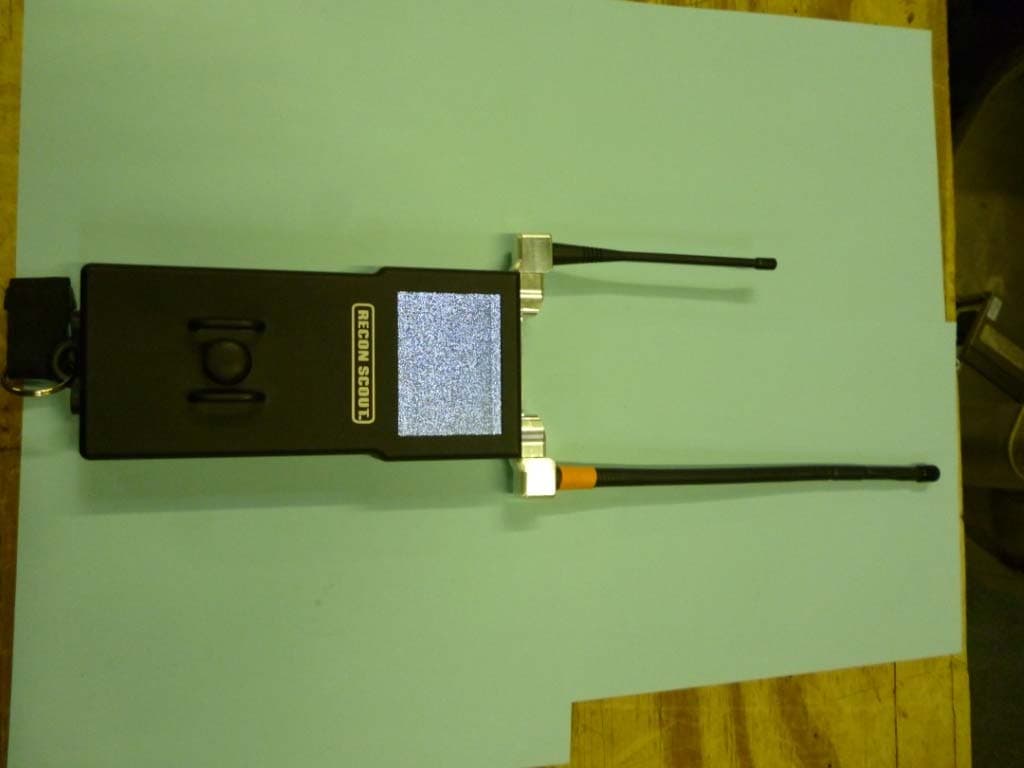
UYXRSK2011-02
Jan 19, 2012Recon Scout Operator Control Unit
Equipment Class
TNB - Licensed Non-Broadcast Station Transmitter
UYXRSK2011-01
Oct 20, 2011Recon Scout
Equipment Class
TNB - Licensed Non-Broadcast Station Transmitter