Text extracted from the exhibit documents filed with the FCC. Open a document above to read the original.
Table of Contents Before You Start Make Sure You Have What You Need Step 1 Add Solo to Your Wireless Router Step 2 Assemble Solo 2-1 Assemble Mount Base for Ethernet (optional) Step 3 Install Solo Welcome to Video Monitoring Done Right™. Archerfish is the only smart, wireless security camera and recorder that can understand what it sees and send video alerts when important things happen. While the Getting Started with Archerfish Solo insert provides an overview, this guide takes you step-by-step to set up and personalize your Archerfish system. For additional help or troubleshooting, contact Archerfish Customer Support at [email protected] or 877.3.THEFISH (877.384.3347) 8:00 am to 11:00 pm Eastern Time (Weekdays), 9:00 am to 9:00 pm Eastern Time (Weekends). Online Help is available anytime at www.myarcherfish.com/solosetup. Welcome page 01Archerfish Solo Installation Guide Page 02 03 06 08 09 11 13 14 15 16 17 18 19 20 21 22 23 24 25 26 Step 4 Register Solo 4-1 Register Primary User 4-2 Define Notification Methods 4-3 Set Billing Preferences 4-4 Set Up Live Video Step 5 Customize Your System 5-1 Set Up Zones 5-2 Configure Events 5-3 Define Notification Methods by Camera Now that You’re Done Using the Dashboard Helpful Hints in Making Archerfish Work for You Appendix A: Port Forwarding Set Up Appendix B: Solo Device LED Quick Reference Appendix C: Solo Device Technical Specifications Notices Your Archerfish Solo comes with the items pictured in Figure 1. Other things you’ll need to set up are: - PC with Microsoft Internet Explorer (version 7.0 or higher), Mozilla Firefox (version 3.5 or higher), Apple Safari (version 3.2 or higher), or Google Chrome (version 2.0 or higher) - Active broadband Internet connection with an upload speed of at least 512 kbps - Wireless router (with available port for initial setup) connected to the Internet - Phillips and slotted (“flathead”) screwdrivers Before You Start Make Sure You Have What You Need page 02Archerfish Solo Installation Guide Figure 1 Archerfish Solo items Archerfish Solo Device MicroSD Card Archerfish Solo Mount Base Archerfish Solo Mount with Rotating Joint Archerfish Solo Power Supply Three Screws Ethernet Adaptor (usually not needed) Setting up wireless connectivity between Solo and your router is easy because there’s an Archerfish Solo Wi-Fi Setup Tool that does the work for you. If you aren’t using a wireless connection for Solo, skip ahead to Step 2. Before the tool can begin, you need to connect the Ethernet connector to your wireless router and then connect the power connector to the power supply (Figure 2). Next, plug in the power supply. Wait for the small LED light on the bottom of Solo to turn green before proceeding to the next page. It may take several minutes for the light to turn green. Note: The LED light on the Solo device uses different color and blink patterns to tell you what it’s doing. For a summary of all the different LED states, see Appendix B on page 24. Step 1 Add Solo to Your Wireless Router page 03Archerfish Solo Installation Guide Figure 2 Solo device’s power and Ethernet connectors Ethernet connector power connector LED Step 1 Add Solo to Your Wireless Router (continued) page 04Archerfish Solo Installation Guide Figure 3 Archerfish Devices detected by the Wi-Fi Setup Tool Figure 4 Creating a password for your Solo On a PC, go to www.myarcherfish.com/solosetup to download the Solo Wi-Fi Setup Tool. Make sure you’re saving the file (SoloWiFiTool.exe) in the same local network you plan to install Solo on. Double click the file to run it. Note: If your Windows firewall or other security application asks if you want to run “SoloConfigWizard” you’ll need to agree. Once the tool has launched, click the Start button. The tool takes a few moments to detect all Solo devices that are connected to your router. Select the Solo device you wish to configure for Wi-Fi (Figure 3). If you have multiple Solo devices, you can see which device is which by matching the four digits displayed at the end of the Solo device name with the last four digits in the device serial number (included in the Getting Started insert). Click the Continue button. Now you’ll need to provide and confirm a password for the Solo device (Figure 4). You’ll need this password if you ever need to go back and edit the device’s Wi-Fi configuration at a later time. Click OK. Next, you’ll be prompted for a Wireless Network Name, Wireless Network Key, and Wireless Network Key Type (Figure 5). The Wireless Network Name should be the name of your wireless router. The Wireless Network Key is the password you use to access your router (it may even be written on a label on your router). If you don’t see it in the drop-down list, click the Try Again button or enter it in the Wireless Network Name field. There are several available Wireless Network Key types, each corresponding to a level of security. These include WEP, WPA-AES, WPA-TKIP, WPA2-AES, and WPA2-TKIP. By default, this field will automatically include the Wireless Network Key type your router is most likely using. If no Wireless Network Key type appears and you don’t know which Key type your router is using, first try WEP. If that fails, you can test each one of the other options until one of them works. Note: If using WEP (e.g., you are a Verizon FiOS customer using your router’s default settings), the Hex Key checkbox will appear. For most networks using WEP, the Hex Key option must be selected for connectivity to be established. Click OK. If the wireless connectivity is successfully established, the tool will let you know and display a snapshot of whatever’s currently in front of your Solo device (Figure 6). At this point, the LED light on the Solo device will be green. Before proceeding to the next step, disconnect both the Ethernet and power connections. Step 1 Add Solo to Your Wireless Router (continued) page 05Archerfish Solo Installation Guide Figure 5 Wireless network settings Figure 6 Wi-F…
Text truncated - open the document above for the full version.
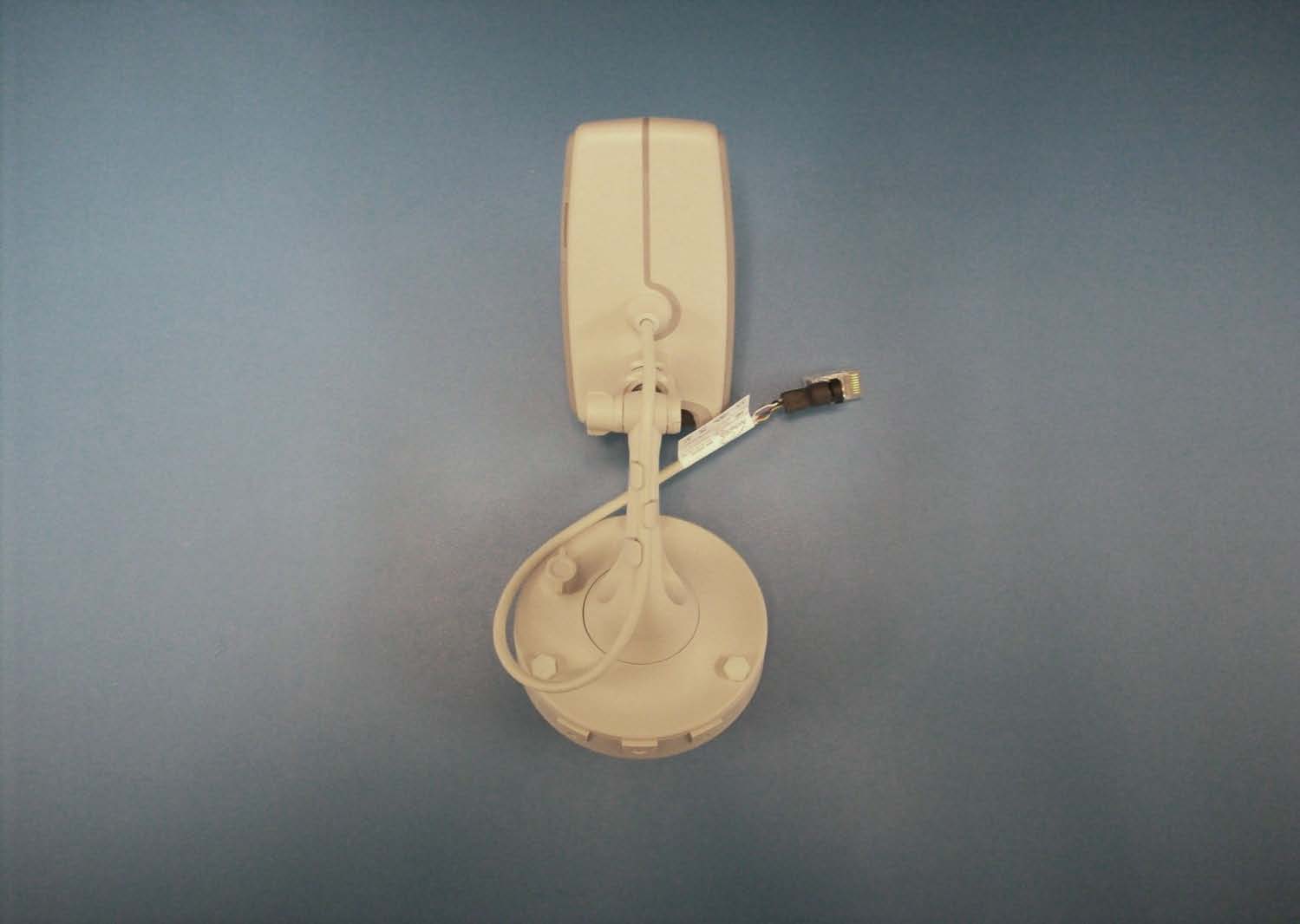
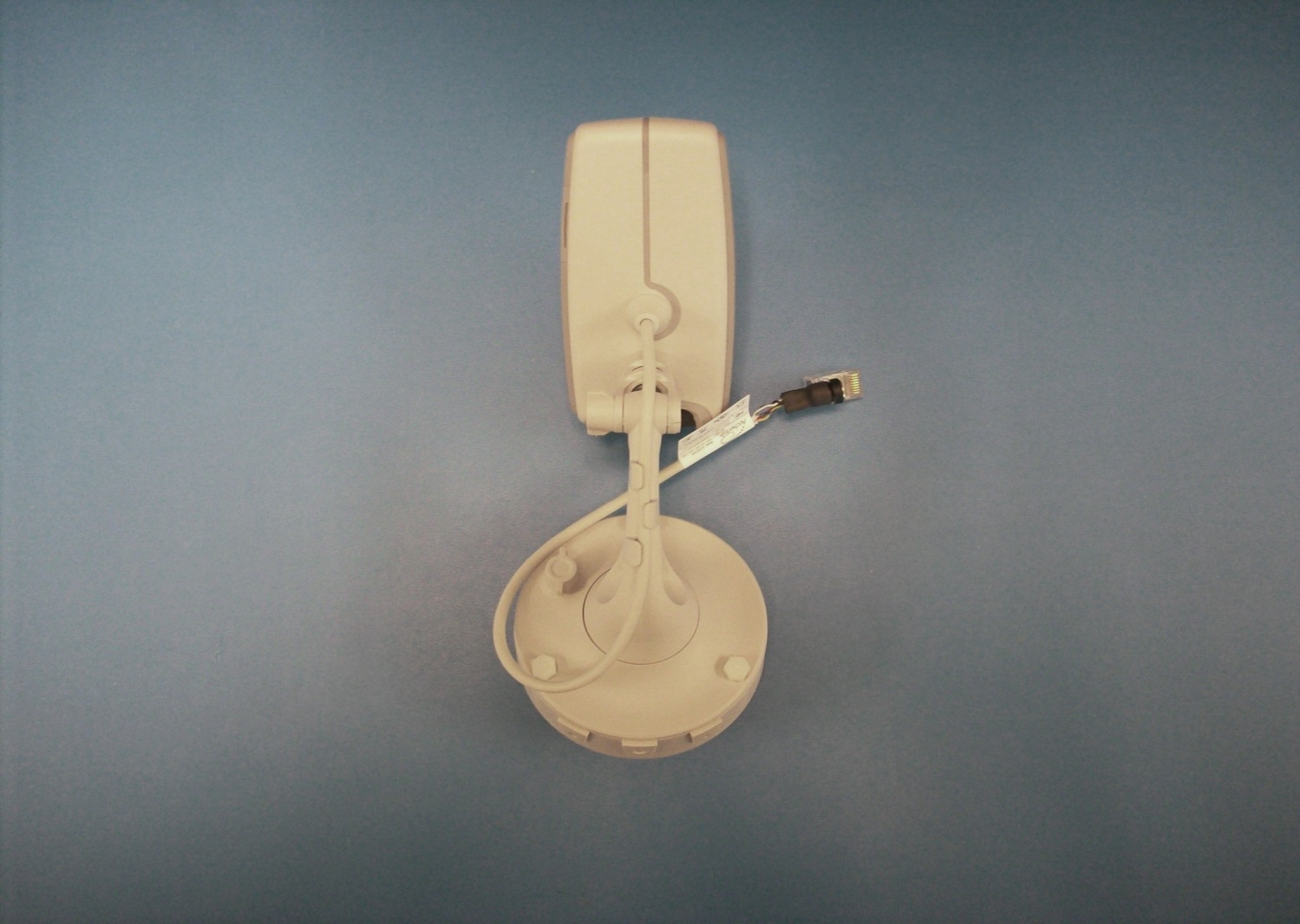
Archerfish Solo Front View Archerfish Solo Rear View Archerfish Solo Right Side View Archerfish Solo Left Side View
Archerfish Solo Front View for reference only Archerfish Solo Rear view with FCC information Archerfish Solo Rear full View Archerfish Solo Rear View close up with FCC logo permanently stamped, indelibly printed, or otherwise permanently marked on the bottom of the lens window as indicated above and readily visible to the purchaser (bottom of the lens window)
Archerfish Solo Internal view with PCA Assembly Imager PCA Top Side Imager PCA Bottom Side WIFI PCA Bottom Side WIFI PCA Top Side CPU PCA Bottom side CPU PCA Top side
Certificates and reports shall not be reproduced except in full, without the written permission of Washington Labs, Limited. Maximum Permissible Exposure Evaluation For the Cernium Corporation Archerfish Solo FCC ID: X86-AF3001001 IC: 9240A-AF3001000 October 12, 2010 WLL Report: 11533-MPE Prepared for: CERNIUM CORPORATION 1925 ISSAC NEWTON SQUARE - 3RD FL. R ESTON, VA 20190 Prepared by: WASHINGTON LABORATORIES, LTD. 7560 LINDBERGH DRIVE G AITHERSBURG, MARYLAND 20879 Testing Certificate AT-1448 Cernium Corporation Archerfish Solo RF Exposure Test Report October 2010 WLL Report #11533-MPE - ii - © 2010 Washington Laboratories, Ltd. Maximum Permissible Exposure Evaluation For the Cernium Corporation Archerfish Solo October 12, 2010 WLL Report # 11533-MPE Prepared by: James Ritter EMC Compliance Engineer Reviewed by: Steven D. Koster EMC Operations Manager Cernium Corporation Archerfish Solo RF Exposure Test Report October 2010 WLL Report #11533-MPE - iii - © 2010 Washington Laboratories, Ltd. Abstract This report has been prepared on behalf of Cernium Corporation Archerfish Solo to document the findings of the maximum permissible exposure evaluation on the Cernium Corporation Archerfish Solo. The purpose of this evaluation is to establish a minimum safe distance as per the RF exposure requirements as defined in FCC §1.1307 & §1.1310. This report documents the results of testing to the requirements of: • CFR Title 47 Volume 1 Practice and Procedure; (1.1307) Environmental Assessments The Evaluation was performed by Washington Laboratories, Ltd, 7560 Lindbergh Drive, Gaithersburg, MD 20879. Washington Laboratories, Ltd. has been accepted as an EMC Conformity Assessment Body (CAB) under the United States/European Union Memorandum of Agreement. Washington Laboratories, Ltd. is accredited by ACLASS under Testing Certificate AT-1448. Revision History Reason Date Rev 0 Initial Release October 12, 2010 Cernium Corporation Archerfish Solo RF Exposure Test Report October 2010 WLL Report #11533-MPE - iv - © 2010 Washington Laboratories, Ltd. Table of Contents Abstract .................................................................................................................................................................... ii 1 Introduction ................................................................................................................................................ 1 2 Requirements .............................................................................................................................................. 1 2.1 Transmitter Categories ............................................................................................................................. 1 2.2 Exposure Categories ................................................................................................................................ 1 3 Device Summary ......................................................................................................................................... 3 4 Radio Frequency Radiation Exposure Evaluation ..................................................................................3 List of Tables Table 1: MPE Limits ..................................................................................................................................................2 Table 2: Device Summary of the Archerfish Solo......................................................................................................3 Table 3: Transmitter MPE Calculation Summary ......................................................................................................4 Cernium Corporation Archerfish Solo RF Exposure Test Report October 2010 WLL Report #11533-MPE - Page 1 of 4 - © 2010 Washington Laboratories, Ltd. 1 Introduction This report has been prepared on behalf of Cernium Corporation Archerfish Solo to show compliance with the RF exposure requirements as defined in FCC §1.1307. Testing supporting this evaluation was performed at Washington Laboratories, Ltd, 7560 Lindbergh Drive, Gaithersburg, MD 20879. Washington Laboratories, Ltd. has been accepted as an EMC Conformity Assessment Body (CAB) under the United States/European Union Memorandum of Agreement. Washington Laboratories, Ltd. is accredited with ACLASS under Testing Certificate AT-1448. 2 Requirements Three different categories of transmitters are defined by the FCC in OET Bulletin 65. These categories are fixed installation, mobile, and portable. Additionally, the FCC categorizes the use of the devices based on the user’s awareness and the ability to exercise control over his or her exposure. The two categories are defined as Occupational/Controlled Exposure and General Population/Uncontrolled Exposure. 2.1 Transmitter Categories 2.1.1 Fixed Installations A fixed location means that the device, including its antenna, is physically secured at a permanent location and is not able to be easily moved to another location. Additionally, distance to humans from the antenna is maintained to at least 2 meters. 2.1.2 Mobile Devices A mobile device is defined as a transmitting device designed to be used in other than fixed locations and to be generally used in such a way that a separation distance of at least 20 centimeters is normally maintained between the transmitter's radiating structures and the body of the user or nearby persons. Transmitters designed to be used by consumers or workers that can be easily re-located, such as a wireless modem operating in a laptop computer, are considered mobile devices if they meet the 20 centimeter separation requirement. The FCC rules for evaluating mobile devices for RF compliance are found in 47 CFR §2.1091. 2.1.3 Portable Devices A portable device is defined as a transmitting device designed to be used so that the radiating structure(s) of the device is/are within 20 centimeters of the body of the user. Portable device requirements are found in Section 2.1093 of t…
Text truncated - open the document above for the full version.
FCC & Industry Canada Certification Test Report For the Cernium Corporation Archerfish Solo FCC ID: X86-AF3001001 IC: 9240A-AF300100 WLL JOB# 11533-01 October 6, 2010 Prepared for: Cernium Corporation 1925 Issac Newton Square - 3rd Fl. Reston, VA, 20190 USA Prepared By: Washington Laboratories, Ltd. 7560 Lindbergh Drive Gaithersburg, Maryland 20879 Testing Certificate AT-1448 Cernium Corporation Archerfish Solo FCC Certification Test Report October, 2010 WLL Report #11533-01-01 - i - © 2010 Washington Laboratories, Ltd. FCC & Industry Canada Certification Test Report for the Cernium Corporation Archerfish Solo FCC ID: X86-AF3001001 IC: 9240A-AF300100 October 6, 2010 WLL JOB# 11533-01 Prepared by: John P. Repella Compliance Engineer Reviewed by: Steven D. Koster EMC Operations Manager Cernium Corporation Archerfish Solo FCC Certification Test Report October, 2010 WLL Report #11533-01-01 - ii - © 2010 Washington Laboratories, Ltd. Abstract This report has been prepared on behalf of Cernium Corporation to support the attached Application for Equipment Authorization. The test report and application are submitted for a Direct Sequence Spread Spectrum Transmitter under Part 15.247 (7/2008) of the FCC Rules and Regulations and Spectrum Management and Telecommunications Policy RSS-210 of Industry Canada. This Certification Test Report documents the test configuration and test results for the Cernium Corporation Archerfish Solo. Testing was performed on an Open Area Test Site (OATS) of Washington Laboratories, Ltd, 7560 Lindbergh Drive, Gaithersburg, MD 20879. Site description and site attenuation data have been placed on file with the FCC's Sampling and Measurements Branch at the FCC laboratory in Columbia, MD. The Industry Canada OATS numbers are 3035A-1 and 3035A-2 for Washington Laboratories, Ltd. Site 1 and Site 2, respectively. Washington Laboratories, Ltd. has been accepted by the FCC and approved by ACLASS under Certificate AT-1448 as an independent FCC test laboratory. The Cernium Corporation Archerfish Solo complies with the limits for a Direct Sequence Spread Spectrum Transmitter under FCC Part 15.247 and Industry Canada RSS-210. Revision History Description of Change Date Rev 0 Initial Release October 6, 2010 Cernium Corporation Archerfish Solo FCC Certification Test Report October, 2010 WLL Report #11533-01-01 - iii - © 2010 Washington Laboratories, Ltd. Table of Contents Abstract ........................................................................................................................................... ii 1 Introduction..........................................................................................................................1 1.1 Compliance Statement .................................................................................................... 1 1.2 Test Scope ....................................................................................................................... 1 1.3 Contract Information.......................................................................................................1 1.4 Test Dates ....................................................................................................................... 1 1.5 Test and Support Personnel ............................................................................................ 1 1.6 Abbreviations .................................................................................................................. 2 2 Equipment Under Test .........................................................................................................3 2.1 EUT Identification & Description .................................................................................. 3 2.2 Test Configuration ..........................................................................................................3 2.3 Testing Algorithm...........................................................................................................3 2.4 Test Location .................................................................................................................. 3 2.5 Measurements ................................................................................................................. 4 2.5.1 References................................................................................................................... 4 2.6 Measurement Uncertainty............................................................................................... 4 3 Test Equipment ....................................................................................................................6 4 Test Results ..........................................................................................................................7 4.1 Test Summary ................................................................................................................. 7 4.2 Occupied Bandwidth: (FCC Part §15.247 (2)) ............................................................... 7 4.3 RF Power Output: (FCC Part §15.247(b)) .................................................................... 20 4.4 Power Spectral Density (Section §15.247(e))............................................................... 22 4.5 Conducted Spurious Emissions at Antenna Terminals (FCC Part §15.247(c))............ 34 4.6 AC Conducted Emissions (FCC Part §15.207)........................................................... 131 4.6.1 Requirements .......................................................................................................... 131 4.6.2 Test Procedure ........................................................................................................ 131 4.6.3 Test Data ................................................................................................................. 132 4.7 Radiated Spurious Emissions: (FCC Part §15.205 & §15.209).................................. 133 4.7.1 Test Proce…
Text truncated - open the document above for the full version.
Cernium Corporation Archerfish Solo FCC Certification Test Report October, 2010 WLL Report #11533-01 - 94 of 138- © 2010 Washington Laboratories, Ltd. Figure 84: Conducted Spurious Emissions, 802.11g 6Mbps, Mid Channel 2.483 - 5GHz Cernium Corporation Archerfish Solo FCC Certification Test Report October, 2010 WLL Report #11533-01 - 95 of 138- © 2010 Washington Laboratories, Ltd. Figure 85: Conducted Spurious Emissions, 802.11g 6Mbps, Mid Channel 5 - 10GHz Cernium Corporation Archerfish Solo FCC Certification Test Report October, 2010 WLL Report #11533-01 - 96 of 138- © 2010 Washington Laboratories, Ltd. Figure 86: Conducted Spurious Emissions, 802.11g 6Mbps, Mid Channel 10 - 15GHz Cernium Corporation Archerfish Solo FCC Certification Test Report October, 2010 WLL Report #11533-01 - 97 of 138- © 2010 Washington Laboratories, Ltd. Figure 87: Conducted Spurious Emissions, 802.11g 6Mbps, Mid Channel 15 - 20GHz Cernium Corporation Archerfish Solo FCC Certification Test Report October, 2010 WLL Report #11533-01 - 98 of 138- © 2010 Washington Laboratories, Ltd. Figure 88: Conducted Spurious Emissions, 802.11g 6Mbps, Mid Channel 20 - 25GHz Cernium Corporation Archerfish Solo FCC Certification Test Report October, 2010 WLL Report #11533-01 - 99 of 138- © 2010 Washington Laboratories, Ltd. Figure 89: Conducted Spurious Emissions, 802.11g 6Mbps, High Channel 30 - 1000MHz Cernium Corporation Archerfish Solo FCC Certification Test Report October, 2010 WLL Report #11533-01 - 100 of 138- © 2010 Washington Laboratories, Ltd. Figure 90: Conducted Spurious Emissions, 802.11g 6Mbps, High Channel 1 – 2.4GHz Cernium Corporation Archerfish Solo FCC Certification Test Report October, 2010 WLL Report #11533-01 - 101 of 138- © 2010 Washington Laboratories, Ltd. Figure 91: Conducted Spurious Emissions, 802.11g 6Mbps, High Channel 2.4 – 2.483GHz Cernium Corporation Archerfish Solo FCC Certification Test Report October, 2010 WLL Report #11533-01 - 102 of 138- © 2010 Washington Laboratories, Ltd. Figure 92: Conducted Spurious Emissions, 802.11g 6Mbps, High Channel 2.483 - 5GHz Cernium Corporation Archerfish Solo FCC Certification Test Report October, 2010 WLL Report #11533-01 - 103 of 138- © 2010 Washington Laboratories, Ltd. Figure 93: Conducted Spurious Emissions, 802.11g 6Mbps, High Channel 5 - 10GHz Cernium Corporation Archerfish Solo FCC Certification Test Report October, 2010 WLL Report #11533-01 - 104 of 138- © 2010 Washington Laboratories, Ltd. Figure 94: Conducted Spurious Emissions, 802.11g 6Mbps, High Channel 10 - 15GHz Cernium Corporation Archerfish Solo FCC Certification Test Report October, 2010 WLL Report #11533-01 - 105 of 138- © 2010 Washington Laboratories, Ltd. Figure 95: Conducted Spurious Emissions, 802.11g 6Mbps, High Channel 15 - 20GHz Cernium Corporation Archerfish Solo FCC Certification Test Report October, 2010 WLL Report #11533-01 - 106 of 138- © 2010 Washington Laboratories, Ltd. Figure 96: Conducted Spurious Emissions, 802.11g 6Mbps, High Channel 20 - 25GHz Cernium Corporation Archerfish Solo FCC Certification Test Report October, 2010 WLL Report #11533-01 - 107 of 138- © 2010 Washington Laboratories, Ltd. Figure 97: Conducted Spurious Emissions, 802.11g 54Mbps Low Channel, 30 - 1000MHz Cernium Corporation Archerfish Solo FCC Certification Test Report October, 2010 WLL Report #11533-01 - 108 of 138- © 2010 Washington Laboratories, Ltd. Figure 98: Conducted Spurious Emissions, 802.11g 54Mbps Low Channel, 1 – 2.35GHz Cernium Corporation Archerfish Solo FCC Certification Test Report October, 2010 WLL Report #11533-01 - 109 of 138- © 2010 Washington Laboratories, Ltd. Figure 99: Conducted Spurious Emissions, 802.11g 54Mbps Low Channel, 2.35 – 2.483GHz Cernium Corporation Archerfish Solo FCC Certification Test Report October, 2010 WLL Report #11533-01 - 110 of 138- © 2010 Washington Laboratories, Ltd. Figure 100: Conducted Spurious Emissions, 802.11g 54Mbps Low Channel, 2.483 - 5GHz Cernium Corporation Archerfish Solo FCC Certification Test Report October, 2010 WLL Report #11533-01 - 111 of 138- © 2010 Washington Laboratories, Ltd. Figure 101: Conducted Spurious Emissions, 802.11g 54Mbps Low Channel, 5 - 10GHz Cernium Corporation Archerfish Solo FCC Certification Test Report October, 2010 WLL Report #11533-01 - 112 of 138- © 2010 Washington Laboratories, Ltd. Figure 102: Conducted Spurious Emissions, 802.11g 54Mbps Low Channel, 10 - 15GHz Cernium Corporation Archerfish Solo FCC Certification Test Report October, 2010 WLL Report #11533-01 - 113 of 138- © 2010 Washington Laboratories, Ltd. Figure 103: Conducted Spurious Emissions, 802.11g 54Mbps Low Channel, 15 - 20GHz Cernium Corporation Archerfish Solo FCC Certification Test Report October, 2010 WLL Report #11533-01 - 114 of 138- © 2010 Washington Laboratories, Ltd. Figure 104: Conducted Spurious Emissions, 802.11g 54Mbps Low Channel, 20 - 25GHz Cernium Corporation Archerfish Solo FCC Certification Test Report October, 2010 WLL Report #11533-01 - 115 of 138- © 2010 Washington Laboratories, Ltd. Figure 105: Conducted Spurious Emissions, 802.11g 54Mbps, Mid Channel 30 - 1000MHz Cernium Corporation Archerfish Solo FCC Certification Test Report October, 2010 WLL Report #11533-01 - 116 of 138- © 2010 Washington Laboratories, Ltd. Figure 106: Conducted Spurious Emissions, 802.11g 54Mbps, Mid Channel 1 – 2.4GHz Cernium Corporation Archerfish Solo FCC Certification Test Report October, 2010 WLL Report #11533-01 - 117 of 138- © 2010 Washington Laboratories, Ltd. Figure 107: Conducted Spurious Emissions, 802.11g 54Mbps, Mid Channel 2.4 – 2.483GHz Cernium Corporation Archerfish Solo FCC Certification Test Report October, 2010 WLL Report #11533-01 - 118 of 138- © 2010 Washington Laboratories, Ltd. Figure 108: Conducted Spurious Emissions, 802.11g 54Mbps, Mid Channel 2.483 - 5GHz
Cernium Corporation Archerfish Solo FCC Certification Test Report October, 2010 WLL Report #11533-01 - 113 of 138- © 2010 Washington Laboratories, Ltd. Figure 103: Conducted Spurious Emissions, 802.11g 54Mbps Low Channel, 15 - 20GHz Cernium Corporation Archerfish Solo FCC Certification Test Report October, 2010 WLL Report #11533-01 - 114 of 138- © 2010 Washington Laboratories, Ltd. Figure 104: Conducted Spurious Emissions, 802.11g 54Mbps Low Channel, 20 - 25GHz Cernium Corporation Archerfish Solo FCC Certification Test Report October, 2010 WLL Report #11533-01 - 115 of 138- © 2010 Washington Laboratories, Ltd. Figure 105: Conducted Spurious Emissions, 802.11g 54Mbps, Mid Channel 30 - 1000MHz Cernium Corporation Archerfish Solo FCC Certification Test Report October, 2010 WLL Report #11533-01 - 116 of 138- © 2010 Washington Laboratories, Ltd. Figure 106: Conducted Spurious Emissions, 802.11g 54Mbps, Mid Channel 1 – 2.4GHz Cernium Corporation Archerfish Solo FCC Certification Test Report October, 2010 WLL Report #11533-01 - 117 of 138- © 2010 Washington Laboratories, Ltd. Figure 107: Conducted Spurious Emissions, 802.11g 54Mbps, Mid Channel 2.4 – 2.483GHz Cernium Corporation Archerfish Solo FCC Certification Test Report October, 2010 WLL Report #11533-01 - 118 of 138- © 2010 Washington Laboratories, Ltd. Figure 108: Conducted Spurious Emissions, 802.11g 54Mbps, Mid Channel 2.483 - 5GHz Cernium Corporation Archerfish Solo FCC Certification Test Report October, 2010 WLL Report #11533-01 - 119 of 138- © 2010 Washington Laboratories, Ltd. Figure 109: Conducted Spurious Emissions, 802.11g 54Mbps, Mid Channel 5 - 10GHz Cernium Corporation Archerfish Solo FCC Certification Test Report October, 2010 WLL Report #11533-01 - 120 of 138- © 2010 Washington Laboratories, Ltd. Figure 110: Conducted Spurious Emissions, 802.11g 54Mbps, Mid Channel 10 - 15GHz Cernium Corporation Archerfish Solo FCC Certification Test Report October, 2010 WLL Report #11533-01 - 121 of 138- © 2010 Washington Laboratories, Ltd. Figure 111: Conducted Spurious Emissions, 802.11g 54Mbps, Mid Channel 15 - 20GHz Cernium Corporation Archerfish Solo FCC Certification Test Report October, 2010 WLL Report #11533-01 - 122 of 138- © 2010 Washington Laboratories, Ltd. Figure 112: Conducted Spurious Emissions, 802.11g 54Mbps, Mid Channel 20 - 25GHz Cernium Corporation Archerfish Solo FCC Certification Test Report October, 2010 WLL Report #11533-01 - 123 of 138- © 2010 Washington Laboratories, Ltd. Figure 113: Conducted Spurious Emissions, 802.11g 54Mbps, High Channel 30 - 1000MHz Cernium Corporation Archerfish Solo FCC Certification Test Report October, 2010 WLL Report #11533-01 - 124 of 138- © 2010 Washington Laboratories, Ltd. Figure 114: Conducted Spurious Emissions, 802.11g 54Mbps, High Channel 1 – 2.4GHz Cernium Corporation Archerfish Solo FCC Certification Test Report October, 2010 WLL Report #11533-01 - 125 of 138- © 2010 Washington Laboratories, Ltd. Figure 115: Conducted Spurious Emissions, 802.11g 54Mbps, High Channel 2.4 – 2.483GHz Cernium Corporation Archerfish Solo FCC Certification Test Report October, 2010 WLL Report #11533-01 - 126 of 138- © 2010 Washington Laboratories, Ltd. Figure 116: Conducted Spurious Emissions, 802.11g 54Mbps, High Channel 2.483 - 5GHz Cernium Corporation Archerfish Solo FCC Certification Test Report October, 2010 WLL Report #11533-01 - 127 of 138- © 2010 Washington Laboratories, Ltd. Figure 117: Conducted Spurious Emissions, 802.11g 54Mbps, High Channel 5 - 10GHz Cernium Corporation Archerfish Solo FCC Certification Test Report October, 2010 WLL Report #11533-01 - 128 of 138- © 2010 Washington Laboratories, Ltd. Figure 118: Conducted Spurious Emissions, 802.11g 54Mbps, High Channel 10 - 15GHz Cernium Corporation Archerfish Solo FCC Certification Test Report October, 2010 WLL Report #11533-01 - 129 of 138- © 2010 Washington Laboratories, Ltd. Figure 119: Conducted Spurious Emissions, 802.11g 54Mbps, High Channel 15 - 20GHz Cernium Corporation Archerfish Solo FCC Certification Test Report October, 2010 WLL Report #11533-01 - 130 of 138- © 2010 Washington Laboratories, Ltd. Figure 120: Conducted Spurious Emissions, 802.11g 54Mbps, High Channel 20 - 25GHz Cernium Corporation Archerfish Solo FCC Certification Test Report October, 2010 WLL Report #11533-01 - 131 of 138- © 2010 Washington Laboratories, Ltd. 4.6 AC Conducted Emissions (FCC Part §15.207) 4.6.1 Requirements Test Arrangement: Table Top Compliance Standard: FCC Class B FCC Compliance Limits Frequency Quasi-peak Average 0.15 - 0.5MHz 66 to 56dBμV 56 to 46dBμV 0.5 - 5MHz 56dBμV 46dBμV 5 - 30MHz 60dBμV 50dBμV 4.6.2 Test Procedure The EUT was placed on an 80 cm high 1 X 1.5 m non-conductive table above a ground plane. Power to the EUT was provided through a Solar Corporation 50 Ω/50 μH Line Impedance Stabilization Network bonded to a 3 X 2 meter ground plane. The LISN has its AC input supplied from a filtered AC power source. Power was supplied to the peripherals through a second LISN. The peripherals were placed on the table in accordance with ANSI C63.4-2003. Power and data cables were moved about to obtain maximum emissions. The 50 Ω output of the LISN was connected to the input of the spectrum analyzer and the emissions in the frequency range of 150 kHz to 30 MHz were measured. The detector function was set to quasi-peak, peak, or average as appropriate, and the resolution bandwidth during testing was at least 9 kHz, with all post-detector filtering no less than 10 times the resolution bandw…
Text truncated - open the document above for the full version.
7560 Lindbergh Drive · Gaithersburg, Maryland · United States
| # | Rule Parts | Frequency Range | Power Output |
|---|---|---|---|
| 1 | 15C | 2.41 GHz - 2.46 GHz | 32.00 mW |

Outdoor Low-Light Wireless Camera & Recording System
Equipment Class
DTS - Digital Transmission System