ZSW-10-036MIFI
b mobile HK Limited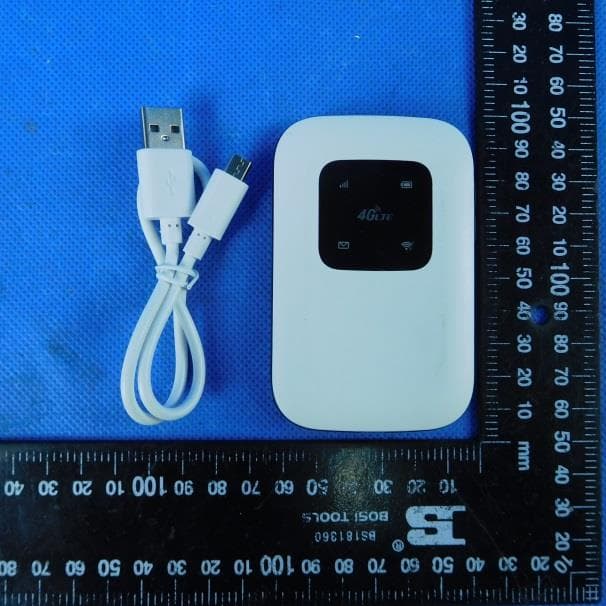
Click to zoom
Application Details
- Equipment Class
- PCB - PCS Licensed Transmitter
- Date of Grant
- Feb 23, 2021
- Application Purpose
- Original Equipment
- Date of Application
- Feb 23, 2021
- Equipment Note
- MIFI
- Frequency Range
- 826.40000000 - 846.60000000
- Company
- b mobile HK Limited
- Country
- China
Documents & Files
Document Text
Text extracted from the exhibit documents filed with the FCC. Open a document above to read the original.
Users Manual
Quick Start Appearance 1. Battery Indicator ● Green: Sufficient Battery ● Blinking green: Charging the battery ● Red: Low Battery ● Blinking Red: Device will power off soon. 2. Power Button Press and hold to turn your 4G Hotspot on or Off 3. Micro USB Port 4. Signal Indicator ● Green: Connected to 4G network ● Blue: Connect to 3G network ● Red: No Signal or sim card is not recognized, etc. 5. SMS Indicator ● Blinking Blue: Have Unread SMS 6. WiFi Indicator ● Blue: WiFi Signal is activite 7. Reset Button Press and hold to restore your 4G hotspot to its factory settings ☆ If you forget the user name, password or SSID for your 4G hotspot, try restoring the device to its factory setttings 8. WPS Button Installation WiFi Connection The default SSID (WiFi network name) and WiFi network key are printed on the 4G Hotspot Label We strongly recommend that you change the default SSID and WiFi key to keep your data secure ☆ You can manage your 4G hotspot through the Web Interface at http://192.168.0.1. The default username and password is admin. Click the online help on the web interface to learn more about your 4G Hotspot. ☆ After installation of driver, you can access to Web Interface http://192.168.0.1 Charging Please only use a charger that is compatible with your 4G Hotspot. The use of an incompatible charger may cause the device to malfunction, fail, or could even cause a fire. Such use voids all warranties, whether expressed or implied, on this product. ☆ The charger is an optional accessory. To buy a charger, please contact an authorized retailer. Connecting to the Internet Using an LTE, 3G, network The 4G Hotspot’s management parameters have been preset according to your operator’s requirements. If data is transmitted, the 4G Hotspot will automatically connect to the internet. If data is not transmitted for a period of time, the 4G Hotspot will automatically disconnect from the network connection. ☆ You can log in to the web management page follow below steps: Log into Web Management page → Network Setting → Connection Mode . Logging into the Web Management page ☆ Make sure that the connection between the 4G Hopspot and the device used to access the Internet, is working normally. ☆ Open the browser on your device and enter http://192.168.0.1 in the address box. ☆ Enter your username and password to log into the web management page. If you have any difficulty please contact customer care. Please note: The default username is admin The default password is admin Wi-Fi Sleep Mode (Battery Saving Mode) The Wi-Fi device has a mode that allows the device turn off automatically if there are no devices connected to the 4G Hotspot (via Wi-Fi or USB) for a period of time . - This mode allows the device to go to “ Wi-Fi Sleep ” Mode to save battery life. - The device can be switched back on by pressing the power button. - The preferred timing can be set by selecting “Wi-Fi Sleep”, and choosing the options shown below screenshot and steps to get to “ Wi-Fi Sleep ” Mode . Log into Web Management page → Advanced Settings →Power Save → “ Wi-Fi Sleep ” Mode Restoring to Factory Settings If you forget the username, password, or SSID you have set, you can restore the settings on the web management page to the default factory settings. To do so, simply press and hold the RESET button until the 4G Hotspots restarts. Changing SSID and password It is recommended that you change your 4G Hotspot’s SSID and password before you use it. The default SSID and password are printed on 4G Hotspot’s label, in the battery slot of the device. Enable SD card sharing * In HTTP Share Mode, the device only supports FAT/FAT32 file system. * HTTP Share Mode: Share SD card via web browser. The removable drive mapping of SD card via USB port will be disabled. * USB Access Only: By the removable drive mapping, user can access SD card *via USB cable only. The web page of sharing SD card will be disabled. * Path to Share: You can input the sharing path, such as /Picture. By typing only, a slash in Path to Share filed, you agree to share entire SD card. * Path to Share can't be a dot, and can't contain following characters: < > " ' & + / \: * | # ? ~ ` SMS Tips: ◇ Why isn’t my 4G Hotspot responding? Try restarting the device. If that doesn’t work, restore the device to its factory settings ◇ Why can’t I connect to my 4G Hotspot sometimes? To save Power, your 4G Hotspot’s WiFi auto off feature is designed to turn off WiFi when there haven’t been connections for a while. You can press the power button to turn on WiFi again. Alternatively, you can disable this feature, although this might impact battery life, Log in to the web interface and disable the WiFi auto off feature. ◇ Why won’t my 4G Hotspot connect to a network even though all the settings are correct? The PIN verification feature might be enabled. You can disable this feature if you find entering the PIN regularly inconvenient. ◇ Why can’t I access the Web Interface at 192.168.0.1 ? This is likely due to an IP address conflict when the 4G Hotspot assigns itself a new IP address. Please try 192.168. 2.1 in this case. ◇ Why won’t my 4G Hotspot power on? Your battery is probably out of power. Charge your 4G Hotspot for a While and Power it back on. ◇ Why did my 4G Hotspot power off all of a sudden ? Your 4G Hotspot may overheat when you use it continuously over a long period of time, and thereby trigger its automated protection system. WiFi will be turn off and your 4G Hotspot will power off if this occurs. Please ensure the device is properly ventilated and cooled before you power it on again. CAUTION: RISK OF EXPLOSION IF BATTERY IS REPLACED BY AN INCORRECT TYPE. DISPOSE OF USED BATTERIES ACCORDING TO THE INSTRUCTIONS OS Compatability Report Operation System Support Remark OS Windows 7 32/64-bit Yes OS Windows 8 32/64-bit Yes OS Windows 8.1 32/64-bit Yes OS Windows 10 32/64-bit Yes OS Windows 10.7 32/64-bit Yes OS Windows 10.8 32/64-bit Yes OS Windows 10.9 32/64-bit Yes OS Windows…
Text truncated - open the document above for the full version.
Cover Letter(s)
b mobile HK Limited Office of Engineering Technology Federal Communications Commission 7435 Oakland Mills Road Columbia, MD 21046 Date: 2021-02-02 Subject; Request for Long Term Confidentiality FCC ID: ZSW-10-036 To Whom It May Concern, Pursuant to the provisions of the Commission’s rules Title 47 Sections §0.457 and §0.459, we are requesting the Commission to withhold the following attachment(s) as confidential documents from public disclosure indefinitely. These documents contain detailed system and equipment descriptions and are considered as proprietary information in operation of the equipment. The public disclosure of these documents might be harmful to our company and would give competitors an unfair advantage in the market. Schematic Diagram Block Diagram BOM Operational Description Tune-up Procedure It is our understanding that all measurement test reports, FCC ID label format and correspondence during the certification review process cannot be granted as confidential documents and this information will be available for public review once the grant of equipment authorization is issued. Sincerely, Signature: Name: KA SHING LAM Title: DIRECTOR
Cover Letter(s)
b mobile HK Limited Letter of Authorization Company: b mobile HK Limited Address: Flat 18; 14/F Block 1; Golden Industrial Building;16-26 Kwai Tak Street; Kwai Chung; New Territories; Hong Kong. Product Name: KA SHING LAM Model Number: DIRECTOR FCC Identifier: ZSW-10-036 We authorize MiCOM Labs Inc, 575 Boulder Court, Pleasanton, California 94566, USA, to act on our behalf on all matters concerning the above named equipment. Any individual within MiCOM Labs is authorized to act on our behalf and take action on the application. We declare that MiCOM Labs Inc, 575 Boulder Court, Pleasanton, California 94566, USA, is allowed to forward all information related to the approval project to the Federal Communication Commission and to discuss any issues concerning the approval application. Any and all acts carried out by MiCOM Labs on our behalf shall have the same effect as acts of our own. Name: KA SHING LAM Date: 2021-02-02 Title: DIRECTOR
External Photos
7.EXTERNAL AND INTERNAL PHOTOS OF THE EUT EXT ER N AL P H O T O S O F E U T M odel:M5L
ID Label/Location Info
Label & Location
Internal Photos
I N T E R N AL P H O T O S O F EUT Model:M5L
RF Exposure Info
Date: 1/19/2021 Test Laboratory: Huatongwei International Inspection Co., Ltd.,SAR Lab WCDMA Band II-Body Communication System: UID 0, Generic UMTS (0); Frequency: 1880 MHz;Duty Cycle: 1:1 Medium parameters used: f = 1880 MHz; σ = 1.367 S/m; ε r = 41.863; ρ = 1000 kg/m 3 Phantom section: Flat Section Ambient Temperature:22.5°C;Liquid Temperature:22.3°C; DASY Configuration: lProbe: EX3DV4 - SN7494; ConvF(8.6, 8.6, 8.6) @ 1880 MHz; Calibrated: 4/1/2020 lSensor-Surface: 1.4mm (Mechanical Surface Detection) lElectronics: DAE4 Sn1549; Calibrated: 4/4/2020 lPhantom: Twin-SAM V8.0 ; Type: QD 000 P41 AA; Serial: 1974 lDASY52 52.10.2(1495); SEMCAD X 14.6.12(7450) Rear/CH 9400/Area Scan (61x81x1): Interpolated grid: dx=1.500 mm, dy=1.500 mm Maximum value of SAR (interpolated) = 0.632 W/kg Rear/CH 9400/Zoom Scan (5x5x7)/Cube 0: Measurement grid: dx=8mm, dy=8mm, dz=5mm Reference Value = 19.31 V/m; Power Drift = 0.15 dB Peak SAR (extrapolated) = 0.730 W/kg SAR(1 g) = 0.458 W/kg; SAR(10 g) = 0.296 W/kg Maximum value of SAR (measured) = 0.628 W/kg 0 dB = 0.628 W/kg = -2.02 dBW/kg Appendix A: SAR Test Data Plots Plot No.1 Date: 1/19/2021 Test Laboratory: Huatongwei International Inspection Co., Ltd.,SAR Lab WCDMA Band IV-Body Communication System: UID 0, Generic UMTS (0); Frequency: 1752.6 MHz;Duty Cycle: 1:1 Medium parameters used (interpolated): f = 1752.6 MHz; σ = 1.323 S/m; ε r = 41.995; ρ = 1000 kg/m 3 Phantom section: Flat Section Ambient Temperature:22.4°C;Liquid Temperature:22.2°C; DASY Configuration: lProbe: EX3DV4 - SN7494; ConvF(8.92, 8.92, 8.92) @ 1752.6 MHz; Calibrated: 4/1/2020 lSensor-Surface: 1.4mm (Mechanical Surface Detection) lElectronics: DAE4 Sn1549; Calibrated: 4/4/2020 lPhantom: Twin-SAM V8.0 ; Type: QD 000 P41 AA; Serial: 1974 lDASY52 52.10.2(1495); SEMCAD X 14.6.12(7450) Rear/CH 1513/Area Scan (61x81x1): Interpolated grid: dx=1.500 mm, dy=1.500 mm Maximum value of SAR (interpolated) = 0.545 W/kg Rear/CH 1513/Zoom Scan (5x5x7)/Cube 0: Measurement grid: dx=8mm, dy=8mm, dz=5mm Reference Value = 18.88 V/m; Power Drift = 0.11 dB Peak SAR (extrapolated) = 0.600 W/kg SAR(1 g) = 0.375 W/kg; SAR(10 g) = 0.241 W/kg Maximum value of SAR (measured) = 0.513 W/kg 0 dB = 0.513 W/kg = -2.90 dBW/kg Appendix A: SAR Test Data Plots Plot No.2 Date: 1/19/2021 Test Laboratory: Huatongwei International Inspection Co., Ltd.,SAR Lab WCDMA Band V-Body Communication System: UID 0, Generic UMTS (0); Frequency: 846.6 MHz;Duty Cycle: 1:1 Medium parameters used (interpolated): f = 846.6 MHz; σ = 0.886 S/m; ε r = 43.542; ρ = 1000 kg/m 3 Phantom section: Flat Section Ambient Temperature:22.3°C;Liquid Temperature:22.1°C; DASY Configuration: lProbe: EX3DV4 - SN7494; ConvF(10.46, 10.46, 10.46) @ 846.6 MHz; Calibrated: 4/1/2020 lSensor-Surface: 1.4mm (Mechanical Surface Detection) lElectronics: DAE4 Sn1549; Calibrated: 4/4/2020 lPhantom: Twin-SAM V8.0 ; Type: QD 000 P41 AA; Serial: 1974 lDASY52 52.10.2(1495); SEMCAD X 14.6.12(7450) Front/CH 4233/Area Scan (61x81x1): Interpolated grid: dx=1.500 mm, dy=1.500 mm Maximum value of SAR (interpolated) = 0.253 W/kg Front/CH 4233/Zoom Scan (5x5x7)/Cube 0: Measurement grid: dx=8mm, dy=8mm, dz=5mm Reference Value = 15.18 V/m; Power Drift = 0.11 dB Peak SAR (extrapolated) = 0.297 W/kg SAR(1 g) = 0.200 W/kg; SAR(10 g) = 0.142 W/kg Maximum value of SAR (measured) = 0.259 W/kg 0 dB = 0.259 W/kg = -5.87 dBW/kg Appendix A: SAR Test Data Plots Plot No.3 Date: 1/19/2021 Test Laboratory: Huatongwei International Inspection Co., Ltd.,SAR Lab LTE Band 2-Body Communication System: UID 0, Generic LTE-FDD (0); Frequency: 1860 MHz;Duty Cycle: 1:1 Medium parameters used: f = 1860 MHz; σ = 1.348 S/m; ε r = 41.857; ρ = 1000 kg/m 3 Phantom section: Flat Section Ambient Temperature:22.8°C;Liquid Temperature:22.6°C; DASY Configuration: lProbe: EX3DV4 - SN7494; ConvF(8.6, 8.6, 8.6) @ 1860 MHz; Calibrated: 4/1/2020 lSensor-Surface: 1.4mm (Mechanical Surface Detection) lElectronics: DAE4 Sn1549; Calibrated: 4/4/2020 lPhantom: Twin-SAM V8.0 ; Type: QD 000 P41 AA; Serial: 1974 lDASY52 52.10.2(1495); SEMCAD X 14.6.12(7450) Rear/CH 18700/Area Scan (61x81x1): Interpolated grid: dx=1.500 mm, dy=1.500 mm Maximum value of SAR (interpolated) = 0.189 W/kg Rear/CH 18700/Zoom Scan (5x5x7)/Cube 0: Measurement grid: dx=8mm, dy=8mm, dz=5mm Reference Value = 10.65 V/m; Power Drift = 0.16 dB Peak SAR (extrapolated) = 0.218 W/kg SAR(1 g) = 0.134 W/kg; SAR(10 g) = 0.084 W/kg Maximum value of SAR (measured) = 0.180 W/kg 0 dB = 0.180 W/kg = -7.45 dBW/kg Appendix A: SAR Test Data Plots Plot No.4 Date: 1/19/2021 Test Laboratory: Huatongwei International Inspection Co., Ltd.,SAR Lab LTE Band 4-Body Communication System: UID 0, Generic LTE-FDD (0); Frequency: 1732.5 MHz;Duty Cycle: 1:1 Medium parameters used (interpolated): f = 1732.5 MHz; σ = 1.294 S/m; ε r = 41.996; ρ = 1000 kg/m 3 Phantom section: Flat Section Ambient Temperature:22.7°C;Liquid Temperature:22.5°C; DASY Configuration: lProbe: EX3DV4 - SN7494; ConvF(8.92, 8.92, 8.92) @ 1732.5 MHz; Calibrated: 4/1/2020 lSensor-Surface: 1.4mm (Mechanical Surface Detection) lElectronics: DAE4 Sn1549; Calibrated: 4/4/2020 lPhantom: Twin-SAM V8.0 ; Type: QD 000 P41 AA; Serial: 1974 lDASY52 52.10.2(1495); SEMCAD X 14.6.12(7450) Rear/CH 20175/Area Scan (61x81x1): Interpolated grid: dx=1.500 mm, dy=1.500 mm Maximum value of SAR (interpolated) = 0.674 W/kg Rear/CH 20175/Zoom Scan (5x5x7)/Cube 0: Measurement grid: dx=8mm, dy=8mm, dz=5mm Reference Value = 20.98 V/m; Power Drift = 0.12 dB Peak SAR (extrapolated) = 0.750 W/kg SAR(1 g) = 0.470 W/kg; SAR(10 g) = 0.303 W/kg Maximum value of SAR (measured) = 0.645 W/kg 0 dB = 0.645 W/kg = -1.90 dBW/kg Appendix A: SAR Test Data Plots Plot No.5 Date: 1/20 /2021 Test Laboratory: Huatongwei International Inspection Co., Ltd.,SAR Lab LTE Band 7-Body Communication System: UID 0, Generic LTE-FDD (0); Frequency: 2560 MHz;Duty Cycle: 1:1 Medium parameters used: f = 2560 MHz; σ = 1.857 S/m; ε r = 40.885; ρ = 1000 kg/m 3 Phantom section: Flat Section …
Text truncated - open the document above for the full version.
RF Exposure Info
Appendix B: DAE and Probe Calibration Certificate 1 of 12 1.1. DAE4 Calibration Certificate Appendix B: DAE and Probe Calibration Certificate 2 of 12 Appendix B: DAE and Probe Calibration Certificate 3 of 12 Appendix B: DAE and Probe Calibration Certificate 4 of 12 1.2. Probe Calibration Certificate Appendix B: DAE and Probe Calibration Certificate 5 of 12 Appendix B: DAE and Probe Calibration Certificate 6 of 12 Appendix B: DAE and Probe Calibration Certificate 7 of 12 Appendix B: DAE and Probe Calibration Certificate 8 of 12 Appendix B: DAE and Probe Calibration Certificate 9 of 12 Appendix B: DAE and Probe Calibration Certificate 10 of 12 Appendix B: DAE and Probe Calibration Certificate 11 of 12 Appendix B: DAE and Probe Calibration Certificate 12 of 12
RF Exposure Info
Appendix C: Dipole Calibration Certificate 1 of 45 1.1. D835V2 Dipole Calibration Certificate Appendix C: Dipole Calibration Certificate 2 of 45 Appendix C: Dipole Calibration Certificate 3 of 45 Appendix C: Dipole Calibration Certificate 4 of 45 Appendix C: Dipole Calibration Certificate 5 of 45 Appendix C: Dipole Calibration Certificate 6 of 45 Appendix C: Dipole Calibration Certificate 7 of 45 Appendix C: Dipole Calibration Certificate 8 of 45 Appendix C: Dipole Calibration Certificate 9 of 45 Extended Dipole Calibrations Referring to KDB865664 D01, if dipoles are verified in return loss (<-20dB, within 20% of prior calibration), and in impedance (within 5 ohm of prior calibration), the annual calibration is not necessary and the calibration interval can be extended. Head-835 Date of measurement Return-loss (dB) Delta (%) Real Impedance (ohm) Delta (ohm) Imaginary impedance (ohm) Delta (ohm) 2018/2/19 -27.8 50.8 -4.0 2019/2/3 -27.1 2.52% 49.9 0.9 -3.6 0.4 2020/1/22 -26.9 3.24% 50.2 0.6 -3.7 0.3 The return loss is <-20dB, within 20% of prior calibration; the impedance is within 5ohm of prior calibration. Therefore the verification result should support extended calibration. Appendix C: Dipole Calibration Certificate 10 of 45 1.2. D1750V2 Dipole Calibration Certificate Appendix C: Dipole Calibration Certificate 11 of 45 Appendix C: Dipole Calibration Certificate 12 of 45 Appendix C: Dipole Calibration Certificate 13 of 45 Appendix C: Dipole Calibration Certificate 14 of 45 Appendix C: Dipole Calibration Certificate 15 of 45 Appendix C: Dipole Calibration Certificate 16 of 45 Appendix C: Dipole Calibration Certificate 17 of 45 Appendix C: Dipole Calibration Certificate 18 of 45 Extended Dipole Calibrations Referring to KDB865664 D01, if dipoles are verified in return loss (<-20dB, within 20% of prior calibration), and in impedance (within 5 ohm of prior calibration), the annual calibration is not necessary and the calibration interval can be extended. Head-1750 Date of measurement Return-loss (dB) Delta (%) Real Impedance (ohm) Delta (ohm) Imaginary impedance (ohm) Delta (ohm) 2018/2/6 -39.2 51.1 -0.1 2019/2/3 -38.6 1.53% 50.7 0.4 -0.8 0.7 2020/1/22 -38.4 2.04% 50.5 0.6 -0.6 0.5 The return loss is <-20dB, within 20% of prior calibration; the impedance is within 5ohm of prior calibration. Therefore the verification result should support extended calibration. Appendix C: Dipole Calibration Certificate 19 of 45 1.3. D1900V2 Dipole Calibration Certificate Appendix C: Dipole Calibration Certificate 20 of 45 Appendix C: Dipole Calibration Certificate 21 of 45 Appendix C: Dipole Calibration Certificate 22 of 45 Appendix C: Dipole Calibration Certificate 23 of 45 Appendix C: Dipole Calibration Certificate 24 of 45 Appendix C: Dipole Calibration Certificate 25 of 45 Appendix C: Dipole Calibration Certificate 26 of 45 Appendix C: Dipole Calibration Certificate 27 of 45 Extended Dipole Calibrations Referring to KDB865664 D01, if dipoles are verified in return loss (<-20dB, within 20% of prior calibration), and in impedance (within 5 ohm of prior calibration), the annual calibration is not necessary and the calibration interval can be extended. Head-1900 Date of measurement Return-loss (dB) Delta (%) Real Impedance (ohm) Delta (ohm) Imaginary impedance (ohm) Delta (ohm) 2018/2/22 -24.0 52.2 6.0 2019/2/20 -24.5 -2.08% 52.6 0.4 6.5 0.5 2020/01/22 -24.7 -2.92% 52.5 0.3 6.1 0.1 The return loss is <-20dB, within 20% of prior calibration; the impedance is within 5ohm of prior calibration. Therefore the verification result should support extended calibration. Appendix C: Dipole Calibration Certificate 28 of 45 1.4. D2450V2 Dipole Calibration Certificate
RF Exposure Info
Appendix C: Dipole Calibration Certificate 29 of 45 Appendix C: Dipole Calibration Certificate 30 of 45 Appendix C: Dipole Calibration Certificate 31 of 45 Appendix C: Dipole Calibration Certificate 32 of 45 Appendix C: Dipole Calibration Certificate 33 of 45 Appendix C: Dipole Calibration Certificate 34 of 45 Appendix C: Dipole Calibration Certificate 35 of 45 Appendix C: Dipole Calibration Certificate 36 of 45 Extended Dipole Calibrations Referring to KDB865664 D01, if dipoles are verified in return loss (<-20dB, within 20% of prior calibration), and in impedance (within 5 ohm of prior calibration), the annual calibration is not necessary and the calibration interval can be extended. Head-2450 Date of measurement Return-loss (dB) Delta (%) Real Impedance (ohm) Delta (ohm) Imaginary impedance (ohm) Delta (ohm) 2018-02-05 -27.4 53.8 2.2 2019-02-03 -26.8 2.19% 52.9 0.9 1.9 0.3 2020-01-22 -27.1 1.09% 53.1 0.7 1.8 0.4 The return loss is <-20dB, within 20% of prior calibration; the impedance is within 5ohm of prior calibration. Therefore the verification result should support extended calibration. Appendix C: Dipole Calibration Certificate 37 of 45 1.5. D2600V2 Dipole Calibration Certificate Appendix C: Dipole Calibration Certificate 38 of 45 Appendix C: Dipole Calibration Certificate 39 of 45 Appendix C: Dipole Calibration Certificate 40 of 45 Appendix C: Dipole Calibration Certificate 41 of 45 Appendix C: Dipole Calibration Certificate 42 of 45 Appendix C: Dipole Calibration Certificate 43 of 45 Appendix C: Dipole Calibration Certificate 44 of 45 Appendix C: Dipole Calibration Certificate 45 of 45 Extended Dipole Calibrations Referring to KDB865664 D01, if dipoles are verified in return loss (<-20dB, within 20% of prior calibration), and in impedance (within 5 ohm of prior calibration), the annual calibration is not necessary and the calibration interval can be extended. Head-750 Date of measurement Return-loss (dB) Delta (%) Real Impedance (ohm) Delta (ohm) Imaginary impedance (ohm) Delta (ohm) 2018/2/5 -22.9 49.4 -7.1 2019/2/3 -23.4 -2.18% 48.8 0.6 -6.7 0.4 2020/1/22 -23.1 -0.87% 48.6 0.8 -6.5 0.6 The return loss is <-20dB, within 20% of prior calibration; the impedance is within 5ohm of prior calibration. Therefore the verification result should support extended calibration.
RF Exposure Info
Page: 1 of 60 TEST REPORT Report No. ...................................... : CHTEW21010117 Report verificaiton: Project No. ...................................... : SHT2012127202EW FCC ID ............................................. : ZSW-10-036 Applicant’s name ........................... : b mobile HK Limited Address ............................................. : Flat 18; 14/F Block 1; Golden Industrial Building;16-26 Kwai Tak Street; Kwai Chung; New Territories; Hong Kong. Test item description .................... : MIFI Trade Mark ....................................... : Bmobile Model/Type reference ....................... : M5L Listed Model(s) ................................. : - Standard ......................................... : FCC 47 CFR Part2.1093 IEEE Std C95.1, 1999 Edition IEEE 1528: 2013 Date of receipt of test sample..........: Dec.31, 2020 Date of testing..............................: Dec.31, 2020- Jan.20, 2021 Date of issue...............................: Jan.21, 2021 Result .................. ........................: PASS Compiled by ( position+printedname+signature) ... : File administrators: Fanghui Zhu Supervised by ( position+printedname+signature) ... : Test Engineer: Patrick Qiu Approved by ( position+printedname+signature) ... : Manager: Hans Hu Testing Laboratory Name ............. : Shenzhen Huatongwei International Inspection Co., Ltd Address ............................................. : 1/F, Bldg 3, Hongfa Hi-tech Industrial Park, Genyu Road, Tianliao, Gongming, Shenzhen, China Shenzhen Huatongwei International Inspection Co., Ltd. All rights reserved. This publication may be reproduced in whole or in part for non-commercial purposes as long as the Shenzhen Huatongwei International Inspection Co., Ltd is acknowledged as copyright owner and source of the material. Shenzhen Huatongwei International Inspection Co., Ltd takes no responsibility for and will not assume liability for damages resulting from the reader's interpretation of the reproduced material due to its placement and context. The test report merely correspond to the test sample. Report No.: CHTEW21010117 Page: 2 of 60 Issued: 2021-01-21 Shenzhen Huatongwei International Inspection Co., Ltd. Report Template Version: V03 (2021-01) Contents 1. Statement of Compliance 3 2. Test Standards and Report version 4 2.1. Test Standards 4 2.2. Report version 4 3. Summary 5 3.1. Client Information 5 3.2. Product Description 5 3.3. RF Specification Description 5 3.4. Testing Laboratory Information 7 3.5. Environmental conditions 7 4. Equipments Used during the Test 8 5. Measurement Uncertainty 9 6. SAR Measurements System Configuration 10 6.1. SAR Measurement Set-up 10 6.2. DASY5 E-field Probe System 11 6.3. Phantoms 12 6.4. Device Holder 12 7. SAR Test Procedure 13 7.1. Scanning Procedure 13 7.2. Data Storage and Evaluation 15 8. Position of the wireless device in relation to the phantom 17 8.1. Hotspot Mode Exposure conditions 17 9. Dielectric Property Measurements & System Check 18 9.1. Tissue Dielectric Parameters 18 9.2. System Check 20 10. SAR Exposure Limits 27 11. Conducted Power Measurement Results 28 11.1. WCDMA 28 11.2. LTE 31 11.3. Wi-Fi 40 12. Maximum Tune-up Limit 41 13. Antenna Location 47 14. Measured and Reported SAR Results 48 15. SAR Measurement Variability 55 16. Simultaneous Transmission analysis 56 17. TestSetup Photos 58 18. External and Internal Photos of the EUT 60 Report No.: CHTEW21010117 Page: 3 of 60 Issued: 2021-01-21 Shenzhen Huatongwei International Inspection Co., Ltd. Report Template Version: V03 (2021-01) 1. Statement of Compliance Maximum Reported SAR (W/kg @1g) RF Exposure Conditions WWAN DTS Simultaneous TX Body worn&Hotspot(Dist.= 10mm) 0.501 0.127 0.628 This device is in compliance with Specific Absorption Rate (SAR) for general population/uncontrolled exposure limits (1.6 W/kg) specified in FCC 47 CFR part 2 (2.1093) and ANSI/IEEE C95.1-1992, and had been tested in accordance with the measurement methods and procedures specified in IEEE 1528-2013 and FCC KDB publications. Report No.: CHTEW21010117 Page: 4 of 60 Issued: 2021-01-21 Shenzhen Huatongwei International Inspection Co., Ltd. Report Template Version: V03 (2021-01) 2. Test Standards and Report version 2.1. Test Standards The tests were performed according to following standards: FCC 47 Part 2.1093: Radiofrequency radiation exposure evaluation: portable devices. IEEE Std C95.1, 1999 Edition: IEEE Standard for Safety Levels with Respect to Human Exposure to Radio Frequency Electromagnetic Fields, 3 kHz to 300 GHz IEEE Std 1528™-2013: IEEE Recommended Practice for Determining the Peak Spatial-Average Specific Absorption Rate (SAR) in the Human Head from Wireless Communications Devices: Measurement Techniques. FCC published RF exposure KDB procedures: 865664 D01 SAR Measurement 100 MHz to 6 GHz v01r04: SAR Measurement Requirements for 100 MHz to 6 GHz 865664 D02 RF Exposure Reporting v01r02: RF Exposure Compliance Reporting and Documentation Considerations 447498 D01 General RF Exposure Guidance v06: Mobile and Portable Device RF Exposure Procedures and Equipment Authorization Policies 248227 D01 802 11 Wi-Fi SAR v02r02: SAR Measurement Proceduresfor802.11 a/b/g Transmitters 941225 D01 3G SAR Procedures v03r01: SAR Measurement Procedures for 3G Devices 941225 D05 SAR for LTE Devices v02r05: SAR Evaluation Considerations for LTE Devices 941225 D06 Hotspot Mode v02r01: SAR Evaluation Procedures for Portable Devices with Wireless Router Capabilities TCB workshop April, 2019; Page 19, Tissue Simulating Liquids (TSL) 2.2. Report version Revision No. Date of issue Description N/A 2021-01-21 Original Report No.: CHTEW21010117 Page: 5 of 60 Issued: 2021-01-21 Shenzhen Huatongwei International Inspection Co., Ltd. Report Template Version: V03 (2021-01) 3. Summary 3.1. Client Information Applicant: b mobile HK Limited Address: Flat 18; 14/F Block 1; Golden Industrial Building;16-26 Kwai Tak Street; Kwai Chung; New Terr…
Text truncated - open the document above for the full version.
Test Report
Project No.: SHT2012127201EW Radio Specification: WCDMA Shenzhen Huatongwei International Inspection Co., Ltd. Appendix report page: 1 of 26 APPENDIX REPORT Project No. SHT2012127201EW Radio Specification WCDMA Test sample No. YPHT20121272002 Model No. M5L Start test date 2021/1/8 Finish date 2021/1/8 Temperature 23.8°C Humidity 22% Test Engineer Jiongsheng.Feng Auditor Appendix clause Test item Result A Conducted Output Power PASS B Peak-to-Average Ratio PASS C 26 dB Bandwidth and Occupied Bandwidth PASS D Band edge PASS E Conducted Spurious Emission PASS F Frequency Stability PASS Project No.: SHT2012127201EW Radio Specification: WCDMA Shenzhen Huatongwei International Inspection Co., Ltd. Appendix report page: 2 of 26 8.1 Appendix A: Conducted Output Power Test Result Band Channel Power(dBm) Limit(dBm) Verdict Band II 9262 23.08 33 PASS Band II 9400 23.75 33 PASS Band II 9538 23.13 33 PASS Band IV 1312 21.66 30 PASS Band IV 1413 22.18 30 PASS Band IV 1513 23.76 30 PASS Band V 4132 23.25 38.5 PASS Band V 4182 23.16 38.5 PASS Band V 4233 23.34 38.5 PASS Band Channel SubTest Power(dBm) Limit(dBm) Verdict Band II 9262 HSDPA_Sub1 24.88 33 PASS Band II 9262 HSDPA_Sub2 24.24 33 PASS Band II 9262 HSDPA_Sub3 24.21 33 PASS Band II 9262 HSDPA_Sub4 23.78 33 PASS Band II 9400 HSDPA_Sub1 24.99 33 PASS Band II 9400 HSDPA_Sub2 24.33 33 PASS Band II 9400 HSDPA_Sub3 24.31 33 PASS Band II 9400 HSDPA_Sub4 23.92 33 PASS Band II 9538 HSDPA_Sub1 24.28 33 PASS Band II 9538 HSDPA_Sub2 23.61 33 PASS Band II 9538 HSDPA_Sub3 23.61 33 PASS Band II 9538 HSDPA_Sub4 23.40 33 PASS Band IV 1312 HSDPA_Sub1 21.43 30 PASS Band IV 1312 HSDPA_Sub2 20.89 30 PASS Band IV 1312 HSDPA_Sub3 20.98 30 PASS Band IV 1312 HSDPA_Sub4 20.47 30 PASS Band IV 1413 HSDPA_Sub1 21.88 30 PASS Band IV 1413 HSDPA_Sub2 21.34 30 PASS Band IV 1413 HSDPA_Sub3 21.41 30 PASS Band IV 1413 HSDPA_Sub4 20.94 30 PASS Band IV 1513 HSDPA_Sub1 23.80 30 PASS Band IV 1513 HSDPA_Sub2 23.18 30 PASS Band IV 1513 HSDPA_Sub3 23.18 30 PASS Band IV 1513 HSDPA_Sub4 22.80 30 PASS Band V 4132 HSDPA_Sub1 23.90 38.5 PASS Band V 4132 HSDPA_Sub2 23.59 38.5 PASS Band V 4132 HSDPA_Sub3 23.59 38.5 PASS Project No.: SHT2012127201EW Radio Specification: WCDMA Shenzhen Huatongwei International Inspection Co., Ltd. Appendix report page: 3 of 26 Band V 4132 HSDPA_Sub4 23.40 38.5 PASS Band V 4182 HSDPA_Sub1 24.37 38.5 PASS Band V 4182 HSDPA_Sub2 24.08 38.5 PASS Band V 4182 HSDPA_Sub3 24.09 38.5 PASS Band V 4182 HSDPA_Sub4 23.67 38.5 PASS Band V 4233 HSDPA_Sub1 24.65 38.5 PASS Band V 4233 HSDPA_Sub2 24.05 38.5 PASS Band V 4233 HSDPA_Sub3 24.08 38.5 PASS Band V 4233 HSDPA_Sub4 23.64 38.5 PASS Project No.: SHT2012127201EW Radio Specification: WCDMA Shenzhen Huatongwei International Inspection Co., Ltd. Appendix report page: 4 of 26 Band Channel SubTest Power(dBm) Limit(dBm) Verdict Band II 9262 HSUPA_Sub1 23.02 33 PASS Band II 9262 HSUPA_Sub2 22.91 33 PASS Band II 9262 HSUPA_Sub3 23.53 33 PASS Band …
Text truncated - open the document above for the full version.
Contact Information
Applicant
Carlos Lopez
Technical Contact
Test Firm
Shenzhen Huatongwei International Inspection Co.,Tony Jiang
[email protected]+86-755-26748078
Technical Specifications
| # | Rule Parts | Frequency Range | Power Output | Emission | Tolerance |
|---|---|---|---|---|---|
| 12 | 22H | 826.4 MHz - 846.6 MHz | 222.80 mW | 4M19F9W | 0.0097 ppm |
Other Applications from b mobile HK Limited
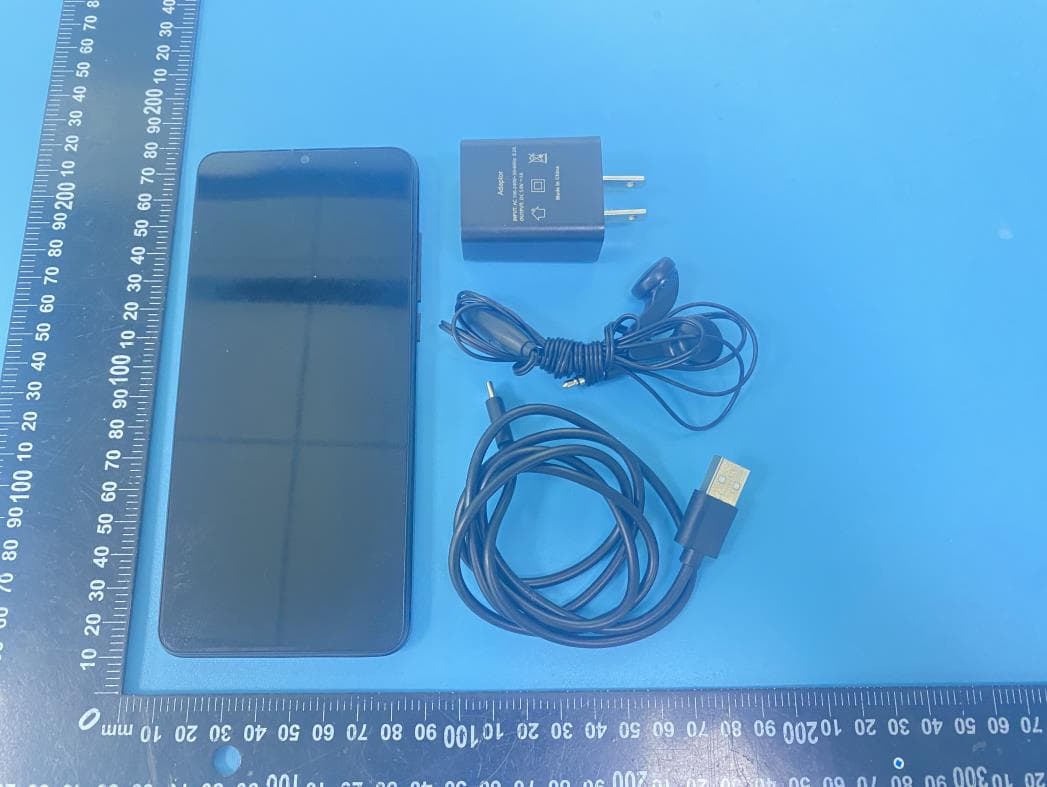
ZSW-30-144
Apr 16, 2026Mobile Phone
Equipment Class
PCE - PCS Licensed Transmitter held to ear
ZSW-10-052
Jan 21, 2026Mobile Phone
Equipment Class
PCE - PCS Licensed Transmitter held to ear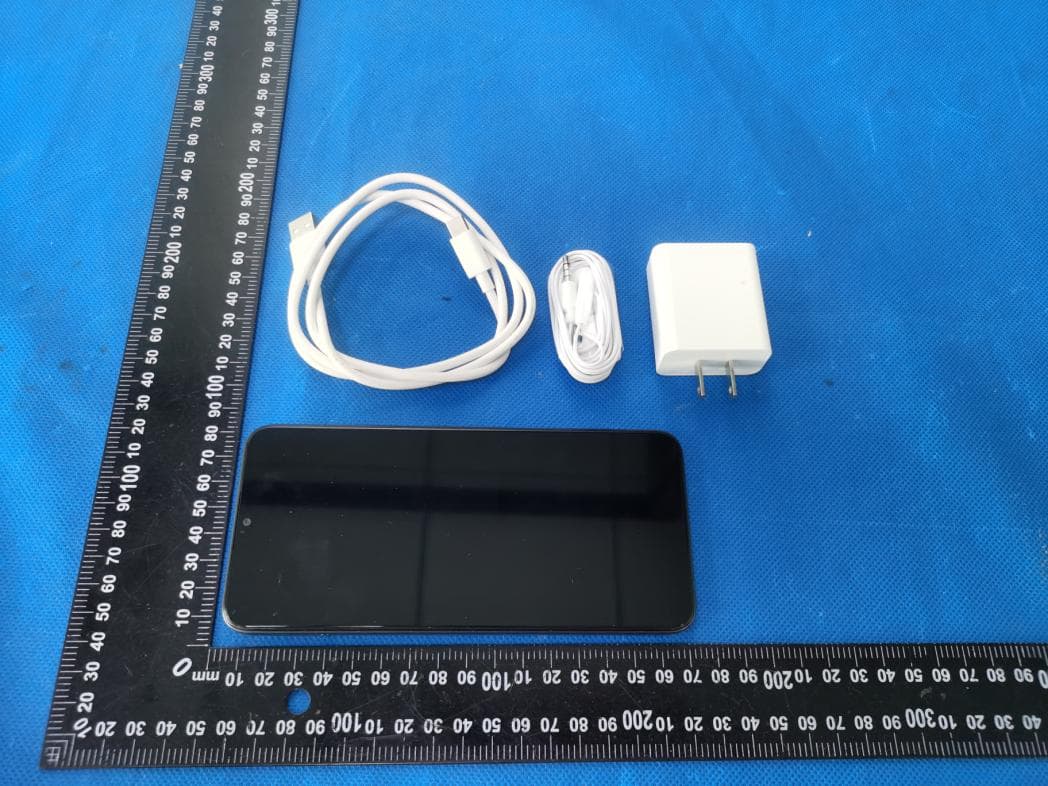
ZSW-30-143
Nov 20, 2025Mobile Phone
Equipment Class
JBP - Part 15 Class B Computing Device Peripheral
ZSW-30-136
Jan 24, 2025Mobile Phone
Equipment Class
PCE - PCS Licensed Transmitter held to ear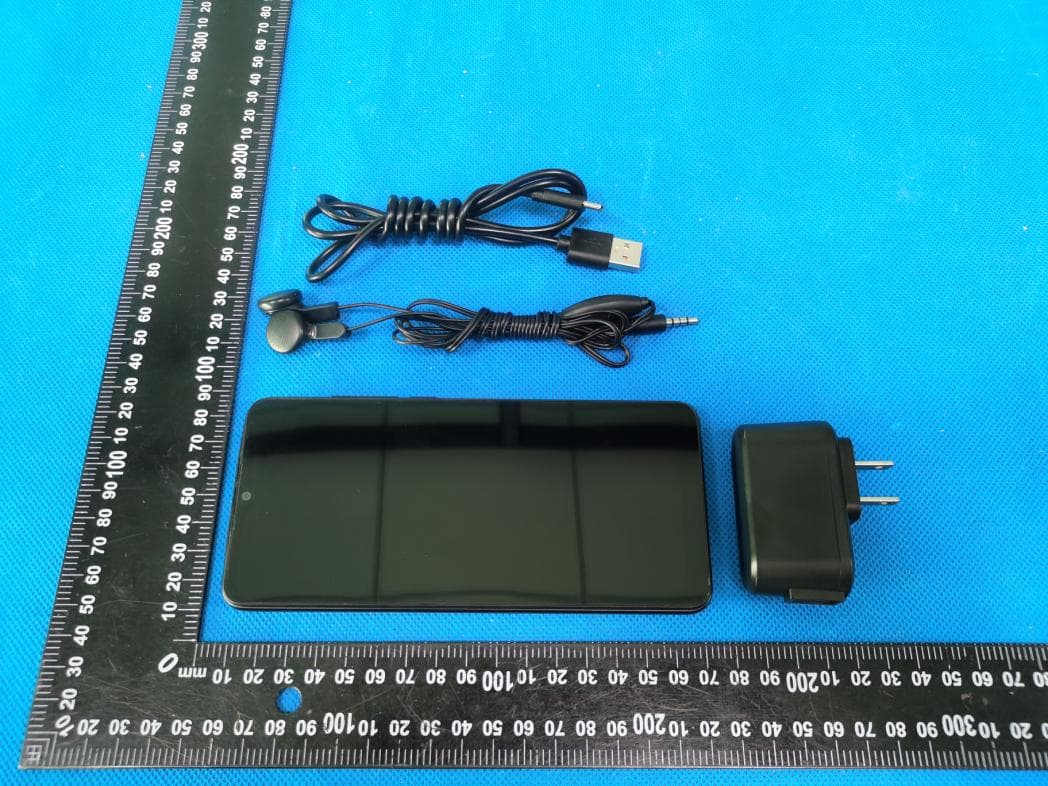
ZSW-30-135
Sep 10, 2024Mobile Phone
Equipment Class
DSS - Part 15 Spread Spectrum Transmitter