ZVS-NVX-610VoIP Phone
invoxia
Click to zoom
Application Details
- Equipment Class
- DSS - Part 15 Spread Spectrum Transmitter
- Date of Grant
- Oct 17, 2011
- Application Purpose
- Original Equipment
- Date of Application
- Oct 17, 2011
- Equipment Note
- VoIP Phone
- Frequency Range
- 2402.00000000 - 2480.00000000
- Company
- invoxia
- Country
- France
Documents & Files
Document Text
Text extracted from the exhibit documents filed with the FCC. Open a document above to read the original.
Users Manual
NVX 610 Skype™ User Guide Declaration of Conformity for the European Union Invoxia declares that the NVX 610 product complies with the essential requirements and other relevant provisions of the European RTTE Directive 1999/5/EC on Radio and Telecommunication Terminal Equipment. You can read the Declaration of Conformity at the following address: www.invoxia.com/fr/support. U.S. Federal Communications Commission (FCC) Compliance Statement The changes or modifications not expressly approved by the party responsible for compliance could void the user’s authority to operate the equipment. To comply with the FCC RF exposure compliance requirements, this device and its antenna must not be co-located or operating to conjunction with any other antenna or transmitter. Note: This equipment has been tested and found to comply with the limits for a Class B Digital Device, pursuant to part 15 of the FCC Rules. These limits are designed to provide reasonable protection against harmful interference in a residential installation. This equipment generates, uses and can radiate radio frequency energy and, if not installed and used in accordance with the instruction, may cause harmful interference to radio communication. However, there is no grantee that interference will not occur in a particular installation. If this equipment dose cause harmful interference to radio or television reception, which can be determined by turning the equipment off and on , the user is encouraged to try to correct the interference by one or more of the following measures: - Reorient or relocate the receiving antenna. - Increase the separation between the equipment and receiver. - Connect the equipment into an outlet on a circuit different from that to which the receiver is connected. - Consult the dealer or an experienced radio/TV technician for help. Environment Your NVX 610 telephone has been designed and manufactured using quality materials and components which can be reused and recycled. The presence of the crossed-out wheeled bin symbol indicates that the product complies with EU Directive 2002/96/EC. It must be disposed of through an appropriate collection and recycling structure. Please contact your local electrical and electronic equipment waste management scheme. Please respect your local municipal regulations and do not dispose of these products with unsorted household waste. The correct disposal of products at the end of their working life is good for the environment and your health. Legal invoxia ®, ™ Experience your phone, In Vivo Acoustic ®, Smart holder® and related trademarks, names and logos are the property of invoxia. iPad, iPhone, iPod touch are trademarks of Apple Inc., registered in the U.S. and other countries. Bluetooth ® is a trademark of Bluetooth SIG. Skype™ is a trademark of Skype Technologies S.A. Skype, associated trade marks and logos and the «S» logo are trade marks of Skype Limited. 2User Guide Skype™ NVX 610 Important information 5 • Safety Guidelines 5 1 Discover your phone 6 • Box Contents 6 • Your invoxia phone 6 2 Setup 7 • Positioning 7 • Connecting the base 7 • Installing the handset 10 • Installing the iPad 11 • Downloading the invoxia application 11 • Connecting your iPhone/iPod touch/iPad 12 • Installing Skype 12 • Changing your password 14 3 Use 15 • Making calls 15 • Ending a call 15 • Receiving an incoming call 15 • Adjusting the volume 16 • Muting the mic 16 • Activating and deactivating the speakers 16 4 Contact list 17 • Displaying and calling a contact 17 • Blocking a contact 17 5 List of recent calls 17 • Displaying your recent calls 17 • Redialing a number from Recents 17 6 Custom Settings 18 • Customizing your ringtones 18 • Connecting your iPhone/iPod/iPad via Bluetooth 18 • Privacy Settings 18 Table of contents 3User Guide Skype™ NVX 610 • Skype and SIP accounts 18 • SIP voicemail 18 7 Technical Data 19 • Mfi program 19 • Connectivity 19 • Codecs 19 • Technical Specifications 19 • Buttons 19 8 FAQs 20 • No dialing tone/ I cannot make a call 20 • You have forgotten your Skype username or password? 20 • I cannot log in to Skype 20 • I cannot make a call 20 • I cannot be reached/I am unable to use the application 20 9 Warranty 21 • Warranty Period 21 • Warranty Coverage 21 • Exclusion 21 • Procedure 21 • Contact 22 4User Guide Skype™ NVX 610 Important information Safety Guidelines Required Power Supply This phone is powered by PoE (Power over Ethernet) through a compatible network, or through a mains AC 100-240V supply. In the latter case, the telephone cannot operate without the power supply (e.g. during a blackout). Warning • Do not open the base, handset or charger. • Please ensure that no liquid comes into contact with the product. Do not expose the device to excessive smoke, dust, mechanical vibration or shock. • Only use the cables, adapters and batteries supplied. • Place the unit near an accessible electrical outlet. • Remove the handset from your ear when speaker mode is activated. • Do not expose the device to excessive heat, e.g. to direct sunlight or near heating equipment. • Do not use in areas where there are risks of explosion. Operating and storage temperature Use the device in a room where the temperature is always between 0 and 40ºC (32 to 104ºF). 5User Guide Skype™ NVX 610 Secrecy mode Adjust volume/ Receive and End a call Messages Bienvenue NVX 610 This welcome bookletiPhone / iPod adapters Ethernet CableAC adapter NVX 610 handset and cable Smart holder x 3iPad standNVX 610 base Box Contents 1 Discover your phone Your invoxia phone Designed and produced by invoxia, Paris 6User Guide Skype™ NVX 610 2 Setup Positioning Place your phone near your network socket (and near your mains supply socket if you are using a mains power adapter). Connecting the base This phone is powered by PoE (Power over Ethernet) on a compatible network, or through a mains AC 100-240V power supply. 1. The base and the handset are protected by transparent films. Please remove them. …
Text truncated - open the document above for the full version.
Attestation Statements
Bluetooth Declaration Per FCC 15.247 Requirements 1 Output power and channel separation of a Bluetooth device in the different operating modes: The different operating modes (data-mode, acquisition-mode) of a Bluetooth device don’t influence the output power and the channel spacing. There is only one transmitter which is driven by identical input parameters concerning these two parameters. Only a different hopping sequence will be used. For this reason the check of these RF parameters in one op-mode is sufficient. 2 Frequency range of a Bluetooth device: Hereby we declare that the maximum frequency of this device is: 2402 – 2480 MHz. This is according the Bluetooth Core Specification for devices which will be operated in the USA. This was checked during the Bluetooth Qualification tests (Test Case: TRM/CA/04-E). Other frequency ranges ( e.g. for Spain, France, Japan) which are allowed according the Core Specification are not supported by this device. 3 Co-ordination of the hopping sequence in data mode to avoid simultaneous occupancy by multiple transmitters: Bluetooth units which want to communicate with other units must be organized in a structure called piconet. This piconet consist of max. 8 Bluetooth units. One unit is the master the other seven are the slaves. The master co- ordinates frequency occupation in this piconet for all units. As the master hop sequence is derived from it’s BD address which is unique for every Bluetooth device, additional masters intending to establish new piconets will always use different hop sequences. 4 Example of a hopping sequence in data mode: Example of a 79 hopping sequence in data mode: 40, 21, 44, 23, 42, 53, 46, 55, 48, 33, 52, 35, 50, 65, 54, 67, 56, 37, 60, 39, 58, 69, 62, 71, 64, 25, 68, 27, 66, 57, 70, 59, 72, 29, 76, 31, 74, 61, 78, 63, 01, 41, 05, 43, 03, 73, 07, 75, 09, 45, 13, 47, 11, 77, 15, 00, 64, 49, 66, 53, 68, 02, 70, 06, 01, 51, 03, 55, 05, 04 5 Equally average use of frequencies in data mode and behaviour for short transmissions: The generation of the hopping sequence in connection mode depends essentially on two input values: 1. LAP/UAP of the master of the connection 2. Internal master clock The LAP (lower address part) are the 24 LSB’s of the 48 BD_ADDRESS. The BD_ADDRESS is an unambiguous number of every Bluetooth unit. The UAP (upper address part) are the 24 MSB’s of the 48 BD_ADDRESS. The internal clock of a Bluetooth unit is derived from a free running clock which is never adjusted and is never turned off. For synchronisation with other units only offset are used. It has no relation to the time of the day. Its resolution is at least half the RX/TX slot length of 312.5 μs. The clock has a cycle of about one day (23h30). In most case it is implemented as 28 bit counter. For the deriving of the hopping sequence the entire LAP (24 bits), 4 LSB’s (4 bits) (Input 1) and the 27 MSB’s of the clock (Input 2) are used. With this input values different mathematical procedures (permutations, additions, XOR-operations) are performed to generate the sequence. This will be done at the beginning of every new transmission. Regarding short transmissions the Bluetooth system has the following behaviors: The first connection between the two devices is established, a hopping sequence was generated. For transmitting the wanted data the complete hopping sequence was not used. The connection ended. The second connection will be established. A new hopping sequence is generated. Due to the fact that the Bluetooth clock has a different value, because the period between the two transmission is longer (and it cannot be shorter) than the minimum resolution of the clock (312.5 μs). The hopping sequence will always differ from the first one. 6 Receiver input bandwidth and behaviors for repeated single or multiple packets: The input bandwidth of the receiver is 1 MHz. In every connection one Bluetooth device is the master and the other one is the slave. The master determines the hopping sequence (see chapter 5). The slave follows this sequence. Both devices shift between RX and TX time slot according to the clock of the master. Additionally the type of connection (e.g. single or multislot packet) is set up at the beginning of the connection. The master adapts its hopping frequency and its TX/RX timing according to the packet type of the connection. Also the slave of the connection will use these settings. Repeating of a packet has no influence on the hopping sequence. The hopping sequence generated by the master of the connection will be followed in any case. That means, a repeated packet will not be send on the same frequency, it is send on the next frequency of the hopping sequence. 7 Dwell time in data mode The dwell time of 0.3797s within a 30 second period in data mode is independent from the packet type (packet length). The calculation for a 30 second period is a follows: Dwell time = time slot length * hop rate / number of hopping channels *30s Example for a DH1 packet (with a maximum length of one time slot) Dwell time = 625 μs * 1600 1/s / 79 * 30s = 0.3797s (in a 30s period) For multislot packet the hopping is reduced according to the length of the packet. Example for a DH5 packet (with a maximum length of five time slots) Dwell time = 5 * 625 μs * 1600 * 1/5 *1/s / 79 * 30s = 0.3797s (in a 30s period) This is according the Bluetooth Core Specification for all Bluetooth devices. There for all Bluetooth devices comply with the FCC dwell time requirement in data mode. This was checked during the Bluetooth Qualification tests. The Dwell time in hybrid mode is measured and stated in the test report. 8 Channel Separation in hybrid mode The nominal channel spacing of the Bluetooth system is 1Mhz independent of the operating mode. The maximum “initial carrier frequency tolerance” which is allowed for Bluetooth is fcenter = 75 kHz. This was checked during the Bluetooth Qualification tests (Test Case: TRM/CA/07-E) for three frequencies (2402, 2441, 2480…
Text truncated - open the document above for the full version.
External Photos
FCC ID: ZVS-NVX-610 ETC Report No.: 11-08-MAS-080-06 Page A1 of A4 ANNEX A: EXTERNAL CONSTRUCTION PHOTOS OF EUT 1. Outside view 1 of EUT 2. Outside view 2 of EUT FCC ID: ZVS-NVX-610 ETC Report No.: 11-08-MAS-080-06 Page A2 of A4 3. Outside view 3 of EUT 4. Outside view 4 of EUT FCC ID: ZVS-NVX-610 ETC Report No.: 11-08-MAS-080-06 Page A3 of A4 5. Outside view 5 of EUT 6. Outside view 6 of EUT FCC ID: ZVS-NVX-610 ETC Report No.: 11-08-MAS-080-06 Page A4 of A4 7. Outside view 7 of EUT 8. Outside view of Adapter
ID Label/Location Info
2011/09/08 Jasmine 日期 產品機種 產品料號 客戶名稱 申請者 設計者 Invoxia Joseph 備註 確認簽名 Av:版本 NVX610 silver US 7406LEMON**1AAx Device label - 2 SN: DDDYYPPVVSSSSSS NVX6X0 CCCCCC XX Made in PRC **Note** 1. Label dimension: 45.4*18.4mm 2. There should be space after colon( 3. Font:Arial font 4. The height of font(字體高度) ≧1.5mm 5. Barcode type: code 39 6. Barcode height(條碼高度) ≧ 4mm 7. FCC ID: ZVS-NVX-610 is fixed 8. SN: DDDYYPPVVSSSSSS D1 to D3 : (一年之中的第幾天)Day number of the last test, decimal number Ex: October 22 is the 265th day of the year. D1 = 2, D2 = 6 D3 = 5 Y1 to Y2: (年度)Last two digits of the year, decimal number Ex: year 2010; Y1 = 1 , Y2 = 0 P1 to P2: (產品型號編碼)Product model, decimal number Ex: 01 means the product Model is 01 , P = 0, P =1 V1 to V2: (HW版本)Product hardware Modification version, decimal number Ex: 01 means the hardware version is 01 V = 0, V = 1 S1 to S6: (MAC address後面6碼)Are the six last digits of the MAC address of the product, Alphanumerical Ex: Considering the MAC address 003EDFA2CD3F S1=A,S2=2,S3=C,S4 = D,S5 = 3,S6 = F (貼紙尺寸) 冒號之後空一格) Designed in France ≧7.0mm ≧5.0mm **Logo dimension restriction** Product Model Wired Model number 有線機種 Product Model DECT Model number 無線機種 顏色/規格 01NVX610 silver EU10NVX620 silver EU銀色/歐規 02NVX610 white EU11NVX620 white EU白色/歐規 03NVX610 black EU12NVX620 black EU黑色/歐規 04NVX610 silver UK13NVX620 silver UK銀色/英規 05NVX610 white UK14NVX620 white UK白色/英規 06NVX610 black UK15NVX620 black UK黑色/英規 07NVX610 silver US16NVX620 silver US銀色/美規 08NVX610 white US17NVX620 white US白色/美規 09NVX610 black US18NVX620 black US黑色/美規 **The rule of model name** Model name: NVX6X0 CCCCCC XX (1) NVX610= wired version (有線機種) NVX620= dect version (無線機種) (2) CCCCCC: the color type of speaker grid(喇叭網的顏色) EX. NVX610 silver EU means the wired version (3) XX: the type of PSU (PSU類型) EU=歐規/UK=英規/US=美規 in silver speaker grid with EU PSU According to the model name list to defined silver = 銀色 / white=白色 / black=黑色 例如:NVX610 silver EU是指有線,銀色喇叭網,PSU為歐規機種 FCC ID: ZVS-NVX-610 NVX 610 This device complies with Part 15 of the FCC Rules. Operation is subject to the following two conditions: (1) this device may not cause harmful interference, and (2) this device must accept any interference received, including interference that may cause undesired operation. FCC ID: ZVS-NVX-610 1 8 . 0 0 m m 32.50 mm NVX 610 This device complies with Part 15 of the FCC Rules. Operation is subject to the following two conditions: (1) this device may not cause harmful interference, and (2) this device must accept any interference received, including interference that may cause undesired operation. FCC ID: ZVS-NVX-610 SN: DDDYYPPVVSSSSSS NVX6X0 CCCCCC XX Made in PRC Designed in France FCC ID: ZVS-NVX-610
Internal Photos
FCC ID: ZVS-NVX-610 ETC Report No.: 11-08-MAS-080-06 Page B1 of B8 ANNEX B: INTERNAL CONSTRUCTION PHOTOS OF EUT 1. Inside View 1 of EUT 2. Inside View 2 of EUT FCC ID: ZVS-NVX-610 ETC Report No.: 11-08-MAS-080-06 Page B2 of B8 3. Inside View 3 of EUT 4. Inside View 4 of EUT FCC ID: ZVS-NVX-610 ETC Report No.: 11-08-MAS-080-06 Page B3 of B8 5. Inside View 5 of EUT 6. Inside View 6 of EUT FCC ID: ZVS-NVX-610 ETC Report No.: 11-08-MAS-080-06 Page B4 of B8 7. Antenna 8. Module FCC ID: ZVS-NVX-610 ETC Report No.: 11-08-MAS-080-06 Page B5 of B8 9. Front view of PCB1 10. Rear view of PCB1 FCC ID: ZVS-NVX-610 ETC Report No.: 11-08-MAS-080-06 Page B6 of B8 11. Front view of PCB2 12. Rear view of PCB2 FCC ID: ZVS-NVX-610 ETC Report No.: 11-08-MAS-080-06 Page B7 of B8 13. PCB3 14. Front view of PCB4 FCC ID: ZVS-NVX-610 ETC Report No.: 11-08-MAS-080-06 Page B8 of B8 15. Rear view of PCB4
Test Report
FCC ID: ZVS-NVX-610 Sheet 1 of 78 Sheets ETC Report No. : 11-08-MAS-080-06 Rev. No 1.0 CONFORMANCE TEST REPORT FOR FCC 47 CFR, Part 15 Subpart C Report No.: 11-08-MAS-080-06 Client: invoxia Product: VoIP Phone Model: NVX 610 Series Model No.: NVX-610 Silver US, NVX-610 White US, NVX-610 Black US FCC ID: NVS-NVX-610 Manufacturer: Nettech Technology (SuZhou) Co. Ltd., Date test item received: 2011/08/08 Date test campaign completed: 2011/10/13 Date of issue: 2011/10/13 The test result onl y corresponds to the tested sample. It is not permitted to copy this report, in part or in full, without the permission of the test laboratory. Total number of pages of this test report: 78 pages Total number of pages of photos: External photos 4 pages Internal photos 8 pages Setup photos 2 pages Test Engineer Checked By Approved By John Li James Cheng Winpo Tsai ELECTRONICS TESTING CENTER, TAIWAN NO.8, LANE 29, WENMING RD., LESHAN TSUEN, GUISHAN SHIANG, TAOYUAN COUNTY, TAIWAN 33383, R.O.C.TAIWAN, R.O.C. TEL: (03) 3276170~4 INT: +886-3-3276170~4 FAX: (03) 3276188 INT: +886-3-3276188 FCC ID: ZVS-NVX-610 Sheet 2 of 78 Sheets ETC Report No. : 11-08-MAS-080-06 Rev. No 1.0 Client : invoxia Address : 87 Rue Du Gouverneur General Eboue, 92130 Issy-Les-Moulineaux, France Manufacturer : Nettech Technology (SuZhou) Co. Ltd., Address : No.1 Chun-Shen-Hu East Road, Xiancheng Economical Development District, SuZhou City, JiangSu Province, China EUT : VoIP Phone Brand/Trade name : invoxia Model No. : NVX 610 Power Source : Adapter: (invoxiz / KSAS 02424 00100HE) Input: 100-240Vac, 50/60Hz, 0.6A Output: 24Vdc, 1.0A Regulations applied : FCC 47 CFR, Part 15 Subpart C The testing described in this report has been carried out to the best of our knowledge and ability, and our responsibility is limited to the exercise of reasonable care. This certification is not intended to believe the sellers from their legal and/or contractual obligations. The compliance test is only certified for the test equipment and the results of the testing report relate only to the item tested. The compliance test of this report was conducted in accordance with the appropriate standards. It’s not intention to assure the quality and performance of the product. This report shall not be reproduced except in full, without the approval of ETC. This report must not be used by the client to claim product endorsement by NVLAP or any agency of the U.S. Government. Laboratory Introduction: Electronics Testing Center, Taiwan is recognized, filed and mutual recognition arrangement as following: 1 ISO9001: TüV Product Service 2 ISO/IEC 17025: BSMI, CNLA, NCC, NVLAP, CCIBLAC, UL, Compliance 3 Filing: FCC, Industry Canada, VCCI 4 MRA: Australia, Hong Kong, New Zealand, Singapore, USA, Japan, Korea, China, APLAC through TAF 5 FCC Registration Number: 90588, 91094, 91095 h Industry Canada Site Regisitation number: IC 2949A NVLAP Lab Code 200133-0 FCC ID: ZVS-NVX-610 Sheet 3 of 78 Sheets ETC Report No. : 11-08-MAS-080-06 Rev. No 1.0 Table of Contents Page 1 GENERAL INFORMATION ....................................................................................................... 5 1.1 Product Description...................................................................................................................... 5 1.2 Characteristics of Device ............................................................................................................. 5 1.3 Test Methodology ........................................................................................................................ 5 1.4 Modifiction List of EUT .............................................................................................................. 5 1.5 Test Facility.................................................................................................................................. 5 1.6 Test Summary .............................................................................................................................. 5 2 PROVISIONS APPLICABLE...................................................................................................... 6 2.1 Definition ..................................................................................................................................... 6 2.2 Requirement for Compliance ....................................................................................................... 7 2.3 Restricted Bands of Operation ..................................................................................................... 9 2.4 Labeling Requirement .................................................................................................................. 9 2.5 User Information ........................................................................................................................ 10 3. SYSTEM TEST CONFIGURATION ........................................................................................ 11 3.1 Justification ................................................................................................................................ 11 3.2 Devices for Tested System......................................................................................................... 11 4 RADIATED EMISSION MEASUREMENT ............................................................................ 13 4.1 Applicable Standard ................................................................................................................... 13 4.2 Measurement Procedure............................................................................................................. 13 4.3 Measuring Instrument ................................................................................................................ 15 4.4 Radiated Emission Data ............................................................................................................. 16 4.5 Field Strength Calculation ..................…
Text truncated - open the document above for the full version.
Test Setup Photos
FCC ID: ZVS-NVX-610 ETC Report No.: 11-08-MAS-080-06 Page 1 of 2 Photos of Radiation Measuring Setup FCC ID: ZVS-NVX-610 ETC Report No.: 11-08-MAS-080-06 Page 2 of 2 Photos of Conduction Measuring Setup
Contact Information
Applicant
Fabrice DEVIGE(ELECTRONIC DIRECTOR)
Test Firm
Electronics Testing Center, TaiwanWinpo Tsai
Technical Specifications
| # | Rule Parts | Frequency Range | Power Output |
|---|---|---|---|
| 1 | 15C | 2.40 GHz - 2.48 GHz | 3.94 mW |
Other Applications from invoxia
ZVS-LWT3
Jan 19, 2020LWT3
Equipment Class
DTS - Digital Transmission System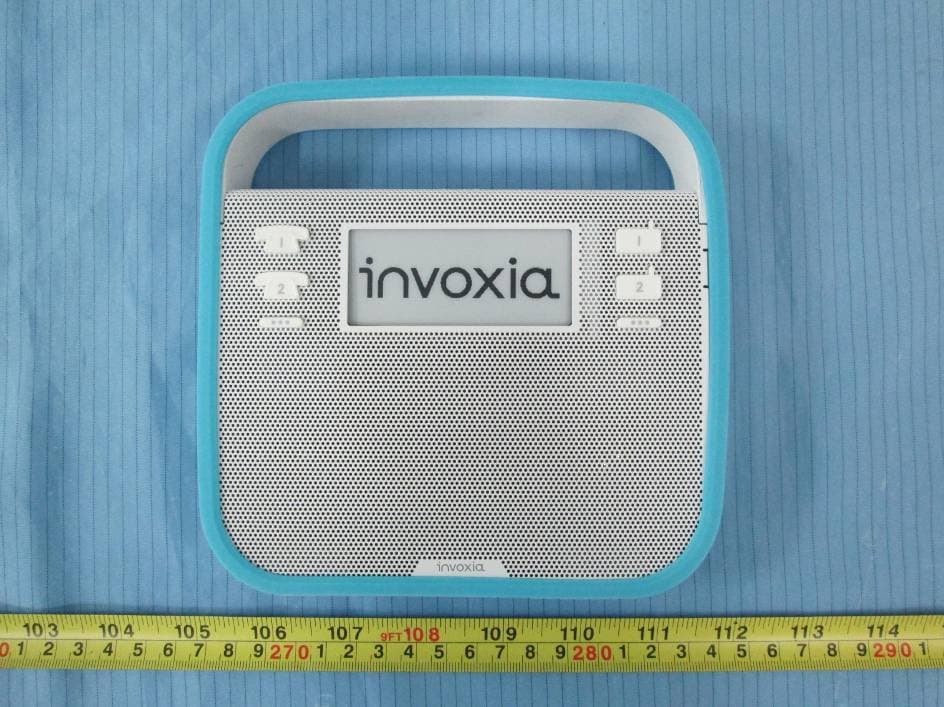
ZVS-KTP1
Jul 30, 2015KTP1
Equipment Class
DTS - Digital Transmission System
ZVS-E169
Jan 13, 2014DTP2
Equipment Class
DSS - Part 15 Spread Spectrum Transmitter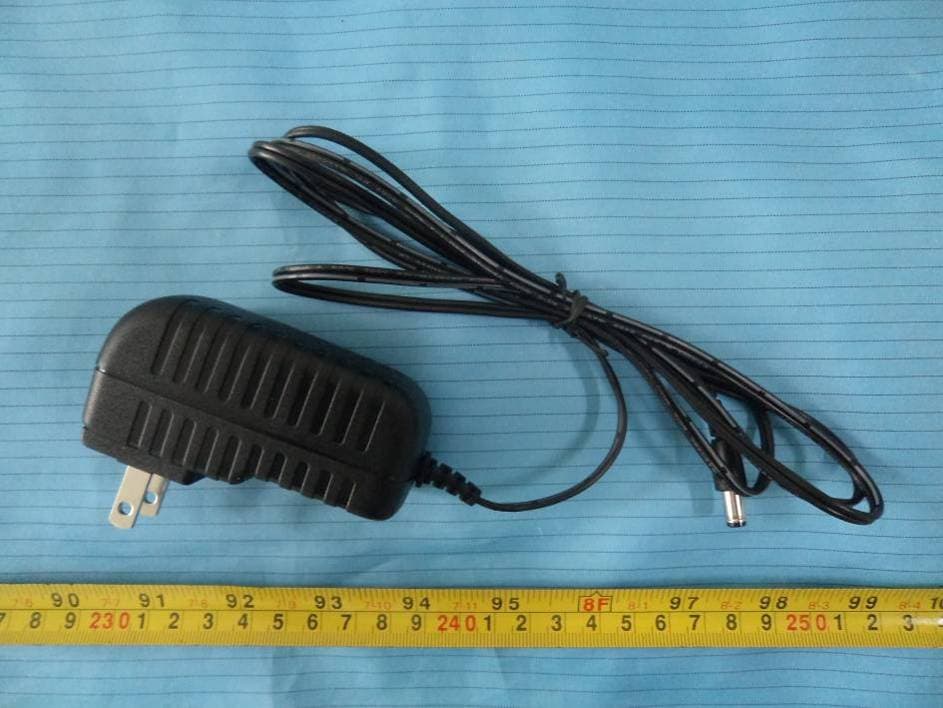
ZVS-DTP3
Dec 19, 2013DTP 3
Equipment Class
DSS - Part 15 Spread Spectrum Transmitter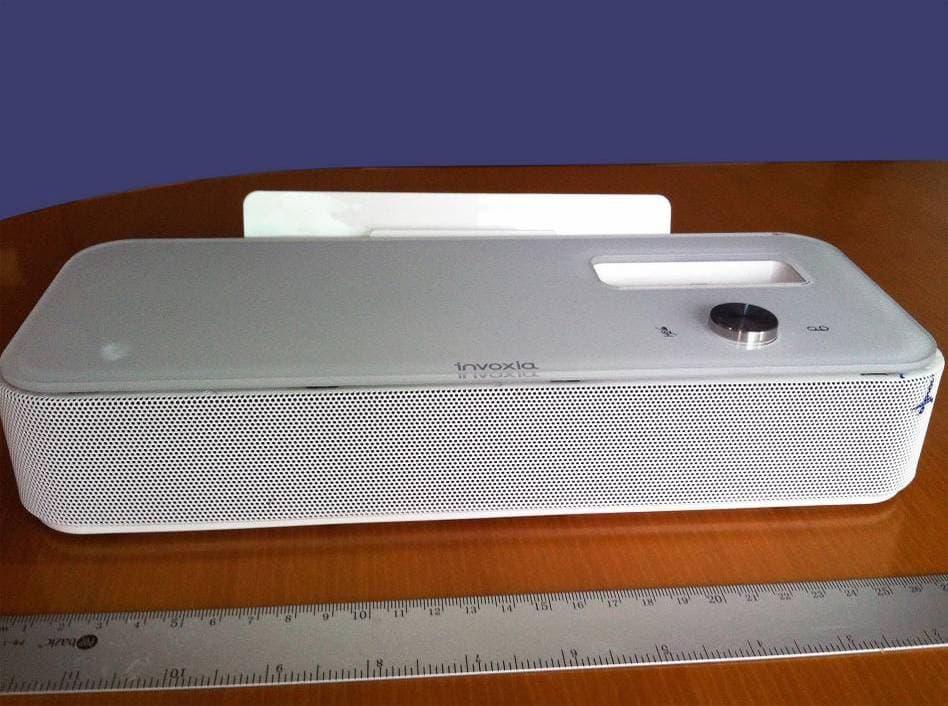
ZVS-NVX-DTP2
Apr 07, 2013NVX2
Equipment Class
DSS - Part 15 Spread Spectrum Transmitter