2AB4KMETYH8128Bluetooth Speaker
MET INDUSTRIAL LTD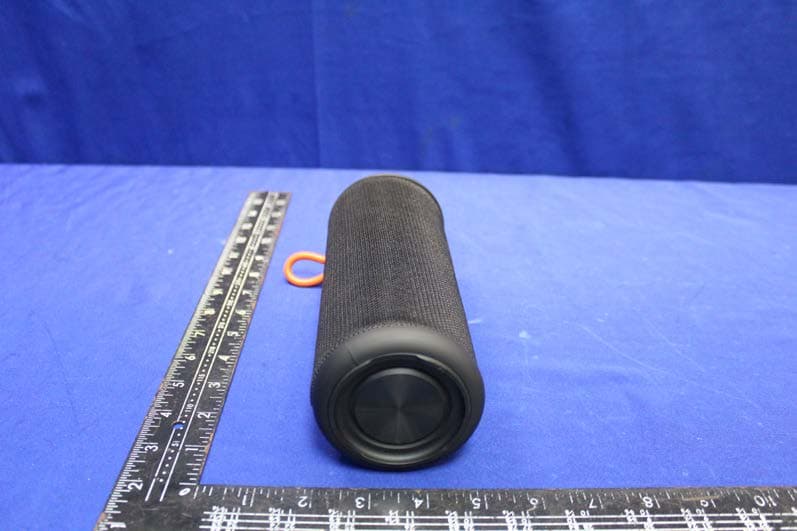
Click to zoom
Application Details
- Equipment Class
- DSS - Part 15 Spread Spectrum Transmitter
- Date of Grant
- Jun 01, 2020
- Application Purpose
- Original Equipment
- Date of Application
- Jun 01, 2020
- Equipment Note
- Bluetooth Speaker
- Frequency Range
- 2402.00000000 - 2480.00000000
- Company
- MET INDUSTRIAL LTD
- Country
- Hong Kong
Documents & Files
Document Text
Text extracted from the exhibit documents filed with the FCC. Open a document above to read the original.
Users Manual
PORTABLE BLUETOOTH SPEAKER MODEL NO.: SP953 INSTRUCTION MANUAL Please read these instructions thoroughly before use and retain for future reference SYLVANIA is a registered trademark of OSRAM Sylvania Inc. used under license. Introduction Thank you for choosing the Sylvania SP953 Bluetooth Speaker as your source for entertainment! You can use this item with iPads, iPhones, iPods and many types of smartphone to stream music. In order to get the best results when using the device, please read this manual first before using. Description Package Contents 1. Bluetooth Speaker 2. Micro USB Charging Cable 3. User Manual Features • Bluetooth – enables simple wireless pairing with your Bluetooth-enabled devices • 360-Degree sound with deep bass • Stylish rubberized design with carrying hook • Large control buttons for easy operation • 3.5mm standard auxiliary input provides a simple wired connection to wide variety of devices • Built-in rechargeable battery Safety Instructions • Keep the unit away from heat sources, direct sunlight, humidity, water and any other liquids. • DO not operate the unit if it has been exposed to water, moisture or any other liquids to prevent against electric shock, explosion and/or injury to yourself and damage to the unit. • Do not use the unit if it has been dropped or damaged in any way. • Repairs to electrical equipment should only be performed by a qualified electrician. Improper repairs may place the user at serious risk. • Do not use the unit with wet hands. • Do not put objects into any of the openings. • Keep the unit free from dust, lint, etc. • Do not use this unit for anything other than its intended use. • Keep the unit out of reach of children. • This product is not a toy. INSTRUCTIONS FOR USE Charging the Speaker The speaker has built-in rechargeable battery. When the battery is drained out, speaker would turn OFF automatically. please recharge the battery every time it drains out. Attach the Micro USB cable to the unit and plug into any USB charger. If the unit is completely discharged, it will take approximately 5 hours to fully charge at 5V/500mA. The Red LED will illuminate during charging, when it has completed, the Red LED will turn off. There will be a beep when the battery is low and needs to be recharged. Please charge it completely before the first-time use. Operation • Press and Hold "ON/OFF" button 2 seconds to power ON, the Blue LED will start to flash. • If an Aux (3.5 mm) cable is connected to the unit, the Blue LED will turn off, and the Green LED will stay illuminated, notifying you, the unit is in Aux-In mode. • Press and Hold "ON/OFF" button 2 seconds to power OFF. Bluetooth Mode Pairing The unit will go into “Pairing Mode” when the Bluetooth pairing button is pressed. Go into your Bluetooth device settings menu and look for “Sylvania SP953” After the unit has paired and connected, it will re-connect automatically when the unit is powered on and the device is in range. Note: Bluetooth Timeout: 10 minutes. You can press and hold the Bluetooth pairing button to unpair your current device and search for new devices in Bluetooth mode. Begin Streaming Music • Press Play/Pause button to start playing music • Press and Hold “+” button 2 seconds to play the next track • Press and Hold “-” button 2 seconds to play previous track • Press either “+” or “-” button for volume control Note: You will hear an audible alert when the maximum / minimum volume level has been reached. Aux-In Mode Plug in the supplied 3.5 mm cable into the unit. The other end is connected to your device. The Green LED will only illuminate when in “Aux” mode. Please note music and volume can be controlled by your device. LED Status Blue LED flashing & Blue LED solid Bluetooth Mode Green LED on solid Aux Mode Red LED Charging Red LED off Full charged Troubleshooting Unit doesn’t connect to device Speaker needs to be connected/ re-paired to device A tone is heard every few seconds Speaker needs to be charged Unit will no power on Speaker needs to be charged Unit doesn’t control track(s)/volume Speaker needs to be in Bluetooth mode for full control Unit distorts at high volume The devices’ volume needs to be lowered Care and Maintenance Read the following recommendations before using the Bluetooth Speaker. Following these you will be able to enjoy the product for many years. • Do not expose the Bluetooth Speakers to liquid, moisture or humidity to avoid the product's internal circuit being affected. • Do not use abrasive cleaning solvents to clean the device. • Do not expose the device to extremely high or low temperature as this will shorten the life of electronic devices, destroy the battery or distort certain plastic parts. • Do not dispose of the device in a fire as it will result in an explosion. • Do not expose the device to contact with sharp objects as this will cause scratches and damage. • Do not let the device fall on the floor. The internal circuit might get damaged. • DO not attempt to disassemble the device as it may get damaged if you are not professional. Specifications Bluetooth specification Bluetooth 5.0 (A2DP, HFP, AVRCP) Bluetooth Range 33ft (10m) Charging input voltage DC 5V = 500mA Built-ln Battery 1200mAh rechargeable lithium battery Dimension 200mm x 78mm Battery life & charging time may vary based on usage & types of devices used. NOTE: This equipment has been tested and found to comply with the limits for a Class B digital device, pursuant to part 15 of the FCC Rules. These limits are designed to provide reasonable protection against harmful interference in a residential installation. This equipment generates uses and can radiate radio frequency energy and, if not installed and used in accordance with the instructions, may cause harmful interference to radio communications. However, there is no guarantee that interference will not occur in a particular installation. If this equipment does cause harmful interference to radio or television reception, wh…
Text truncated - open the document above for the full version.
Cover Letter(s)
MET INDUSTRIAL LTD Federal Communications Commission Authorization and Evaluation Division 1435 Oakland Mills Road Columbia, MD 21046 Date: 2020-05-20 SUBJECT: FCC Application for FCC ID: 2AB4KMETYH8128 To Whom It May Concern: We, the undersigned, hereby authorize Lisa Wang at EMTEK (SHENZHEN) CO., LTD.on our behalf, to apply to the Federal Communications Commission on our equipment. Any and all acts carried out byEMTEK (SHENZHEN) CO., LTD.on our behalf shall have the same effect as acts of our own. This is to advise that we are in full compliance with the Anti- Drug Abuse Act. We, the applicant, are not subject to a denial of federal benefits pursuant to Section 5301 of the Anti-Drug Act of 1988, 21 USC853a, and no party to the application is subject to a denial of federal benefits pursuant to that section. Regards, TONY LAM/Manager MET INDUSTRIAL LTD
Cover Letter(s)
Rev 11/20/07 MET INDUSTRIAL LTD Federal Communications Commission Authorization and Evaluation Division Confidentiality Request regarding application for certification of FCC ID: 2AB4KMETYH8128 Pursuant to Sections 0.457 and 0.459 of the Commission’s Rules, we hereby request confidential treatment of information accompanying this application as outlined below: Exhibit Type File Name Block Diagram, Schematics, Operational Description, Block Diagram Operation Description schematic diagram The above materials contain trade secrets and proprietary information not customarily released to the public. The public disclosure of these materials may be harmful to the applicant and provide unjustified benefits to its competitors. Sincerely, TONY LAM/Manager MET INDUSTRIAL LTD
External Photos
TRF NO. FCC15/A Page 1 of 2 Report No.: ES200103025W Ver.1.0 EUT EXTERNAL PHOTOGRAPHS EUT View 1 EUT View 2 TRF NO. FCC15/A Page 2 of 2 Report No.: ES200103025W Ver.1.0 EUT View 3 EUT View 4 ----------------The end----------------
ID Label/Location Info
8mm 40mm x S/N:A2005316510000001 L40*H5mm MANUFACTURED: MAY 2020 SP953(8128) W28xH25mm S/N:A2005316510005208 Cancer and Reproductive Harm -www.P65Warning.ca.gov MODEL:SP953 OUTPUT POWER : 3W x 2 Micro USB POWER SUPPLY : DC 5V CURTIS INTERNATIONAL LTD FCC ID : 2AB4KMETYH8128 IMPORTED BY: MADE IN CHINA PORTABLE BLUETOOTH SPEAKER MODEL:SP929-BLACK Cancer and Reproductive Harm -www.P65Warning.ca.gov MODEL:SP953 OUTPUT POWER : 3W x 2 Micro USB POWER SUPPLY : DC 5V CURTIS INTERNATIONAL LTD FCC ID : 2AB4KMETYH8128 IMPORTED BY: MADE IN CHINA PORTABLE BLUETOOTH SPEAKER S/N:A2005316510000001 MANUFACTURED: MAY 2020 MODEL:SP929-BLACK
Internal Photos
TRF NO. FCC15/A Page 1 of 3 Report No.: ES200103025W Ver.1.0 EUT INTERNAL PHOTOGRAPHS EUT Housing and Board View 1: EUT Housing and Board View 2: TRF NO. FCC15/A Page 2 of 3 Report No.: ES200103025W Ver.1.0 EUT Housing and Board View 3: Antenna : BT Ant. TRF NO. FCC15/A Page 3 of 3 Report No.: ES200103025W Ver.1.0 ----------------The end----------------
RF Exposure Info
FCC ID: 2AB4KMETYH8128 Portable device According to §15.247(i) and §1.1307(b)(1), systems operating under the provisions of this section shall be operated in a manner that ensures that the public is not exposed to radio frequency energy level in excess of the Commission’s guidelines. According to KDB447498 D01 General RF Exposure Guidance V06 The 1-g and 10-g SAR test exclusion thresholds for 100 MHz to 6 GHz at test separation distances ≤ 50 mm are determined by: [(max. power of channel, including tune-up tolerance, mW)/(min. test separation distance, mm)] * [√f(GHz)] ≤ 3.0 for 1-g SAR and ≤ 7.5 for 10-g extremity SAR, where f(GHz) is the RF channel transmit frequency in GHz; Power and distance are rounded to the nearest mW and mm before calculation; The result is rounded to one decimal place for comparison; The test exclusions are applicable only when the minimum test separation distance is ≤ 50 mm and for transmission frequencies between 100 MHz and 6 GHz. When the minimum test separation distance is < 5 mm, a distance of 5 mm is applied to determine SAR test exclusion. We use 5mm as separation distance to calculate. Maximum measured transmitter power: Transmit Frequency (GHz) Mode Max Conducted Power (dBm) tune up maximum power(dBm) Result calculation 1-g SAR 2.402 GFSK -0.31 0 0.289 3 2.441 GFSK -1.59 -1 0.217 3 2.480 GFSK -0.27 0 0.296 3 2.402 PI/4 DQPSK 0.95 1 0.386 3 2.441 PI/4 DQPSK -0.43 0 0.283 3 2.480 PI/4 DQPSK 0.93 1 0.390 3 2.402 8DPSK 1.33 2 0.421 3 2.441 8DPSK -0.26 0 0.294 3 2.480 8DPSK 1.06 2 0.402 3 Conclusion: For the max result : 0.421≤ 3.0 for 1-g SAR extremity SAR, No SAR is required.
Test Report
Report No. ES20428040W Page 1 of 62 Ver.1.0 TEST REPORT Product Name : Bluetooth Speaker Model Number : MET8128, SP953,SP953-BLACK, SP953-BLUE, SP953-MINT, SP953-CORALPINK,SP953-XXXXX(Where X would be any Arabian umber or English letter or blank) FCC ID : 2AB4KMETYH8128 Prepared for : MET INDUSTRIAL LTD Address : Room 605, 6/F., No. 9 Wing Hong Street, Lai Chi Kok, Kowloon, Hong Kong Prepared by : EMTEK (SHENZHEN) CO., LTD. Address : Bldg 69, Majialong Industry Zone, Nanshan District, Shenzhen, Guangdong, China Tel: (0755) 26954280 Fax: (0755) 26954282 Report Number : ES200428040W Date(s) of Tests : May 2, 2020 to May 8, 2020 Date of issue : May 20, 2020 $二维码$ Report No. ES20428040W Page 2 of 62 Ver.1.0 Table of Contents 1 TEST RESULT CERTIFICATION ............................................................................................................................................ 3 2 EUT TECHNICAL DESCRIPTION ........................................................................................................................................... 5 3 SUMMARY OF TEST RESULT ................................................................................................................................................ 6 4 TEST METHODOLOGY ........................................................................................................................................................... 7 4.1 GENERAL DESCRIPTION OF APPLIED STANDARDS ................................................................................................. 7 4.2 MEASUREMENT EQUIPMENT USED ............................................................................................................................. 7 4.3 DESCRIPTION OF TEST MODES ..................................................................................................................................... 8 5 FACILITIES AND ACCREDITATIONS................................................................................................................................... 9 5.1 FACILITIES ......................................................................................................................................................................... 9 5.2 LABORATORY ACCREDITATIONS AND LISTINGS .................................................................................................... 9 6 TEST SYSTEM UNCERTAINTY ........................................................................................................................................... 10 7 SETUP OF EQUIPMENT UNDER TEST ............................................................................................................................... 11 7.1 RADIO FREQUENCY TEST SETUP 1 ............................................................................................................................. 11 7.2 RADIO FREQUENCY TEST SETUP 2 ............................................................................................................................. 11 7.3 CONDUCTED EMISSION TEST SETUP......................................................................................................................... 13 7.4 SUPPORT EQUIPMENT ................................................................................................................................................... 13 8 FREQUENCY HOPPING SYSTEM REQUIREMENTS ........................................................................................................ 14 8.1 S TANDARD APPLICABLE ..................................................................................................................................................... 14 8.2 EUT PSEUDORANDOM FREQUENCY HOPPING SEQUENCE ................................................................................................... 14 8.3 E QUAL HOPPING FREQUENCY USE ..................................................................................................................................... 15 8.4 F REQUENCY HOPPING SYSTEM ........................................................................................................................................... 15 9 TEST REQUIREMENTS .......................................................................................................................................................... 16 9.1 20DB BANDWIDTH ......................................................................................................................................................... 16 9.2 CARRIER FREQUENCY SEPARATION ........................................................................................................................ 22 9.3 NUMBER OF HOPPING FREQUENCIES ....................................................................................................................... 28 9.4 AVERAGE TIME OF OCCUPANCY (DWELL TIME) ................................................................................................... 30 9.5 MAXIMUM PEAK CONDUCTED OUTPUT POWER .................................................................................................... 33 9.6 CONDUCTED SUPRIOUS EMISSION ............................................................................................................................ 39 9.7 RADIATED SPURIOUS EMISSION ................................................................................................................................ 46 9.8 CONDUCTED EMISSION TEST ..................................................................................................................................... 60 9.9 ANTENNA APPLICATION .............................................................................................................................................. 61 Report No. ES20428040W Page 3 of 62 Ver.1.0 1 TEST RESULT CERTIFICATION Applicant : MET INDUSTRIAL LTD Address : Room 605, 6/F., No. 9 Wing Hong Street, Lai Chi Kok, Kowloon, Hong Kong Man…
Text truncated - open the document above for the full version.
Test Setup Photos
TEST SETUP PHOTOGRAPHS 1.1. Photos of Radiation Emission Measurement Spurious Emission Test Setup (Below 1GHz) Spurious Emission Test Setup (Above 1GHz) ----------------The end----------------
Contact Information
Applicant
TONY LAM(Manager)
Test Firm
EMTEK (Shenzhen) Co., Ltd.Lisa Wang
[email protected]86 755 26954280
Technical Specifications
| # | Rule Parts | Frequency Range | Power Output |
|---|---|---|---|
| 1 | 15C | 2.40 GHz - 2.48 GHz | 1.36 mW |
Other Applications from MET INDUSTRIAL LTD
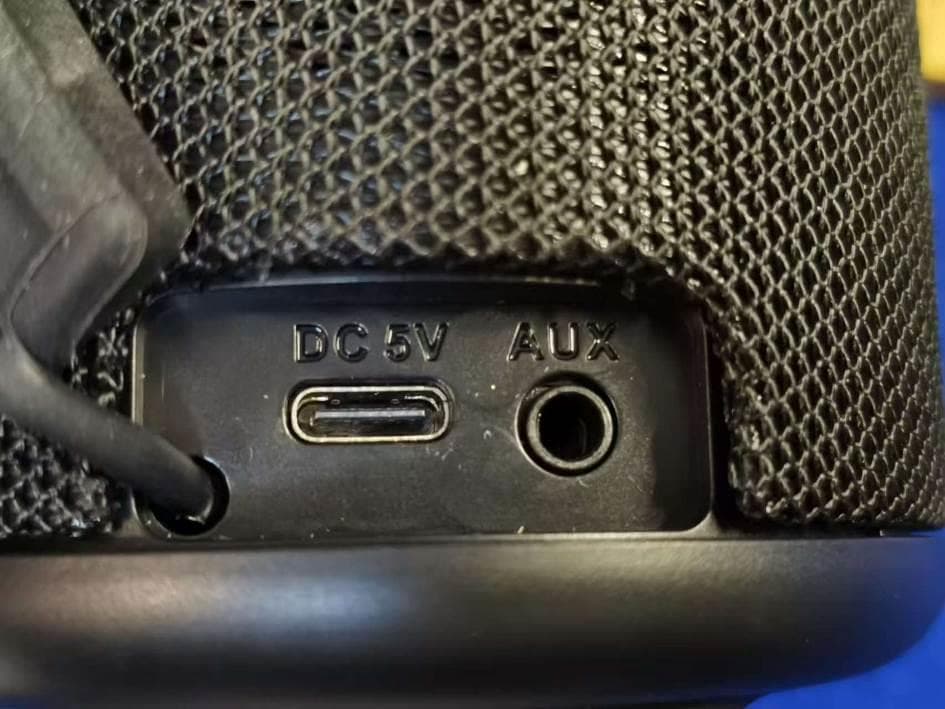
2AB4KMTYH8129
Oct 08, 2024SMALL RUBBER FINISH BLUETOOTH SPEAKER WITH CLOTH TRIM-FM RADIO
Equipment Class
DSS - Part 15 Spread Spectrum Transmitter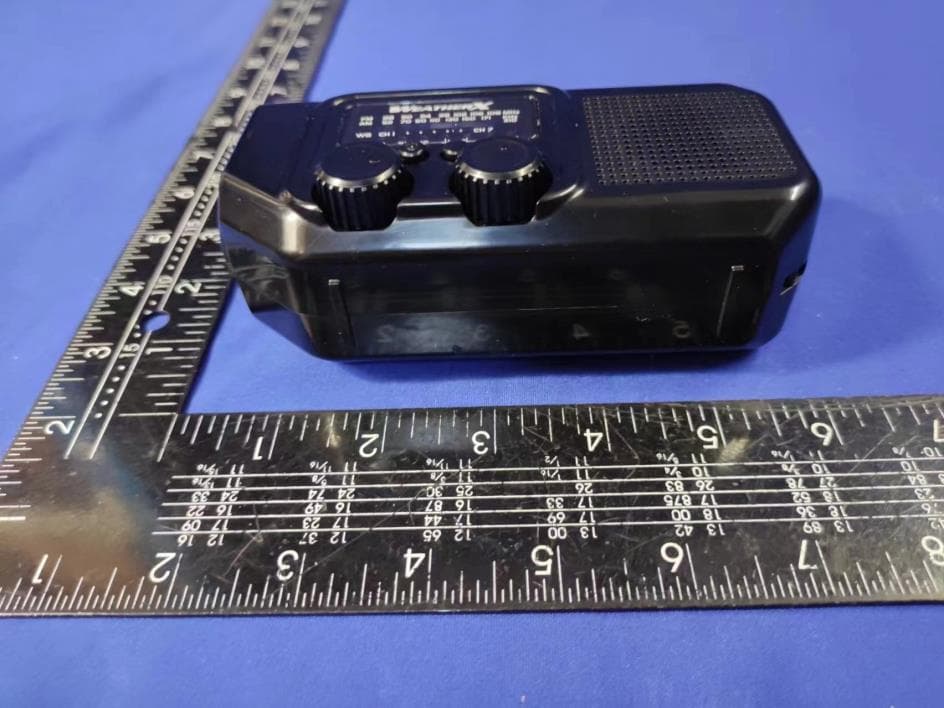
2AB4KMTYH7018
Jul 28, 2024NOAA Weatherband AM/FM radio with Bluetooth and Flashlight
Equipment Class
DSS - Part 15 Spread Spectrum Transmitter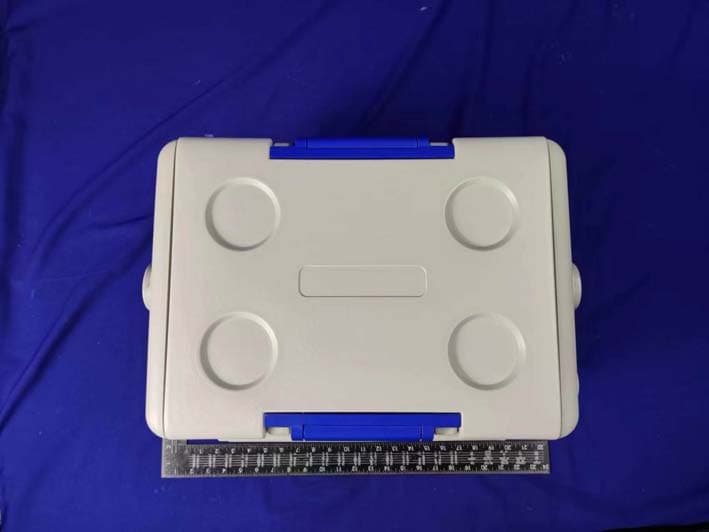
2AB4KMTYH8258
Jun 19, 2024SUNCOOLER+ WIRELESS SPEAKER SYSTEM WITH 22QT COOLER
Equipment Class
DSS - Part 15 Spread Spectrum Transmitter
2AB4K363901TV
Jun 16, 20249 INCH PORTABLE SWIVEL TV/DVD PLAYER COMBO
Equipment Class
DSS - Part 15 Spread Spectrum Transmitter
2AB4KMTYH1591
Aug 19, 2023BROADWAY Desktop CD Bluetooth Jukebox
Equipment Class
DSS - Part 15 Spread Spectrum Transmitter