2AJN9-BTC002Crazy Duo Battle
U2O GLOBAL CO.,LTD.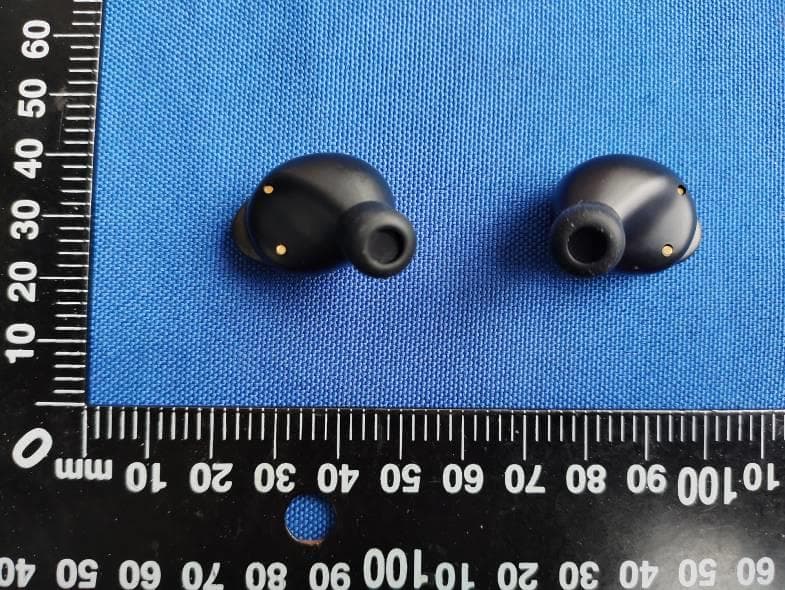
Click to zoom
Application Details
- Equipment Class
- DSS - Part 15 Spread Spectrum Transmitter
- Date of Grant
- Mar 26, 2020
- Application Purpose
- Original Equipment
- Date of Application
- Mar 26, 2020
- Equipment Note
- Crazy Duo Battle
- Frequency Range
- 2402.00000000 - 2480.00000000
- Company
- U2O GLOBAL CO.,LTD.
- Country
- China
Documents & Files
Document Text
Text extracted from the exhibit documents filed with the FCC. Open a document above to read the original.
Users Manual
Welcome Guide 使用说明书 | user's manual | Manuel d'utilisation Bedienungsanleitung | Manuale d’istruzione Manual de instrucciones | 取扱説明書 初次使用|First time to use| 初めて使う |Erster Gebrauch|Première utilisation |Primer uso|Primo utilizzo 功能概述|Functional Overview| 機能の概要 |Funktionsübersicht|Aperçu des fonctions |Generalidad de funciones|Introduzione funzionale 1:开机关机|Turn on/off|電源を入れて電源を切る| Ein-und ausschalten| Allumer et éteindre | Encender y apagar|Accensione e spegnimento 2:按键功能|Touch key function|キー機能|Tastenfunktionen|Fonctions des touches |Función de botón|Funzione del pulsante 为耳机充电|Charge the earphone| |Laden Sie die Kopfhörer auf |Charger les écouteurs|Cargar los auriculares|Ricaricare gli auricolari 耳机状态指示灯|Indicator lamp|ヘッドセットステータスインジケータ|Headset- Statusanzeige|Indicateur d'état du casque|Indicador de estado del auricular |Indicatore di stato delle cuffie 为充电盒充电|Charge the charging box| |Laden Sie die Ladebox auf|Charger le boîtier de charge|Cargar la caja de carga |Ricaricare la scatola Richtige Trageform: 错误的佩戴方式|The wrong way of wearing| |Falsche Trageform |Façon incorrecte de port |Formaincorrecta de llevar|Scorretto modo di indossare 警告|Warning|Warnung|Avertissement|Advertencia|Avvertenza 电量水平|Power level| |Batterieleistung|Niveau de la batterie |Nivel de volumen|Carico 耳机基本参数|Detail information| |Grundparameter des Kopfhörers |Paramètres de base des écouteurs|Parámetros básicos de auriculares|Parametri di base degli auricolari 问题与解答|Questions and Answers|Questions et réponses|Fragen und Antworten |Preguntas y respuestas|Domande e Risposte Q: 为何“Crazy Duo Battle"会出现声音信号延迟 A:由于耳机是通过蓝牙信号来进行传输的,在磁场较强的环境里,因为磁场干扰会产生声音信号延迟, 须要避免在这种环境使用。如远离此环境后,仍然出现声音信号延迟,请进行重置。 Q: 如何对“Crazy Duo Battle"进行重置? A:请断开蓝牙连接,将左右耳机放回充电盒并盖上盖子,待左右耳机的指示灯亮起后取出,同时三击, 完成重置 Q:How to reset "Crazy Duo Battle"? A:Please disconnect the bluetooth, put the put the left and right earphones back into the charging box and cover them. After the indicator lights of the left and right earphones are turned on, take them out, Click 3 times at the same time,and reseting is done. Q: 「Crazy Duo Battle」をリセットする方法は? A:ブルートゥースの接続をオフにし、左右のイヤホンを充電ケースに戻して蓋をします。左右のイヤ ホンのランプが点灯したら、同時に3回クリック,イヤホンを取り出してリセットは完了します。 Q: 「Crazy Duo Battle」が音声の信号遅延が生じたのはなぜですか。 A:イヤホンはブルートゥースを通じて伝送されるため、磁界の強い環境では、磁界干渉による音声の 信号遅延が発生するため、このような環境での使用を避ける必要があります。このような環境から離れ ても音声信号の遅延が発生している場合は、リセットしてください。 Q : Comment réinitialiser les «Crazy Duo Battle» ? R : Coupez la connexion Bluetooth, remettez les écouteurs gauche et droit dans le boîtier de charge et fermez le couvercle, retirez-les une fois que les indicateurs des écouteurs gauche et droit sont allumés,Cliquez 3 fois en même temps, la réinitialisation est terminée. Q: Pourquoi « Crazy Duo Battle» présente un retard dans le signal sonore La transmission des R:écouteurs est assurée par des signaux Bluetooth, dans un champ magnétique puissant, les interfé- rences de champ magnétique causent un retard du signal sonore, il faut de éviter des les utiliser dans un tel environnement. Si le retard du signal sonore persiste après avoir quitté cet environne- ment, réinitialisez-le. F: Wie setze ich "Crazy Duo Battle" zurück? A: Bitte trennen Sie die Bluetooth-Verbindung, stecken Sie den linken und den rechten Kopfhörer wieder in die Ladebox und decken Sie sie ab. Nehmen Sie sie dann heraus, nachdem die Anzeige- lampen des linken und des rechten Kopfhörers eingeschaltet wurden, Klicken Sie dreimal gleichz- eitig auf,und setzen Sie sie zurück. F: Warum hat "Crazy Duo Battle" eine Tonsignalverzögerung? A: Da Kopfhörer in einer Umgebung mit starken Magnetfeldern über Bluetooth-Signale übertragen werden und die Magnetfeldstörung eine Tonsignalverzögerung hervorruft, muss die Verwendung in dieser Umgebung vermieden werden. Wenn das Tonsignal außerhalb dieser Umgebung immer noch verzögert ist, setzen Sie es zurück. P: ¿Cómo restablecer el "Crazy Duo Battle"? R: Desconecte la conexión Bluetooth, vuelva a colocar los auriculares izquierdo y derecho en la caja de carga y cierre la cubierta. Después de encender los auriculares izquierdo y derecho, Fare clic 3 volte allo stesso tempo,quítelos y complete el restablecimiento. P: ¿Por qué hay un retardo en la señal de sonido en "Crazy Duo Battle"? R: Por motivo de que los auriculares se transmiten a través de la señal de Bluetooth, si queda en un campo magnético fuerte, la interferencia de la señal magnética causará un retraso en la señal de sonido, y es necesario evitar su uso en dicho entorno. Si sigue retraso de señal y sonido aunque ya está lejos de este entorno, reinícielo. Q: Come ripristinare "Crazy Duo Battle"? A: A: Si prega di scollegare la connessione Bluetooth, rimettere gli auricolari sinistro e destro nella scatola di ricarica e chiudere il coperchio Dopo aver acceso le spie degli auricolari sinistro e destro, rimuoverli e contemporaneamente fare triplo clic per completare il ripristino. Q: Perché esiste il ritardo del segnale sonoro di "Crazy Duo Battle" A: Dato che le cuffie emettono il segnale mediante Bluetooth, nell'ambiente magnetico dove il segnale sonoro è disturbato e ritardato,è necessario evitare il loro utilizzo. In caso di ritardo del segnale sonoro anche al posto lontano da tale ambiente, è necessario il ripristino. Q: Why is there a delay in the sound signal of "Crazy Duo Battle"? A: Since the earphones are transmitted via Bluetooth signals, in a strong magnetic field, the mag- netic signal interference will cause a delay in the sound signal, and it is necessary to avoid using it i n such an environment. If you are away from this environment, the sound signal delay still occurs, please reset it. 使用安全说明|Security instructions| |Anweisungen zur sicheren Verwendung|Instructions d'utilisation en toute sécurité|Instrucciones para uso de seguridad|Istruzione dell’utilizzo in sicurezza 单击|Click once| |Ein einziger Klick|Simple clic|Haga un clic|Singolo clic 双击|Click twice|ダブル|Doppelklick|Double clic|Haga doble clic|Doppio clic Carte de garantie | Garantiekarte | Scheda di …
Text truncated - open the document above for the full version.
Cover Letter(s)
CONFIDENTIALITY REQUEST for Certification Service in USA Federal Communication Commission Equipment Authorization Division, Application Processing Branch 7435 Oakland Mills Road Columbia, MD 21046 Date: 2020/03/24 TO WHOM IT MAY CONCERN Pursuant to Paragraphs §0.457 and 0.459 of the Commission’s Rules (47 C.F.R.) and Section §552(b)(4) of the Freedom of Information Act, we requests confidentiality for the following products: FCC ID Model name 2AJN9-BTC002 BTC002 For the product stated above, we request that the following information be held confidential; Exhibits Long-Term Confidentiality Short-Term Confidentiality Short-Term Confidentiality Days External Photos Internal Photos Block Diagram Schematics Test Setup Photos User’s Manual Parts List Tune Up Operational Descriptions The long-term confidentiality exhibits contain our trade secrets and proprietary information that could be of benefit to our competitors. The short-term confidentiality on the basis of ensuring that business sensitive information remains confidential until the actual marketing of our new device. If you have any questions, please feel free to contact me at the address shown below. Sincerely, Name: Zhide Wu Company: U2O GLOBAL CO.,LTD. Address: Huanzhu Road No.385, 4 Floor, Jimei District ,Xiamen, China Phone: +860592-5743537 Fax: +860592-5753736 E-Mail: [email protected]
Cover Letter(s)
U2O GLOBAL CO.,LTD. Huanzhu Road No.385, 4 Floor, Jimei District ,Xiamen, China Tel: +860592-5743537 Fax: +860592-5753736 Federal Communications Commission Authorization and Evaluation Division Equipment Authorization Branch 7435 Oakland Mills Road Columbia, MD 21046 3/24/2020 To whom it may concern: We, U2O GLOBAL CO.,LTD. the undersigned, hereby authorize Eurofins Product Service GmbH to act on our behalf in all matters relating to applications for equipment authorization FCC ID: 2AJN9- BTC002 including the signing of all documents related to these matters. Any and all acts carried out by Eurofins Product Service GmbH on our behalf shall have the same effect as acts of our own. We also hereby certify that no party to this application is subject to a denial of benefits, including FCC benefits, pursuant to Section 5301 of the Anti-Drug Abuse Act of 1988, 21 U.S.C. 862. Sincerely, Name: Zhide Wu Company: U2O GLOBAL CO.,LTD. Address: Huanzhu Road No.385, 4 Floor, Jimei District ,Xiamen, China Phone: +860592-5743537 Fax: +860592-5753736 E-Mail: [email protected]
External Photos
Charge Base
ID Label/Location Info
2AJN9-BTC002
Internal Photos
BT antenna
RF Exposure Info
RF Exposure evaluation FCC ID: 2AJN9-BTC002 1.1. Applicable Standard According to §1.1307(b)(1), systems operating under the provisions of this section shall be operated in a manner that ensures that the public is not exposed to radio frequency energy level in excess of the Commission’s guidelines. According to §1.1310 and §2.1093 RF exposure requirement KDB447498 v06: Mobile and Portable Devices RF Exposure Procedures and Equipment Authorization Policies 1.2. Requirement According to KDB447498 D01 General RF Exposure Guidance v06 Section 4.3.1 Standalone SAR test exclusion considerations: “Unless specifically required by the published RF exposure KDB procedures, standalone 1-g head or body and 10-g extremity SAR evaluation for general population exposure conditions, by measurement or numerical simulation, is not required when the corresponding SAR Test Exclusion Threshold condition, listed below, is satisfied. These test exclusion conditions are based on source-based time-averaged maximum conducted output power of the RF channel requiring evaluation, adjusted for tune-up tolerance, and the minimum test separation distance required for the exposure conditions.22 The minimum test separation distance is determined by the smallest distance from the antenna and radiating structures or outer surface of the device, according to the host form factor, exposure conditions and platform requirements, to any part of the body or extremity of a user or bystander (see 5) of section 4.1). To qualify for SAR test exclusion, the test separation distances applied must be fully explained and justified by the operating configurations and exposure conditions of the transmitter and applicable host platform requirements, typically in the SAR measurement or SAR analysis report, according to the required published RF exposure KDB procedures. When no other RF exposure testing or reporting is required, a statement of justification and compliance must be included in the equipment approval, in lieu of the SAR report, to qualify for the SAR test exclusion. When required, the device specific conditions described in the other published RF exposure KDB procedures must be satisfied before applying these SAR test exclusion provisions; for example, handheld PTT two-way radios, handsets, laptops & tablets etc.23 “ [(max. power of channel, including tune-up tolerance, mW)/ (min. test separation distance, mm)] · [√f (GHz)] ≤ 3.0 for 1-g SAR and ≤ 7.5 for 10-g extremity SAR, where: • f (GHz) is the RF channel transmit frequency in GHz • Power and distance are rounded to the nearest mW and mm before calculation • The result is rounded to one decimal place for comparison • 3.0 and 7.5 are referred to as the numeric thresholds in the step 2 below The test exclusions are applicable only when the minimum test separation distance is ≤ 50 mm and for transmission frequencies between 100 MHz and 6 GHz. When the minimum test separation distance is < 5 mm, a distance of 5 mm according to 5) in section 4.1 is applied to determine SAR test exclusion. 1.3. Manufacturing tolerance GFSK Channel Channel 00 Channel 39 Channel 78 Target (dBm) 3.0 3.0 3.0 Tolerance ±(dB) 1.0 1.0 1.0 π/4DQPSK Channel Channel 00 Channel 39 Channel 78 Target (dBm) 2.0 2.0 2.0 Tolerance ±(dB) 1.0 1.0 1.0 8DPSK Channel Channel 00 Channel 39 Channel 78 Target (dBm) 2.0 2.0 2.0 Tolerance ±(dB) 1.0 1.0 1.0 2. E v a l u a t i o n R e s u l t Evaluation Results Band/Mode f (GHz) Antenna Distance (mm) RF output power (including tune-up tolerance) SAR Test Exclusion Threshold SAR Test Exclusion dBm mW BT 2.480 5 4.0 2.512 0.8<3.0 Yes 3. C o n c l u s i o n The measurement results comply with the FCC Limit per 47 CFR 2.1093 for the uncontrolled RF Exposure and SAR Exclusion Threshold per KDB 447498 v06, No SAR is required. .....................End.........................
Test Report
Shenzhen Global Test Service Co.,Ltd. No.7-101 and 8A-104, Building 7 and 8, DCC Cultural and Creative Garden, No.98, Pingxin North Road, Shangmugu Community, Pinghu Street, Longgang District, Shenzhen, Guangdong FCC PART 15 SUBPART C TEST REPORT FCC PART 15.247 Report Reference No. ..................... : FCC ID. ............................................ : GTS20200324013-1-12 2AJN9-BTC002 Compiled by ( position+printed name+signature) .. : File administrators Jimmy Wang Supervised by ( position+printed name+signature) .. : Test Engineer Aaron Tan Approved by ( position+printed name+signature) .. : Manager Jason Hu Date of issue ..................................... : Mar. 19, 2020 Representative Laboratory Name .: Shenzhen Global Test Service Co., Ltd. Address ............................................ : No.7-101 and 8A-104, Building 7 and 8, DCC Cultural and Creative Garden, No.98, Pingxin North Road, Shangmugu Community, Pinghu Street, Longgang District, Shenzhen, Guangdong Applicant’s name ............................ : U2O GLOBAL CO.,LTD. Address ............................................ : Huanzhu Road No.385, 4 Floor,Jimei District, Xiamen, China. Test specification ...........................: Standard ........................................... : FCC Part 15.247 TRF Originator .................................. : Shenzhen Global Test Service Co.,Ltd. Master TRF ....................................... : Dated 2014-12 Shenzhen Global Test Service Co.,Ltd. All rights reserved. This publication may be reproduced in whole or in part for non-commercial purposes as long as the Shenzhen Global Test Service Co.,Ltd. is acknowledged as copyright owner and source of the material. Shenzhen Global Test Service Co.,Ltd. takes no responsibility for and will not assume liability for damages resulting from the reader's interpretation of the reproduced material due to its placement and context. Test item description .....................: Crazy Duo Battle Trade Mark ....................................... : iWALK Manufacturer .................................... : U2O GLOBAL CO.,LTD. Model/Type reference....................... : BTC002 Listed Models .................................. : N/A Modulation Type ............................... : GFSK, Π/4DQPSK, 8DPSK Operation Frequency ........................ : From 2402MHz to 2480MHz Rating ............................................... : DC3.6V from battery Result................................................ : PASS Report No.: GTS20200324013-1-12 Page 2 of 48 T E S T R E P O R T Test Report No. : GTS20200324013-1-12 Mar. 19, 2020 ____________________________________________________________________________________ Date of issue Equipment under Test : Crazy Duo Battle Model /Type : BTC002 Listed Models : N/A Applicant : U2O GLOBAL CO.,LTD. Address : Huanzhu Road No.385, 4 Floor,Jimei District, Xiamen, China. Manufacturer : U2O GLOBAL CO.,LTD. Address : Huanzhu Road No.385, 4 Floor,Jimei District, Xiamen, China. Test Result: PASS The test report merely corresponds to the test sample. It is not permitted to copy extracts of these test result without the written permission of the test laboratory. Report No.: GTS20200324013-1-12 Page 3 of 48 Contents 1 T E S T S T A N D A R D S ................................................................. 4 2 S U M M A R Y ............................................................................ 5 2.1 General Remarks 5 2.2 Product Description 5 2.3 Equipment Under Test 5 2.4 Short description of the Equipment under Test (EUT) 5 2.5 EUT operation mode 6 2.6 Block Diagram of Test Setup 6 2.7 Related Submittal(s) / Grant (s) 6 2.8 Modifications 6 3 T E S T E N V I R O N M E N T .............................................................. 7 3.1 Address of the test laboratory 7 3.2 Test Facility 7 3.3 Environmental conditions 7 3.4 Summary of measurement results 8 3.5 Statement of the measurement uncertainty 8 3.6 Equipments Used during the Test 9 4 T E S T C O N D I T I O N S A N D R E S U L T S ........................................... 10 4.1 AC Power Conducted Emission 10 4.2 Radiated Emission 13 4.3 Maximum Peak Output Power 20 4.4 20dB Bandwidth 21 4.5 Frequency Separation 25 4.6 Number of hopping frequency 27 4.7 Time of Occupancy (Dwell Time) 29 4.8 Out-of-band Emissions 33 4.9 Pseudorandom Frequency Hopping Sequence 41 4.10 Antenna Requirement 42 5 P H O T O S O F T H E E U T ........................................................... 43 Report No.: GTS20200324013-1-12 Page 4 of 48 1 T E S T S T A N D A R D S The tests were performed according to following standards: FCC Rules Part 15.247: Frequency Hopping, Direct Spread Spectrum and Hybrid Systems that are in operation within the bands of 902-928 MHz, 2400-2483.5 MHz, and 5725-5850 MHz. ANSI C63.10-2013: American National Standard for Testing Unlicensed Wireless Devices Report No.: GTS20200324013-1-12 Page 5 of 48 2 S U M M A R Y 2.1 General Remarks Date of receipt of test sample : Mar. 03, 2020 Testing commenced on : Mar. 10, 2020 Testing concluded on : Mar. 18, 2020 2.2 Product Description Product Name: Crazy Duo Battle Model/Type reference: BTC002 Power supply: DC3.6V from battery Adapter(Auxiliary test Provided by the laborator) Mode:EP-TA20CBC Input:AC100-240V-50/60Hz,0.5A Output:DC 5V,2A Bluetooth : Supported Type: Bluetooth BR/EDR Modulation: GFSK, π/4DQPSK, 8DPSK Operation frequency: 2402MHz~2480MHz Channel number: 79 Channel separation: 1MHz Antenna type: FPC antenna Antenna gain: 0 dBi 2.3 Equipment Under Test Power supply system utilised Power supply voltage : ○ 230V / 50 Hz ○ 120V / 60Hz ○ 12 V DC ○ 24 V DC ● Other (specified in blank below) DC3.6V from battery 2.4 Short description of the Equipment under Test (EUT) This is a Crazy Duo Battle. For more details, refer to the user’s manual of the EUT. Report No.: GTS20200324013-1-12 Page 6 of 48 2.5 EUT operation mode The Applicant provides communication tools software(AWRDLAB_R_1_0_3_…
Text truncated - open the document above for the full version.
Test Report
Report No.: GTS20200324013-1-12 Page 36 of 48 π/4DQPSK CH39 π/4DQPSK CH78 Reference Reference 30MHz-3GHz 30MHz-3GHz 3GHz-25GHz 3GHz-25GHz Report No.: GTS20200324013-1-12 Page 37 of 48 8DPSK CH00 8DPSK CH39 Reference Reference 30MHz-3GHz 30MHz-3GHz 3GHz-25GHz 3GHz-25GHz Report No.: GTS20200324013-1-12 Page 38 of 48 8DPSK CH78 Reference 30MHz-3GHz 3GHz-25GHz Report No.: GTS20200324013-1-12 Page 39 of 48 Band-edge Measurements for RF Conducted Emissions: GFSK Left Band edge hoping off Right Band edge hoping off Left Band edge hoping on Right Band edge hoping on π/4DQPSK Left Band edge hoping off Right Band edge hoping off Report No.: GTS20200324013-1-12 Page 40 of 48 Left Band edge hoping on Right Band edge hoping on 8DPSK Left Band edge hoping off Right Band edge hoping off Left Band edge hoping on Right Band edge hoping on Report No.: GTS20200324013-1-12 Page 41 of 48 4.9 Pseudorandom Frequency Hopping Sequence TEST APPLICABLE For 47 CFR Part 15C section 15.247 (a) (1) requirement: Frequency hopping systems shall have hopping channel carrier frequencies separated by a minimum of 25 kHz or the 20 dB bandwidth of the hop-ping channel, whichever is greater. Alternatively, frequency hopping systems operating in the 2400–2483.5 MHz band may have hopping channel carrier frequencies that are separated by 25 kHz or two-thirds of the 20 dB bandwidth of the hopping channel, whichever is greater, provided the systems operate with an output power no greater than 125 mW. The system shall hop to channel frequencies that are selected at the system hopping rate from a pseudo randomly ordered list of hopping frequencies. Each frequency must be used equally on the average by each transmitter. The system receivers shall have input bandwidths that match the hop-ping channel bandwidths of their corresponding transmitters and shall shift frequencies in synchronization with the transmitted signals. EUT Pseudorandom Frequency Hopping Sequence Requirement The pseudorandom frequency hopping sequence may be generated in a nice-stage shift register whose 5 th and 9 th stage outputs are added in a modulo-two addition stage. And the result is fed back to the input of the first stage. The sequence begins with the first one of 9 consecutive ones, for example: the shift register is initialized with nine ones. ● Number of shift register stages:9 ● Length of pseudo-random sequence:29-1=511 bits ● Longest sequence of zeros:8(non-inverted signal) An example of pseudorandom frequency hopping sequence as follows: Each frequency used equally one the average by each transmitter. The system receiver have input bandwidths that match the hopping channel bandwidths of their corresponding transmitter and shift frequencies in synchronization with the transmitted signals. Report No.: GTS20200324013-1-12 Page 42 of 48 4.10 Antenna Requirement Standard Applicable For intentional device, according to FCC 47 CFR Section 15.203, an intentional radiator shall be designed to ensure that no antenna other than that furnished by the responsible party shall be used with the device. And according to FCC 47 CFR Section 15.247 (c), if transmitting antennas of directional gain greater than 6dBi are used, the power shall be reduced by the amount in dB that the directional gain of the antenna exceeds 6dBi. Refer to statement below for compliance The manufacturer may design the unit so that the user can replace a broken antenna, but the use of a standard antenna jack or electrical connector is prohibited. Further, this requirement does not apply to intentional radiators that must be professionally installed. Antenna Connected Construction The maximum gain of antenna was 0dBi. Report No.: GTS20200324013-1-12 Page 43 of 48 5 T e s t S e t u p P h o t o s o f t h e E U T Report No.: GTS20200324013-1-12 Page 44 of 48 6 P h o t o s o f t h e E U T External Photos of EUT Charge Base Report No.: GTS20200324013-1-12 Page 45 of 48 Report No.: GTS20200324013-1-12 Page 46 of 48 Report No.: GTS20200324013-1-12 Page 47 of 48 Internal Photos of EUT BT antenna Report No.: GTS20200324013-1-12 Page 48 of 48 ********************** End of Report **********************
Contact Information
Applicant
Zhide Wu(Engineering Manager)
Test Firm
Shenzhen LCS Compliance Testing Laboratory Ltd.Gavin Liang
Technical Specifications
| # | Rule Parts | Frequency Range | Power Output |
|---|---|---|---|
| 1 | 15C | 2.40 GHz - 2.48 GHz | 2.50 mW |
Other Applications from U2O GLOBAL CO.,LTD.
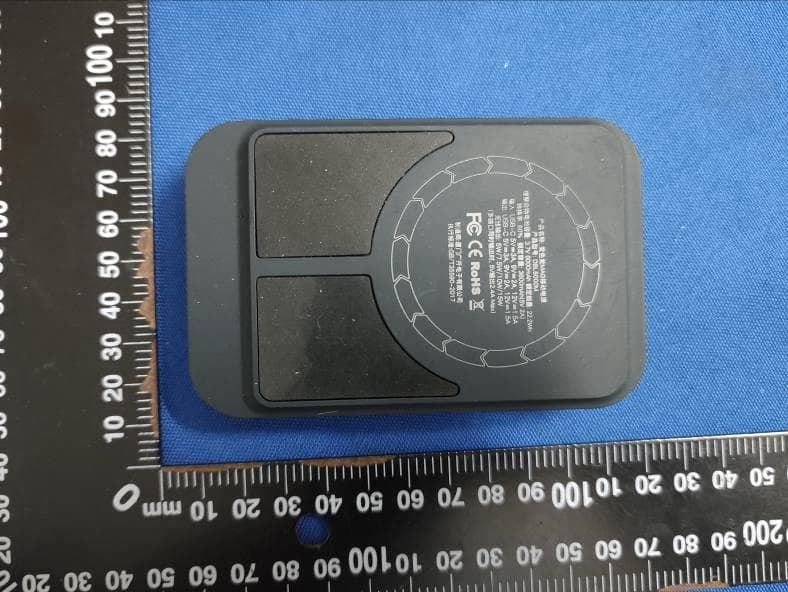
2AJN9-DBL6000M
Jul 09, 2021PowerGrip Mag
Equipment Class
DCD - Part 15 Low Power Transmitter Below 1705 kHz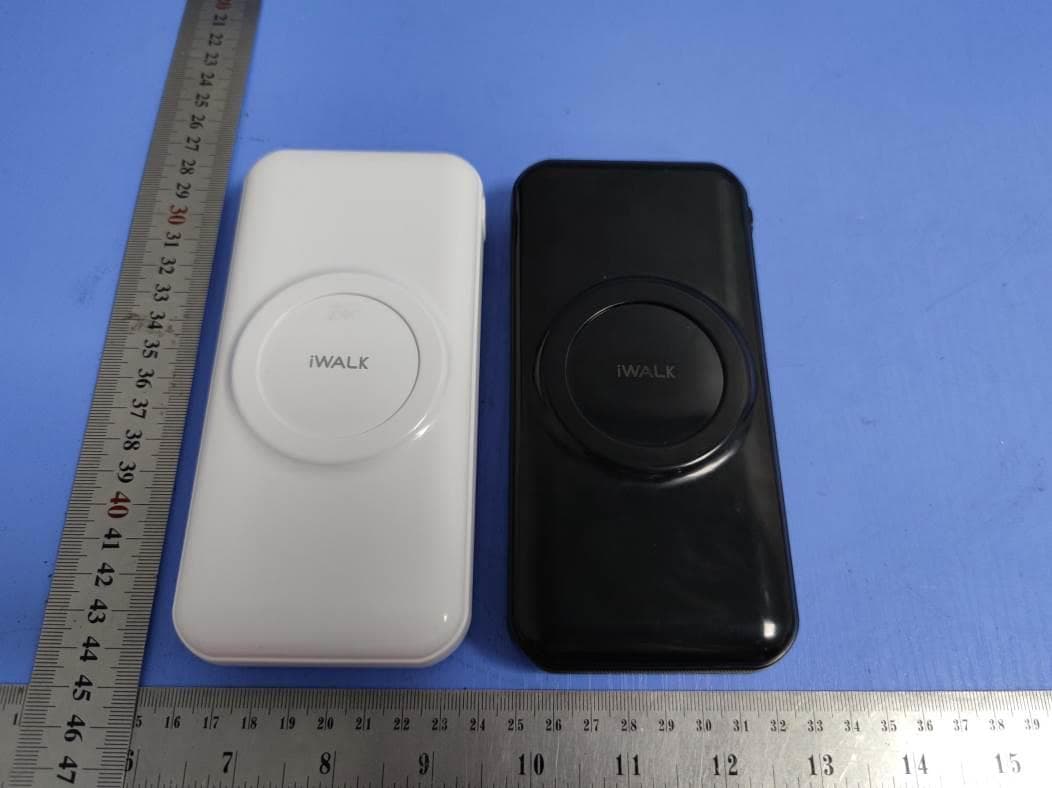
2AJN9-UBP20000M
Jun 02, 2021Power Stand Mag
Equipment Class
DCD - Part 15 Low Power Transmitter Below 1705 kHz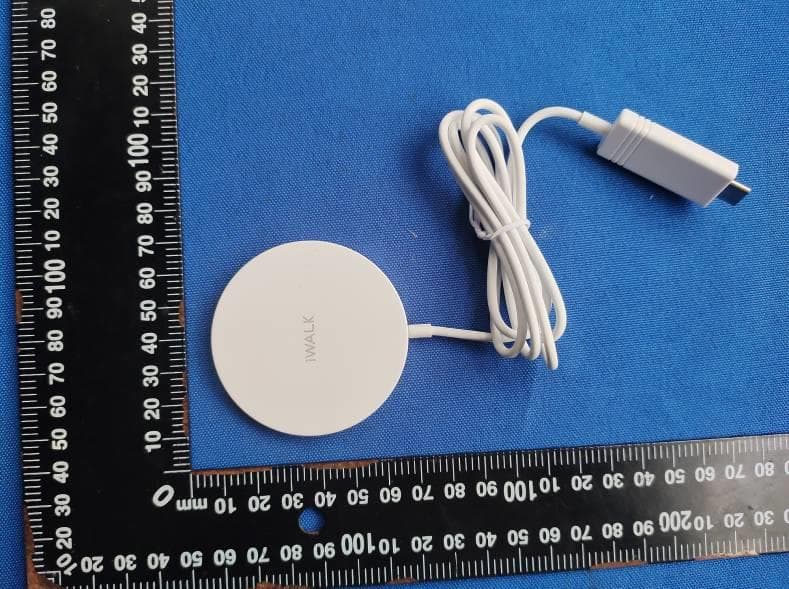
2AJN9-MCC010L
Jan 05, 2021Crazy Cable Maglite, Carzy cable mag
Equipment Class
DCD - Part 15 Low Power Transmitter Below 1705 kHz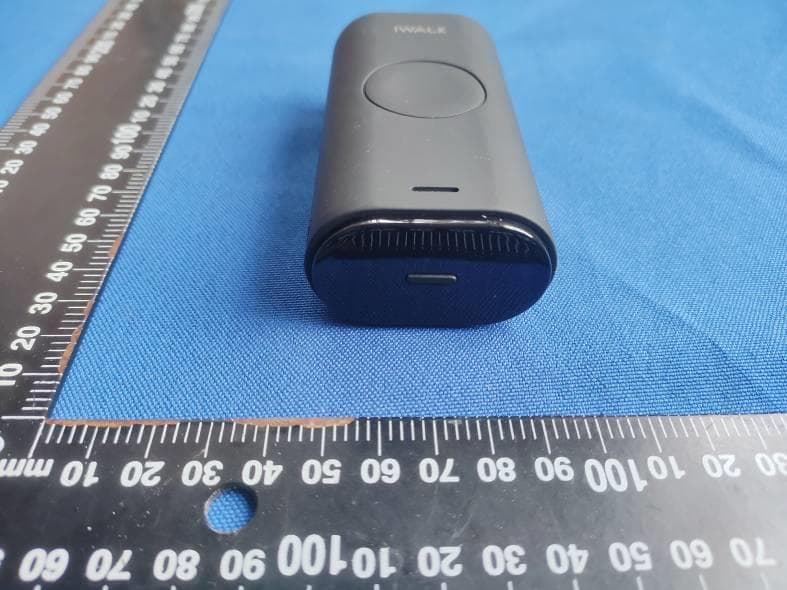
2AJN9-DBL9000W
Nov 15, 2020Link Me Watch
Equipment Class
DCD - Part 15 Low Power Transmitter Below 1705 kHz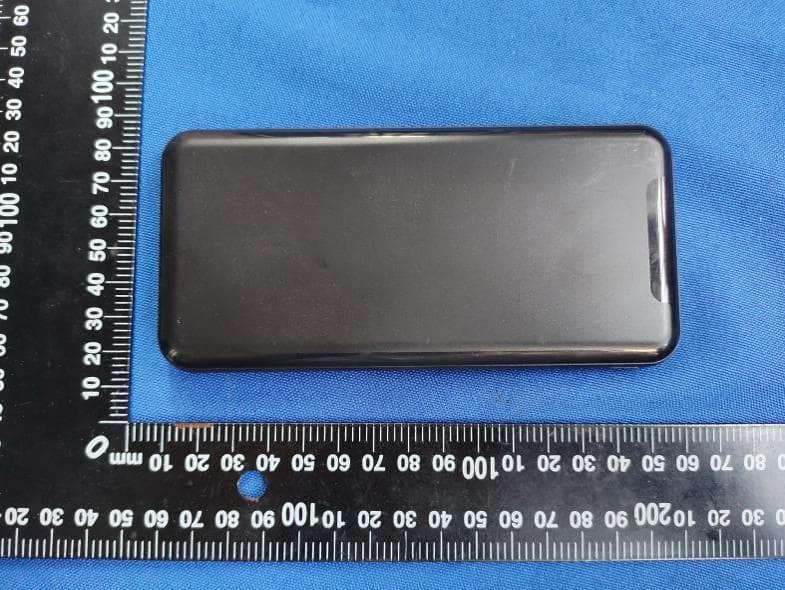
2AJN9-UBC10000PA
May 13, 2020Power Cling
Equipment Class
DCD - Part 15 Low Power Transmitter Below 1705 kHz