A3LSCHN100Dual Mode Cellular Phone (AMPS/CDMA)
Samsung Electronics Co Ltd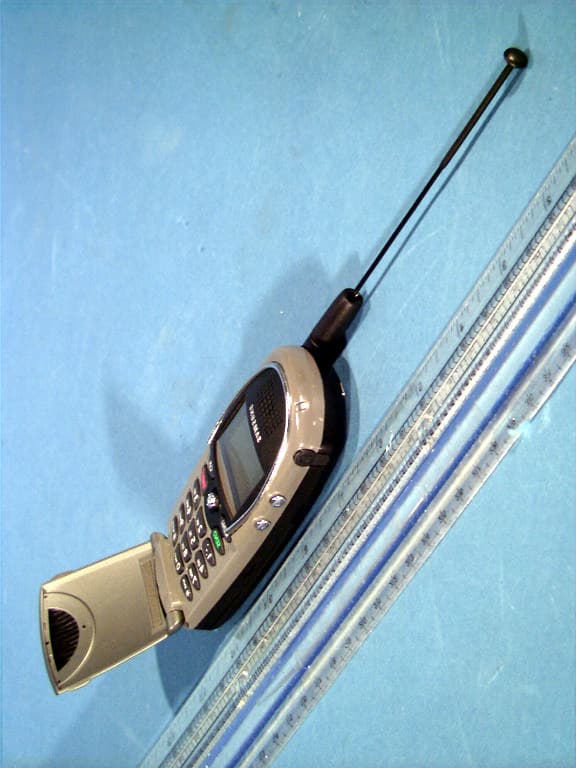
Click to zoom
Application Details
- Equipment Class
- TNE - Licensed Non-Broadcast Transmitter Held to Ear
- Date of Grant
- Sep 12, 2000
- Application Purpose
- Original Equipment
- Date of Application
- Jun 12, 2000
- Equipment Note
- Dual Mode Cellular Phone (AMPS/CDMA)
- Frequency Range
- 824.70000000 - 848.31000000
- Company
- Samsung Electronics Co Ltd
- Country
- United States
Documents & Files
Document Text
Text extracted from the exhibit documents filed with the FCC. Open a document above to read the original.
Users Manual
User Guide ELECT ELECTRONICS GH00-000000 ‘2000/3. Rev. 1. 1 Series CDMA DIGITAL CELLULAR TELEPHONE SCH-N100(eng) 4/6/00 11:53 AM 3 Setting the Language of the Display 45 Displaying your phone’s Hardware and Software Version 46 Alarm 47 Setting the Alarm 47 To Change the Alarm Setting 48 To Cancel the Alarm 48 Sounds 49 Key Beep Volume Setting 49 Ringer Options 50 One-Touch Vibrate Ringer 50 Fast Ringer Mute 50 Ring type setting for Data and Fax Calls 51 Ring Volume Setting for all Incoming Calls 51 Differential Ring 53 Voice-Activated Dialing 54 Tips on Recording Names 54 Program the Phone for Voice-Activated Dialing 55 Voice Dialing Activation 56 Placing a Call using Voice Dialing 57 Reviewing Voice Dialing Entries 57 Erasing Voice Dialing Entries 58 Message Services 59 Incoming Messages 59 Incoming Message Memory Capacity 59 Reviewing Incoming Page,Text,or Browser Messages 60 Incoming Message Ringer 61 Incoming Messages and Lock Mode 61 Options when Reviewing Incoming Messages 61 Erasing Inbox Messages 62 Voicemail 63 Setting up your Voicemail 63 Reviewing Voicemail Messages 63 2 Call Forwarding 27 Call Waiting 28 Answering a Call Waiting Call 28 Missed Calls 29 Dropped Calls 29 Failed Calls 29 Prepend Dialing 30 Emergency Dialing 31 Pause Dialing 32 Storing Pauses in a Phone Book Entry 32 Pause Dialing From a Stored Phone Book Entry 33 Manual Pause Dialing 33 Basic Setup of Your Phone 34 Automatic Retry 34 Automatic Answer 34 Automatic Hyphenation 35 Answer Options 35 Tone Length Setting 36 Setting the Time 36 Setting Your NAM 37 System Selection 38 How to Setup For a Voice,Data,or Fax Call 39 How to Setup the Web Browser Prompts 39 Audible Alerts 40 Minute Beep 40 Service Alert 40 Connect Alert 41 Disconnect Alert 41 Display Options 43 Backlight Control 43 Personal Greeting 44 Animation Display 44 Displaying your own Phone Number 45 SCH-N100(eng) 4/6/00 11:53 AM Page 2 54 The Phone Book 64 Viewing Stored Entries 64 Storing Phone Numbers and Names 66 Storing phone numbers shortcuts 67 Storing phone numbers at the end of a call 67 Prepend a Phone Number 68 Adding a Name Ringer 69 Changing Your Phone Book 70 Editing Phone Book numbers 70 Secret Phone Book numbers 70 Erasing Phone Book Entries 71 Erasing the Phone Book 71 Set Speed Dial 71 Dialing numbers from your Phone Book 72 Memory Dialing Shortcuts 72 Your Phone’s Security Features 73 Lock Mode 73 Dialing in Lock Mode 73 Locking the Phone 74 Unlocking the Phone 75 Call Restriction Options 75 Lock Code Setting 76 Priority Numbers 77 Storing a Priority Number 77 Dialing Priority Numbers in Lock Mode 78 Personal Identification Number (PIN) 78 Erasing Your Phone Book (Clear Memory) 79 Hiding your Phone Number 79 Vocoder 80 Resetting Your Phone 81 Keeping Track of Your Calls 82 Displaying Your Call Logs 82 Erasing Call Logs 83 Reviewing Air Time 84 Scheduler 86 Today 86 View Month 88 Jump To Date 89 To Do List 90 Count Down 91 World Time 93 Calculator 94 Game 95 Fax and Data Calls 96 Receiving a Fax 96 Receiving a Data File 97 Sending a Fax or Data File 98 The Web Browser(WAP) 99 To Setup the Web Browser Prompts 99 Launching the Web Browser 100 To exit the Web Browser 101 The Web Browser Soft Keys 101 Navigating the Web Browser 102 Entering text,numbers,or symbols 104 Using Links 105 Initiating a Phone Call during a Web Browser Session 105 Receiving a phone call while in the Web Browser 105 Using Bookmarks 106 To Create a Bookmark 106 Finding a Bookmark 106 Orange Menu 107 Menus 108 Main Menu 108 In Use Menu 108 Navigating Menus 108 Your Phon’s Main Menu 109 SCH-N100(eng) 4/6/00 11:53 AM Page 4 98 Getting to Know Your Phone Getting to Know Your Phone (continued) 1. Active Flip Phone:Closing the phone will always end your call and turn off the backlight.There are several options you can set to happen when you open the phone. When opening the phone you can: u answer an incoming call.To set this option see “Answering a Call”on page 24. u voice dial someone.To set this option see“Voice Dialing Activation”on page 56. u control the backlight.To set this option see“Backlight Control”on page 43. 2. Backlight Display Screen:The Display screen contains two areas: u The top line displays indications about your phone’s operating mode (see “The Top Line of the Display”on page 16). u The lower area displays in-use information such as the call timer,the name and number of the other party (if available),Mute,Call Waiting,etc.Your menus also dis- play in the lower area. 3. Headset Connector:This is where you connect the optional headset.The headset includes an earpiece and microphone in a convenient,lightweight unit so you can converse without using your hands. u What you see in the illustration to the left is really the cover for the headset connector.Gently pry off the top of the cover to expose the headset connector. 3 DEF 1 5 JKL 6 MNO GHI 4 9 WXYZ PQRS 7 0 2 ABC . ' SEND END CLR 8 TUV Next MENU Shift Space OK OK Antenna Earpiece Display Screen CLR Key OK / Messages / Navigation Key End/Power Key Vibrator / Space Key Microphone Send Key Voice Dial / Shift Key Accessories Connector Menu Key Volume / Scroll Key Headset Connector LED Indicator SCH-N100(eng) 4/6/00 11:53 AM Page 8 11 8. OK / Messages / Navigation Key:This key per- forms several useful functions: u From Standby or Conversation mode,press it briefly to access the Messages Menu. u When entering a phone number,press it once to save the number to the Phone Book (then follow a few prompts). u When navigating a menu,press it to select the highlighted item. u When the alarm goes off,press it to silence the alarm. u In Standby or Conversation mode,Slide it up to view your Phone Book (in numerical order). u In Standby or Conversation mode,Slide it down to view your Phone Book (in alphabetical order). u In Standby mode,Slide it right to launch the Web Browser. u In Standby mode,Slide it left to launch the Scheduler. 10 4. Microphone: Your typical voice microphone for conversa- tion,but also accepts…
Text truncated - open the document above for the full version.
Attestation Statements
May 30, 2000 Federal Communications Commission Authorization and Evaluation Div. Equipment Authorization Branch 7435 Oakland Mills Road Columbia, MD 21046 To whom it may concern: We, the undersigned, hereby authorize PCTEST Engineering Laboratory Inc., to act as agent on behalf of all matters relating to applications for equipment authorization, including the signing of all documents relating to these matters. Any and all acts carried out by PCTEST Engineering Laboratory, Inc. on our behalf shall have the same effect as acts of our own. We also hereby certify that no party to this application is subject to a denial of benefits, including FCC benefits, pursuant to Section 5301 of the Anti-Drug Abuse Act of 1988,21 U.S.C.862. Sincerely, Wallace Oh Engineering Manager Samsung Electronics America May 30, 2000 Federal Communications Commission Authorization and Evaluation Div. Equipment Authorization Branch 7435 Oakland Mills Road Columbia, MD 21046 In re: Samsung Electronics Co., Ltd. FCC ID.:A3LSCHN100 Request for Confidentiality To whom it may concern: In accordance with 0.459 of CFR 47, Samsung Electronics Co., Ltd. requests confidentiality for the Block Diagram, Schematics, and Circuit Description of the attached test report. These documents contain detailed system and equipment description and related information about the product which Samsung Electronics Co., Ltd. considers to be proprietary, confidential, and a custom design and otherwise, would not release to the general public. Since this design is a basis from which future technological products will evolve, Samsung feels that this information would be of benefit to its competitors, and that the disclosure of the information in these documents would give our competitors an unfair advantage in the market. May 30, 2000 Federal Communications Commission Equipment Approval Services 7435 Oakland Mills Road Columbia, MD 21046 SUBJECT:FCC E911 REQUIREMENTS PER §22.921 Gentlemen: Samsung Electronics Co., Ltd. hereby certifies that the analog cellular telephone (FCC ID: A3LSCHN100), using the Automatic A/B Roaming – Intelligent Retry method, meets the E911 requirements specified in Section 22.921 of the FCC Rules. This procedure recognizes when a “9-1-1” call is made and, at such time, will override any programming in the mobile unit that determines the handling of a non-911 call and permit the call to be handled by other analog carriers. Should you have any questions or comments concerning the above, please contact the undersigned. AFFIDAVIT FOR ESN PROTECTION OF CELLULAR MOBILE TELEPHONES We hereby certify that the Portable Cellular Telephone (FCC ID:A3LSCHN100) is so designed that it complies with all the requirements for ESN protection specified in Sec. 22.919 of the FCC Rules. a) The transmitter in service has a unique ESN. b) The ESN host component is permanently attached to a main circuit board of the mobile transmitter and the integrity of the unit operating software cannot be altered. The ESN is plated from fraudulent contact and tampering. The ESN is encoded using multiplication by a polynomial and the ESN data programmed in the memory with other information. c) The ESN is factory set and cannot be altered, transferred, removed or otherwise able to be manipulated. Cellular mobile equipment is specifically designed such that any attempt to remove, tamper with, or change the ESN chip, its logic system, or firmware originally programmed by the manufacturer will render the mobile transmitter inoperative.
Cover Letter(s)
May 24, 2000 Federal Communications Commission Equipment Approval Services 7435 Oakland Mills Road Columbia, MD 21046 SUBJECT:SAMSUNG ELECTRONICS CO., LTD. FCC ID: A3LSCHN100 Part 22 Certification Gentlemen: Attached herewith, on behalf of SAMSUNG ELECTRONICS CO., LTD. is an application for Part 22 Certification of the following Dual-Mode Cellular Phone (AMPS/CDMA): FCC ID:A3LSCHN100 TRADE / MODEL(s):SAMSUNG SCH-N100, SCH-N102, SCH-N105 EUT TYPE:Non-Broadcast Transmitter held to ear (TNE) Tx Freq. Range:824.04 – 848.97 MHz (AMPS) 824.70 – 848.31 MHz (CDMA) Rx Freq. Range:869.04 – 893.97 MHz (AMPS) 869.70 – 848.31 MHz (CDMA) Max. RF Output Power:0.6 W ERP AMPS (27.76 dBm) 0.483 W ERP CDMA (26.83 dBm) Attached is the applicant’s Letter of Authorization, Confidentiality Request, ESN Affidavit, E911 Compliance Statement, measurement report data and plots, RF Exposure measurement report, FCC ID label and location, test setup photographs, internal and external photographs, block diagrams (confidential), schematic diagrams & circuit description (confidential), operational description, parts list & tune-up procedure, and the user's manual. Should you have any questions or comments concerning the above, please contact the undersigned. cc:Mr. Wallace Oh Engineering Manager SAMSUNG American QA Lab
Cover Letter(s)
September 8, 2000 Federal Communications Commission Equipment Approval Services 7435 Oakland Mills Road Columbia, MD 21046 Attn: Mr. Frank Coperich SUBJECT: SAMSUNG ELECTRONICS CO., LTD. FCC ID: A3LSCHN100 731 Confirmation No.: EA97885 Correspondence Reference No.: 15906 Request for Tech. Info.: 9/05/00 Dear Frank: Transmitted herewith, on behalf of Samsung Electronics Co., Ltd. is an amendment provided in response to the request for technical information dated September 5, 2000. 1. Please find attached, the re-uploaded test photos. 2. Attached are the peak SAR locations for head and body-worn operating configurations. 3. The correct RF exposure statement is the one that we submitted earlier, and will be placed towards the front of the users manual. (see attached). We trust this information is sufficient to issue the grant ASAP. If you have any further questions, please do not hesitate to contact us. cc: Samsung Electronics Co., Ltd.
External Photos
© 2000 PCTEST Lab FCC ID: A3LSCHN100 (3 Models) NVLAP Lab Code: 100431-0 SAMSUNG Dual-Mode Cellular Phone (AMPS /CDMA) © 2000 PCTEST Lab FCC ID: A3LSCHN100 (3 Models) NVLAP Lab Code: 100431-0 SAMSUNG Dual-Mode Cellular Phone (AMPS /CDMA) © 2000 PCTEST Lab FCC ID: A3LSCHN100 (3 Models) NVLAP Lab Code: 100431-0 SAMSUNG Dual-Mode Cellular Phone (AMPS /CDMA) © 2000 PCTEST Lab FCC ID: A3LSCHN100 (3 Models) NVLAP Lab Code: 100431-0 SAMSUNG Dual-Mode Cellular Phone (AMPS /CDMA) © 2000 PCTEST Lab FCC ID: A3LSCHN100 (3 Models) NVLAP Lab Code: 100431-0 SAMSUNG Dual-Mode Cellular Phone (AMPS /CDMA) © 2000 PCTEST Lab FCC ID: A3LSCHN100 (3 Models) NVLAP Lab Code: 100431-0 SAMSUNG Dual-Mode Cellular Phone (AMPS /CDMA) © 2000 PCTEST Lab FCC ID: A3LSCHN100 (3 Models) NVLAP Lab Code: 100431-0 SAMSUNG Dual-Mode Cellular Phone (AMPS /CDMA) © 2000 PCTEST Lab FCC ID: A3LSCHN100 (3 Models) NVLAP Lab Code: 100431-0 SAMSUNG Dual-Mode Cellular Phone (AMPS /CDMA)
ID Label/Location Info
© 2000 PCTEST Lab FCC ID SAMPLE LABEL & LOCATION LABELLING REQUIREMENTS PER §§ 2.925 The Label shown shall be permanently affixed at a conspicuous location on the device and be readily visible to the user at the time of purchase. (SEE NEXT PAGE) MODEL NO: SCH-N100 FCC ID: A3LSCHN100 CANADA: MADE IN KOREA MODEL NO: SCH-N102 FCC ID: A3LSCHN100 CANADA: MADE IN KOREA MODEL NO: SCH-N105 FCC ID: A3LSCHN100 CANADA: MADE IN KOREA
Internal Photos
© 2000 PCTEST Lab FCC ID: A3LSCHN100 (3 Models) NVLAP Lab Code: 100431-0 SAMSUNG Dual-Mode Cellular Phone (AMPS /CDMA) © 2000 PCTEST Lab FCC ID: A3LSCHN100 (3 Models) NVLAP Lab Code: 100431-0 SAMSUNG Dual-Mode Cellular Phone (AMPS /CDMA) © 2000 PCTEST Lab FCC ID: A3LSCHN100 (3 Models) NVLAP Lab Code: 100431-0 SAMSUNG Dual-Mode Cellular Phone (AMPS /CDMA) © 2000 PCTEST Lab FCC ID: A3LSCHN100 (3 Models) NVLAP Lab Code: 100431-0 SAMSUNG Dual-Mode Cellular Phone (AMPS /CDMA) © 2000 PCTEST Lab FCC ID: A3LSCHN100 (3 Models) NVLAP Lab Code: 100431-0 SAMSUNG Dual-Mode Cellular Phone (AMPS /CDMA) © 2000 PCTEST Lab FCC ID: A3LSCHN100 (3 Models) NVLAP Lab Code: 100431-0 SAMSUNG Dual-Mode Cellular Phone (AMPS /CDMA)
RF Exposure Info
1 GETTING STARTED Unpacking ....................................................................................................7 Phone Layout ................................................................................................8 Display .......................................................................................................11 Icons .......................................................................................................11 Backlight .....................................................................................................12 Service Light ...............................................................................................12 Installing Battery ..........................................................................................13 To Install the Battery ................................................................................13 To Remove the Battery .............................................................................14 Charging a Battery .......................................................................................15 Low Battery Indicator ...............................................................................16 Switching the Phone On/Off .........................................................................17 GENERAL FUNCTIONS Making a Call ...............................................................................................19 Correcting the Number .............................................................................19 Ending a Call ...........................................................................................19 Priority Dialing ........................................................................................20 Prepend Dialing .......................................................................................20 Making a Call from the Phone Book ............................................................21 Speed Dialing .............................................................................................21 One-Touch Dial .........................................................................................22 Two-Touch Dial .........................................................................................22 Three-Touch Dial ......................................................................................23 Voice Dialing ...............................................................................................24 Last Number Redial ......................................................................................24 Answering a Call ...........................................................................................25 Viewing Missed Calls .....................................................................................25 In-Call Options ..............................................................................................26 Call Waiting .............................................................................................27 Three-Way Calling.....................................................................................27 Call Forwarding.........................................................................................28 Adjusting the Volume.....................................................................................28 Quick Switching to Vibration Mode ................................................................29 Recording a Voice Memo or Phone Conversation ............................................29 Table of ContentsFCC RF EXPOSURE INFORMATION In August 1996 the Federal Communications Commission (FCC) of the United States with its action in Report and Order FCC 96-326 adopted an updated safety standard for human exposure to radio frequency electromagnetic energy emitted by FCC regulated transmitters. Those guidelines are consistent with the safety standard previously set by both U.S. and international standards bodies. The design of this phone complies with the FCC guidelines and these international standards. Use only the supplied or an approved antenna. Unauthorized antennas, modifications, or attachments could impair call quality, damage the phone, or result in violation of FCC regulations. Do not use the phone with a damaged antenna. If a damaged antenna comes into contact with the skin, a minor burn may result. Please contact your local dealer for replacement antenna. Body-worn Operation This device was tested for typical body-worn operations using a spacing of 2.5 cm between the phone and the body. To comply with FCC RF exposure requirements, a minimum separation distance of 2.5 cm must be maintained between the user’s body and the phone, including the antenna, whether extended or retracted. The use of third-party belt-clips/ holsters with no metallic components that provide the minimum separation distance of 2.5 cm can be used to satisfy FCC RF exposure requirements. The use of non-tested accessories or other body-worn operations may not comply with FCC RF exposure requirements and should be avoided. Contact your local dealer for optional accessory items. For more information about RF exposure, please visit the FCC web site at www .fcc.gov
RF Exposure Info
August 31, 2000 Federal Communications Commission Equipment Approval Services 7435 Oakland Mills Road Columbia, MD 21046 Attn: Mr. Frank Coperich SUBJECT: SAMSUNG ELECTRONICS CO., LTD. FCC ID: A3LSCHN100 731 Confirmation No.: EA97885 Correspondence Reference No.: 15729 Request for Tech. Info.: 8/22/00 Dear Frank: Transmitted herewith, on behalf of Samsung Electronics Co., Ltd. is an amendment provided in response to the request for technical information dated August 22, 2000. 1. Please find attached the following RF exposure exhibits; SAR report, test photos, and head SAR plots. 2. Attached is the SCHN100 manual. Please note that the RF exposure statement will be placed towards the front section of the users manual. 3. The revised Tune-Up procedure is attached, indicating an AMPS mode output of 26.8 dBm +0.2/-4 dB, where the maximum conducted output tested was 27.0 dBm (0.600W ERP) AMPS. Also attached, is the revised technical specs. for the CDMA mode, showing the maximum RF output power of 26dBm (0.483W ERP) CDMA. We trust this information is sufficient to issue the grant ASAP. If you have any further questions, please do not hesitate to contact us. cc: Samsung Electronics Co., Ltd.
RF Exposure Info
© 2000 PCTEST Engineering Lab., Inc. PCTEST Engineering Laboratory, Inc. 6660-B Dobbin Road 6660-B Dobbin Road •• Columbia, MD 21045 Columbia, MD 21045 •• U.S.A. U.S.A. TEL (410) 290-6652 TEL (410) 290-6652 •• FAX (410) 290-6654 FAX (410) 290-6654 http://www.pctestlab.comhttp://www.pctestlab.com CERTIFICATE OF COMPLIANCE (SAR EVALUATION) SAMSUNG ELECTRONICS CO., LTD.Dates of Tests: May 8-15, 2000 416 Maetan-3 Dong, Paldal-KuTest Report S/N: SAR.200508201.A3L Suwon City, Kyungki-Do 441-742, KOREATest Site: PCTEST Lab, Columbia MD U.S.A. Attn: Wallace Oh, Engineering Manager Samsung Electronics America (QA Lab) FCC ID A3LSCHN100 APPLICANT SAMSUNG Electronics Industries Co., Ltd. EUT Type:Dual-Mode Cellular Phone (AMPS/CDMA) Tx Frequency:824.04 – 848.97 MHz (AMPS) / 824.70 – 848.31 MHz (CDMA) Rx Frequency:869.04 – 893.97 MHz (AMPS) / 869.70 – 893.31 MHz (CDMA) Max. RF Output Power:0.6W ERP AMPS (27.76 dBm) / 0.483W ERP CDMA (26.83 dBm) Trade Name/Model(s):SAMSUNG SCH-N100, SCH-N102, SCH-N105 FCC Classification:Non-Broadcast Transmitter Held to Ear (TNE) Application Type:Certification Serial Number:n/a (pre-production) FCC Rule Part(s):2.1093; ET Docket 96.326 This wireless portable device has been shown to be capable of compliance for localized specific absorption rate (SAR) for uncontrolled environment/general population exposure limits specified in ANSI/IEEE Std. C95.1-1992 and had been tested in accordance with the measurement procedures specified in ANSI/IEEE Std. C95.3-1992 (See Test Report). I attest to the accuracy of data. All measurements reported herein were performed by me or were made under my supervision and are correct to the best of my knowledge and belief. I assume full responsibility for the completeness of these measurements and vouch for the qualifications of all persons taking them. NVLAP accreditation does not constitute any product endorsement by NVLAP or any agency of the United States Government. PCTEST certifies that no party to this application has been denied the FCC benefits pursuant to Section 5301 of the Anti-Drug Abuse Act of 1988, 21 U.S.C. 862. 200508201.A3L SAR Measurement ReportFCC Part 22 Certification © 2000 PCTEST Labi Table of Contents 1.1: SCOPE ..............................................................1 2.1-2: INTRODUCTION / SAR DEFINITION ..........................2 3.1: SAR MEASUREMENT SET-UP .................................3 4.1-2: E-FIELD PROBE SYSTEM .......................................4 5.1-4: E-FIELD PROBE CALIBRATION .............................. 5-6 6.1-3: PHANTOM & EQUIVALENT TISSUE ...........................7 7.1-2: SYSTEM SPECIFICATIONS ..................................... 8 8.1-2: MEASUREMENT PROCESS ....................................9 9.1-2: TEST POSITION OF THE PHONE ............................. 10 10.1-2: BODY-WORN TEST SETUP .................................. 11 11.1: ANSI/IEEE C95.1 RF EXPOSURE LIMITS .................. 12 12.1: MEASUREMENT UNCERTAINTIES ....................... 13 13.1-3: TEST DATA SUMMARY ......................................... 14-15 14.1: SAR TEST EQUIPMENT LIST ............................... 16 15.1: CONCLUSION / REFERENCES .............................. 17 Test Report S/N: SAR.200508201.A3LSAR Measurement Report Test Dates: May 8-15, 2000FCC Part 22 Certification SAMSUNG Dual-Mode Cellular Phone (AMPS/CDMA) © 2000 PCTEST LabFCC ID: A3LSCHN100 (3 Models)1 SAR MEASUREMENT REPORT 1.1 SCOPE Environmental evaluation measurements of specific absorption rate 1 (SAR) distributions in simulated human head and body tissues exposed to radiofrequency (RF) radiation from wireless portable devices for compliance with the rules and regulations of the U.S. Federal Communications Commission (FCC). 2 Company Name:SAMSUNG ELECTRONICS CO., LTD. Address:416 Maetan-3 Dong, Paldal-Ku Suwon City, Kyungki-Do 441-742, KOREA Attention:Wallace Oh, Engineering Manager Samsung Electronics America (QA Lab) • EUT Type:Dual-Mode Cellular Phone (AMPS/CDMA) • Trade Name:SAMSUNG • FCC IDENTIFIER:A3LSCHN100 • Model(s):SCH-N100, SCH-N102, SCH-N105 • S/N:Pre-production • Tx Frequency:824.04 – 848.97 MHz (AMPS) 824.70 – 848.31 MHz (CDMA) • Rx Frequency:869.04 – 893.97 MHz (AMPS) 869.70 – 893.31 MHz (CDMA) • Application Type: Certification • FCC Classification:Non-Broadcast Transmitter Held to Ear (TNE) • FCC Rule Part(s):§2.1093, Docket 96-326 • Max. RF Output Power:0.600W ERP AMPS (27.76 dBm) 0.483W ERP CDMA (26.83 dBm) • Modulation:AMPS / CDMA • Dates of Test(s):May 8-15, 2000 • Place of Test(s):PCTEST Engineering Lab. Columbia, MD, U.S.A. • Report Serial No.:SAR.200508201.A3L 1 Specific Absorption Rate (SAR) is a measure of the rate of energy absorption due to exposure to an RF transmitting source (wireless portable device). 2 IEEE/ANSI Std. C95.1-1992 limits are used to determine compliance with FCC ET-Docket 93-62. Fig. 1 SAR Test Setup Test Report S/N: SAR.200508201.A3LSAR Measurement Report Test Dates: May 8-15, 2000FCC Part 22 Certification SAMSUNG Dual-Mode Cellular Phone (AMPS/CDMA) © 2000 PCTEST LabFCC ID: A3LSCHN100 (3 Models)2 2.1 INTRODUCTION The FCC has adopted the guidelines for evaluating the environmental effects of radiofrequency radiation in ET Docket 93-62 on Aug. 6, 1996 to protect the public and workers from the potential hazards of RF emissions due to FCC-regulated portable devices.[1] The safety limits used for the environmental evaluation measurements are based on the criteria published by the American National Standards Institute (ANSI) for localized specific absorption rate (SAR) in IEEE/ANSI C95.1-1992 Standard for Safety Levels with Respect to Human Exposure to Radio Frequency Electromagnetic Fields, 3 kHz to 300 GHz. (c) 1992 by the Institute of Electrical and Electronics Engineers, Inc., New York, New York 10017.[2] The measurement procedure described in IEEE/ANSI C95.3-1992 Recommended Practice for the Measurement of Potentially Hazardous Electromagnetic Fields - RF and Microwave[3] is used for guidanc…
Text truncated - open the document above for the full version.
RF Exposure Info
l.AMPS(FM) /--- TEST ITEMS 1. PREPARATIO N 2. RF POWER 3. TX FREQUENCY PROCEDURE Set test equipments up. “* 7 5 9 # 8 1 3 5 8 0" : Enter the Test Mode “0 1" : Suspend “0 4" : Current Mode Check Confirm that the phone is in the “AMPS Mode”. ( If not AMPS Mode, Use Test Command “Zl”, “10000” or “10001” and Enter “0 2” to restart) "4 6" : Initialize Vocoder in Analog mode If a wrong key would be selected, press “#“, and then enter new command. To exit the Test Mode at any time, just press “0 2”. “0 1" : Suspend. "4 6" : Initialize Vocoder in Analog mode. "0 9 .Q 3 fi 3 #I" : Set channel to 363. “0 7 ": Carrier On. ” 1 0 2" : RF Power level selection, ‘Y’ means one of the power levels (O-7). Measurement of the Power Output Levels Level RFPower 0-2 +26.8 dBm + 0.2/-4 dB 3 + 24 dBm +2/-4 dB 4 + 20 dBm +2/-4 dB 5 + 16 dBm +2/-4 dB 6 + 12 dBm +2/-4 dB 7 + 8 dBm +2/-4 dB “0 8”: Carrier off Note 1 : In case of using the antenna cable, compensation for the cable loss should be added (about 1.5dB). Note 2 : To prevent phones from being damaged, they must be measured only by calibrated test equipments. Warning ! Adjustments without calibrated equipments can cause phones to be heated excessively and would void the warranty. “0 1" : Suspend. “4 6” : Initialize Vocoder in Analog mode. “0 9 0 3 6 3 #” : Set channel to 363. “0 7”: Carrier On. Measure the TX frequency : 835.89 MHd2.5ppm. SCH-NlOO(Dual-mode Cellular) April 20, 2000 2. SOOMHz CDMA 1) General Frequency Range .Transmitter : 824 - 849 MHz .Receiver : 869 - 894MHz Channel Bandwidth : 123MHz Channel Spacing : 30kHz Number of Channels : 832 Duplex Seperation : 45 MHz Type of Emission: 40KOF8W,40KOFlD Input/Output Impedance : 50 52 Intermediate Freequency .Transmitter : 130.38MHz .Receiver: 85.38MHz Local Frequency .Transmitter : lst(l%+130.38MHz), Znd(260.76MHz) .Receiver : lst(FR?rt_8538MHz), Znd(l70.76MHz) TCXO Frequency : 19.68MHz Frequency Stability : (FRY45MHz) * 3OOHz Operation Temperature : -3O’c - 60°c Supply Voltage : +3.75V 2) Transmitter Waveform Quality :0.944 or more Open Loop Power Control Range . -25dBm : -57.5dBm - -38.5dBm . -65dBm : -17.5dBm - +l.EidBm .- 104dBm : +18.OdBm - +30dBm Minimum TX Power Control : below -50dBm Closed Loop Power Control Range : +/- 26 dB Maximum RF Output Power : 400mW(+26 dBm) Occupied Bandwidth : 123MHz Conducted Spurious Emission @900 KHz : -42dBc13OkHz B1.25 MHz : -54dBc/30kHz SCH-NlOO(Dual-mode Cellular) April 20, 2000 3. SOOMHz AMPS 1) General Frequency Range .Transmitter : 824- 849 MHz .Receiver : 869- 894MHz Channel Spacing :3OkHz Number of Channels : 832 Duplex Spacing : 45MHz Frequency Stability : *2.5ppm(-30°c - 60°c, -2Z0 F - 1400 F) Modulation/Demodulation Voice: PM .Data: FM Operating Temperature :-30°c - 60°c, -2Z0 F - 1400 F Supply Voltate : 3.75V 2) Transmitter RF output power : 0.48 W(+0.2/-4dB) Carrier ON/OFF conditions “ON” Condition : within *3dB of specification output(in 2 ms) “OFF” Condition : below -GOdBm(in 2ms) Compresssor Compression Rate : 2 : 1 Attack Time: 3ms Recovery Time: 13.5ms Reference Input: input power level for producing a nominal*2,9kHz : peak frequency deviation of transmitted carrier Preamphasis: 6dB/OCT within 0.3 - 3 kHz Maximum Frequency Deviation F3 of G3 : f12 kHz Supervisory Audio Tone : f2 kHz(f 10%) Signaling Tone: f8 kHz(+lO%) Wideband Data: f8 kHz(flO%) SCH-NlOO(Dual-mode Cellular) April 20, 2000
RF Exposure Info
© 2000 PCTEST Lab FCC ID: A3LSCHN100 (3 Models) NVLAP Lab Code: 100431-0 SAMSUNG Dual-Mode Cellular Phone (AMPS /CDMA) © 2000 PCTEST Lab FCC ID: A3LSCHN100 (3 Models) NVLAP Lab Code: 100431-0 SAMSUNG Dual-Mode Cellular Phone (AMPS /CDMA) © 2000 PCTEST Lab FCC ID: A3LSCHN100 …
Text truncated - open the document above for the full version.
Contact Information
Applicant
Jenni Chun(General Manager)
Technical Contact
PCTEST Engineering Laboratory, Inc.Randy Ortanez
[email protected]410-290-6652
6660-B Dobbin Road · Columbia, Maryland · United States
Non-Technical Contact
PCTEST Engineering Laboratory, Inc.Randy Ortanez
[email protected]410-290-6652
Test Firm
PCTEST Engineering Laboratory, Inc.Randy Ortanez
Technical Specifications
| # | Rule Parts | Frequency Range | Power Output | Emission | Tolerance |
|---|---|---|---|---|---|
| 3 | 22.901(d) | 824.7 MHz - 848.31 MHz | 483.00 mW | 1M25F9W | 2.5 ppm |
Other Applications from Samsung Electronics Co Ltd
A3LSMS741B
Aug 05, 2026Portable Handset
Equipment Class
6VL - 15E 6 GHZ Very Low Power DeviceA3LSMX940
Jul 31, 2026BT,BLE Tablet DTS,UNII a,b,g,n,ac,ax,be and digitizer
Equipment Class
DTS - Digital Transmission SystemA3LSMS741U
Jul 30, 2026Portable Handset
Equipment Class
6CD - 15E 6 GHz Low Power Dual ClientA3LSMX840
Jul 27, 2026BT,BLE Tablet DTS,UNII a,b,g,n,ac,ax and Digitizer
Equipment Class
DSS - Part 15 Spread Spectrum TransmitterA3LSMX848U
Jul 27, 2026WCDMA, LTE, 5G NR Tablet BT,BLE, DTS,UNII a b g n ac ax and Digitizer
Equipment Class
JBP - Part 15 Class B Computing Device Peripheral