A3LSTHN395Dual-Mode Cellular Phone (AMPS/TDMA)
Samsung Electronics Co Ltd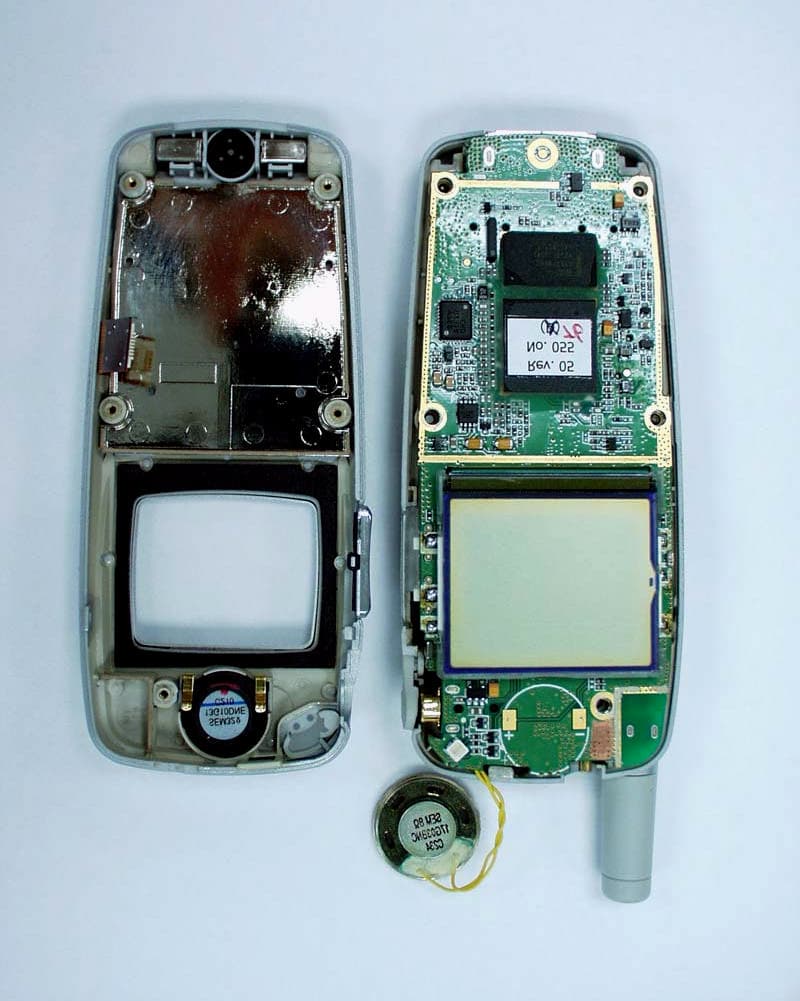
Click to zoom
Application Details
- Equipment Class
- TNE - Licensed Non-Broadcast Transmitter Held to Ear
- Date of Grant
- Feb 11, 2003
- Application Purpose
- Original Equipment
- Date of Application
- Feb 11, 2003
- Equipment Note
- Dual-Mode Cellular Phone (AMPS/TDMA)
- Frequency Range
- 824.04000000 - 848.97000000
- Company
- Samsung Electronics Co Ltd
- Country
- United States
Documents & Files
Document Text
Text extracted from the exhibit documents filed with the FCC. Open a document above to read the original.
Users Manual
Printed in Korea Code No. : GH68-xxxxxA English. 11/2002. Rev. 1.0 ELECTRONICS World Wide Web http://www.samsungmobile.com TDMA MOBILE TELEPHONE STH-N395 3rd version (2002. 11. 27) * Some contents in this manual may differ from your phone depending on the software of the phone or your service provider. Please, be sure to read this manual before using your phone. And keep the manual after reading it and use any time you have a question. 1 Contents Unpacking. . . . . . . . . . . . . . . . . . . . . . . . . . . . . . . . . . 7 Your Phone Phone Layout. . . . . . . . . . . . . . . . . . . . . . . . . . . . . . . . . 8 Display. . . . . . . . . . . . . . . . . . . . . . . . . . . . . . . . . . . . . 10 Service Light. . . . . . . . . . . . . . . . . . . . . . . . . . . . . . . . 12 Getting Started Installing the Battery. . . . . . . . . . . . . . . . . . . . . . . . . . 13 Charging the Battery. . . . . . . . . . . . . . . . . . . . . . . . . . 15 Switching the Phone On or Off. . . . . . . . . . . . . . . . . . . 17 Locking Your Phone . . . . . . . . . . . . . . . . . . . . . . . . . . . 18 Call Functions Making a Call. . . . . . . . . . . . . . . . . . . . . . . . . . . . . . . . 19 Making a Call from the Phonebook. . . . . . . . . . . . . . . . 20 Redialing the Last Number. . . . . . . . . . . . . . . . . . . . . . 20 Adjusting the Volume. . . . . . . . . . . . . . . . . . . . . . . . . . 21 Answering a Call. . . . . . . . . . . . . . . . . . . . . . . . . . . . . 22 Viewing Missed Calls. . . . . . . . . . . . . . . . . . . . . . . . . . 23 Quickly Switching to Silent Mode . . . . . . . . . . . . . . . . . . 25 Selecting Functions and Options Using the Soft Keys . . . . . . . . . . . . . . . . . . . . . . . . . . . . . . 26 Selecting Functions and Options . . . . . . . . . . . . . . . . . . . 27 Example: Setting the Display Language. . . . . . . . . . . . 28 Phonebook Storing a Phone Number with a Name. . . . . . . . . . . . . 30 Searching for a Number in the Phonebook. . . . . . . . . 31 Entry Options. . . . . . . . . . . . . . . . . . . . . . . . . . . . . . . . 33 Speed Dialing by Memory Location. . . . . . . . . . . . . . . 35 Phonebook Options. . . . . . . . . . . . . . . . . . . . . . . . . . . 36 FCC RF EXPOSURE INFORMATION In August 1996 the Federal Communications Commission (FCC) of the United States with its action in Report and Order FCC 96-326 adopted an updated safety standard for human exposure to radio frequency electromagnetic energy emitted by FCC regulated transmitters. Those guidelines are consistent with the safety standard previously set by both U.S. and international standards bodies. The design of this phone complies with the FCC guidelines and these international standards. Use only the supplied or an approved antenna. Unauthorized antennas, modifications, or attachments could impair call quality, damage the phone, or result in violation of FCC regulations. Do not use the phone with a damaged antenna. If a damaged antenna comes into contact with the skin, a minor burn may result. Please contact your local dealer for replacement antenna. Body-worn Operation This device was tested for typical body-worn operations with the back of the phone kept 1.5 cm. from the body. To maintain compliance with FCC RF exposure requirements, use only belt- clips, holsters or similar accessories that maintain a 1.5 cm. separation distance between the user's body and the back of the phone. The use of belt-clips, holsters and similar accessories should not contain metallic components in its assembly. The use of accessories that do not satisfy these requirements may not comply with FCC RF exposure requirements, and should be avoided. Contact your local dealer for optional accessory items. Vehicle Mounted External Antenna (optional, if available.) A minimum separation distance of 7.9 inches (20cm) must be maintained Between a person and the vehicle mounted external antenna to satisfy FCC RF exposure requirements. For more information about RF exposure, please visit the FCC website at www .fcc.gov Entering Text Changing the Text Input Mode. . . . . . . . . . . . . . . . . . . 40 Using the T9 Mode. . . . . . . . . . . . . . . . . . . . . . . . . . . . 41 Using the Upper/Lower-Case Character Mode. . . . . . . 42 Using the Number Mode. . . . . . . . . . . . . . . . . . . . . . . 43 Options During a Call Muting/Sending Key Tones. . . . . . . . . . . . . . . . . . . . . . 44 Searching for a Number in the Phonebook. . . . . . . . . . 45 Using the SMS Service. . . . . . . . . . . . . . . . . . . . . . . . 46 Making a Calling card call . . . . . . . . . . . . . . . . . . . . . . . . 46 Making the Voice Call Private . . . . . . . . . . . . . . . . . . . . . . 47 Putting a Call on Hold. . . . . . . . . . . . . . . . . . . . . . . . . . 47 Answering a Second Call. . . . . . . . . . . . . . . . . . . . . . . 48 Making a Conference Call. . . . . . . . . . . . . . . . . . . . . . 49 Using the Menus Accessing a Menu Function by scrolling. . . . . . . . . . . 50 Accessing a Menu Function by Using its Shortcut. . . . 51 List of Menu Functions. . . . . . . . . . . . . . . . . . . . . . . . . 52 Call Records Missed Calls (Menu 1.1). . . . . . . . . . . . . . . . . . . . . . . . 57 Incoming Calls (Menu 1.2). . . . . . . . . . . . . . . . . . . . . . 57 Outgoing Calls (Menu 1.3). . . . . . . . . . . . . . . . . . . . . . . 58 Call Time (Menu 1.4). . . . . . . . . . . . . . . . . . . . . . . . . . . 58 Messages Voice Mail (Menu 2.1). . . . . . . . . . . . . . . . . . . . . . . . . . 59 Read Messages (Menu 2.2). . . . . . . . . . . . . . . . . . . . . 60 Write Messages (Menu 2.3). . . . . . . . . . . . . . . . . . . . . 62 Preset Message List (Menu 2.4). . . . . . . . . . . . . . . . . . 63 Setup (Menu 2.5). . . . . . . . . . . . . . . . . . . . . . . . . . . . . 64 Message Alert Setting (Menu 2.6). . . . . . . . . . . . . . . . . 65 Picture Message (Menu 2.7). . . . . . . . . . . . . . . . . . . . . 66 Receiving Pictu…
Text truncated - open the document above for the full version.
Users Manual
115114 Tests for SAR are conducted using standard operating positions specified by the FCC with the phone transmitting at its highest certified power level in all tested frequency bands. Although the SAR is determined at the highest certified power level, the actual SAR level of the phone while operation can be well below the maximum value. This is because the phone is designed to operate at multiple power levels so as to use only the power required to reach the network. In general, the closer you are to a wireless base station antenna, the lower the power output. Before a phone model is available for sale to the public, it must be tested and certified to the FCC that it does not exceed the limit established by the government-adopted requirement for safe exposure. The tests are performed in positions and locations (e.g., at the ear and worn on the body) as required by the FCC for each model. (Body-worn measurements differ among phone models, depending upon available accessories and FCC requirements). While there may be differences between the SAR levels of various phones and at various positions, they all meet the government requirement for safety exposure. To maintain compliance with FCC RF exposure require- ments, use only belt-clips, holsters or similar accessories that maintain a 1.5 cm. separation distance between the user's body and the back of the phone. The use of belt- clips, holsters and similar accessories should not contain metallic components in its assembly. The use of acces- sories that do not satisfy these requirements may not comply with FCC RF exposure requirements, and should be Health and Safety Information Exposure to Radio Frequency (RF) Signals Your mobile phone is a radio transmitter and receiver. It is designed and manufactured not to exceed the emission limits for exposure to radio frequency (RF) energy set by the Federal Communications Commission of the U.S. Government. These limits are part of comprehensive guidelines and establish permitted levels of RF energy for the general population. Those guidelines are consistent with the safety standard previously set by both U.S. and international standards bodies: • American National Standards Institute (ANSI) IEEE. C95.1-1992 • National Council on Radiation Protection and Measurement (NCRP). Report 86 • International Commission on Non-Ionizing Radiation Protection (ICNIRP) 1996 • Ministry of Health (Canada), Safety Code 6. The standards include a substantial safety margin designed to assure the safety of all persons, regardless of age and health. The exposure standard for wireless mobile phones employs a unit of measurement known as the Specific Absorption Rate, or SAR. The SAR limit set by the FCC is 1.6W/kg.* * In the U.S. and Canada, the SAR limit for mobile phones used by the public is 1.6 watts/kg(w/kg) averaged over on gram of tissue. The standard incorporates a substantial margin of safety to give additional protection for the public and to account for any variations in measurements. HHeeaalltthh aanndd SSaaffeettyy IInnffoorrmmaattiioonn
Attestation Statements
February 6, 2003 Federal Communications Commission Authorization and Evaluation Div. Equipment Authorization Branch 7435 Oakland Mills Road Columbia, MD 21046 In re: Samsung Electronics Co., Ltd. FCC ID.: A3LSTHN395 Request for Confidentiality To Whom It May Concern: In accordance with 0.459 of CFR 47, Samsung Electronics Co., Ltd. requests confidentiality for the Block Diagram, Schematics, Parts list, Tune-up Procedure, Operational and Circuit Description of the attached test report. These documents contain detailed system and equipment descriptions and related information about the product, which Samsung Electronics Co., Ltd. considers to be proprietary, confidential, and a custom design and otherwise, would not release to the general public. Since this design is a basis from which future technological products will evolve, Samsung feels that this information would be of benefit to its competitors, and that the disclosure of the information in these documents would give our competitors an unfair advantage in the market. Sincerely, Wallace Oh Engineering Manager Samsun Samsung Electronics America
Attestation Statements
January 6, 2003 Federal Communications Commission Authorization and Evaluation Div. Equipment Authorization Branch 7435 Oakland Mills Road Columbia, MD 21046 To whom it may concern: We, the undersigned, hereby authorize PCTEST Engineering Laboratory Inc., to act as agent on behalf of all matters relating to applications for equipment authorization, including the signing of all documents relating to these matters. Any and all acts carried out by PCTEST Engineering Laboratory, Inc. on our behalf shall have the same effect as acts of our own. We also hereby certify that no party to this application is subject to a denial of benefits, including FCC benefits, pursuant to Section 5301 of the Anti-Drug Abuse Act of 1988,21 U.S.C.862. Sincerely, Wallace Oh Engineering Manager Samsun Electronics America February 6, 2003 Federal Communications Commission Equipment Approval Services 7435 Oakland Mills Road Columbia, MD 21046 SUBJECT: FCC E911 REQUIREMENTS PER §22.921 Gentlemen: Samsung Electronics Co., Ltd. hereby certifies that the analog cellular telephone (FCC ID: A3LSTHN395), using the Automatic A/B Roaming — Intelligent Retry method, meets the E911 requirements specified in Section 22.921 of the FCC Rules. This procedure recognizes when a “9-1-1” call is made and, at such time, will override any programming in the mobile unit that determines the handling of a non-911 call and permit the call to be handled by other analog carriers. Should you have any questions or comments concerning the above, please contact the undersigned. AFFIDAVIT FOR ESN PROTECTION OF CELLULAR MOBILE TELEPHONES We hereby certify that the Portable Cellular Telephone (FCC ID: A3LSTHN395 ) is so designed that it complies with all the requirements for ESN protection specified in Sec.22.919 of the FCC Rules. a) The transmitter in service has a unique ESN. b) The ESN host component is permanently attached to a main circuit board of the mobile transmitter and the integrity of the unit operating software cannot be altered. The ESN is plated from fraudulent contact and tampering. The ESN is encoded using multiplication by a polynomial and the ESN data programmed in the memory with other information. c) The ESN is factory set and cannot be altered, transferred, removed or otherwise able to be manipulated. Cellular mobile equipment is specifically designed such that any attempt to remove, tamper with, or change the ESN chip, its logic system, or firmware originally programmed by the manufacturer will render the mobile transmitter inoperative. February 6, 2003 Federal Communications Commission Equipment Approval Services 7435 Oakland Mills Road Columbia, MD 21046 SUBJECT:Samsung Electronics Co., Ltd. FCC ID: A3LSTHN395 Users Manual RF Exposure Warning Statement Gentlemen: Samsung Electronics Co., Ltd., hereby confirms that the attached RF exposure warning page will be readily visible to the user, and will be placed at a prominent location in the users manual. If you have any further questions regarding this matter, please do not hesitate to contact me or PCTEST Lab at (410) 290-6652. Sincerely, Wallace Oh Engineering Manager Samsun Electronics America
Cover Letter(s)
February 6, 2003 Federal Communications Commission Equipment Approval Services 7435 Oakland Mills Road Columbia, MD 21046 SUBJECT: SAMSUNG Electronics Co., Ltd. FCC ID: A3LSTHN395 Part 22 Certification Gentlemen: Submitted herewith, on behalf of SAMSUNG Electronics Co., Ltd., is an application for Part 22 Certification of the Dual-Mode Cellular Phone (AMPS/TDMA). Attached is the applicant’s Letter of Authorization, Confidentiality Request, ESN Affidavit, E911 compliance statement, measurement report test data and plots, RF Exposure measurement report and data, FCC ID label and location, test setup photographs, internal and external photographs, block diagram (confidential), circuit diagrams & description (confidential), operational description (confidential), parts list & tune-up procedure (confidential), and the user's manual. Should you have any questions or comments concerning the above, please contact the undersigned. cc: SAMSUNG Electronics Co., Ltd.
ID Label/Location Info
© 2003 PCTEST Lab FCC ID SAMPLE LABEL & LOCATION LABELLING REQUIREMENTS The Label shown shall be permanently affixed at a conspicuous location on the device and be readily visible to the user at the time of purchase. (SEE NEXT PAGE) SAMSUNG ELECTRONICS CO., LTD. MODEL NO: STH-N395 FCC ID: A3LSTHN395 MADE IN KOREA SAMSUNG ELECTRONICS CO., LTD
Internal Photos
© 2003 SAMSUNG ELECTRONICS Co., Ltd. SAMSUNG FCC ID: A3LSTHN395 Dual-Mode Cellular Phone © 2003 SAMSUNG ELECTRONICS Co., Ltd. SAMSUNG FCC ID: A3LSTHN395 Dual-Mode Cellular Phone © 2003 SAMSUNG ELECTRONICS Co., Ltd. SAMSUNG FCC ID: A3LSTHN395 Dual-Mode Cellular Phone
RF Exposure Info
2 of 32 Contents 1. General Information.............................................................................................3 2. Description of Device...........................................................................................3 3. Description of Test Equipment..............................................................................4 3.1 SAR Measurement Setup.........................................................................................4 3.2 DASY3 E-Field Probe.............................................................................................5 3.3 SAM Phantom.....................................................................................................6 3.4 Brain & Muscle Simulating Mixture Characterization....................................................7 3.5 Device Holder for transmitters.................................................................................8 3.6 Validation Dipole...................................................................................................8 3.7 Equipment Calibration.............................................................................................9 4. SAR Measurement Procedure.............................................................................10 5. Description of test position..............................................................................11 5.1 SAM Phantom Shape............................................................................................11 5.2 Cheek/Touch Position............................................................................................11 5.3 Ear/Tilt 15 Position..............................................................................................13 5.4 Body/Holster/Belt Clip Configuration.......................................................................14 6. Measurement Uncertainty..................................................................................16 7. System Verification.........................................................................................17 7.1 Tissue Verification..............................................................................................17 7.2 Test System Validation...........................................................................................17 8. SAR Measurement Results.................................................................................18 8.1 Measurement Results(AMPS Right Head SAR-Touch)...............................................19 8.2 Measurement Results(AMPS Right Head SAR-Tilt)...................................................20 8.3 Measurement Results(AMPS Left Head SAR-Touch)...................................................21 8.4 Measurement Results(AMPS Left Head SAR-Tilt).......................................................22 8.5 Measurement Results(AMPS Left Head SAR-Tilt)........................................................23 8.6 Measurement Results(CELLULAR TDMA Right Head SAR-Touch)..............................24 8.7 Measurement Results(CELLULAR TDMA Right Head SAR-Tilt)..................................25 8.8 Measurement Results(CELLULAR TDMA Left Head SAR-Touch)................................26 8.9 Measurement Results(CELLULAR TDMA Left Head SAR-Tilt)....................................27 8.10 Measurement Results(CELLULAR TDMA Left Head SAR-Touch)................................28 8.11 Measurement Results(AMPS Body SAR w/o Holster)................................................29 8.12 Measurement Results(CELLULAR TDMA Body SAR w/o Holster).................................30 9. Conclusion.......................................................................................................31 10. Reference......................................................................................................32 3 of 32 1. GENERAL INFORMATION Test Sample : Dual-Mode Cellular Phone (AMPS/TDMA) Model Number : STH-N395 Serial Number : Identical prototype (S/N : #3 ) Manufacturer : SAMSUNG ELECTRONICS Co., Ltd. Contact : SK Yoon, Technical Manager Phone : +82-54-479-7615 Fax : +82-54-479-7714 Test Standard : §2.1093; FCC/OET Bulletin 65, Supplement C(July 2001) FCC Classification : Licensed Portable Transmitter Held to Ear (PCE) Test Dates : December 11,2002 ~ December 13,2002 Tested for : FCC/TCB Certification 2. DESCRIPTION OF DEVICE Tx Freq. Range : 824.04 – 848.97 MHz (AMPS) 824.04 – 848.97 MHz (TDMA) Rx Freq. Range : 869.04 – 893.97 MHz (AMPS) 869.04 – 893.97 MHz (TDMA) Max. RF Output Power : 0.541W ERP AMPS (27.33 dBm) 0.607W ERP TDMA (27.83 dBm) Antenna Manufacturer : EM.W. Antenna.co.,Ltd Model No.: STH-N395 Antenna Dimensions : Length = 30.0mm [Fixed] 4 of 32 3. DESCRIPTION OF TEST EQUIPMENT 3.1 SAR Measurement Setup Robotic System Measurements are performed using the DASY3 automated dosimetric assessment system. Which is made by Schmid & Partner Engineering AG (SPEAG) in Zurich, Switzerland and consists of high precision robotics system (Stäubli), robot controller, Pentium computer, near-field probe, probe alignment sensor, and the SAM twin phantom containing the brain equivalent material. The robot is a six-axis industrial robot performing precise movements to position the probe to the location (points) of maximum electromagnetic field (EMF) (see Fig. 3.1). Figure 3.1 SAR Measurement System Setup System Hardware A cell controller system contains the power supply, robot controller, teach pendant (Joystick), and a remote control is used to drive the robot motors. The PC consists of the Samsung Pentium 550MHz computer with Windows 2000 system and SAR Measurement Software DASY3, A/D interface card, LCD monitor, mouse and keyboard. The Stäubli Robot is connected to the cell controller to allow software manipulation of the robot. A data acquisition electronic (DAE) circuit that performs the signal amplification, signal multiplexing, AD-conversion, offset measurements, mechanical surface detection, c…
Text truncated - open the document above for the full version.
RF Exposure Info
© 2003 SAMSUNG ELECTRONICS Co., Ltd. SAMSUNG FCC ID: A3LS THN395 Dual - Mode Cellular Phone © 2003 SAMSUNG ELECTRONICS Co., Ltd. SAMSUNG FCC ID: A3LS THN395 Dual - Mode Cellular Phone © 2003 SAMSUNG ELECTRONICS Co., Ltd. SAMSUNG FCC ID: A3LS THN395 Dual - Mode Cellular Phone © 2003 SAMSUNG ELECTRONICS Co., Ltd. SAMSUNG FCC ID: A3LS THN395 Dual - Mode Cellular Phone © 2003 SAMSUNG ELECTRONICS Co., Ltd. SAMSUNG FCC ID: A3LS THN395 Dual - Mode Cellular Phone © 2003 SAMSUNG ELECTRONICS Co., Ltd. SAMSUNG FCC ID: A3LS THN395 Dual - Mode Cellular Phone © 2003 SAMSUNG ELECTRONICS Co., Ltd. SAMSUNG FCC ID: A3LS THN395 Dual - Mode Cellular Phone © 2003 SAMSUNG ELECTRONICS Co., Ltd. SAMSUNG FCC ID: A3LS THN395 Dual - Mode Cellular Phone © 2003 SAMSUNG ELECTRONICS Co., Ltd. SAMSUNG FCC ID: A3LS THN395 Dual - Mode Cellular Phone © 2003 SAMSUNG ELECTRONICS Co., Ltd. SAMSUNG FCC ID: A3LS THN395 Dual - Mode Cellular Phone © 2003 SAMSUNG ELECTRONICS Co., Ltd. SAMSUNG FCC ID: A3LS THN395 Dual - Mode Cellular Phone © 2003 SAMSUNG ELECTRONICS Co., Ltd. SAMSUNG FCC ID: A3LS THN395 Dual - Mode Cellular Phone © 2003 SAMSUNG ELECTRONICS Co., Ltd. SAMSUNG FCC ID: A3LS THN395 Dual - Mode Cellular Phone © 2003 SAMSUNG ELECTRONICS Co., Ltd. SAMSUNG FCC ID: A3LS THN395 Dual - Mode Cellular Phone © 2003 SAMSUNG ELECTRONICS Co., Ltd. SAMSUNG VFCC ID: A3LS THN395 Dual - Mode Cellular Phone © 2003 SAMSUNG ELECTRONICS Co., Ltd. SAMSUNG FCC ID: A3LS THN395 Dual - Mode Cellular Phone
Test Report
PCTEST Engineering Lab., Inc. SUBJECT:Modulation CharacteristicsTest Report No.:22.230117028.A3L FCC Part 22 Test Date: 01.27.2003 EUT:SAMSUNG Dual-Mode Cellular Phone (AMPS/TDMA) Model:STH-N395 FCC ID:A3LSTHN395 REFERENCE:1 kHz = 0 dB Modulation Limiting 0 2000 4000 6000 8000 10000 12000 14000 -35-30-25-20-15-10-50 Audio Input Level (dBV) Deviation (Hz) 3KHz 1KHz 300Hz SAMSUNG Dual-Mode Cellular Phone (AMPS/TDMA) FCC ID: A3LSTHN395 PCTEST Engineering Lab., Inc. SUBJECT:Modulation CharacteristicsTest Report No.:22.230117028.A3L FCC Part 22 Test Date: 01.27.2003 EUT:SAMSUNG Dual-Mode Cellular Phone (AMPS/TDMA) Model:STH-N395 FCC ID:A3LSTHN395 REFERENCE:1 kHz = 0 dB Frequency Response of Audio Low Pass Filter -90.0 -80.0 -70.0 -60.0 -50.0 -40.0 -30.0 -20.0 -10.0 0.0 10.0 FREQUENCY (Hz) LEVEL (dB) Relative to 1kHz 10k1k 100k SAMSUNG Dual-Mode Cellular Phone (AMPS/TDMA) FCC ID: A3LSTHN395 PCTEST Engineering Lab., Inc. SUBJECT:Modulation CharacteristicsTest Report No.:22.230117028.A3L FCC Part 22 Test Date: 01.27.2003 EUT:SAMSUNG Dual-Mode Cellular Phone (AMPS/TDMA) Model:STH-N395 FCC ID:A3LSTHN395 REFERENCE:1 kHz = 0 dB Transmitter Audio Frequency Response -60.00 -50.00 -40.00 -30.00 -20.00 -10.00 0.00 10.00 20.00 FREQUENCY (Hz) LEVEL (dB) Relative to 1kHz 100 1k 10k 100k SAMSUNG Dual-Mode Cellular Phone (AMPS/TDMA) FCC ID: A3LSTHN395
Test Setup Photos
© 2003 PCTEST Lab SAMSUNG FCC ID: A3LSTHN395 Dual-Mode Cellular Phone (AMPS/TDMA) © 2003 PCTEST Lab SAMSUNG FCC ID: A3LSTHN395 Dual-Mode Cellular Phone (AMPS/TDMA) © 2003 PCTEST Lab SAMSUNG FCC ID: A3LSTHN395 Dual-Mode Cellular Phone (AMPS/TDMA) © 2003 PCTEST Lab SAMSUNG FCC ID: A3LSTHN395 Dual-Mode Cellular Phone (AMPS/TDMA)
Contact Information
Applicant
Jenni Chun(General Manager)
Technical Contact
PCTEST Engineering Lab., Inc.Randy Ortanez
[email protected]410-290-6652
6660-B Dobbin Road · Columbia, Maryland · United States
Test Firm
PCTEST Engineering Laboratory, Inc.Randy Ortanez
Technical Specifications
| # | Rule Parts | Frequency Range | Power Output | Emission | Tolerance |
|---|---|---|---|---|---|
| 3 | 22.901(d) | 824.04 MHz - 848.97 MHz | 607.00 mW | 30K0DXW | 2.5 ppm |
Other Applications from Samsung Electronics Co Ltd
A3LSMS741B
Aug 05, 2026Portable Handset
Equipment Class
6VL - 15E 6 GHZ Very Low Power DeviceA3LSMX940
Jul 31, 2026BT,BLE Tablet DTS,UNII a,b,g,n,ac,ax,be and digitizer
Equipment Class
DTS - Digital Transmission SystemA3LSMS741U
Jul 30, 2026Portable Handset
Equipment Class
6CD - 15E 6 GHz Low Power Dual ClientA3LSMX840
Jul 27, 2026BT,BLE Tablet DTS,UNII a,b,g,n,ac,ax and Digitizer
Equipment Class
DSS - Part 15 Spread Spectrum TransmitterA3LSMX848U
Jul 27, 2026WCDMA, LTE, 5G NR Tablet BT,BLE, DTS,UNII a b g n ac ax and Digitizer
Equipment Class
JBP - Part 15 Class B Computing Device Peripheral