A98-FOMA-N905IBIZPCS GSM Phone with RFID
NEC Corporation of America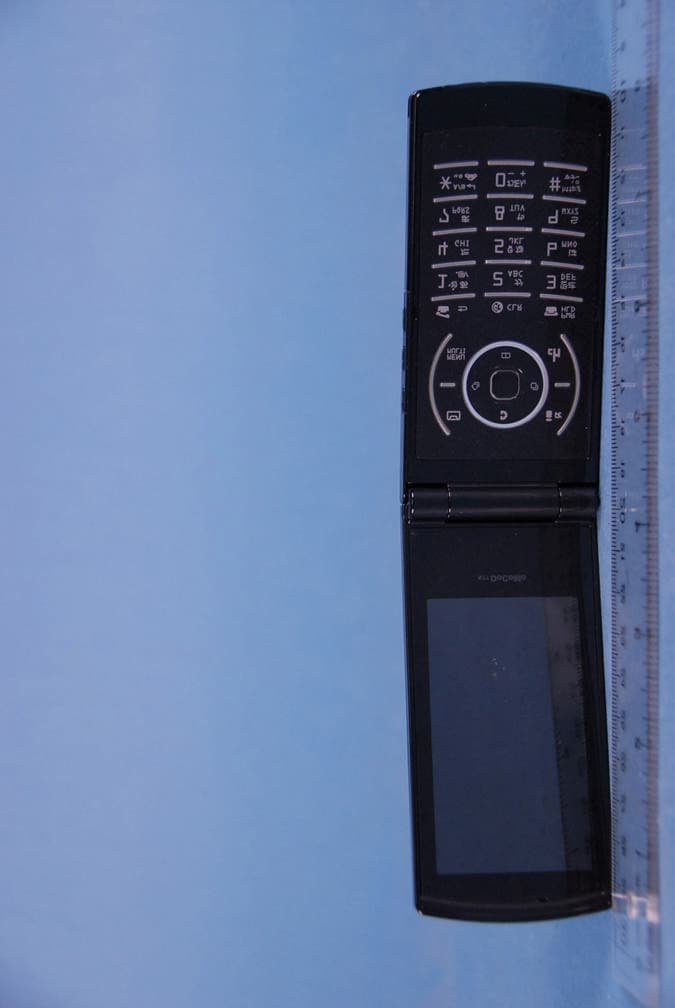
Click to zoom
Application Details
- Equipment Class
- PCE - PCS Licensed Transmitter held to ear
- Date of Grant
- Oct 18, 2007
- Application Purpose
- Original Equipment
- Date of Application
- Oct 18, 2007
- Equipment Note
- PCS GSM Phone with RFID
- Frequency Range
- 1850.20000000 - 1909.80000000
- Company
- NEC Corporation of America
- Country
- United States
Documents & Files
Document Text
Text extracted from the exhibit documents filed with the FCC. Open a document above to read the original.
Users Manual
Radio Frequency (RF) Signals THIS MODEL PHONE MEETS THE U.S. GOVERNMENT'S REQUIREMENTS FOR EXPOSURE TO RADIO WAVES. Your wireless phone contains a radio transmitter and receiver. Your phone is designed and manufactured not to exceed the emission limits for exposure to radio frequency (RF) energy set by the Federal Communications Commission of the U.S. Government. These limits are part of comprehensive guidelines and establish permitted levels of RF energy for the general population. The guidelines are based on standards that were developed by independent scientific organizations through periodic and thorough evaluation of scientific studies. The exposure standard for wireless mobile phones employs a unit of measurement known as the Specific Absorption Rate (SAR). The SAR limit set by the FCC is 1.6W/kg.* Tests for SAR are conducted using standard operating positions accepted by the FCC with the phone transmitting at its highest certified power level in all tested frequency bands. Although the SAR is determined at the highest certified power level, the actual SAR level of the phone while operating can be well below the maximum value. This is because the phone is designed to operate at multiple power levels so as to use only the power required to reach the network. In general, the closer you are to a wireless base station antenna, the lower the output. Before a phone model is available for sale to the public, it must be tested and certified to the FCC that it does not exceed the limit established by the U.S. government-adopted requirement for safe exposure. The tests are performed on position and locations (for example, at the ear and worn on the body) as required by FCC for each model. The highest SAR value for this model phone as reported to the FCC when tested for use at the ear is 0.778W/kg, and when worn on the body, is 0.332W/kg. (Body- worn measurements differ among phone models, depending upon available accessories and FCC requirements). While there may be differences between the SAR levels of various phones and at various positions, they all meet the U.S. government requirement. The FCC has granted an Equipment Authorization for this model phone with all reported SAR levels evaluated as in compliance with the FCC RF exposure guidelines. SAR information on this model phone is on file with the FCC and can be found under the Display Grant section at https:// gullfoss2.fcc.gov/oetcf/eas/reports/GenericSearch.cfm after search on FCC ID A98-FOMA- N905IBIZ. For body worn operation, this phone has been tested and meets the FCC RF exposure guidelines when used with an accessory designated for this product or when used with an accessory that contains no metal and that positions the handset a minimum of 1.5 cm from the body. * In the United States, the SAR limit for wireless mobile phones used by the public is 1.6 watts/kg (W/kg) averaged over one gram of tissue. SAR values may vary depending upon national reporting requirements and the network band. FCC Regulations This mobile phone complies with part 15 of the FCC Rules. Operation is subject to the following two conditions: (1) This device may not cause harmful interference, and (2) this device must accept any interference received, including interference that may cause undesired operation. This mobile phone has been tested and found to comply with the limits for a Class B digital device, pursuant to Part 15 of the FCC Rules. These limits are designed to provide reasonable protection against harmful interference in a residential installation. This equipment generates, uses and can radiate radio frequency energy and, if not installed and used in accordance with the instructions, may cause harmful interference to radio communications. However, there is no guarantee that interference will not occur in a particular installation; if this equipment does cause harmful interference to radio or television reception, which can be determined by turning the equipment off and on, the user is encouraged to try to correct the interference by one or more of the following measures: eReorient or relocate the receiving antenna. eIncrease the separation between the equipment and receiver. eConnect the equipment into an outlet on a circuit different from that to which the receiver is connected. eConsult the dealer or an experienced radio/TV technician for help. Changes or modifications not expressly approved by the party responsible for compliance could void the user's authority to operate the equipment. 1 Making/Receiving Calls Making a Voice/Videophone Call 1 Dial the other party’s number, starting with the area code The “Phone number entry” screen appears. Always start with the area code, even for calls within the same area. A number of up to 80 digits can be entered for making a call although the numbers disappear from the display one by one from the beginning after the number exceeds 26 digits. 2 r The phone number disappears briefly and then reappears from the right as it is dialed. The “” icon flashes during dialing and remains lit during a call. The “FOMA voice in-call” screen appears. To switch to a videophone call during a voice call "Changing a call from voice to videophone"p.3 If you hear the busy tone The line is busy. Press y, and call again after a while. If you hear the message saying that the other party cannot be reached The other party's mobile phone or PHS phone is not switched on or is out of signal range. Press y , and call again after a while. If you hear the message requesting your caller ID The other party has set the Caller ID Request service to "Activate". Call again with your caller ID shown. If you set "2in1 setting" to "Dual mode" The outgoing number selection screen appears. Select a phone number. 3 To end the call, press y dMaking a videophone call 1 Phone number entry screen Xo () The "Videophone in-call" screen appears. You can talk hearing the other party's voice through the speaker. The "" icon flashes during dialing and rem…
Text truncated - open the document above for the full version.
Cover Letter(s)
Subject: RE: Questions Regarding FCC ID: A98-FOMA-N905IBIZ Subject: Questions Regarding FCC ID: A98-FOMA-N905IBIZ To: Mr. Johnny Pham/ NEC Corporation of America From: Mr. Gregory Czumak/ PCTEST TCB RE: FCC ID: A98-FOMA-N905IBIZ Applicant: NEC Corporation of America Correspondence Reference Number: A987841 Confirmation Number: 709280841-43 Dat of Original Email: October 16, 2007 Subject: Request for additional information In regards to your recent TCB application referenced above, we kindly request that you provide the following additional information. 1. Please verify that multi (transmit) slot GPRS modes are not available to the EUT. ANSWER: The GPRS Multislot class of this project is Class 8, which is only 1 uplink. 2. Please correct the max SAR levels listed in the RFx user’s manual statement. ANSWER: The correct max. SAR was revised and sent to PCTEST on 10/08/07. 3. Please address Section 15.203 for the RFID transmitter. ANSWER: RFID antenna is built-in antenna. 4. Please describe the RFID antenna. ANSWER: RFID antenna is built-in antenna. 5. Please specify the location of the RFID schematics within the schematic exhibit. ANSWER: The RFID feature is shown as "Felica" in the page 2 and 4 of the schematics. 6. Please submit a more detailed operational description (technical description) of the RFID transmitter. ANSWER: The updated revision of the operational description is attached. 7. Please verify that the RFID transmitter is shown as “Felica” in the block diagram. Please submit a block diagram that shows the clock/oscillator values of the RFID transmitter. ANSWER: The updated revision of the block diagram is attached. The items indicated above must be submitted before processing can continue on the above referenced application. Sincerely, Gregory Czumak Senior Certification Engineer
External Photos
NEC AMERICA FCC ID: A98-FOMA-N905IBIZ EUT Photographs © 2007 PCTEST Lab. PCS GSM/GPRS Phone Model: FOMA N905iBiz NEC AMERICA FCC ID: A98-FOMA-N905IBIZ EUT Photographs © 2007 PCTEST Lab. PCS GSM/GPRS Phone Model: FOMA N905iBiz NEC AMERICA FCC ID: A98-FOMA-N905IBIZ EUT Photographs © 2007 PCTEST Lab. PCS GSM/GPRS Phone Model: FOMA N905iBiz NEC AMERICA FCC ID: A98-FOMA-N905IBIZ EUT Photographs © 2007 PCTEST Lab. PCS GSM/GPRS Phone Model: FOMA N905iBiz NEC AMERICA FCC ID: A98-FOMA-N905IBIZ EUT Photographs © 2007 PCTEST Lab. PCS GSM/GPRS Phone Model: FOMA N905iBiz
ID Label/Location Info
FCCID Label Placement Rear View Without Battery Pack Please see a separate file for detailed drawing of a label FOMA N905iBiz:IMEI Label Layout Applicant·Manufacturer: NEC Corporation Serial Number Barcode Year/month of manufacture Serial Number ID for TELEC (Japanese Accreditation) ID for JATE (Japanese Accreditation) Color of UE Product name: FOMA N905iBiz NTT DoCoMo., Ltd.
Internal Photos
NEC AMERICA FCC ID: A98-FOMA-N905IBIZ EUT Photographs © 2007 PCTEST Lab. PCS GSM/GPRS Phone Model: FOMA N905iBiz NEC AMERICA FCC ID: A98-FOMA-N905IBIZ EUT Photographs © 2007 PCTEST Lab. PCS GSM/GPRS Phone Model: FOMA N905iBiz NEC AMERICA FCC ID: A98-FOMA-N905IBIZ EUT Photographs © 2007 PCTEST Lab. PCS GSM/GPRS Phone Model: FOMA N905iBiz NEC AMERICA FCC ID: A98-FOMA-N905IBIZ EUT Photographs © 2007 PCTEST Lab. PCS GSM/GPRS Phone Model: FOMA N905iBiz NEC AMERICA FCC ID: A98-FOMA-N905IBIZ EUT Photographs © 2007 PCTEST Lab. PCS GSM/GPRS Phone Model: FOMA N905iBiz
RF Exposure Info
Reviewed by: FCC ID: A98-FOMA-N905IBIZ CERTIFICATION REPORT Quality Manager SAR Filename: Test Dates: EUT Type: 0709281130.A98 10/1/2007 PCS GSM/GPRS Phone Page 1 of 22 © 2007 PCTEST Engineering Laboratory, Inc. REV 4.3G 03/22/07 Applicant Name: Date of Testing: NEC Corporation of America 10/1/2007 Radio Communications Sytems Division Test Site/Location: 6535 N. State Highway 161 PCTEST Lab, Columbia, MD, USA Irving, TX 75039 Test Report Serial No.: 0709281130.A98 FCC ID: A98-FOMA-N905IBIZ APPLICANT: NEC CORPORATION OF AMERICA EUT Type: PCS GSM/GPRS Phone Application Type: Certification FCC Rule Part(s): §2.1093; FCC/OET Bulletin 65 Supplement C [July 2001] FCC Classification: Licensed Transmitter Held to Ear (PCE) Model(s): FOMA N905iBiz Tx Frequency: 1850.20 - 1909.80 MHz (GSM PCS) Conducted Power: 29.27 dBm GSM PCS Max. SAR Measurement: 0.778 W/kg GSM1900 Head SAR / 0.332 W/kg GPRS1900 Body SAR Test Device Serial No.: Pre-Production [S/N: 004401200215032] This wireless portable device has been shown to be capable of compliance for localized specific absorption rate (SAR) for uncontrolled environment/general population exposure limits specified in ANSI/IEEE Std. C95.1-2005 and has been tested in accordance with the measurement procedures specified in FCC/OET Bulletin 65 Supplement C (2001) and IEEE Std. 1528-2003. I attest to the accuracy of data. All measurements reported herein were performed by me or were made under my supervision and are correct to the best of my knowledge and belief. I assume full responsibility for the completeness of these measurements and vouch for the qualifications of all persons taking them. Grant Conditions: Power output listed is EIRP for Part 24. SAR compliance for body-worn operating configuration is based on a separation distance of 1.5 cm between the back of the unit and the body of the user. End-users must be informed of the body-worn operating requirements for satisfying RF exposure compliance. Belt clips or holsters not specified in this filing may not contain metallic components. PCTEST certifies that no party to this application has been denied the FCC benefits pursuant to Section 5301 of the Anti-Drug Abuse Act of 1988, 21 U.S.C. 862. PCTEST ENGINEERING LABORATORY, INC. 6660-B Dobbin Road, Columbia, MD 21045 USA Tel. 410.290.6652 / Fax 410.290.6554 http://www.pctestlab.com CERTIFICATE OF COMPLIANCE (SAR EVALUATION) Reviewed by: FCC ID: A98-FOMA-N905IBIZ CERTIFICATION REPORT Quality Manager SAR Filename: Test Dates: EUT Type: 0709281130.A98 10/1/2007 PCS GSM/GPRS Phone Page 2 of 22 © 2007 PCTEST Engineering Laboratory, Inc. REV 4.3G 03/22/07 TABLE OF CONTENTS 1 INTRODUCTION ........................................................................................................................ 3 2 TEST SITE LOCATION............................................................................................................... 4 3 SAR MEASUREMENT SETUP ................................................................................................... 5 4 DASY E-FIELD PROBE SYSTEM............................................................................................... 7 5 PROBE CALIBRATION PROCESS............................................................................................. 8 6 PHANTOM AND EQUIVALENT TISSUES .................................................................................. 9 7 DOSIMETRIC ASSESSMENT & PHANTOM SPECS................................................................ 10 8 DEFINITION OF REFERENCE POINTS ................................................................................... 11 9 TEST CONFIGURATION POSITIONS ...................................................................................... 12 10 ANSI/IEEE C95.1-2005 RF EXPOSURE LIMITS...................................................................... 14 11 MEASUREMENT UNCERTAINTIES......................................................................................... 15 12 SYSTEM VERIFICATION ......................................................................................................... 16 13 SAR DATA SUMMARY............................................................................................................. 17 14 EQUIPMENT LIST.................................................................................................................... 19 15 CONCLUSION.......................................................................................................................... 20 16 REFERENCES ......................................................................................................................... 21 Reviewed by: FCC ID: A98-FOMA-N905IBIZ CERTIFICATION REPORT Quality Manager SAR Filename: Test Dates: EUT Type: 0709281130.A98 10/1/2007 PCS GSM/GPRS Phone Page 3 of 22 © 2007 PCTEST Engineering Laboratory, Inc. REV 4.3G 03/22/07 1 INTRODUCTION The FCC has adopted the guidelines for evaluating the environmental effects of radio frequency (RF) radiation in ET Docket 93-62 on Aug. 6, 1996 to protect the public and workers from the potential hazards of RF emissions due to FCC-regulated portable devices.[1] The safety limits used for the environmental evaluation measurements are based on the criteria published by the American National Standards Institute (ANSI) for localized specific absorption rate (SAR) in IEEE/ANSI C95.1-2005 Standard for Safety Levels with Respect to Human Exposure to Radio Frequency Electromagnetic Fields, 3 kHz to 300 GHz. (c) 2005 by the Institute of Electrical and Electronics Engineers, Inc., New York, New York 10017.[2] The measurement procedure described in IEEE/ANSI C95.3-2002 Recommended Practice for the Measurement of Potentially Hazardous Electromagnetic Fields - RF and Microwave[3] is used for guidance in measuring the Specific Absorption Rate (SAR) due to the RF radiation exposure from the Equipment Under Test (EUT). These criteria for SAR evaluation are similar to those reco…
Text truncated - open the document above for the full version.
Test Report
Reviewed by: FCC ID: A98-FOMA-N905IBIZ FCC Pt. 24 GSM / GPRS MEASUREMENT REPORT (CERTIFICATION) Quality Manager Test Report S/N: Test Dates: EUT Type: 0709281129-R2.A98 October 2, 2007 PCS GSM/GPRS Phone Page 1 of 23 © 2007 PCTEST Engineering Laboratory, Inc. REV 2.0SBG 08/06/07 Applicant Name: Date of Testing: NEC Corporation of America October 2, 2007 Radio Communications Systems Division Test Site/Location: 6535 N. State Highway 161 PCTEST Lab, Columbia, MD, USA Irving, TX 75039 USA Test Report Serial No.: 0709281129-R2.A98 FCC ID: A98-FOMA-N905IBIZ APPLICANT: NEC CORPORATION OF AMERICA Application Type: Certification FCC Classification: PCS Licensed Transmitter Held to Ear (PCE) FCC Rule Part(s): §2; §24(E) EUT Type: PCS GSM/GPRS Phone Model(s): FOMA N905iBiz Tx Frequency Range: 1850.20 - 1909.80MHz (PCS GSM) Max. RF Output Power: 1.901 W EIRP PCS GSM (32.79 dBm) Emission Designator(s): 238KGXW (PCS GSM) Test Device Serial No.: identical prototype [S/N: 004401200215032, 004401200215016] This equipment has been shown to be capable of compliance with the applicable technical standards as indicated in the measurement report and was tested in accordance with the measurement procedures specified in §2.947. I attest to the accuracy of data. All measurements reported herein were performed by me or were made under my supervision and are correct to the best of my knowledge and belief. I assume full responsibility for the completeness of these measurements and vouch for the qualifications of all persons taking them. * This revised Test Report (S/N: 0709281129-R2.A98) supersedes and replaces the previously issued test report on the same subject EUT for the same type of testing as indicated. Please discard and destroy the previously issued test report (S/N: 0709281129-R1.A98) and dispose of it accordingly. Grant Conditions: Power output listed is EIRP for Part 24. This device also contains functions that are not operational in U.S. territories. This report is applicable only to U.S. operations. PCTEST certifies that no party to this application has been denied the FCC benefits pursuant to Section 5301 of the Anti-Drug Abuse Act of 1988, 21 U.S.C. 862. PCTEST ENGINEERING LABORATORY, INC. 6660-B Dobbin Road, Columbia, MD 21045 USA Tel. 410.290.6652 / Fax 410.290.6554 http://www.pctestlab.com CERTIFICATE OF COMPLIANCE FCC Part 24 Certification Reviewed by: FCC ID: A98-FOMA-N905IBIZ FCC Pt. 24 GSM / GPRS MEASUREMENT REPORT (CERTIFICATION) Quality Manager Test Report S/N: Test Dates: EUT Type: 0709281129-R2.A98 October 2, 2007 PCS GSM/GPRS Phone Page 2 of 23 © 2007 PCTEST Engineering Laboratory, Inc. REV 2.0SBG 08/06/07 TABLE OF CONTENTS FCC PART 24 MEASUREMENT REPORT...................................................................................3 1.0 INTRODUCTION ..............................................................................................................................4 1.1 MEASUREMENT PROCEDURE......................................................................................................... 4 1.2 SCOPE ................................................................................................................................................ 4 1.3 TESTING FACILITY............................................................................................................................. 4 2.0 PRODUCT INFORMATION..............................................................................................................5 2.1 EQUIPMENT DESCRIPTION .............................................................................................................. 5 2.2 EMI SUPPRESSION DEVICE(S)/MODIFICATIONS ........................................................................... 5 2.3 LABELING REQUIREMENTS.............................................................................................................. 5 3.0 DESCRIPTION OF TESTS ..............................................................................................................6 3.1 OCCUPIED BANDWIDTH EMISSION LIMITS .................................................................................... 6 3.2 PCS - BASE FREQUENCY BLOCKS .................................................................................................. 6 3.3 PCS - MOBILE FREQUENCY BLOCKS .............................................................................................. 6 3.4 SPURIOUS AND HARMONIC EMISSIONS AT ANTENNA TERMINAL.............................................. 7 3.5 RADIATED SPURIOUS AND HARMONIC EMISSIONS ..................................................................... 7 3.6 FREQUENCY STABILITY / TEMPERATURE VARIATION ................................................................. 7 4.0 TEST EQUIPMENT CALIBRATION DATA ......................................................................................8 5.0 SAMPLE CALCULATIONS ..............................................................................................................9 6.0 TEST RESULTS .............................................................................................................................10 6.1 SUMMARY......................................................................................................................................... 10 6.2 CONDUCTED OUTPUT POWER ...................................................................................................... 11 6.3 EQUIVALENT ISOTROPIC RADIATED POWER OUTPUT DATA .................................................... 12 6.4 PCS GSM RADIATED MEASUREMENTS ........................................................................................ 13 6.5 PCS GSM FREQUENCY STABILITY MEASUREMENTS ................................................................. 16 7.0 PLOTS OF EMISSIONS.................................................................................................................18 8.0 CONCLUSION.........................................…
Text truncated - open the document above for the full version.
Test Setup Photos
NEC FCC ID: A98-FOMA-N905IBIZ EUT Photographs © 2007 PCTEST Lab. PCS GSM/GPRS Phone Model: FOMA N905iBiz NEC FCC ID: A98-FOMA-N905IBIZ EUT Photographs © 2007 PCTEST Lab. PCS GSM/GPRS Phone Model: FOMA N905iBiz NEC FCC ID: A98-FOMA-N905IBIZ EUT Photographs © 2007 PCTEST Lab. PCS GSM/GPRS Phone Model: FOMA N905iBiz NEC FCC ID: A98-FOMA-N905IBIZ EUT Photographs © 2007 PCTEST Lab. PCS GSM/GPRS Phone Model: FOMA N905iBiz
Test Setup Photos
NEC FCC ID: A98-FOMA-N905IBIZ Model: FOMA N905iBiz SAR Test Setup Photos 1900 GSM/GPRS Phone Page 1 of 5 © 2007 PCTEST Lab. REV 2.1 05/24/2007 1. Right Head SAR 2. Left Head SAR NEC FCC ID: A98-FOMA-N905IBIZ Model: FOMA N905iBiz SAR Test Setup Photos 1900 GSM/GPRS Phone Page 2 of 5 © 2007 PCTEST Lab. REV 2.1 05/24/2007 3. Right Head SAR, Cheek Touch 4. Right Head SAR, 15° Tilt NEC FCC ID: A98-FOMA-N905IBIZ Model: FOMA N905iBiz SAR Test Setup Photos 1900 GSM/GPRS Phone Page 3 of 5 © 2007 PCTEST Lab. REV 2.1 05/24/2007 5. Left Head SAR, Cheek Touch 6. Left Head SAR, 15° Tilt NEC FCC ID: A98-FOMA-N905IBIZ Model: FOMA N905iBiz SAR Test Setup Photos 1900 GSM/GPRS Phone Page 4 of 5 © 2007 PCTEST Lab. REV 2.1 05/24/2007 7. Body SAR 8. Body SAR, Back Side with 15mm Space NEC FCC ID: A98-FOMA-N905IBIZ Model: FOMA N905iBiz SAR Test Setup Photos 1900 GSM/GPRS Phone Page 5 of 5 © 2007 PCTEST Lab. REV 2.1 05/24/2007 9. Body SAR, Front Side with 15mm Space
Contact Information
Applicant
Sanjay Wadhwa(Senior Manager)
Technical Contact
PCTEST Engineering Laboratory, Inc.Randy Ortanez
[email protected]410-290-6652
6660-B Dobbin Road · Columbia, Maryland · United States
Test Firm
PCTEST Engineering Laboratory, Inc.Randy Ortanez
Technical Specifications
| # | Rule Parts | Frequency Range | Power Output | Emission | Tolerance |
|---|---|---|---|---|---|
| 1 | 24E | 1.85 GHz - 1.91 GHz | 1.901 W | 238KGXW | 2.5000000000 ppm |
Other Applications from NEC Corporation of America

A98-MDD1075
Oct 16, 2013Cellular WCDMA and PCS GSM Phone with RFID
Equipment Class
JBP - Part 15 Class B Computing Device Peripheral
A98-MER7671
Jun 09, 2013Cellular WCDMA and PCS GSM Phone with WLAN and RFID
Equipment Class
DTS - Digital Transmission System
A98-HDN2538
Apr 24, 2013Cellular/ PCS GSM and Cellular WCDMA Phone with WLAN, Bluetooth and RFID
Equipment Class
DSS - Part 15 Spread Spectrum Transmitter
A98-FQM6833
Feb 17, 2013Digital Portable Cellular Telephone
Equipment Class
JBP - Part 15 Class B Computing Device Peripheral
A98-RSZ3446
Jan 01, 2013GSM/EGPRS/WCDMA/LTE MOBILE PHONE
Equipment Class
DSS - Part 15 Spread Spectrum Transmitter