AJDT101Digital Wireless Speaker Transmitter
Pioneer Corporation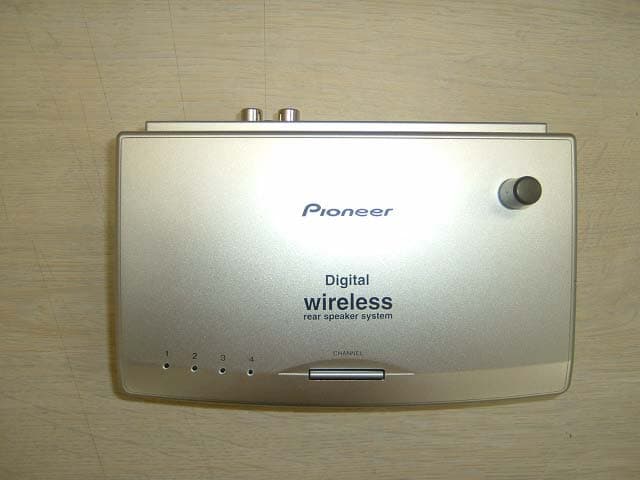
Click to zoom
Application Details
- Equipment Class
- DSS - Part 15 Spread Spectrum Transmitter
- Date of Grant
- Jun 15, 2003
- Application Purpose
- Original Equipment
- Date of Application
- Jun 15, 2003
- Equipment Note
- Digital Wireless Speaker Transmitter
- Frequency Range
- 2414.00000000 - 2468.00000000
- Company
- Pioneer Corporation
- Country
- Japan
Documents & Files
Document Text
Text extracted from the exhibit documents filed with the FCC. Open a document above to read the original.
Users Manual
Operating Instructions Mode d’emploi Digital Wireless Speaker System Ensemble d ’enceintes sans fil pour transmission numérique XW-DV515 Digital Wireless Rear Speaker System Ensemble d ’enceintes arrière sans fil pour transmission numérique XW-HTD630 WSS.book Page 1 Friday, March 7, 2003 5:57 PM READ INSTRUCTIONS — All the safety and operating instructions should be read before the product is operated. RETAIN INSTRUCTIONS — The safety and operating instructions should be retained for future reference. HEED WARNINGS — All warnings on the product and in the operating instructions should be adhered to. FOLLOW INSTRUCTIONS — All operating and use instructions should be followed. CLEANING — Unplug this product from the wall outlet before cleaning. The product should be cleaned only with a polishing cloth or a soft dry cloth. Never clean with furniture wax, benzine, insecticides or other volatile liquids since they may corrode the cabinet. ATTACHMENTS — Do not use attachments not recommended by the product manufacturer as they may cause hazards. WATER AND MOISTURE — Do not use this product near water — for example, near a bathtub, wash bowl, kitchen sink, or laundry tub; in a wet basement; or near a swimming pool; and the like. ACCESSORIES — Do not place this product on an unstable cart, stand, tripod, bracket, or table. The product may fall, causing serious injury to a child or adult, and serious damage to the product. Use only with a cart, stand, tripod, bracket, or table recommended by the manufacturer, or sold with the product. Any mounting of the product should follow the manufacturer’s instructions, and should use a mounting accessory recommended by the manufacturer. CART — A product and cart combination should be moved with care. Quick stops, excessive force, and uneven surfaces may cause the product and cart combination to overturn. VENTILATION — Slots and openings in the cabinet are provided for ventilation and to ensure reliable operation of the product and to protect it from overheating, and these openings must not be blocked or covered. The openings should never be blocked by placing the product on a bed, sofa, rug, or other similar surface. This product should not be placed in a built-in installation such as a bookcase or rack unless proper ventilation is provided or the manufacturer’s instructions have been adhered to. POWER SOURCES — This product should be operated only from the type of power source indicated on the marking label. If you are not sure of the type of power supply to your home, consult your product dealer or local power company. LOCATION – The appliance should be installed in a stable location. NONUSE PERIODS – The power cord of the appliance should be unplugged from the outlet when left unused for a long period of time. GROUNDING OR POLARIZATION • If this product is equipped with a polarized alternating current line plug (a plug having one blade wider than the other), it will fit into the outlet only one way. This is a safety feature. If you are unable to insert the plug fully into the outlet, try reversing the plug. If the plug should still fail to fit, contact your electrician to replace your obsolete outlet. Do not defeat the safety purpose of the polarized plug. • If this product is equipped with a three-wire grounding type plug, a plug having a third (grounding) pin, it will only fit into a grounding type power outlet. This is a safety feature. If you are unable to insert the plug into the outlet, contact your electrician to replace your obsolete outlet. Do not defeat the safety purpose of the grounding type plug. IMPORTANT SAFETY INSTRUCTIONS The lightning flash with arrowhead symbol, within an equilateral triangle, is intended to alert the user to the presence of uninsulated “dangerous voltage” within the product's enclosure that may be of sufficient magnitude to constitute a risk of electric shock to persons. IMPORTANT CAUTION: TO PREVENT THE RISK OF ELECTRIC SHOCK, DO NOT REMOVE COVER (OR BACK). NO USER-SERVICEABLE PARTS INSIDE. REFER SERVICING TO QUALIFIED SERVICE PERSONNEL. The exclamation point within an equilateral triangle is intended to alert the user to the presence of important operating and maintenance (servicing) instructions in the literature accompanying the appliance. H002_En RISK OF ELECTRIC SHOCK DO NOT OPEN CAUTION WSS.book Page 2 Friday, March 7, 2003 5:57 PM POWER-CORD PROTECTION — Power-supply cords should be routed so that they are not likely to be walked on or pinched by items placed upon or against them, paying particular attention to cords at plugs, convenience receptacles, and the point where they exit from the product. LIGHTNING — For added protection for this product during a lightning storm, or when it is left unattended and unused for long periods of time, unplug it from the wall outlet and disconnect the antenna or cable system. This will prevent damage to the product due to lightning and power-line surges. POWER LINES — An outside antenna system should not be located in the vicinity of overhead power lines or other electric light or power circuits, or where it can fall into such power lines or circuits. When installing an outside antenna system, extreme care should be taken to keep from touching such power lines or circuits as contact with them might be fatal. OVERLOADING — Do not overload wall outlets, extension cords, or integral convenience receptacles as this can result in a risk of fire or electric shock. OBJECT AND LIQUID ENTRY — Never push objects of any kind into this product through openings as they may touch dangerous voltage points or short-out parts that could result in a fire or electric shock. Never spill liquid of any kind on the product. SERVICING — Do not attempt to service this product yourself as opening or removing covers may expose you to dangerous voltage or other hazards. Refer all servicing to qualified service personnel. DAMAGE REQUIRING SERVICE — Unplug this product from the wall outlet and refer ser…
Text truncated - open the document above for the full version.
Cover Letter(s)
June 13, 2003 Re : Pioneer Corporation FCC ID : AJDT101 Dear Mr. William Graff Please find the following replies to your comments dated June 12, 2003; 1. Please refer to the revised RF Exposure Statement we have uploaded. 2. As you indicated, we agree that we need to be careful for measurement of RF Power output. We have performed testing in accordance with Federal communications Commission Guide on Measurement for Digital Transmission Systems, Section 15.247 which states that RBW of Spectrum Analyzer to be set up more than 6dB (bandwidth) or to use Power meter. We have performed testing at the condition with RBW:3MHz, VBW:3MHz of 6dB bandwidth: more than 0.8MHz. This level of Spectrum Analyzer have been proofed on a periodic basis by Power meter, fudge factor should be less than 0.3dB. Is it difficult for you to consider it would meet your requirement? 3. RF output power is 119.2dBuV. We revised the description of RF Exposure Statement. Please refer to the revised RF Exposure Statement. 4. Thank you for your advice. 5. Fixed value is 5Mbps. 6. As for this product, we consider that it belongs to category “Fixed Station”. Even if it is “Fixed Station”, is such cautions necessary required to be stated? If so, will you please indicate or provide us a FCC guide line which require to state cautions to the end user about maintaining a distance of 20cm from the antenna? 7. Result of calculation of “S” is provided in the revised RF Exposure Statement. Please refer. 8. Please refer to a PDF file of “23HE0036-HO-Pioneer(Revised P.9)”. Kanako Sanda UL Apex International Co., Ltd.
Cover Letter(s)
American Telecommunications Certification Body Inc. 6731 Whittier Ave, McLean, VA 22101 June 11, 2003 RE: Pioneer Corporation FCC ID: AJDT101 I have a few comments on this Application. 1.) Form 731 calls out an RF Pout of 1413 mW. This is well in excess of the 15.247(b)(3) limits of 1 watt. 2.) In general, spectrum analyzers are considered too inaccurate for measurement of RF power output. In addition, the FCC also has concerns about the bandwidth limitations when using peak power sensors. Please repeat the peak RF Pout measurement using appropriate means that are not affected by the bandwidth of the emission. If you need additional assistance, I will be happy to provide guidance in what is considered acceptable technique. 3.) The 119.2 dBuV readings given for RF Pout do not match either the Form 731 or the RF Exposure information. This calls again the question of what actually is the RF Pout. 4.) FYI: the Spectral Power Density test should be taken over a span of at least 1.5MHz. Please note for future submissions. 5.) Can the unit be varied across multiple data rates? If so, will this device so any differences in RF Pout or Spectral Power Density when varied across these data rates? 6.) Are there any cautions to the end user about maintaining a distance of 20cm from the antenna while in operation? If so, please indicate where in the Manual it can be found. 7.) Please re-do the RF Exposure information calculating for “S” (field density) at 20 cm instead of “R” (distance). This will place this Exhibit in line with current FCC expectations. 8.) Was this device tested across three orthogonal planes? William H. Graff President and Examining Engineer mailto: [email protected] The items indicated above must be submitted before processing can continue on the above referenced application. Failure to provide the requested information may result in application termination. Correspondence should be considered part of the permanent submission and may be viewed from the Internet after a Grant of Equipment Authorization is issued. Please do not respond to this correspondence using the email reply button. In order for your response to be processed expeditiously, you must submit your documents through the AmericanTCB.com website. Also, please note that partial responses increase processing time and should not be submitted. Any questions about the content of this correspondence should be directed to the sender.
External Photos
FCC ID: AJDT101 External Photo Pioneer Corporation Front side Back side
ID Label/Location Info
Rating Label Location for Model XW-HTD630(T) To p View Bottom View Rating Label is located on Bottom side
Internal Photos
FCC ID: AJDT101 Internal Photo Pioneer Corporation Front side with shield Front side without shield FCC ID: AJDT101 Internal Photo Pioneer Corporation Back Side
RF Exposure Info
RF Exposure Statement No.:23HE0036-HO-1 Applicant : Pioneer Corporation Type of Equipment : Digital Wireless Speaker System (Transmitter) Model No. : XW-HTD630(T) FCC ID : AJDT101 Radiofrequency radiation exposure evaluation statement: Pioneer Corporation declares that Model: XW-HTD630(T) complies with the definition of “mobile devices” indicated in FCC 2.1091(b) and complies with the limits for MPE for the General Population/Uncontrolled Exposure at 20 cm separation between the antenna and the body of user or nearby persons (Table 1(B) of FCC 1.1310). MPE Calculation: The Table 1(B) of FCC 1.1310 specifies the limits for MPE (Maximum Permissible Exposure) for General Population/Uncontrolled Exposure. The power density shall be below 1.0 mW/cm 2 for frequencies from 1.5 GHz to 100 GHz. The power density S is calculated by the following equation: S = (P x G) / (4πR 2 ) Where, S = Power Density in mW/cm 2 at 20 cm apart from the antenna P = 16.6 mW (Maximum Conducted Power) G = 1.48 (Numerical Antenna Gain;equal to 1.69dBi) R = 20 cm For : XW-HTD630(T) S = 0.004872 mW/cm 2 Notes in the User’s Manual: IMPORTANT: To meet the FCC's RF Exposure Guidelines, model XW-HTD630(T) should be used so that there is at least 20 centimeters of separation between the body of user or nearby persons and the antenna. UL Apex Co., Ltd. EMC Service Dept. Head Office EMC Lab. 4383-326 Asama-cho, Ise-shi, Mie-ken 516-0021 JAPAN Telephone : +81 596 24 8116 Facsimile : +81 596 24 8124
Contact Information
Applicant
Takashi Tsuzura(Manager)
Technical Contact
Test Firm
UL Apex Co., Ltd.Tetsuya Hashimoto
Technical Specifications
| # | Rule Parts | Frequency Range | Power Output |
|---|---|---|---|
| 1 | 15C | 2.41 GHz - 2.47 GHz | 17.00 mW |
Other Applications from Pioneer Corporation
AJDK133
Jun 15, 2026On-Dash Multimedia Display
Equipment Class
NII - Unlicensed National Information Infrastructure TX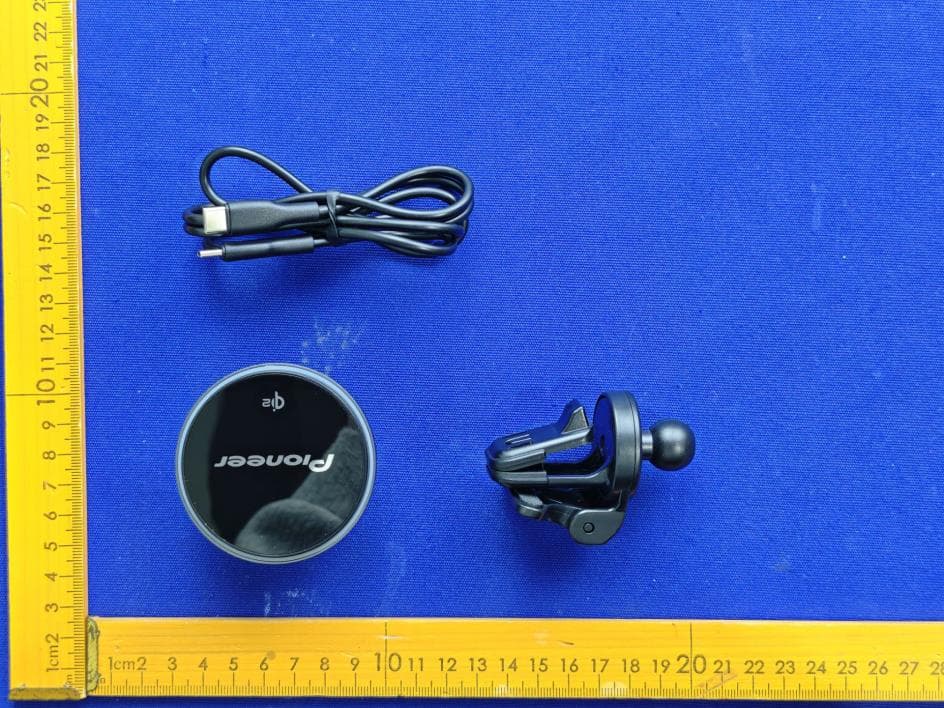
AJDK132
Jan 29, 2026WIRELESS CHARGING CRADLE
Equipment Class
DCD - Part 15 Low Power Transmitter Below 1705 kHz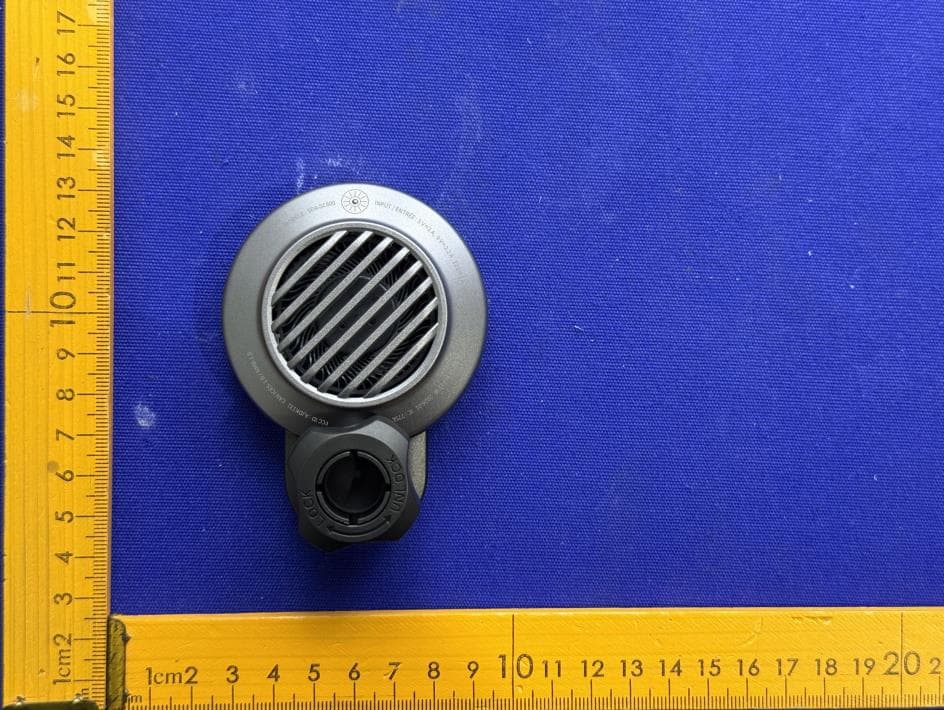
AJDK131
Jan 29, 2026WIRELESS CHARGING CRADLE
Equipment Class
DCD - Part 15 Low Power Transmitter Below 1705 kHzAJDK129
Nov 17, 2025RDS AV RECEIVER
Equipment Class
DSS - Part 15 Spread Spectrum Transmitter
AJDK122
Dec 11, 2022RDS AV RECEIVER
Equipment Class
NII - Unlicensed National Information Infrastructure TX