BABFT0017ACD Receiver with Bluetooth and Display
DENSO TEN Limited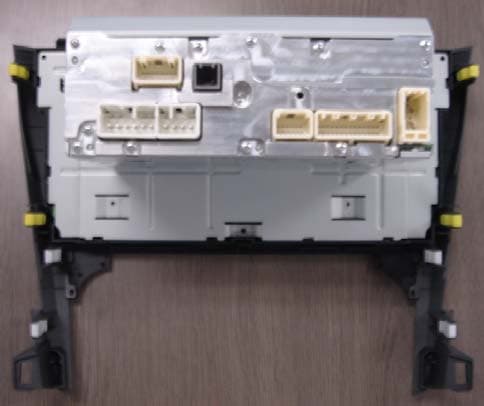
Click to zoom
Application Details
- Equipment Class
- DSS - Part 15 Spread Spectrum Transmitter
- Date of Grant
- Apr 01, 2012
- Application Purpose
- Original Equipment
- Date of Application
- Mar 29, 2012
- Equipment Note
- CD Receiver with Bluetooth and Display
- Frequency Range
- 2402.00000000 - 2480.00000000
- Company
- DENSO TEN Limited
- Country
- Japan
Documents & Files
Document Text
Text extracted from the exhibit documents filed with the FCC. Open a document above to read the original.
Users Manual
378 3-3. Using the Display Audio system ■About the phonebook in this system The following data is stored for every registered phone. When another phone is connecting, you cannot read the registered data. ●Phonebook data ●All of call history ●Speed dial When you delete the phone, the above-mentioned data is also deleted. ■When you release your car Be sure to initialize your data. (→P. 311) ■About Bluetooth ® ■Compatible models This system supports the following service. ●Bluetooth ® Specification: Ver. 1.1 or higher (Recommended: Ver. 2.1 + EDR or higher) ●Profiles: • HFP (Hands Free Profile) Ver. 1.0 or higher (Recommended: Ver. 1.5 or higher) This is a profile to allow hands-free phone calls using the cellular phone or head sets. It has an outgoing and incoming call function. • OPP (Object Push Profile) Ver. 1.1 or higher This is a profile to exchange phonebook data. When the Bluetooth ® phone has PBAP and OPP, OPP cannot be used. • PBAP (Phone Book Access Profile) Ver. 1.0 or higher This is a profile to transfer phonebook data. If your cellular phone does not support HFP, you cannot enter the Bluetooth ® phone. You need to take OPP or PBAP service individually. Bluetooth is a registered trademark of Bluetooth SIG. Inc. The Bluetooth wordmark and logo are owned by Bluetooth SIG. and permission has been granted to use the trademark of the licensee FUJITSU TEN LIMITED. Other trademarks and trade names are owned by various different owners. 3-3. U sing the Display Audio system 3 Interior features ■Certification This device complies with part 15 of the FCC Rules. Operation is subject to the following two conditions: (1) This device may not cause harmful interfer- ence, and (2) this device must accept any interference received, including interference that may cause undesired operation. FCC WARNING: Changes or modifications not expressly approved by the party responsible for compliance could void the user’s authority to operate the equipment. CAUTION: Radio Frequency Radiation Exposure This equipment complies with FCC radiation exposure limits set forth for uncontrolled equipment and meets the FCC radio frequency (RF) Exposure Guidelines in Supplement C to OET65. This equipment has very low levels of RF energy that it deemed to comply without maximum permissive expo- sure evaluation (MPE). But it is desirable that it should be installed and oper- ated with at least 20 cm and more between the radiator and person’s body (excluding extremities: hands, wrists, feet and ankles). Co-location: This transmitter must not be co-located or operated in conjunction with any other antenna or transmitter. 380 3-3. Using the Display Audio system CAUTION ■While driving Do not use the cellular phone or connect the Bluetooth ® system. NOTICE ■When leaving the vehicle Do not leave your cellular phone in the vehicle. The inside of the vehicle may become hot, causing damage to the phone. 381 3-3. Using the Display Audio system 3 Interior features Using the Bluetooth ® phone Device name Bluetooth ® connection status Make a call To display the screen shown above, press on the steering wheel or . 382 3-3. Using the Display Audio system Registering a Bluetooth ® phone To use the hands-free system, you must register a Bluetooth ® phone in the system. You can register up to 5 phones in the system. Display the “Telephone” screen. (→P. 381) Touch “Yes”. Input the passcode displayed on the screen into your phone. For the operation of the phone, see the manual that comes with your cellular phone. Passcodes are not required for SSP (Secure Simple Pairing) compatible Bluetooth ® devices. Depending on the phone, you may need to select “Yes” to regis- ter, or “No” to cancel on your cel- lular phone. If you want to cancel it, select “Cancel”. If a completion message is dis- played, registration is complete. If an error message is displayed, follow the guidance on the screen to try again. STEP1 STEP2 STEP3 383 3-3. Using the Display Audio system 3 Interior features Selecting the Bluetooth ® phone If multiple Bluetooth ® devices are registered, follow the procedure below to select the Bluetooth ® device to be used. You may only use one device at a time. Display the “Telephone” screen. (→P. 381) Touch “Connect telephone”. Touch the device to connect. “Add new”: Registering a Bluetooth ® device. (→P. 409) The selection indicator is displayed on left side of the selected device name. The Bluetooth ® mark is displayed when you connected the device. STEP1 STEP2 STEP3 384 3-3. Using the Display Audio system Connecting a Bluetooth ® phone There are two connecting methods available-automatic and manual. Automatic When you register your phone, auto connection will be activated. Always set it to this mode and leave the Bluetooth ® phone in a place where connection can be established. Vehicles without a smart entry & start system: When the engine switch is turned to the “ACC” or “ON” position, the system will search for a nearby cellular phone you have registered. Vehicles with a smart entry & start system: When the “ENGINE START STOP” switch is turned to ACCESSORY or IGNITION ON mode, the system will search for a nearby cellular phone you have registered. Next, the system automatically connects with the most recent of the phones connected to in the past. Then, the connection result is dis- played. 385 3-3. Using the Display Audio system 3 Interior features Ma nual When the auto connection has failed or “Bluetooth * power” is turned off, you must connect Bluetooth ® manually. *: Bluetooth is a registered trademark of Bluetooth SIG. Inc. Display the “Telephone” screen. (→P. 381) Touch “Connect telephone”. Touch the device to connect. A message is shown if connection has been successful. If connection fails, a message will be displayed and connection will be re-attempted. STEP1 STEP2 STEP3 386 3-3. Using the Display Audio system Making a call Once the Bluetooth ® phone is registered, you can make a call using the following procedure: ■Dialing …
Text truncated - open the document above for the full version.
External Photos
FUJITSU TEN CONFIDENTIAL External Photo FRONT REAR 250mm 330mm 330mm 250mm FUJITSU TEN CONFIDENTIAL TOP BOTTOM 195mm 330mm 330mm 195mm FUJITSU TEN CONFIDENTIAL RIGHT 250mm 195mm REAR 250mm 195mm
ID Label/Location Info
FT0017A Label Drawing and Position FUJITSU TEN CONFIDENTIAL TOP View
Internal Photos
MURATA CONFIDENTIAL 2009.12.15
Internal Photos
MURATA CONFIDENTIAL 2009.12.15
Internal Photos
FCC ID: BABFT0017A Sheet B1 of B2 Sheets ETC Report No. : 11-01-MAS-203-01 ANNEX B: INTERNAL CONSTRUCTION PHOTOS OF EUT FCC ID: BABFT0017A Sheet B2 of B2 Sheets ETC Report No. : 11-01-MAS-203-01
RF Exposure Info
FCC ID. : BABFT0017A Sheet 1 of 2 Sheets ETC Report No. : 11-01-MAS-203-03 Rev. No 1.0 MAXIMUM PERMISSIBLE EXPOSURE Standard Applicable Section 15.247 (b)(5) : Systems operating under the provisions of this section shall be operated in a manner that ensures that the public is not exposed to radio frequency energy levels in excess of the Commission's guidelines. See § 1.1307(b)(1) of this Chapter. Section 1.1310: The criteria listed in the following table shall be used to evaluate the environment impact of human exposure to radio frequency radiation as specified in 1.1307(b) LIMITS FOR MAXIMUM PERMISSIBLE EXPOSURE (MPE) Frequency Range (MHz) Electric Field Strength (V/m) Magnetic Field Strength (A/m) Power Density (nW/cm 2 ) Average Time (Minutes) (A) Limits for Occupational/control Exposures 300-1500 -- -- F/300 6 1500-100,000 -- -- 5 6 (B) Limits for General Population/Uncontrolled Exposures 300-1500 -- -- F/300 6 1500-100,000 -- -- 1 30 F = Frequency in MHz Calculations Friis transmission formula: P d = ( P out * G ) / ( 4 * pi * r 2 ) Where P d = power density in mW/cm 2 P out = output power to antenna in mW G = gain of antenna in linear scale pi = 3.1416 r = distance between observation point and center of the radiator in cm The limit of P d is 1 mW/cm 2 . If we know the maximum gain of the antenna and the total power input to the antenna, through the calculation, we will know the distance where the P d at 20 cm is meet the limit of MPE. FCC ID. : BABFT0017A Sheet 2 of 2 Sheets ETC Report No. : 11-01-MAS-203-03 Rev. No 1.0 Result Operation Frequency (GHz) Distance (cm) Maximum Peak Output Power (dBm) Maximum Peak Output Power (mW) Antenna Gain (dBi) FCC Power Density (mW/cm 2 ) 2402 20 1.09 1.285 1.1 0.00033 The P d at 20 cm distance calculated from the Friis transmission formula is mush smaller than the limit requirement 1 mW/cm 2 or 10W/m 2 . The Installation Manual instructs the user to install the device such that it has a separation of at least 20 cm from persons to comply with the FCC's requirements. This separation of 20 cm more than meets the FCC's and Industry Canada RF exposure requirements.
Test Report
FCC ID: BABFT0017A Sheet 1 of 82 Sheets ETC Report No. : 11-01-MAS-203-01 Rev. No 1.0 CONFORMANCE TEST REPORT FOR FCC 47 CFR, Part 15 Subpart C Report No.: 11-01-MAS-203-01 Client: FUJITSU TEN LIMITED Product: CD Receiver with Bluetooth and Display Model: FT0017A FCC ID: BABFT0017A Manufacturer/supplier: FUJITSU TEN LIMITED Date test item received: 2011/01/25 Date test campaign completed: 2011/02/16 Date of issue: 2011/02/16 The test result onl y corresponds to the tested sample. It is not permitted to copy this report, in part or in full, without the permission of the test laboratory. Total number of pages of this test report: 82 pages Total number of pages of photos: External photos 2 pages Internal photos 2 pages Setup photos 1 pages Test Engineer Checked By Approved By David You James Cheng Joe Hsieh ELECTRONICS TESTING CENTER, TAIWAN NO.8, LANE 29, WENMING RD., LESHAN TSUEN, GUISHAN SHIANG, TAOYUAN COUNTY, TAIWAN 33383, R.O.C.TAIWAN, R.O.C. TEL: (03) 3276170~4 INT: +886-3-3276170~4 FAX: (03) 3276188 INT: +886-3-3276188 FCC ID: BABFT0017A Sheet 2 of 82 Sheets ETC Report No. : 11-01-MAS-203-01 Rev. No 1.0 Client : FUJITSU TEN LIMITED Address : 2-28, Gosho-dori, 1-chome, Hyogo-ku, kobe 652-8510 Japan Manufacturer : FUJITSU TEN LIMITED Address : 2-28, Gosho-dori, 1-chome, Hyogo-ku, kobe 652-8510 Japan EUT : CD Receiver with Bluetooth and Display Trade name : ---- Model No. : FT0017A Power Source : 13.2Vdc battery Regulations applied : FCC 47 CFR, Part 15 Subpart C (2009) The testing described in this report has been carried out to the best of our knowledge and ability, and our responsibility is limited to the exercise of reasonable care. This certification is not intended to believe the sellers from their legal and/or contractual obligations. The compliance test is only certified for the test equipment and the results of the testing report relate only to the item tested. The compliance test of this report was conducted in accordance with the appropriate standards. It’s not intention to assure the quality and performance of the product. This report shall not be reproduced except in full, without the approval of ETC. This report must not be used by the client to claim product endorsement by NVLAP or any agency of the U.S. Government. Laboratory Introduction: Electronics Testing Center, Taiwan is recognized, filed and mutual recognition arrangement as following: 1 ISO9001: TüV Product Service 2 ISO/IEC 17025: BSMI, CNLA, NCC, NVLAP, CCIBLAC, UL, Compliance 3 Filing: FCC, Industry Canada, VCCI 4 MRA: Australia, Hong Kong, New Zealand, Singapore, USA, Japan, Korea, China, APLAC through TAF 5 FCC Registration Number: 90588, 91094, 91095 h Industry Canada Site Regisitation number: IC 2949A-1 NVLAP Lab Code 200133-0 FCC ID: BABFT0017A Sheet 3 of 82 Sheets ETC Report No. : 11-01-MAS-203-01 Rev. No 1.0 Table of Contents Page 1 GENERAL INFORMATION ............................................................................................... 5 1.1 Product Description .............................................................................................................. 5 1.2 Characteristics of Device...................................................................................................... 5 1.3 Test Methodology................................................................................................................. 5 1.4 Modifiction List of EUT....................................................................................................... 5 1.5 Test Facility .......................................................................................................................... 5 1.6 Test Summary....................................................................................................................... 5 2 PROVISIONS APPLICABLE .............................................................................................. 6 2.1 Definition.............................................................................................................................. 6 2.2 Requirement for Compliance................................................................................................7 2.3 Restricted Bands of Operation..............................................................................................9 2.4 Labeling Requirement .......................................................................................................... 9 2.5 User Information ................................................................................................................ 10 3. SYSTEM TEST CONFIGURATION ................................................................................ 11 3.1 Justification......................................................................................................................... 11 3.2 Devices for Tested System .................................................................................................11 4 RADIATED EMISSION MEASUREMENT .................................................................... 13 4.1 Applicable Standard ........................................................................................................... 13 4.2 Measurement Procedure .....................................................................................................13 4.3 Measuring Instrument ........................................................................................................ 15 4.4 Radiated Emission Data ..................................................................................................... 16 4.5 Field Strength Calculation.................................................................................................. 20 5 CONDUCTED EMISSION MEASUREMENT ................................................................ 21 6 ANTENNA REQUIREMENT ............................................................................................ 22 6.1 Standard Applicable .....…
Text truncated - open the document above for the full version.
Test Setup Photos
FCC ID: BABFT0017A Sheet 1 of 1 Sheets ETC Report No. : 11-01-MAS-203-01 Photos of Radiation Measuring Setup
Contact Information
Applicant
Kaoru Abe(Department General Manager)
Technical Contact
electronics testing centerJames Cheng
[email protected]886 3 3280026
No. 8, Lane 29, Wenming Rd., Leshan Tsuen, · Taoyuan county · Taiwan
Test Firm
Electronics Testing Center, TaiwanWinpo Tsai
Technical Specifications
| # | Rule Parts | Frequency Range | Power Output |
|---|---|---|---|
| 1 | 15C | 2.40 GHz - 2.48 GHz | 1.29 mW |
Other Applications from DENSO TEN Limited
BABTN0052E
May 26, 2026Car Audio
Equipment Class
CXX - Communications Rcvr for use w/ licensed Tx and CBsBABTN0051A
Apr 10, 2026Car Navigation
Equipment Class
CXX - Communications Rcvr for use w/ licensed Tx and CBs
BABTN0046A
Feb 12, 2024Car Audio
Equipment Class
CXX - Communications Rcvr for use w/ licensed Tx and CBs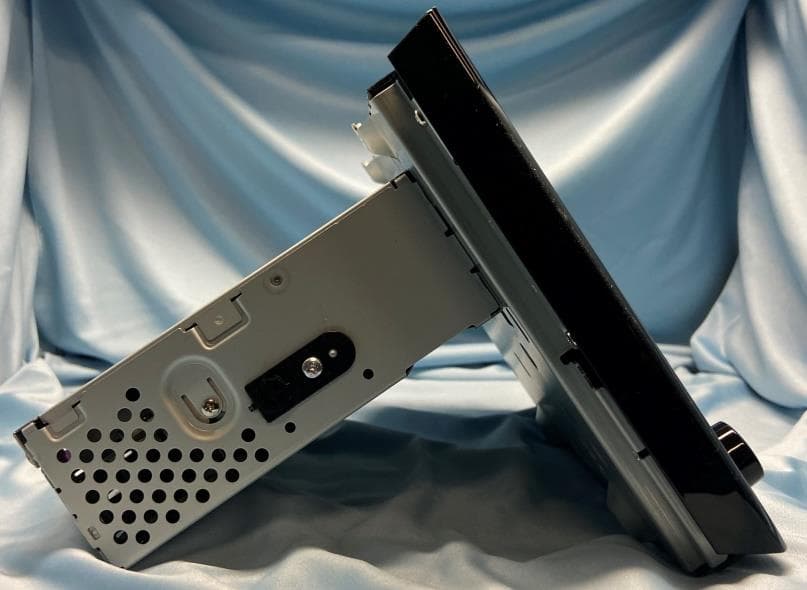
BABTN0040B
Jul 23, 2023Car Audio
Equipment Class
DTS - Digital Transmission System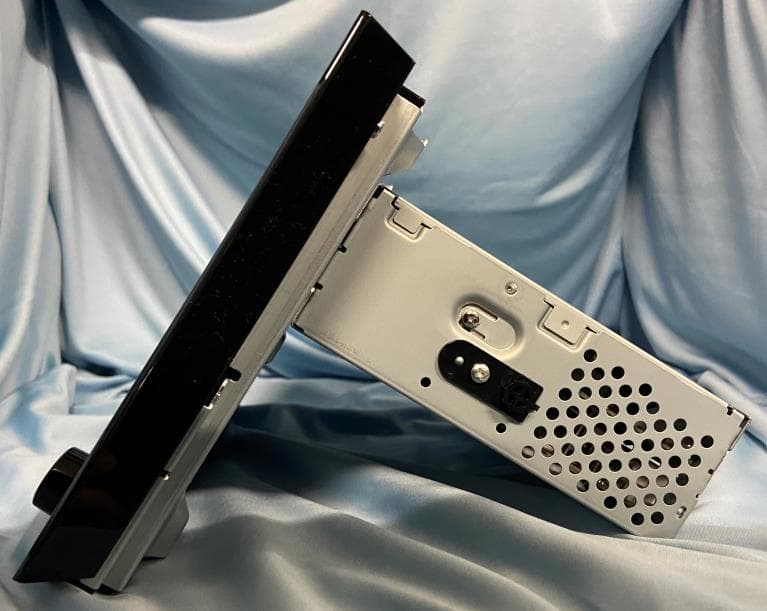
BABTN0040A
Jul 23, 2023Car Audio
Equipment Class
CXX - Communications Rcvr for use w/ licensed Tx and CBs