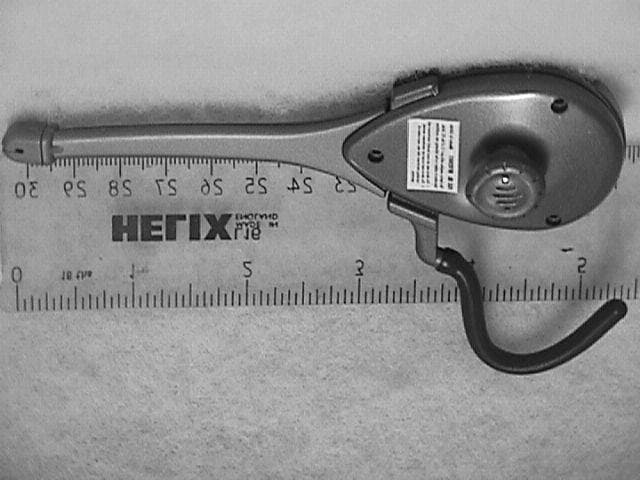
BFV2001Wireless RF HandFree EarPhone
Golden Eagle Electronics Manufactory Ltd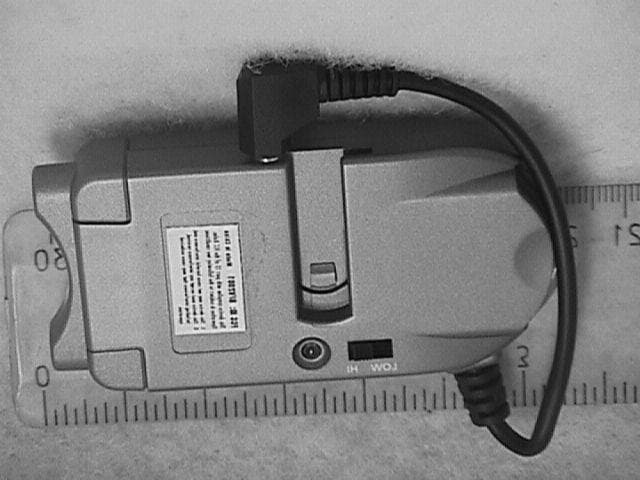
Click to zoom
Application Details
- Equipment Class
- DXT - Part 15 Low Power Transceiver, Rx Verified
- Date of Grant
- Feb 18, 2001
- Application Purpose
- Original Equipment
- Date of Application
- Feb 18, 2001
- Equipment Note
- Wireless RF HandFree EarPhone
- Frequency Range
- 447.20000000 - 448.40000000
- Country
- Hong Kong
Documents & Files
Document Text
Text extracted from the exhibit documents filed with the FCC. Open a document above to read the original.
Users Manual
1 APPENDIX B OPERATION INSTRUCTION 1. System introduction The system consists of one transceiver. One ear-piece, one plastic case, one charger (including two pieces of Lithium-Ion batteries) and one AC/DC adapter. The system utilizes state of the art wireless communication technology to achieve a high- quality replacement of the usual wired headset. The ease of use and the extremely low radiation power (less than 0.01mW) of the transceiver and the ear-piece, make the system ideal for daily usage. 2. OPERATION a. Connect the transceiver to your cellular phone by plugging the 2.5mm jack into the phone’s headphone outlet. In case your cellular phone has a different type of headphone outlet, please use a converter (not included) which has an access to the 2.5mm jack. b. Load the fully charged batteries into the battery compartments of the transceiver and ear-piece. Make sure the positive sign face down on the battery ring. c. The system is now in stand by mode. Observe that the LED in the transceiver blinks intermittently at an approximate interval of 4 seconds. d. There are two ways that the system will enter the operation state. To enter operation state manually, press the on/off switch on the ear-piece and a single beep will sound immediately in response. To enter operation state automatically, nothing needs to be done. Notice that there are two beeps in the ear-piece to signify the transition from stand by to operation. One can test the automatic operation by just pressing the keyboard on the cellular phone. Depending on manufacturers of cellular phones, one may hear the keyboard beep through the ear-piece. In any case, when your telephone is connected (whether dial out or dial in), the system will operate automatically and you can hear and talk freely. e. If your cellular phone has voice dialing feature, you can use the wireless headset to perform this function. Simply press the on/off switch on the ear-piece and then choose the voice dialing command in the cellular phone, talk just as you would with the cellular phone only. f. When battery voltage is low in either the transceiver or ear-piece, you can hear several warning beeps. After the beeps, the system will still operate for a few minutes, and then stops operate completely. At this stage, the LED of the transceiver will stop blinking and the ON/OFF switch in the ear-piece will stop working. In this case, please recharge the battery. g. Usage of ear-piece on/off switch 2 The switch has dual function of on/off and volume adjustment. Please note following steps: a) Single press with one ‘BEEP-TONE’ is to operate the system . b) During conservation, each press will allow you to hear a single ‘BEEP’ and that is to change the volume. There are three volume level that you can choose and each beep indicate the next volume level. Once it reaches the highest level, each press will decrement to the next lower level and when it reaches the lowest level, each press will increment to the next higher level. c) To enter the standby mode manually, you can press the switch firmly for 2 seconds. At this moment, two ‘BEEP-TONE’ can be heard. It is recommended that the system should be manually set to standby mode for conserving power. h. Automatic standby mode after use After 30 seconds up to one minute of silence in the phone, the system will enter standby mode automatically to conserve power. i. LED and switch in transceiver *LED The LED blinks approximately at 4-seconds interval during operation. *Hi-Low volume switch There is a Hi-Low volume setting with the mini transceiver. This provides a convenience for the transceiver to adapt to different sound level of different phone makers. j. Out of Range When ear-piece is out of range from transceiver, static noise will increase suddenly, the user should go back near the transceiver. In some models, there may be a warning beep to indicate this situation. 3. Recharging System provides a charger which allows two lithium-Ion batteries to be charged at the same time. a. Install the plug of AC adapter to the DC jack of the unit and plug the adapter into a standard wall outlet . The multi-color LED is displaying green when charger is ready. b. Insert the battery into the charger together with the battery ‘ring’ and matching polarity. The LED will illuminate red to show that charging is taking place. c. LED will glow amber when battery capacity reaches 90%. The battery will be fully charged in approximately one hour by then and LED will turn green. d. Unplug the AC adapter and it is safe to keep the batteries inside the charger when not in use. e. Please pay attention to the local voltage when you use the adapter f. Avoid leaving the batteries in the ear-piece or transceiver for more than 7 days without recharge. It is better to leave the batteries inside the charger when not in use. 4. Things to beware of when system is not functioning. 3 a. Is on/off button switched off? b. Is there any battery loaded in? c. Is battery fully recharged? d. Is transceiver properly connected to cellular phone? e. Is transceiver loaded with fully recharged battery? f. Is ear-piece out of transmit/receive range? g. Is battery properly in place without mixing up positive and negative side? h. Is LED in transceiver still blinking? 5. Features: a. Extremely low output power creating no radiation hazards. b. Standby time: 80 hours. c. Continuous talk time 2 hours. d. Full duplex. e. Used with any cellular phone, home phone. f. Replaceable batteries. g. Automatic anti-collusion system to avoid cross talking with other users within the same working radius. h. Maximum 5 channels and 65000 address codes to avoid interference with other users. i. Very low static noise and high fidelity sound. j. State of the art microwave wireless technology.
Cover Letter(s)
To:Commission Reviewer From:Richard King Certification Department Coordinator Elite Electronic Engineering RE:FCC ID: BFV2001 Applicant:Golden Eagle. Corr. Ref. #: 731 Confirm. #: Date: In reference to a request for certification from Golden Ea gle Wireless RF HandFree EarPho ne Model GEMC2001 . Elite performed a certification of the above referenced product manufactured by Golden Eagle. Deficiencies were discovered during the certification process. The noted deficiencies were addressed in correspondence between the appropriate test facilities and Elite Electronic Engineering. The correspondence is indicated below. Questions from Elite dated November 14, 2000. 1. An inconsistency was noted in the users’ manual as to the number of channels the device will use. The user’s manual states that it features a “minimum 16 channels and 65000 address codes to avoid interference with other users” while certification is being requested for a single channel. Please explain. 2.The report for the base unit did not indicate if all ports of the device were filled. Does the base unit connect to other devices? If so, does the test configuration represent the worst case? 3. Exhibit B schematic is not very clear the values cannot be read. Please re-submit the schematic for both the headset and the base unit. 4. Exhibit E measurement report did not have a photograph of the radiated emissions test setup for the headset or the base unit. Please submit the radiated emissions test setup for both devices. Response to Elite’s questions dated November 14, 2000. 1, 3, 4. Yes there are 15 other channels for a total of 16 channels. New schematic, users manual and photo for the headset are attached. 2.Yes. Questions from Elite dated December 1, 2000. 1. The device does not comply with 47 CFR Part 15.205. The device transmits in a restricted band. Response to Elite’s questions dated December 1, 2000. In reference to your letter dated December 1, 2000, regarding the Golden Eagle Model GEMC2001 Comtalk: We have contacted Golden Eagle and they would like to go ahead with certification on only the first five channel sets, which are not in restricted bands. We are currently awaiting new test samples set at high & low frequency, to cover the range of operation. However, we are concerned that they may not arrive before the 30-day hold period. We respectfully request that you keep the application on hold through the first week of January 2001, so we may submit the necessary data for certification. Thank you in advance for your assistance. Mr. King, Enclosed you will find the high and low frequency, radiated emissions data files for the Golden Eagle application which is currently on hold (FCC IDs:BFV2100 & BFV 2101). The system will utilize only the following frequency pairs so as not to transmit in restricted bands: Base Tx Freq. (MHz) Head-Piece Tx Freq. (MHz) 1. 397.6 447.2 2. 397.9 447.5 3. 398.2 447.8 4. 398.5 448.1 5. 398.8 448.4 Comments: Richard E. King Certification Department Coordinator Elite Electronic Engineering
Cover Letter(s)
To:Ric h Fabina From:Richard King Certification Department Coordinator Elite Electronic Engineering RE:FCC ID BFV2001 and BFV2101 Applicant:Golden Eagle Corr. Ref. #: 731 Confirm. #:TC 100091 & TC 100092 Date:06/06/01 For the above-mentioned FCC ID numbers the grants were revised to include the entire frequency ranges the devices could operate in. If I need to send this letter to the "submit correspondence" site please let me know. Please feel free to contact me here at Elite with any comments, questions or concerns regarding this matter. Sincerely, Richard King Certification Department Coordinator Elite Electronic Engineering Telephone: (630) 495-9770 E-mail: [email protected]
Schematics
SCHEMATIC DIAGRAM OF MIC BASE
Test Report
APPLICANT Golden Eagle Electronics Manufactory LTD. Suite 215, 2/F., New East Ocean Centre 9 Science Museum Road Tsim Sha Tsui East, Kowloon Hong Kong, China MANUFACTURER Golden Eagle Electronics Manufactory LTD. Suite 215, 2/F., New East Ocean Centre 9 Science Museum Road Tsim Sha Tsui East, Kowloon Hong Kong, China TEST SPECIFICATION: FCC Rules and Regulations Part 15, Subpart C TEST PROCEDURE: FCC 15.209(a) TEST SAMPLE DESCRIPTION BRANDNAME: Com-Talk MODEL: GEMC2001 FCC ID: BFV2001 TYPE: Hands Free Base Transmitter FREQUENCY RANGE: 447.1 MHz POWER REQUIREMENTS: 3.6 VDC derived from a rechargeable battery TESTS PERFORMED - 15.209 Radiated Emissions REPORT OF MEASUREMENTS Applicant: Golden Eagle Electronics Manufactory LTD. Device: Hands Free Base Transmitter FCC ID: BFV2001 Power Requirements: 3.6 VDC derived from a rechargeable battery Applicable Rule Section: Part 15, Subpart C, Section 15.209 Report Number: R-8763-2 FCC ID #: BFV2001 TEST RESULTS 15.203:The intentional radiator is designed to ensure that no antenna other than that furnished by the applicant can be used with the device. 15.209(c):Emissions radiated were attenuated in accordance with the general radiated emissions limits of 15.209. GENERAL NOTES 1.All user accessible controls were adjusted to produce maximum emissions. 2.The frequency range was scanned from 30MHz to 4.5 GHz. All emissions not reported were more than 20dB below the specified limit. Report Number: R-8763-2 FCC ID #: BFV2001 EXHIBIT 4 Radiated Emissions, Spurious Emissions Para. 15.209(a) (Please see separate e-file attachment named REspur.pdf) Report Number: R-8763-2 FCC ID #: BFV2001 EQUIPMENT LIST FCC15.209(a) Radiated Emissions, 30MHz-4GHz ENTypeManufacturerDescriptionModel No.Cal DateDue Date 067Open Area Test SiteRetlif3 MeterRNY10/15/200010/15/2003 128CDouble Ridge GuideEaton Corporation1 GHz - 18 GHz9600109/18/200009/18/2001 133Broadband Pre-AmplifierElectro-Metrics10 kHz - 1 GHz, 26dBBPA-100006/13/200006/13/2001 141Spectrum AnalyzerHewlett Packard100 Hz - 40 GHz8566B08/03/200002/03/2001 141AGraphics PlotterHewlett PackardN/A7470A03/08/200003/08/2001 141BQuasi-Peak AdaptorHewlett Packard100 Hz - 1 GHz85650A08/02/200002/02/2001 206B6.0 dB AttenuatorTexscan0 - 1.0 GHzFP-50 - 6 dB06/13/200006/13/2001 523BiconilogElectro-Mechanics26 - 2000 MHz3142B06/08/200006/08/2001 543PreamplifierHewlett Packard1.0 GHz - 26.5 GHz8449B06/16/199906/16/2001 617Interference AnalyzerElectro-Metrics10 kHz - 1 GHzEMC-3001/17/200001/17/2001 Report Number: R-8763-2 FCC ID #: BFV2001 EQUIPMENT LIST FCC15.209(a) Radiated Emissions, 30MHz-4GHz EN Type Manufacturer Description Model No. Cal Date Due Date 067 Open Area Test Site Retlif 3 Meter RNY 10/15/2000 10/15/2003 128C Double Ridge Guide Eaton Corporation 1 GHz - 18 GHz 96001 09/18/2000 09/18/2001 133 Broadband Pre-Amplifier Electro-Metrics 10 kHz - 1 GHz, 26dB BPA-1000 06/13/2000 06/13/2001 141 Spectrum Analyzer Hewlett Packard 100 Hz - 40 GHz 8566B 08/03/2000 02/03/2001 141A Graphics Plotter Hewlett Packard N/A 7470A 03/08/2000 03/08/2001 141B Quasi-Peak Adaptor Hewlett Packard 100 Hz - 1 GHz 85650A 08/02/2000 02/02/2001 206B 6.0 dB Attenuator Texscan 0 - 1.0 GHz FP-50 - 6 dB 06/13/2000 06/13/2001 523 Biconilog Electro-Mechanics 26 - 2000 MHz 3142B 06/08/2000 06/08/2001 543 Preamplifier Hewlett Packard 1.0 GHz - 26.5 GHz 8449B 06/16/1999 06/16/2001 617 Interference Analyzer Electro-Metrics 10 kHz - 1 GHz EMC-30 01/17/2000 01/17/2001 Retlif Testing Laboratories R Retlif Job Number R-8763-2 Data Sheet 1 of 1 Test Method: FCC Part 15 Subpart C, Spurious Case Radiated Emissions, Paragraph 15.209(a) Customer: Golden Eagle Electronics Manufactory Ltd. Job No. R-8763-2 Test Sample: Hands Free Base 397.6 MHz FM Transmitter Model No.: GEMC2001 FCC ID: BFV2001 Operating Mode: Continuously Transmitting a 397.6 MHz CW signal. Technician: Peter Lananna Date: January 2, 2001 Notes: Test Distance: 3 Meters Temp:4C Humidity:53% Detector: Quasi-Peak 30 MHz to 1 GHz, Peak above 1 GHz Test Freq. Antenna Position EUT Orientation Meter Readings Correction Factor Corrected Reading Converted Reading LIMIT MHz (V/H) / Meters Degrees dBuV dB dBuV/m uV/m uV/m 30.00 100 | | | | | | | | | | | | 88.00 100 88.00 150 l | | | | | | | | | | | | | l | 216.00 150 216.00 200 | | 397.6 V/1.0 203 40 -0.7 39.3 92.2 | l | 960.00 200 960.00 500 l | | | l | 4000.0 500 The EUT was scanned from 30 MHz to 4 GHz The emissions observed from the EUT do exceed the specified limits. Emissions not recorded were more than 10dB under the specified limit
Contact Information
Applicant
Patrick Lo
011 852-2411-1881Fax: 011 852-2411-2138
Technical Contact
Retilf Testing LaboratoriesThomas J Schneider
[email protected]631 737-1500
795 Marconi Avenue · Ronkonkoma, New York · United States
Non-Technical Contact
Retilf Testing LaboratoriesMichelle White
[email protected]631 737-1500
Test Firm
Retlif Testing LaboratoriesMichael Bozza
Technical Specifications
| # | Rule Parts | Frequency Range | Power Output |
|---|---|---|---|
| 1 | 15C | 447.2 MHz - 448.4 MHz | - |
Other Applications from Golden Eagle Electronics Manufactory Ltd
BFV2101
Feb 18, 2001Wireless RF HandFree EarPhone
Equipment Class
DXT - Part 15 Low Power Transceiver, Rx Verified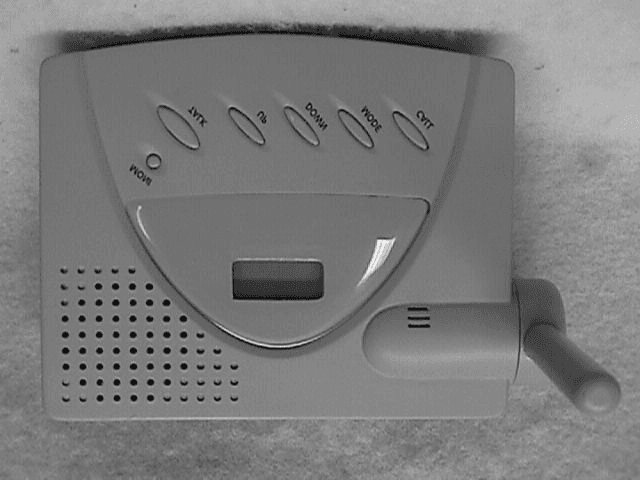
BFV5M3BS
Mar 26, 2000Family Radio Base Station
Equipment Class
FRB - Part 95 Family Radio Base Transmitter
BFVGEE248T
Jan 19, 20002.4 GHz Audio.Video Monitor System
Equipment Class
DXX - Part 15 Low Power Communication Device Transmitter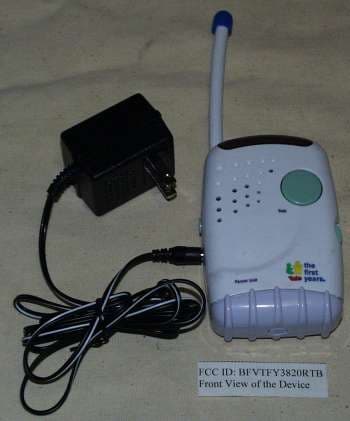
BFVTFY3820RTB
Nov 29, 1999Talkback Baby Monitor
Equipment Class
DXT - Part 15 Low Power Transceiver, Rx Verified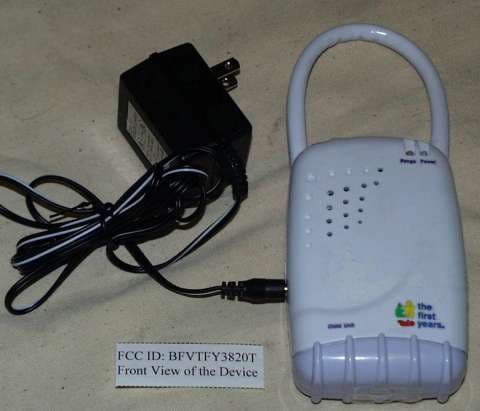
BFVTFY3820T
Nov 21, 1999Talkback Baby Monitor
Equipment Class
DXT - Part 15 Low Power Transceiver, Rx Verified