BV8DB800800 MHz Transceiver
Harris Corporation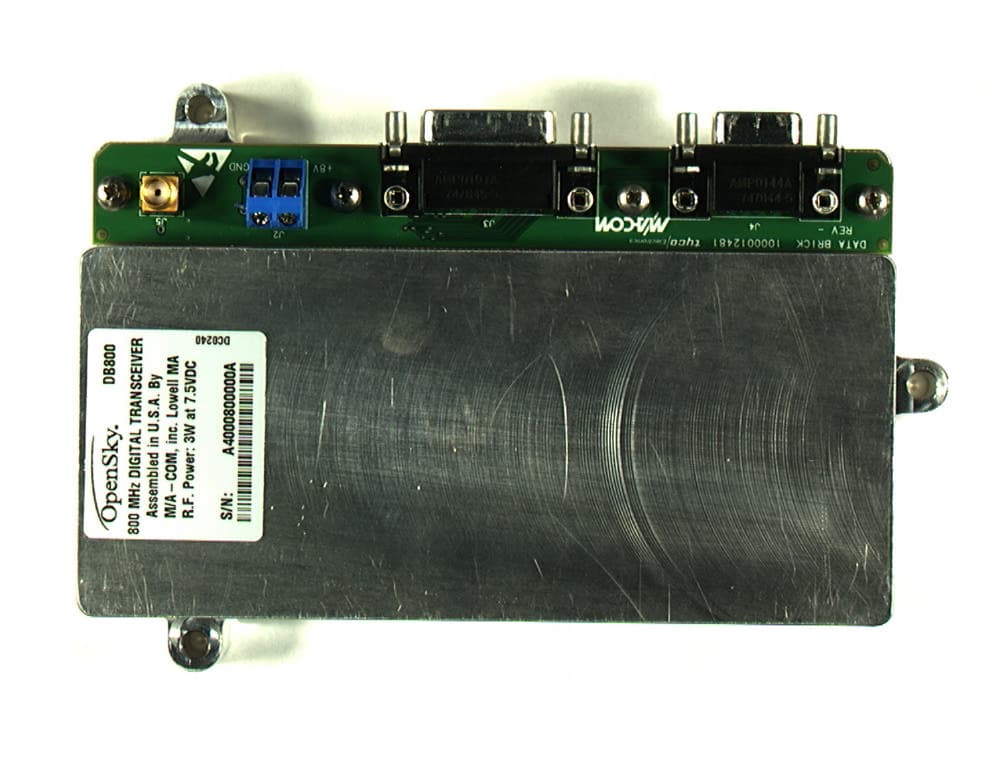
Click to zoom
Application Details
- Equipment Class
- TNB - Licensed Non-Broadcast Station Transmitter
- Date of Grant
- Sep 08, 2003
- Application Purpose
- Original Equipment
- Date of Application
- Sep 08, 2003
- Equipment Note
- 800 MHz Transceiver
- Frequency Range
- 806.01250000 - 823.98750000
- Company
- Harris Corporation
- Country
- United States
Documents & Files
Document Text
Text extracted from the exhibit documents filed with the FCC. Open a document above to read the original.
Users Manual
Installation Manual MM102424V1 R1A Data Brick DB800 2 The software contained in this device is copyrighted by M/A-COM, Inc. Unpublished rights are reserved under the copyright laws of the United States. NOTICE! This manual is published by M/A-COM, Inc. without any warranty. Improvements and changes to this manual necessitated by typographical errors, inaccuracies of current information, or improvements to programs and/or equipment, may be made by M/A-COM, Inc. at any time and without notice. Such changes will be incorporated into new editions of this manual. No part of this manual may be reproduced or transmitted in any form or by any means, electronic or mechanical, including photocopying and recording, for any purpose, without the express written permission of M/A-COM, Inc. Copyright © 2003, M/A-COM, Inc. All rights reserved. 3 TABLE OF CONTENTS Page 1. SAFETY.............................................................. 4 1.1 MPE LIMITS ............................................ 4 1.2 SAFETY TRAINING INFORMATION... 5 1.3 TRANSMITTER HAZARDS ................... 6 1.4 OPERATING TIPS ................................... 9 1.5 OCCUPATIONAL SAFETY GUIDELINES.... 9 2. PRODUCT DESCRIPTION ........................... 11 3. SPECIFICATIONS.......................................... 12 3.1 GENERAL .............................................. 12 3.2 TRANSMITTER ..................................... 12 3.3 RECEIVER ............................................. 13 3.4 DIGITAL OPERATION ......................... 14 3.5 REGULATORY DATA.......................... 14 4. OPTIONS AND ACCESSORIES ................... 15 5. INSTALLATION ............................................. 16 5.1 POWER INSTALLATION ..................... 16 5.2 ANTENNA INSTALLATION................ 17 6. CONFIGURATION ......................................... 18 7. MOUNTING REQUIREMENTS ................... 19 8. TROUBLESHOOTING .................................. 20 4 1. SAFETY 1.1 MAXIMUM PERMISSIBLE EXPOSURE (MPE) LIMITS Do not transmit with this radio and antenna when persons are within the MPE Radius of the antenna, unless such persons (vehicle occupants or bystanders, for example) are shielded from the antenna field by a metallic barrier (such as the user’s vehicle rooftop). The MPE Radius is the minimum distance from the antenna axis that ALL persons should maintain in order to avoid RF exposure higher than the allowable MPE level set by the FCC. WARNING Failure to observe these limits may allow those within the MPE radius to experience RF radiation absorption which exceeds the FCC maximum permissible exposure (MPE) limit. It is the responsibility of the installer to ensure that the maximum permissible exposure limits are observed at all times during radio transmission. The installer is to ensure that no bystanders come within the radius of the maximum permissible exposure limits shown below. 5 1.1.1 Determining MPE Radius The Maximum Permissible Exposure Radius has been estimated to be a radius of about 6.3 inches (or 16 cm) for a 5 dBi gain antenna, and 11.25 inches (or 28.5 cm) for a 10 dBi gain antenna per OET bulletin 65 of the FCC. This estimate is made using the maximum capable power of the radio and a maximum 50% transmit duty cycle. 1.2 SAFETY TRAINING INFORMATION WARNING The DB800 generates RF electromagnetic energy during transmit mode. This radio is designed for and classified as “Occupational Use Only” meaning it must be used only during the course of employment by individuals aware of the hazards and the ways to minimize such hazards. This radio is NOT intended for use by the “General Population” in an uncontrolled environment. It is the responsibility of the installer to ensure that the maximum permissible exposure limits are observed at all times during radio transmission. The installer is to ensure that no bystanders come within the radius of the maximum permissible exposure limits. 6 This radio has been tested and complies with the FCC RF exposure limits for “Occupational Use Only.” In addition, this M/A-COM radio complies with the following Standards and Guidelines with regard to RF energy and electromagnetic energy levels and evaluation of such levels for exposure to humans: • FCC OET Bulletin 65 Edition 97-01 Supplement C, Evaluating Compliance with FCC Guidelines for Human Exposure to Radio Frequency Electromagnetic Fields. • American National Standards Institute (C95.1 – 1992), IEEE Standard for Safety Levels with Respect to Human Exposure to Radio Frequency Electromagnetic Fields, 3 kHz to 300 GHz. • American National Standards Institute (C95.3 – 1992), IEEE Recommended Practice for the Measurement of Potentially Hazardous Electromagnetic Fields – RF and Microwave. 1.3 TRANSMITTER HAZARDS WARNING The installer should be aware of certain hazards common to the operation of vehicular radio transmitters. A list of several possible hazards is given: 7 1. Explosive Atmospheres – Just as it is dangerous to fuel a vehicle with the motor running, similar hazards exist when operating a vehicular radio. Be sure to turn the radio off while fueling a vehicle. Do not carry containers of fuel in the trunk of a vehicle if the radio is mounted in the trunk. Areas with potentially explosive atmospheres are often, but not always, clearly marked. Turn OFF your radio when in any area with a potentially explosive atmosphere. It is rare, but not impossible that the radio could generate sparks. 2. Interference to Vehicular Electronic Systems – Electronic fuel injection systems, electronic anti-skid braking systems, electronic cruise control systems, etc., are typical electronic systems that can malfunction due to the lack of protection from radio frequency energy present when transmitting. If the vehicle contains such equipment, consult the dealer and enlist their aid in determining the expected performance of electronic circuits when the radio is transmitting. 3. Dynamite Blasting Caps – dynamite blasting caps may be caused to…
Text truncated - open the document above for the full version.
Cover Letter(s)
M/A-COM, Inc. 221 Jefferson Ridge Parkway Lynchburg, VA 24501 [email protected] Regulatory Manager Telephone: (434) 455-9377 Fax: (434) 455-6815 April 30, 2003 Federal Communications Commission Authorization & Evaluation Division 7435 Oakland Mills Road Columbia Maryland 21046 Attention: To Whom it may concern Subject: Type Acceptance FCC ID: BV8DB800, M/A-COM, Inc. wishes to submit this confidentiality letter for the record for FCC ID:BV8DB800 M/A-COM, Inc. is requesting that Exhibit 4 (Circuit Descriptions), Exhibit 5 (Schematic Diagrams), Exhibit 10 (Parts List and Tune Up Procedures), and Exhibit 12 (Operational Description) not be made routinely available for public inspection. M/A-COM, Inc. considers the information in these exhibits to be classified as trade secrets, pursuant to 47 CFR Section 0.457(d) and Section 552(b)(4) of the Freedom of Information Act. Please mark Exhibits 4, 5, 10, and 12 as “Confidential.” Regards, Bryan McWatters M/A-COM, Inc. Engineering Regulatory Manager 221 Jefferson Ridge Parkway Lynchburg VA, 24501 (434)455-9377 Fax(434)455-6815 [email protected]
Contact Information
Applicant
Thomas Camper, Jr.(Regulatory Manager)
Test Firm
Bay Area Compliance LaboratoryJohn Chan
Technical Specifications
| # | Rule Parts | Frequency Range | Power Output | Emission | Tolerance |
|---|---|---|---|---|---|
| 2 | 9 | 806.0125 MHz - 823.9875 MHz | 6.61 W | 13K5F1E | 2.5 ppm |
Other Applications from Harris Corporation
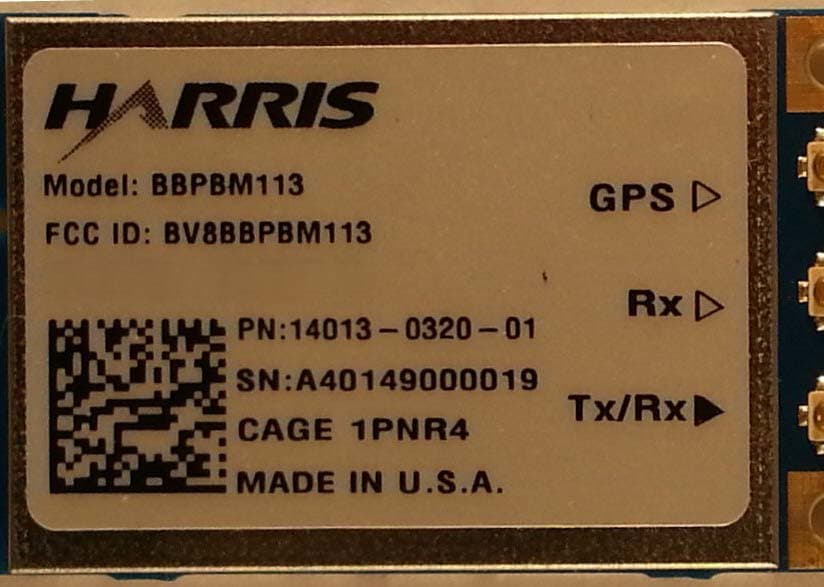
BV8BBPBM113
Apr 11, 2013Wireless Licensed Module
Equipment Class
TNB - Licensed Non-Broadcast Station Transmitter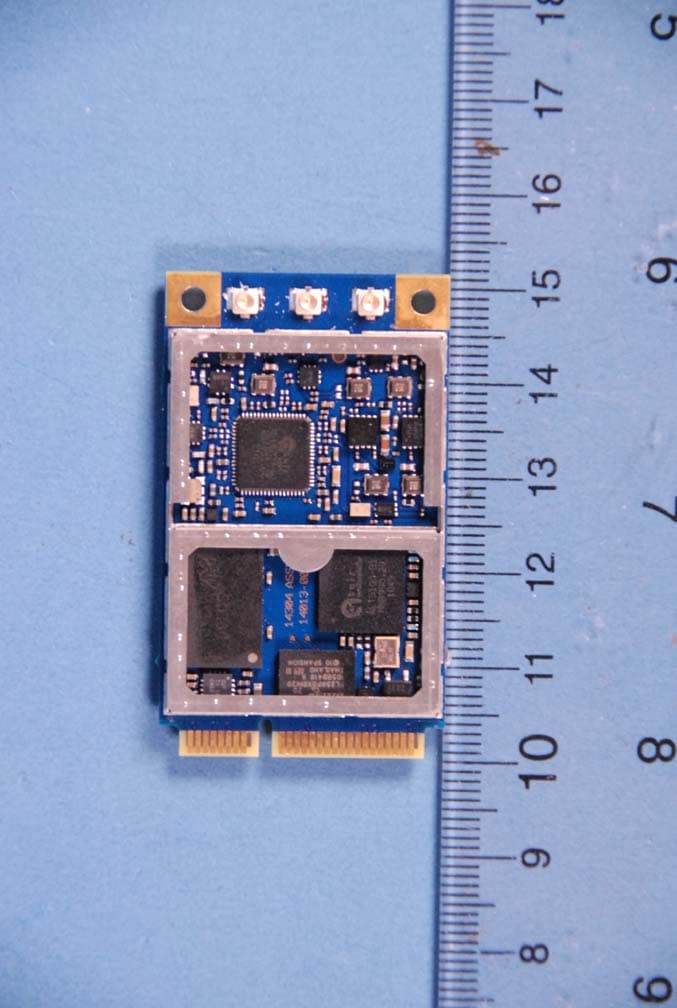
BV8BBPBM100
Feb 09, 2012700 MHz LTE Wireless Module
Equipment Class
TNB - Licensed Non-Broadcast Station Transmitter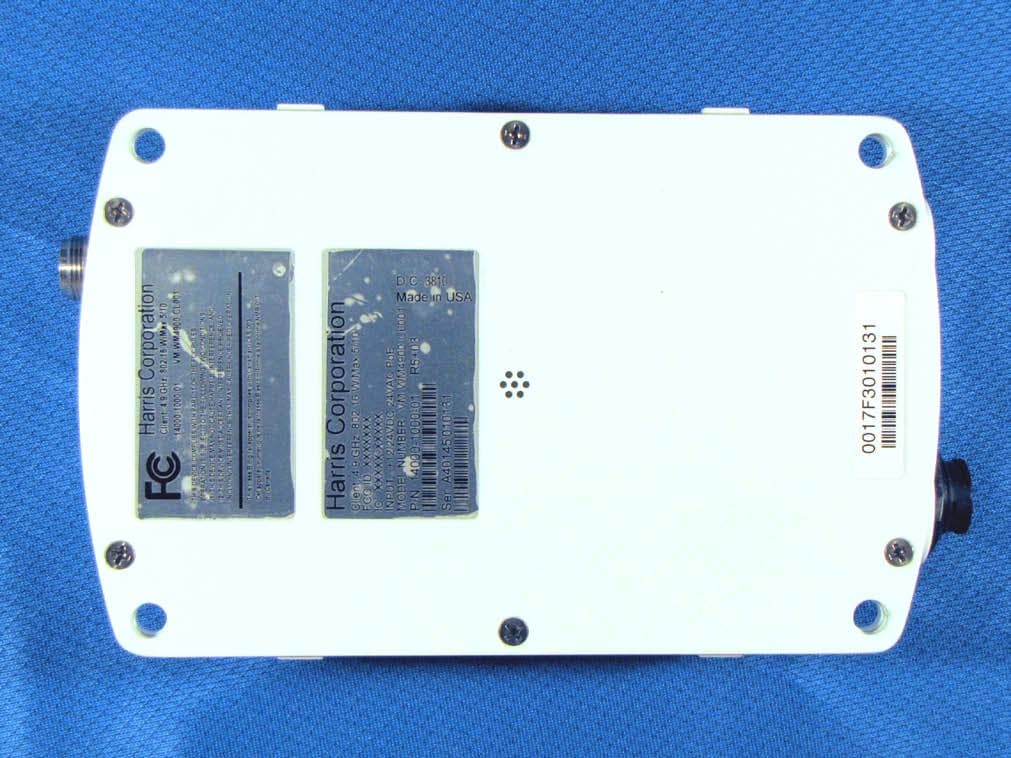
BV8WM4900CL
Nov 21, 2010Client 4.9 GHz 802.16 VBB 5/10
Equipment Class
TNB - Licensed Non-Broadcast Station Transmitter
BV8VIDA-BB-CL
Apr 11, 2007VIDA Broadband High Power Client
Equipment Class
TNB - Licensed Non-Broadcast Station Transmitter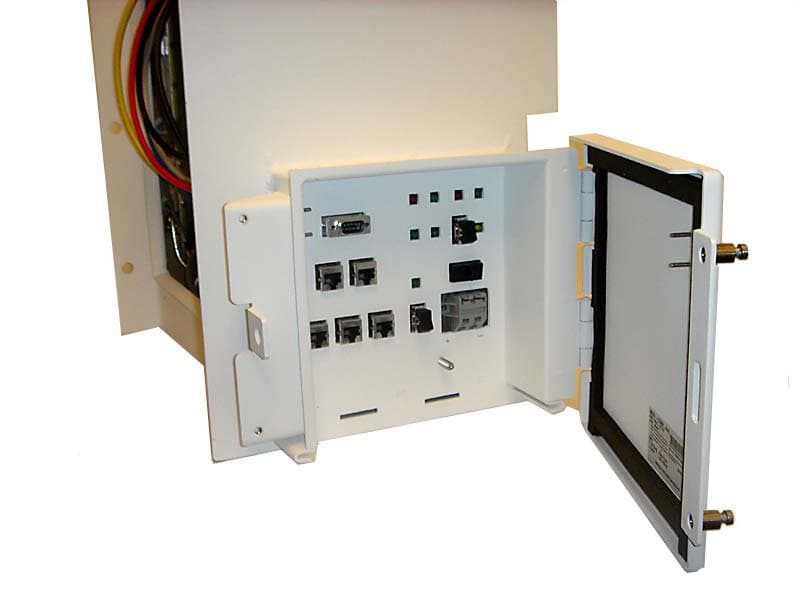
BV8CS900
Apr 08, 2007OpenSky 900 MHz Cell Site
Equipment Class
TNB - Licensed Non-Broadcast Station Transmitter