C9SDTA01IPAD100Handheld Bar-code Reader
Fujitsu Limited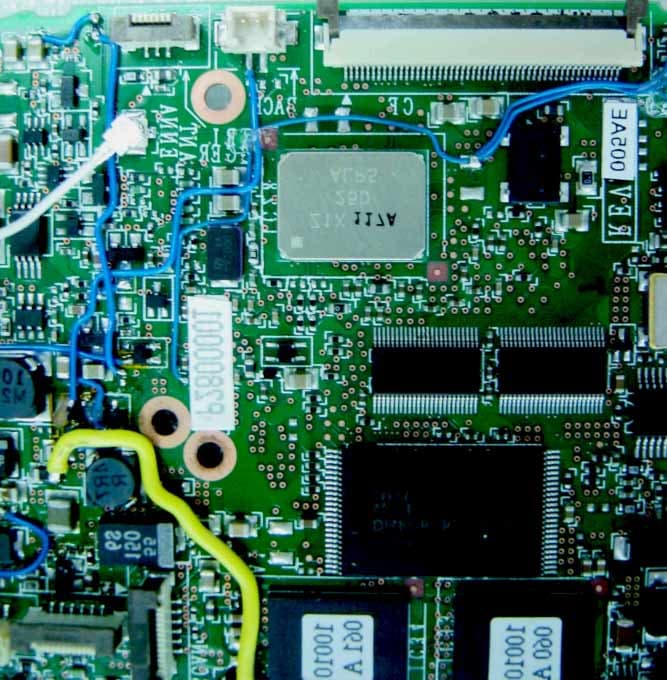
Click to zoom
Application Details
- Equipment Class
- DSS - Part 15 Spread Spectrum Transmitter
- Date of Grant
- Sep 30, 2002
- Application Purpose
- Original Equipment
- Date of Application
- Sep 30, 2002
- Equipment Note
- Handheld Bar-code Reader
- Frequency Range
- 2402.00000000 - 2480.00000000
- Company
- Fujitsu Limited
- Country
- Japan
Documents & Files
Document Text
Text extracted from the exhibit documents filed with the FCC. Open a document above to read the original.
Users Manual
FCC information FCC notice This device complies with Part 15 of the FCC Rules. Operation is subject to the following two conditions: (1) This device may not cause harmful interference, (2) this device must accept any interference received, including interference that may cause undesired operation. FCC Caution CAUTION: This device and its antenna(s) must not be co-located or operating in conjunction with any other antenna or transmitter. End user can not modify this transmitter device. Any unauthorized modification made on the device could avoid the user's authority to operate this device. IC (Industry Canada) To prevent radio interference to the licensed service, this device is intended to be operated indoors and away from windows to provide maximum shielding. Equipment that is installed outdoors is subject to licensing. The term “IC:” before the radio certification number only signifies that Industry Canada technical specifications were met. “Operation of this device is subject to the following two conditions: (1) this device may not cause interference, and (2) this device must accept any interference, including interference that may cause undesired operation of the device.” "The installer of this radio equipment must ensure that the antenna is located or pointed such that it does not emit RF field in excess of Health Canada limits for the general population; consult Safety Code 6, obtainable from Health Canada’s website www.hc-sc.gc.ca/rpb" < Notice > This device and its antenna(s) must not be co-located or operating in conjunction with any other antenna or transmitter. End user can not modify this transmitter device. Any unauthorized modification made on the device could avoid the user's authority to operate this device. 1 iPAD (IPAD100-xx) User’s Manual(Draft) C166-E324-01EN 2 Using the IPAD This manual contains important information required for using the iPAD safely. Before attempting to use the iPAD, read this manual carefully to ensure that you understand its contents. For safe operation of the product, pay particular attention to the section "Notes on Safety." Also keep this manual in a safe but convenient location for quick reference. Since Fujitsu takes every precaution to ensure that its products can be used safely without physical harm to users or damage to a product or peripheral equipment, use the iPAD only as instructed in this manual. 3 Preface Thank you for purchasing the iPAD. Before using the iPAD, read this manual thoroughly so that you will be able to take full of its functions. July 2002 First Edition VCCI Compatibility Standard This product is a Class A information technology device that complies with the standard of the Voluntary Control Council for Interference by Information Technology Equipment (VCCI). Since use of the IPAD in a home environment can cause interference, appropriate protective measures may be required. Microsoft, Windows CE, and eMbedded Visual Tools are registered trademarks of Microsoft Corporation in the U.S.A. and/or other countries. Other company and product names appearing in this manual are the trademarks of their respective owners. 4 Using the iPAD in Mission-Critical Situations The iPAD is designed and manufactured for use in standard applications such as those for general office, personal, and household use. It is not intended for specialized uses, such as atomic energy control systems, aeronautical or space systems, mass transportation control systems, medical devices for life support, or weapons firing control systems where particularly high reliability requirements exist, the pertinent levels of safety are not guaranteed, or a failure or operational error could be life threatening or result in physical injury (referred to hereafter as "mission-critical" use). Customers considering the use the iPAD for mission-critical applications must have safety-assurance measures in place beforehand, and should consult a Fujitsu sales representative before proceeding. 5 Warning Indications and Symbols This user's manual uses warning indications and symbols to help users use the iPAD safely and to prevent personal injury and property damage. This manual uses warning indications and symbols in the text to indicate safety conditions. The meaning of each indication and symbol is explained below. Warning Indications WARNING Indicates a hazardous situation that could result in personal injury if the user does not perform the procedure correctly. CAUTION Indicates a hazardous situation that could result in minor or moderate personal injury if the user does not perform the procedure correctly. Also indicates that damage to the product or other property could occur if the user does not perform the procedure correctly. 6 Warning Symbols ELECTRIC SHOCK Indicates the possibility of injury from an electric shock. GENERAL INHIBITION Indicates a condition that requires caution and a specific action that must not be performed. GENERAL CAUTION Indicates a condition that requires general caution. FIRE Indicates the possibility of an electric shock or fire. DISASSEMBLY PROHIBITED Indicates an action that is prohibited (prohibited action). UNPLUG THE CABLE Indicates a required action. 7 Notes on Safety WARNING ELECTRIC SHOCK z Do not damage the power cord when you use the AC adapter, single-pack charger, or cradle. Doing so may result in an electric shock or fire. GENERAL INHIBITION z Use only the specially designed cradle, AC adapter, and single-pack charger. If another item is used, differences in voltage or current can damage the iPAD. z If the battery is not handled correctly, the iPAD may overheat, explode, or catch fire. Be sure to observe the following precautions: − −− − Neither throw the battery into a fire nor heat it. − −− − Connect the terminals correctly. − −− − Do not connect the terminals using a wire or other metallic material. Do not carry or store the battery while wearing a metal necklace or hair pin. − −− − Do not puncture the battery with a need…
Text truncated - open the document above for the full version.
Cover Letter(s)
Date: September 24, 2002 Federal Communications Commission Equipment Approval Services Subject: Request for Confidentiality FCC ID: C9SDTA01IPAD100 Dear Sir/Madame: Pursuant to Section 0.459 of the Commission’s Rules; we, FUJITSU FRONTECH LIMITED, hereby request confidentiality as below; 1. Schematics 2. Block Diagram 3. Technical Description(Technical Description) The reason of Confidentiality request is that trade secrets and proprietary information are enclosed in the above data, and the public disclosure of the data is harmful for us and will be made unjustifiable benefits to competitors. Sincerely, Applicant Name : Takeshi Asahina Title : Manager Section & Company : Engineering Dept.II Branch & Store Systems Div. FUJITSU FRONTECH LIMITED
External Photos
- Front - - Rear -
ID Label/Location Info
- Label Location -
Internal Photos
- Internal Photo(Over Viwe) - - Internal Photo(Transition Part) -
RF Exposure Info
JAPAN QUALITY ASSURANCE ORGANIZATION 21-25, KINUTA 1-CHOME, SETAGAYA-KU, TOKYO 157-8573 JAPAN PHONE +81-3-3416-0111, FAX +81-3-3416-9691 Issue Date : September 12, 2002 Page 1 of 1 Declaration of compliance Exposure of Humans to RF Fields Requirements Applicant : Fujitsu Frontech Limited Type of Equipment : Handheld Terminal Model No. : i-Pad100-xx FCC ID : C9SDTA01IPAD100 Regulations Applied : CFR 47 FCC 15.247(b)(5) References Documents : CFR 47 FCC 1.1307(b), 1.1310, 2.1093 and OET65 Supplement C RF Exposure Calculations : The following minimum separation distance between the EUT’s antenna and the human body was calculated in accordance with FCC OET65 Appendix B Table(B) “Limit for General Population / Uncontrolled Exposure”. The maximum permissible exposure level is defined with 1mW/cm 2 . The minimum separation distance where the exposure level reaches the permitted level can be calculated as bellow: Where: R = minimum separation distance in cm P = 13.996 mW (Max. conducted output power at antenna terminal) G = 1.26(numeric gain) = 1.00 dBi(Max. antenna Gain) S = 1.0 mW/cm 2 for 2.4 GHz (Max. permissible exposure level) Then minimum separation distance is 1.185 cm. Summary: The EUT complies with the RF exposure requirement of the above regulation. Masaaki Takahashi Senior Manager JQA EMC Engineering Dept. 2 4/*RGPS π = SGPRπ 4/*=Q C O P Y
Test Report
JAPAN QUALITY ASSURANCE ORGANIZATION 21-25, KINUTA 1-CHOME, SETAGAYA-KU, TOKYO 157-8573 JAPAN PHONE +81-3-3416-0111, FAX +81-3-3416-9691 JQA APPLICATION NO.: 400-20416 Issue Date : September 12, 2002 Page 1 of 65 EMI TEST REPORT JQA APPLICATION NO. : 400-20416 Model No. : i-Pad100-xx Type of Equipment : Handheld Terminal Regulations Applied : CFR 47 FCC Rules and Regulations Part 15 FCC ID : C9SDTA01IPAD100 Applicant : Fujitsu Frontech Limited Address : 1776 Yanokuchi, Inagi-shi, Tokyo 206-8555, Japan Manufacture : Fujitsu Frontech Limited Address : 1776 Yanokuchi, Inagi-shi, Tokyo 206-8555, Japan Received date of EUT : September 3, 2002 Final Judgment : Passed Test results in this report are obtained in use of equipment that is traceable to National Institute of Advanced Industrial Science and Technology (AIST) of Japan and Communication Research Laboratory (CRL) of Japan. The test results only respond to the tested sample. This report should not be reproduced except in full, without the written approval of JQA EMC Engineering Dept. Testing Div. C O P Y JQA Application No. :400-20416 FCC ID : C9SDTA01IPAD100 Model No. :i-Pad100-xx Issue Date :September 12, 2002 Standard :CFR 47 FCC Rules Part 15 Page 2 of 65 JAPAN QUALITY ASSURANCE ORGANIZATION TABLE OF CONTENTS Page 1 Documentation 1.1 Test Regulation 4 1.2 General Information 4 1.3 Test Condition 5 – 11 1.4 EUT Modifications / Deviation from Standard 12 1.5 Test results 13 - 14 1.6 Summary 15 1.7 Test Configuration / Operation of EUT 16 1.8 EUT Arrangement (Drawing) 17 1.9 Preliminary Test and Test-setup (Drawings) 18 – 26 1.10 EUT Arrangement (Photographs) 27 - 28 C O P Y JQA Application No. :400-20416 FCC ID : C9SDTA01IPAD100 Model No. :i-Pad100-xx Issue Date :September 12, 2002 Standard :CFR 47 FCC Rules Part 15 Page 3 of 65 JAPAN QUALITY ASSURANCE ORGANIZATION 2 Test Data 2.1 Channel Separation 29 2.2 Minimum Hopping Channel 30 – 31 2.3 Occupied Bandwidth 32 – 36 2.4 Dwell Time 37 – 42 2.5 Peak Output Power (Conduction) 43 2.6 Peak Output Power (Radiation) 44 2.7 Peak Power Density (Conduction) 45 - 46 2.8 Peak Power Density (Radiation) N/A 2.9 Spurious Emissions (Conduction) 47 - 52 2.10 Spurious Emissions (Radiation) 53 - 61 2.11 AC Power Line Conducted Emissions N/A 2.12 RF Exposure Compliance 61 3 Appendix Test instruments List C O P Y JQA Application No. :400-20416 FCC ID : C9SDTA01IPAD100 Model No. :i-Pad100-xx Issue Date :September 12, 2002 Standard :CFR 47 FCC Rules Part 15 Page 4 of 65 JAPAN QUALITY ASSURANCE ORGANIZATION 1 DOCUMENTATION 1.1 TEST REGULATION FCC Rules and Regulations Subpart C Test procedure : The tests were performed with reference to the FCC Public Notice DA 00-705, released March 30, 2000. The test set-up was made in accordance to the general provisions of ANSIC63.4-1992. 1.2 GENERAL INFORMATION 1.2.1 Test facility : 1) Test Facility located at EMC Engineering Dept. Testing Div. : - No.2 and 3 Anechoic Chambers(3 meters Site). - Shielded Enclosure. Expiration date of FCC test facility filing : May 27, 2005 2) EMC Engineering Dept. Testing Div. is recognized under the National Voluntary Laboratory accreditation Program for satisfactory compliance established in title 15, Part 285 Code of Federal Regulations. NVLAP Lab Code : 200189-0 (Effective through : June 30, 2003) 1.2.2 Description of the Equipment Under Test (EUT) : 1) Type of Equipment : Handheld Terminal 2) Product Type : Pre-Production 3) Category : Spread Spectrum Transmitter 4) EUT Authorization : Certification 5) FCC ID : C9SDTA01IPAD100 6) Trade Name : i-Pad 7) Model No. : i-Pad100-xx 8) Operating Frequency Range : 2402 MHz - 2480 MHz 9) Highest Frequency Used in the EUT : 2480 MHz 10) RF Output Power : 100 mW(Rated) 11) Serial No. : - 12) Date of Manufacture : - 13) Power Rating : DC 3.7V(Rechargeable Battery) 14) EUT Grounding : None 1.2.3 Definitions for symbols used in this test report : x - indicates that the listed condition, standard or equipment is applicable for this report. - indicates that the listed condition, standard or equipment is not applicable for this report. C O P Y JQA Application No. :400-20416 FCC ID : C9SDTA01IPAD100 Model No. :i-Pad100-xx Issue Date :September 12, 2002 Standard :CFR 47 FCC Rules Part 15 Page 5 of 65 JAPAN QUALITY ASSURANCE ORGANIZATION 1.3 TEST CONDITION 1.3.1 The measurement of Channel Separation x - was performed. - was not applicable. Used test instruments : Type Number of test instruments (Refer to Appendix) Test Receiver TR07 Spectrum Analyzer N/A Cable CA11 Attenuator AU18 Antenna N/A 1.3.2 The measurement of Minimum Hopping Channel x - was performed. - was not applicable. Used test instruments : Type Number of test instruments (Refer to Appendix) Test Receiver TR07 Spectrum Analyzer N/A Cable CA11 Attenuator AU18 Antenna N/A 1.3.3 The measurement of Occupied Bandwidth x - was performed. - was not applicable. Used test instruments : Type Number of test instruments (Refer to Appendix) Test Receiver TR07 Spectrum Analyzer N/A Cable CA11 Attenuator AU18 Antenna N/A C O P Y JQA Application No. :400-20416 FCC ID : C9SDTA01IPAD100 Model No. :i-Pad100-xx Issue Date :September 12, 2002 Standard :CFR 47 FCC Rules Part 15 Page 6 of 65 JAPAN QUALITY ASSURANCE ORGANIZATION 1.3.4 The measurement of Dwell Time x - was performed. - was not applicable. Used test instruments : Type Number of test instruments (Refer to Appendix) Test Receiver TR07 Spectrum Analyzer N/A Cable CA11 Attenuator AU18 Antenna N/A 1.3.5 The measurement of Peak Output Power and Density (Conduction) x - was performed. - was not applicable. Used test instruments : Type Number of test instruments (Refer to Appendix) Test Receiver TR07 Spectrum Analyzer N/A Cable CA11 Attenuator AU18 Antenna N/A Power Meter AU03 Power Sensor AU04 Signal Generator SG03 C O P Y JQA Application No. :400-20416 FCC ID : C9SDTA01IPAD100 Model No. :i-Pad100-xx Issue Date :September 12, 2002 Standard :CFR 47 FCC Rules Part 15 Page 7 of 65 JAPAN QUALITY ASSURANCE OR…
Text truncated - open the document above for the full version.
Test Setup Photos
JQA Application No. :400-20416 FCC ID : C9SDTA01IPAD100 Model No. :i-Pad100-xx Issue Date :September 12, 2002 Standard :CFR 47 FCC Rules Part 15 Page 27 of 65 JAPAN QUALITY ASSURANCE ORGANIZATION 1.10 TEST ARRANGEMENT (PHOTOGRAPHS) PHOTOGRAPHS OF EUT CONFIGURATION FOR RADIATED EMISSIONS MEASUREMENT Photograph present configuration with maximum emission C O P Y JQA Application No. :400-20416 FCC ID : C9SDTA01IPAD100 Model No. :i-Pad100-xx Issue Date :September 12, 2002 Standard :CFR 47 FCC Rules Part 15 Page 28 of 65 JAPAN QUALITY ASSURANCE ORGANIZATION C O P Y
Contact Information
Applicant
Takashi Maekawa(Project Manager)
N/AFax: N/A
Test Firm
Japan Quality Assurance Org.Tetsuo Kato
Technical Specifications
| # | Rule Parts | Frequency Range | Power Output |
|---|---|---|---|
| 1 | 15C | 2.40 GHz - 2.48 GHz | 14.00 mW |
Other Applications from Fujitsu Limited
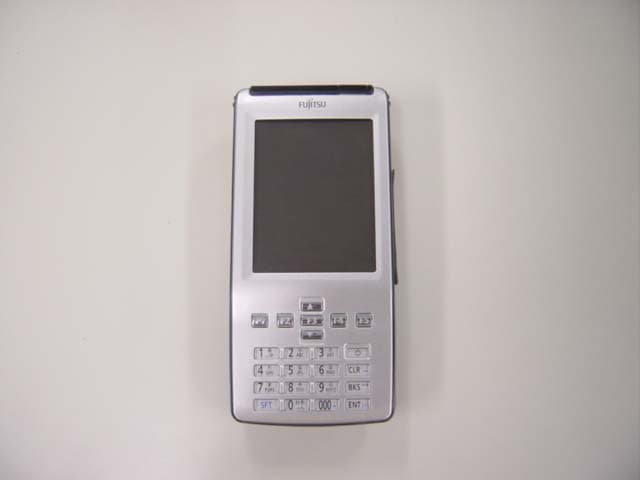
C9SDTA01TP400GSB
Oct 26, 2005Handheld Computer
Equipment Class
DTS - Digital Transmission System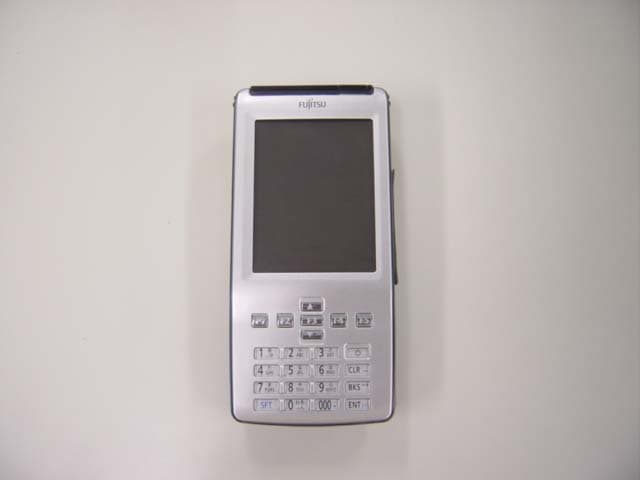
C9SDTA01TP400GS
Oct 26, 2005Handheld Computer
Equipment Class
DTS - Digital Transmission System
C9S-CFBIPAD
Jun 02, 2004Digital Transmission System
Equipment Class
DTS - Digital Transmission System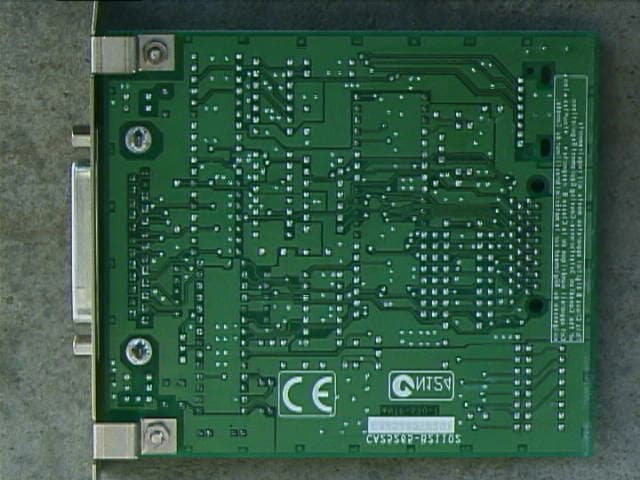
C9SDP050M33111Z2
Jun 09, 1999USB interface board
Equipment Class
JBP - Part 15 Class B Computing Device Peripheral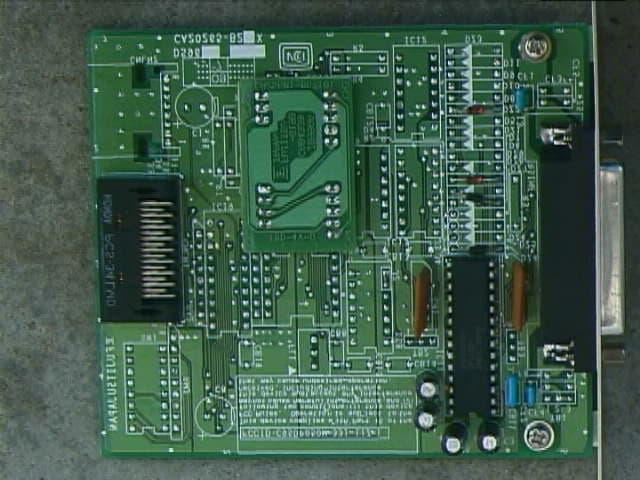
C9SDP050M33111Z1
Jun 09, 1999Serial interface board
Equipment Class
JBP - Part 15 Class B Computing Device Peripheral