DMOCDHDECDW 30 HS DECT Headset
Sennheiser Electronic Corp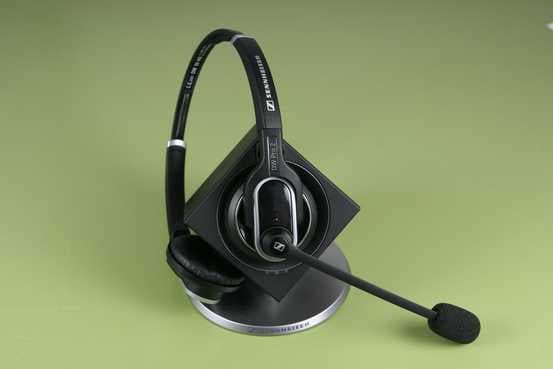
Click to zoom
Application Details
- Equipment Class
- PUE - Part 15 Unlicensed PCS portable Tx held to ear
- Date of Grant
- Sep 01, 2010
- Application Purpose
- Original Equipment
- Date of Application
- Sep 01, 2010
- Equipment Note
- DW 30 HS DECT Headset
- Frequency Range
- 1920.00000000 - 1930.00000000
- Company
- Sennheiser Electronic Corp
- Country
- United States
Documents & Files
Document Text
Text extracted from the exhibit documents filed with the FCC. Open a document above to read the original.
Users Manual
Sicherheitshinweise Indicazioni di sicurezza Instruções de segurança Säkerhetsanvisning Veiligheidsvoorschriften Safety Guide Consignes de sécurité Indicaciones de seguridad Sikkerhedsvejledning Sikkerhetsinstrukser DW Office DW Office USB DW Pro1/Pro2 DW Pro1/Pro2 USB DW Series DW-Series_0610_SP10.book Seite 1 Freitag, 16. April 2010 10:22 10 English Deutsch Français Italiano Español Portugues Dansk Svenska Norsk Nederlands DW-Series_0610_SP10.book Seite 1 Freitag, 16. April 2010 10:22 10 Important safety information 1 Important safety information • Please read this instruction manual carefully and completely before using the product. • Make the instruction manual easily accessible to all users at all times. Always include the instruction manual when passing the product on to third parties. • Do not use the product in situations which require special attention (e.g. when performing skilled jobs). • Always keep the product dry and do not expose it to extreme temperatures (normal operating temperatures: +5°C/+41°F to +45°C/+113°F). • Use the product with care and store it in a clean, dust-free environment. • Switch off the headset after use to conserve battery power. • Only use the DW series * base station for charging DW series headsets fitted with the DW series rechargeable battery. Never try to charge other rechargeable batteries or non-rechargeable batteries in the DW series base station. • Do not short-circuit the contacts of the product. Make sure that no metal objects (e.g. paper clips, hair pins, earrings) come into contact with the interfaces and contacts. • Sennheiser Communications is not liable for damages resulting from the loss of connection due to a run flat battery, an old battery or exceeding the DECT transmission range. • This equipment generates, uses and can radiate radio frequency energy and, if not used in accordance with the instructions, may cause harmful interference to radio communications. However, there is no guarantee that interference will not occur in a particular installation. • The DW series headsets contain magnets that generate a magnetic field which could cause inter- ference with cardiac pacemakers and implanted defibrillators. Keep the DW series headsets at least 1.2” (3 cm) from cardiac pacemakers or implanted defibrillators! • Protect your hearing from high volume levels. • Only use the power supply units supplied by Sennheiser Communications. • To reduce the risk of fire or electric shock, do not use the product near water and do not expose it to rain or moisture. * The DW series comprises the following products: DW Office, DW Office USB, DW Pro1/Pro2, DW Pro1/Pro2 USB. The DW 800 is not part of the DW series. DW-Series_0610_SP10.book Seite 1 Freitag, 16. April 2010 10:22 10 Important safety information 2 • Unplug the power supply unit from the wall socket – to completely disconnect the product from the mains power supply – during lightning storms or – when unused for long periods of time. • Only operate the power supply unit from the type of power source specified in the chapter “Specifi- cations” of the detailed instruction manual (included on the enclosed CD ROM). • Ensure that the power supply unit is – in a safe operating condition and easily accessible, – properly plugged into the wall socket, – only operated within the permissible temperature range, – not covered or exposed to direct sunlight for longer periods of time in order to prevent heat accumulation. • Do not operate the product near any heat sources. • Only use attachments/accessories specified by Sennheiser Communications. • Keep plastic wrap and plastic bags of the packaging out of reach of children – danger of suffocation! Intended use Intended use of the product includes • having read the detailed instruction manual included on the enclosed CD ROM, especially the chapter “Safety instructions”, • using the product within the operating conditions and limitations described in the detailed instruc- tion manual. “Improper use” means using the product other than as described in the instruction manual, or under operating conditions which differ from those described herein. DW-Series_0610_SP10.book Seite 2 Freitag, 16. April 2010 10:22 10 Important safety information 3 Safety instructions for Lithium-Polymer rechargeable batteries If abused or misused, the rechargeable batteries may leak. In extreme cases, they may even present Please understand that Sennheiser Communications does not accept liability for damage arising from abuse or misuse. • a heat hazard, • a fire hazard, • an explosion hazard, • a smoke or gas hazard. Keep away from children.Do not short-circuit. Do not expose to moisture.Do not heat above +45°C/+113°F, e.g. do not expose to sunlight or throw into a fire. Do not mutilate or dismantle.Do not charge the rechargeable battery if the device is obviously defective. When not using rechargeable batteries for extended periods of time, charge them regularly (every six months for about one hour). Only charge rechargeable batteries with an appropriate Sennheiser Communica- tions charger. Only charge rechargeable batteries at ambient temperatures between +5°C/ +41°F to +45°C/+113°F. Store in a cool and dry place at room temperature (approx. 20°C/68°F). Return defective devices or devices with defective rechargeable batteries to your specialist dealer. DW-Series_0610_SP10.book Seite 3 Freitag, 16. April 2010 10:22 10 Manufacturer Declarations 4 Manufacturer Declarations Warranty Sennheiser Communications A/S gives a warranty of 24 months on this product. For the current warranty conditions, please visit our web site at www.senncom.com or contact your Sennheiser partner. In compliance with the following requirements • RoHS Directive (2002/95/EC) • WEEE Directive (2002/96/EC) Please dispose of this product at the end of its operational lifetime by taking it to your local collection point or recycling center for such equipment. • Battery Directive (2006/66/EC) The supplied rechargeab…
Text truncated - open the document above for the full version.
Users Manual
DW Pro1/Pro2 Instruction manual DECT Comfort calls 1 Contents Contents Important safety information ................................................................................... 2 The DW Pro1/Pro2 wireless headset system ...................................................... 4 Delivery includes ............................................................................................................. 5 Product overview ............................................................................................................ 6 Base station ................................................................................................................. 6 Pro1/Pro2 headset ................................................................................................... 7 Overview of the buttons .............................................................................................. 8 Overview of the LEDs ..................................................................................................... 9 Putting the headset system into operation ..................................................... 10 Putting the base station into operation ....................................................... 10 Putting the headset into operation ................................................................ 16 Testing the headset system in Phone mode and adjusting it .............. 17 Testing the headset system in PC mode and adjusting it ...................... 19 Adjusting advanced settings ............................................................................. 20 Using the headset system ........................................................................................ 22 Charging the headset rechargeable battery ............................................... 22 Switching the headset on/off ........................................................................... 23 Establishing a wireless link between headset and base station ......... 23 Putting the headset on and adjusting it ....................................................... 24 Calling via the fixed line phone using the headset ................................... 25 Calling via the PC using the headset ............................................................... 26 Switching between Phone and PC mode ....................................................... 28 Holding a conference call .................................................................................... 28 Adjusting the volume ........................................................................................... 29 Muting the headset’s microphone .................................................................. 30 Using the advanced functions .......................................................................... 30 If you leave the DECT range ............................................................................... 31 Cleaning and maintaining the headset system .............................................. 32 Replacing the ear pad(s) ..................................................................................... 32 Replacing the headset’s rechargeable battery ........................................... 33 If a problem occurs ..................................................................................................... 35 Accessories and spare parts .................................................................................... 36 Specifications ................................................................................................................. 37 Manufacturer Declarations ...................................................................................... 39 Index .................................................................................................................................. 41 Important safety information 2 Important safety information • Please read this instruction manual carefully and completely before using the product. • Make the instruction manual easily accessible to all users at all times. Always include the instruction manual when passing the product on to third parties. • Do not use the product in situations which require special attention (e.g. wh en performing skilled jobs). • Always keep the product dry and do not expose it to extreme tempera- tures (normal operating temperatures: +5°C/+41°F to +45°C/+113°F). • Use the product with care and store it in a clean, dust-free environ- ment. • Switch off the headset after use to conserve battery power. • Only use the DW series * base station for charging DW series headsets fitted with the DW series rechargeable battery. Never try to charge other rechargeable batteries or non-rechargeable batteries in the DW series base station. • Do not short-circuit the contacts of t he product. Make sure that no metal objects (e.g. paper clips, hair pins, earrings) come into contact with the interfaces and contacts. • Sennheiser Communications is not li ab le for damages resulting from the loss of connection due to a run flat battery, an old battery or exceeding the DECT transmission range. • This equipment generates, uses and can radiate radio frequency energy and, if not used in accordance with the instructions, may cause harmful interference to radio communications. However, there is no guarantee that interference will not occur in a particular installation. • The DW series headsets contain magnets that gener ate a magnetic field which could cause interference with cardiac pacemakers and implanted defibrillators. Keep the DW series headsets at least 1.2” (3 cm) from cardiac pacemakers or i mplanted defibrillators! • Protect your hearing from high volume levels. • Only use the power supply units suppli ed by Sennheiser Communica- tions. • To reduce the risk of fire or electric shock, do not use the product near water and do not expose it to rain or moisture. • Unplug the power supply unit from the wall socket – to completely dis…
Text truncated - open the document above for the full version.
Attestation Statements
Langager 6, Solroed Strand 2680 –DK, Phone: + 45 56 18 00 00 Fax: + 45 56 18 00 99 www.sennheisercommunications.com TRL 51F047 iss02B LETTER OF AGENCY 28-07-2010 TRaC Global 100 Frobisher Business Park Leigh Sinton Road Malvern Worcestershire WR14 1BX UK To Whom It May Concern: We certify that we are not subject to denial of federal benefits that includes FCC benefits, pursuant to Section 5301 of the Anti-Drug Abuse ACT of 1988, U.S.C. 862. Further, no party, as defined in 47 CFR 1.2002(b), to the application, is subject to denial of federal benefits, that includes FCC benefits. Thank you for your attention to this matter. Sennheiser Communications A/S Yours faithfully Edina Mujan Regulatory Compliance Manager e-mail:[email protected] phone:+45 56 18 00 00 fax :+45 56 18 00 99
Cover Letter(s)
R EQUEST FOR CONFIDENTIALITY I N ACCORDANCE WITH FCC RULE 0.459 TELECOMMUNICATION CERTIFICATION BODY 28-07-2010 TRaC Global 100 Frobisher Business Park Leigh Sinton Road Malvern Worcestershire WR14 1BX UK FCC ID: DMOCDHDEC Model Name: DW 30 HS Trade Name: SENNHEISER To Whom It May Concern: Pursuant to Paragraphs §0.457 and 0.459 of the Commission’s Rules (47 C.F.R.) and Section §552(b)(4) of the Freedom of Information Act, we request confidentiality for the following products: Please be advised that the following information is to be held confidential on behalf of Sennheiser Electronic Corp Schematics “Thor Binaural HS V6 RE” Layout & component diagrams “THOR_BAT_CON_4_PCB”; “THOR_MO BI_PIGGY_4_PCB”; “THOR_WCB_HS_V6_PCB” Design / operational description ” DW office_DWPro1_DW Pro2_for TCB_version1” Block diagram “Block Diagram of THOR HS V1.1” Parts list “ Binaural HS V6 RE BOM” ; “THOR_BI_PIGGY_4A_BOM” The above exhibits contain company trade secrets and proprietary information that could be of benefit to our competitors regarding the design of our product. This material is not customarily available to the general public and we request that it be withheld from public inspection. The Applicant understands that pursuant to Rule 0.457, disclosure of this Application and all accompanying documentation will not be made before the date of the Grant for this application. If you have any questions, please feel free to contact me at the address shown below. Sincerely, John Falcone Title: CEO and President - SEC Tel: +1 860 434 9190 Fax: +1 860 434 1759 e-mail: [email protected]
RF Exposure Info
DAT-P-152/98-01 SAR_Report_Nemko_6620_812_FCC_DECT_DW30HS Page 1 of 28 Report Dosimetric Assessment of the Portable Device Sennheiser Communications DW 30 HS (FCC ID: DMOCDHDEC) According to the FCC Requirements August 02, 2010 IMST GmbH Carl-Friedrich-Gauß-Str. 2 D-47475 Kamp-Lintfort Customer Sennheiser Communications A/S Langager 6 DK-2680 Solrod Strand The test results only relate to the items tested. This report shall not be reproduced except in full without the written approval of the testing laboratory. Dasy_Report_FCC_DECT_1900_1.1.doc/22.05.2006/CH SAR_Report_Nemko_6620_812_FCC_DECT_DW30HS Page 2 of 28 Dasy_Report_FCC_DECT_1900_1.1.doc/22.05.2006/CH Executive Summary The DW 30 HS is a new cordless DECT headset (Portable Device) from Sennheiser Communications operating in the 1920 MHz frequency range (US DECT Standard). The device operates with two integrated antennas in diversity mode. The objective of the measurements done by IMST was the dosimetric assessment of one headset DW 30 HS. For the test, the HS is configured to use the highest RF power level. A normal audio connection is running between the HS and a Base Station during the test. The examinations have been carried out with the dosimetric assessment system „DASY4“. The measurements were made according to the Supplement C to OET Bulletin 65 of the Federal Communications Commission (FCC) Guidelines [OET 65] for evaluating compliance of mobile and portable devices with FCC limits for human exposure (general population) to radiofrequency emissions. All measurements have been performed in accordance to the recommendations given by SPEAG. The Sennheiser Communications DW 30 HS cordless DECT headset (FCC ID: DMOCDHDEC) is in compliance with the Federal Communications Commission (FCC) Guidelines [OET 65] for uncontrolled exposure. Since the intended use position is head configuration, body worn assessment was not conducted. Maximum SAR 1g = 0.039 W/kg (cheek right, Channel 2, Antenna 1) prepared by: ........................................... reviewed by: ..................................... Alexander Rahn André van den Bosch test engineer quality assurance engineer SAR_Report_Nemko_6620_812_FCC_DECT_DW30HS Page 3 of 28 Dasy_Report_FCC_DECT_1900_1.1.doc/22.05.2006/CH Table of Contents 1 SUBJECT OF INVESTIGATION .................................................................................................................... 4 2 THE IEEE STANDARD C95.1-1999 AND THE FCC EXPOSURE CRITERIA ....................................... 4 2.1 DISTINCTION BETWEEN EXPOSED POPULATION, DURATION OF EXPOSURE AND FREQUENCIES ........... 4 2.2 DISTINCTION BETWEEN MAXIMUM PERMISSIBLE EXPOSURE AND SAR LIMITS ....................................... 5 2.3 SAR LIMIT .................................................................................................................................................. 5 3 THE FCC MEASUREMENT PROCEDURE ................................................................................................. 6 3.1 GENERAL REQUIREMENTS......................................................................................................................... 6 3.2 DEVICE OPERATING NEXT TO A PERSON’S EAR ....................................................................................... 6 4 BODY-WORN CONFIGURATIONS .............................................................................................................. 9 4.1 POC (PTT) POSITION ................................................................................................................................ 9 4.2 PHANTOM REQUIREMENTS ...................................................................................................................... 10 4.3 TEST TO BE PERFORMED ......................................................................................................................... 10 5 THE MEASUREMENT SYSTEM ................................................................................................................. 10 5.1 PHANTOM ................................................................................................................................................. 12 5.2 PROBE ...................................................................................................................................................... 12 5.3 MEASUREMENT PROCEDURE .................................................................................................................. 13 5.4 UNCERTAINTY ASSESSMENT ................................................................................................................... 14 6 SAR RESULTS ............................................................................................................................................... 15 7 EVALUATION ................................................................................................................................................. 16 8 APPENDIX ....................................................................................................................................................... 17 8.1 ADMINISTRATIVE DATA ............................................................................................................................ 17 8.2 DEVICE UNDER TEST AND TEST CONDITIONS ......................................................................................... 17 8.3 TISSUE RECIPES ...................................................................................................................................... 17 8.4 MATERIAL PARAMETERS ......................................................................................................................... 18 8.5 SIMPLIFIED PERFORMANCE CHECKING ................................................................................................... 19 8.6 ENVIRONMENT .................................................................................................…
Text truncated - open the document above for the full version.
RF Exposure Info
DAT-P-152/98-01 SAR_Report_Nemko_6620_812_FCC_DECT_SAR Plots_DW30HS Page 1 of 7 Appendix for the Report Dosimetric Assessment of the Portable Device Sennheiser Communications DW30HS (FCC ID: DMOCDHDEC) According to the FCC Requirements SAR Distribution Plots August 03, 2010 IMST GmbH Carl-Friedrich-Gauß-Str. 2 D-47475 Kamp-Lintfort Customer Sennheiser Communications A/S Langager 6 DK-2680 Solrod Strand The test results only relate to the items tested. This report shall not be reproduced except in full without the written approval of the testing laboratory. Dasy_Report_FCC_DECT_1900_1.1.doc/22.05.2006/CH SAR_Report_Nemko_6620_812_FCC_DECT_SAR Plots_DW30HS Page 2 of 7 dasy_report_fcc_DECT_1900_plots_1.0.doc/110.05.2006/ABo Table of Contents 1 SAR DISTRIBUTION PLOTS, HEAD MEASUREMENTS, ANTENNA 1 ................................................ 3 2 SAR DISTRIBUTION PLOTS, HEAD MEASUREMENTS, ANTENNA 2 ................................................ 5 3 SAR Z-AXIS SCANS (VALIDATION) ........................................................................................................... 7 4 SAR Z-AXIS SCANS (MEASUREMENTS) .................................................................................................. 7 SAR_Report_Nemko_6620_812_FCC_DECT_SAR Plots_DW30HS Page 3 of 7 dasy_report_fcc_DECT_1900_plots_1.0.doc/110.05.2006/ABo 1 SAR Distribution Plots, Head Measurements, Antenna 1 Test Laboratory: Imst GmbH, DASY Yellow (II); File Name: DW30_380_yplm_1_ant1.da4 DUT: Sennheiser; Type: DW30HS; Serial: 10000380 Program Name: Cheek Left Communication System: DECT US; Frequency: 1924.99 MHz;Duty Cycle: 1:15 Medium parameters used: f = 1924.99 MHz; σ = 1.45 mho/m; ε r = 40.5; ρ = 1000 kg/m 3 Phantom section: Left Section DASY4 Configuration: - Probe: EX3DV4 - SN3536; ConvF(7.95, 7.95, 7.95); Calibrated: 18.09.2009 - Sensor-Surface: 4mm (Mechanical Surface Detection) - Electronics: DAE3 Sn335; Calibrated: 10.02.2010 - Phantom: SAM Glycol 1340; Type: QD 000 P40 CB; Serial: TP-1340 - Measurement SW: DASY4, V4.7 Build 80; Postprocessing SW: SEMCAD, V1.8 Build 186 Cheek Left/Area Scan (7x13x1): Measurement grid: dx=15mm, dy=15mm Maximum value of SAR (measured) = 0.040 mW/g Cheek Left/Zoom Scan (7x7x7)/Cube 0: Measurement grid: dx=5mm, dy=5mm, dz=5mm Reference Value = 4.37 V/m; Power Drift = 0.180 dB Peak SAR (extrapolated) = 0.063 W/kg SAR(1 g) = 0.036 mW/g; SAR(10 g) = 0.020 mW/g Maximum value of SAR (measured) = 0.039 mW/g Fig. 1: SAR distribution for DECT US, channel 2, cheek position, left side of head, the view looking from above the phantom (June 16, 2010; Ambient Temperature: 20.7°C; Liquid Temperature: 20.2°C). SAR_Report_Nemko_6620_812_FCC_DECT_SAR Plots_DW30HS Page 4 of 7 dasy_report_fcc_DECT_1900_plots_1.0.doc/110.05.2006/ABo Test Laboratory: Imst GmbH, DASY Yellow (II); File Name: DW30_380_yprm_1_ant1.da4 DUT: Sennheiser; Type: DW30HS; Serial: 10000380 Program Name: Cheek Right Communication System: DECT US; Frequency: 1924.99 MHz;Duty Cycle: 1:15 Medium parameters used: f = 1924.99 MHz; σ = 1.45 mho/m; ε r = 40.5; ρ = 1000 kg/m 3 Phantom section: Right Section DASY4 Configuration: - Probe: EX3DV4 - SN3536; ConvF(7.95, 7.95, 7.95); Calibrated: 18.09.2009 - Sensor-Surface: 4mm (Mechanical Surface Detection) - Electronics: DAE3 Sn335; Calibrated: 10.02.2010 - Phantom: SAM Glycol 1340; Type: QD 000 P40 CB; Serial: TP-1340 - Measurement SW: DASY4, V4.7 Build 80; Postprocessing SW: SEMCAD, V1.8 Build 186 Cheek Right/Area Scan (8x13x1): Measurement grid: dx=15mm, dy=15mm Maximum value of SAR (measured) = 0.037 mW/g Cheek Right/Zoom Scan (7x7x7)/Cube 0: Measurement grid: dx=5mm, dy=5mm, dz=5mm Reference Value = 2.71 V/m; Power Drift = 0.005 dB Peak SAR (extrapolated) = 0.065 W/kg SAR(1 g) = 0.039 mW/g; SAR(10 g) = 0.021 mW/g Maximum value of SAR (measured) = 0.042 mW/g Fig. 2: SAR distribution for DECT US, channel 2, cheek position, right side of head, the view looking from above the phantom (June 16, 2010; Ambient Temperature: 20.7°C; Liquid Temperature: 20.2°C). SAR_Report_Nemko_6620_812_FCC_DECT_SAR Plots_DW30HS Page 5 of 7 dasy_report_fcc_DECT_1900_plots_1.0.doc/110.05.2006/ABo 2 SAR Distribution Plots, Head Measurements, Antenna 2 Test Laboratory: Imst GmbH, DASY Yellow (II); File Name: DW30_380_yplm_1_ant2.da4 DUT: Sennheiser; Type: DW30HS; Serial: 10000380 Program Name: Cheek Left Communication System: DECT US; Frequency: 1924.99 MHz;Duty Cycle: 1:15 Medium parameters used: f = 1924.99 MHz; σ = 1.45 mho/m; ε r = 40.5; ρ = 1000 kg/m 3 Phantom section: Left Section DASY4 Configuration: - Probe: EX3DV4 - SN3536; ConvF(7.95, 7.95, 7.95); Calibrated: 18.09.2009 - Sensor-Surface: 4mm (Mechanical Surface Detection) - Electronics: DAE3 Sn335; Calibrated: 10.02.2010 - Phantom: SAM Glycol 1340; Type: QD 000 P40 CB; Serial: TP-1340 - Measurement SW: DASY4, V4.7 Build 80; Postprocessing SW: SEMCAD, V1.8 Build 186 Cheek Left/Area Scan (7x13x1): Measurement grid: dx=15mm, dy=15mm Maximum value of SAR (measured) = 0.021 mW/g Cheek Left/Zoom Scan (7x7x7)/Cube 0: Measurement grid: dx=5mm, dy=5mm, dz=5mm Reference Value = 2.91 V/m; Power Drift = -0.059 dB Peak SAR (extrapolated) = 0.032 W/kg SAR(1 g) = 0.018 mW/g; SAR(10 g) = 0.00887 mW/g Maximum value of SAR (measured) = 0.020 mW/g Fig. 3: SAR distribution for DECT US, channel 2, cheek position, left side of head, the view looking from above the phantom (June 16, 2010; Ambient Temperature: 20.7°C; Liquid Temperature: 20.2°C). SAR_Report_Nemko_6620_812_FCC_DECT_SAR Plots_DW30HS Page 6 of 7 dasy_report_fcc_DECT_1900_plots_1.0.doc/110.05.2006/ABo Test Laboratory: Imst GmbH, DASY Yellow (II); File Name: DW30_380_yprm_1_ant2.da4 DUT: Sennheiser; Type: DW30HS; Serial: 10000380 Program Name: Cheek Right Communication System: DECT US; Frequency: 1924.99 MHz;Duty Cycle: 1:15 Medium parameters used: f = 1924.99 MHz; σ = 1.45 mho/m; ε r = 40.5; ρ = 1000 kg/m 3 Phantom section: Right Section DASY4 Configuration: - Probe: EX3DV4 - SN3536; ConvF(7.95, 7.95, …
Text truncated - open the document above for the full version.
Test Report
REPORT ON THE CERTIFICATION TESTING OF AN SENNHEISER COMMUNICATIONS A/S DW 30 HS RADIATED EMISSIONS ONLY WITH RESPECT TO FCC RULES CFR 47, PART 15July 2008 INTENTIONAL RADIATOR SPECIFICATION & INDUSTRY CANADA RADIO STANDARDS SPECIFICATION RSS-213ISSUE2 December2005 TEST REPORT NO:TTR-000521WUS2 COPY NO:PDF FCC ID:DMOCDHDEC IC NUMBER:2099D-TDH1 REPORT ON THE CERTIFICATION TESTING OF AN SENNHEISER COMMUNICATIONS A/S DW 30 HS RADIATED EMISSIONS ONLY WITH RESPECT TO FCC RULES CFR 47, PART 15July 2008 INTENTIONAL RADIATOR SPECIFICATION & INDUSTRY CANADA RADIO STANDARDS SPECIFICATION RSS-213ISSUE2 December2005 TEST DATE: 11 th – 22 nd June 2010 APPROVED BY:J CHARTERS RADIO PRODUCT MANAGER DATE:5 th August 2010 Distribution:Sennheiser Communications A/S TRaC Telecoms & Radio THIS DOCUMENT MAY BE REPRODUCED ONLY IN ITS ENTIRETY AND WITHOUT CHANGE TTR-000521WUS2Page 3 of 39 CONTENTS PAGE CERTIFICATE OF CONFORMITY & COMPLIANCE4 APPLICANT’S SUMMARY5 TESTS REQUIRED6 EQUIPMENT TEST CONDITIONS7 SYSTEM DESCRIPTION7 TEST RESULTS8 – 13 ANNEX PHOTOGRAPHSA PHOTOGRAPH No. 1: Radiated Test Setup PHOTOGRAPH No. 2: Top Overview PHOTOGRAPH No. 3: Bottom Overview ANNEX SPURIOUS EMISSIONS – RADIATEDB EQUIPMENT DETAILS & CALIBRATIONC MEASUREMENT UNCERTAINTYD Notes: 1.Component failure during testYES[ ]NO[X] 2.If Yes,details of failure: 3.The facilities used for the testing of the product contain in this report are FCC Listed. 4.The contents of the attached applicants declarations and other supplied information are not covered by the scope of this laboratory’s UKAS or FCC accreditations’ and is provided in good faith. CERTIFICATE OF CONFORMITY & COMPLIANCE TTR-000521WUS2 FCC IDENTITY:DMOCDHDEC IC NUMBER:2099D-TDH1 PURPOSE OF TEST:Certification TEST SPECIFICATION(s): FCC RULES CFR 47, Part 15July 2008 RSS-213 TEST RESULT:Compliant to Specification EQUIPMENT UNDER TEST:DW 30 HS EQUIPMENT TYPE:UPCS Transceiver PRODUCT USE:Personal communications CARRIER POWER:19.55 dBm (Conducted)(See TRaC Telecoms & Radio Test Report 8F1839WUS1) ANTENNA TYPE:Integral ALTERNATIVE ANTENNA:Not Applicable BAND OF OPERATION:1920 MHz – 1930 MHz CHANNEL SPACING:1.728 MHz (starting at 1921.536 MHz – 1928.448MHz) MAXIMUM NUMBER OF CHANNELS:5 frequencies, 12 single time slots per frequency giving 60 channels FREQUENCY GENERATION:SAW Resonator[ ]Crystal [ ]Synthesiser [X] MODULATION METHOD:Amplitude[ ]Digital[X]Angle[ ] POWER SOURCE(s):+3.7Vdc TEST DATE(s):11 th – 22 nd June 2010 APPLICANT:Sennheiser Communications A/S ADDRESS:Langager 6 DK-2680 Solrd Stand Denmark TESTED BY:D WINSTANLEY APPROVED BY: J CHARTERS RADIO PRODUCT MANAGER TTR-000521WUS1Page 5 of 39 APPLICANT’S SUMMARY EQUIPMENT UNDER TEST (EUT):DW 30 HS EQUIPMENT TYPE:UPCS Transceiver PURPOSE OF TEST:Certification TEST SPECIFICATION(s): FCC RULES CFR 47, Part 15July 2008 RSS-213 TEST RESULT:COMPLIANTYes No [X] [ ] APPLICANT’S CATEGORY:MANUFACTURER IMPORTER DISTRIBUTOR TEST HOUSE AGENT [X] [ ] [ ] [ ] [ ] APPLICANT’S CONTACT PERSON(s):Ms E Mujan E-mail address: [email protected] APPLICANT:Sennheiser Communications A/S ADDRESS:Langager 6 DK-2680 Solrd Stand Denmark TEL:+45 5618 0000 FAX:+45 5618 0099 TEST LABORATORY:TRaC Telecoms & Radio, Up Holland TEST DATE(s):11 th – 22 nd June 2010 TEST REPORT No:TTR-000521WUS2 TTR-000521WUS1Page 6 of 39 EQUIPMENT TEST / EXAMINATIONS REQUIRED 1.TEST/EXAMINATIONPart 15RSS-213Applicable Coordination withFixed Microwave Service15.307 (b)2.1 No Note 1 Cross reference to Subpart B15.309 (b)N/AYes Labelling Requirements 15.311 15.19 (a)(3) RSS-GEN 5.2Yes Measurement Procedures15.3134…
Text truncated - open the document above for the full version.
Contact Information
Applicant
Michael Lieske
Test Firm
Element Materials Technology Warwick LtdMax Leach
Technical Specifications
| # | Rule Parts | Frequency Range | Power Output |
|---|---|---|---|
| 1 | 15D | 1.92 GHz - 1.93 GHz | 90.00 mW |
Other Applications from Sennheiser Electronic Corp
DMOSKM1G4
Aug 19, 2026Handheld Transmitter
Equipment Class
TLD - Licensed LPAS DeviceDMOSKMUHF
May 20, 2026Antenna Transceiver
Equipment Class
DWM - Part 15 Wireless Microphone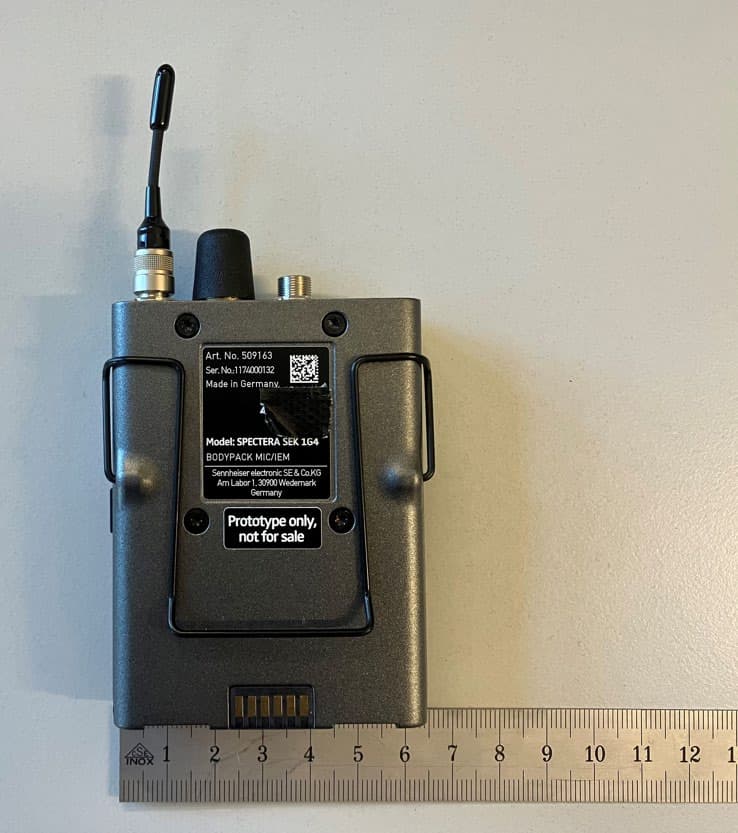
DMOSEK1G4
Mar 11, 2026Bodypack Mic/IEM
Equipment Class
TLD - Licensed LPAS Device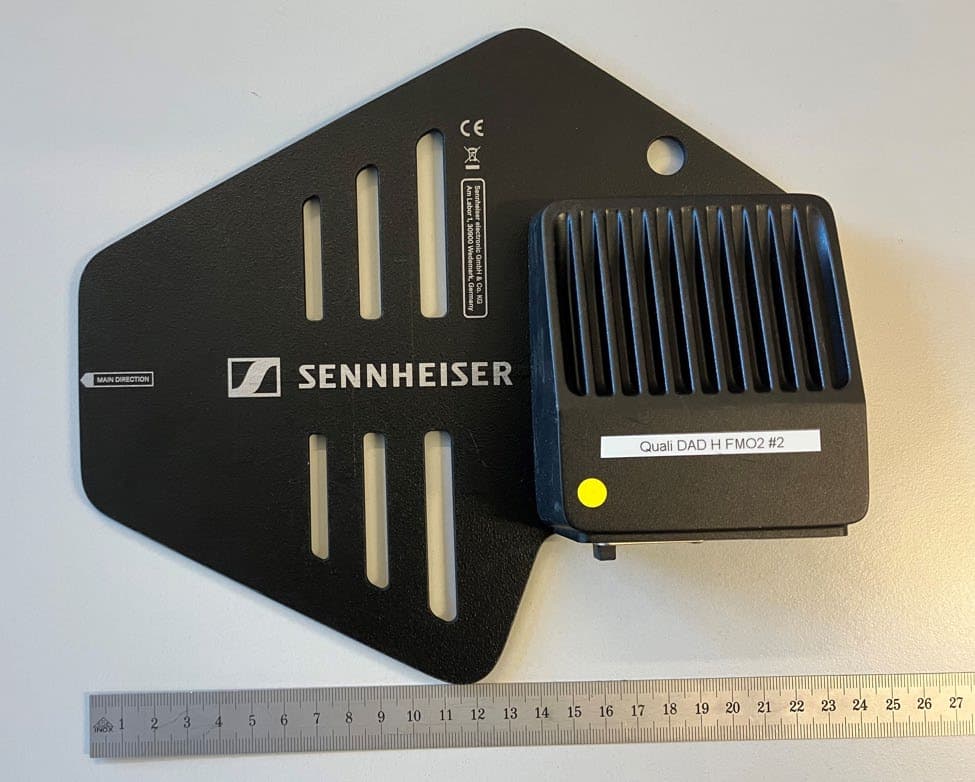
DMODAD1G4
Mar 11, 2026Antenna Transceiver
Equipment Class
TLD - Licensed LPAS DeviceDMOTSEWDX
Jan 30, 2024Wireless Table Stand
Equipment Class
TLD - Licensed LPAS Device